
Telaprevir dosing regimen
a technology of telaprevir and dosing regimen, which is applied in the direction of drug composition, organic active ingredients, peptide/protein ingredients, etc., can solve the problems of few or no available treatment options, risk of rapid progression of liver disease, and inability to achieve sustained virologic response, etc., and achieves the effect of increasing the svr ra
Patent Information
- Authority / Receiving Office
- US · United States
- Patent Type
- Applications(United States)
- Current Assignee / Owner
- Publication Date
- 2011-07-07
- Estimated Expiration
- Not applicable · inactive patent
Smart Images
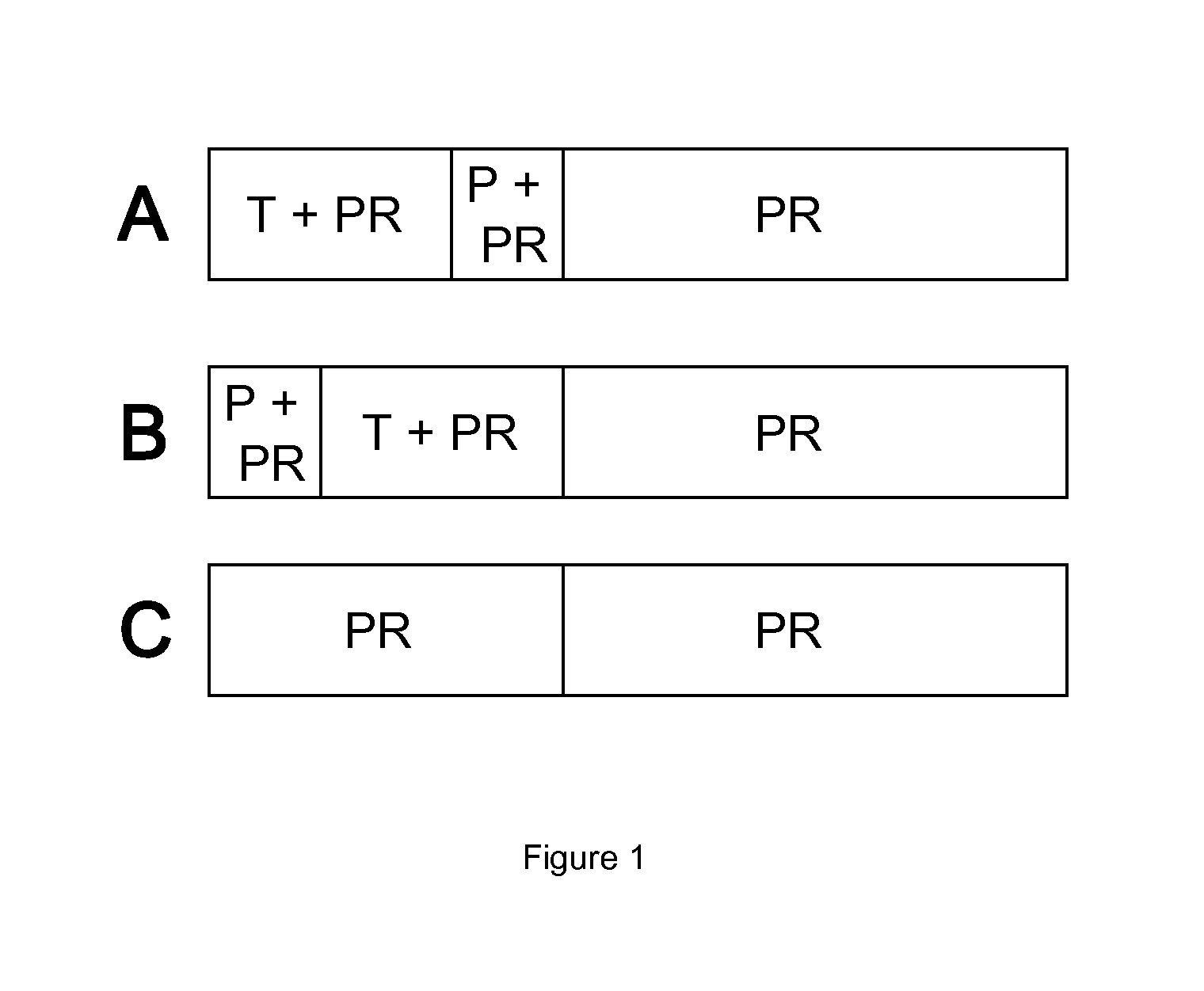
Figure 1 
Figure 2
Abstract
Description
[0001] This invention relates to the use of telaprevir in combination with peg-IFN and RBV in the treatment of HCV patients. In particular, the use of specific dosing regimens of telaprevir in combination with pegylated interferon and ribavirin.BACKGROUND
[0002] Hepatitis C is a liver disease caused by the hepatitis C virus, which is found in the blood of people with the disease. HCV, a serious public health concern affecting 3.4 million individuals in the United States, is spread through direct contact with the blood of infected people. Though many people with HCV infection may not experience symptoms, others may have symptoms such as jaundice, abdominal pain, fatigue and fever. The burden of liver disease associated with HCV infection is increasing, and current therapies typically provide sustained benefit in less than half of patients with genotype 1 HCV, the most common strain of the virus.
[0003] The standard of care for the treatment of HCV patients consists of the combination of p...
Examples
example 1
[0035]A randomized, double-blind, placebo-controlled study is conducted with telaprevir in subjects with chronic HCV genotype 1 infection who failed prior treatment with Peg-IFN (Peg-IFN alfa-2a or Peg-IFN alfa-2b) plus RBV. The trial is designed to compare the efficacy, safety, and tolerability of 2 regimens of telaprevir (with and without delayed start) combined with Peg-IFN alfa-2a and RBV versus standard treatment (Peg-IFN alfa-2a and RBV).
[0036]The trial consists of a screening period of approximately 4 weeks, a 48-week treatment period, and a 24-week follow-up period. A schematic overview of the design of the experiment is presented in FIG. 1.
[0037]Subjects taken up in the study meet either one of the following criteria:[0038](1) subject had an undetectable HCV RNA level at the end of a prior course of Peg-IFN / RBV therapy but did not achieve SVR (viral relapsers), or[0039](2) subject never had an undetectable HCV RNA level during or at the end of a prior course of Peg-IFN / RBV ...