
Air sterilizing assembly
Patent Information
- Authority / Receiving Office
- US · United States
- Current Assignee / Owner
- Publication Date
- 2012-05-17
Smart Images
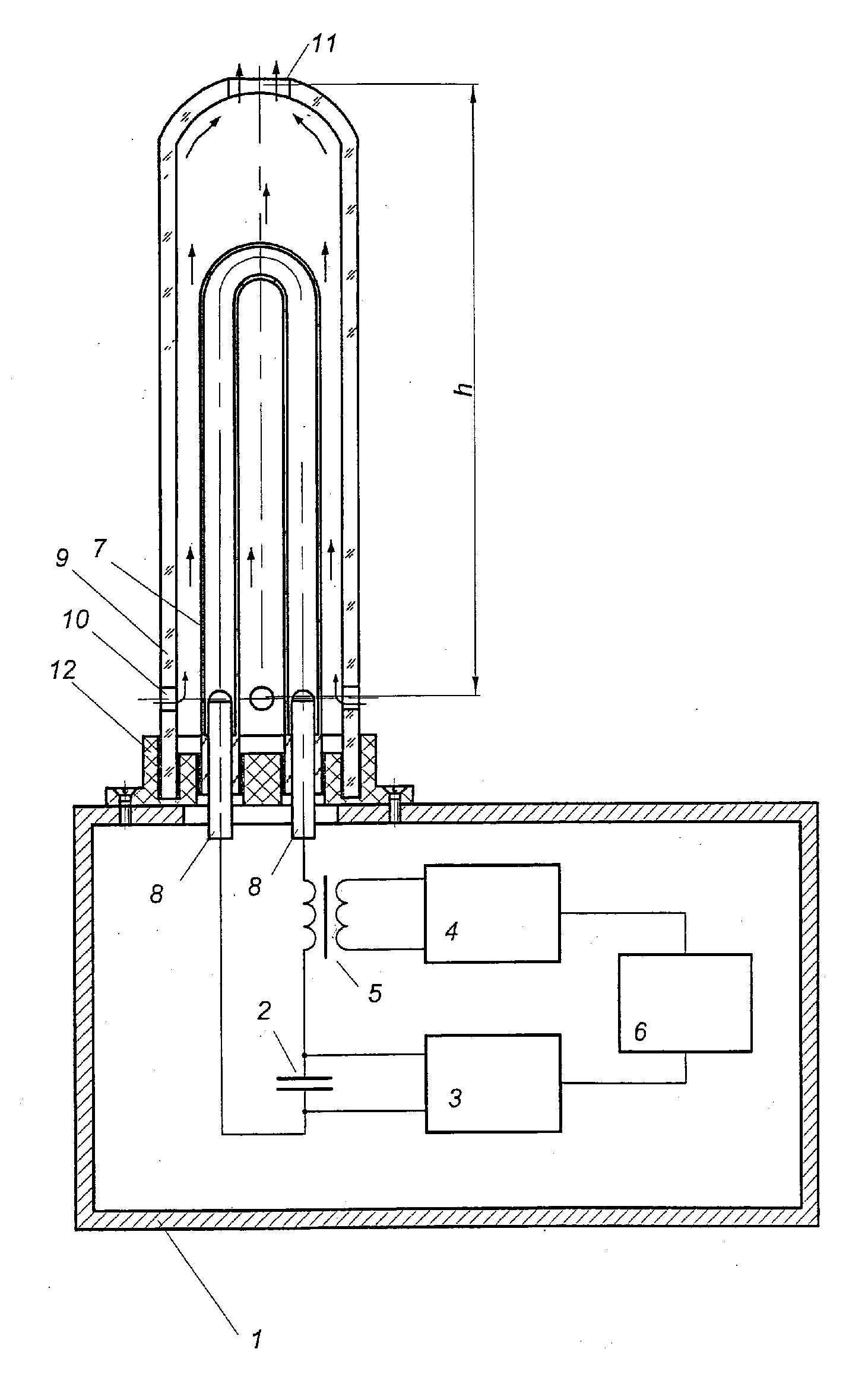
Figure 1 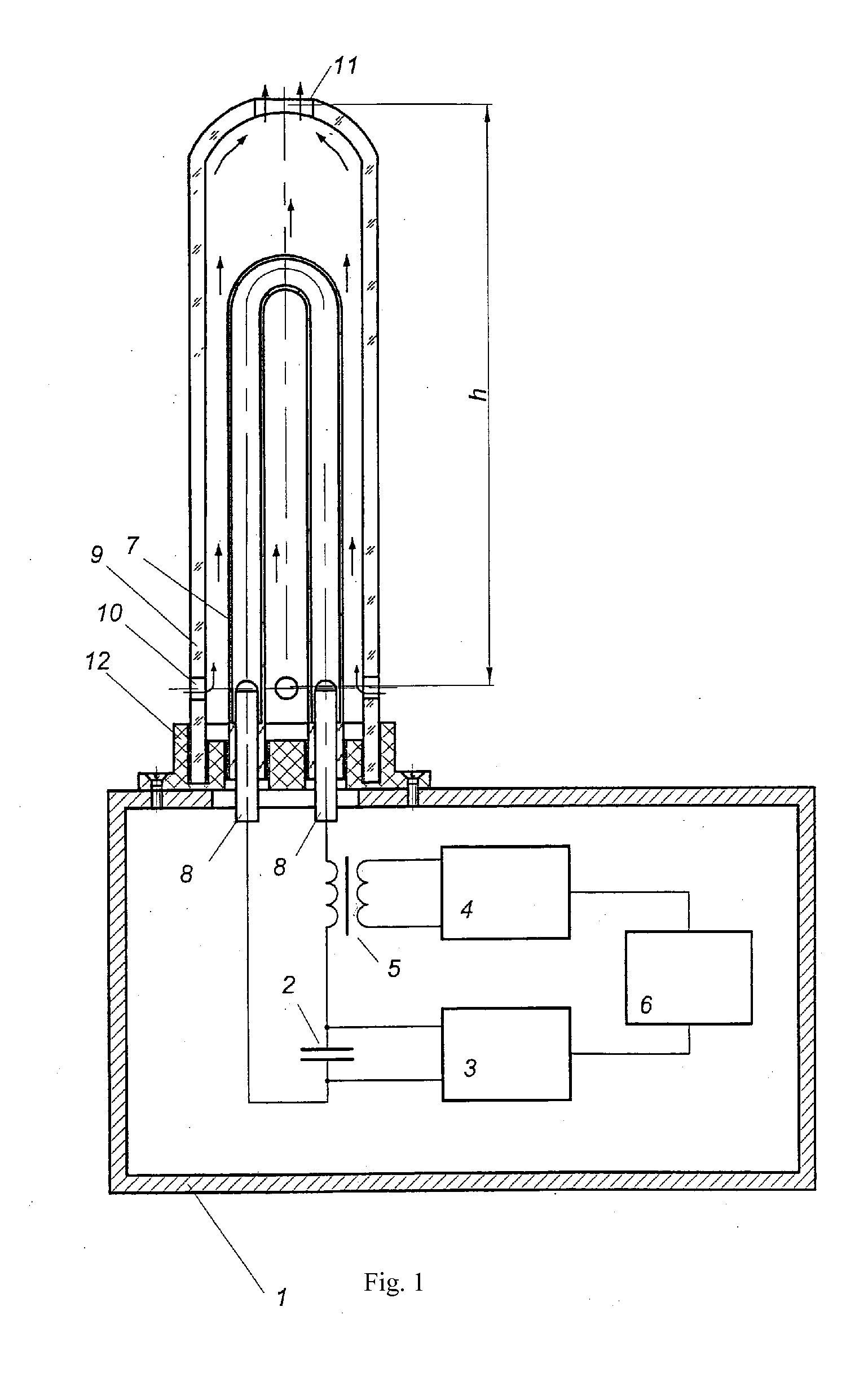
Figure 2 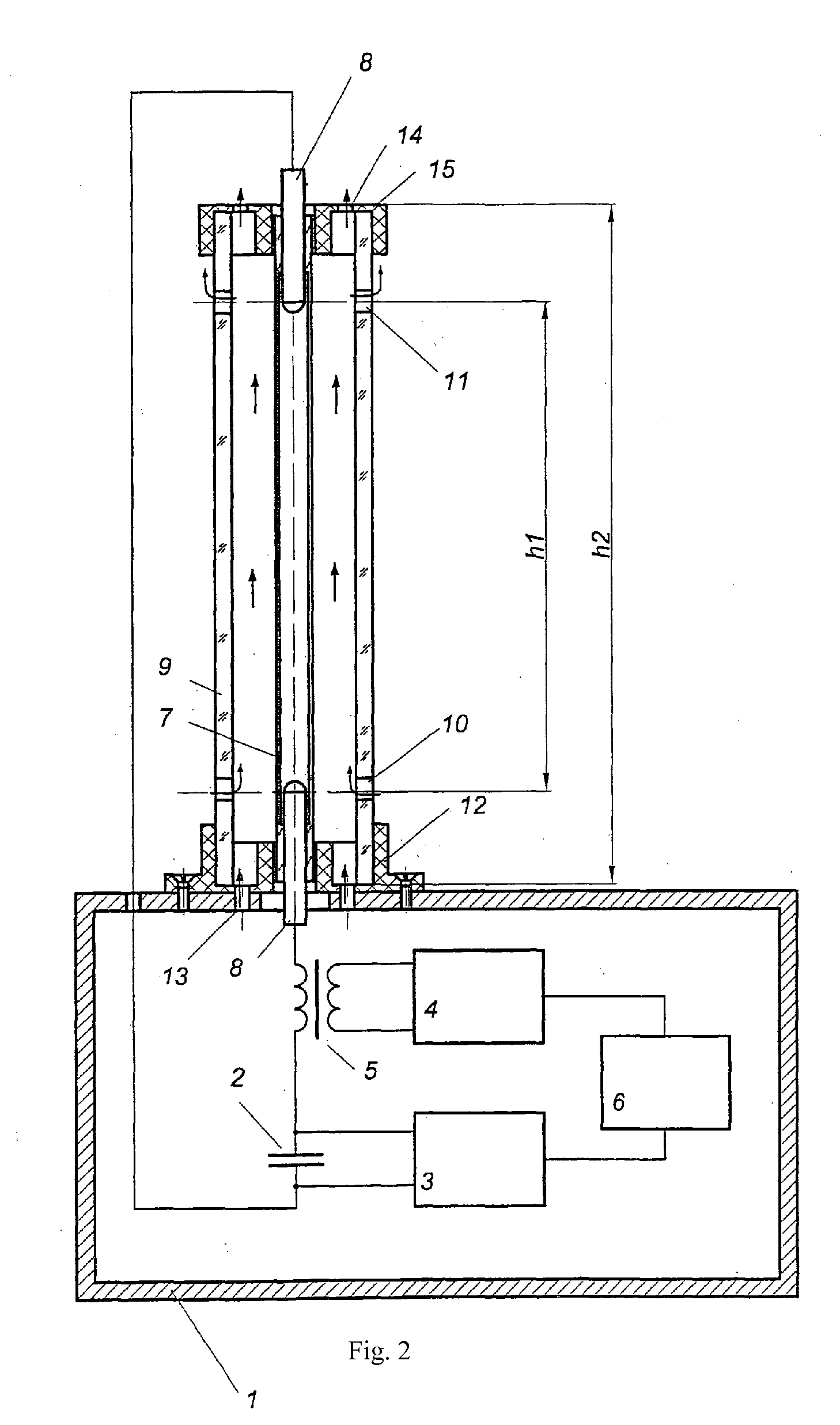
Figure 3
Abstract
Description
TECHNICAL FIELD
[0001] The present invention relates to medical equipment, and can be used to improve the efficiency of disinfecting / sterilizing air in various rooms used for different purposes.PRIOR ART
[0002] Air disinfection / sterilizing devices with one or several sources of ultra-violet radiation in the form of mercury gas-discharge bactericidal lamps, and operating in a continuous lighting mode (RU 2153886 C1, A61L9 / 20, 2000; RU 2153886 C1, A61L9 / 20, 2007; EP 0220050, A61L9 / 18, 1987) are known from the prior art. The main disadvantage of these well-known devices is low productivity, caused by low intensity monochromatic radiation emitted from the used bactericidal lamps, and, accordingly, contributing to longer exposure periods needed to ensure effective air disinfection.
[0003] The another well-known unit used for air disinfection and deodorization, contains a body housing a power supply and control unit, which, in turn, includes an energy storage capacitor, a high-voltage constant ...
Examples
example 2
[0048]The air disinfection device having power of 200 W, with a pulsed gas-discharge lamp in the form of a straight cylinder, positioned horizontally (see FIG. 3) in a quartz casing, 20 mm in diameter, has the following technical parameters:
C=60 μF=6·10−5 F, U0=1,400 V, F=3.3 Hz, h=20 mm=0.02 m, Supper=1 cm2=1·10−4 m2, Slower=1 cm2=1·10−4 m2.
[0049]The device is installed in the same room with a total surface area of 29.2 m3. According to microbiological tests to maintain efficient bactericidal air disinfection at 99.9%, measured for the Staphylococcus Aureus sanitary-indicative microorganism, this unit should work for 300 seconds to achieve maximum results. The device was switched on by means of the program control unit 6 at the designated time, then, the average volume of ozone concentration in the air was calculated, which, in this case, was equal 84 μg / m3. The received value should also not exceed MAC of ozone permitted in the air in working zones.