
Protective Sheath for Surgical Laser Fiber
a protective sheath and laser fiber technology, applied in the direction of surgery, medical science, surgical instrument details, etc., can solve the problems of reducing the flow of fluid through the working channel around the sheath/fiber assembly, and achieve the effect of preventing leakage from the working channel, convenient positioning, and convenient adjustmen
Patent Information
- Authority / Receiving Office
- US · United States
- Current Assignee / Owner
- Publication Date
- 2014-10-23
- Estimated Expiration
- Not applicable · inactive patent
Smart Images
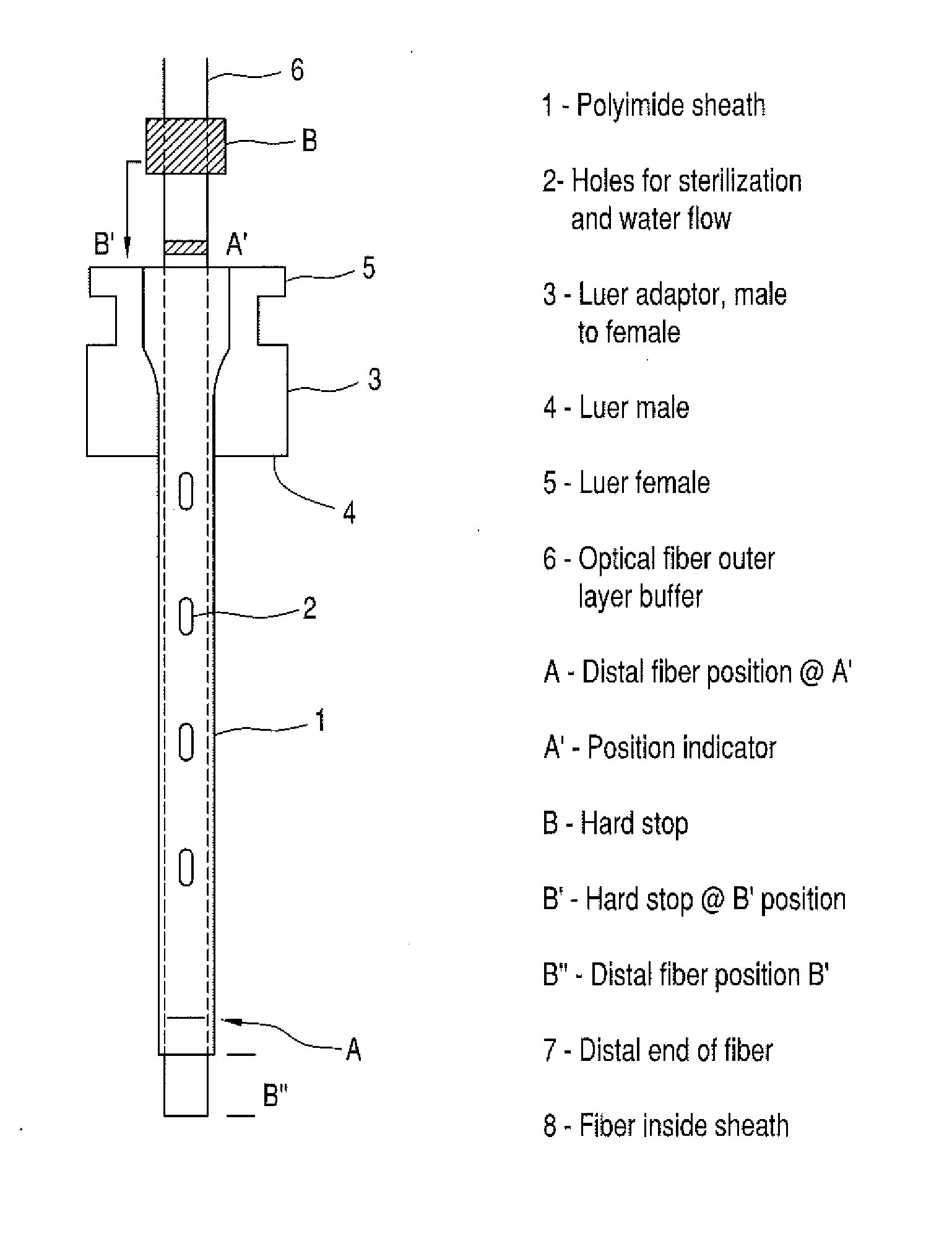
Figure 1 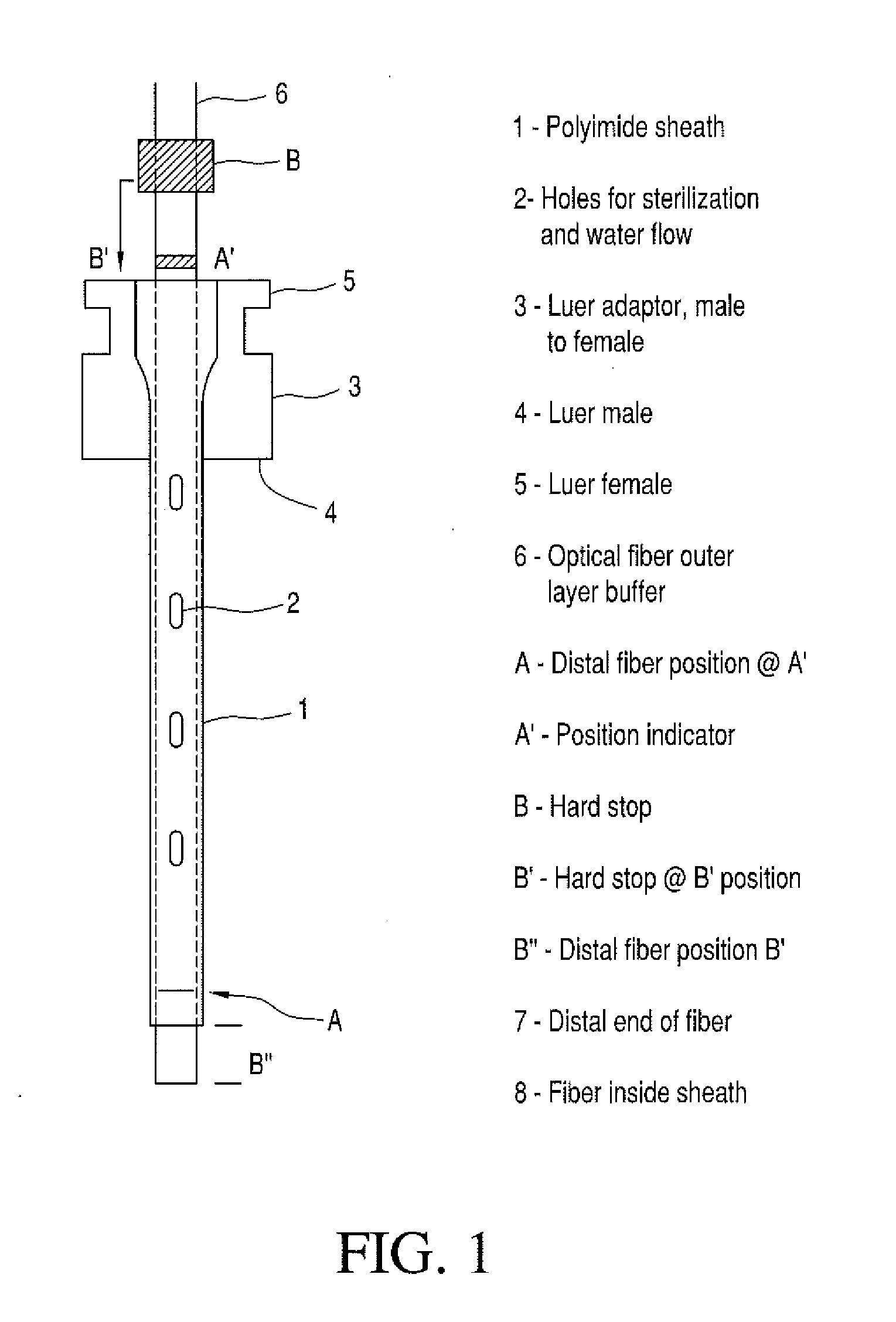
Figure 2 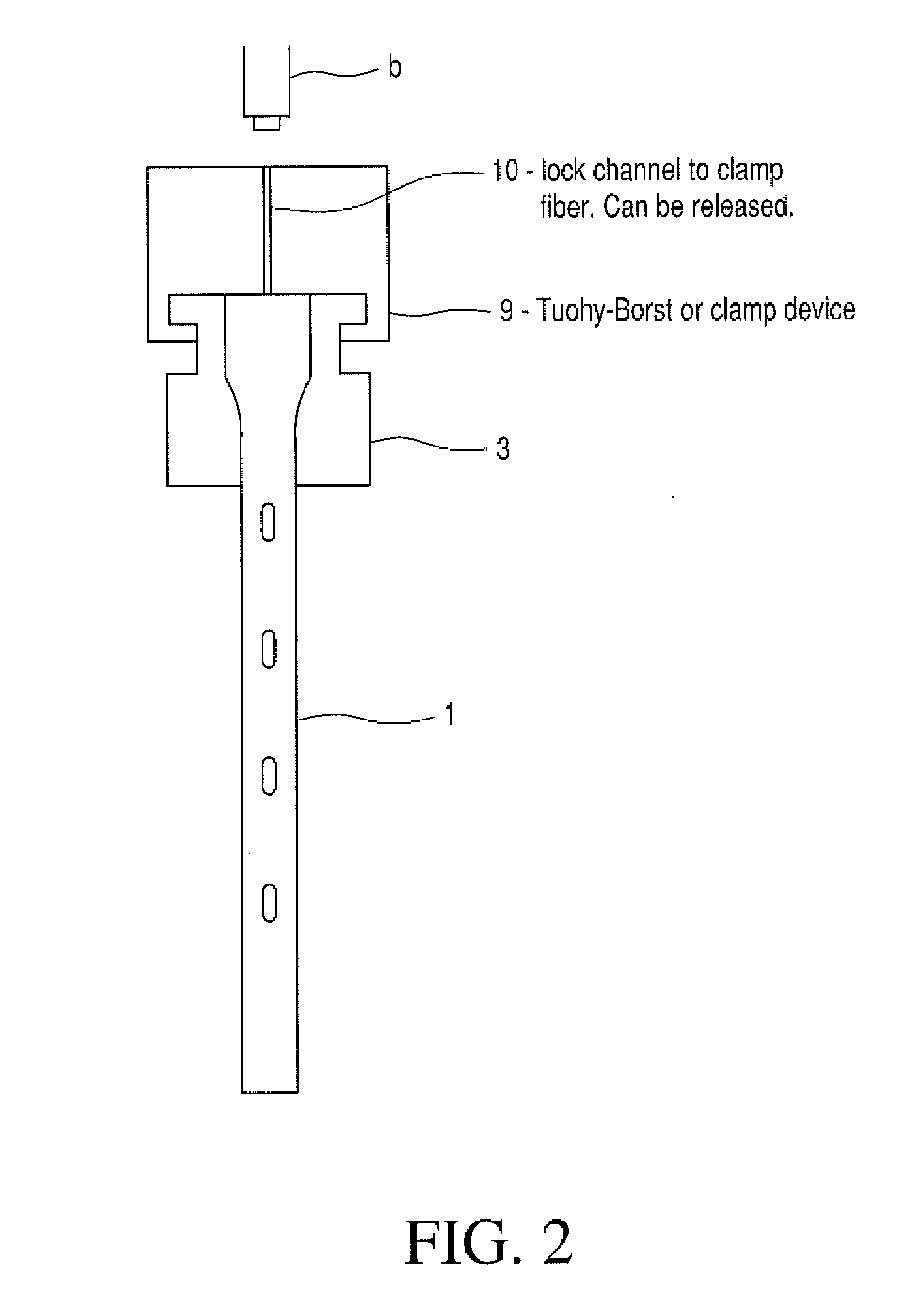
Figure 3
Abstract
Description
[0001] This application claims the benefit of U.S. provisional patent application Ser. Nos. 61 / 824,755, filed May 17, 2013, 61 / 819,900, filed May 6, 2013, and 61 / 787,599, filed Mar. 15, 2013.BACKGROUND OF THE INVENTION
[0002] 1. Field of the Invention
[0003] This invention relates to a device and method for delivering therapeutic light to a tissue, and in particular to an optical fiber arrangement in which a protective sheath is placed over the entire length of the fiber prior to insertion into an endoscope that guides the fiber to a treatment site. The protective sheath prevents mechanical damage to working channel of the endoscope during insertion of the fiber, insulates the fiber from surrounding cooling fluids, and may serve as an indicator of overheating that enables early detection of excess heating or burning of tissues or equipment at the treatment site.
[0004] 2. Description of Related Art
[0005] The most important function of a protective sheath of the type with which the present i...
Examples
Embodiment Construction
[0021]As shown in FIG. 1, the optical fiber buffer (6) is surrounded by a very thin-walled polyimide sheath (1) that performs several functions. The most important function of this sheath is to provide a protective sheath that allows the advancement of the relatively sharp-edged laser fiber tip through the ureteroscope without damaging the inner wall of the working channel, thereby preventing expensive repairs to the scope. Previous sheaths had such a thick wall and / or a large diameter that fluid flow through the working channel around the sheath / fiber assembly was greatly decreased, to the point where the physicians refused to use the sheath due to reduced vision due to reduced flow. The inner diameter (ID) of the sheath in this invention is very close to the maximum outer diameter (OD) of the buffer of the optical fiber (6) and the wall is very thin, thus providing maximum room for flow. Another design variation utilizes a larger ID that allows for the introduction of larger diame...