
Hydrogen feed method and systems for engines
a technology of hydrocarbon feed and engine, which is applied in the direction of machines/engines, combustion air/fuel air treatment, instruments, etc., can solve the problems of increasing the complexity of state of the art systems of internal combustion engines, the increase of the cost of implementation, and the increase of the cost of fuel consumption. , to achieve the effect of increasing the combustion of hydrocarbons and promoting efficient combustion
Patent Information
- Authority / Receiving Office
- US · United States
- Patent Type
- Applications(United States)
- Current Assignee / Owner
- Publication Date
- 2014-12-18
- Estimated Expiration
- Not applicable · inactive patent
Smart Images
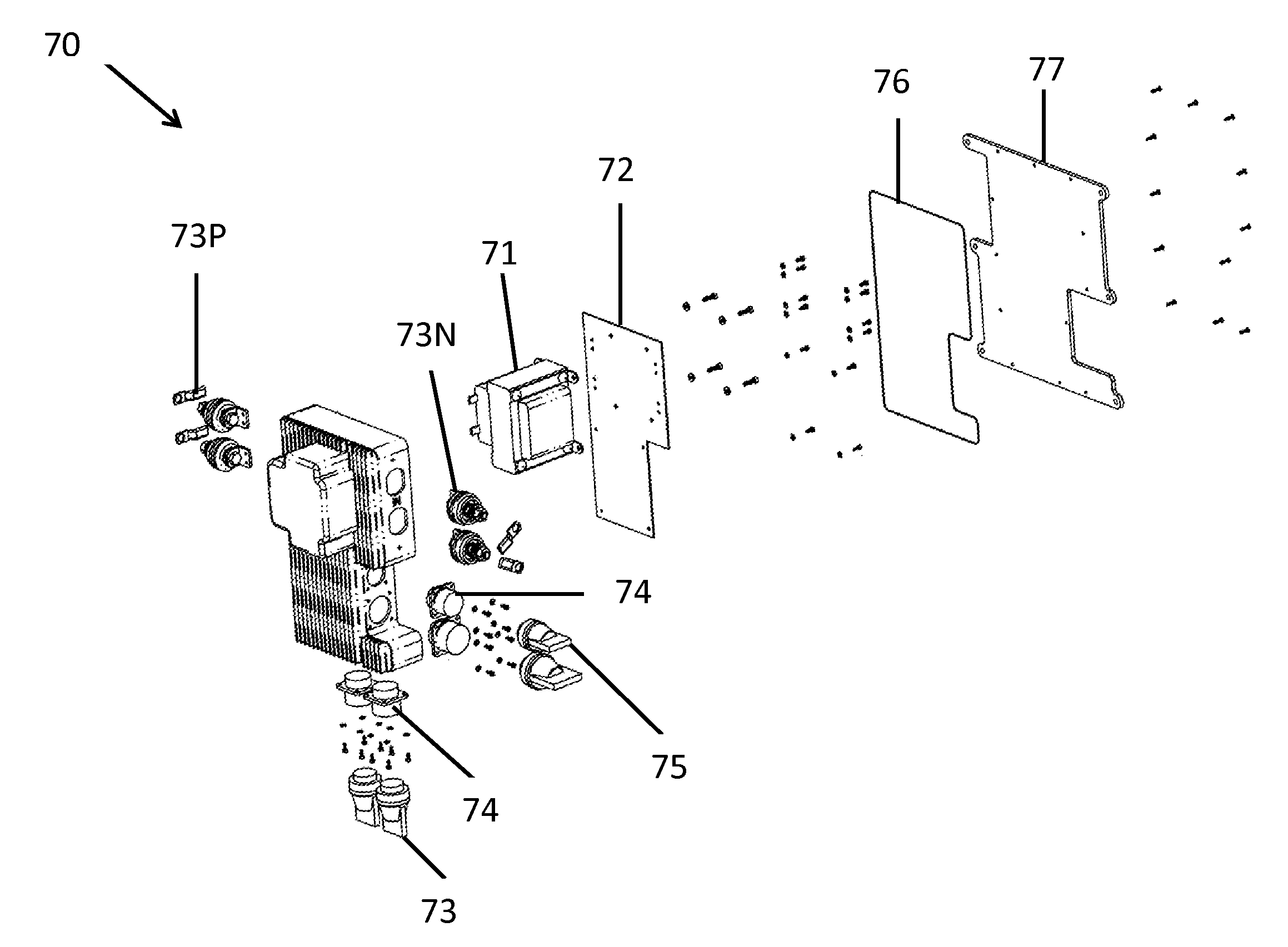
Figure 1 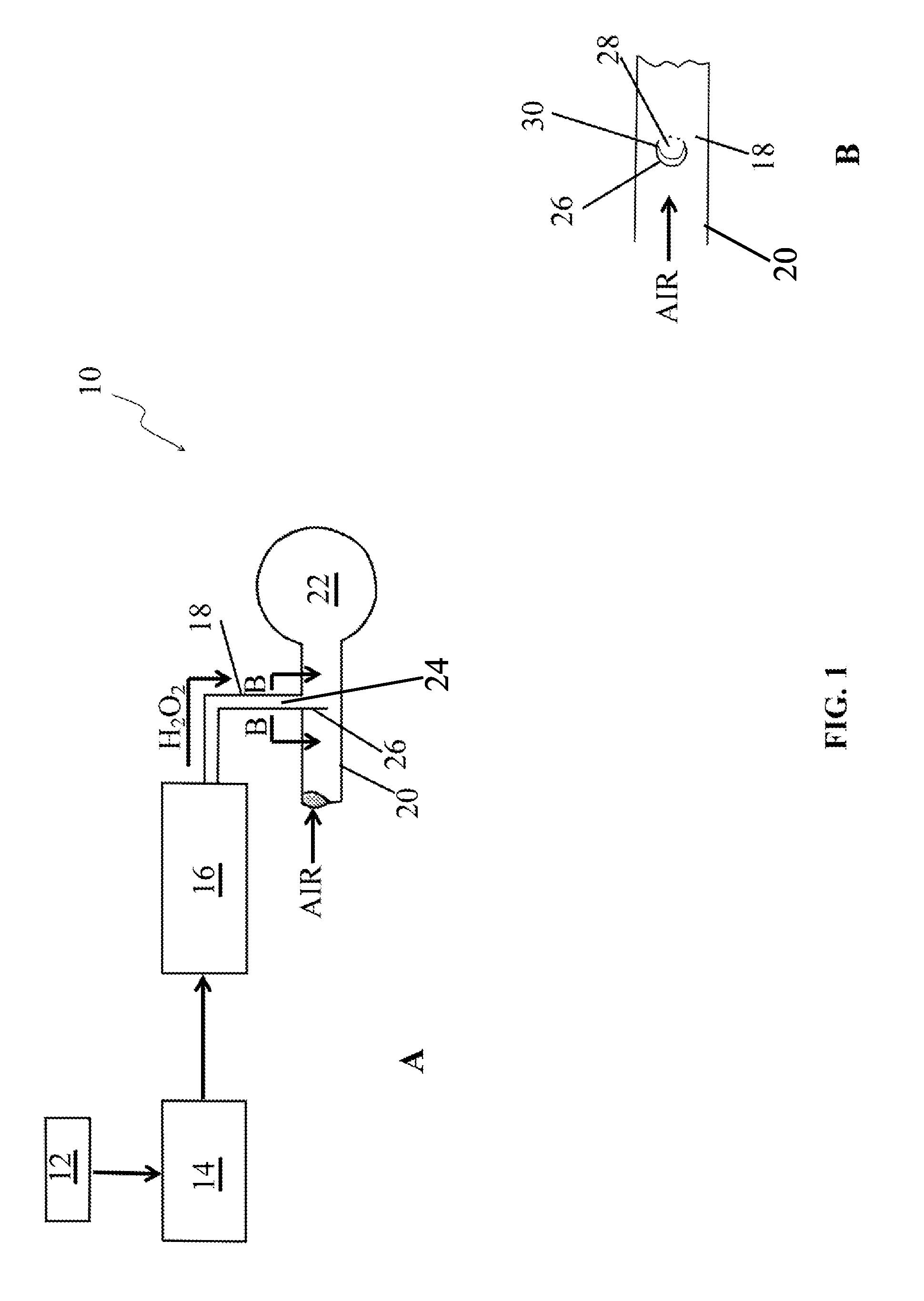
Figure 2 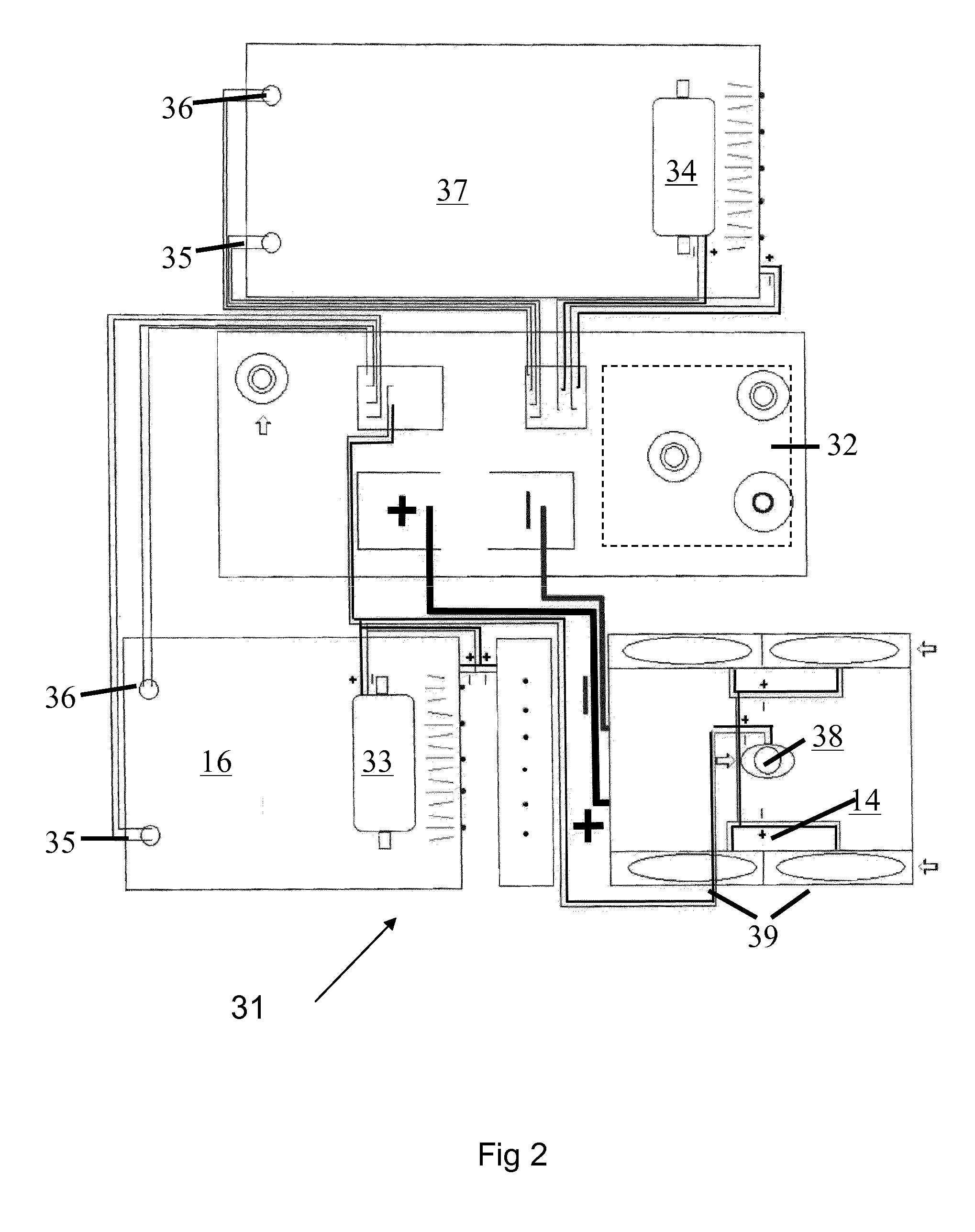
Figure 3
Abstract
Description
CROSS REFERENCE TO RELATED APPLICATIONS
[0001] This application claims the benefit as a continuation of U.S. Utility application Ser. No. 13 / 431,791 filed on Mar. 27, 2012, presently pending.BACKGROUND OF THE INVENTION
[0002] 1. Field of the Invention
[0003] This invention relates to a device and method for supplying hydrogen gas to an air intake system, and more particularly, this invention relates to a device and method for in situ production and utilization of hydrogen gas in internal combustion engines.
[0004] 2. Background of the Invention
[0005] The need for increase fuel efficiency and lower emissions has reached a critical state. State of the art systems for internal combustion engines have become increasingly complex, with the latest developments including an amalgam of hybrid vehicle drive trains, complex fuel reforming systems and alternate fuel storage systems.
[0006] Current fuel reforming designs utilize liquid petroleum fuels in attempts to crack those feedstocks to single carbon...
Examples
example 1
FLUID EXAMPLE 1
[0070]The three-season Hydrogen Reaction Fluid is currently formulated using about 0.64% weight percentage of an alkali hydroxide (such as sodium hydroxide) dissolved in deionized water.
[0071]The winterized versions of the reaction fluid (i.e., where ambient temperatures range from about −50 F to 32 F), have 2-Propanol as a component of its composition. The alcohol's presence is primarily to lower the freezing temperature of this mixture. Different freeze protection levels contain different alcohol percentages. An embodiment of the winter blend also contains between about 50% and 500% more chemical salts, preferably between about 75 and 300% and most preferably between about 100 and 200% more chemical salts to achieve the hydrogen production rates seen when the 3-season fluid blend is used.
example 2
FLUID EXAMPLE 2
[0072]The winter blend (wherein the blend accommodates 0° F. average ambient temperatures) is currently formulated using from about 2% to about 5% by weight of alkali hydroxide (such as sodium hydroxide), preferably 2.2% to 2.8%, and most preferably about 2.3% by weight sodium hydroxide (“Alkali chemical salt”). The hydroxide is substantially completely dissolved in the deionized Water (from between 60% to 70% by formulation weight, preferably 65% to 70% and most preferably 68.7% by formulation weight). From about 15% to 40% by weight, preferably 20-35% by weight, and most preferably about 27-30% by weight of the 2-Propanol is added to the alkali hydroxide spike water and mixed to a homogeneous blend of the three ingredients.
example 3
FLUID EXAMPLE 3
[0073]A second winter blend (wherein the blend accommodates ambient temperatures which average minus 10° F. utilizes between 2% and 4% by weight of alkali metal salt, preferably between about 1% and 2% and most preferably about 1.4 to 1.5% weight percentage. The salt is substantially completely dissolved in the deionized water between 50 and 70% by formulation weight, preferably between 55 and 65% and most preferably about (63% by formulation weight). Between approximately 20-45% by weight, preferably 30-40% and most preferably between about 35% and 36% by weight of the 2-Propanol is added and the three constituents homogenized.