
Systems, methods, and compositions relating to combiomics
a combiomic complex and system technology, applied in the field of systems, methods, and compositions, can solve the problems of probiotics having difficulty surviving the harsh environment of the host's digestive system, many of their potential applications to human and animal health are still not well understood, and conventional systems, methods and compositions used to deliver bacteria and/or yeast suffer from certain drawbacks, etc., to achieve the effect of promoting the adhesion of non-adhered bacteria and facilitating the secretion
Patent Information
- Authority / Receiving Office
- US · United States
- Current Assignee / Owner
- Publication Date
- 2016-12-08
- Estimated Expiration
- Not applicable · inactive patent
Smart Images
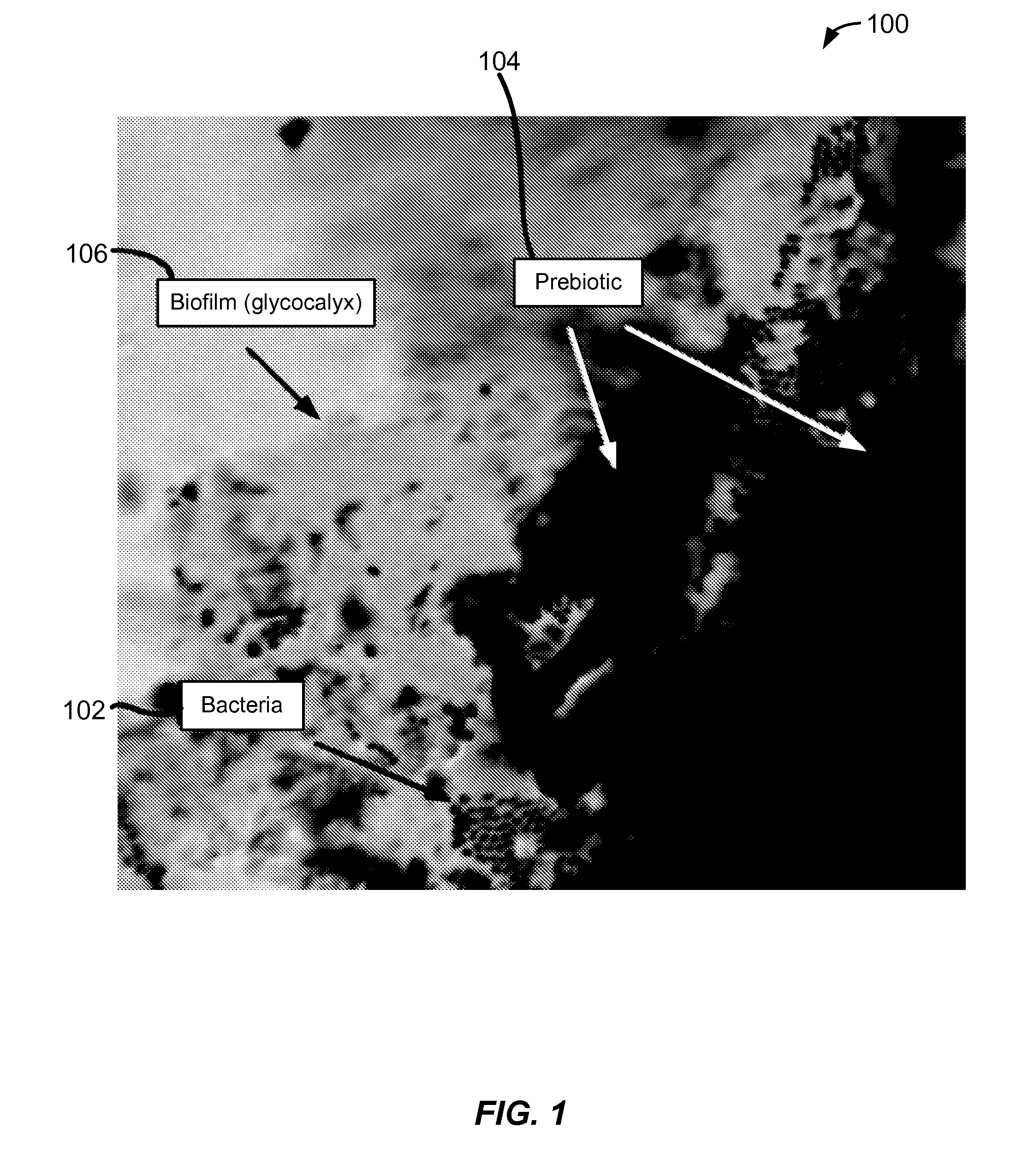
Figure 1 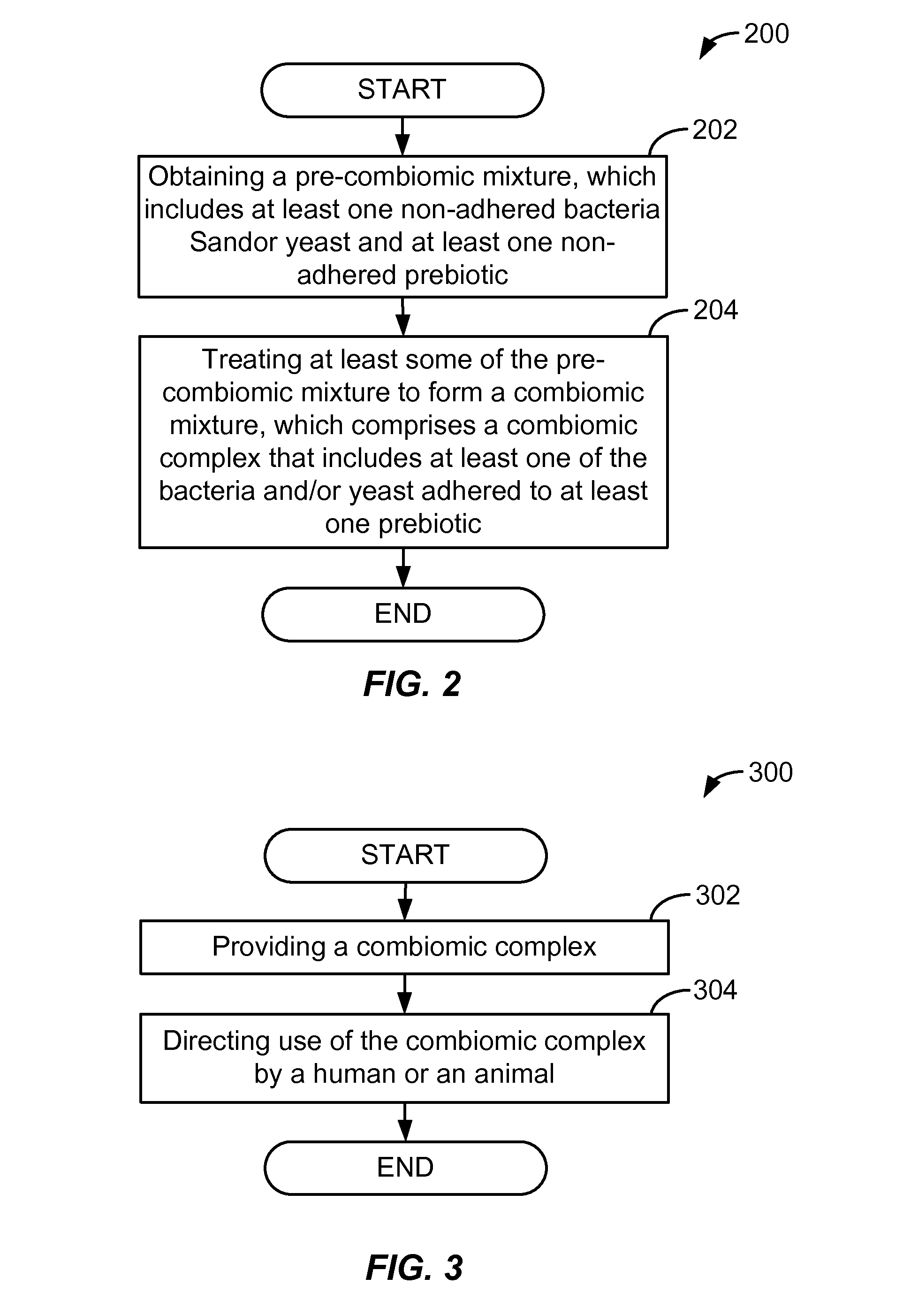
Figure 2 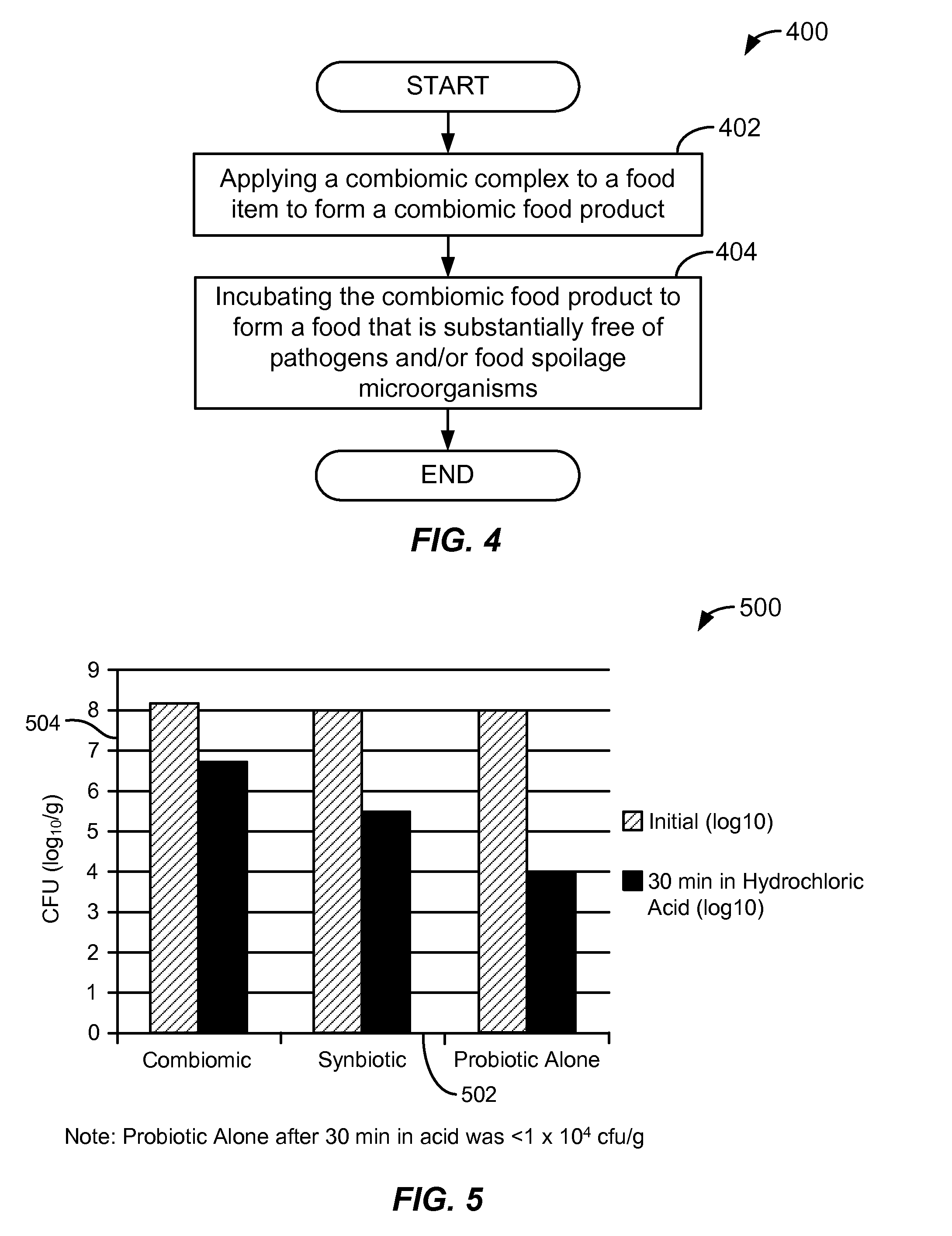
Figure 3
Abstract
Description
RELATED CASE
[0001] This application claims priority to U.S. provisional application No. 61 / 935,402, filed Feb. 4, 2014, and is incorporated herein by reference for all purposes.FIELD
[0002] The present teachings relate generally to systems, methods, and compositions that promote human and animal health, and facilitate food safety and food preservation. More particularly, the present teachings relate to systems, methods, and compositions for making and using a combiomic complex to promote human and animal health and to facilitate food safety and food preservation.BACKGROUND
[0003] Microorganisms, including bacteria and yeasts, are increasingly being explored and exploited as solutions to many current health and sanitation problems. However, due to their unique nature, many of their potential applications to human and animal health are still not well understood. Microorganisms that provide health benefits to the host are generally referred to as probiotics.
[0004] Unfortunately, conventional...
Examples
example 1
Preference of a Non-Adhered Bacteria that is Adhered to a Prebiotic
[0120]In the embodiment of example 1, a bacteria's preference for adhering to a prebiotic over remaining a non-adhered bacteria during a treating step (e.g., treating step 204 of FIG. 2) is experientially shown. To this end, Table 1 shows a composition of a pre-combiomic mixture used to generate samples to test the affinity of a bacteria for adhesion to a prebiotic.
TABLE 1Composition Used to Create “Pre-Combiomic Mixture”IngredientPercent by WeightBeef brothTo 100Apple juice concentrate1*Chicory1 Starter Culture** 0.0626*Starter Culture contains sufficient Pediococcus acidilactici and Pediococcus pentosaceus (i.e., non-adhered bacteria) to provide 1 × 10⁷ cfu / ml of beef broth (i.e., growth medium). The concentration, 0.0626%, is an approximate concentration. As the concentration of bacteria in a starter culture may vary, the actual percentage included in the Fermented Mixture may vary.**Apple juice concentrate (i.e...
example 2
Enhanced Resistance to Hydrochloric Acid of a Bacteria in a Combiomic Complex
[0126]In the embodiment of Example 2, enhanced survivability of a bacteria in a combiomic complex is experimentally shown. To this end, FIG. 5 is a bar graph 500, according to one preferred embodiment of the present teachings, showing the enhanced resistance of a bacteria, when exposed to hydrochloric acid (HCl) for 30 minutes, in a combiomic complex. FIG. 5 includes an x-axis 502 showing three types of test samples, (1) bacteria in a combiomic complex (i.e., bacteria adhered to a prebiotic), (2) bacteria in a pre-combiomic mixture (i.e., bacteria not adhered to a prebiotic, i.e., synbiotic), and (3) bacteria alone (i.e., bacteria not in the presence of a prebiotic). FIG. 5 also includes a y-axis 504, which shows growth of bacteria, as measured in CFU (log10 / g). As shown in FIG. 5, dashed bars shown growth of bacteria prior to exposure to HCl, and solid bars shows growth of bacteria after exposure to HCl fo...
example 3
Treating of a Pre-Combiomic Mixture Carried Out in Multiple Steps
[0133]In the embodiment of Example 2, treating is carried out in multiple steps that may require separate treating conditions. To this end, Table 6 shows a composition used to generate a “fermented mixture,” according to one embodiment of the present teachings, that does not include a prebiotic in an initial treating step.
TABLE 6Composition Used to Create “Fermented Mixture”IngredientPercent by WeightBeef brothTo 100Dextrose1Starter Culture*0.0626*Starter Culture contains sufficient Pediococcus acidilactici and Pediococcus pentosaceus to provide 1 × 10⁷ cfu / ml of beef broth. The concentration, 0.0625% by weight of the Fermented Mixture, is an approximate concentration. As the concentration of bacteria in the starter culture may vary, the actual percentage included in the Fermented Mixture may vary.
[0134]As shown in Table 6, Pediococcus acidilactici and Pediococcus pentosaceus (non-adhered bacteria) were inoculated in b...