
Stable mixed oxide catalysts for direct conversion of ethanol to isobutene and process for making
a mixed oxide catalyst and direct conversion technology, which is applied in the direction of physical/chemical process catalysts, metal/metal-oxide/metal-hydroxide catalysts, hydrocarbon preparation catalysts, etc., can solve the problem of further improvement of catalyst stability, and achieve the effect of improving the stability of the conversion of ethanol
Patent Information
- Authority / Receiving Office
- US · United States
- Patent Type
- Applications(United States)
- Current Assignee / Owner
- Publication Date
- 2018-05-17
- Estimated Expiration
- Not applicable · inactive patent
Smart Images
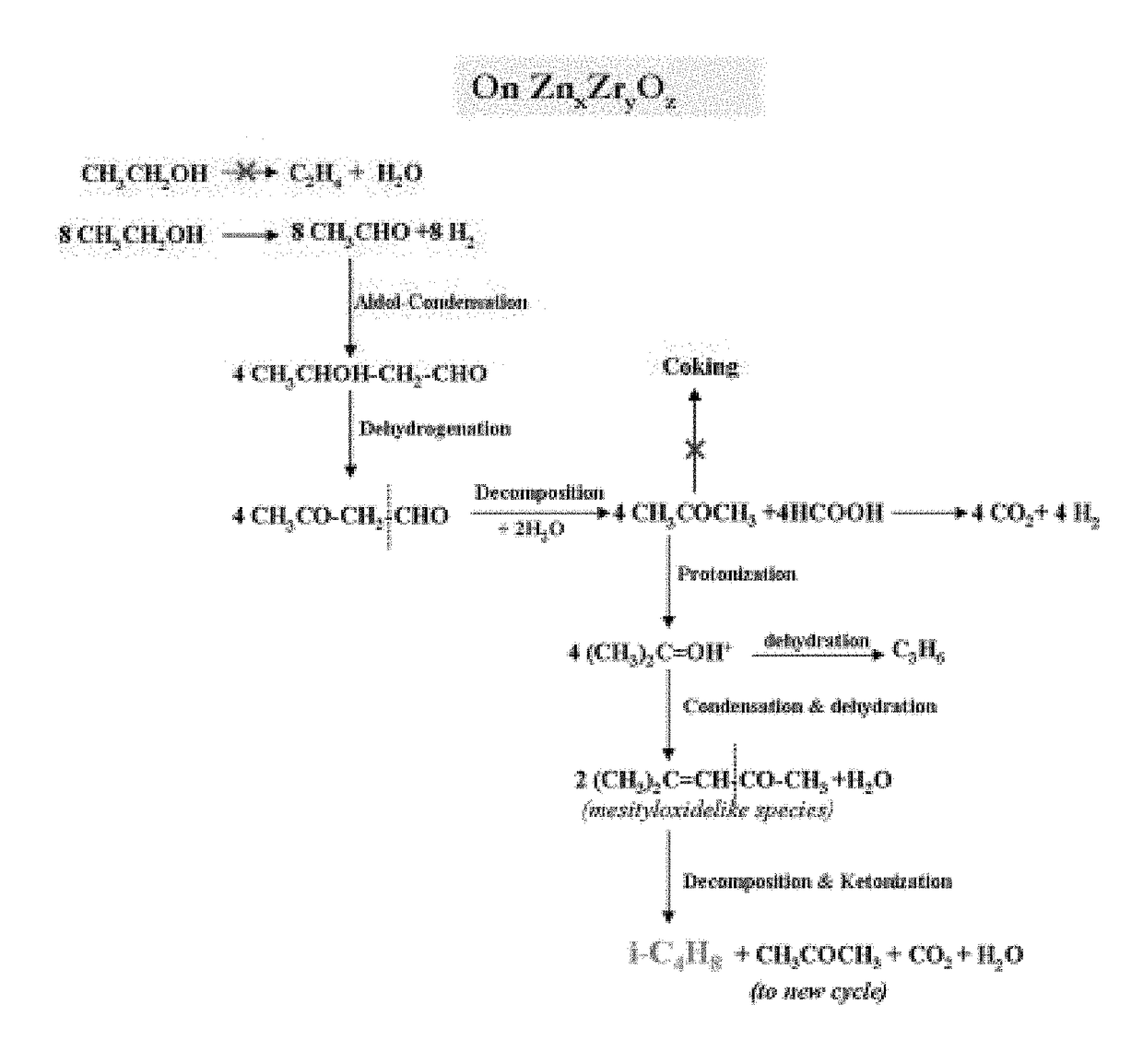
Figure 1 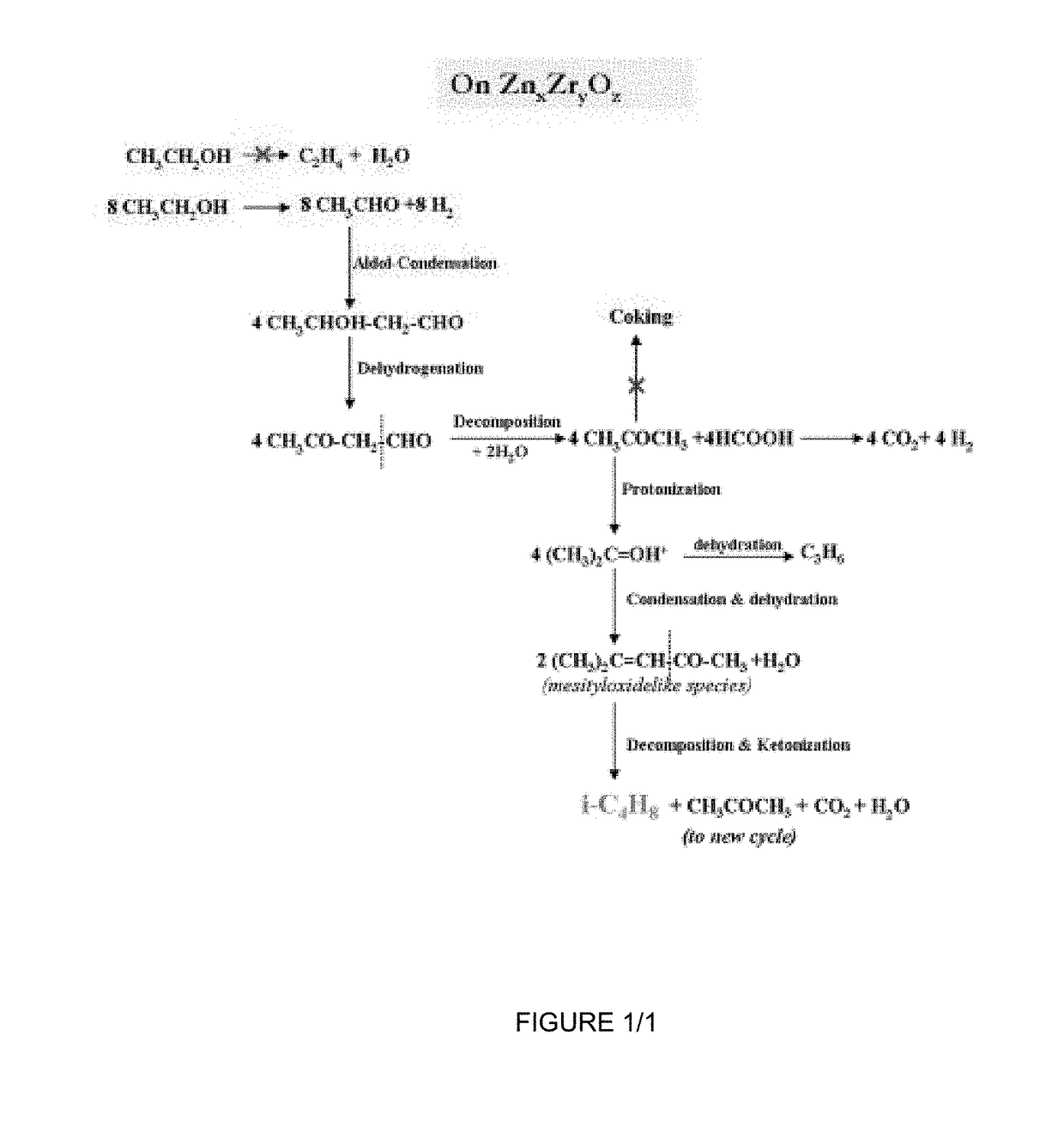
Figure 2
Abstract
Description
CROSS-REFERENCE TO RELATED APPLICATIONS
[0001] The present application is a continuation U.S. patent application Ser. No. 14 / 683,787 filed Apr. 10, 2015, which is a continuation of International Application No. PCT / US2013 / 062784, filed Oct. 1, 2013, now published as WO 2014 / 070354, which directly claims the benefit of U.S. Provisional Patent Application Ser. No. 61 / 720,433 filed Oct. 31, 2012.TECHNICAL FIELD
[0002] The present invention relates generally to renewable process alternatives for the production of isobutene. More particularly, the present invention relates to processes for the direct conversion of ethanol to isobutene and to the catalysts used therein, and still more particularly relates to the methods used for making such catalysts.BACKGROUND ART
[0003] As background, biomass is considered as a CO2 neutral energy carrier, and is one of the most abundant and renewable of natural resources. In recent years, both as a result of market conditions as well as in response to a varie...
Examples
examples 2 through 30
[0042]Based on the improved catalyst stability demonstrated in Example 1, a number of additional catalysts were prepared by first drying commercial zirconium hydroxide at 120 degrees Celsius for more than 5 hours. Calculated amounts of Zn(NO3)2 (from Sigma-Aldrich, more than 99.8 percent purity) were dissolved in water to form a series of clear solutions. The dried zirconium hydroxide (also from Sigma-Aldrich, more than 99.8 percent purity) was then mixed with the solutions in turn by incipient wetness, in order to form wet powders impregnated with Zn in certain proportions to the zirconium in the form of the dried zirconium hydroxide powder. The wetted powders were then dried at 80 degrees Celsius for 4 hours, followed by calcination at the temperature indicated in Table 1 below for 3 hours, to obtain a series of ZnxZryOz catalysts by the new method. Particular reaction conditions, whether the reaction temperature, WHSV or steam to carbon ratio, for example, were then varied to com...