
Force measuring speculum
Patent Information
- Authority / Receiving Office
- US · United States
- Current Assignee / Owner
- Publication Date
- 2019-04-11
- Estimated Expiration
- Not applicable · inactive patent
Smart Images
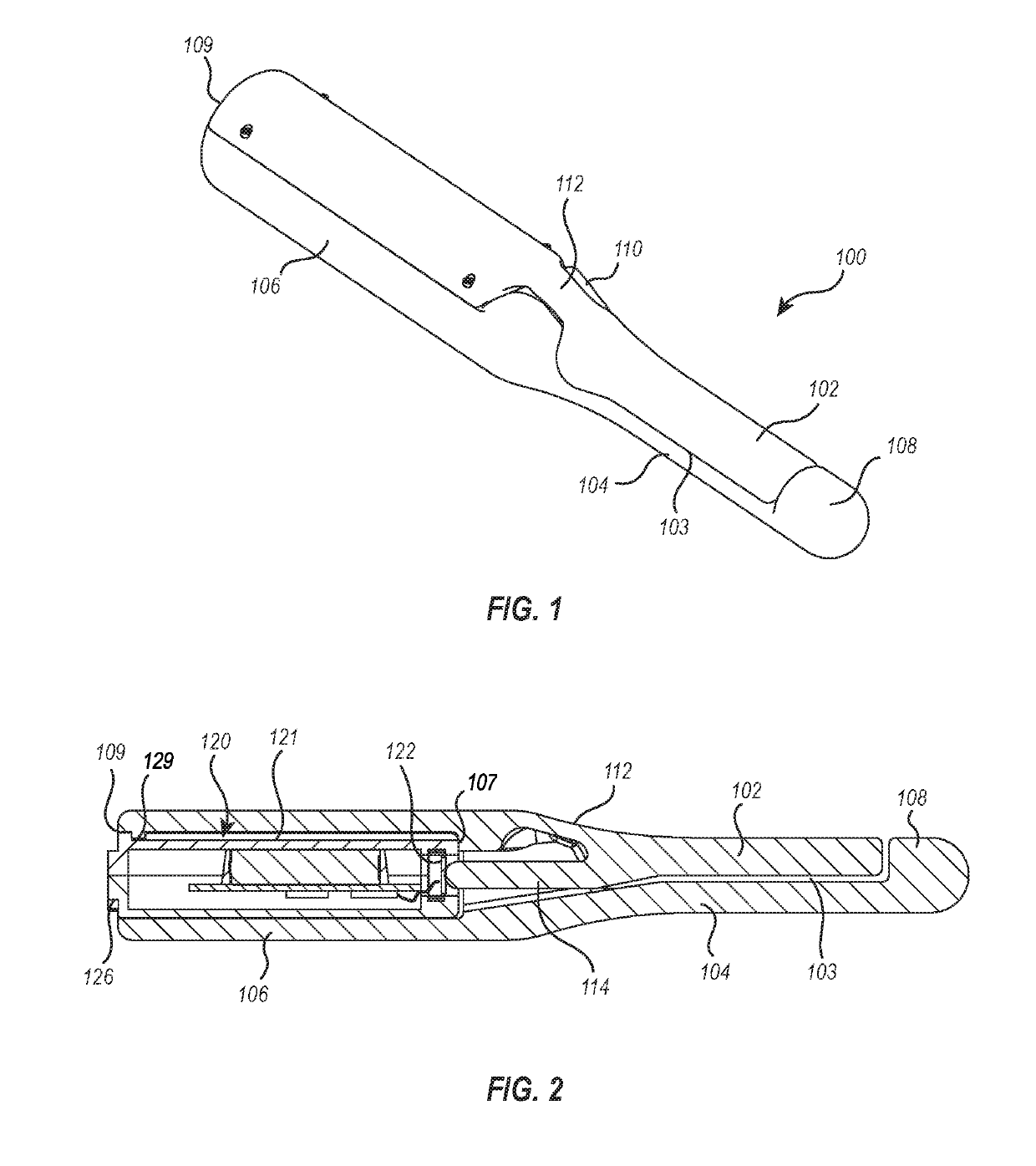
Figure 1 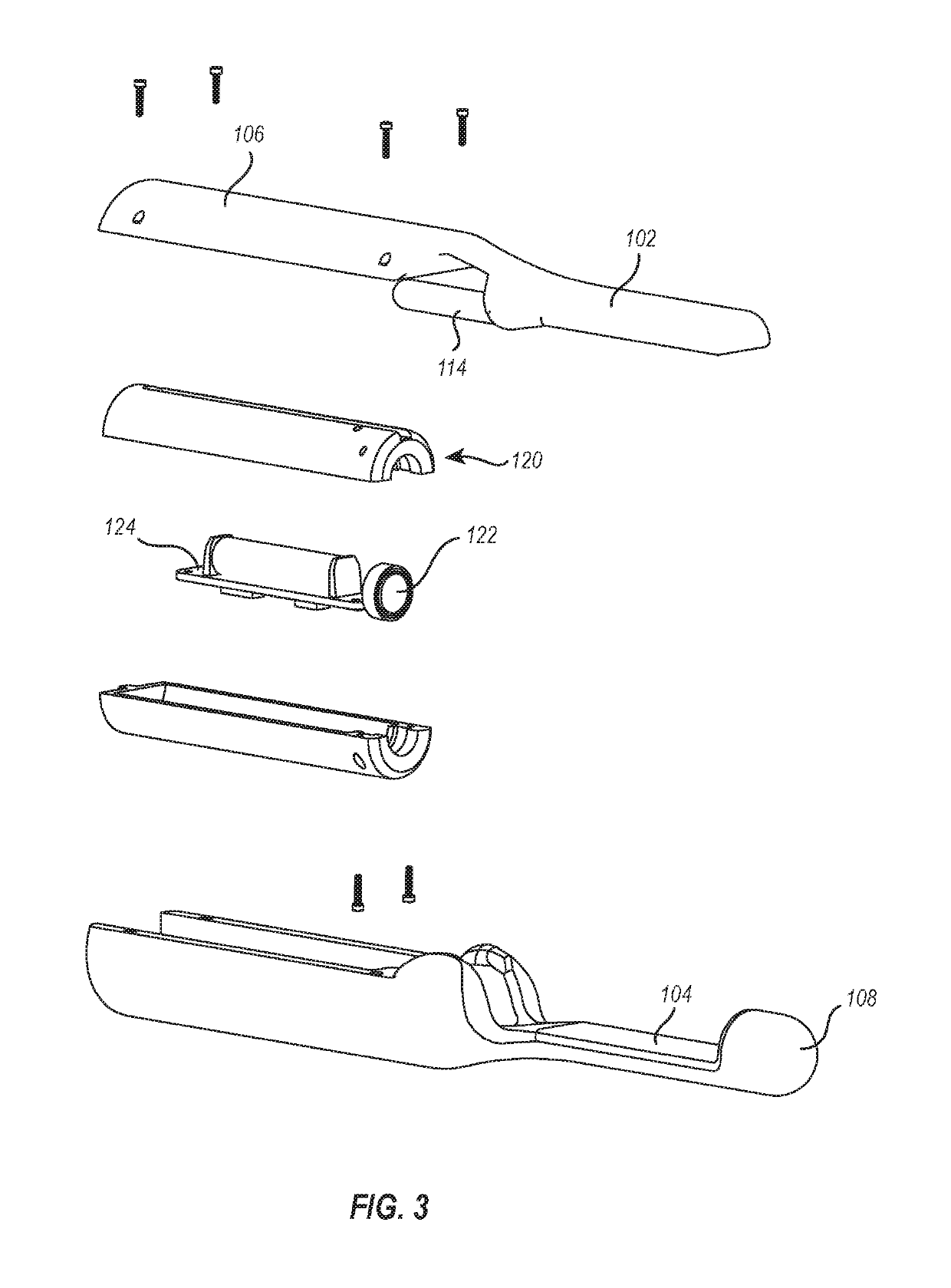
Figure 2 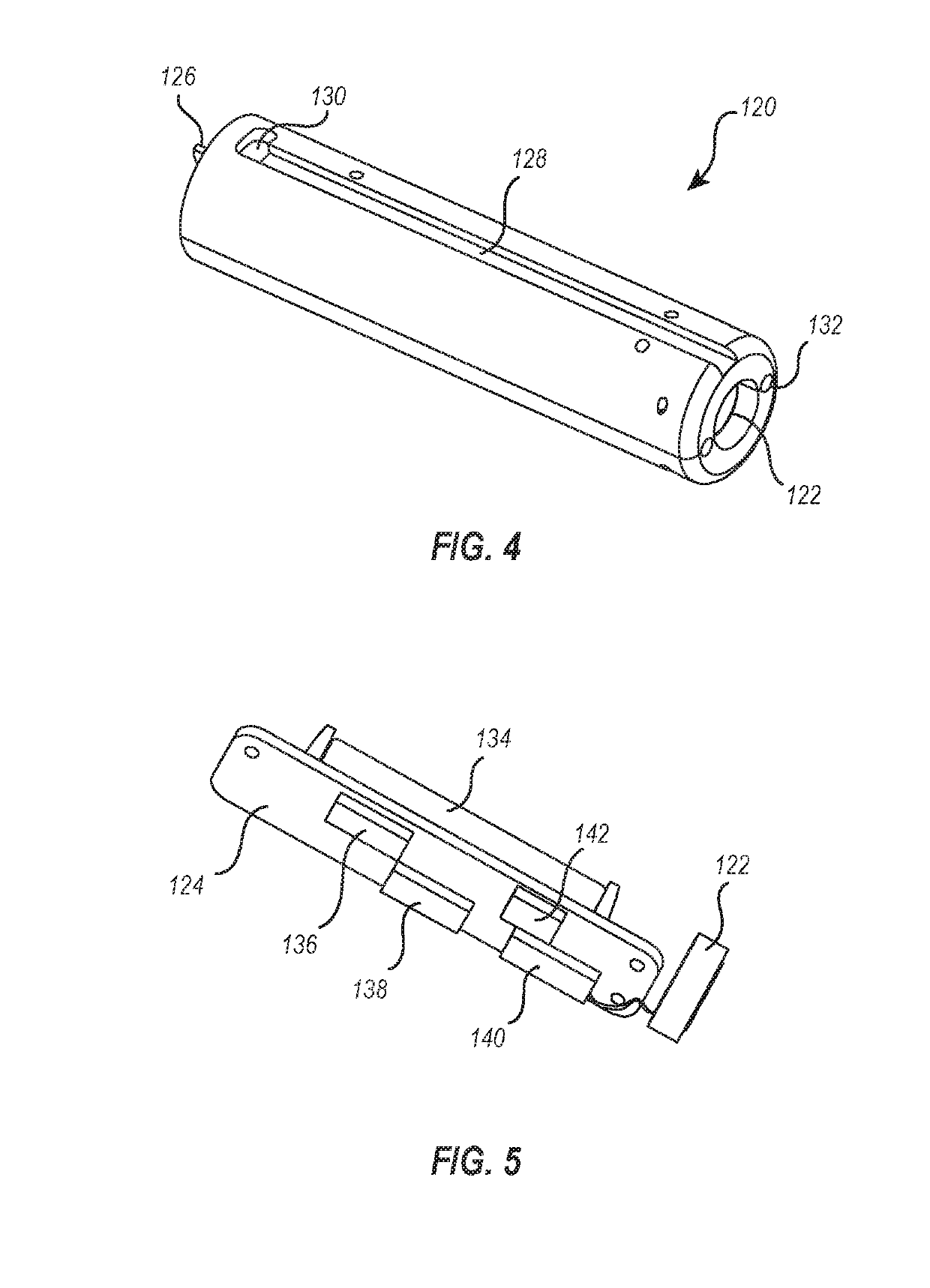
Figure 3
Abstract
Description
CROSS-REFERENCE TO RELATED APPLICATIONS
[0001] This Application claims priority to and the benefit of U.S. Provisional Patent Application No. 62 / 570,010, filed on Oct. 9, 2017 and titled “Force Measuring Speculum,” the entirety of which is incorporated herein by this reference.BACKGROUND
[0002] Pelvic Floor Disorders (PFDs) affect nearly one in four women in the United States (Nygaard, Ingrid et al. “Prevalence of Symptomatic Pelvic Floor Disorders in US Women.” JAMA: the journal of the American Medical Association 300.11 (2008): 1311-1316). These disorders are caused by weakening of the muscles that line the bottom of the abdominal cavity, and can lead to urinary incontinence, fecal incontinence, and pelvic organ prolapse. The pelvic floor muscles form a hammock-like supporting structure for abdominal organs. Inability of the pelvic floor muscles to support the abdominal organs can lead to pelvic floor symptoms, such as urinary incontinence due to lack of support at the bladder neck (D...
Examples
Embodiment Construction
[0026]FIG. 1 illustrates an exemplary embodiment of a force measuring speculum device 100 in isometric view. The device 100 is also shown in cross-section in FIG. 2 and in an exploded view in FIG. 3. The device 100 includes a bill assembly including a first bill 102 and an opposing second bill 104. A gap 103 is defined between the first and second bills 102, 104. The bills 102 and 104 each extend between a proximal end and a distal end. The proximal ends of each of the bills 102 and 104 converge to form a handle 106.
[0027]In this embodiment, an upper portion of the handle 106 is integrally formed with the first bill 102 and a lower portion of the handle 106 is integrally formed with the second bill 104. This arrangement allows the device 100 to be readily assembled by fastening the upper and lower portions together. In other embodiments, however, one or both of the bills 102, 104 are not necessarily integrally formed with portions of the handle 106, and may be mechanically fastened ...