
Hygiene tissue with lactic acid producing bacterial strains
Patent Information
- Authority / Receiving Office
- US · United States
- Current Assignee / Owner
- Publication Date
- 2004-07-22
- Estimated Expiration
- Not applicable · inactive patent
Smart Images
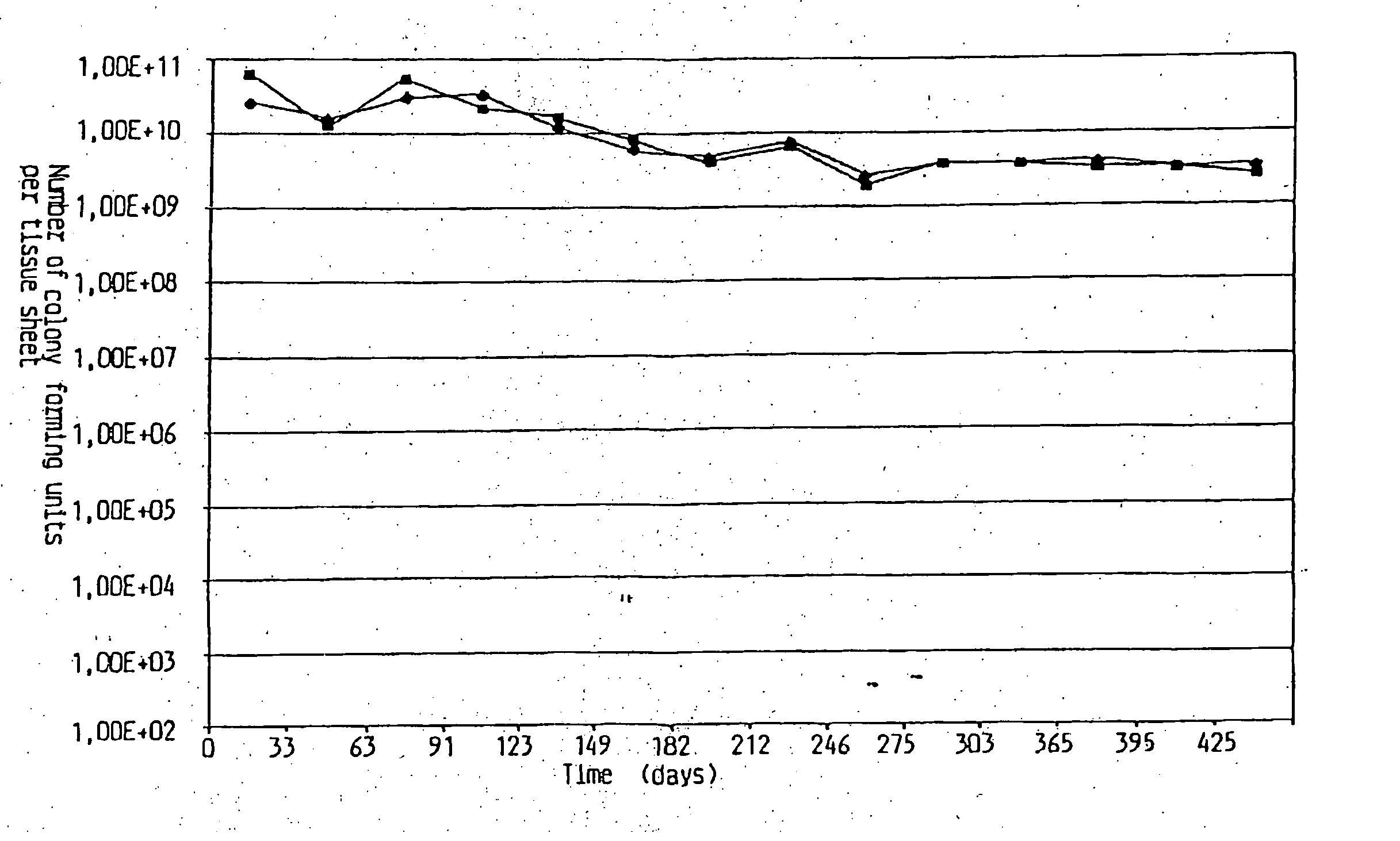
Figure 1 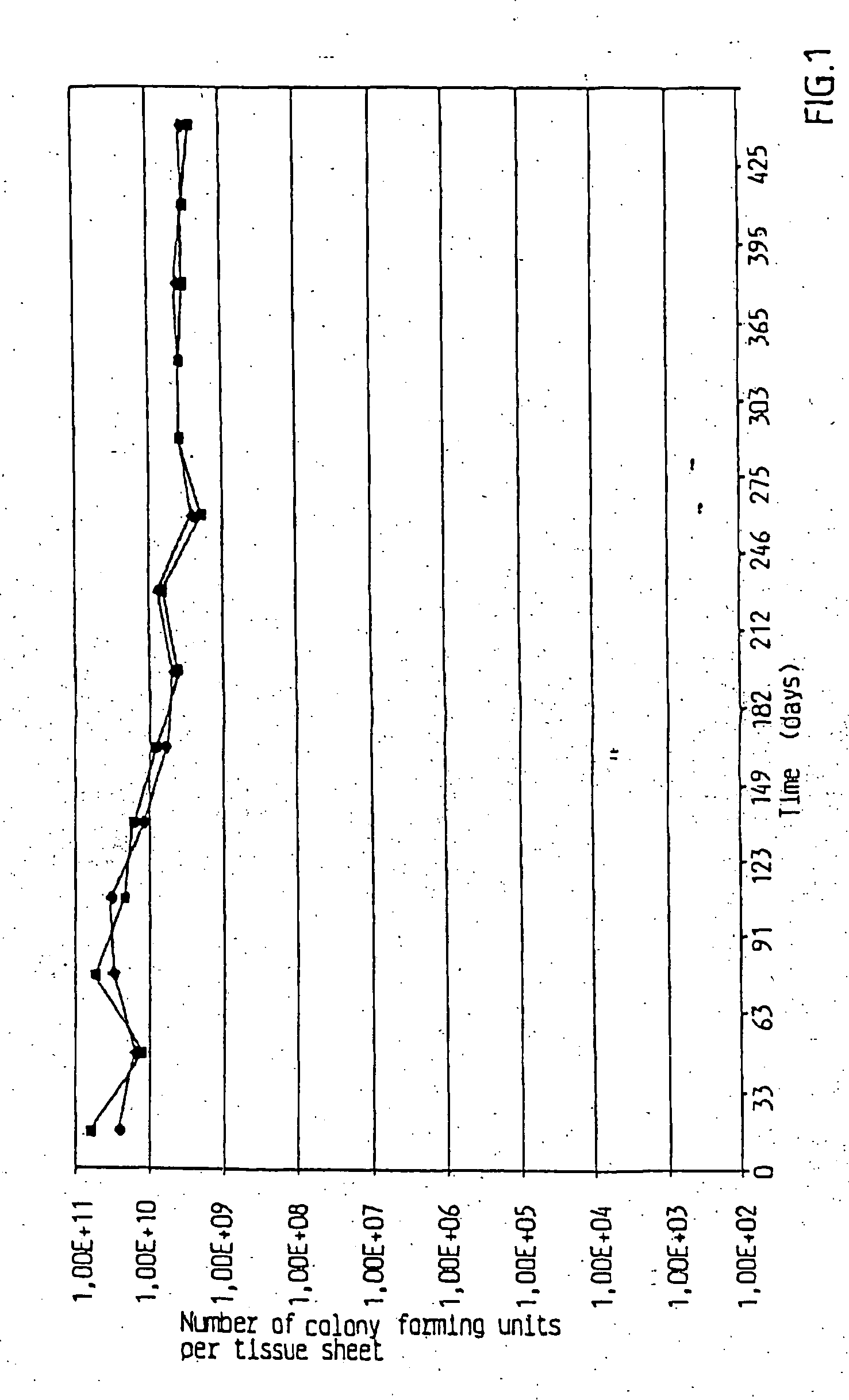
Figure 2 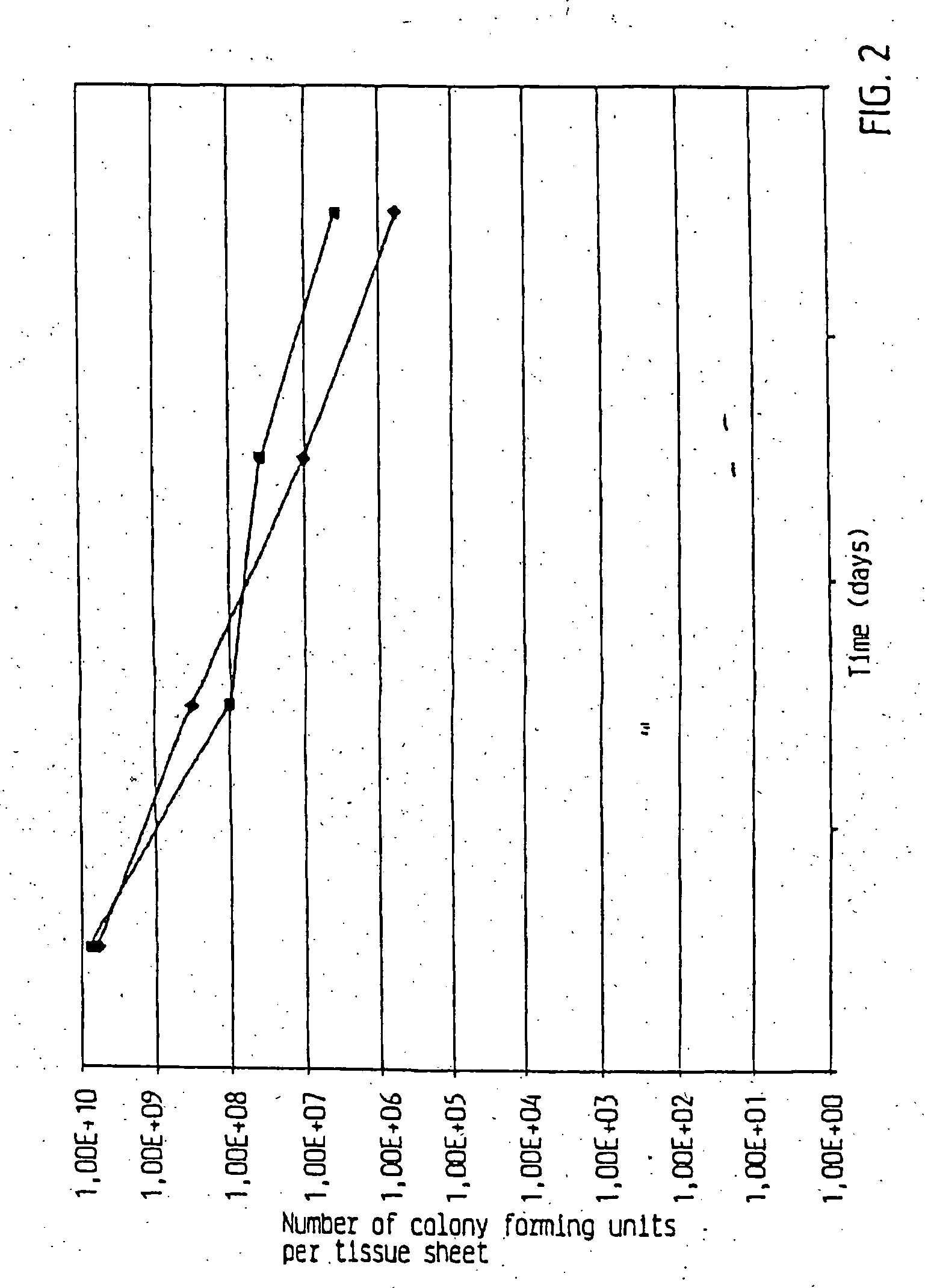
Figure 3
Abstract
Description
[0001] The present application claims the benefit of U.S. Provisional Application No. 60 / 437,742, filed in the United States on Jan. 3, 2003, the entire contents of which are hereby incorporated herein by reference.
[0002] The present invention relates to hygiene tissue to be used for cleaning of and transfer of lactic acid producing bacteria to the skin and urogenital area.
[0003] The urogenital area harbors a complex microbial ecosystem comprising more than 50 different bacterial species (Hill et al., Scand. J. Urol. Nephrol. 1984;86 (suppl.) 23-29). The dominating species in this area are lactic acid producing bacteria belonging to the genus Lactobacillus. These lactic acid producing members are important for retaining a healthy microbial flora in these areas, and act as probiotic bacteria with an antagonistic effect against pathogenic microbial species. Lactic acid producing bacteria inhibit growth and colonization by other microorganisms by occupying suitable niches for colonizat...
Examples
example 1
Survival of Lactobacillus plantarum 931 in Olive Oil on Hygiene Tissues
[0068] A preparation of freeze dried L. plantarum 931 cells in skimmilk was grounded until a powder of fine grains was formed. 10 g of the L. plantarum 931 powder was added to 120 ml olive oil (Filippo BERIO extra virgin olive oil) and shaken until a homogenous solution was formed. An additional aliquot of 80 ml of olive oil was added and the resulting 200 ml solution was vortexed for ca 2 min. The bacterial suspension was kept at room temperature for 3 hours, with mixing twice an hour. Tissue sheets (Spun Lace Dupont and SCA Absbond) were cut to 6.times.4 cm squares and placed in sterile stainless steel trays. On each tissue sheet, 2 ml of bacterial suspension was dropped over the tissue to cover it. The tissue sheet was folded in the middle, then from the long side to the middle again and packed in foil bags, which edges were welded. Samples were removed for determination of initial bacterial concentration and ...
example 2
Survival of L. plantarum 931 in Lipids with Different Chemical Compositions
[0072] 497 mg of a powder of L. plantarum 931 in skim milk, prepared as described in Example 1, was mixed with 5 ml of olive oil (Filippo BERIO extra virgin olive oil, Filippo BERIO, Italy) or rapeseed oil (Felix AB, Sweden). The pH of the oils was about 5. The rapeseed oil also contained citric acid and vitamin A and D. The suspensions were vortexed for 1 min and allowed to rest for 1 min. This was repeated four more times. The bacterial suspensions were kept for 4 hours at room temperature with mixing twice an hour. The suspensions were then divided into 1 ml aliquots and stored in sterile brown glass vials. The initial concentrations of bacteria in the suspensions were determined. The vials were stored in a dark place at room temperature and normal air humidity varying from 30-60%.
[0073] In addition to the experiment described above, to further compare the survival of L. plantarum 931 in lipids with differ...
example 3
Study on Transfer Efficacy to and Survival Rates on skin of L. plantarum 931 Suspended in Olive Oil, Paraffin Oil or Milli Q Water
[0076] 2.00 g of freeze-dried L. plantarum 931 were added to a sterile glass vial and 40 ml of olive oil, paraffin oil or Milli Q water were added. The suspensions were shaken until homogenous solutions formed and were left at room temperature for four hours. Tissue sheets with L. plantarum 931 were prepared by cutting tissue sheets to 7.times.8 cm pieces and dropping 2 ml of the different bacterial suspensions, prepared as described above, to cover the tissue. The tissue sheets were folded in the middle, then from the long side to the middle again and packed in foil bags which edges were welded. Samples were removed for determination of initial bacterial concentrations and the remaining bags were stored at room temperature for viability studies. Two of the prepared tissue sheets with L. plantarum 931 for each preparation were used in the bend of the arm ...