
Multifilar conductor for cardiac leads
a multi-filar conductor and lead body technology, applied in the direction of coupling device details, coupling device connection, therapy, etc., can solve the problems of compromising electrical communication between vital components, affecting and affecting the normal combination of defibrillation and pacing functions, so as to enhance the separation integrity of electrical communication and minimize the electrical impedance and the risk of lead body expansion.
Patent Information
- Authority / Receiving Office
- US · United States
- Patent Type
- Patents(United States)
- Current Assignee / Owner
- Publication Date
- 2005-12-20
- Estimated Expiration
- Not applicable · inactive patent
Smart Images
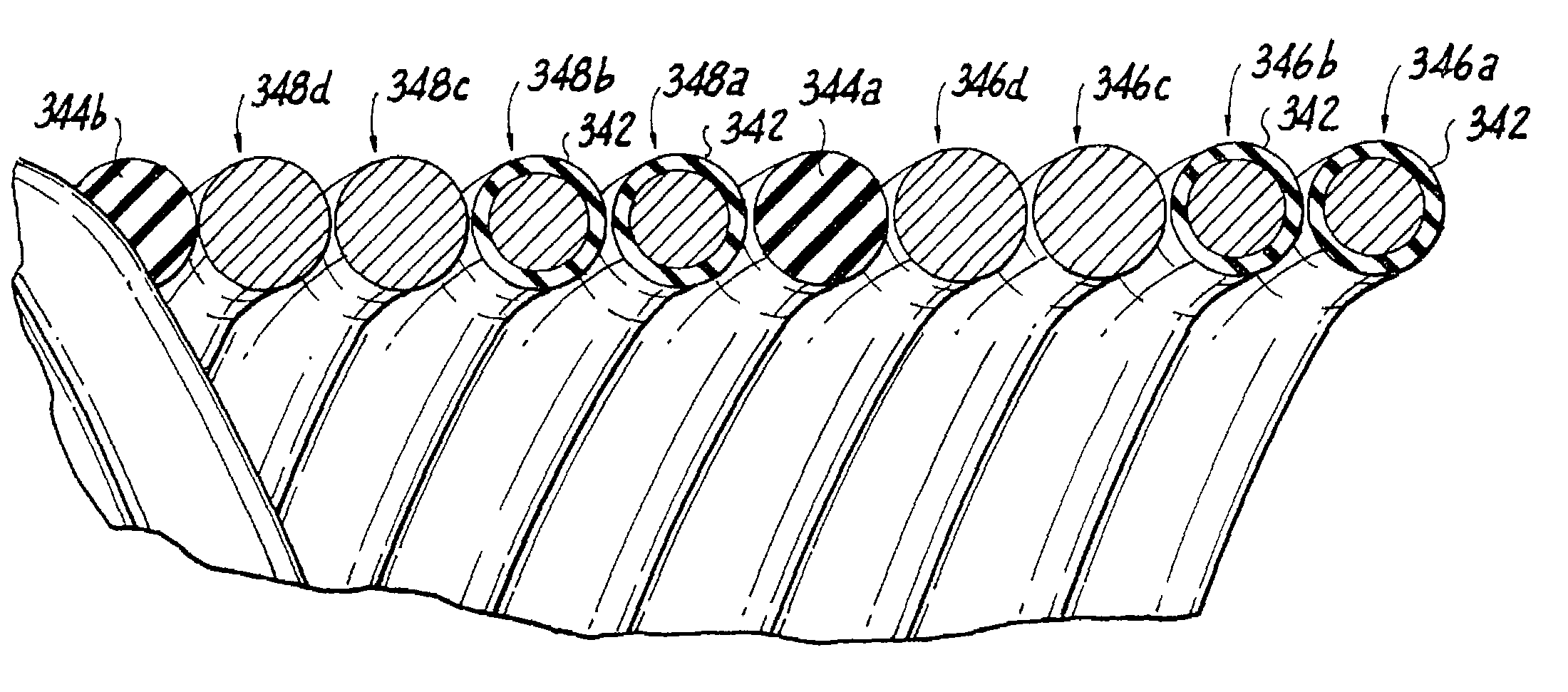
Figure 1 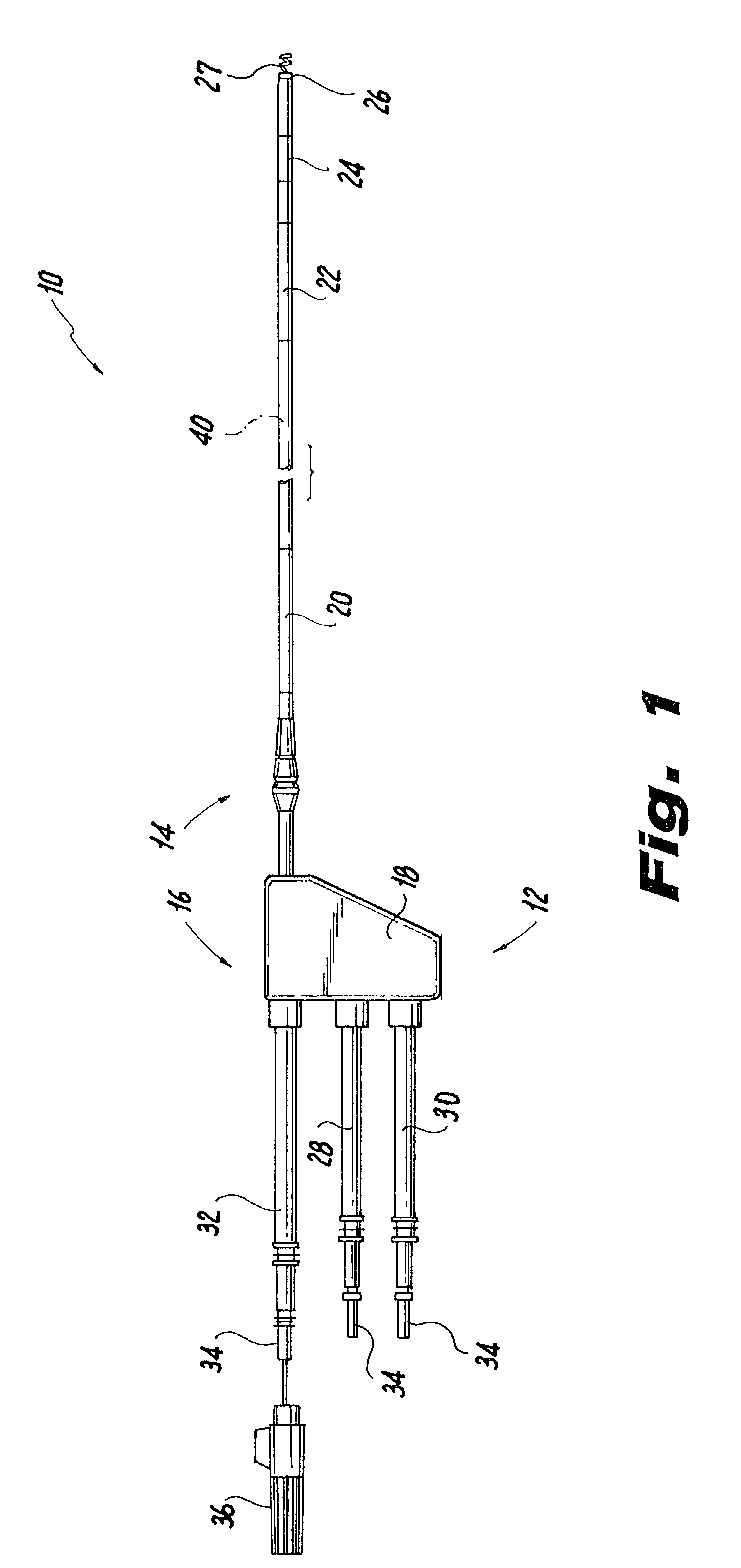
Figure 2 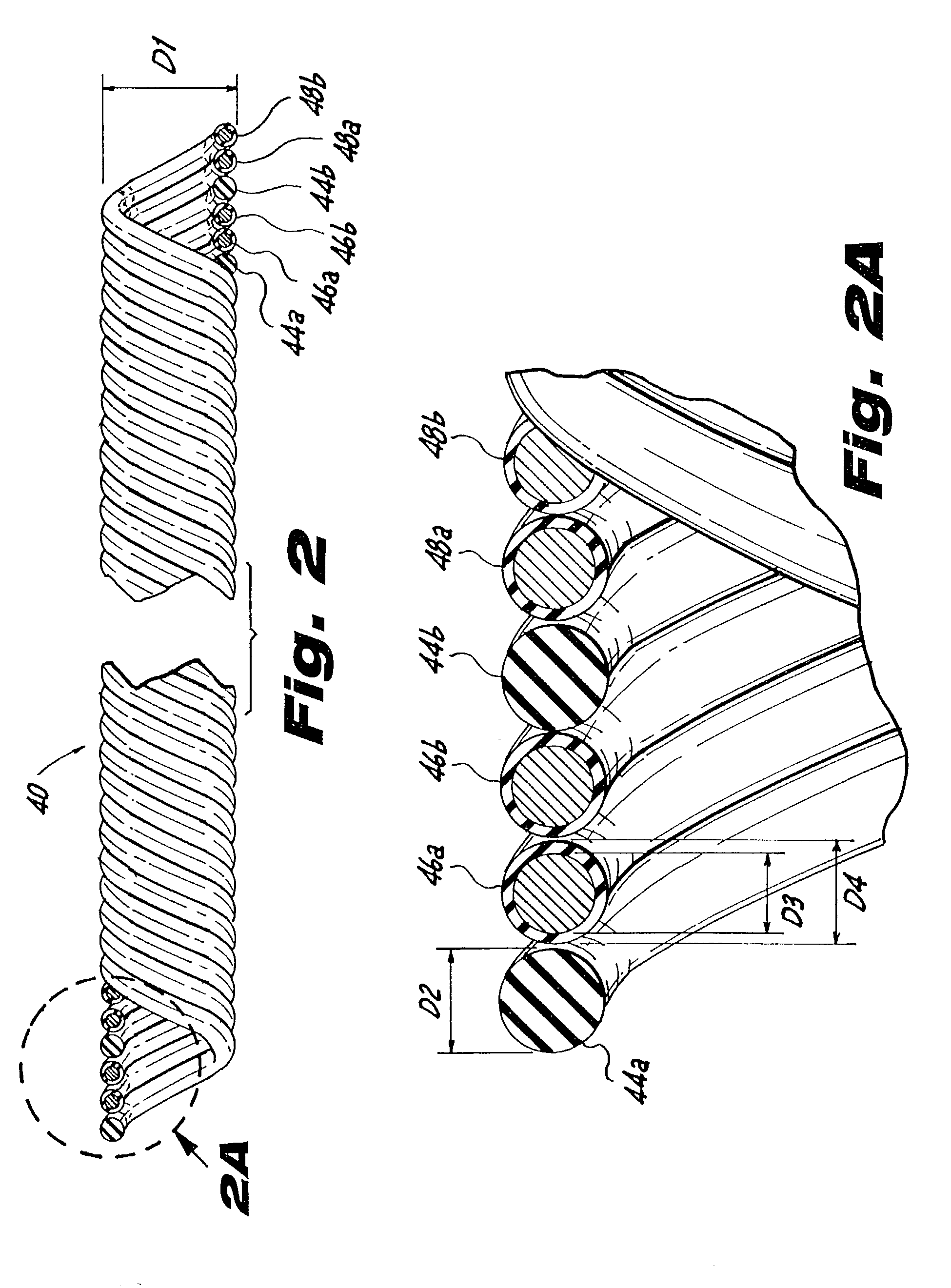
Figure 3
Abstract
Description
CROSS-REFERENCE TO RELATED APPLICATION(S)
[0001] The subject application claims the benefit of commonly owned, copending U.S. Provisional Application Ser. No. 60 / 346,098, filed Nov. 9, 2001, the disclosure of which is herein incorporated by reference.BACKGROUND OF THE INVENTION
[0002] 1. Field of the Invention
[0003] The present disclosure relates generally to cardiac pacing and defibrillation leads, and more particularly, to a multifilar conductor for cardiac leads.
[0004] 2. Background of the Related Art
[0005] It is well known in the field of cardiology that certain types of cardiac arrhythmia can be effectively treated by the application of electrical energy to cardiac tissue in an attempt to restore a normal sinus rhythm. Endocardial leads implanted within the heart have been developed to monitor the cardiac state and automatically deliver electrical energy to cardiac tissue. These leads sense the intrinsic rhythm, atrial and ventricular tachycardia and atrial and ventricular fibrillatio...
Examples
Embodiment Construction
[0038]In the description which follows the term “proximal” refers to the end of the endocardial lead which is farthest from the surgical site, while the term “distal” refers to the end of the lead which is intended to be closest to the heart. In addition, in the following detailed description of the disclosure, like reference numerals shall be used to identify similar structural elements of the invention disclosed herein.
[0039]Referring now to FIG. 1, an endocardial lead fabricated in accordance with the present disclosure is indicated generally by the reference numeral 10. Lead 10 includes an elongated support body or lumen 12 having a distal end portion 14 and a proximal end portion 16. Distal end portion 14 may be straight or have a pre-formed shape, such as a J-shape. Body 12 may include various joints, spacers, extensions and adapters to increase its operational length.
[0040]The distal end portion 14 of lead body 12 houses various electrical components used for defibrillation, ...