
Mask
Patent Information
- Authority / Receiving Office
- US · United States
- Current Assignee / Owner
- Publication Date
- 2006-05-23
Smart Images
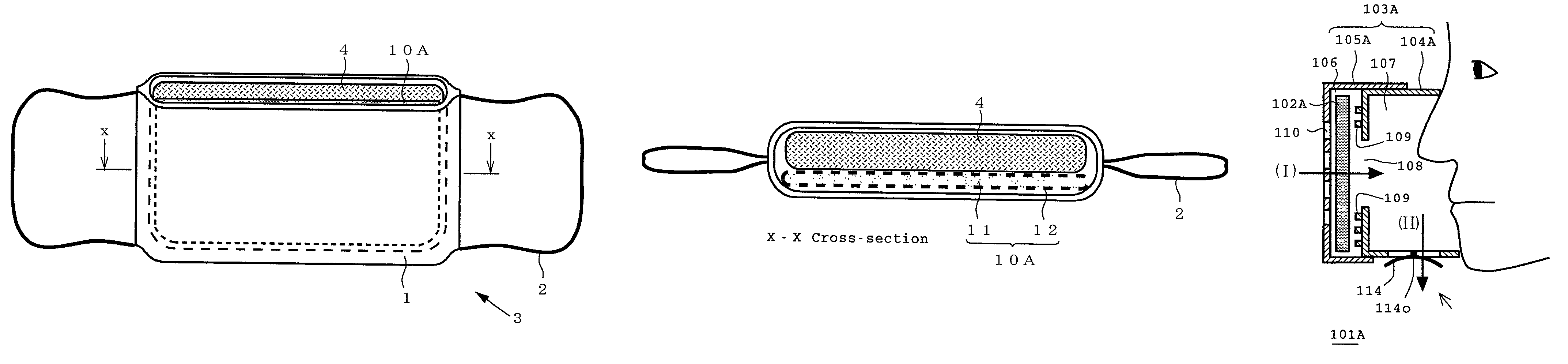
Figure 1 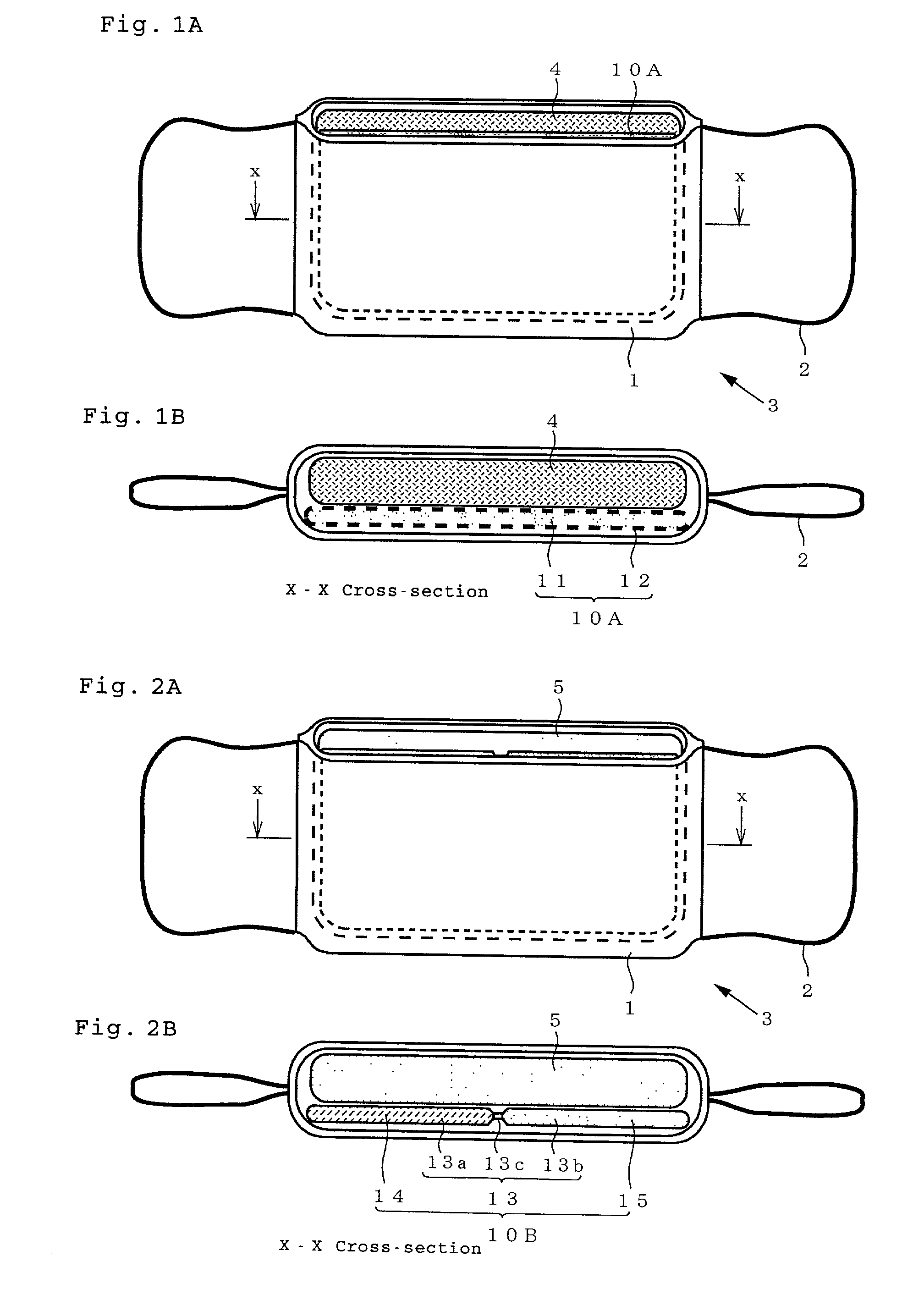
Figure 2 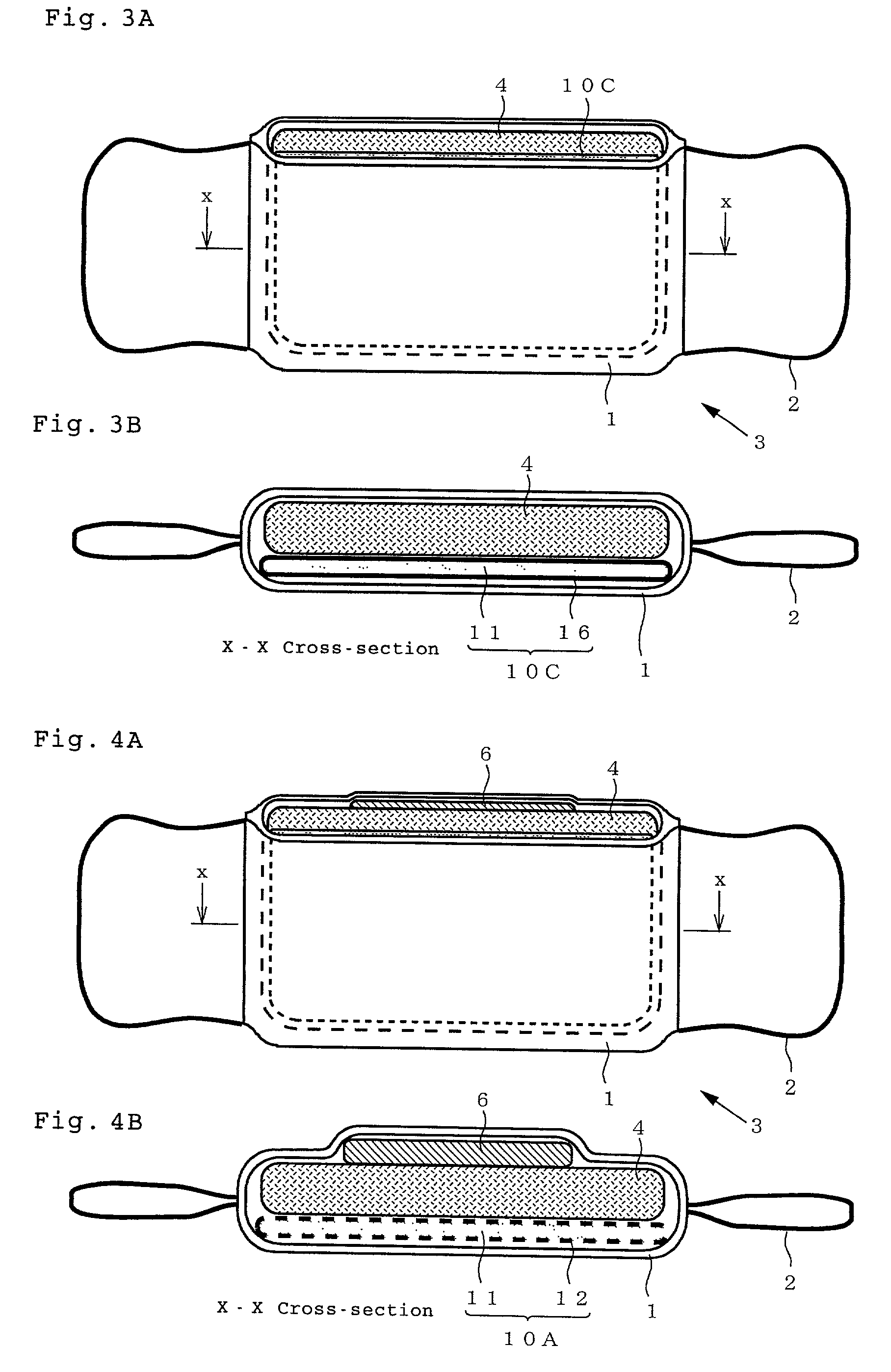
Figure 3
Abstract
Description
BACKGROUND OF THE INVENTION
[0001] 1. Field of the Invention
[0002] This invention relates to a mask that supplies steam to the nose and throat in order to protect the nose and throat.
[0003] 2. Description of the Related Art
[0004] Since antiquity, the common cold has been a deep-rooted factor in our daily lives. In every era, the common cold has been responsible for the highest proportion of examinations conducted at medical institutions. Common colds begin when viruses in the atmosphere invade, and grow in, such upper respiratory tract region as the nasal membranes and throat. In the dry winter season, in particular, it becomes very easy to catch a cold because, in addition to the fact that immunological resistance declines in the upper respiratory tract, viruses then tend to be dispersed more readily.
[0005] Thereupon, masks have conventionally been used as a measure to prevent the common cold by preventing the inhalation of viruses and keeping the throat warm. A type of mask that is made...
Examples
example 1
[0081]A main mask body 3 (13 cm on the long side, 8 cm on the short side) comprising a bag 1 and rubber ear loops 2 as shown in FIGS. 1A and 1B was fabricated. The bag 1 in this case was formed from cotton.
[0082]Separately, an exothermic composition 11 having the composition indicated in Table 1 was prepared, 20 g of this exothermic composition 11 were placed in a moisture permeable heat generating unit inner bag 12 made of a polypropylene fiber nonwoven fabric to form a heat generating unit 10A, and that was contained inside the bag 1 of the main mask body 3 as shown in FIGS. 1A and 1B.
[0083]For a temperature buffer material 4, a polypropylene fiber nonwoven fabric (15 mm in thickness) was prepared, and this was contained inside the bag 1 of the main mask body 3 as shown in FIG. 1 to make the mask of this embodiment.
[0084]
TABLE 1Exothermic compositionWt. %Activated carbon20Sodium chloride 5Iron powder50Water25
example 2
[0085]Using a sheet comprised of a water-impermeable polyethylene, a heat generating unit inner bag 13 was fabricated having the interior thereof divided into two containing sections 13a and 13b, as shown in FIG. 2B, such that, by inserting contents into those containing sections 13a and 13b and pressing on them, the two containing sections 13a and 13b are easily interconnected at the boundary 13c therebetween. Into one of the containing sections, 13a, were placed 7 g of calcium chloride 14, and in the other containing section, 13b, were placed 30 g of water 15 to constitute a heat generating unit 10B. This heat generating unit 10B was contained inside the bag 1 of the main mask body 3 as in Example 1.
[0086]A high-density nonwoven fabric was impregnated with water and contained in an inner bag made of a nonwoven fabric comprised of a moisture permeable and water-impermeable polypropylene fiber to fabricate a moisture-retaining unit 5, and that was contained inside the bag 1 of the m...
example 3
[0087]As shown in FIGS. 3A and 3B, an exothermic composition 11 like that in Example 1 was contained in an air permeable and non-moisture permeable heat generating body inner bag 16 that passes oxygen but does not pass steam to fabricate a heat generating body 10C not having a steam generating capability. Thus the mask of this embodiment was fabricated in the same way as in Example 1, except for using the heat generating unit 10C instead of the heat generating unit 10A.