
Method and apparatus for producing uniform isotropic stresses in a sputtered film
a sputtered film, uniform technology, applied in the field of films, can solve the problems of porous films without mechanical strength in the film plane, thin films with common stress, undesirable, etc., and achieve the effect of avoiding x-y stress anisotropy and avoiding stress non-uniformity
Patent Information
- Authority / Receiving Office
- US · United States
- Patent Type
- Patents(United States)
- Current Assignee / Owner
- Publication Date
- 2006-12-26
- Estimated Expiration
- Not applicable · inactive patent
Smart Images
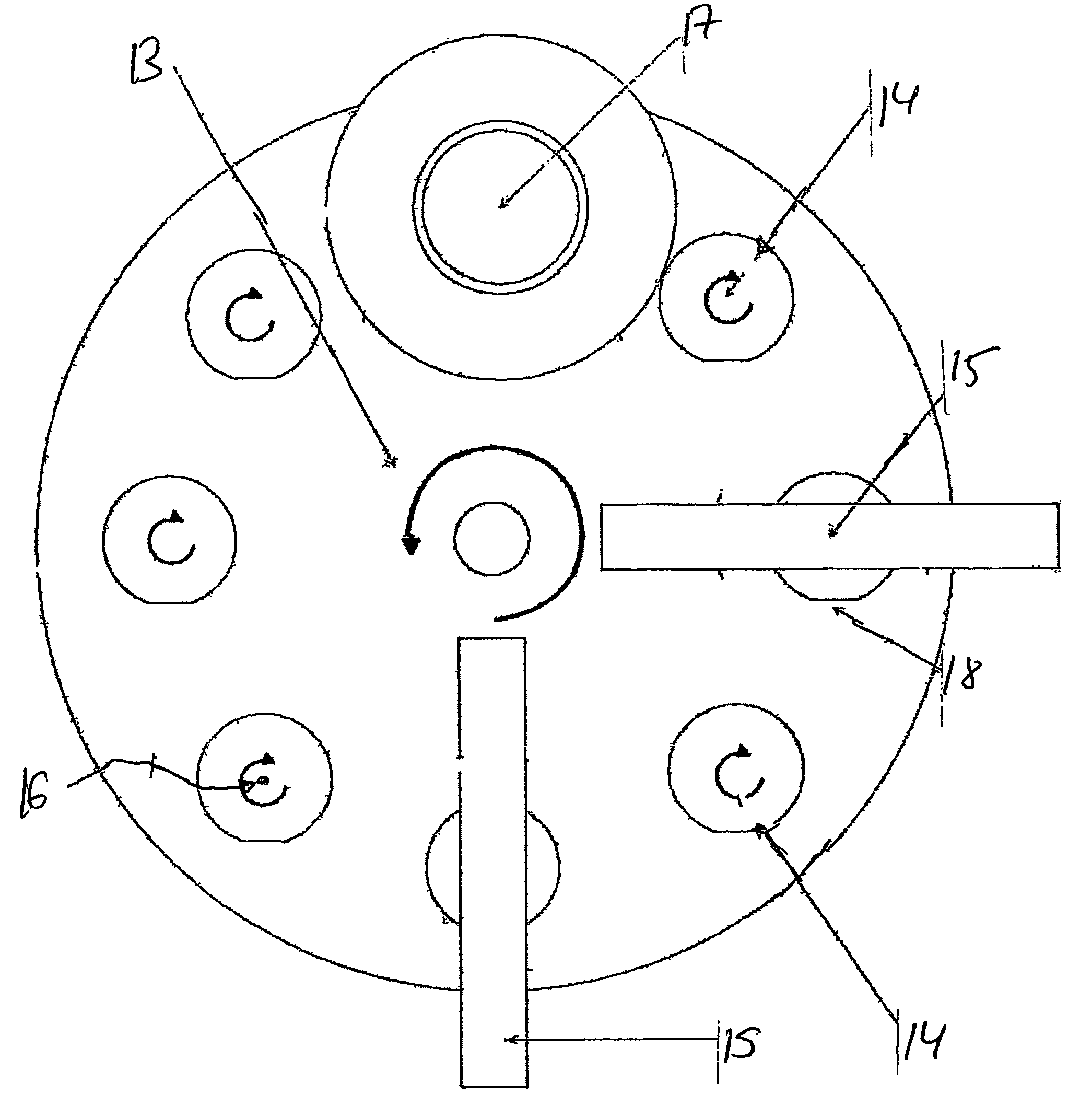
Figure 1 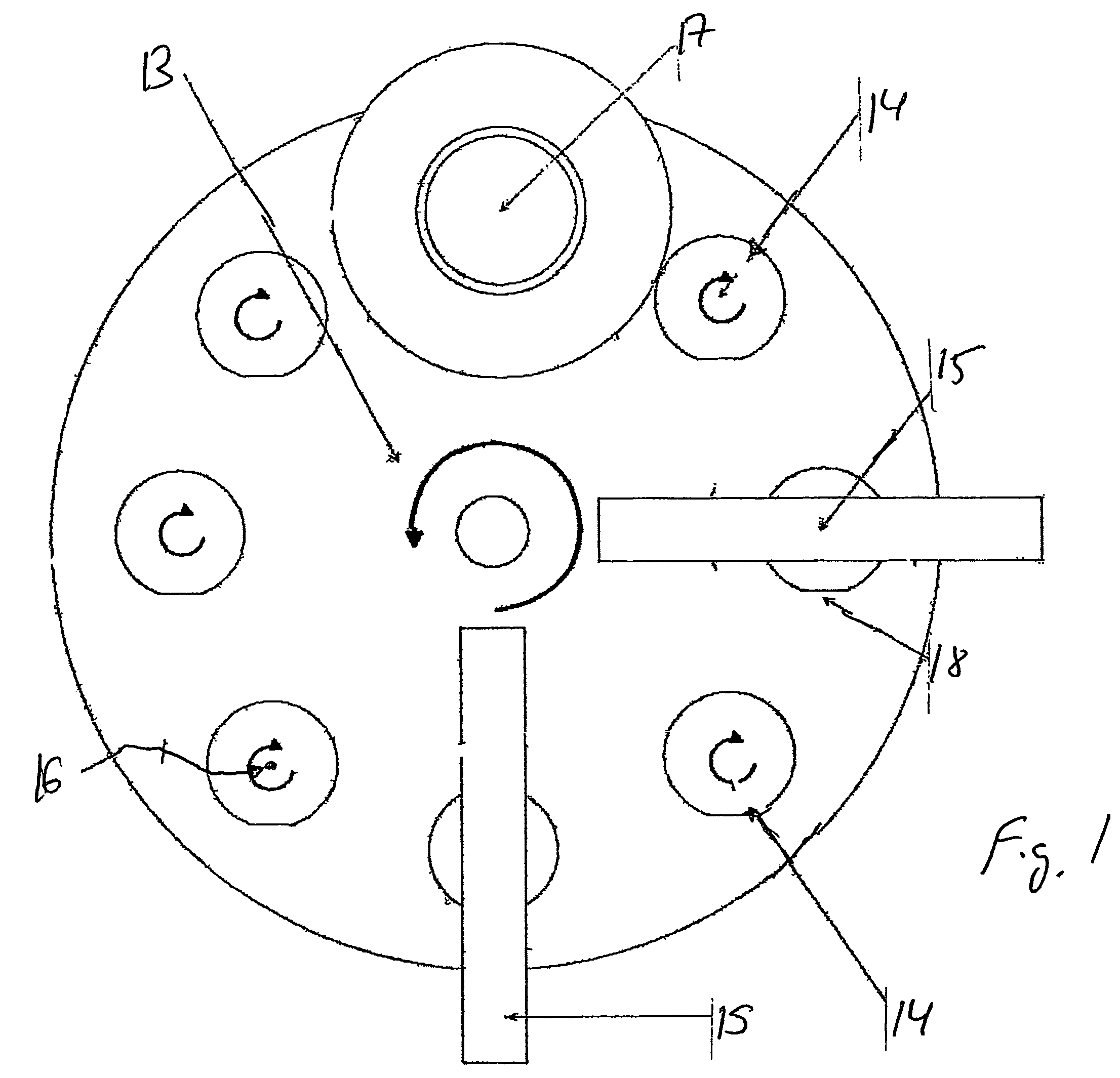
Figure 2 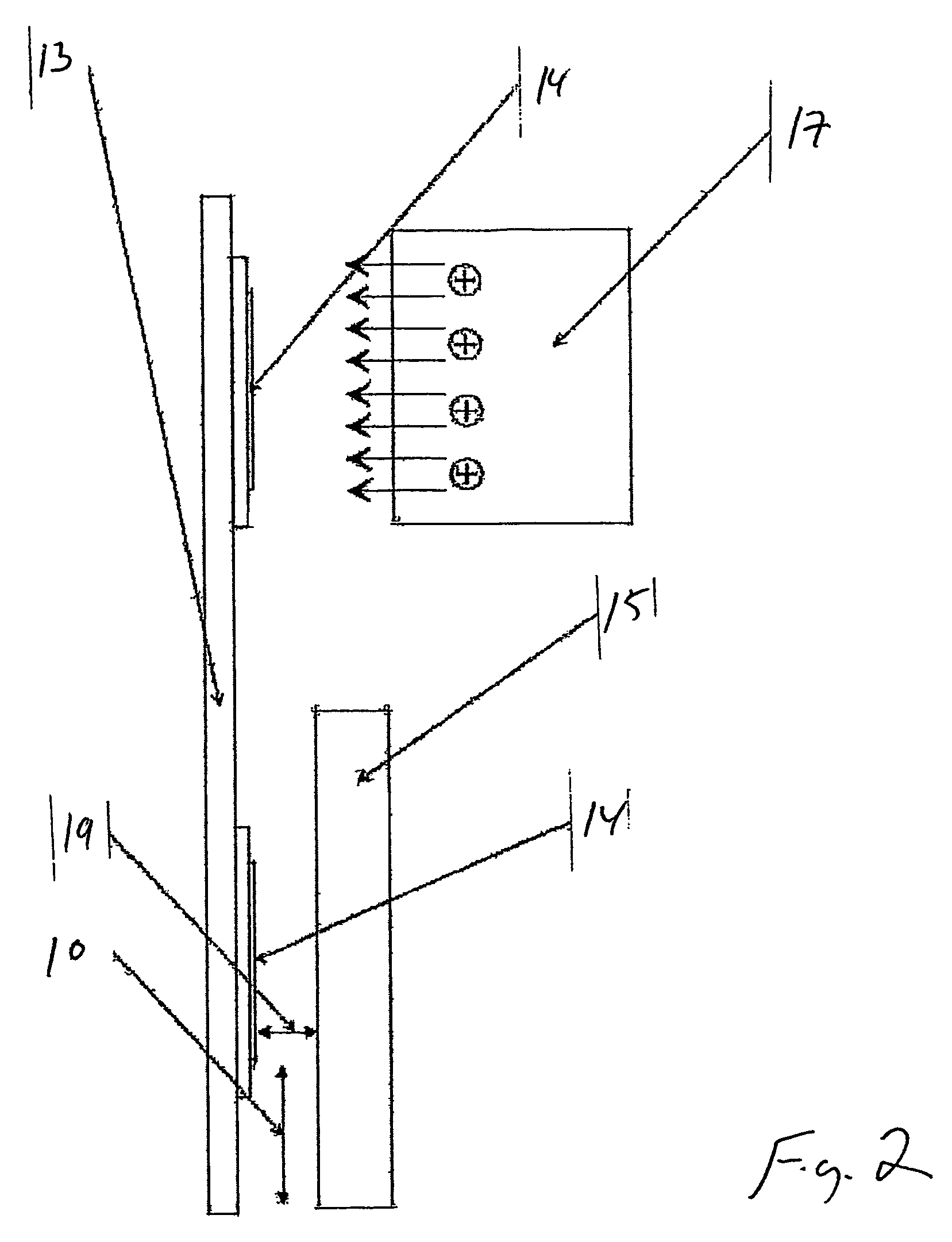
Figure 3
Abstract
Description
RELATED APPLICATION
[0001] This application claims benefit to U.S. Provisional Patent Application 60 / 314,776 filed Aug. 24, 2001.BACKGROUND OF THE INVENTION
[0002] 1. Technical Field
[0003] The invention relates to the deposition of films on substrates. More particularly, the invention relates to a method and apparatus for producing uniform, isotropic stresses in a sputtered film.
[0004] 2. Description of the Prior Art
[0005] Thin films are often deposited on substrates by sputtering in a glow-discharge plasma, where ions accelerated out of the plasma knock atoms off of the target (source) material whence the atoms are transported to the substrate. A magnetically confined plasma generator (magnetron) is typically used to increase sputtering efficiency and to reduce the minimum operating pressure. Sputtering is a preferred deposition technique because it can be used for any material, because the energy of the depositing atoms helps film adherence, and because the substrates do not get very hot...
Examples
example
[0045]Fixturing to practice the invention is installed in a conventional 10−7 Torr stainless-steel or aluminum high-vacuum chamber with elastomer seals and cryopumping, such as manufactured by Leybold and other vendors.
[0046]The system includes at least two rectangular magnetron sputter sources, such as those manufactured by Leybold, and an ion gun with a 6-inch diameter beam, such as the Kaufman-style guns manufactured by Commonwealth, arranged as described above. The cathodes are oriented 90 degrees to each other. The distance from magnetron target surface to wafer is 1″.
[0047]The planetary linkage for wafer motion is connected so that the wafers remain in the same rotational orientation about their own normal axes relative to a fixed point as they orbit about the central axis of the chamber.
[0048]The plate rotating about the central axis carries 6″ wafers on a 10-inch orbiting radius from the center of the plate, and the 14-inch long magnetrons and the ion gun are centered on the...