
Integral composite structural material
a composite material and structural material technology, applied in the field of composite materials, can solve the problems of brittleness, metal materials lose their structural capabilities, monolithic ceramic structures, and members may not meet the reliability requirements of such strenuous use, and achieve good thermal cycling resistance, good strength, and good substrate
Patent Information
- Authority / Receiving Office
- US · United States
- Patent Type
- Patents(United States)
- Current Assignee / Owner
- Publication Date
- 2007-10-16
Smart Images
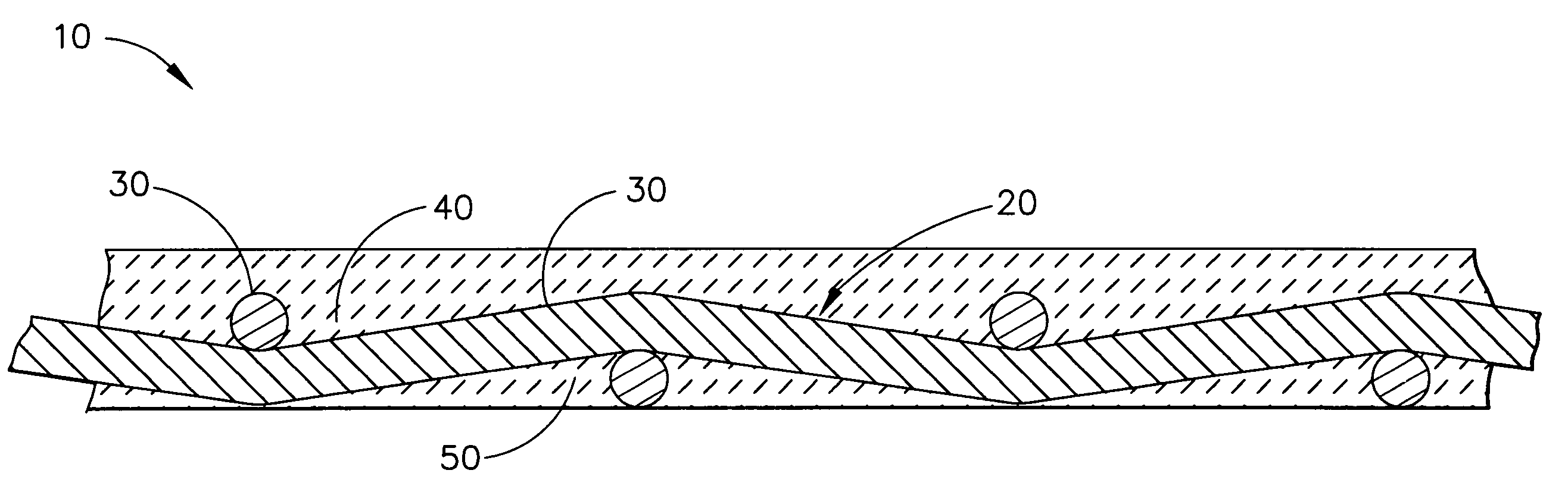
Figure 1 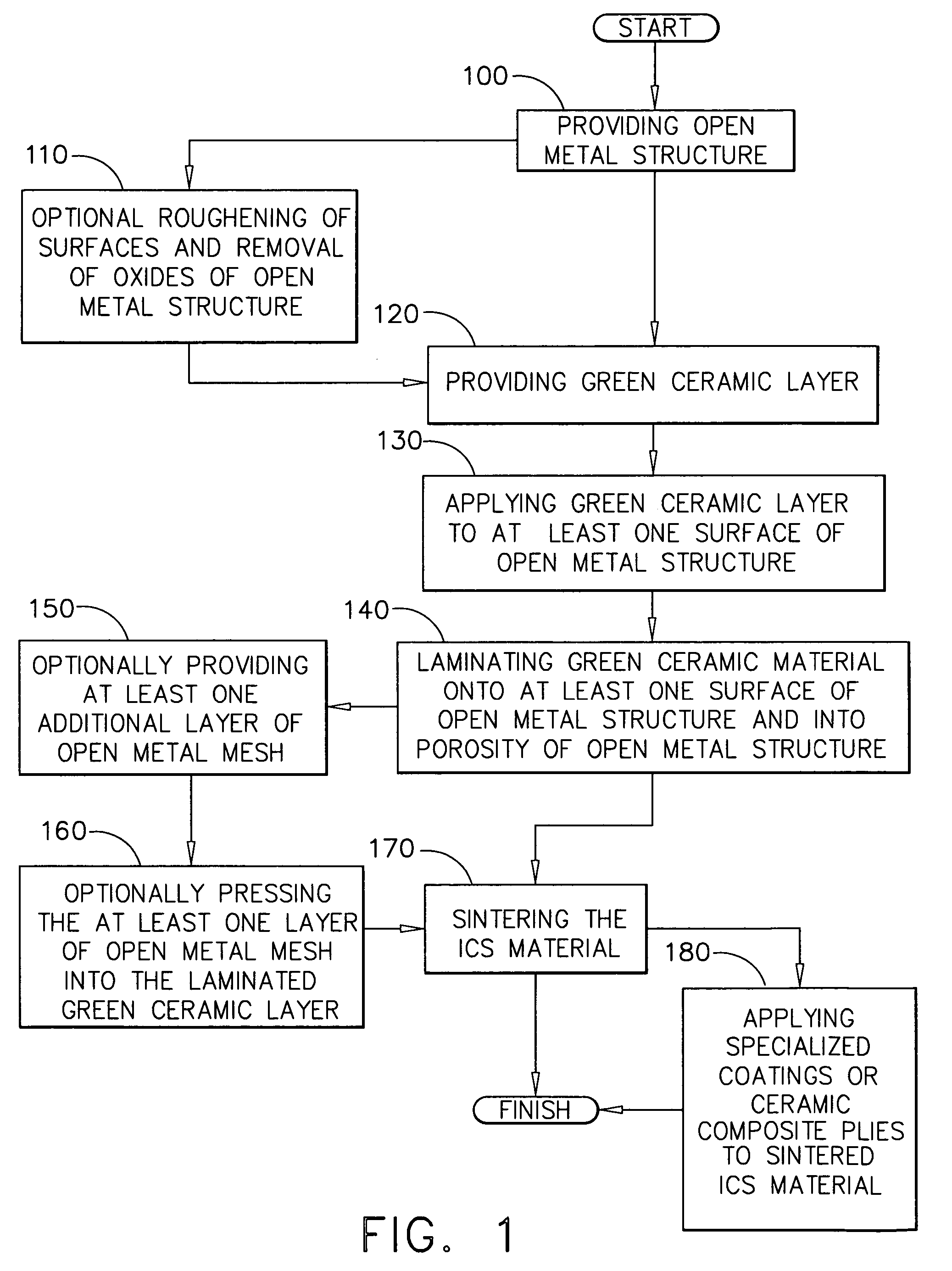
Figure 2 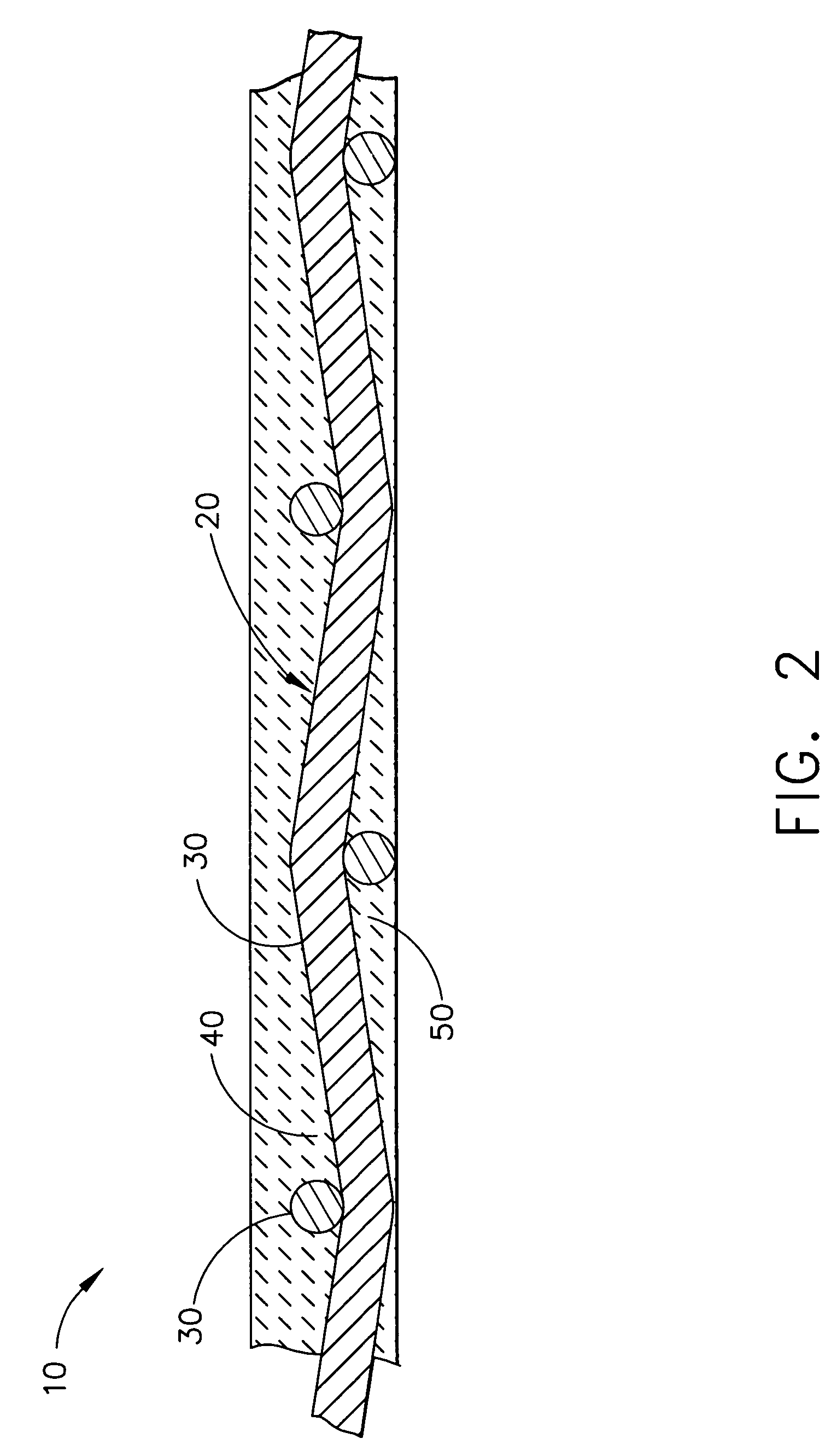
Figure 3
Abstract
Description
FIELD OF THE INVENTION
[0001] The present invention relates generally to composite materials, and more particularly, to an integral composite structural material.BACKGROUND OF THE INVENTION
[0002] Currently engine components, in most instances, are fabricated with metallic materials with some substitution of ceramics or ceramic matrix composite materials (CMC's). Metallic materials, particularly iron-based, cobalt-based, and nickel-based superalloys have high strengths and good elastic moduli, which lead to excellent strain capabilities and damage tolerances within their useful temperature regime. The useful temperature regime for a superalloy changes with composition. Additionally, engine environments as well as operational and structural requirements further define the useful temperature regime for a superalloy. At high temperatures, or temperatures above the superalloy's useful temperature regime, the metal material begins to exhibit significantly reduced elastic moduli. These metall...
Examples
example 1
[0040]In an investigation leading up to this invention, an ICS material was formed using a thin sheet of aluminum metal perforated sheet with evenly spaced apertures, the sheet having a total porosity of about 25%. The aluminum perforated sheet was sandwiched between one ply of NEXTEL® 312 paper, which is a well known proprietary ceramic comprising non-directional alumina-silica-boria fibers, which was previously prepregged with an aluminosilicate-yielding matrix, laminated at a pressure of about 200 psi, at a temperature of about 300° F. (150° C.) for a time of about 30 minutes, and was then sintered at a temperature of about 1100° F. (590° C.) for a time of 4 hours. A static load was applied to a 1-inch wide aluminum ICS specimen as well as to 4 stacked 1 inch wide perforated aluminum plates, such that the thickness of the 4 stacked plates was substantially equal to the thickness of the aluminum ICS specimen. The static load was applied normal to the 1-inch width of the ICS specim...
example 2
[0041]In an investigation leading up to this invention, an ICS material was formed using a #3 mesh carbon steel wire mesh having a wire diameter of about 0.080 inch. The steel mesh was sandwiched between 6 plies of NEXTEL® 610 paper, which is a well known proprietary ceramic comprising non-directional alumina, which was previously prepregged with an aluminosilicate-yielding matrix, laminated at a pressure of about 200 psi, at a temperature of about 300° F. (150° C.) for a time of about 30 minutes, and was then sintered at a temperature of about 1650° F. (900° C.) for a time of about 4 hours. Three plies of the NEXTEL® 610 paper were placed on opposite sides of the mesh. A thermal cycling test was performed on the ICS material and excellent thermal cycling resistance was shown above about 2200° F. (1205° C.). The thermal cycling test consisted of inserting about ¾ inch of an edge of the ICS specimen through a slot in a heated furnace, letting the specimen soak for a time greater than...