
WLAN having load balancing by access point admission/termination
a load balancing and access point technology, applied in the field of communication networks, can solve the problems of hot spots that can become overloaded and experience reduced performance, and achieve the effect of enhancing overall network performance and more efficient access point loading
Patent Information
- Authority / Receiving Office
- US · United States
- Patent Type
- Patents(United States)
- Current Assignee / Owner
- Publication Date
- 2008-07-29
- Estimated Expiration
- Not applicable · inactive patent
Smart Images
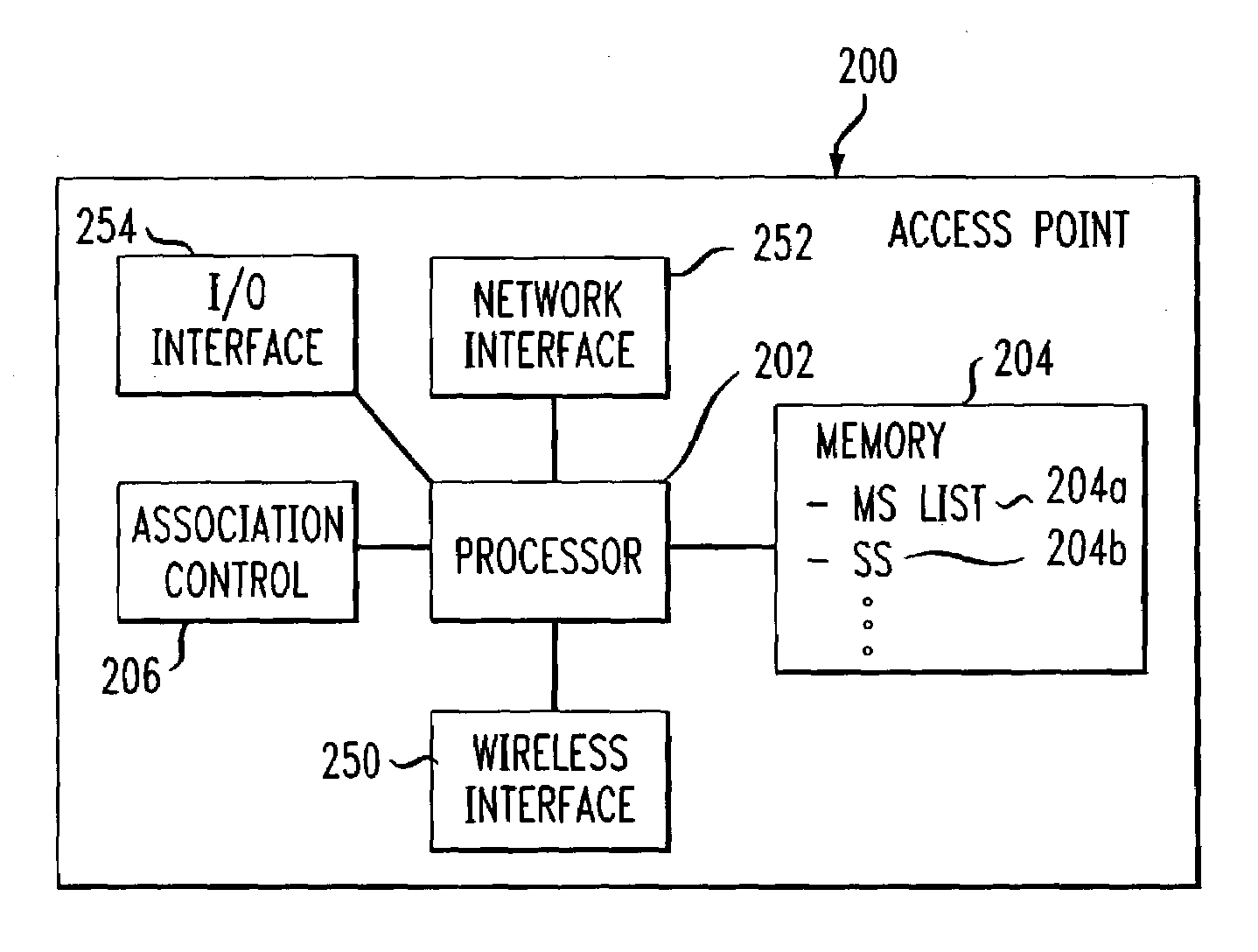
Figure 1 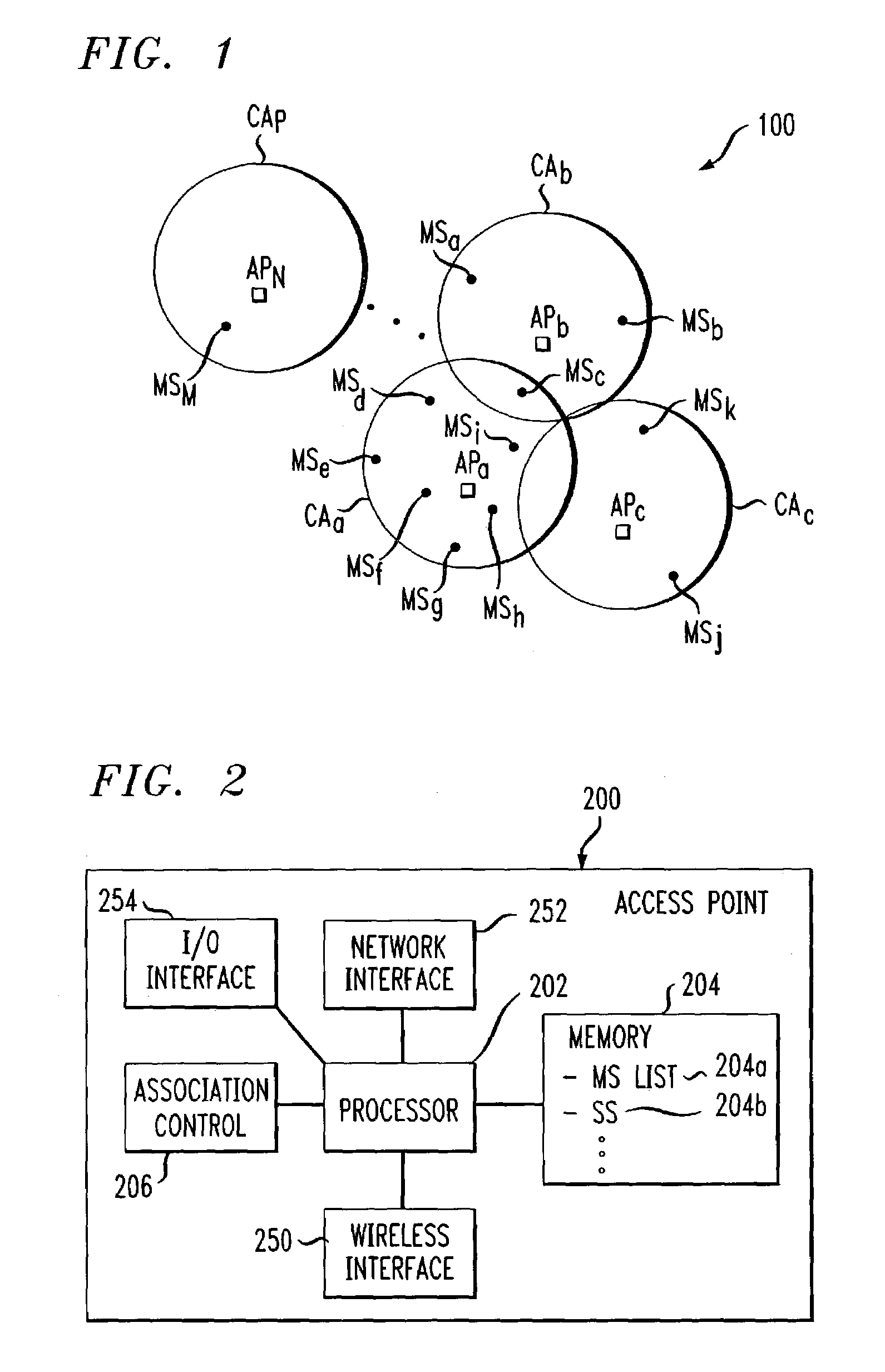
Figure 2 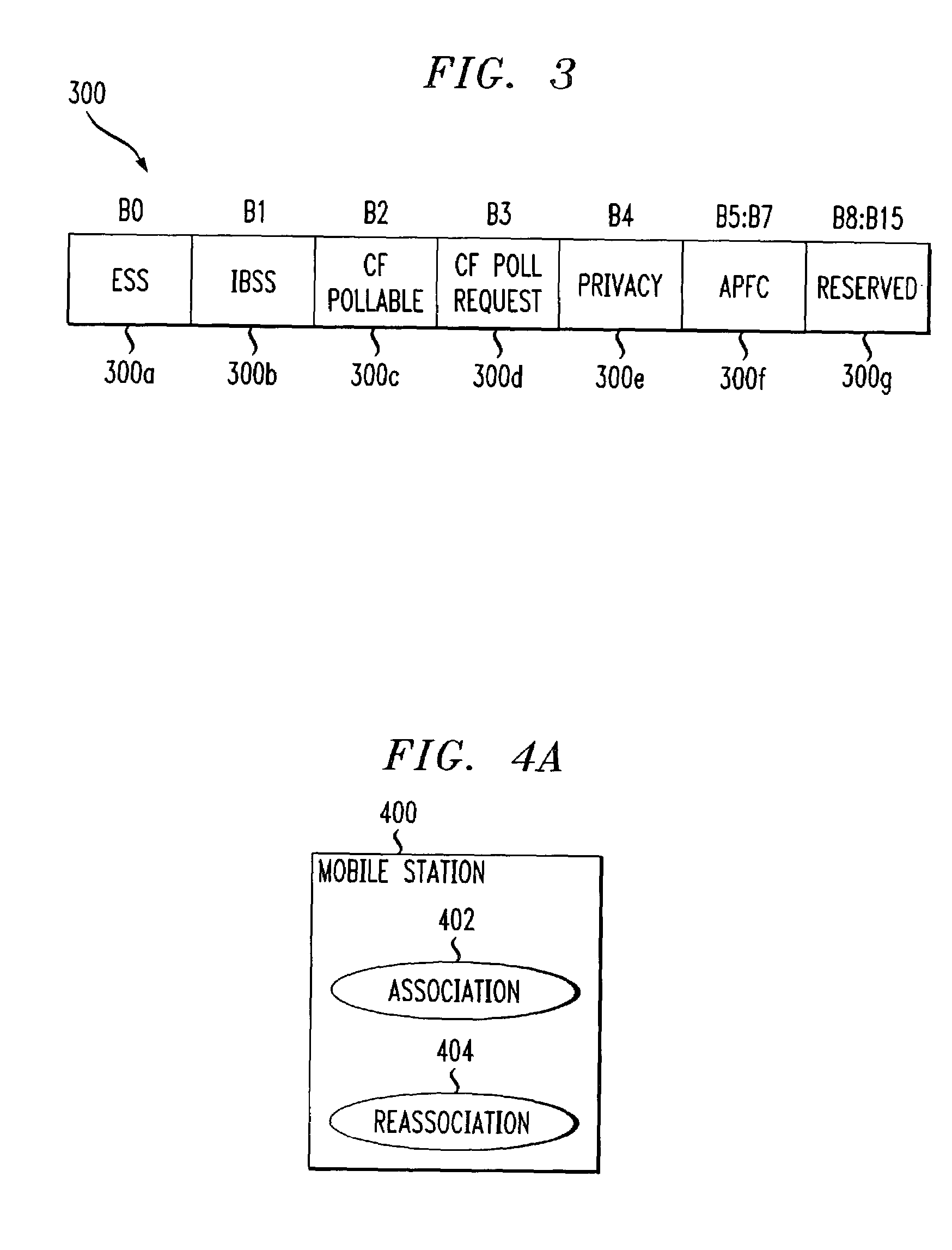
Figure 3
Abstract
Description
CROSS REFERENCE TO RELATED APPLICATIONS
[0001] The present invention claims the benefit of U.S. Provisional Patent Application No. 60 / 332,956, filed on Nov. 19, 2001, which is incorporated herein by reference.STATEMENT REGARDING FEDERALLY SPONSORED RESEARCH
[0002] Not Applicable.FIELD OF THE INVENTION
[0003] The present invention relates generally to communication networks and, more particularly, to wireless communication networks.BACKGROUND OF THE INVENTION
[0004] Wireless communication networks for providing links to mobile stations are well known in the art. In one type of wireless network, a series of access points provide wireless connections to various mobile users. For example, a building can include access points located at strategic locations to serve mobile users as they move throughout the building. The mobile users migrate from access point to access point based upon the strength of beacon signals from the various access points. That is, the mobile stations use the strength of t...
Examples
Embodiment Construction
[0016]FIG. 1 shows an exemplary wireless network 100 having access points that perform load balancing by access point admission control of mobile stations and / or termination of mobile station associations. The network 100 includes a series of access points APa-N having associated coverage areas CAa-P serving various mobile stations MSa-M. In general, each access point Apa-N evaluates its loading level to determine whether additional mobile station associations are feasible, e.g., would not result in (or make worse) an overload condition for the access point. In addition, an access point can terminate a mobile station association under certain conditions to distribute access point loading. For example, a mobile station may transmit an indication to an overloaded access point that there are other access points to which the mobile station can associate itself. The overloaded access point may terminate the association and the mobile station can attempt to associate with another access p...