
Transmission power management
a power management and transmission technology, applied in power management, transmission monitoring, wireless commuication services, etc., can solve the problems of wasting network resources, affecting the inability to correctly receive information transmitted on the channel by the receiver, so as to improve the quality of service, increase the network performance, and increase the network resources
Patent Information
- Authority / Receiving Office
- US · United States
- Patent Type
- Applications(United States)
- Current Assignee / Owner
- Publication Date
- 2008-04-10
- Estimated Expiration
- Not applicable · inactive patent
Smart Images
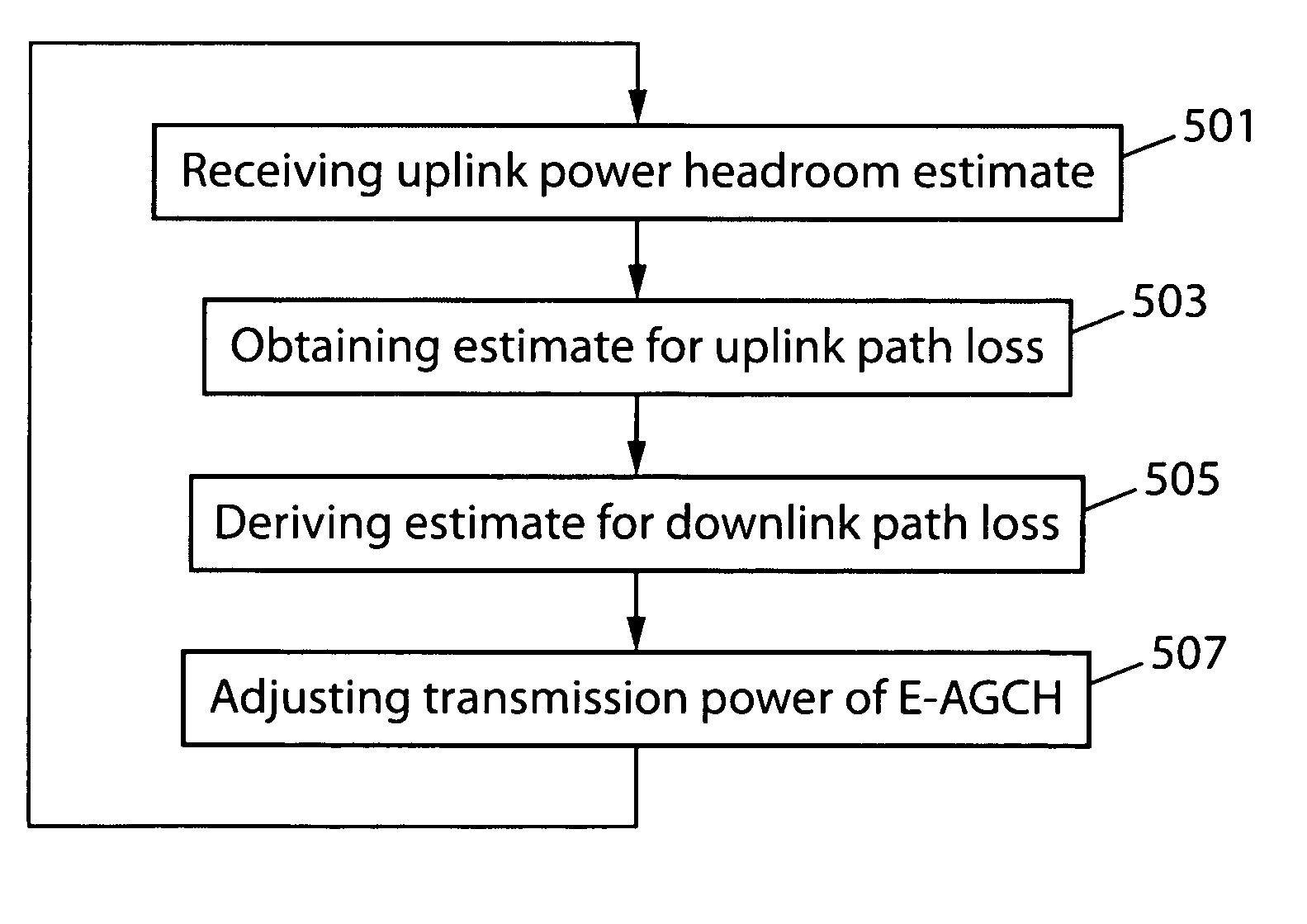
Figure 1 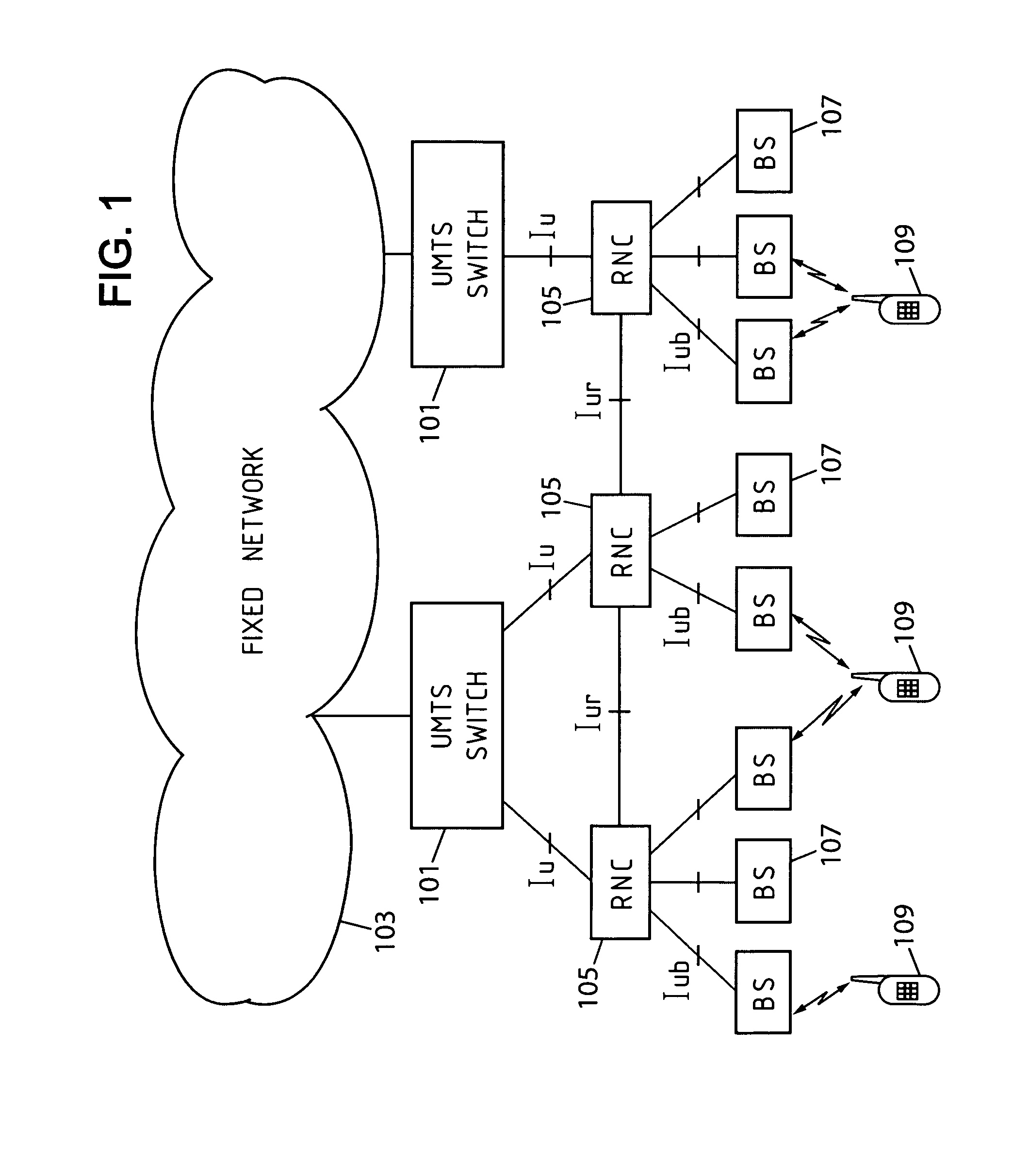
Figure 2 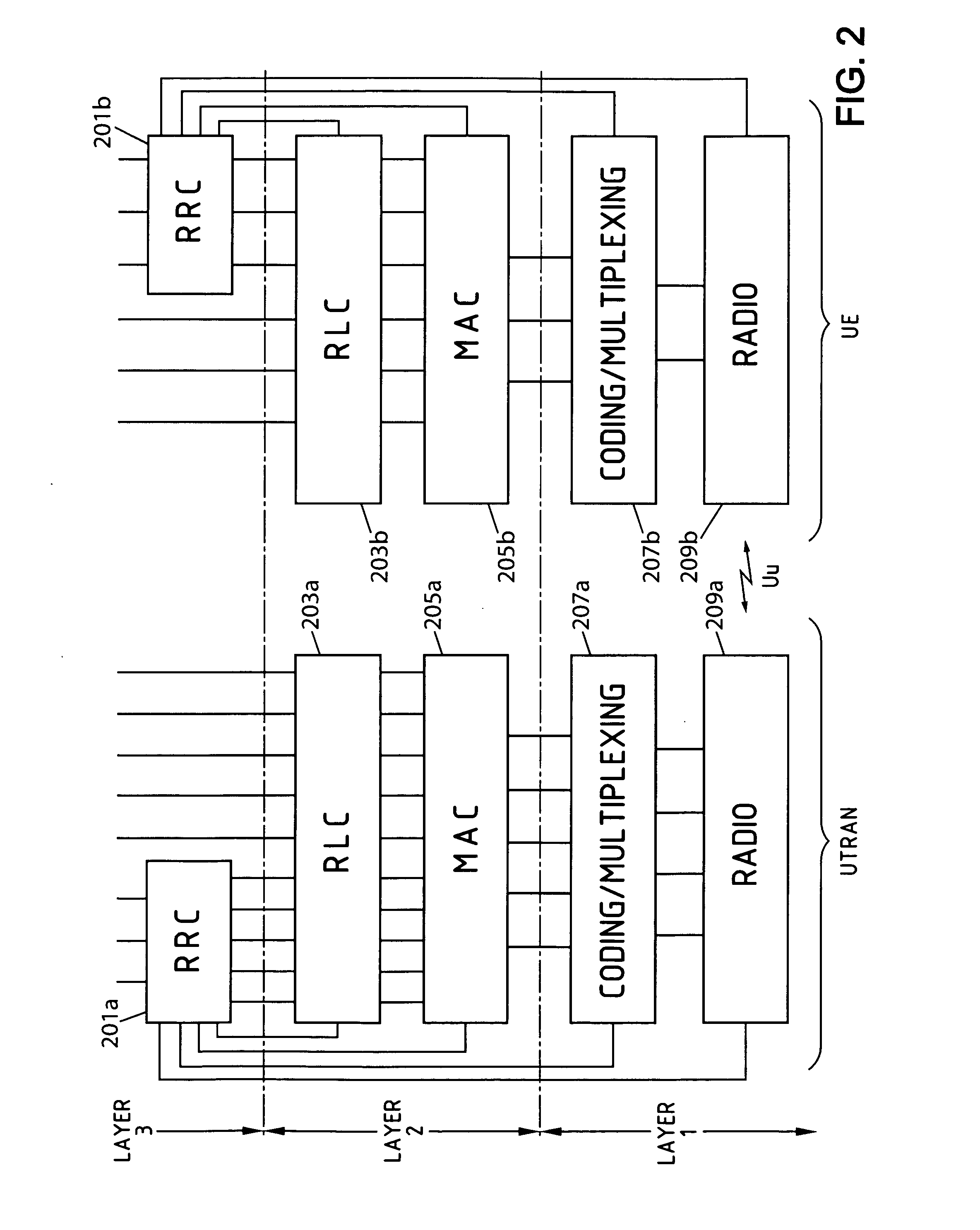
Figure 3
Abstract
Description
FIELD OF THE INVENTION
[0001] The present invention relates to radio transmissions, and more precisely to the transmission power management in a base station of a wireless communication system.BACKGROUND OF THE INVENTION
[0002] In the present description, the invention will be described more particularly in its non-limiting application to third generation radio communication networks of the universal mobile telecommunication system (UMTS) type. In this system, the invention finds application within the framework of the high speed uplink packet access (HSUPA) feature being specified by the 3rd Generation Partnership Project (3GPP)—also named “FDD enhanced uplink” in 3GPP terminology, or “E-DCH” according to the transport channel's name. This feature is described particularly in the technical specification TS 25.309, V6.6.0, “FDD Enhanced Uplink; Overall description; Stage 2 (Release 6)”, published in March 2006 by the 3GPP.
[0003] FIG. 1 shows the architecture of such a UMTS network. The s...
Examples
Embodiment Construction
[0035]Some embodiments of the invention will now be described in more detail in the framework of the UMTS HSUPA. In this case, the considered radio channel between the UE 109 and the BS 107 is thus a high speed uplink channel, like an E-DCH. The invention could also be applied to other channels or units assuming that an uplink power headroom (UPH) or equivalent value is signalled from the UE 109 to the BS 107. It is to be noted that the invention can equally be applied to other types of communication systems as well.
[0036]In FIG. 1, the network elements are arranged to implement corresponding protocols shown in FIG. 3. Furthermore, the BSs 107 are arranged to transmit on E-AGCH.
[0037]Next a method for determining transmission power on the E-AGCH is described with reference to FIG. 5 in accordance with an embodiment of the invention. In the context of E-DCH a metric called uplink power headroom (UPH) is determined in the following way:
UPH=Ptx,max,UEPtx,DPCCH,UE,(1)
where Ptx,max,UE is...