
Biomimetic tactile sensor for control of grip
a technology of biomimetic and tactile sensors, applied in the direction of force/torque/work measurement apparatus, instruments, manufacturing tools, etc., can solve the problems of preventing the development of evoluted robots for off-factory jobs, industrial robots lacking the sensorial abilities of humans, and unable to carry out delicate tasks. , to achieve the effect of softness, elasticity and mechanical resistan
Patent Information
- Authority / Receiving Office
- US · United States
- Patent Type
- Patents(United States)
- Current Assignee / Owner
- Publication Date
- 2011-02-01
Smart Images
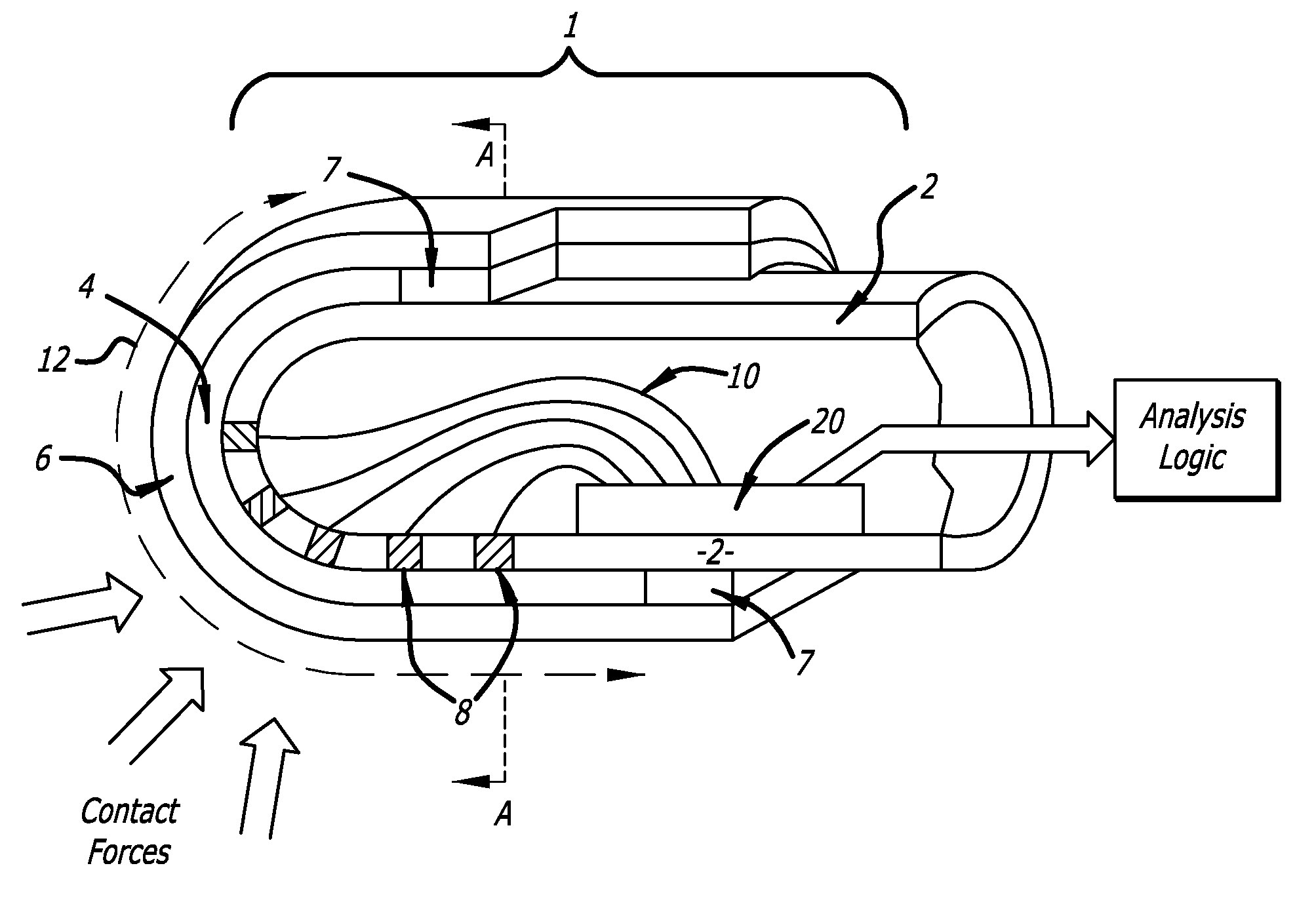
Figure 1 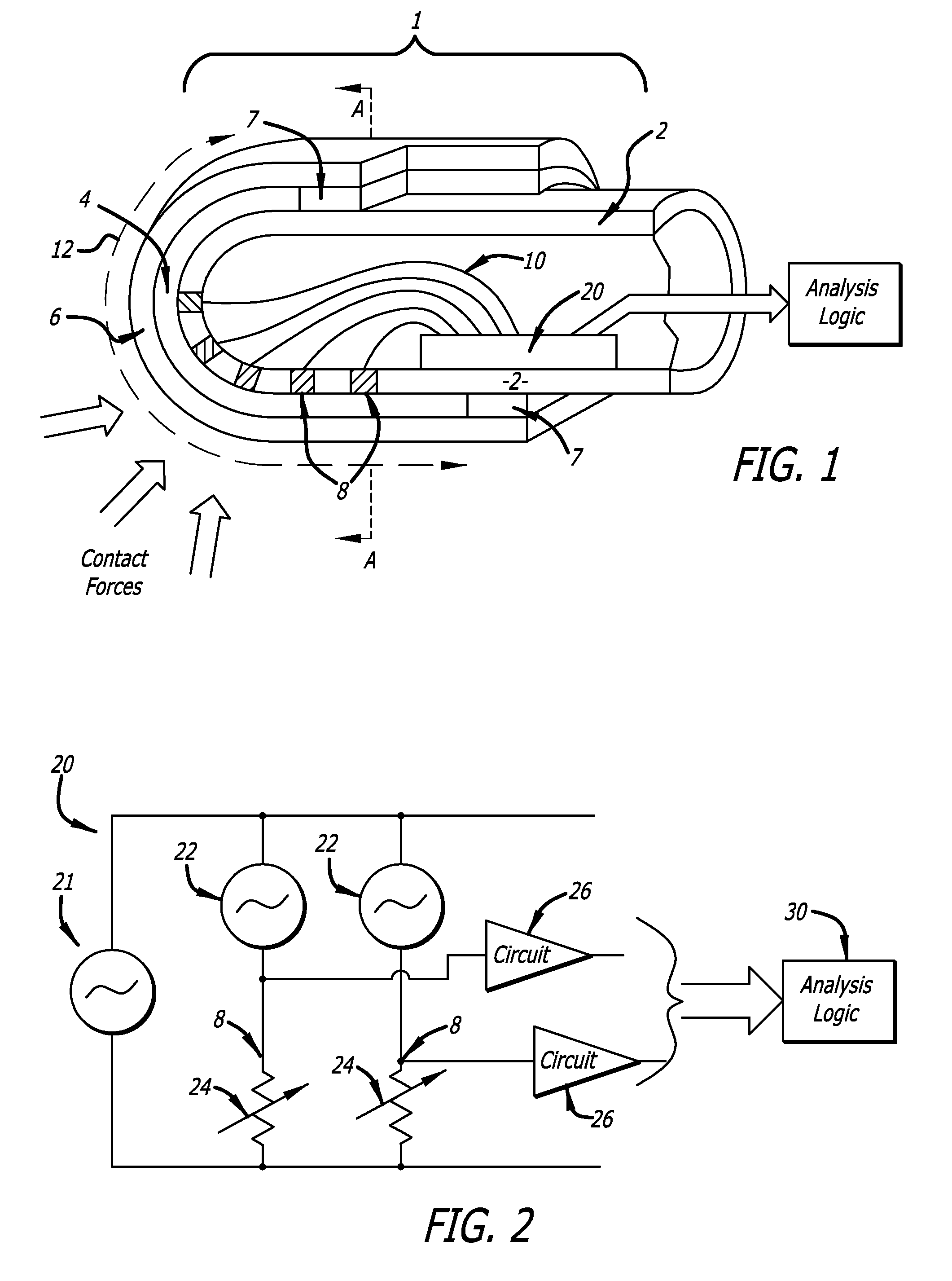
Figure 2 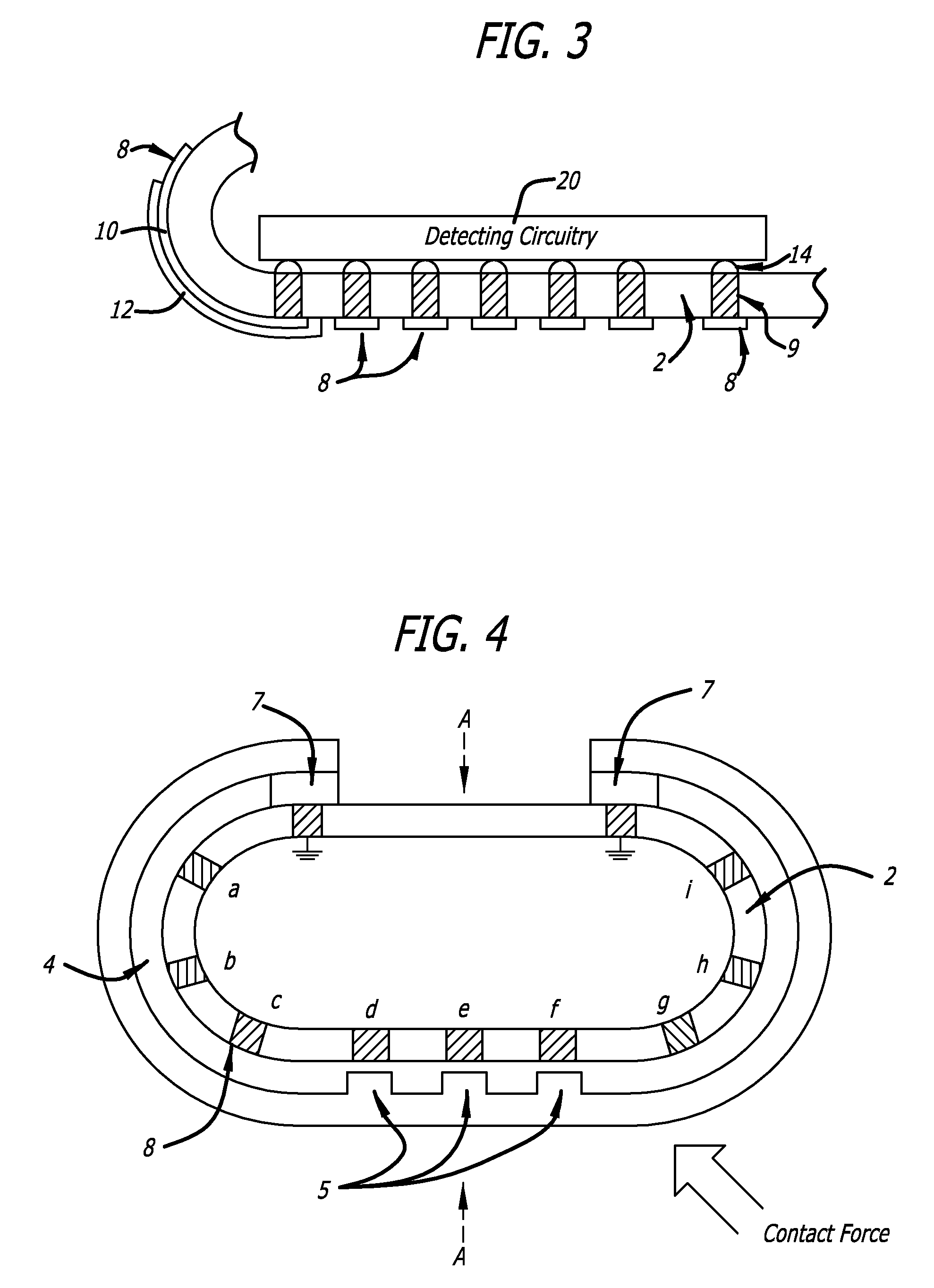
Figure 3
Abstract
Description
CROSS REFERENCE TO RELATED APPLICATIONS
[0001] This patent application is related to U.S. patent application Ser. No. 11 / 692,718 entitled “Biomimetic Tactile Sensor” filed Mar. 28, 2007 (now U.S. Pat. No. 7,658,229, issued Feb. 9, 2010). This application also claims the benefit of the filing date of U.S. provisional application Ser. No. 60 / 939,009 filed May 18, 2007, entitled “Biomimetic Tactile Sensor for Control of Grip.” The content of both of these applications is incorporated herein by reference.STATEMENT REGARDING FEDERALLY SPONSORED RESEARCH
[0002] This invention was made with government support under Contract No. 907959, awarded by the Defense Advanced Research Projects Agency (DARPA). The government has certain rights in the invention.BACKGROUND
[0003] 1. Field
[0004] This application relates generally to devices and methods to provide a set of sensory feedback information capabilities from robotic or prosthetic finger tips comparable to those provided by the human skin.
[0005] 2. Ge...
Examples
Embodiment Construction
[0038]The detailed description set forth below is intended as a description of exemplary embodiments of the tactile sensory system and method and is not intended to represent the only embodiments in which the biomimetic tactile sensor systems and methods can be practiced. The term “exemplary” used throughout this description means “serving as an example, instance, or illustration,” and should not necessarily be construed as preferred or advantageous over other embodiments. The detailed description includes specific details for the purpose of providing a thorough understanding of the tactile sensory systems and methods. However, it will be apparent to those skilled in the art that the tactile sensory systems and methods may be practiced without these specific details. In some instances, well-known structures and devices are shown in block diagram form in order to avoid obscuring the concepts of the tactile sensory systems and methods.
[0039]The following articles are referred to throu...