
Method for lamination of decorative metal film on resin base material, and resin base material having decorative metal film thereon
a metal film and resin base technology, applied in the direction of film/foil adhesives, synthetic resin layered products, transportation and packaging, etc., can solve the problems of preventing the reduction of the installation area of the deposition apparatus, affecting the appearance of the surface affecting the appearance of the resin base material, so as to achieve sufficient gloss and reduce the thickness
Patent Information
- Authority / Receiving Office
- US · United States
- Patent Type
- Patents(United States)
- Current Assignee / Owner
- Publication Date
- 2013-09-03
Smart Images
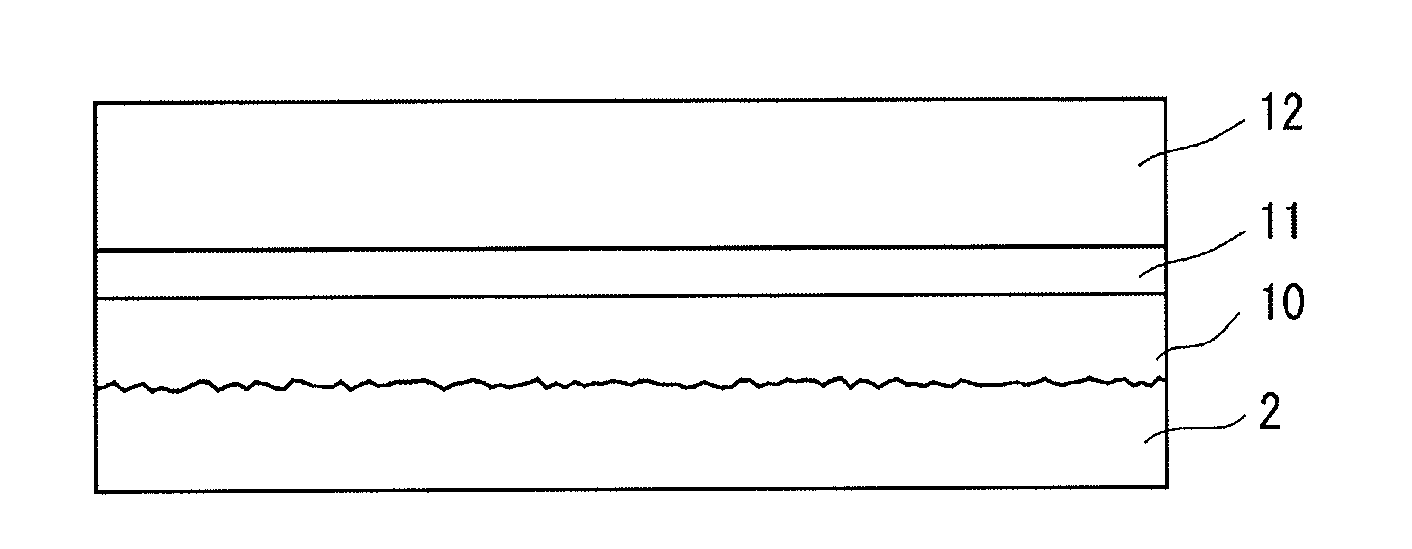
Figure 1 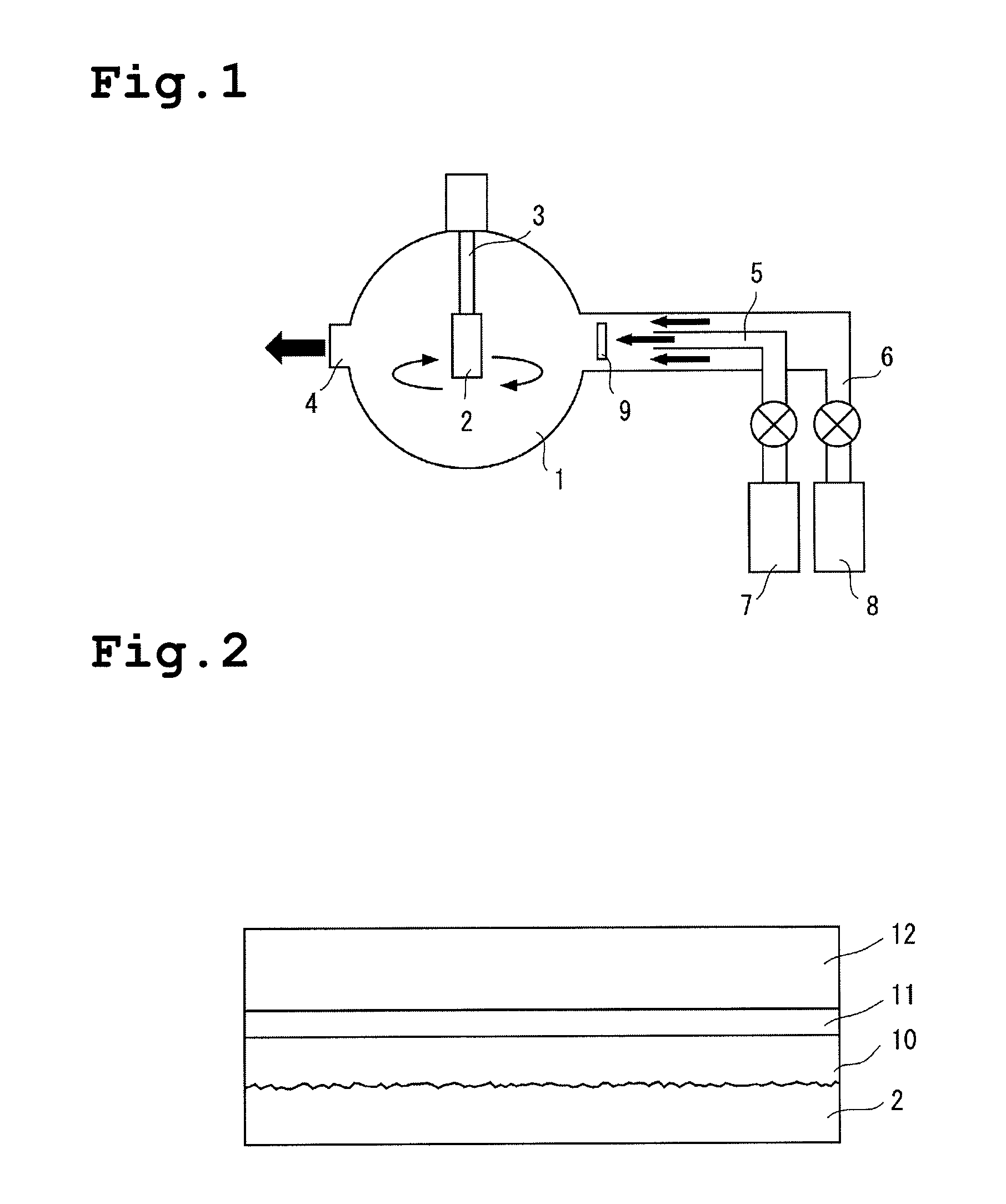
Figure 2 
Figure 3
Abstract
Description
TECHNICAL FIELD
[0001] The present invention relates to a method for laminating a decorative metal film on a resin base material, and a resin base material having a decorative metal film thereon.BACKGROUND ART
[0002] For the lamination of a decorative metal film, the resin base materials used in applications such as in electronic devices, home appliances, and exteriors and interiors of automobiles are subjected to a surface treatment whereby a thin film of about 10 μm thick is laminated using methods such as a coating method, and a decorative metal film is laminated thereon to provide the feel and appearance of a metal, using a wet plating method, a sputtering method, or a vacuum deposition method.
[0003] One of the problems of the coating method, however, is that it uses organic solvents and is therefore harmful to the environment. Another problem is the cost and the poor yield. Further, the coating method presents difficulties in continuously performing processes such as sputtering afte...
Examples
examples
[0052]An example of the present invention is described below with reference to the accompanying drawings.
[0053]FIG. 1 illustrates an example of an apparatus used in a method of the present invention. As illustrated in FIG. 1, a PC resin base material 2 as the base material of a polyurea film was rotatably supported on a holder 3 in a processing chamber 1. The processing chamber 1 was connected to glass containers 7 and 8 containing the feedstock monomers, via a vacuum exhaust system 4 or some other external vacuum pump, and channels 5 and 6. As the feedstock monomers, methylenebis(4-cyclohexylamine) and 1,3-bis(isocyanatemethyl)cyclohexane were used. As illustrated in FIG. 1, a valve 9 was provided between the PC resin base material 2 and the evaporation containers 7 and 8.
[0054]In the apparatus of the foregoing configuration, the methylenebis(4-cyclohexylamine) in the glass container 7, and the 1,3-bis(isocyanatemethyl)cyclohexane in the glass container 8 were heated to 94° C. and ...