

Paper, coated paper, use thereof, paper packaging and methods
A paper composition of short fibers and mineral filler, combined with a barrier coating, addresses the permeability and recyclability issues of traditional paper packaging, providing a biodegradable and compostable solution with improved mechanical and sealing properties for flexible packaging.
Patent Information
- Application Number
- PCT/BR2024/050204
- Authority / Receiving Office
- WO · WO
- Patent Type
- Applications
- Current Assignee / Owner
- Priority Date
- 2023-05-19
- Filing Date
- 2024-05-20
- Publication Date
- 2024-11-28
AI Technical Summary
Current paper packaging is permeable to oils, fats, and gases, leading to compromised product quality and difficulty in recycling due to the use of plastic-based coatings, which lack biodegradability and compostability, and struggle to match the mechanical properties and flexibility of plastic films.
Development of a paper comprising 60-95% short fibers and 2-15% mineral filler, with a coated version incorporating a barrier composition including a sealing agent, biobinding agent, and anti-blocking agent, providing improved mechanical properties, printability, and biodegradability, suitable for flexible packaging that mimics the performance of plastic films.
The paper achieves enhanced mechanical resistance, printability, and biodegradability, offering a sustainable alternative to plastic packaging with comparable sealing and grease barrier properties, suitable for food and pharmaceutical packaging, while being recyclable and compostable.
Smart Images
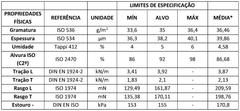
Figure IMGF000018_0001 
Figure IMGF000019_0001 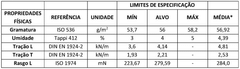
Figure IMGF000019_0002
Abstract
Description
PAPER, COATED PAPER, USE OF THE SAME, PAPER PACKAGING AND METHODS FIELD OF INVENTION
[0001] The present invention relates to a paper comprising short fibers and mineral filler. The paper of the present invention has good mechanical properties, good printability, and recyclability. Also described is a coated paper comprising the paper of the invention and a barrier composition. The coated paper also has good sealing and a grease barrier. Also disclosed are paper packaging comprising the paper or coated paper of the present invention, in which the packaging is biodegradable and compostable. Also described is the use of the coated paper or paper for application in primary and secondary flexible packaging. Also disclosed are a method for obtaining the paper and a method for manufacturing the coated paper of the present invention. BACKGROUND OF THE INVENTION
[0002] Paper packaging is permeable to oils, fats, gases, water, and other liquids. The permeation of oils and fats compromises the external appearance of the packaging, which becomes oily and sticky. This permeation also affects material properties, such as rigidity, delamination resistance, and heat seal resistance, among others. On the other hand, contact with oxygen can cause a series of undesirable changes, such as the production of unpleasant aromas, loss of nutritional value, and changes in color, aroma, and flavor. Therefore, packaging with good oxygen barrier properties is necessary for the production of products sensitive to this gas.
[0003] In this context, it is common to coat or treat the paper to present barrier properties, which are essential for packaging products that require protection, for example, food or medicinal products.
[0004] Plastic-based paper coatings are commonly used. Polyolefin coatings are often used as liquid barrier layers, heat seal layers, and adhesives. Additionally, styrene-acrylic and styrene-butadiene resins are currently available for paper applications, providing sealing and barrier properties. However, recycling this type of plastic-coated paper product is difficult because it is difficult to separate the polymers from the fibers.
[0005] Although there's a market trend toward replacing plastic with paper, this replacement in flexible packaging is associated with significant challenges. Plastic has good elongation, flexibility, and tensile strength properties, and doesn't tear easily. Paper, on the other hand, behaves completely differently.
[0006] In this sense, the papers currently marketed have low mechanical strength, such as MD Tear (machine direction) and CD (cross direction) - some use long fiber to improve this property - MD and CD tensile strength, MD and CD elongation, and burst. Another disadvantage of the papers currently marketed is that they are thicker compared to plastic films, which makes it impossible to format the final packaging, causing cracks in the fiber and consequently a loss of strength and barrier properties when polymeric material is applied to establish sealing and barrier properties, where the base paper alone lacks these properties.
[0007] There is, therefore, a need to manufacture a paper with good mechanical properties, especially one that is applicable to machinery already commonly used with plastic, to avoid large investments in industrial parks.
[0008] To replace plastic packaging with paper packaging, this invention developed a biodegradable and compostable paper with good mechanical properties, as well as good sealing and a grease barrier when coated. The paper developed in this invention comprises a significant amount of renewable source material (natural fibers) and can be applied in various processes. SUMMARY OF THE INVENTION
[0009] The present invention describes a paper comprising fibers and mineral filler. The paper of the present invention comprises about 60% by weight to about 95% by weight of short fibers and about 2% by weight to about 15% by weight of mineral filler, wherein the % by weight is based on the total weight of the paper.
[0010] In one embodiment of the invention, the fibers are natural fibers, preferably cellulose fibers.
[0011] In one embodiment of the invention, the mineral filler is selected from the group consisting of precipitated calcium carbonate (PCC), ground calcium carbonate (GCC), talc, and mixtures thereof.
[0012] In one embodiment of the invention, the paper further comprises other components, such as modified starch, internal sizing agent (e.g., alkenyl succinic anhydride), and / or surface sizing agent (e.g., alkyl ketene dimer).
[0013] In one embodiment of the invention, the paper has about 30 g / m 2 at about 110 g / m 2 in grammage; and / or approximately 30 pm to approximately 120 pm in thickness. The grammage was measured according to the ISO 536 standard and the thickness was measured according to the ISO 534 standard.
[0014] Also described in the present invention is a coated paper comprising the role of the present invention and a barrier composition.
[0015] In an optional embodiment of the invention, the barrier composition comprises a sealing agent, a biobinding agent, and an anti-blocking agent.
[0016] In a preferred embodiment of the invention, the sealing agent is polyvinyl alcohol (PVOH); the biobinding agent is a starch or a formulation comprising starch; and the anti-blocking agent is calcium stearate.
[0017] In an optional embodiment of the invention, the barrier composition comprises about 25 wt % to about 45 wt % solids content, wherein the wt % is based on the dry weight of the barrier composition. The solids content was measured by drying oven or moisture balance.
[0018] In one embodiment of the invention, the coated paper has about 40 g / m 2 at about 120 g / m 2in grammage; and / or approximately 40 pm to approximately 130 pm in thickness. The grammage was measured according to the ISO 536 standard and the thickness was measured according to the ISO 534 standard.
[0019] Also described in the present invention are flexible paper packaging comprising the paper or coated paper of the present invention.
[0020] In one embodiment of the invention, the flexible paper packaging is food packaging or coating packaging for pharmaceutical compositions.
[0021] The flexible paper packaging of the invention can be of the flowpack, Flat Bottom, Stand Up Pouch (SUP), wrap, 3 welds, 4 welds, SOS type, among others.
[0022] Also described herein is the use of the paper or coated paper of the present invention for application in primary and secondary flexible packaging.
[0023] In a preferred embodiment of the invention, the use is for application in flexible food packaging or coating packaging for pharmaceutical compositions.
[0024] In one embodiment of the invention, the use is for application by means of vertical, horizontal, SOS, among other filling machines.
[0025] Also described in the present invention is a method for obtaining the paper of the invention, comprising (a) refining the fibers, (b) adding modified starch, (c) adding an internal sizing agent, (d) adding the mineral filler, (e) optionally adding a surface sizing agent, and (f) adding a natural polymer to the surface plus a second surface sizing agent.
[0026] Further described in the present invention is a method for manufacturing a coated paper, comprising applying about 2 g / m 2 at about 20 g / m 2, in accordance with ISO 536, of a barrier composition on a paper of the present invention by means of reverse gravure, rod, blade, engraved roller, air knife, curtain coating, or printing systems. The barrier composition can be applied to the felt side or the web side of the base paper. DEFINITIONS
[0027] The definitions of some terms / expressions used in the present invention are presented in the present invention.
[0028] The term "fiber" as used in the present invention means an elongated particulate having an apparent length that considerably exceeds its apparent width.
[0029] "Short fibers" as used in the present invention are fibers less than 2 mm in length.
[0030] The term "barrier" as used herein refers to the ability of a product, e.g., packaging, to resist the passage of Fat. The barrier properties of a packaging should not be confused with its chemical resistance, which is associated with its ability to resist solubilization, alteration, or softening when in contact with an agent. However, the barrier attributes of a packaging are closely related to the chemical, physical, sensory, microbiological, and biological stability of the products.
[0031] The term "sealing" refers to polymer melting under the application of heat and pressure during packaging of the final product.
[0032] "Primary packaging" is the packaging in direct contact with the product. "Secondary packaging," in turn, is the packaging that protects the primary packaging.
[0033] The term "biodegradation" is defined as a chemical process in which materials are metabolized into water, carbon dioxide, and biomass with the help of microorganisms. The biodegradation process depends on environmental conditions, such as temperature, inoculum, and humidity, and on the material or its application. To declare a product's biodegradability, the environmental conditions must be specified, and a biodegradation timeline must be established to make claims measurable and comparable. Some examples of standards are EN 13432, ASTM D6400, ASTM D5338, ISO14855, ASTM 5988, ASTM D6003, ASTM G160, ABNT NBR 15448-1, and ABNT NBR 15448-2.
[0034] The term "composting" is defined as a process that controls biological decomposition and transforms biodegradable materials into a humus-like substance called compost. The decomposition of biodegradable materials results in the production of carbon dioxide, water, minerals, and stabilized organic matter (fertilizer or humus). Therefore, compostable materials are those that undergo biodegradation during composting to release CO2, water, inorganic compounds, and biomass at a rate consistent with other known compostable materials and leave no visible, distinguishable, or toxic residue.
[0035] Compostable materials, which are designed to be disposed of after use through organic recycling—composting—represent one of the strategic options available for waste management. Composting is an attractive alternative for reducing solid waste and is especially suitable for conventional plastics segments, where recycling is difficult or not economically viable.
[0036] The term "recyclability" refers to the property of paper in having fibers that can be reused to form new paper.
[0037] The term "grammage" refers to the determination of the mass per unit area of the paper, described in grams per square meter in the present invention.
[0038] "Tensile strength" refers to the maximum tensile force per unit width that the paper can withstand before breaking. The "tensile index," in turn, refers to tensile strength divided by basis weight.
[0039] "Elongation" refers to the increase in length of a test specimen.
[0040] "Burst strength" refers to the maximum pressure developed by the hydraulic system that forces an elastic diaphragm through a circular area of paper. The "burst index," in turn, is the burst strength divided by the basis weight.
[0041] Tear strength is the force perpendicular to the plane of the paper required to tear multiple sheets of paper a specified distance after tearing has begun. Tear index, in turn, refers to tear strength divided by basis weight. BRIEF DESCRIPTION OF THE FIGURES
[0042] Figure 01 represents the SEM analyses of the front and back surface of the paper of example 3 of the invention.
[0043] Figure 02 represents the SEM analyses of the front and back surface of the paper of example 4 of the invention. DETAILED DESCRIPTION OF THE INVENTION
[0044] One of the advantages of the present invention is the replacement of plastic with paper in flexible packaging, such as packaging for flour, rice, and beans. In this context, paper needs to be versatile so that it can be substituted in a process in which plastic is generally used as a raw material, while also obtaining packaging with sealing and grease barrier properties comparable to or better than packaging made from plastic. In this sense, the present invention relates to biodegradable and compostable flexible packaging, comprising paper (coated or uncoated) with good mechanical properties. The flexible packaging developed in the present invention is environmentally friendly, providing a sustainable alternative to conventional plastic packaging.
[0045] The present invention provides a paper with good resistance, which is applicable to machinery already commonly used with plastic, avoiding large investments in industrial parks.
[0046] The paper of the present invention is composed of fibers and mineral filler. An additional advantage of this paper is that it uses only short fibers, i.e., 100% of the fibers are short. Based on the knowledge available previously, it was expected that the use of only short fibers would confer lower strength to the material (e.g., paper or packaging comprising the same). However, through the present invention, a paper with improved strength was obtained compared to existing papers containing both short and long fibers or only long fibers.
[0047] In one embodiment of the invention, the paper fibers are natural fibers, which refer to cellulose fibers, cellulose fiber derivatives, wood derivatives, or mixtures thereof, preferably cellulose fibers. The natural fibers may be virgin, recycled, or secondary natural fibers, preferably virgin natural fibers.
[0048] The short fibers comprised in the paper of the present invention are less than 2 mm in length.
[0049] The paper of the present invention comprises about 60% by weight to about 95% by weight short fibers, wherein the % by weight is based on the total weight of the paper.
[0050] The paper of the present invention comprises, in addition to the short fibers, about 2% by weight to about 15% by weight, preferably about 6% by weight to about 8% by weight, of mineral filler, wherein the % by weight is based on the total weight of the paper. In one embodiment of the invention, the mineral filler is selected from the group consisting of precipitated calcium carbonate (PCC), ground calcium carbonate (GCC), talc, and mixtures thereof.
[0051] In one embodiment of the invention, the paper further comprises other components, such as modified starch, internal sizing agent (e.g., alkenyl succinic anhydride), and / or surface sizing agent (e.g., alkyl ketene dimer).
[0052] In one embodiment of the invention, the paper has a grammage of approximately 30 g / m 2 at about 110 g / m 2 , according to ISO standard 536, and / or thickness of about 30 pm to about 120 pm, according to ISO standard 534.
[0053] The paper of the present invention, also called base paper, applicable for the manufacture of flexible paper packaging, has good mechanical resistance (traction, tearing, bursting and stretching), low thickness, Good printability and recyclability. This paper has a PPS smoothness of approximately 2.5 pm, according to ISO 8791 standard, when uncoated, and approximately 1.7 pm, according to ISO 8791 standard, for coated paper, to achieve good printability and legibility in fine text in rotographic and flexographic printing processes. The paper of the present invention acts as a base for the application of a polymeric material, which can be applied to both the web and felt sides, with the aim of being used as a raw material for the manufacture of primary or secondary packaging for the flexible packaging market.
[0054] The present invention further provides a coated paper comprising the paper described in the present invention and a barrier composition.
[0055] In an optional embodiment of the invention, the barrier composition comprises a sealing agent, a biobinding agent, and an anti-blocking agent.
[0056] In a preferred embodiment of the invention, the sealing agent is polyvinyl alcohol (PVOH); the biobinding agent is a starch or a formulation comprising starch; and the anti-blocking agent is calcium stearate.
[0057] In an optional embodiment of the invention, the barrier composition comprises about 25 wt % to about 45 wt % solids content, wherein the wt % is based on the dry weight of the barrier composition. The solids content was measured by drying oven or moisture balance.
[0058] In one embodiment of the invention, the coated paper has a basis weight of about 40 g / m 2 at about 120 g / m 2 , according to ISO standard 536, and / or thickness of about 40 pm to about 130 pm, according to ISO standard 534.
[0059] Both the paper and coated paper of the present invention have good mechanical properties, such as good tensile strength, bursting, tearing, and stretching, in addition to having good printability and recyclability. Furthermore, the coated paper of the present invention has a good sealing and grease barrier.
[0060] To measure the grease barrier, the Kit 12 method can be used. In this method, the sample is subjected to a series of oil / grease mixtures, where the mixtures are numbered from 1 to 12, in order of increasing potency. Higher kit numbers indicate better oil and / or grease barrier properties for the sample.
[0061] The present invention also relates to flexible paper packaging comprising the paper or coated paper of the present invention.
[0062] In one embodiment of the invention, the flexible paper packaging is food packaging or coating packaging for pharmaceutical compositions.
[0063] The flexible paper packaging of the invention can be of the flowpack, Flat Bottom, Stand Up Pouch (SUP), wrap, 3 welds, 4 welds, SOS type, among others.
[0064] The flexible paper packaging of the present invention is biodegradable and compostable and, particularly, the packaging comprising the coated paper has good sealing and grease barrier properties.
[0065] The present invention also relates to the use of paper or coated paper, described in the present invention, for application in primary and secondary flexible packaging.
[0066] In a preferred embodiment of the invention, the use is for application in flexible food packaging or coating packaging for pharmaceutical compositions.
[0067] In one embodiment of the invention, the use is for application by means of vertical, horizontal, SOS filling machines, among others.
[0068] Also disclosed in the present invention is a method for obtaining the paper of the invention, comprising the following steps: a) refining the fibers to a degree of about 300 CFS to about 400 CFS, preferably about 320 CFS to about 380 CFS, more preferably to 350 CFS; b) adding modified starch in a dosage of about 2 to 10 kg / ton, preferably about 3 to 9 kg / ton, more preferably about 4 to 8 kg / ton, wherein the kg / ton refers to the mass of starch per mass of fibers; c) adding the internal sizing agent, such as alkenyl succinic anhydride, in an amount of about 0.5 to 4 kg / ton, preferably about 1 to 2 kg / ton, emulsified with at least one natural polymer, wherein the kg / ton refers to the mass of internal sizing agent per mass of fibers plus starch;d) adding the mineral filler, which is selected from the group consisting of precipitated calcium carbonate (PCC), ground calcium carbonate (GCC), talc and mixtures thereof, in an amount of about 2 to 15% by weight, preferably about 2 to 7% by weight or 5 to 10% by weight, more preferably 6 to 8% by weight of the total weight of the paper; e) optionally, adding a surface sizing agent, preferably alkyl ketene dimer; f) adding a natural polymer to the surface plus a second surface sizing agent, preferably alkyl ketene dimer;
[0069] In one embodiment of the invention, the following machines may be used to obtain the paper of the invention: Headbox for papermaking: paper framing of 1 to 3, preferably 1.2 to 2.5, more preferably 1.4 to 2.2. Consistency of headbox from 0.3 to 0.9, preferably from 0.35 to 0.9, more preferably from 0.4 to 0.5; 0.5 to 0.6; 0.55 to 0.65; or 0.7 to 0.85. Paper formation: manufacturing on fourdrinier (flat table) and duoformer equipment. Press: Shoe press actuation with pressure of 2 NIPs around 200 to 600 N / mm, preferably around 300 to 500 N / mm, more preferably around 350 to 450 N / mm. Coating: Application of a natural polymer with a surface sizing agent, such as alkyl ketene dimer, in a rapid sizing equipment, or a third polymer based on styrene butadiene in the range of about 5 to 12 g / m 2 , preferably about 7 to 10 g / m 2 . Calendering: Soft calendering at a temperature of around 80 to 210 °C, preferably around 90 to 210 °C, more preferably around 100 to 180 °C.
[0070] Using the above-mentioned method, it is possible to obtain papers with a grammage of approximately 30 g / m 2 at about 110 g / m 2 .
[0071] In a preferred embodiment of the invention, Technique 1, described below, is used for the manufacture of paper (base paper). Technique 1: Production of base paper with a grammage between approximately 30 and 110 g / m 2 , according to ISO 536 standard, using 100% hardwood pulp, with a degree of refinement between 330 and 380 CFS, comprising a mineral filler of 3 to 15% by weight, based on the total weight of the paper, and shoe press pressure of 200 to 600 N / mm, using equipment with two stacks of 1 NIP each, which allows calendering of one side of the paper at a time. The equipment is used to adjust the smoothness of the coated paper on the machine. The calenders found on other machines (hard calender) do not have temperature adjustment and are used to standardize the thickness profile of the paper. coated. The temperature range in NIPs is 80 to 200 °C.
[0072] Reducing the mineral filler and reducing pulp refining, using two NIPs at the same pressure and temperature, as described in Technique 1, resulted in a 15-30% thickness reduction in the base paper, a 5-20% increase in MD and CD tensile strength, a 5-20% increase in CD and MD elongation, a 5-10% increase in Mullen strength, and a 3-10% increase in MD and CD tear strength, when comparing products of the same basis weight in the standard operation. These values were confirmed through analyses performed during quality control during the production of this material.
[0073] With the pressure and use of the soft calender, PPS smoothness values of 2.5 to 3 pm (according to ISO 8791 standard) were obtained for uncoated papers and 1.5 to 2 pm (according to ISO 8791 standard) for coated paper (only one side), presenting excellent printability in the phlebographic and rotographic printing processes.
[0074] Another object of the present invention is a method for manufacturing a coated paper. Said method comprises applying about 2 g / m 2 to about 20 g / m 2 , in accordance with ISO standard 536, of a barrier composition onto a paper of the present invention using reverse gravure, rod, blade, engraved roller, air knife, curtain coating, or printing systems. The barrier composition can be applied to the felt or web side of the base paper, and the application grammage will depend on the barrier requirement. The barrier composition has a solids content of approximately 25% by weight to approximately 45% by weight, where the % by weight is based on the dry weight of the barrier composition. The coated paper thus produced can be used as packaging paper, having good sealing and grease barrier properties (kits 6 to 12).
[0075] In a preferred embodiment of the invention, Technique 2, described below, is used to make a coated paper. Technique 2: Application of coating on the felt or canvas side of the base paper, comprising a grammage of 2 to 20 g / m 2 Application process, according to ISO 536 standard, depending on the barrier requirement, transforming the base paper into packaging paper with sealing and grease barrier attributes (kits 6 to 12). The application of polymeric material, with solids of 25 to 45% by weight (based on the dry weight of the barrier composition), can be done using reverse gravure, air knife, rod, blade, and curtain coating systems.
[0076] When applying the coating (barrier composition) to the base paper there was a 4 to 10% increase in MD and CD tensile strength, a 4 to 10% increase in MD and CD elongation and a 5 to 20% increase in MD and CD tear.
[0077] Coated paper, in which the coating has a grammage between 2 and 20 g / m 2, has a solids content between 25 and 45% by weight (where the % by weight is based on dry weight) and is applied in systems such as reverse gravure, air knife, rod, blade, and curtain coating. This paper has sealing and grease barrier properties (kits 6 to 12) and is used as a packaging substrate. Due to the properties obtained through Techniques 1 and 2, the coated paper has properties similar to plastic films made of polyethylene (PE) or polyethylene terephthalate (PET) with polyethylene (PE), in terms of tensile strength, thickness, and excellent machinability in vertical and horizontal filling machines, with speeds between 30 ppm and 150 ppm, the equipment's cruise speeds, depending on the polymer structure.
[0078] The filling temperature of the paper object of this invention is around 110°C to 145°C, while the temperatures of polymeric films, such as PE or PET + PE, are around 160°C to 210°C, characterizing cost reduction. energy consumption due to temperature and reduction of the accumulation of polymer residue in the mordant (sealing). This is because the higher the temperature, the greater the tendency for the resin to degrade. EXAMPLES
[0079] The examples presented in the present invention are non-exhaustive, intended only to illustrate the invention and should not be used as a basis for limiting it.
[0080] Examples 1 to 4 refer to tests aimed at paper production (base paper for packaging), with a reduction in mineral filler, an increase in calender pressure (using 2 NIPs) and pulp refining.
[0081] Example 5 refers to a comparative analysis between SAPPI paper (containing 40% long fiber) and the paper of the present invention (100% short fiber base paper).
[0082] Example 6 refers to a sealing and performance evaluation test on a machine.
[0083] Example 7 relates to a comparative analysis between a paper flowpack packaging according to the present invention and a plastic flowpack packaging (PET + PE).
[0084] Example 8 refers to a comparative analysis between a commonly commercially available paper and the paper of the present invention.
[0085] Example 9 relates to comparisons between uncoated paper (base paper) and paper coated with a barrier composition (base paper + resin), all in accordance with the present invention. Example 1
[0086] This example describes a test whose main objective was to produce stock paper (1020 mmW x 1000 mmD format), uncoated, with a grammage of 35 g / m 2 , according to ISO 536 standard, manufactured with inputs that Complies with current ANVISA, BfR, and FDA regulations. This composition is intended for use in flexible packaging, where the paper will be coated with a barrier compound and undergo packaging testing.
[0087] Approximately 52 tons (gross production) / 47 tons (net production) of uncoated paper with a final grammage of 35 g / m were produced. 2 .
[0088] Two calenders, NIP 1 and NIP 2, were used to achieve the target smoothness of this paper (NIP 1: 230 N / mm at a temperature of 130 °C and NIP 2: 220 N / mm and a temperature of 150 °C), thus reaching a PPS condition of, at most, 3.0 pm; in this case, a PPS of 2.64 pm (average) was obtained. A soft pressure was used.
[0089] For flexible packaging manufacturing, paper thickness is crucial for good machinability in packaging converters (the thinner the paper, the better the machinability). During testing, an average thickness of 39.86 pm was achieved, which was considered satisfactory, as the goal was to achieve a maximum thickness of 40.1 pm.
[0090] Paper production specifications were as expected and are shown in Table 1. Table 1 *Average obtained from paper samples according to the invention studied. Example 2
[0091] This example describes a test whose main objective was to produce coated paper stock with a grammage of 56 g / m 2(1020 mmW x 1000 mmD format), with inputs that comply with current ANVISA, BfR and FDA legislation. This composition is intended for use in flexible packaging, where the base paper has been coated with a barrier composition and will undergo filling tests.
[0092] Approximately 44 tons (gross production) / 40 tons (net production) of coated paper with a final grammage of 56 g / m were produced. 2 , according to ISO 536 standard.
[0093] The application of the coating according to the conventional recipe for fit silk lacquer paper reached a grammage between 6.3 and 9.6 g / m 2 , below the specified 8 to 12 g / m 2 . Two calenders NIP 1 and NIP 2 were used to achieve the target smoothness of this paper (NIP 1: 235 N / mm at a temperature of 130 °C and NIP 2: 280 N / mm and a temperature of 130 °C), thus reaching a PPS condition of, at most, 1.8 pm, in this case, a PPS of 1.85 pm (average) was obtained. A soft pressure was used.
[0094] Paper production specifications were as expected and are shown in Table 2. Table 2 *Average obtained from paper samples according to the invention studied. Example 3
[0095] This example describes a test whose main objective was to produce paper with a buffer solution for precipitated calcium carbonate (PCC) and aiming to meet the parameters of ANVISA, FDA and BfR.
[0096] Approximately 50 tons of uncoated paper were produced, with a final grammage of 46 g / m 2 , with dimensions of 1020 mmL x 1000 mmD.
[0097] For this test, surface starch is applied to the wire and felt sides with a sizing agent and no bleach. Two calenders, NIP 1 and NIP 2, were used to achieve the target smoothness of this paper (NIP 1: 270 N / mm at a temperature of 170 °C and NIP 2: 270 N / mm at a temperature of 170 °C), thus reaching a PPS condition of a maximum of 2.8 pm. In this case, a PPS of 2.63 pm (average) was obtained.
[0098] For flexible packaging manufacturing, paper thickness is crucial for good machinability in packaging converters (the thinner the paper, the better the machinability). During testing, an average thickness of 48.8 pm was achieved, which was considered satisfactory, as the goal was to achieve a maximum thickness of 52.5 pm.
[0099] Paper production specifications were as expected and are shown in Table 3. Table 3 *Average obtained from paper samples according to the invention studied.
[0100] Gross production was 55 tons (23 reels of 2040 mmL and 46 reels of 1020 mmL) in the dimension of 1020 mmL x 1000 mmD, as planned. Production was satisfactory, without breakage, at a speed of 830 m / min.
[0101] Figure 1 illustrates SEM analyses of the front and back surfaces of the paper. As can be seen, the paper produced in this test has no significant surface irregularities and exhibits excellent sealing. In this regard, it should be noted that it is desirable to obtain more sealed (less porous) papers, as porous papers require more barrier material. Example 4
[0102] This example describes a test whose main objective was to produce paper with a buffer solution for precipitated calcium carbonate (PCC), Carboflex ink and aiming to meet the requirements of ANVISA, FDA and BfR.
[0103] Approximately 50 tons of coated paper with a final grammage of 70 g / m were produced. 2 , with dimensions of 1020 mmW x 1000 mmD.
[0104] The application of the coating according to the conventional recipe of the fit silk lacquer paper reached a grammage of 10 g / m 2 , reaching the specified PEI of 10 to 12 g / m 2 . Two calenders NIP 1 and NIP 2 were used to achieve the target smoothness of this paper, (NIP 1: 270 N / mm at a temperature of 170 °C NIP 2: 270 N / mm and temperature of 170 °C), thus reaching the PPS condition of a maximum of 1.7 pm, in this case, a PPS of 1.7 pm (average) was obtained.
[0105] For flexible packaging manufacturing, paper thickness is crucial for good machinability in packaging converters (the thinner the paper, the better the machinability). During testing, an average thickness of 62.8 pm was achieved, which was considered satisfactory, as the goal was to achieve a maximum thickness of 64.05 pm.
[0106] Paper production specifications were as expected and are shown in Table 4. Table 4 *Average obtained from paper samples according to the invention studied.
[0107] Figure 2 illustrates SEM analyses of the front and back surfaces of the paper. As can be seen, the paper produced in this test does not present significant surface irregularities and exhibits excellent sealing. Example 5
[0108] In this example, a comparative analysis is made between SAPPI Algro Fineness 2000 paper (which contains 40% by weight of long fibers and 60% by weight of short fibers) and the paper of the present invention (100% short fiber base paper, referred to as GLBA070BR). The analysis performed indicates that the composition of the present invention has superior strengths.
[0109] Thickness is a critical factor in many machines currently used in industry, where thinner paper yields better machinability. In this sense, the paper proposed by this invention has a thickness similar to the SAPPI paper tested.
[0110] Furthermore, the CD and MD tensile strength and burst strength of the paper proposed by the present invention (GLBA070BR) are superior to those of SAPPI, as can be seen in Table 5. Table 5
[0111] As can be seen from the data in Table 5, the paper of the present invention, which comprises only short fibers, presents: - MD (machine steering) tensile strength 34% higher, - 45% higher CD Tensile Strength (cross direction), - 66% greater burst, in relation to the SAPPI composition, which comprises long fibers and short fibers.
[0112] The other properties are similar between SAPPI paper and the paper of the present invention. Example 6
[0113] In this example, an evaluation is made of the sealing and machine performance of the paper of the present invention coated with a barrier composition, the latter comprising 35% by weight of polyvinyl alcohol (PVOH), 60% by weight of biobinder and 5% by weight of calcium stearate.
[0114] The objective was to evaluate the behavior of paper coated with the barrier composition in a packaging machine and in continuous productivity scenarios, with a view to qualifying the input.
[0115] Thus, the input used in this test was Greenpack GLSA061BR (coated paper); the printing technology used was a Flexography printer, UV ink, UV varnish and printing carried out by AII4Labels; and the packaging technology was Maquinox SPK 600 - Flowpack 4 welds 4 lanes. Table 6 Example 7
[0116] This example compares a paper flow pack prepared with the paper of the present invention (sample GLSA061BR) and a plastic flow pack made of polyethylene terephthalate (PET) and polyethylene (PE). The properties of each of the packages analyzed are shown in Table 7. Table 7
[0117] From the data in Table 7, it is highlighted that the paper flowpack packaging of the present invention presents an increase of 94% in relation to the PET + PE flowpack in MD tensile strength and an increase of 4% in CD tensile strength.
[0118] It should also be noted that, although the paper flowpack packaging comprises a resin (barrier composition) that does not contain high-performance sealing polymers such as PE, its sealing force (0.26 kN / m) is similar to the sealing force of the flowpack packaging made of PET + PE plastic (0.24 kN / m). Example 8
[0119] In this example, a comparative analysis is made between a commonly marketed paper ("commercial paper") and the paper of the present invention (namely "GNBA046BR"). The commonly marketed paper comprises long fibers, short fibers and mineral filler.
[0120] The properties of the two products are shown in Table 8. To calculate the indexes, the desired property was divided by the paper weight. base. Table 8
[0121] From the data in Table 8, it can be seen that there was a significant reduction in paper thickness in the present invention compared to that commonly used in the industry (a 23% reduction), as well as in its smoothness. The reduction in smoothness improves printability and surface application. Furthermore, the paper of the present invention exhibits higher tensile strength than CD and MD, elongation strength than CD and MD, burst strength, and tear strength. Example 9
[0122] In this example, comparisons are made between uncoated paper (base paper) and paper coated with a barrier composition (base paper + resin), all in accordance with the present invention.
[0123] The properties of the products are shown in Table 9. To calculate the indexes, the desired property was divided by the weight of the base paper. Table 9
[0124] It is possible to notice that there is an increase in resistance when the barrier composition is applied, although the uncoated paper already has good resistance.
Claims
CLAIMS 1. Paper, characterized by the fact that it comprises about 60% by weight to about 95% by weight of short fibers and about 2% by weight to about 15% by weight of mineral filler.
2. Paper according to claim 1, characterized in that the mineral filler is selected from the group consisting of precipitated calcium carbonate (PCC), ground calcium carbonate (GCC), talc and mixtures thereof.
3. Paper according to claim 1 or 2, characterized in that it further comprises other components, such as modified starch, internal sizing agent and / or surface sizing agent.
4. Paper according to any one of claims 1 to 3, characterized in that it has approximately 30 g / m 2 at about 110 g / m 2 in weight; and / or approximately 30 pm to approximately 120 pm in thickness.
5. Coated paper, characterized by the fact that it comprises the paper defined in any one of claims 1 to 4 and a barrier composition.
6. The coated paper of claim 5, wherein the barrier composition comprises a sealing agent, a biobinding agent, and an anti-blocking agent, wherein the sealing agent is preferably polyvinyl alcohol (PVOH); the biobinding agent is preferably starch or a formulation comprising starch; and the anti-blocking agent is preferably calcium stearate; and the barrier composition optionally comprises about 25 wt. % to about 45 wt. % solids content, wherein the wt. % is based on the dry weight of the barrier composition.
7. Coated paper according to claim 5 or 6, characterized in that it has about 40 g / m 2 at about 120 g / m 2 in weight; and / or approximately 40 pm to approximately 130 pm in thickness.
8. Paper packaging, characterized in that it comprises the paper, defined in any one of claims 1 to 4, or the coated paper, defined in any one of claims 5 to 7.
9. Paper packaging according to claim 8, characterized in that it is a food packaging or coating packaging for pharmaceutical compositions.
10. Paper packaging according to claim 8 or 9, characterized by the fact that it is of the flowpack type, Flat Bottom, Stand Up Pouch (SUP), wrap, 3 welds, 4 welds, SOS, among others.
11. Use of the paper, defined in any one of claims 1 to 4, or of the coated paper, defined in any one of claims 5 to 7, characterized in that it is for application in primary and secondary flexible packaging.
12. Use according to claim 11, characterized in that it is for application in food packaging, such as flour, rice and bean packaging, or coating packaging for pharmaceutical compositions.
13. Use according to claim 11 or 12, characterized in that the application is by means of vertical, horizontal, SOS, among other filling machines.
14. Method for obtaining the paper defined in any one of claims 1 to 4, characterized in that it comprises: (a) refine the fibers; (b) add modified starch; (c) add an internal sizing agent; (d) add the mineral filler; (e) optionally, add a surface sizing agent; and (f) add a natural polymer to the surface plus a second surface sizing agent.
15. Method for manufacturing a coated paper, characterized by the fact that it includes applying about 2 g / m 2 at about 20 g / m 2 of a barrier composition on a paper defined in any one of claims 1 to 4 by means of reverse gravure, rod, blade, engraved roller, air knife, curtain coating or printer systems.
16. Invention of a product, process, system, kit or use, characterized by the fact that it comprises one or more elements described in this patent application.
Citation Information
Patent Citations
High-grade environment-friendly super-sense paper and preparation process thereof
CN104532680A
Manufacture of paper and paperboard
US20140124155A1
Decorative paper for layered products
US20150299962A1
Light Packaging Paper for Food Having Improved Resistance to Fats
US20190203423A1
Recyclable barrier paper
US20200370244A1
Cited By
Paper for straw production
WO2025145243A1