
Cooling composition for powertrain of electric vehicles
The use of a ferrofluid with ferromagnetic particles and a dispersant in electric vehicle powertrains addresses the limited heat extraction of existing cooling oils, achieving efficient cooling comparable to pure water and enhancing motor integrity and power density.
Patent Information
- Application Number
- PCT/EP2024/075964
- Authority / Receiving Office
- WO · WO
- Patent Type
- Applications
- Current Assignee / Owner
- Priority Date
- 2023-09-18
- Filing Date
- 2024-09-17
- Publication Date
- 2025-03-27
AI Technical Summary
Existing cooling oils for electric vehicle powertrains have limited heat extraction capabilities, which can lead to reduced efficiency and integrity of electric motors due to inadequate cooling.
A ferrofluid comprising a liquid carrier, ferromagnetic particles, and a dispersant is used for direct contact cooling of powertrain elements in electric vehicles, enhancing heat extraction through the application of a magnetic field.
The ferrofluid achieves improved cooling performance, with a heat extraction capacity comparable to that of pure water, thereby preserving the integrity of electric motors and increasing power density.
Smart Images
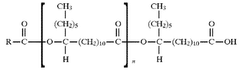
Figure IMGF000008_0001 
Figure IMGF000012_0001
Abstract
Description
[0001] Description
[0002] Title: Cooling composition for powertrain of electric vehicles
[0003] Technical field
[0004] The present invention relates to the field of cooling compositions for powertrain elements of electric vehicles, in particular for power electronics and electric motors and more especially for electric motors.
[0005] Prior art
[0006] Evolving international standards for reducing CO2 emissions, but also for cutting energy consumption, are prompting car manufacturers to propose alternative solutions to combustion engines.
[0007] One of the solutions identified by car manufacturers is to replace combustion engines with electric motors. Research into reducing CO2 emissions has thus led to the development of electric vehicles by a number of car manufacturers.
[0008] For the purposes of this invention, "electric vehicle" refers to a vehicle with an electric motor as the sole means of propulsion, whereas a hybrid vehicle comprises a combustion engine and an electric motor as combined means of propulsion.
[0009] For the purposes of this invention, "powertrain" refers to a system comprising the mechanical parts required to propel an electric vehicle. More specifically, the powertrain system comprises an electric motor including the rotor-stator assembly of the power electronics (dedicated to speed regulation), a transmission (also known as a gearbox, and when the gearbox is attached to the motor, it is referred to as a geared motor) and a battery.
[0010] Generally, electric or hybrid vehicles require compositions to meet the lubrication and / or cooling requirements of the various propulsion system components mentioned above.
[0011] In particular, electric motors heat up during their operation, in particular for high-power operating points. Better electric motor cooling preserves the integrity of the electric motor and further allows the electric motor designer to increase the power density.
[0012] Cooling oils have been developed to cool electric propulsion systems. Different oils are used for direct e-motor cooling. Direct cooling means that there is a contact between the coolant and the hot spots of the e-motor, contrary to indirect water jacket cooling for instance. However, the heat extraction of existing cooling oil is limited.
[0013] It is therefore one objective of the present invention to provide a composition allowing better cooling performances of electric propulsion system.
[0014] Summary of the invention
[0015] More specifically, the present invention relates to the use of a ferrofluid to cool at least one element of the powertrain of an electric vehicle, the ferrofluid comprising:
[0016] - at least one liquid carrier,
[0017] - ferromagnetic particles,
[0018] - at least one dispersant.
[0019] Preferably, the ferrofluid is used as the cooling composition of the at least one element of the powertrain of the electric vehicle.
[0020] According to a preferred embodiment, the at least one element of the powertrain is selected from power electronics and electric motor of the electric vehicle, preferably the at least one element of the powertrain is the electric motor of the electric vehicle.
[0021] Preferably, the ferrofluid is in direct contact with the at least one element of the powertrain, the direct contact being preferably obtained by spraying the ferrofluid onto the at least one element or by totally or partially immersing the at least one element of the powertrain in a bath containing the ferrofluid.
[0022] Preferably, the carrier is selected from non-polar solvents, preferably from hydrocarbon solvents having preferably a kinematic viscosity at 100°C from 1 to 20 mm2 / s.
[0023] Preferably, the ferromagnetic particles are selected from ferrites, gamma iron oxide, chromium dioxide, metal alloys, and mixture thereof, preferably from ferrites, more preferably, the ferromagnetic particles are magnetite.
[0024] Preferably, the average particle size of the ferromagnetic particles ranges from 1 to 50 nm, preferably from 5 to 20 nm, more preferably from 6 to 10 nm.
[0025] Typically, the ferromagnetic particles are coated with the at least one dispersant.
[0026] Preferably, the dispersant is selected from organic acids, organic anhydride and mixture thereof.
[0027] According to a preferred embodiment, the ferrofluid comprises from 1 to 20% by volume of ferromagnetic particles, preferably from 1 to 10% by volume of ferromagnetic particles, more preferably from 3 to 5% by volume of ferromagnetic particles, based on the total volume of the ferrofluid.
[0028] The invention is also directed to a cooling system comprising at least one element of the powertrain of an electric vehicle and at least one ferrofluid, wherein the ferrofluid comprises:
[0029] - at least one liquid carrier,
[0030] - ferromagnetic particles,
[0031] - at least one dispersant.
[0032] Preferably, in the cooling system, the ferrofluid has one or several of the following features:
[0033] - the ferrofluid is in direct contact with the at least one element of the powertrain, the direct contact being preferably obtained by spraying the ferrofluid onto the at least one element or by totally or partially immersing the at least one element of the powertrain in a bath containing the ferrofluid, and / or
[0034] - the carrier is selected from non-polar solvents, preferably from hydrocarbon solvents having preferably a kinematic viscosity at 100°C from 1 to 20 mm2 / s, and / or
[0035] - the ferromagnetic particles are selected from ferrites, gamma iron oxide, chromium dioxide, metal alloys, and mixture thereof, preferably from ferrites, more preferably, the ferromagnetic particles are magnetite, and / or
[0036] - the average particle size of the ferromagnetic particles ranges from 1 to 50 nm, preferably from 5 to 20 nm, more preferably from 6 to 10 nm, and / or
[0037] - the ferromagnetic particles are coated with the at least one dispersant, and / or
[0038] - the dispersant is selected from organic acids, organic anhydride and mixture thereof, and / or
[0039] - the ferrofluid comprises from 1 to 20% by volume of ferromagnetic particles, preferably from 1 to 10% by volume of ferromagnetic particles, more preferably from 3 to 5% by volume of ferromagnetic particles, based on the total volume of the ferrofluid.
[0040] Preferably, in the cooling system, the at least one element of the powertrain is selected from power electronics and electric motor of the electric vehicle, preferably the at least one element of the powertrain is the electric motor of the electric vehicle. The present invention is also directed to a method for cooling at least one element of the powertrain of an electric vehicle, wherein the method comprises:
[0041] - contacting the at least one element of the powertrain with a ferrofluid, wherein the ferrofluid comprises at least one carrier liquid, ferromagnetic particles and at least one dispersant, and
[0042] - applying a magnetic field, preferably in the range from 7 to 25 kA / m, preferably from 15 to 20 kA / m.
[0043] Preferably, in the method for cooling, the ferrofluid has one or several of the following features:
[0044] - the ferrofluid is in direct contact with the at least one element of the powertrain, the direct contact being preferably obtained by spraying the ferrofluid onto the at least one element or by totally or partially immersing the at least one element of the powertrain in a bath containing the ferrofluid, and / or
[0045] - the carrier is selected from non-polar solvents, preferably from hydrocarbon solvents having preferably a kinematic viscosity at 100°C from 1 to 20 mm2 / s, and / or
[0046] - the ferromagnetic particles are selected from ferrites, gamma iron oxide, chromium dioxide, metal alloys, and mixture thereof, preferably from ferrites, more preferably, the ferromagnetic particles are magnetite, and / or
[0047] - the average particle size of the ferromagnetic particles ranges from 1 to 50 nm, preferably from 5 to 20 nm, more preferably from 6 to 10 nm, and / or
[0048] - the ferromagnetic particles are coated with the at least one dispersant, and / or
[0049] - the dispersant is selected from organic acids, organic anhydride and mixture thereof, and / or
[0050] - the ferrofluid comprises from 1 to 20% by volume of ferromagnetic particles, preferably from 1 to 10% by volume of ferromagnetic particles, more preferably from 3 to 5% by volume of ferromagnetic particles, based on the total volume of the ferrofluid.
[0051] Preferably, in the method for cooling, the at least one element of the powertrain is selected from power electronics and electric motor of the electric vehicle, preferably the at least one element of the powertrain is the electric motor of the electric vehicle. The present invention allows to provide a cooling solution by direct contact with improved cooling performances.
[0052] The present invention allows to provide a cooling solution by direct contact having a heat extraction capacity that equals the heat extraction capacity of pure water.
[0053] Detailed description
[0054] The present invention concerns the use of a ferrofluid to cool at least one element of the powertrain of an electric vehicle, the ferrofluid comprising:
[0055] - at least one liquid carrier,
[0056] - ferromagnetic particles,
[0057] - at least one dispersant.
[0058] The ferrofluid of the invention is typically in the form of a colloidal suspension.
[0059] Liquid carrier
[0060] The liquid carrier used in the ferrofluid may be any liquid carrier known by skilled person to be useful for ferrofluids. The liquid carrier may be a polar carrier or a nonpolar carrier. Suitable carriers are disclosed for example in documents US4938886 and US5064550.
[0061] Preferably, the carrier used in the invention is a non-polar carrier, in particular the carrier used in the invention is selected from hydrocarbon solvents. Preferably, the hydrocarbon solvents are selected from hydrocarbon solvents having a kinematic viscosity at 100°C from 1 to 20 mm2 / s. The kinematic viscosity can be measured by ASTM D 445.
[0062] The hydrocarbon solvents can be selected from mineral oils, synthetic oils, natural oils, or mixtures thereof.
[0063] Among synthetic oils, mention may be made of polyalphaolefines.
[0064] Among mineral oils, mention may be made of middle distillates from petroleum.
[0065] The hydrocarbon solvents can be selected from solvents having an initial boiling point and a final boiling point in the range from 150 to 300°C. Kerosene can be an example of liquid carrier. According to a particular embodiment, the carrier used in the invention is a hydrocarbon oil having an initial boiling point and a final boiling point in the range from 150 to 300°C and having a kinematic viscosity at 100°C from 1 to 20 mm2 / s.
[0066] Ferromagnetic particles
[0067] The ferrofluid according to the present invention contains magnetic particles, also named ferromagnetic particles.
[0068] According to an embodiment, the ferromagnetic particles are selected from ferrites, chromium dioxide, gamma iron oxide, magnetic alloys, maghemite, and pure iron, cobalt or nickel.
[0069] Preferably, the ferrites are selected from magnetite and MnZn-based ferrites.
[0070] According to a particularly preferred embodiment, the ferromagnetic particles are selected from magnetite (FesOfl.
[0071] According to an embodiment, the ferromagnetic particles used in the invention have an average particle diameter ranging from 1 to 50 nm, preferably from 5 to 20 nm, more preferably from 6 to 10 nm. The average particle diameter can be measured by laser diffraction.
[0072] According to an embodiment, the ferromagnetic particles represent from 1% to 20% by volume of volume of the ferrofluid, preferably from 1% to 10% by volume of the volume of the ferrofluid, most preferably from 3% to 8% by volume of the volume of the ferrofluid.
[0073] Dispersant
[0074] The ferrofluid comprises at least one dispersant. The dispersant allows to maintain the stability of the colloidal suspension, in particular by separating the ferromagnetic particles from each other and by preventing them from coalescing.
[0075] According to a particularly preferred embodiment, the ferromagnetic particles of the invention are coated with at least one dispersant. The ferromagnetic particles can comprise one or several layers of one of several dispersants.
[0076] Examples of dispersants that can be used in the ferrofluid of the invention are for example disclosed in documents US4938886 and US5064550 or US5879580.
[0077] According to an embodiment, the dispersant is selected from organic acids, organic anhydride. According to an embodiment, the dispersant can comprise (i) a hydrocarbon chain of at least 10 carbon atoms having optionally oxygen atoms, and (ii) at least one functional group as a terminal group, the functional group being preferably a carboxylic acid group or an anhydride group.
[0078] As an example, the dispersant can reply to formula (1): wherein:
[0079] R is a linear or branched alkyl having 1 to 22 carbon atoms, preferably 1 to 17 carbon atoms, n is an integer ranging from 1 to 3.
[0080] As known for the skilled person, the dispersant is selected so as to be at least partially soluble in the liquid carrier.
[0081] The ferrofluid of the invention can also comprise an antioxidant. The antioxidant can be as defined in document US5879580.
[0082] The ferromagnetic particles can be coated with a silane-based surface modifier before coating with the dispersant. According to this embodiment, the dispersant is preferably coated onto the silane-based surface modifier of the ferromagnetic particles. The silane-based surface modifier can help and improve the further coating with the dispersant. The silane-based surface modifier can be as defined in document WO 01 / 31662.
[0083] According to an embodiment, the ferrofluid comprises:
[0084] - from 1 to 20% by volume, preferably from 1 to 10% by volume of ferromagnetic particles,
[0085] - from 1 to 30% by volume of dispersant(s), preferably from 5 to 20% by volume of dispersant(s),
[0086] - up to 100% by volume of the liquid carrier. Ferrofluids used in the invention can be prepared according to method described in US5879580, more specifically according to the protocol described in example 2 of US5879580.
[0087] Ferrofluids can be commercially available, for example from Ferrotec.
[0088] Typical saturation magnetization values for: (1) exclusion seals for a hard disk drive are between 200-300; (2) vacuum seals for the semiconductor industry are between 300-600; (3) loudspeakers are between 100-400; and (4) fluid film bearings for a motor and tester are between 50-300.
[0089] The fluid of the invention can have a saturation magnetization ranging from 50 to 1000, preferably from 300 to 600, even more preferably from 400 to 500.
[0090] The saturation magnetization can be determined by the method defined in US5879580, in particular according to the Einstein relationship defined in column 1, lines 47-57 of this document.
[0091] The ferrofluid defined in the invention is used to cool at least one element of the powertrain of an electric vehicle, preferably at least one element selected from power electronics and electric motor of the electric vehicle, more preferably at least the electric motor of the electric vehicle.
[0092] According to an embodiment, the ferrofluid is used to cool at least two elements of the powertrain of an electric vehicle, preferably at least the power electronics and the electric motor of an electric vehicle.
[0093] In particular, the ferrofluid is used as the cooling composition of the at least one element of the powertrain of the electric vehicle.
[0094] According to the invention, the ferrofluid is preferably in direct contact with the at least one element of the powertrain.
[0095] The direct contact can be obtained by spraying the ferrofluid onto the at least one element or by totally or partially immersing the at least one element of the powertrain in a bath containing the ferrofluid.
[0096] Examples of direct contact include cooling by injection, jetting, spraying or misting the ferrofluid under pressure and gravity onto the powertrain element.
[0097] Advantageously, the ferrofluid is injected by jet under fairly high pressure into the areas of the powertrain element(s) to be cooled. Advantageously, the shear resulting from this injection reduces the ferrofluid viscosity at the injection zone, compared to the kinematic viscosity at rest, thus further enhancing the ferrofluid’s cooling potential.
[0098] Semi-immersion or partial immersion mean that only a part of the powertrain element is immerged in the ferrofluid.
[0099] Immersion or total immersion mean that all the powertrain element is immerged in the ferrofluid.
[0100] Typically, a magnetic field is applied onto the ferrofluid and the element to be cooled, preferably in the range from 7 to 25 kA / m, preferably from 15 to 20 kA / m.
[0101] The present invention is also directed to a cooling system comprising at least one element of the powertrain of an electric vehicle and at least one ferrofluid as defined in the present invention. Preferably, the at least one element of the powertrain is selected from power electronics and electric motor of the electric vehicle, preferably the at least one element of the powertrain is the electric motor of the electric vehicle.
[0102] The present invention is also directed to a method for cooling at least one element of the powertrain of an electric vehicle, wherein the method comprises: contacting the at least one element of the powertrain with a ferrofluid as defined in the present invention, and applying a magnetic field, preferably in the range from 7 to 25 kA / m, preferably from 15 to 20 kA / m.
[0103] In the context of the invention, the magnetic field allows to reduce the thermal resistance of the ferrofluid up to 0.3 K / W or even up to 0.2 K / W.
[0104] According to a particular embodiment, the contacting step consists of injecting the ferrofluid onto the at least one element of the powertrain, or of immersion or semiimmersion of the at least one element of the powertrain in said ferrofluid.
[0105] In the invention, the particular, advantageous or preferred characteristics of the ferrofluid defined for the use of the invention also define characteristics of the ferrofluid used in the method for cooling and the cooling system of the invention, which are also particular, advantageous or preferred.
[0106] The invention is now described by means of the following examples evidently given for illustration purposes and not limiting the invention.
[0107] Examples
[0108] An experimental setup using a single stator tooth enwrapped by copper windings was considered. This configuration is representative of the heat exchange taking place in the electric motor between the cooling fluid and the stator windings.
[0109] In the present test, a ferrofluid comprising kerosene, and magnetite particles coated with dispersant(s), was tested. The ferrofluid used in the present example has a saturation magnetization ranging from 400 to 500.
[0110] In the present test, the winding is heated by Joule effect by circulating an alternating electric current through it using a power supply. The winding is cooled by a jet impingement using a nozzle placed horizontally in the transverse plane of the winding with a flow rate of 0.5 L / min, which corresponds to a fluid speed of 0.66 m / s at the outlet of the nozzle. The fluid temperature is of 20°C before its impact on the winding. In order to determine the effect of ferrofluid on cooling, 5 PT100 thermocouples are placed along the stator winding and allow continuous acquisition of the winding temperature during the test. An alternating magnetic field is generated by the circulation of an alternating electrical current in the winding and it is this magnetic field which will drive the ferrofluid motion and allows a better heat extraction from the winding. Different values of magnetic flux density have been tested in order to study the performance of the ferrofluid as a cooling fluid: 10, 15, 20, 25 ml. The above-mentioned values correspond to the magnetic flux density measured by a teslameter near the winding.
[0111] The thermal performance was evaluated by determining the thermal resistance (Rthermal) between the fluid and the winding according to this formula:
[0112] Tcoil — T fluid
[0113] Rthermal = - - — - -
[0114] Pcoil wherein: Tcoil is the coil temperature,
[0115] Tfluid is the fluid temperature,
[0116] Pcoil is the power generated by the coil.
[0117] The thermal resistance quantifies the opposition to a thermal flow between two bodies (here the winding and the fluid) and therefore makes it possible to evaluate the efficiency with which the heat exchange takes place between the hot body (the winding) and the cooling fluid. The lower the thermal resistance, the better the fluid is able to extract heat from the winding.
[0118] The experimental results are mentioned in Table 1 below for the different magnetic flux density.
[0119] [Table 1]
[0120] In the absence of a magnetic field, the thermal resistance is equal to 0.4 K / W. From 15 mT (11.9 kA / m) magnetic flux density, there is a significant reduction in thermal resistance, close to 0.3 K / W; which is also maintained at 20 mT (15.9 kA / m). Finally, there is an even greater reduction in the thermal resistance at 25 mT (19.9 kA / m), which then becomes equal to 0.2 K / W. This reduction of thermal resistance is quite outstanding, since pure water has, under the same experimental conditions, a thermal resistance also equals to 0.2 K / W.
[0121] Compared to a cooling fluid comprising an oil without ferromagnetic particles, the thermal resistance would be of 0.4 K / W even in the presence of a magnetic field.
[0122] The action of the magnetic field on the ferrofluid for a magnetic flux density of 25 mT therefore allows an oil to equal the heat extraction capacity of pure water, which is often cited as the best coolant.
Claims
Claims1. Use of a ferrofluid to cool at least one element of the powertrain of an electric vehicle, the ferrofluid comprising: at least one liquid carrier, ferromagnetic particles, at least one dispersant.
2. Use according to claim 1, wherein the ferrofluid is used as the cooling composition of the at least one element of the powertrain of the electric vehicle.
3. Use according to claim 1 or 2, wherein the at least one element of the powertrain is selected from power electronics and electric motor of the electric vehicle, preferably the at least one element of the powertrain is the electric motor of the electric vehicle.
4. Use according to any one of claims 1 to 3, wherein the ferrofluid is in direct contact with the at least one element of the powertrain, the direct contact being preferably obtained by spraying the ferrofluid onto the at least one element or by totally or partially immersing the at least one element of the powertrain in a bath containing the ferrofluid.
5. Use according to any one of claims 1 to 4, wherein the carrier is selected from non-polar solvents, preferably from hydrocarbon solvents having preferably a kinematic viscosity at 100°C from 1 to 20 mm2 / s.
6. Use according to any one of claims 1 to 5, wherein the ferromagnetic particles are selected from ferrites, gamma iron oxide, chromium dioxide, metal alloys, and mixture thereof, preferably from ferrites, more preferably, the ferromagnetic particles are magnetite.
7. Use according to any one of claims 1 to 6, wherein the average particle size of the ferromagnetic particles ranges from 1 to 50 nm, preferably from 5 to 20 nm, more preferably from 6 to 10 nm.
8. Use according to any one of claims 1 to 7, wherein the ferromagnetic particles are coated with the at least one dispersant.
9. Use according to any one of claims 1 to 8, wherein the dispersant is selected from organic acids, organic anhydride and mixture thereof.
10. Use according to any one of claims 1 to 9, wherein the ferrofluid comprises from 1 to 20% by volume of ferromagnetic particles, preferably from 1 to 10% by volume of ferromagnetic particles, more preferably from 3 to 5% by volume of ferromagnetic particles, based on the total volume of the ferrofluid.
11. Cooling system comprising at least one element of the powertrain of an electric vehicle and at least one ferrofluid, wherein the ferrofluid comprises: at least one liquid carrier, ferromagnetic particles, at least one dispersant.
12. Cooling system according to claim 11, wherein the ferrofluid is as defined in any one of claims 4 to 10.
13. Cooling system according to claim 11 or 12, wherein the at least one element of the powertrain is selected from power electronics and electric motor of the electric vehicle, preferably the at least one element of the powertrain is the electric motor of the electric vehicle.
14. Method for cooling at least one element of the powertrain of an electric vehicle, wherein the method comprises: contacting the at least one element of the powertrain with a ferrofluid, wherein the ferrofluid comprises at least one carrier liquid, ferromagnetic particles and at least one dispersant, andapplying a magnetic field, preferably in the range from 7 to 25 kA / m, preferably from 15 to 20 kA / m.
15. Method for cooling according to claim 14, wherein the ferrofluid is as defined in any one of claims 4 to 10 and / or the at least one element of the powertrain is selected from power electronics and electric motor of the electric vehicle, preferably the at least one element of the powertrain is the electric motor of the electric vehicle.
Citation Information
Patent Citations
Superparamagnetic liquids and methods of making superparamagnetic liquids
US4938886A
Superparamagnetic fluids and methods of making superparamagnetic fluids
US5064550A
Ferrofluid having improved oxidation resistance
US5879580A
Ferrofluid composition and process
WO2001031662A1
Magnetic fluid drive device, heat transport device using the same, and power generation device
JP2014134335A