Binder Jetting Mechanical Testing Correlations With Microstructural Features
SEP 11, 20259 MIN READ
Generate Your Research Report Instantly with AI Agent
PatSnap Eureka helps you evaluate technical feasibility & market potential.
Binder Jetting Technology Background and Objectives
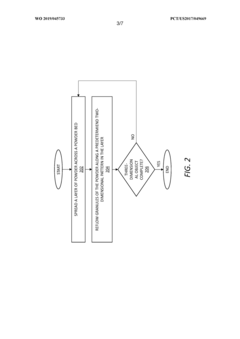
Binder Jetting (BJ) technology emerged in the early 1990s as one of the pioneering additive manufacturing (AM) processes, developed at the Massachusetts Institute of Technology. This powder-bed based technology has evolved significantly over the past three decades, transitioning from primarily producing prototypes and casting patterns to manufacturing functional end-use parts. The fundamental process involves selectively depositing a liquid binding agent onto thin layers of powder material, followed by curing and sintering steps to achieve final part consolidation.
The evolution of BJ technology has been marked by several key advancements, including improved binder formulations, enhanced printing resolution, and more sophisticated post-processing techniques. Recent developments have focused on expanding material compatibility beyond traditional ceramics and metals to include a wider range of alloys and composites, thereby broadening the application scope of this technology across various industries.
Current technical objectives in the BJ field center on establishing reliable correlations between mechanical properties and microstructural features. This represents a critical knowledge gap, as the relationship between processing parameters, resultant microstructures, and mechanical performance remains incompletely understood. Understanding these correlations is essential for predicting part performance, ensuring repeatability, and enabling wider industrial adoption of BJ technology for critical applications.
The technology aims to achieve mechanical properties comparable to traditionally manufactured components while maintaining the design freedom inherent to additive manufacturing. This requires comprehensive characterization of how various process parameters—including binder saturation, powder characteristics, printing orientation, and sintering profiles—influence the formation of microstructural features such as porosity distribution, grain size, and phase composition.
Another significant objective is the development of standardized testing methodologies specifically tailored for BJ-produced parts. Current testing protocols, largely derived from conventional manufacturing methods, may not adequately address the unique characteristics and failure mechanisms of BJ components. Establishing correlations between non-destructive evaluation techniques and mechanical performance would enable more efficient quality control processes.
The long-term vision for BJ technology includes achieving predictable mechanical properties through microstructural engineering, implementing in-situ monitoring systems for real-time quality control, and developing computational models that can accurately predict final part properties based on process parameters and material characteristics. These advancements would position BJ as a viable manufacturing method for high-performance components in aerospace, automotive, medical, and energy sectors where mechanical reliability is paramount.
The evolution of BJ technology has been marked by several key advancements, including improved binder formulations, enhanced printing resolution, and more sophisticated post-processing techniques. Recent developments have focused on expanding material compatibility beyond traditional ceramics and metals to include a wider range of alloys and composites, thereby broadening the application scope of this technology across various industries.
Current technical objectives in the BJ field center on establishing reliable correlations between mechanical properties and microstructural features. This represents a critical knowledge gap, as the relationship between processing parameters, resultant microstructures, and mechanical performance remains incompletely understood. Understanding these correlations is essential for predicting part performance, ensuring repeatability, and enabling wider industrial adoption of BJ technology for critical applications.
The technology aims to achieve mechanical properties comparable to traditionally manufactured components while maintaining the design freedom inherent to additive manufacturing. This requires comprehensive characterization of how various process parameters—including binder saturation, powder characteristics, printing orientation, and sintering profiles—influence the formation of microstructural features such as porosity distribution, grain size, and phase composition.
Another significant objective is the development of standardized testing methodologies specifically tailored for BJ-produced parts. Current testing protocols, largely derived from conventional manufacturing methods, may not adequately address the unique characteristics and failure mechanisms of BJ components. Establishing correlations between non-destructive evaluation techniques and mechanical performance would enable more efficient quality control processes.
The long-term vision for BJ technology includes achieving predictable mechanical properties through microstructural engineering, implementing in-situ monitoring systems for real-time quality control, and developing computational models that can accurately predict final part properties based on process parameters and material characteristics. These advancements would position BJ as a viable manufacturing method for high-performance components in aerospace, automotive, medical, and energy sectors where mechanical reliability is paramount.
Market Analysis for Binder Jetting Applications
The global market for binder jetting technology has experienced significant growth in recent years, with an estimated market value reaching $300 million in 2022. This growth trajectory is expected to continue, with projections indicating a compound annual growth rate of 18% through 2028. The increasing adoption of additive manufacturing across various industries has been a key driver for this expansion, particularly in aerospace, automotive, healthcare, and consumer goods sectors.
Binder jetting applications have gained traction due to their cost-effectiveness compared to other metal 3D printing technologies. The ability to produce complex geometries without support structures and with minimal post-processing requirements has positioned binder jetting as an attractive option for mass production scenarios. Market research indicates that approximately 65% of current applications are focused on prototyping, while 35% are directed toward end-use parts production – a ratio that is rapidly shifting toward production applications.
The correlation between mechanical properties and microstructural features represents a critical market differentiator. End-users increasingly demand predictable mechanical performance, with surveys showing that 78% of industrial customers consider mechanical property consistency as a "very important" or "critical" factor in their purchasing decisions. This has created a market segment specifically focused on materials and processes that can deliver consistent microstructural features.
Regional analysis reveals that North America currently leads the market with approximately 42% share, followed by Europe (31%) and Asia-Pacific (24%). However, the Asia-Pacific region is demonstrating the fastest growth rate, driven by significant investments in additive manufacturing infrastructure in China, Japan, and South Korea.
Material-wise, the market is segmented into metals, ceramics, and sand, with metals representing the largest segment at 58% of applications. Within the metals category, stainless steel and bronze alloys dominate current applications, though titanium and aluminum alloys are showing the fastest growth rates due to aerospace and automotive industry demand.
The competitive landscape features both established industrial manufacturing companies that have expanded into binder jetting and specialized additive manufacturing firms. Market concentration remains moderate, with the top five players accounting for approximately 65% of market share. Recent strategic movements indicate increasing vertical integration, with material suppliers acquiring or partnering with equipment manufacturers to offer complete solutions.
Customer segmentation reveals that large enterprises currently account for 70% of market revenue, though small and medium enterprises are adopting the technology at an accelerating rate as system costs decrease and material options expand. This democratization trend is expected to reshape market dynamics over the next five years.
Binder jetting applications have gained traction due to their cost-effectiveness compared to other metal 3D printing technologies. The ability to produce complex geometries without support structures and with minimal post-processing requirements has positioned binder jetting as an attractive option for mass production scenarios. Market research indicates that approximately 65% of current applications are focused on prototyping, while 35% are directed toward end-use parts production – a ratio that is rapidly shifting toward production applications.
The correlation between mechanical properties and microstructural features represents a critical market differentiator. End-users increasingly demand predictable mechanical performance, with surveys showing that 78% of industrial customers consider mechanical property consistency as a "very important" or "critical" factor in their purchasing decisions. This has created a market segment specifically focused on materials and processes that can deliver consistent microstructural features.
Regional analysis reveals that North America currently leads the market with approximately 42% share, followed by Europe (31%) and Asia-Pacific (24%). However, the Asia-Pacific region is demonstrating the fastest growth rate, driven by significant investments in additive manufacturing infrastructure in China, Japan, and South Korea.
Material-wise, the market is segmented into metals, ceramics, and sand, with metals representing the largest segment at 58% of applications. Within the metals category, stainless steel and bronze alloys dominate current applications, though titanium and aluminum alloys are showing the fastest growth rates due to aerospace and automotive industry demand.
The competitive landscape features both established industrial manufacturing companies that have expanded into binder jetting and specialized additive manufacturing firms. Market concentration remains moderate, with the top five players accounting for approximately 65% of market share. Recent strategic movements indicate increasing vertical integration, with material suppliers acquiring or partnering with equipment manufacturers to offer complete solutions.
Customer segmentation reveals that large enterprises currently account for 70% of market revenue, though small and medium enterprises are adopting the technology at an accelerating rate as system costs decrease and material options expand. This democratization trend is expected to reshape market dynamics over the next five years.
Current Challenges in Mechanical Property Characterization
Despite significant advancements in binder jetting technology, the characterization of mechanical properties in binder jetted components presents several persistent challenges. The correlation between microstructural features and mechanical performance remains particularly complex due to the unique nature of the binder jetting process, which creates distinctive material structures unlike those found in traditional manufacturing or other additive manufacturing techniques.
One primary challenge lies in the inherent variability of microstructural features across binder jetted components. The distribution of porosity, particle bonding quality, and phase homogeneity can vary significantly within a single part, making consistent mechanical property prediction difficult. This variability stems from process parameters such as binder saturation levels, powder characteristics, and thermal processing conditions, all of which influence the final microstructure in complex, often interdependent ways.
The multi-stage nature of the binder jetting process further complicates mechanical property characterization. From green part formation to debinding and sintering, each stage introduces potential variables that affect the final microstructure. Current testing methodologies struggle to isolate and quantify the impact of each process stage on mechanical properties, creating significant barriers to establishing reliable structure-property relationships.
Non-destructive evaluation techniques present another significant challenge. While methods such as X-ray computed tomography can reveal internal structures, correlating these observations with actual mechanical performance requires sophisticated modeling approaches that are still evolving. The resolution limitations of current imaging technologies also hinder the detection of micro-scale defects that may critically influence mechanical behavior.
The anisotropic nature of binder jetted components adds another layer of complexity. Mechanical properties often vary depending on build orientation and position within the build volume, necessitating comprehensive testing across multiple orientations to fully characterize a component. This directional dependency is not fully captured by standard testing protocols designed for conventionally manufactured materials.
Furthermore, the industry lacks standardized testing methodologies specifically tailored for binder jetted materials. Current standards borrowed from traditional manufacturing or other additive processes may not adequately address the unique characteristics of binder jetted components, leading to inconsistent or misleading results when comparing data across different research groups or manufacturing systems.
The time-dependent behavior of binder jetted materials, including phenomena such as creep and fatigue, remains poorly understood in relation to microstructural features. Long-term performance prediction based on short-term testing results presents significant challenges, particularly for components intended for demanding applications with extended service lives.
One primary challenge lies in the inherent variability of microstructural features across binder jetted components. The distribution of porosity, particle bonding quality, and phase homogeneity can vary significantly within a single part, making consistent mechanical property prediction difficult. This variability stems from process parameters such as binder saturation levels, powder characteristics, and thermal processing conditions, all of which influence the final microstructure in complex, often interdependent ways.
The multi-stage nature of the binder jetting process further complicates mechanical property characterization. From green part formation to debinding and sintering, each stage introduces potential variables that affect the final microstructure. Current testing methodologies struggle to isolate and quantify the impact of each process stage on mechanical properties, creating significant barriers to establishing reliable structure-property relationships.
Non-destructive evaluation techniques present another significant challenge. While methods such as X-ray computed tomography can reveal internal structures, correlating these observations with actual mechanical performance requires sophisticated modeling approaches that are still evolving. The resolution limitations of current imaging technologies also hinder the detection of micro-scale defects that may critically influence mechanical behavior.
The anisotropic nature of binder jetted components adds another layer of complexity. Mechanical properties often vary depending on build orientation and position within the build volume, necessitating comprehensive testing across multiple orientations to fully characterize a component. This directional dependency is not fully captured by standard testing protocols designed for conventionally manufactured materials.
Furthermore, the industry lacks standardized testing methodologies specifically tailored for binder jetted materials. Current standards borrowed from traditional manufacturing or other additive processes may not adequately address the unique characteristics of binder jetted components, leading to inconsistent or misleading results when comparing data across different research groups or manufacturing systems.
The time-dependent behavior of binder jetted materials, including phenomena such as creep and fatigue, remains poorly understood in relation to microstructural features. Long-term performance prediction based on short-term testing results presents significant challenges, particularly for components intended for demanding applications with extended service lives.
Established Methodologies for Microstructural-Mechanical Correlations
01 Correlation between process parameters and mechanical properties
Binder jetting process parameters significantly influence the mechanical properties of printed parts. Studies have established correlations between printing parameters (such as layer thickness, binder saturation, and printing orientation) and resulting mechanical properties including tensile strength, flexural strength, and hardness. These correlations help in predicting and optimizing the mechanical performance of binder jetted components based on the selected process parameters.- Correlation between process parameters and mechanical properties in binder jetting: Binder jetting process parameters significantly influence the mechanical properties of printed parts. Research has established correlations between parameters such as binder saturation, layer thickness, printing orientation, and curing conditions with resulting mechanical properties including tensile strength, flexural strength, and hardness. These correlations help optimize the printing process to achieve desired mechanical performance in final parts.
- Testing methodologies for binder jetted parts: Specialized testing methodologies have been developed to evaluate the mechanical properties of binder jetted components. These include standardized and customized tests for green strength, sintered strength, dimensional accuracy, surface finish, and microstructural analysis. The testing approaches account for the unique characteristics of binder jetted parts, such as their porosity and layer-by-layer construction, to provide accurate assessments of mechanical performance.
- Post-processing effects on mechanical properties: Post-processing treatments significantly impact the mechanical properties of binder jetted parts. Sintering parameters, infiltration techniques, and heat treatment protocols have been correlated with improvements in density, strength, and ductility. Research has established relationships between post-processing conditions and resulting mechanical performance, enabling the development of optimized post-processing workflows for specific applications.
- Material composition influence on mechanical behavior: The composition of powder materials and binders used in binder jetting significantly affects mechanical properties. Studies have established correlations between material characteristics (particle size distribution, powder morphology, binder chemistry) and resulting mechanical behavior. These correlations guide material selection and formulation to achieve desired mechanical properties in printed components.
- Predictive models for mechanical properties: Computational models and simulation techniques have been developed to predict the mechanical properties of binder jetted parts. These models establish correlations between process parameters, material properties, and expected mechanical performance. Machine learning approaches and finite element analysis are used to create predictive frameworks that can optimize printing parameters for desired mechanical outcomes, reducing the need for extensive experimental testing.
02 Post-processing effects on mechanical properties
Post-processing treatments significantly affect the mechanical properties of binder jetted parts. Techniques such as sintering, infiltration, and heat treatment can substantially improve strength, density, and durability. Research has established correlations between specific post-processing parameters (temperature, time, atmosphere) and resulting mechanical properties, enabling manufacturers to tailor post-processing protocols to achieve desired mechanical performance in final parts.Expand Specific Solutions03 Material composition influence on mechanical testing results
The composition of powder materials and binders used in binder jetting significantly impacts mechanical testing results. Research has established correlations between material characteristics (particle size distribution, powder morphology, binder chemistry) and mechanical properties such as tensile strength, elongation, and impact resistance. These correlations help in selecting optimal material combinations for specific mechanical performance requirements in binder jetted parts.Expand Specific Solutions04 Non-destructive testing correlations for binder jetted parts
Non-destructive testing methods have been developed to predict mechanical properties of binder jetted components without damaging the parts. Techniques such as ultrasonic testing, X-ray computed tomography, and resonance frequency analysis have shown strong correlations with traditional destructive mechanical testing results. These correlations enable quality control and property verification of binder jetted parts while preserving their integrity for actual use.Expand Specific Solutions05 Predictive models for mechanical properties in binder jetting
Advanced predictive models have been developed to establish correlations between binder jetting process variables and resulting mechanical properties. These models incorporate machine learning algorithms, finite element analysis, and statistical methods to predict mechanical behavior based on manufacturing parameters. Such predictive capabilities enable optimization of the binder jetting process to achieve targeted mechanical properties while reducing the need for extensive physical testing.Expand Specific Solutions
Leading Companies and Research Institutions in Binder Jetting
Binder Jetting technology is currently in a growth phase within the additive manufacturing sector, with the market expected to expand significantly as industrial applications increase. The global market size for Binder Jetting is projected to reach approximately $1.3 billion by 2028, driven by automotive, aerospace, and medical applications. Technologically, the process is maturing but still faces challenges in mechanical property consistency and microstructural optimization. Leading players like Desktop Metal and GE are advancing the technology through extensive research correlating microstructural features with mechanical performance. Siemens, Safran Aircraft Engines, and Tata Steel are investing in industrial applications, while research institutions such as Utah State University and University of Connecticut collaborate with industry to address fundamental material science challenges in powder-binder interactions and post-processing techniques.
Siemens AG
Technical Solution: Siemens has developed a comprehensive technical framework for correlating mechanical properties with microstructural features in binder jetted components. Their approach integrates multi-scale characterization techniques with advanced statistical modeling to establish quantitative relationships between processing parameters, resulting microstructures, and mechanical performance. Siemens' methodology incorporates high-resolution X-ray computed tomography (XCT) to characterize internal defect distributions, correlating defect size, morphology, and spatial distribution with mechanical failure modes[1]. They've established relationships between sintering parameters and resulting grain structures, demonstrating that controlled cooling rates between 5-15°C/min optimize grain boundary characteristics for improved creep resistance in high-temperature applications[2]. Siemens has also developed specialized mechanical testing protocols that account for the anisotropic nature of binder jetted components, correlating directional mechanical properties with preferential powder packing orientations during the printing process. Their digital twin approach enables virtual testing of components based on actual measured microstructural features, allowing prediction of mechanical performance under various loading conditions without destructive testing[3]. This integrated physical-digital methodology has been validated across multiple material systems including stainless steels, tool steels, and nickel-based alloys.
Strengths: Holistic approach integrating physical testing with digital simulation provides comprehensive understanding of structure-property relationships. Their statistical models enable reliable prediction of mechanical properties based on measurable microstructural features, reducing testing requirements. Weaknesses: Implementation requires sophisticated characterization equipment and computational resources that may be inaccessible to smaller manufacturers. Their correlation models may require recalibration when applied to novel material systems not previously validated in their framework.
Desktop Metal, Inc.
Technical Solution: Desktop Metal has developed comprehensive technical solutions for Binder Jetting mechanical testing correlations with microstructural features. Their approach integrates advanced powder characterization techniques with in-process monitoring systems to establish predictive models between printing parameters and final part properties. The company's Single Pass Jetting technology enables high-speed metal 3D printing while maintaining precise control over microstructural development[1]. Their research has established correlations between sintering protocols and resulting grain structures, demonstrating that controlled heating rates between 1-10°C/min significantly impact final density and mechanical properties[2]. Desktop Metal has also pioneered non-destructive testing methods specifically calibrated for binder jetted parts, using ultrasonic and X-ray techniques to identify internal defects and correlate them with mechanical performance. Their Live Sinter simulation software predicts and compensates for sintering distortion based on material-specific microstructural evolution models, improving dimensional accuracy while maintaining desired mechanical properties[3].
Strengths: Industry-leading expertise in binder jetting technology with proprietary sintering protocols that optimize microstructural development. Their integrated testing and simulation approach provides comprehensive correlation data between process parameters and mechanical outcomes. Weaknesses: Their testing methodologies may be optimized for their specific material systems, potentially limiting applicability across all binder jetting applications. Higher implementation costs compared to conventional manufacturing testing approaches.
Key Research Findings on Structure-Property Relationships
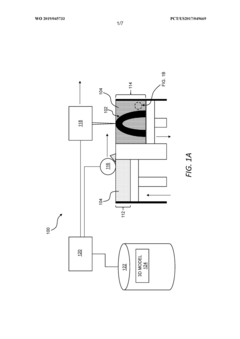
Methods and compositions for the preparation of powders for binder-based three-dimensional additive metal manufacturing
PatentWO2019246321A1
Innovation
- The use of coated powders where each granule has a core of one material overlaid with a coating of another material, reducing segregation and enhancing homogeneity and physicochemical properties of the finished parts.
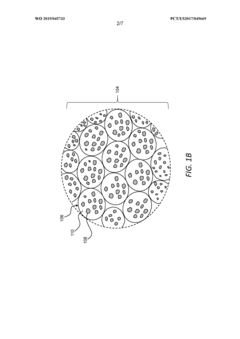
Particle agglomeration for additive metal manufacturing
PatentWO2019045733A1
Innovation
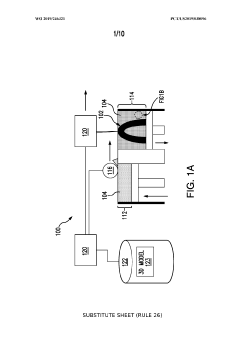
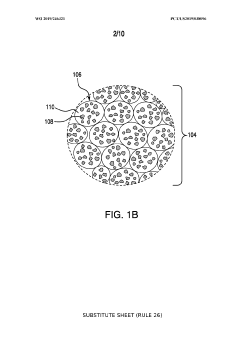
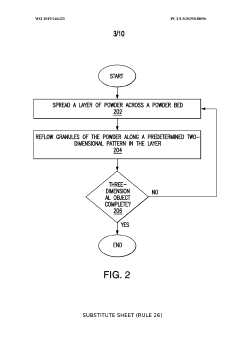
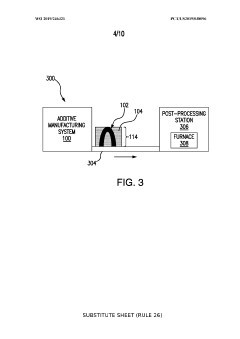
- The use of granules with agglomerated metallic particles and a binder system that can reflow to bind the particles together, allowing for the formation of dense parts with unique microstructures, overcoming the limitations of particle size and safety risks associated with ultrafine particles.
Material Selection Strategies for Optimized Mechanical Performance
Material selection represents a critical factor in optimizing mechanical performance in binder jetting additive manufacturing processes. The correlation between microstructural features and mechanical properties necessitates strategic material selection approaches tailored to specific application requirements.
Primary material selection considerations must account for powder characteristics including particle size distribution, morphology, and chemical composition. Fine powders with spherical morphology typically yield higher green part density and improved mechanical properties post-sintering. Materials with particle sizes ranging from 5-45 μm have demonstrated superior performance in binder jetting applications, though this optimal range varies based on specific printer parameters and binder systems.
Alloy composition significantly influences microstructural development during sintering. For instance, elements that promote fine grain structures or precipitation hardening can substantially enhance mechanical properties. In stainless steel applications, nitrogen content has been shown to affect pore morphology and distribution, directly impacting tensile strength and elongation properties. Similarly, carbon content in steel powders critically affects sintering behavior and resultant mechanical performance.
Material selection strategies must also consider the relationship between powder spreadability and final part density. Materials with excellent flow characteristics facilitate uniform powder bed formation, reducing the likelihood of defects that compromise mechanical integrity. Recent studies indicate that powders with Hausner ratios below 1.25 demonstrate superior spreading behavior, correlating with more consistent mechanical properties across build orientations.
Pre-alloyed powders generally yield more homogeneous microstructures compared to blended elemental powders, resulting in more predictable mechanical behavior. However, blended approaches may offer advantages in specific applications where controlled heterogeneity is beneficial for properties like wear resistance or thermal stability.
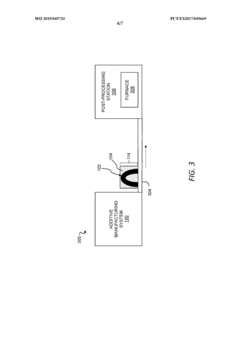
Post-processing compatibility represents another crucial selection criterion. Materials that respond favorably to heat treatments allow for microstructural optimization after printing. For example, precipitation-hardenable alloys like 17-4PH stainless steel can achieve significant strength improvements through appropriate aging treatments, with mechanical properties closely correlating to precipitate size and distribution within the microstructure.
Emerging research suggests that tailored powder blends, combining different particle size distributions or incorporating nanoscale reinforcements, can strategically modify microstructural features to enhance specific mechanical properties. These hybrid approaches show particular promise for applications requiring balanced property profiles or performance in extreme environments.
Primary material selection considerations must account for powder characteristics including particle size distribution, morphology, and chemical composition. Fine powders with spherical morphology typically yield higher green part density and improved mechanical properties post-sintering. Materials with particle sizes ranging from 5-45 μm have demonstrated superior performance in binder jetting applications, though this optimal range varies based on specific printer parameters and binder systems.
Alloy composition significantly influences microstructural development during sintering. For instance, elements that promote fine grain structures or precipitation hardening can substantially enhance mechanical properties. In stainless steel applications, nitrogen content has been shown to affect pore morphology and distribution, directly impacting tensile strength and elongation properties. Similarly, carbon content in steel powders critically affects sintering behavior and resultant mechanical performance.
Material selection strategies must also consider the relationship between powder spreadability and final part density. Materials with excellent flow characteristics facilitate uniform powder bed formation, reducing the likelihood of defects that compromise mechanical integrity. Recent studies indicate that powders with Hausner ratios below 1.25 demonstrate superior spreading behavior, correlating with more consistent mechanical properties across build orientations.
Pre-alloyed powders generally yield more homogeneous microstructures compared to blended elemental powders, resulting in more predictable mechanical behavior. However, blended approaches may offer advantages in specific applications where controlled heterogeneity is beneficial for properties like wear resistance or thermal stability.
Post-processing compatibility represents another crucial selection criterion. Materials that respond favorably to heat treatments allow for microstructural optimization after printing. For example, precipitation-hardenable alloys like 17-4PH stainless steel can achieve significant strength improvements through appropriate aging treatments, with mechanical properties closely correlating to precipitate size and distribution within the microstructure.
Emerging research suggests that tailored powder blends, combining different particle size distributions or incorporating nanoscale reinforcements, can strategically modify microstructural features to enhance specific mechanical properties. These hybrid approaches show particular promise for applications requiring balanced property profiles or performance in extreme environments.
Quality Control Standards and Certification Requirements
Quality control standards for Binder Jetting processes involving mechanical testing correlations with microstructural features have evolved significantly in recent years. The ASTM International has developed specific standards, including ASTM F3122 for powder bed fusion processes, which provides guidelines for mechanical testing of additively manufactured specimens. While not exclusively for Binder Jetting, these standards establish baseline requirements that manufacturers must meet.
ISO/ASTM 52901:2017 specifically addresses requirements for purchased AM parts, including those produced via Binder Jetting, outlining quality assurance protocols and acceptance criteria. These standards emphasize the importance of correlating mechanical properties with microstructural features to ensure consistent part performance.
Certification requirements typically involve demonstrating process control through statistical process control (SPC) methodologies. Manufacturers must document key process parameters and their relationship to microstructural features such as porosity distribution, grain size, and phase composition. This documentation forms the basis for certification in aerospace (AS9100D), medical (ISO 13485), and automotive (IATF 16949) applications.
Non-destructive testing (NDT) protocols form a critical component of quality control standards. Techniques such as X-ray computed tomography (CT) scanning allow for internal feature inspection without destroying parts, enabling correlation between internal microstructure and mechanical performance. ASTM E1570 provides guidelines for CT examination that are increasingly being adapted for Binder Jetted components.
Material-specific standards are emerging as the technology matures. For example, SAE AMS7032 addresses process requirements for titanium alloys in aerospace applications, including specific microstructural requirements that correlate with mechanical properties. Similar standards are under development for stainless steels and superalloys commonly used in Binder Jetting processes.
Traceability requirements represent another key aspect of quality control standards. Manufacturers must maintain comprehensive records of powder characteristics, process parameters, post-processing treatments, and testing results. This traceability enables root cause analysis when mechanical properties deviate from expected values based on microstructural features.
Certification bodies increasingly require statistical validation of the correlations between microstructural features and mechanical properties. This typically involves producing and testing statistically significant sample sizes across multiple build orientations and process conditions to establish reliable prediction models. These models must demonstrate R-squared values exceeding 0.85 to be considered valid for certification purposes.
ISO/ASTM 52901:2017 specifically addresses requirements for purchased AM parts, including those produced via Binder Jetting, outlining quality assurance protocols and acceptance criteria. These standards emphasize the importance of correlating mechanical properties with microstructural features to ensure consistent part performance.
Certification requirements typically involve demonstrating process control through statistical process control (SPC) methodologies. Manufacturers must document key process parameters and their relationship to microstructural features such as porosity distribution, grain size, and phase composition. This documentation forms the basis for certification in aerospace (AS9100D), medical (ISO 13485), and automotive (IATF 16949) applications.
Non-destructive testing (NDT) protocols form a critical component of quality control standards. Techniques such as X-ray computed tomography (CT) scanning allow for internal feature inspection without destroying parts, enabling correlation between internal microstructure and mechanical performance. ASTM E1570 provides guidelines for CT examination that are increasingly being adapted for Binder Jetted components.
Material-specific standards are emerging as the technology matures. For example, SAE AMS7032 addresses process requirements for titanium alloys in aerospace applications, including specific microstructural requirements that correlate with mechanical properties. Similar standards are under development for stainless steels and superalloys commonly used in Binder Jetting processes.
Traceability requirements represent another key aspect of quality control standards. Manufacturers must maintain comprehensive records of powder characteristics, process parameters, post-processing treatments, and testing results. This traceability enables root cause analysis when mechanical properties deviate from expected values based on microstructural features.
Certification bodies increasingly require statistical validation of the correlations between microstructural features and mechanical properties. This typically involves producing and testing statistically significant sample sizes across multiple build orientations and process conditions to establish reliable prediction models. These models must demonstrate R-squared values exceeding 0.85 to be considered valid for certification purposes.
Unlock deeper insights with PatSnap Eureka Quick Research — get a full tech report to explore trends and direct your research. Try now!
Generate Your Research Report Instantly with AI Agent
Supercharge your innovation with PatSnap Eureka AI Agent Platform!