

Ceramic Thermal Spray Process Modeling and Simulation
OCT 22, 20259 MIN READ
Generate Your Research Report Instantly with AI Agent
PatSnap Eureka helps you evaluate technical feasibility & market potential.
Ceramic Thermal Spray Technology Evolution and Objectives
Ceramic thermal spray technology has evolved significantly over the past seven decades since its initial development in the 1940s. The process began as a simple flame spray technique but has since diversified into various sophisticated methods including plasma spray, high-velocity oxy-fuel (HVOF), detonation gun, and cold spray processes. Each evolutionary step has addressed specific limitations of previous techniques, particularly in terms of coating density, adhesion strength, and process efficiency.
The 1970s marked a pivotal era with the introduction of vacuum plasma spraying, which substantially reduced oxidation issues in reactive materials. The 1980s and 1990s witnessed significant advancements in process control systems and the integration of computational modeling, enabling more precise parameter optimization. Recent developments have focused on nanostructured coatings and suspension/solution precursor methods, which offer enhanced performance characteristics including improved wear resistance, thermal insulation, and corrosion protection.
Current technological trends indicate a shift toward more environmentally sustainable processes with reduced energy consumption and waste generation. Additionally, there is growing interest in hybrid techniques that combine the advantages of multiple spray methods to achieve coatings with superior properties. The integration of in-situ monitoring and real-time control systems represents another frontier, allowing for adaptive process adjustments during deposition.
The primary objectives of ceramic thermal spray process modeling and simulation are multifaceted. First, they aim to develop comprehensive mathematical models that accurately capture the complex physics of particle heating, acceleration, impact, and solidification. Second, they seek to establish reliable correlations between process parameters and coating microstructure, which directly influences functional properties. Third, they strive to optimize process efficiency by minimizing material waste and energy consumption while maximizing deposition rates and coating quality.
Furthermore, these modeling efforts are directed toward predicting coating performance under various service conditions, including thermal cycling, mechanical loading, and corrosive environments. This predictive capability is crucial for extending component lifespans in critical applications such as gas turbines, aerospace components, and biomedical implants. The ultimate goal is to transition from empirical, trial-and-error approaches to knowledge-based design methodologies that enable rapid development of tailored coating solutions for specific industrial challenges.
The 1970s marked a pivotal era with the introduction of vacuum plasma spraying, which substantially reduced oxidation issues in reactive materials. The 1980s and 1990s witnessed significant advancements in process control systems and the integration of computational modeling, enabling more precise parameter optimization. Recent developments have focused on nanostructured coatings and suspension/solution precursor methods, which offer enhanced performance characteristics including improved wear resistance, thermal insulation, and corrosion protection.
Current technological trends indicate a shift toward more environmentally sustainable processes with reduced energy consumption and waste generation. Additionally, there is growing interest in hybrid techniques that combine the advantages of multiple spray methods to achieve coatings with superior properties. The integration of in-situ monitoring and real-time control systems represents another frontier, allowing for adaptive process adjustments during deposition.
The primary objectives of ceramic thermal spray process modeling and simulation are multifaceted. First, they aim to develop comprehensive mathematical models that accurately capture the complex physics of particle heating, acceleration, impact, and solidification. Second, they seek to establish reliable correlations between process parameters and coating microstructure, which directly influences functional properties. Third, they strive to optimize process efficiency by minimizing material waste and energy consumption while maximizing deposition rates and coating quality.
Furthermore, these modeling efforts are directed toward predicting coating performance under various service conditions, including thermal cycling, mechanical loading, and corrosive environments. This predictive capability is crucial for extending component lifespans in critical applications such as gas turbines, aerospace components, and biomedical implants. The ultimate goal is to transition from empirical, trial-and-error approaches to knowledge-based design methodologies that enable rapid development of tailored coating solutions for specific industrial challenges.
Market Analysis for Ceramic Thermal Spray Applications
The global ceramic thermal spray coatings market is experiencing robust growth, valued at approximately $2.3 billion in 2022 and projected to reach $3.5 billion by 2028, representing a compound annual growth rate (CAGR) of 7.2%. This growth is primarily driven by increasing demand across aerospace, automotive, healthcare, and energy sectors, where thermal protection, wear resistance, and corrosion prevention are critical requirements.
The aerospace industry remains the largest consumer of ceramic thermal spray applications, accounting for nearly 35% of the market share. This dominance stems from the essential role these coatings play in protecting turbine blades, combustion chambers, and other high-temperature components. The automotive sector follows closely, with growing adoption in engine components, exhaust systems, and cylinder liners to enhance performance and durability.
Regionally, North America and Europe currently lead the market with combined market share exceeding 60%, attributed to their established aerospace and automotive manufacturing bases. However, the Asia-Pacific region is witnessing the fastest growth rate at 9.5% annually, driven by rapid industrialization in China and India, alongside expanding manufacturing capabilities in Japan and South Korea.
Technological advancements are reshaping market dynamics, with plasma spray dominating at 45% market share due to its versatility and reliability. However, high-velocity oxy-fuel (HVOF) and cold spray technologies are gaining traction, growing at 10.3% and 12.1% respectively, as they offer improved coating quality and reduced process temperatures.
Customer demand is increasingly focused on environmentally sustainable solutions with reduced waste and energy consumption. This trend is driving innovation in water-based slurry systems and powder feedstock optimization, creating new market opportunities for suppliers who can deliver eco-friendly alternatives.
The competitive landscape features both established players like Oerlikon Metco, Praxair Surface Technologies, and H.C. Starck, alongside emerging specialists. Market consolidation is evident through strategic acquisitions, as companies seek to expand their technological capabilities and geographic reach.
Future market growth will be significantly influenced by advancements in modeling and simulation technologies, as these tools enable manufacturers to optimize spray parameters, reduce material waste, and improve coating performance. Industries are increasingly willing to invest in advanced ceramic thermal spray solutions that offer demonstrable improvements in component lifespan and performance, creating substantial opportunities for companies that can effectively leverage simulation-driven innovation.
The aerospace industry remains the largest consumer of ceramic thermal spray applications, accounting for nearly 35% of the market share. This dominance stems from the essential role these coatings play in protecting turbine blades, combustion chambers, and other high-temperature components. The automotive sector follows closely, with growing adoption in engine components, exhaust systems, and cylinder liners to enhance performance and durability.
Regionally, North America and Europe currently lead the market with combined market share exceeding 60%, attributed to their established aerospace and automotive manufacturing bases. However, the Asia-Pacific region is witnessing the fastest growth rate at 9.5% annually, driven by rapid industrialization in China and India, alongside expanding manufacturing capabilities in Japan and South Korea.
Technological advancements are reshaping market dynamics, with plasma spray dominating at 45% market share due to its versatility and reliability. However, high-velocity oxy-fuel (HVOF) and cold spray technologies are gaining traction, growing at 10.3% and 12.1% respectively, as they offer improved coating quality and reduced process temperatures.
Customer demand is increasingly focused on environmentally sustainable solutions with reduced waste and energy consumption. This trend is driving innovation in water-based slurry systems and powder feedstock optimization, creating new market opportunities for suppliers who can deliver eco-friendly alternatives.
The competitive landscape features both established players like Oerlikon Metco, Praxair Surface Technologies, and H.C. Starck, alongside emerging specialists. Market consolidation is evident through strategic acquisitions, as companies seek to expand their technological capabilities and geographic reach.
Future market growth will be significantly influenced by advancements in modeling and simulation technologies, as these tools enable manufacturers to optimize spray parameters, reduce material waste, and improve coating performance. Industries are increasingly willing to invest in advanced ceramic thermal spray solutions that offer demonstrable improvements in component lifespan and performance, creating substantial opportunities for companies that can effectively leverage simulation-driven innovation.
Current Challenges in Thermal Spray Process Modeling
Despite significant advancements in thermal spray technology, the modeling and simulation of ceramic thermal spray processes continue to face substantial challenges. The multi-physics nature of the process, involving complex interactions between plasma/flame dynamics, particle behavior, and substrate conditions, creates formidable computational obstacles. Current models struggle to accurately capture the non-linear relationships between process parameters and coating properties, particularly for ceramic materials with their unique thermal and mechanical characteristics.
Scale disparity presents another major challenge, as thermal spray processes span multiple length scales (from nanometers to centimeters) and time scales (from microseconds to minutes). Existing computational frameworks often fail to bridge these scales effectively, leading to incomplete or inaccurate predictions of coating microstructure and performance.
The stochastic nature of particle behavior during flight and impact introduces significant variability that current deterministic models cannot adequately address. This randomness affects particle trajectory, temperature distribution, and solidification patterns, ultimately influencing coating quality and reproducibility. While some probabilistic approaches have emerged, they remain computationally intensive and difficult to validate.
Material property data for ceramics at extreme temperatures and strain rates is notably scarce, forcing researchers to rely on extrapolations or approximations that compromise model accuracy. The rapid phase transformations and non-equilibrium solidification that occur during ceramic thermal spray further complicate the modeling landscape, as these phenomena are poorly represented in current simulation frameworks.
Validation methodologies present additional hurdles, as direct measurement of in-flight particle properties and real-time coating formation processes remains technically challenging. The lack of standardized benchmarks for model validation hampers progress in developing more accurate simulation tools.
Computational resource limitations continue to constrain model complexity and resolution. Full-scale simulations incorporating all relevant physical phenomena often require prohibitive computing power, forcing researchers to make simplifying assumptions that may compromise predictive accuracy.
Integration of machine learning approaches with physics-based models represents a promising but underdeveloped direction. While initial efforts have shown potential for improving prediction accuracy and computational efficiency, the lack of comprehensive training datasets and interpretable AI frameworks limits widespread implementation in industrial settings.
Scale disparity presents another major challenge, as thermal spray processes span multiple length scales (from nanometers to centimeters) and time scales (from microseconds to minutes). Existing computational frameworks often fail to bridge these scales effectively, leading to incomplete or inaccurate predictions of coating microstructure and performance.
The stochastic nature of particle behavior during flight and impact introduces significant variability that current deterministic models cannot adequately address. This randomness affects particle trajectory, temperature distribution, and solidification patterns, ultimately influencing coating quality and reproducibility. While some probabilistic approaches have emerged, they remain computationally intensive and difficult to validate.
Material property data for ceramics at extreme temperatures and strain rates is notably scarce, forcing researchers to rely on extrapolations or approximations that compromise model accuracy. The rapid phase transformations and non-equilibrium solidification that occur during ceramic thermal spray further complicate the modeling landscape, as these phenomena are poorly represented in current simulation frameworks.
Validation methodologies present additional hurdles, as direct measurement of in-flight particle properties and real-time coating formation processes remains technically challenging. The lack of standardized benchmarks for model validation hampers progress in developing more accurate simulation tools.
Computational resource limitations continue to constrain model complexity and resolution. Full-scale simulations incorporating all relevant physical phenomena often require prohibitive computing power, forcing researchers to make simplifying assumptions that may compromise predictive accuracy.
Integration of machine learning approaches with physics-based models represents a promising but underdeveloped direction. While initial efforts have shown potential for improving prediction accuracy and computational efficiency, the lack of comprehensive training datasets and interpretable AI frameworks limits widespread implementation in industrial settings.
State-of-the-Art Simulation Approaches for Thermal Spray
01 Ceramic coating compositions for thermal spray processes
Various ceramic compositions have been developed specifically for thermal spray applications. These compositions typically include ceramic materials such as zirconia, alumina, or their combinations, which provide excellent thermal resistance and durability. The compositions may also contain binding agents, stabilizers, or other additives to enhance the coating performance. These specialized formulations ensure optimal adhesion to substrates and desired thermal barrier properties when applied through thermal spray processes.- Ceramic coating compositions for thermal spray processes: Various ceramic coating compositions have been developed specifically for thermal spray applications. These compositions typically include ceramic materials such as zirconia, alumina, or titanium dioxide, which provide excellent thermal resistance and durability. The compositions may also contain binders, dispersants, and other additives to improve adhesion and performance. These specialized formulations enable the creation of high-quality ceramic coatings with enhanced thermal and mechanical properties.
- Thermal spray equipment and application methods: Specialized equipment and application techniques are essential for effective ceramic thermal spray processes. This includes plasma spray guns, HVOF (High Velocity Oxy-Fuel) systems, and other thermal spray devices designed to properly melt and propel ceramic particles. The application methods involve controlling parameters such as spray distance, angle, temperature, and particle velocity to achieve optimal coating properties. Advanced monitoring systems may be used to ensure consistent quality during the spraying process.
- Surface preparation and post-treatment techniques: Proper surface preparation before thermal spraying and post-treatment after application are crucial for ceramic coating performance. Surface preparation typically involves cleaning, grit blasting, or chemical treatments to ensure proper adhesion. Post-treatment techniques may include sealing, heat treatment, or machining to enhance coating properties such as density, hardness, and corrosion resistance. These steps significantly impact the quality and longevity of the ceramic thermal spray coatings.
- Specialized ceramic thermal spray applications: Ceramic thermal spray processes have been developed for specific industrial applications requiring unique performance characteristics. These include thermal barrier coatings for gas turbines, wear-resistant coatings for industrial equipment, electrical insulation coatings, and biocompatible coatings for medical implants. Each application requires tailored ceramic compositions and spray parameters to meet specific requirements such as thermal cycling resistance, erosion protection, or biocompatibility.
- Process optimization and quality control methods: Advanced methods for optimizing ceramic thermal spray processes and ensuring quality control have been developed. These include computational modeling to predict coating properties, in-process monitoring systems to detect defects, and non-destructive testing techniques to evaluate coating quality. Statistical process control approaches help maintain consistency in production environments, while innovative parameter optimization techniques improve coating performance and reduce production costs.
02 Thermal spray equipment and application methods
Specialized equipment and application techniques are essential for ceramic thermal spray processes. This includes plasma spray guns, high-velocity oxygen fuel (HVOF) systems, and other thermal spray devices designed to melt and propel ceramic particles onto substrates. The equipment must control parameters such as temperature, particle velocity, and spray pattern to ensure uniform coating deposition. Advanced application methods may incorporate robotic systems for precise coating application and real-time monitoring systems to maintain quality control during the spraying process.Expand Specific Solutions03 Surface preparation and post-treatment techniques
Proper surface preparation before thermal spraying and post-treatment after coating application are crucial for coating quality and performance. Surface preparation techniques include grit blasting, chemical cleaning, and application of bond coats to enhance adhesion. Post-treatment processes may involve heat treatment, sealing, or polishing to improve coating properties such as density, hardness, and corrosion resistance. These preparation and finishing steps significantly influence the final coating's durability, adhesion strength, and functional performance.Expand Specific Solutions04 Specialized ceramic thermal spray applications
Ceramic thermal spray coatings are utilized in various specialized applications across industries. These include thermal barrier coatings for gas turbine components, wear-resistant coatings for industrial equipment, corrosion-resistant layers for chemical processing equipment, and electrically insulating coatings for electronic components. The specific application requirements dictate the ceramic composition, coating thickness, and spray parameters. Advanced applications may involve functionally graded coatings with varying compositions throughout the coating thickness to optimize performance characteristics.Expand Specific Solutions05 Quality control and performance testing of ceramic thermal spray coatings
Various methods are employed to evaluate and ensure the quality of ceramic thermal spray coatings. These include non-destructive testing techniques such as ultrasonic inspection, thermal imaging, and X-ray diffraction to assess coating integrity and structure. Performance testing involves evaluating thermal cycling resistance, erosion resistance, bond strength, and thermal conductivity. Advanced analytical techniques may be used to characterize microstructure, phase composition, and porosity. These quality control measures are essential for validating coating performance and ensuring compliance with industry specifications.Expand Specific Solutions
Leading Companies and Research Institutions in Thermal Spray
Ceramic Thermal Spray Process Modeling and Simulation is currently in a growth phase, with the market expanding due to increasing applications in aerospace, power generation, and automotive industries. The global thermal spray coating market is projected to reach approximately $15 billion by 2026, driven by demand for high-performance surface treatments. Technologically, the field is advancing from empirical approaches to sophisticated computational modeling. Leading players include established companies like Sulzer-Metco and Oerlikon Metco, which offer comprehensive industrial solutions, while Tocalo and Inframat Corporation focus on specialized applications. Academic institutions such as Tsinghua University and University of Connecticut are contributing significant research advancements. Japanese manufacturers like Niterra and NHK Spring are integrating these technologies into automotive and industrial applications, while aerospace giants Rolls-Royce and Mitsubishi Power are developing advanced turbine coating systems.
Sulzer-Metco
Technical Solution: Sulzer-Metco (now part of Oerlikon following acquisition) pioneered comprehensive ceramic thermal spray modeling approaches that combine particle in-flight behavior with coating formation mechanisms. Their technical solution employs a multi-scale modeling framework that bridges microscopic phenomena (particle melting, flattening, and solidification) with macroscopic coating properties (thickness distribution, residual stress profiles, and thermal conductivity)[2]. The company developed specialized algorithms to simulate plasma fluctuations and their effects on coating consistency, particularly important for ceramic materials with high melting points. Their models incorporate feedstock powder characteristics (size distribution, morphology, and thermal properties) as critical inputs that determine coating quality[4]. Sulzer-Metco's simulation platform enables virtual process optimization by predicting the influence of spray parameters (current, gas flow rates, spray distance) on coating microstructure and performance metrics[6].
Strengths: Extensive industrial validation across diverse ceramic materials; robust correlation between simulated and measured coating properties; practical implementation in production environments. Weaknesses: Some models rely on semi-empirical approaches rather than first principles; computational intensity limits real-time applications; historical focus on plasma spray with less emphasis on newer thermal spray variants.
Oerlikon Metco (US), Inc.
Technical Solution: Oerlikon Metco has developed advanced computational fluid dynamics (CFD) models for ceramic thermal spray processes that simulate particle trajectories, temperatures, and velocities within plasma and HVOF spray systems. Their approach integrates multi-physics modeling to account for plasma-particle interactions, heat transfer mechanisms, and solidification kinetics during coating formation[1]. The company's simulation platform incorporates particle size distribution effects and can predict coating microstructure development based on spray parameters. Notably, their models account for substrate temperature evolution and residual stress development during deposition[3]. Oerlikon's simulation capabilities extend to predicting coating porosity, oxide content, and adhesion strength based on process parameters, enabling digital twin approaches for thermal spray operations that reduce physical testing requirements and accelerate coating development cycles[5].
Strengths: Industry-leading integration of multi-physics models with practical process control systems; extensive validation against real-world coating results; ability to predict microstructural features and mechanical properties. Weaknesses: Models may require significant computational resources; some material-specific parameters require empirical calibration; limited public disclosure of proprietary modeling techniques.
Key Computational Models and Algorithms for Spray Process
Method for determining process parameters in a thermal spraying process
PatentInactiveEP1847629A2
Innovation
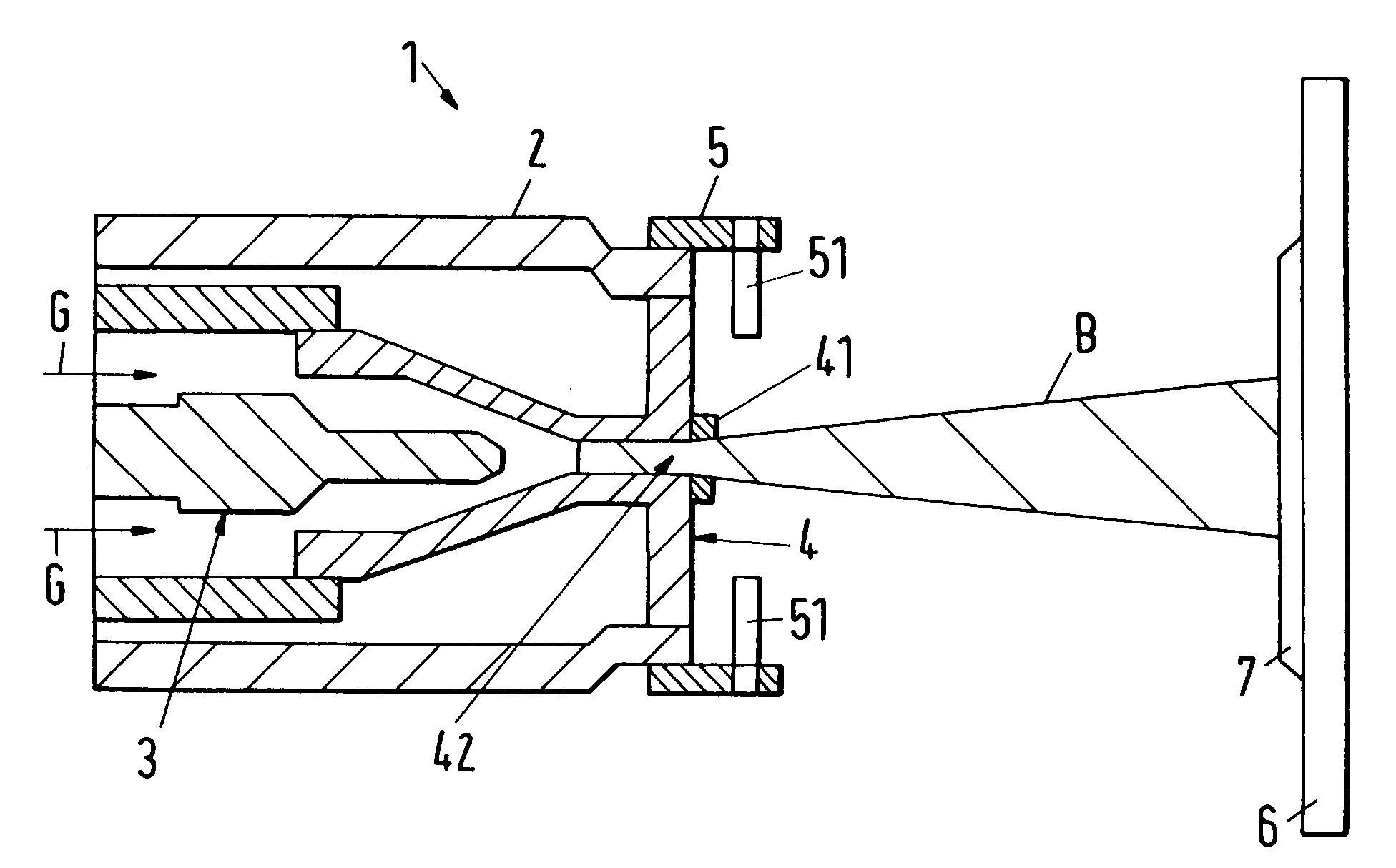
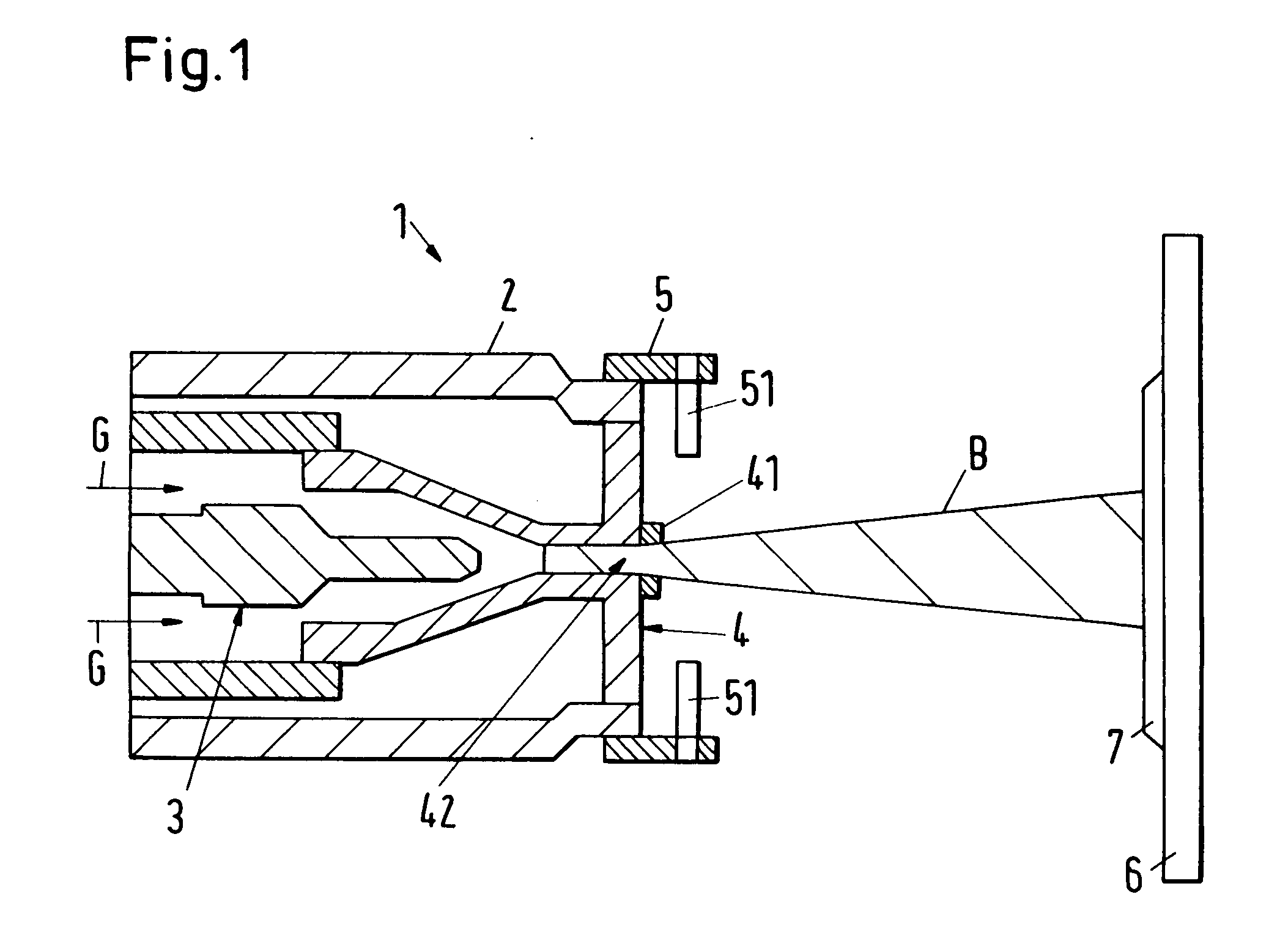
- A method that uses a coupled fluid mechanical and electromagnetic model to simulate the thermal spraying process, allowing for the determination of process parameters without direct measurement, enabling precise optimization of device design and operation.


Method for the determination of process parameters in a thermal spraying process
PatentInactiveUS20070248744A1
Innovation
- A method that constructs an operating model combining a flow mechanical model and an electromagnetic model to simulate the thermal spraying process, allowing for the determination of process parameters without direct measurement, enabling the optimization of thermal spraying apparatuses and coatings under various conditions.
Material Science Considerations for Ceramic Coatings
The selection of appropriate ceramic materials for thermal spray coatings requires comprehensive understanding of material properties and their behavior under extreme conditions. Ceramic materials such as alumina (Al₂O₃), zirconia (ZrO₂), and yttria-stabilized zirconia (YSZ) are commonly utilized in thermal spray applications due to their exceptional thermal resistance and mechanical stability. These materials exhibit distinct crystallographic structures that significantly influence their performance characteristics in coating applications.
Material phase transformations during the thermal spray process represent a critical consideration. When ceramic particles are heated to near-melting temperatures and rapidly cooled upon impact with the substrate, they undergo complex phase changes that affect the final coating microstructure. For instance, zirconia can transform between monoclinic, tetragonal, and cubic phases depending on temperature and cooling rate, with each phase offering different mechanical and thermal properties.
Particle size distribution plays a fundamental role in determining coating quality. Optimal particle size ranges typically fall between 10-100 μm, with narrower distributions generally producing more homogeneous coatings. Smaller particles tend to achieve higher degrees of melting during flight, while larger particles may remain partially unmelted, creating a composite microstructure that can enhance certain mechanical properties such as fracture toughness.
The chemical composition of ceramic feedstock materials directly influences coating performance characteristics. Minor dopants and stabilizers can dramatically alter material behavior. For example, the addition of 7-8 wt% yttria to zirconia stabilizes the tetragonal phase, preventing detrimental phase transformations during thermal cycling and significantly improving coating durability in high-temperature applications.
Porosity control represents another essential aspect of ceramic coating development. While conventional wisdom often suggests minimizing porosity, controlled porosity can be beneficial for specific applications. Thermal barrier coatings, for instance, benefit from 10-15% porosity that reduces thermal conductivity, while wear-resistant coatings typically require higher density to maximize hardness and erosion resistance.
The thermal expansion coefficient mismatch between ceramic coatings and metallic substrates presents a significant challenge. This mismatch generates residual stresses during cooling that can lead to coating delamination or cracking. Bond coat layers composed of MCrAlY alloys are frequently employed to mitigate these effects by providing a gradual transition in thermal expansion properties between the substrate and ceramic topcoat.
Material phase transformations during the thermal spray process represent a critical consideration. When ceramic particles are heated to near-melting temperatures and rapidly cooled upon impact with the substrate, they undergo complex phase changes that affect the final coating microstructure. For instance, zirconia can transform between monoclinic, tetragonal, and cubic phases depending on temperature and cooling rate, with each phase offering different mechanical and thermal properties.
Particle size distribution plays a fundamental role in determining coating quality. Optimal particle size ranges typically fall between 10-100 μm, with narrower distributions generally producing more homogeneous coatings. Smaller particles tend to achieve higher degrees of melting during flight, while larger particles may remain partially unmelted, creating a composite microstructure that can enhance certain mechanical properties such as fracture toughness.
The chemical composition of ceramic feedstock materials directly influences coating performance characteristics. Minor dopants and stabilizers can dramatically alter material behavior. For example, the addition of 7-8 wt% yttria to zirconia stabilizes the tetragonal phase, preventing detrimental phase transformations during thermal cycling and significantly improving coating durability in high-temperature applications.
Porosity control represents another essential aspect of ceramic coating development. While conventional wisdom often suggests minimizing porosity, controlled porosity can be beneficial for specific applications. Thermal barrier coatings, for instance, benefit from 10-15% porosity that reduces thermal conductivity, while wear-resistant coatings typically require higher density to maximize hardness and erosion resistance.
The thermal expansion coefficient mismatch between ceramic coatings and metallic substrates presents a significant challenge. This mismatch generates residual stresses during cooling that can lead to coating delamination or cracking. Bond coat layers composed of MCrAlY alloys are frequently employed to mitigate these effects by providing a gradual transition in thermal expansion properties between the substrate and ceramic topcoat.
Industrial Standards and Quality Control Methods
The ceramic thermal spray industry operates under a comprehensive framework of standards and quality control methodologies that ensure process reliability and product performance. Organizations such as the International Organization for Standardization (ISO), American Society for Testing and Materials (ASTM), and the Thermal Spray Society (TSS) have established critical standards specifically for thermal spray processes, including ISO 14924 for metallic and ceramic coatings and ASTM C633 for adhesion testing.
Quality control in ceramic thermal spray processes begins with rigorous material characterization. Powder feedstock must meet strict specifications for particle size distribution, morphology, and chemical composition. Advanced techniques such as laser diffraction analysis, scanning electron microscopy (SEM), and X-ray diffraction (XRD) are routinely employed to verify these parameters before processing begins.
Process parameter monitoring represents another crucial aspect of quality assurance. Modern thermal spray systems incorporate sophisticated sensors that continuously track critical variables including plasma/flame temperature, particle velocity, substrate temperature, and spray distance. Statistical Process Control (SPC) methodologies are widely implemented to maintain these parameters within established control limits, enabling real-time adjustments to prevent defects.
Post-deposition inspection protocols form the backbone of coating quality verification. Non-destructive testing methods such as ultrasonic thickness measurement, eddy current testing, and thermography allow for comprehensive evaluation without compromising the coating integrity. For more detailed analysis, destructive testing including cross-sectional microscopy, porosity measurement, and hardness testing provide definitive data on coating microstructure and mechanical properties.
The aerospace and medical device industries have driven the development of particularly stringent standards, with requirements for 100% inspection and complete process traceability. Digital quality management systems now integrate all inspection data, creating comprehensive records that facilitate regulatory compliance and continuous improvement initiatives.
Recent advancements in quality control methodologies include the integration of artificial intelligence and machine learning algorithms that can detect subtle process deviations before they manifest as coating defects. These predictive quality systems analyze patterns across multiple process variables, significantly reducing rejection rates in high-precision applications.
Certification programs for thermal spray operators and facilities, such as those offered by the American Welding Society (AWS), ensure that personnel possess the necessary skills to maintain quality standards. These certifications typically require demonstrated proficiency in process control, equipment maintenance, and quality inspection techniques.
Quality control in ceramic thermal spray processes begins with rigorous material characterization. Powder feedstock must meet strict specifications for particle size distribution, morphology, and chemical composition. Advanced techniques such as laser diffraction analysis, scanning electron microscopy (SEM), and X-ray diffraction (XRD) are routinely employed to verify these parameters before processing begins.
Process parameter monitoring represents another crucial aspect of quality assurance. Modern thermal spray systems incorporate sophisticated sensors that continuously track critical variables including plasma/flame temperature, particle velocity, substrate temperature, and spray distance. Statistical Process Control (SPC) methodologies are widely implemented to maintain these parameters within established control limits, enabling real-time adjustments to prevent defects.
Post-deposition inspection protocols form the backbone of coating quality verification. Non-destructive testing methods such as ultrasonic thickness measurement, eddy current testing, and thermography allow for comprehensive evaluation without compromising the coating integrity. For more detailed analysis, destructive testing including cross-sectional microscopy, porosity measurement, and hardness testing provide definitive data on coating microstructure and mechanical properties.
The aerospace and medical device industries have driven the development of particularly stringent standards, with requirements for 100% inspection and complete process traceability. Digital quality management systems now integrate all inspection data, creating comprehensive records that facilitate regulatory compliance and continuous improvement initiatives.
Recent advancements in quality control methodologies include the integration of artificial intelligence and machine learning algorithms that can detect subtle process deviations before they manifest as coating defects. These predictive quality systems analyze patterns across multiple process variables, significantly reducing rejection rates in high-precision applications.
Certification programs for thermal spray operators and facilities, such as those offered by the American Welding Society (AWS), ensure that personnel possess the necessary skills to maintain quality standards. These certifications typically require demonstrated proficiency in process control, equipment maintenance, and quality inspection techniques.
Unlock deeper insights with PatSnap Eureka Quick Research — get a full tech report to explore trends and direct your research. Try now!
Generate Your Research Report Instantly with AI Agent
Supercharge your innovation with PatSnap Eureka AI Agent Platform!