Comparing Diesel Particulate Filter Emission Profiles
SEP 18, 20259 MIN READ
Generate Your Research Report Instantly with AI Agent
Patsnap Eureka helps you evaluate technical feasibility & market potential.
DPF Technology Background and Objectives
Diesel Particulate Filters (DPFs) emerged in the 1980s as a response to increasingly stringent emission regulations worldwide, particularly targeting particulate matter (PM) from diesel engines. The technology has evolved significantly over the past four decades, transforming from rudimentary filtration systems to sophisticated emission control devices that can capture over 95% of diesel particulate matter. This evolution has been driven by the dual pressures of regulatory compliance and the growing awareness of diesel exhaust's impact on public health and the environment.
The historical development of DPF technology can be traced through several key phases. Initially, ceramic wall-flow filters dominated the market, characterized by their honeycomb structure that forced exhaust gases through porous walls while trapping particulates. Subsequently, the industry witnessed the introduction of metal fiber filters, sintered metal filters, and partial flow filters, each offering distinct advantages in terms of filtration efficiency, backpressure management, and regeneration capabilities.
Current technological trends in DPF development focus on enhancing filter durability, reducing system complexity, improving regeneration efficiency, and minimizing the fuel economy penalty associated with DPF operation. Advanced materials science has enabled the development of filters with optimized pore structures and improved thermal stability, while sophisticated control algorithms have enhanced regeneration strategies to extend filter life and maintain performance.
The primary objective of comparing DPF emission profiles is to establish a comprehensive understanding of how different filter designs, materials, and operating conditions influence the quantity and composition of emissions across various diesel applications. This comparison aims to identify optimal DPF configurations for specific use cases, ranging from light-duty passenger vehicles to heavy-duty commercial trucks and off-road machinery.
Additional technical goals include quantifying the relationship between filter properties (porosity, cell density, wall thickness) and emission reduction efficiency, evaluating the impact of various regeneration strategies on long-term filter performance, and assessing the effectiveness of different catalyst formulations in reducing secondary emissions during regeneration events. These objectives align with the broader industry goal of developing next-generation DPF systems that balance regulatory compliance with practical considerations such as cost, maintenance requirements, and operational reliability.
The ultimate aim is to establish a scientific foundation for the design and optimization of application-specific DPF systems that can meet increasingly stringent emission standards while maintaining acceptable performance parameters for end-users across diverse operational environments.
The historical development of DPF technology can be traced through several key phases. Initially, ceramic wall-flow filters dominated the market, characterized by their honeycomb structure that forced exhaust gases through porous walls while trapping particulates. Subsequently, the industry witnessed the introduction of metal fiber filters, sintered metal filters, and partial flow filters, each offering distinct advantages in terms of filtration efficiency, backpressure management, and regeneration capabilities.
Current technological trends in DPF development focus on enhancing filter durability, reducing system complexity, improving regeneration efficiency, and minimizing the fuel economy penalty associated with DPF operation. Advanced materials science has enabled the development of filters with optimized pore structures and improved thermal stability, while sophisticated control algorithms have enhanced regeneration strategies to extend filter life and maintain performance.
The primary objective of comparing DPF emission profiles is to establish a comprehensive understanding of how different filter designs, materials, and operating conditions influence the quantity and composition of emissions across various diesel applications. This comparison aims to identify optimal DPF configurations for specific use cases, ranging from light-duty passenger vehicles to heavy-duty commercial trucks and off-road machinery.
Additional technical goals include quantifying the relationship between filter properties (porosity, cell density, wall thickness) and emission reduction efficiency, evaluating the impact of various regeneration strategies on long-term filter performance, and assessing the effectiveness of different catalyst formulations in reducing secondary emissions during regeneration events. These objectives align with the broader industry goal of developing next-generation DPF systems that balance regulatory compliance with practical considerations such as cost, maintenance requirements, and operational reliability.
The ultimate aim is to establish a scientific foundation for the design and optimization of application-specific DPF systems that can meet increasingly stringent emission standards while maintaining acceptable performance parameters for end-users across diverse operational environments.
Emission Reduction Market Analysis
The global emission reduction market has witnessed significant growth in recent years, driven by stringent environmental regulations and increasing awareness about air quality. The diesel particulate filter (DPF) segment represents a crucial component of this market, with an estimated value of $12.3 billion in 2022 and projected to reach $17.8 billion by 2027, growing at a CAGR of 7.6%. This growth trajectory is primarily attributed to the implementation of Euro 6/VI, China 6, and US EPA emission standards across major automotive markets.
Regional analysis reveals varying adoption rates and market maturity. Europe leads the DPF market with approximately 38% market share, followed by North America (29%) and Asia-Pacific (24%). The European dominance stems from early adoption of stringent emission norms, while the Asia-Pacific region, particularly China and India, represents the fastest-growing market due to rapidly evolving emission regulations and expanding vehicle fleets.
The commercial vehicle segment currently generates the highest demand for DPF systems, accounting for 56% of the total market. However, the passenger vehicle segment is expected to grow more rapidly as emission standards become increasingly stringent across global markets. Retrofit applications for existing vehicle fleets also present a substantial market opportunity, especially in regions transitioning to stricter emission norms.
Market dynamics are significantly influenced by regulatory frameworks. The implementation timeline of Euro 7 standards in Europe, China 7 in Asia, and potential updates to US EPA regulations will directly impact market growth patterns. Additionally, the shift toward electric vehicles poses a long-term challenge to the DPF market, though this transition will likely occur gradually over the next 15-20 years, particularly in the heavy-duty vehicle segment.
Cost considerations remain a critical factor affecting market penetration. The average cost of DPF systems ranges from $800-$2,500 depending on vehicle type and specifications. Maintenance costs and fuel economy penalties associated with DPF systems influence total cost of ownership calculations for fleet operators. Recent technological advancements have focused on reducing these operational costs while improving filtration efficiency.
The competitive landscape features both established automotive suppliers and specialized emission control companies. Key market players include Bosch, Faurecia, Tenneco, NGK Insulators, and Corning, collectively holding approximately 65% market share. These companies are increasingly investing in advanced materials and sensing technologies to differentiate their offerings and address emerging market needs.
Regional analysis reveals varying adoption rates and market maturity. Europe leads the DPF market with approximately 38% market share, followed by North America (29%) and Asia-Pacific (24%). The European dominance stems from early adoption of stringent emission norms, while the Asia-Pacific region, particularly China and India, represents the fastest-growing market due to rapidly evolving emission regulations and expanding vehicle fleets.
The commercial vehicle segment currently generates the highest demand for DPF systems, accounting for 56% of the total market. However, the passenger vehicle segment is expected to grow more rapidly as emission standards become increasingly stringent across global markets. Retrofit applications for existing vehicle fleets also present a substantial market opportunity, especially in regions transitioning to stricter emission norms.
Market dynamics are significantly influenced by regulatory frameworks. The implementation timeline of Euro 7 standards in Europe, China 7 in Asia, and potential updates to US EPA regulations will directly impact market growth patterns. Additionally, the shift toward electric vehicles poses a long-term challenge to the DPF market, though this transition will likely occur gradually over the next 15-20 years, particularly in the heavy-duty vehicle segment.
Cost considerations remain a critical factor affecting market penetration. The average cost of DPF systems ranges from $800-$2,500 depending on vehicle type and specifications. Maintenance costs and fuel economy penalties associated with DPF systems influence total cost of ownership calculations for fleet operators. Recent technological advancements have focused on reducing these operational costs while improving filtration efficiency.
The competitive landscape features both established automotive suppliers and specialized emission control companies. Key market players include Bosch, Faurecia, Tenneco, NGK Insulators, and Corning, collectively holding approximately 65% market share. These companies are increasingly investing in advanced materials and sensing technologies to differentiate their offerings and address emerging market needs.
Global DPF Technology Status and Challenges
Diesel Particulate Filters (DPFs) have become a critical component in modern diesel emission control systems worldwide. Currently, the global DPF technology landscape exhibits significant regional variations in terms of regulatory frameworks, technological adoption, and innovation focus. In Europe, stringent Euro 6/VI standards have driven widespread implementation of advanced DPF systems with integrated NOx reduction capabilities. Meanwhile, North America has established comprehensive EPA Tier 3 and CARB standards that have similarly accelerated DPF adoption across vehicle categories.
The Asia-Pacific region presents a more diverse picture, with Japan and South Korea closely following European technological trajectories, while China has rapidly accelerated implementation through China VI standards. Developing markets in Southeast Asia, India, and Latin America are at various stages of DPF adoption, creating a complex global technology distribution pattern.
Despite widespread implementation, DPF technology faces several persistent challenges. Regeneration management remains problematic, particularly in low-temperature operating conditions where passive regeneration is insufficient, necessitating active regeneration strategies that increase fuel consumption. This challenge is especially pronounced in urban driving cycles with frequent stops and starts.
Ash accumulation represents another significant hurdle, as non-combustible materials gradually reduce filter capacity and increase backpressure. Current cleaning intervals typically range from 100,000 to 200,000 kilometers, presenting maintenance challenges for fleet operators and individual owners alike.
Durability concerns persist across different operating environments, with thermal cycling during regeneration events causing mechanical stress that can lead to cracking or melting in extreme cases. This is particularly problematic in applications with highly variable load profiles.
Integration complexity with other emission control systems presents additional challenges, as DPFs must function harmoniously with selective catalytic reduction (SCR) systems, diesel oxidation catalysts (DOCs), and exhaust gas recirculation (EGR) systems. Optimizing these interactions while maintaining performance across all systems requires sophisticated control strategies.
Cost remains a significant barrier to wider adoption, particularly in price-sensitive markets and smaller vehicle segments. While manufacturing economies of scale have reduced costs somewhat, the use of precious metals in catalyst coatings and advanced materials in filter substrates keeps overall system costs relatively high.
Emerging challenges include adapting DPF technology to accommodate changing fuel compositions, including biodiesel blends and synthetic fuels, which can alter combustion characteristics and particulate matter composition. Additionally, as emission standards continue to tighten globally, DPF systems must achieve ever-higher filtration efficiencies while maintaining acceptable backpressure levels and regeneration intervals.
The Asia-Pacific region presents a more diverse picture, with Japan and South Korea closely following European technological trajectories, while China has rapidly accelerated implementation through China VI standards. Developing markets in Southeast Asia, India, and Latin America are at various stages of DPF adoption, creating a complex global technology distribution pattern.
Despite widespread implementation, DPF technology faces several persistent challenges. Regeneration management remains problematic, particularly in low-temperature operating conditions where passive regeneration is insufficient, necessitating active regeneration strategies that increase fuel consumption. This challenge is especially pronounced in urban driving cycles with frequent stops and starts.
Ash accumulation represents another significant hurdle, as non-combustible materials gradually reduce filter capacity and increase backpressure. Current cleaning intervals typically range from 100,000 to 200,000 kilometers, presenting maintenance challenges for fleet operators and individual owners alike.
Durability concerns persist across different operating environments, with thermal cycling during regeneration events causing mechanical stress that can lead to cracking or melting in extreme cases. This is particularly problematic in applications with highly variable load profiles.
Integration complexity with other emission control systems presents additional challenges, as DPFs must function harmoniously with selective catalytic reduction (SCR) systems, diesel oxidation catalysts (DOCs), and exhaust gas recirculation (EGR) systems. Optimizing these interactions while maintaining performance across all systems requires sophisticated control strategies.
Cost remains a significant barrier to wider adoption, particularly in price-sensitive markets and smaller vehicle segments. While manufacturing economies of scale have reduced costs somewhat, the use of precious metals in catalyst coatings and advanced materials in filter substrates keeps overall system costs relatively high.
Emerging challenges include adapting DPF technology to accommodate changing fuel compositions, including biodiesel blends and synthetic fuels, which can alter combustion characteristics and particulate matter composition. Additionally, as emission standards continue to tighten globally, DPF systems must achieve ever-higher filtration efficiencies while maintaining acceptable backpressure levels and regeneration intervals.
Current DPF Design Solutions Comparison
01 DPF design and structure for emission control
The design and structure of diesel particulate filters (DPFs) play a crucial role in controlling emissions. Various configurations, materials, and structural elements are employed to enhance filtration efficiency and reduce particulate matter emissions. These designs include honeycomb structures, wall-flow filters, and multi-layer configurations that optimize the capture of soot particles while maintaining acceptable back pressure levels in the exhaust system.- DPF design and structure for emission control: Diesel Particulate Filters can be designed with specific structural features to enhance emission control. These designs include optimized filter wall thickness, porosity, and cell density to improve filtration efficiency while maintaining acceptable back pressure. Advanced materials and geometries are used to create filters that can effectively capture particulate matter of various sizes while allowing proper exhaust flow. Some designs incorporate asymmetric channel structures or segmented configurations to maximize the filtration surface area and extend service life.
- Regeneration methods for DPF systems: Various regeneration methods are employed to remove accumulated soot from Diesel Particulate Filters, maintaining their efficiency and preventing excessive back pressure. These methods include active regeneration using fuel injection or electric heating to raise exhaust temperatures, passive regeneration utilizing catalytic coatings that lower soot oxidation temperatures, and forced regeneration during maintenance. Advanced regeneration control strategies monitor filter loading and adjust parameters to optimize the regeneration process while minimizing fuel consumption and maintaining emission compliance.
- Catalytic coatings for enhanced DPF performance: Catalytic coatings applied to Diesel Particulate Filters can significantly improve their emission reduction capabilities. These coatings typically contain precious metals like platinum, palladium, or base metals that facilitate the oxidation of particulate matter at lower temperatures. Some formulations combine multiple catalytic materials to target different pollutants simultaneously, such as soot, hydrocarbons, and carbon monoxide. The distribution and loading of catalytic materials on the filter substrate are optimized to balance filtration efficiency, regeneration performance, and durability under various operating conditions.
- DPF monitoring and diagnostic systems: Monitoring and diagnostic systems for Diesel Particulate Filters track their performance and condition to ensure optimal emission control. These systems employ various sensors to measure parameters such as differential pressure, temperature, and particulate matter concentration. Advanced algorithms analyze these inputs to determine filter loading levels, detect malfunctions, and predict maintenance needs. Some systems incorporate machine learning techniques to adapt to changing operating conditions and aging of the filter. Real-time monitoring enables precise control of regeneration timing and provides feedback for emission compliance verification.
- Integration of DPF with other emission control technologies: Diesel Particulate Filters are often integrated with other emission control technologies to create comprehensive systems that address multiple pollutants. These integrated systems may combine DPFs with Selective Catalytic Reduction (SCR) for NOx reduction, Diesel Oxidation Catalysts (DOC) for hydrocarbon and CO oxidation, or Exhaust Gas Recirculation (EGR) systems. The arrangement and interaction between these components are carefully engineered to optimize overall emission reduction while minimizing fuel consumption penalties. Some advanced systems feature modular designs that allow for customization based on specific emission requirements and vehicle applications.
02 Regeneration methods and emission profiles during regeneration
Regeneration processes in diesel particulate filters significantly impact emission profiles. Various methods including active regeneration using fuel injection, passive regeneration with catalytic coatings, and combined approaches are employed to burn off accumulated soot. During regeneration, emission profiles change dramatically with potential spikes in certain pollutants. Controlling these regeneration events through temperature management and oxygen availability helps maintain optimal emission profiles throughout the filter's operational cycle.Expand Specific Solutions03 Catalytic coatings and additives for enhanced DPF performance
Specialized catalytic coatings and fuel additives are used to enhance DPF performance and modify emission profiles. These materials promote soot oxidation at lower temperatures, reducing regeneration frequency and improving filter durability. Catalytic materials including platinum group metals, cerium-based compounds, and various metal oxides are strategically applied to filter surfaces to facilitate continuous passive regeneration and reduce secondary emissions formation during operation.Expand Specific Solutions04 Monitoring and diagnostic systems for DPF emission profiles
Advanced monitoring and diagnostic systems are essential for tracking DPF emission profiles in real-time. These systems employ various sensors, pressure differential measurements, and computational models to assess filter loading, predict regeneration needs, and detect potential failures. On-board diagnostic capabilities allow for continuous monitoring of emission profiles, ensuring compliance with regulatory standards and optimizing filter performance throughout its operational life.Expand Specific Solutions05 Integration of DPF with other emission control systems
The integration of diesel particulate filters with other emission control technologies creates comprehensive systems for managing exhaust emissions. Combined systems incorporating selective catalytic reduction (SCR), diesel oxidation catalysts (DOC), and exhaust gas recirculation (EGR) work synergistically to address multiple pollutants simultaneously. These integrated approaches optimize overall emission profiles by managing interactions between different control technologies and ensuring balanced performance across varying operating conditions.Expand Specific Solutions
Major DPF Manufacturers and Competitive Landscape
The diesel particulate filter (DPF) emission control market is in a growth phase, driven by increasingly stringent global emissions regulations. The market size is expanding significantly as automotive manufacturers integrate advanced filtration technologies into their vehicles. From a technological maturity perspective, established players like Corning, Johnson Matthey, and Bosch lead with sophisticated ceramic substrate and catalyst technologies, while NGK Insulators and IBIDEN have developed proprietary filter materials with enhanced durability. Asian manufacturers including LG Chem and companies from China's emerging ecosystem are rapidly advancing their capabilities. Major automotive OEMs such as Toyota, Hyundai, and GM are increasingly focused on optimizing DPF systems for their specific vehicle platforms, creating a competitive landscape that balances established Western technology leaders with fast-developing Asian manufacturers.
GM Global Technology Operations LLC
Technical Solution: GM has developed advanced Diesel Particulate Filter (DPF) systems that utilize a combination of passive and active regeneration strategies. Their technology incorporates a multi-layer filter substrate with optimized porosity gradients to enhance particulate matter (PM) capture efficiency while minimizing back pressure. GM's DPF systems feature integrated temperature and pressure sensors that continuously monitor filter loading conditions to determine optimal regeneration timing. The company has pioneered the use of fuel-borne catalysts in conjunction with their DPF systems, which lowers the soot ignition temperature by approximately 100°C compared to non-catalyzed systems. Their latest generation filters employ a dual-zone catalyst coating strategy, with different precious metal loadings in the inlet and outlet sections to optimize both NO₂ production for passive regeneration and CO/HC oxidation during active regeneration events.
Strengths: Excellent balance between filtration efficiency (>95%) and back pressure management; sophisticated regeneration control algorithms that adapt to driving conditions; integration with other aftertreatment components. Weaknesses: Higher system complexity requiring more sophisticated control systems; potential for increased fuel consumption during active regeneration events; higher manufacturing costs compared to simpler systems.
Johnson Matthey Plc
Technical Solution: Johnson Matthey has developed proprietary Continuously Regenerating Trap (CRT®) technology for diesel particulate filtration, which combines a platinum-based oxidation catalyst with a ceramic wall-flow filter. This system promotes passive regeneration by converting NO to NO₂, which then oxidizes trapped soot at lower temperatures (250-300°C) than would otherwise be possible. Their advanced filter substrates feature asymmetric cell structures with alternating plugged channels that force exhaust gases through porous ceramic walls, capturing over 99% of particulate matter. Johnson Matthey's latest innovation includes their SCRT® system that integrates DPF technology with Selective Catalytic Reduction (SCR) to simultaneously address particulate matter and NOx emissions. The company has also pioneered catalyzed soot filters (CSF) with carefully engineered washcoat distributions that optimize the balance between catalytic activity and filter permeability, resulting in up to 30% lower pressure drop compared to conventional DPFs.
Strengths: Industry-leading catalytic formulations that enable efficient passive regeneration; robust filter designs with excellent thermal durability; comprehensive integration with other emission control systems. Weaknesses: Higher initial cost due to precious metal content; potential for sulfur poisoning in markets with higher sulfur fuel content; requires careful thermal management to prevent damage during regeneration.
Key Patents and Technical Innovations in DPF Systems
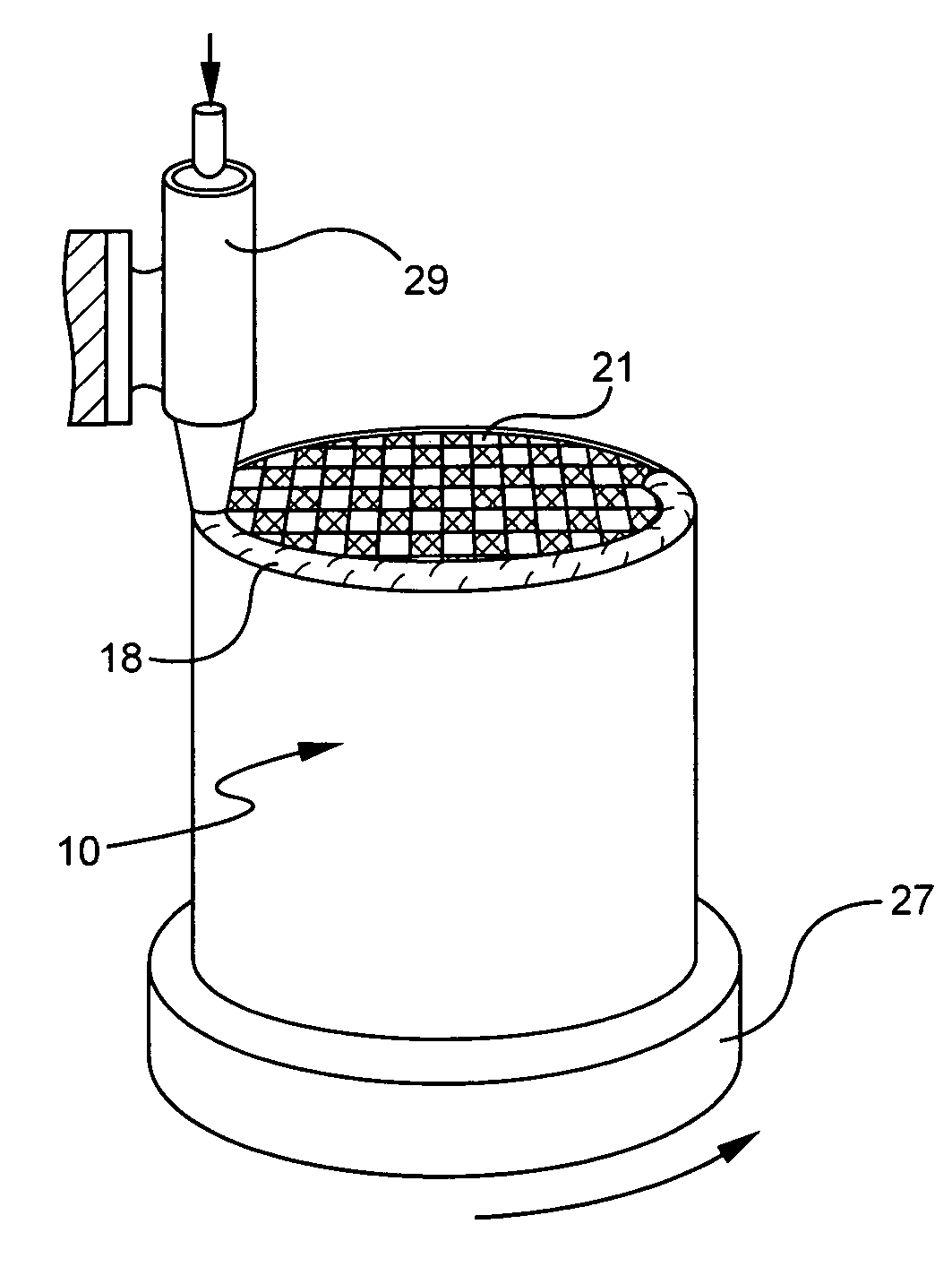
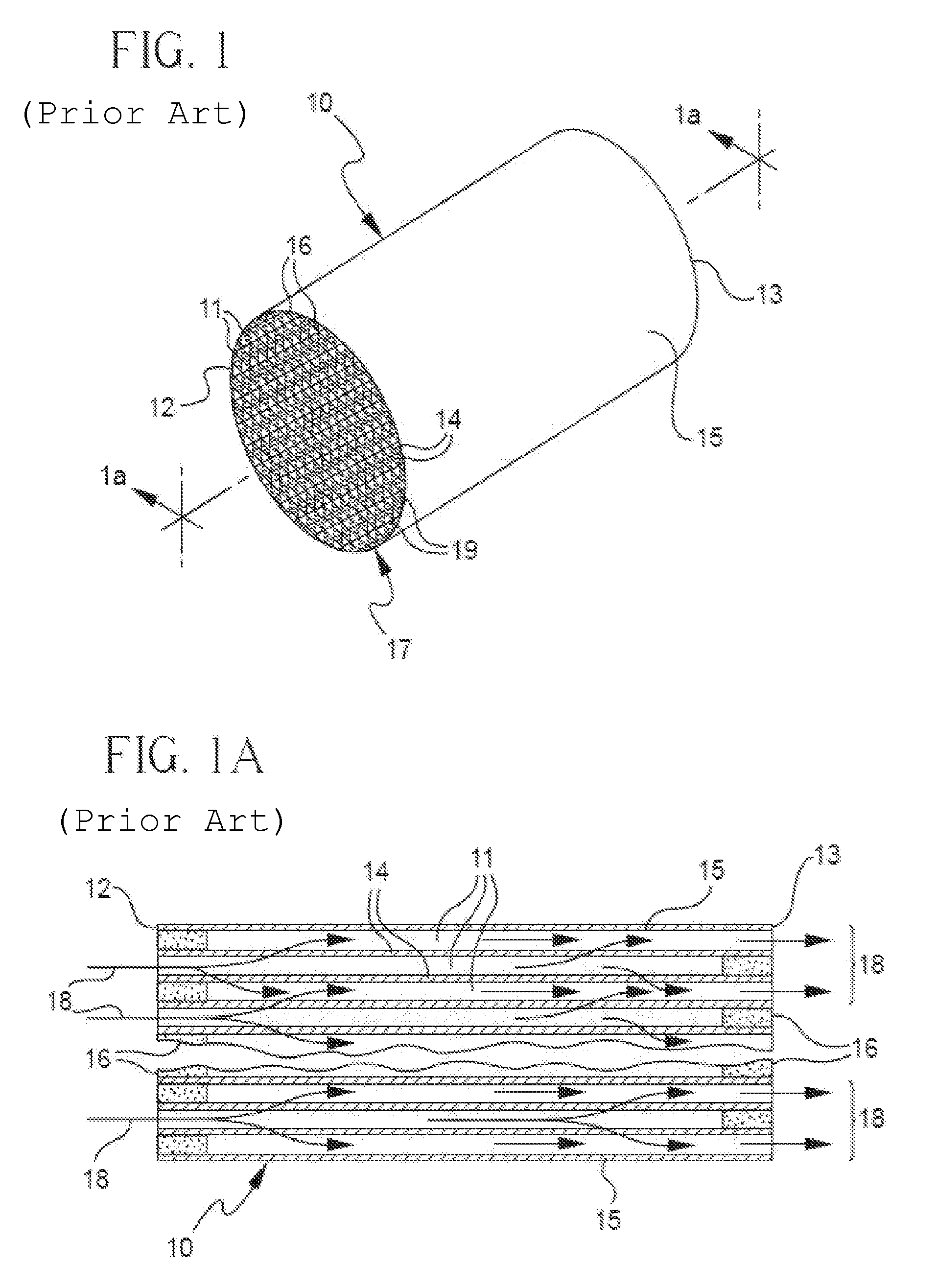
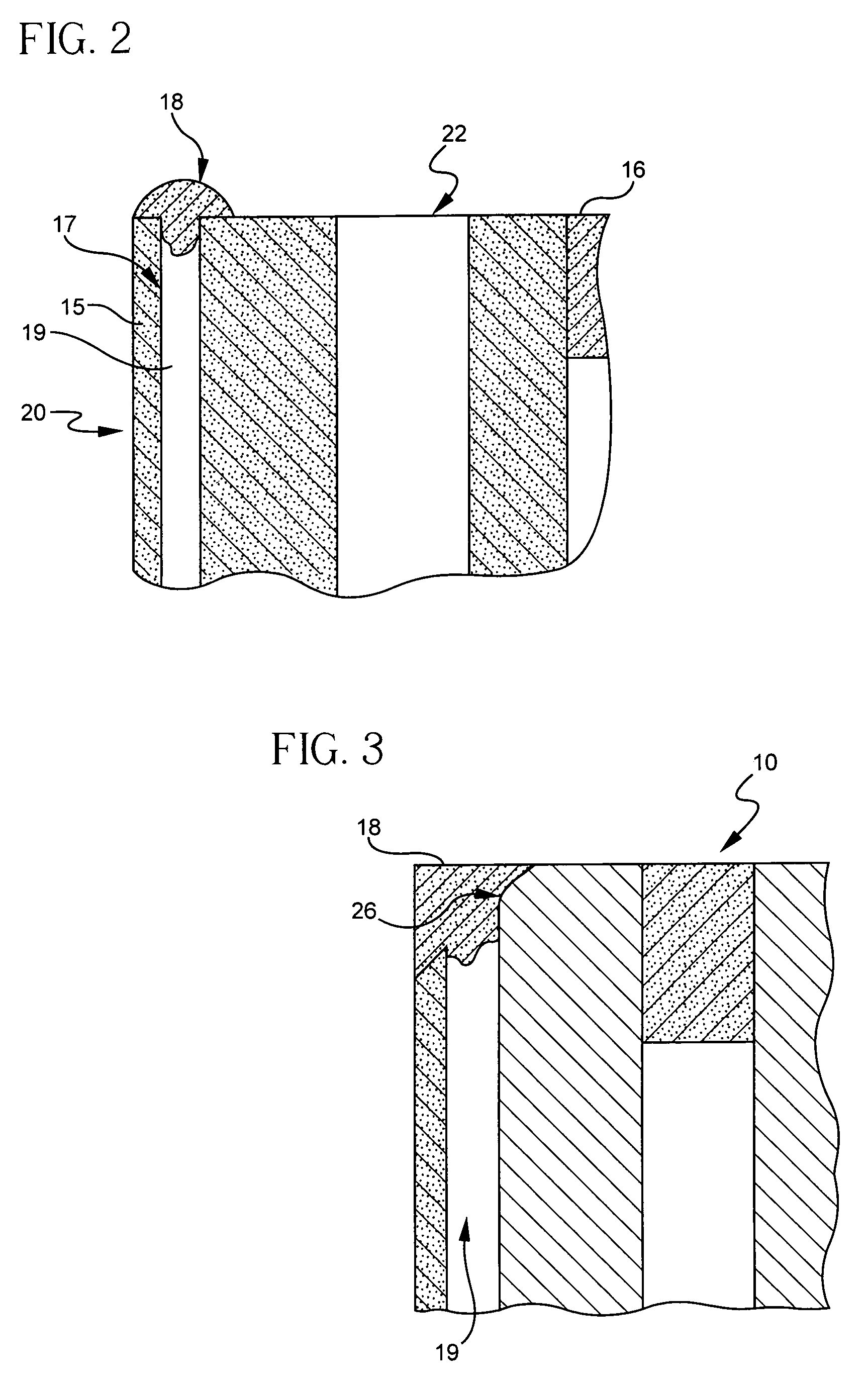
Honeycomb filters with reduced number of unplugged partial peripheral cells and methods of manufacturing same
PatentActiveUS7517379B2
Innovation
- A method of applying a line of plugging material to the outermost row of partial cells at the periphery of the filter, which can be beveled and altered in profile to ensure complete blockage, thereby preventing exhaust gas flow and enhancing edge strength.

Methods and apparatus for making honeycomb structures with chamfered after-applied skin and honeycomb structures produced thereby
PatentWO2008136898A2
Innovation
- A method and apparatus for manufacturing honeycomb filter structures with a chamfered edge on the after-applied skin, using tools such as contoured or straight blades, rollers, and press plates to shape the skin layer before or after application, reducing the susceptibility to damage.


Environmental Regulations Impact on DPF Development
Environmental regulations have been the primary driving force behind the evolution of Diesel Particulate Filter (DPF) technology over the past three decades. The progressive tightening of emission standards worldwide has necessitated continuous innovation in DPF design and functionality to meet increasingly stringent requirements for particulate matter (PM) reduction.
The United States Environmental Protection Agency (EPA) and the European Union's Euro standards have established increasingly strict limits on diesel emissions. The EPA's Tier 4 Final regulations and Euro 6/VI standards represent watershed moments that dramatically reduced allowable PM emissions by over 90% compared to previous generations. These regulatory frameworks have directly shaped DPF development trajectories and adoption rates across different markets.
Japan and South Korea have similarly implemented rigorous emission control standards, while emerging economies like China and India have accelerated their regulatory timelines in recent years. China's implementation of China VI standards (equivalent to Euro VI) represents a significant leap in emission control requirements for one of the world's largest diesel markets.
The regulatory landscape has evolved from focusing solely on total PM mass to addressing particle number and size distribution. This shift recognizes the health impacts of ultrafine particles and has driven manufacturers to develop DPF technologies capable of capturing smaller particulate matter with greater efficiency. The introduction of Real Driving Emissions (RDE) testing in Europe has further challenged manufacturers to ensure DPF performance across diverse operating conditions.
Climate change initiatives have begun to influence emission regulations as well, with carbon dioxide and nitrogen oxide reduction targets increasingly integrated with particulate matter controls. This has created complex engineering challenges requiring holistic exhaust aftertreatment systems where DPFs must function effectively alongside selective catalytic reduction (SCR) systems and other emission control technologies.
Future regulatory trends point toward even more comprehensive emission control frameworks. The anticipated Euro 7 standards and EPA's next-generation requirements are expected to further reduce allowable emission limits while expanding testing conditions to ensure real-world compliance. These pending regulations will likely drive innovation in advanced materials for DPF construction, improved regeneration strategies, and enhanced durability to maintain filtration efficiency throughout the vehicle lifecycle.
The global regulatory divergence presents significant challenges for manufacturers operating in multiple markets, necessitating flexible DPF designs that can be adapted to meet varying regional requirements while maintaining cost-effectiveness and performance reliability.
The United States Environmental Protection Agency (EPA) and the European Union's Euro standards have established increasingly strict limits on diesel emissions. The EPA's Tier 4 Final regulations and Euro 6/VI standards represent watershed moments that dramatically reduced allowable PM emissions by over 90% compared to previous generations. These regulatory frameworks have directly shaped DPF development trajectories and adoption rates across different markets.
Japan and South Korea have similarly implemented rigorous emission control standards, while emerging economies like China and India have accelerated their regulatory timelines in recent years. China's implementation of China VI standards (equivalent to Euro VI) represents a significant leap in emission control requirements for one of the world's largest diesel markets.
The regulatory landscape has evolved from focusing solely on total PM mass to addressing particle number and size distribution. This shift recognizes the health impacts of ultrafine particles and has driven manufacturers to develop DPF technologies capable of capturing smaller particulate matter with greater efficiency. The introduction of Real Driving Emissions (RDE) testing in Europe has further challenged manufacturers to ensure DPF performance across diverse operating conditions.
Climate change initiatives have begun to influence emission regulations as well, with carbon dioxide and nitrogen oxide reduction targets increasingly integrated with particulate matter controls. This has created complex engineering challenges requiring holistic exhaust aftertreatment systems where DPFs must function effectively alongside selective catalytic reduction (SCR) systems and other emission control technologies.
Future regulatory trends point toward even more comprehensive emission control frameworks. The anticipated Euro 7 standards and EPA's next-generation requirements are expected to further reduce allowable emission limits while expanding testing conditions to ensure real-world compliance. These pending regulations will likely drive innovation in advanced materials for DPF construction, improved regeneration strategies, and enhanced durability to maintain filtration efficiency throughout the vehicle lifecycle.
The global regulatory divergence presents significant challenges for manufacturers operating in multiple markets, necessitating flexible DPF designs that can be adapted to meet varying regional requirements while maintaining cost-effectiveness and performance reliability.
Cost-Benefit Analysis of Different DPF Technologies
When evaluating different Diesel Particulate Filter (DPF) technologies, a comprehensive cost-benefit analysis reveals significant variations in initial investment, operational expenses, and long-term economic impact. The initial acquisition costs of advanced ceramic wall-flow filters typically range from $1,000 to $3,500 per unit, depending on size and material composition, while metallic substrate filters generally cost 15-25% less but may require more frequent replacement.
Operational expenses constitute a major consideration in the total cost of ownership. Maintenance costs for traditional cordierite filters average $200-400 annually, whereas silicon carbide variants, though 30% more expensive initially, demonstrate 20-25% longer service intervals, reducing lifetime maintenance expenditure. Fuel economy penalties associated with DPF backpressure range from 1-4%, translating to approximately $300-1,200 in additional fuel costs annually for commercial vehicles.
Regeneration strategies significantly impact operational economics. Active regeneration systems increase fuel consumption by 2-5% during regeneration cycles but offer more predictable performance. Passive systems, while requiring less intervention, may necessitate more expensive catalyst coatings, with platinum group metal loadings adding $200-600 to initial costs but potentially reducing regeneration frequency by 30-40%.
The environmental benefits provide substantial economic value when quantified. Advanced DPF technologies achieving over 99% particulate matter reduction contribute to avoided healthcare costs estimated at $10,000-30,000 per ton of emissions prevented. Regulatory compliance benefits must also be factored, as non-compliance penalties can exceed $10,000 per violation in many jurisdictions, while early adoption of advanced filtration technology can provide regulatory credits worth $500-2,000 per vehicle in certain markets.
Lifecycle analysis reveals that higher-cost silicon carbide filters often demonstrate superior return on investment over a 5-7 year operational period, with total cost of ownership 15-20% lower than less expensive alternatives when accounting for all factors. Emerging technologies such as electrically regenerated filters show promising cost-benefit profiles in specialized applications, with 30-40% lower regeneration-related expenses despite 25-35% higher acquisition costs.
Fleet-scale implementation creates additional economic considerations through maintenance infrastructure requirements, staff training needs, and potential for bulk purchasing discounts of 10-15% for larger operations. The optimal DPF technology selection ultimately depends on specific operational profiles, with long-haul applications generally favoring passive systems despite higher initial costs, while urban operations with frequent stop-start cycles often achieve better economics with active regeneration systems.
Operational expenses constitute a major consideration in the total cost of ownership. Maintenance costs for traditional cordierite filters average $200-400 annually, whereas silicon carbide variants, though 30% more expensive initially, demonstrate 20-25% longer service intervals, reducing lifetime maintenance expenditure. Fuel economy penalties associated with DPF backpressure range from 1-4%, translating to approximately $300-1,200 in additional fuel costs annually for commercial vehicles.
Regeneration strategies significantly impact operational economics. Active regeneration systems increase fuel consumption by 2-5% during regeneration cycles but offer more predictable performance. Passive systems, while requiring less intervention, may necessitate more expensive catalyst coatings, with platinum group metal loadings adding $200-600 to initial costs but potentially reducing regeneration frequency by 30-40%.
The environmental benefits provide substantial economic value when quantified. Advanced DPF technologies achieving over 99% particulate matter reduction contribute to avoided healthcare costs estimated at $10,000-30,000 per ton of emissions prevented. Regulatory compliance benefits must also be factored, as non-compliance penalties can exceed $10,000 per violation in many jurisdictions, while early adoption of advanced filtration technology can provide regulatory credits worth $500-2,000 per vehicle in certain markets.
Lifecycle analysis reveals that higher-cost silicon carbide filters often demonstrate superior return on investment over a 5-7 year operational period, with total cost of ownership 15-20% lower than less expensive alternatives when accounting for all factors. Emerging technologies such as electrically regenerated filters show promising cost-benefit profiles in specialized applications, with 30-40% lower regeneration-related expenses despite 25-35% higher acquisition costs.
Fleet-scale implementation creates additional economic considerations through maintenance infrastructure requirements, staff training needs, and potential for bulk purchasing discounts of 10-15% for larger operations. The optimal DPF technology selection ultimately depends on specific operational profiles, with long-haul applications generally favoring passive systems despite higher initial costs, while urban operations with frequent stop-start cycles often achieve better economics with active regeneration systems.
Unlock deeper insights with Patsnap Eureka Quick Research — get a full tech report to explore trends and direct your research. Try now!
Generate Your Research Report Instantly with AI Agent
Supercharge your innovation with Patsnap Eureka AI Agent Platform!