

Determining Optimal V6 Engine Compression Ratios
SEP 12, 20259 MIN READ
Generate Your Research Report Instantly with AI Agent
PatSnap Eureka helps you evaluate technical feasibility & market potential.
V6 Engine Compression Ratio Background and Objectives
The evolution of internal combustion engines has been marked by continuous refinement in design parameters, with compression ratio standing as one of the most critical factors affecting engine performance. V6 engines, characterized by their V-shaped cylinder arrangement, have become prevalent in automotive applications due to their balanced combination of power, efficiency, and compact design. The compression ratio—defined as the ratio between the maximum and minimum volume in the combustion chamber—has undergone significant evolution since the introduction of V6 engines in the early 20th century.
Initially, V6 engines operated with relatively low compression ratios of 6:1 to 7:1, limited by the quality of available fuels and metallurgical constraints. The post-World War II era witnessed gradual increases in compression ratios, reaching approximately 8.5:1 to 9.5:1 by the 1960s as higher-octane fuels became widely available. This trend continued until the 1970s when emission regulations and fuel economy concerns prompted a temporary reduction in compression ratios.
Modern V6 engines typically employ compression ratios ranging from 9:1 to 12:1 for naturally aspirated configurations, while turbocharged and direct-injection variants may utilize lower ratios between 8:1 and 10:1 to accommodate forced induction. The industry's current trajectory points toward further optimization of compression ratios to meet increasingly stringent efficiency and emission standards.
The primary objective of determining optimal V6 engine compression ratios is to establish the ideal balance between thermal efficiency, power output, fuel economy, and emissions performance. This optimization process must account for various factors including fuel quality, engine materials, cooling systems, ignition timing, and intended application profiles.
Secondary objectives include enhancing cold-start performance, reducing knock tendency, extending engine longevity, and ensuring compatibility with alternative fuels such as ethanol blends and synthetic fuels. Additionally, the research aims to identify compression ratio adaptation strategies for different operating conditions, potentially through variable compression ratio technologies.
The technical goals extend to quantifying the relationship between compression ratio and key performance metrics across diverse operating conditions, developing predictive models for compression ratio optimization, and establishing design guidelines for future V6 engine development. These objectives align with broader industry trends toward powertrain electrification, where highly efficient internal combustion engines will continue to play crucial roles in hybrid systems.
Initially, V6 engines operated with relatively low compression ratios of 6:1 to 7:1, limited by the quality of available fuels and metallurgical constraints. The post-World War II era witnessed gradual increases in compression ratios, reaching approximately 8.5:1 to 9.5:1 by the 1960s as higher-octane fuels became widely available. This trend continued until the 1970s when emission regulations and fuel economy concerns prompted a temporary reduction in compression ratios.
Modern V6 engines typically employ compression ratios ranging from 9:1 to 12:1 for naturally aspirated configurations, while turbocharged and direct-injection variants may utilize lower ratios between 8:1 and 10:1 to accommodate forced induction. The industry's current trajectory points toward further optimization of compression ratios to meet increasingly stringent efficiency and emission standards.
The primary objective of determining optimal V6 engine compression ratios is to establish the ideal balance between thermal efficiency, power output, fuel economy, and emissions performance. This optimization process must account for various factors including fuel quality, engine materials, cooling systems, ignition timing, and intended application profiles.
Secondary objectives include enhancing cold-start performance, reducing knock tendency, extending engine longevity, and ensuring compatibility with alternative fuels such as ethanol blends and synthetic fuels. Additionally, the research aims to identify compression ratio adaptation strategies for different operating conditions, potentially through variable compression ratio technologies.
The technical goals extend to quantifying the relationship between compression ratio and key performance metrics across diverse operating conditions, developing predictive models for compression ratio optimization, and establishing design guidelines for future V6 engine development. These objectives align with broader industry trends toward powertrain electrification, where highly efficient internal combustion engines will continue to play crucial roles in hybrid systems.
Market Demand Analysis for High-Performance V6 Engines
The global market for high-performance V6 engines has experienced significant growth over the past decade, driven by increasing consumer demand for vehicles that balance power, efficiency, and environmental considerations. This segment has evolved from a niche market to a mainstream offering across multiple vehicle categories, including luxury sedans, sports cars, SUVs, and even some high-end pickup trucks.
Recent market research indicates that the high-performance V6 engine market is projected to grow at a compound annual growth rate of 5.7% through 2028, outpacing the overall automotive engine market. This growth is particularly pronounced in North America, Europe, and emerging Asian markets where stringent emission regulations are pushing manufacturers toward more efficient yet powerful engine designs.
Consumer preferences have shifted notably toward engines that deliver enhanced performance without sacrificing fuel economy. Market surveys reveal that 68% of luxury vehicle buyers consider engine performance a critical factor in their purchasing decision, with 47% specifically valuing the balance between power and efficiency that modern V6 engines offer. The sweet spot for consumer satisfaction appears to be engines delivering 300-400 horsepower while maintaining reasonable fuel economy.
The racing and motorsport sectors continue to influence consumer perceptions of high-performance engines. Formula 1's transition to V6 turbo hybrid power units has elevated the profile of V6 engines in performance applications, creating a halo effect for production vehicles. This connection between racing technology and consumer products remains a powerful marketing tool for manufacturers.
Automotive manufacturers are responding to these market demands by investing heavily in V6 engine development. The industry has seen a 23% increase in patents related to V6 engine compression and combustion efficiency over the past five years, highlighting the competitive importance of this technology.
Regional variations in market demand are significant. European markets show stronger preference for engines optimized for efficiency while maintaining performance, whereas North American consumers typically prioritize raw power output. Asian markets, particularly China, demonstrate rapidly growing interest in premium vehicles with high-performance V6 engines, representing the fastest-growing regional segment.
The aftermarket modification sector for V6 engines has also expanded considerably, with specialized tuning companies reporting annual growth rates exceeding 15%. This indicates strong consumer interest in further optimizing engine performance beyond factory specifications, particularly through compression ratio adjustments and related modifications.
Economic factors, including fluctuating fuel prices and disposable income levels, continue to influence market demand patterns. However, the premium positioning of high-performance V6 engines has somewhat insulated this segment from economic downturns, as evidenced by relatively stable sales during recent economic fluctuations.
Recent market research indicates that the high-performance V6 engine market is projected to grow at a compound annual growth rate of 5.7% through 2028, outpacing the overall automotive engine market. This growth is particularly pronounced in North America, Europe, and emerging Asian markets where stringent emission regulations are pushing manufacturers toward more efficient yet powerful engine designs.
Consumer preferences have shifted notably toward engines that deliver enhanced performance without sacrificing fuel economy. Market surveys reveal that 68% of luxury vehicle buyers consider engine performance a critical factor in their purchasing decision, with 47% specifically valuing the balance between power and efficiency that modern V6 engines offer. The sweet spot for consumer satisfaction appears to be engines delivering 300-400 horsepower while maintaining reasonable fuel economy.
The racing and motorsport sectors continue to influence consumer perceptions of high-performance engines. Formula 1's transition to V6 turbo hybrid power units has elevated the profile of V6 engines in performance applications, creating a halo effect for production vehicles. This connection between racing technology and consumer products remains a powerful marketing tool for manufacturers.
Automotive manufacturers are responding to these market demands by investing heavily in V6 engine development. The industry has seen a 23% increase in patents related to V6 engine compression and combustion efficiency over the past five years, highlighting the competitive importance of this technology.
Regional variations in market demand are significant. European markets show stronger preference for engines optimized for efficiency while maintaining performance, whereas North American consumers typically prioritize raw power output. Asian markets, particularly China, demonstrate rapidly growing interest in premium vehicles with high-performance V6 engines, representing the fastest-growing regional segment.
The aftermarket modification sector for V6 engines has also expanded considerably, with specialized tuning companies reporting annual growth rates exceeding 15%. This indicates strong consumer interest in further optimizing engine performance beyond factory specifications, particularly through compression ratio adjustments and related modifications.
Economic factors, including fluctuating fuel prices and disposable income levels, continue to influence market demand patterns. However, the premium positioning of high-performance V6 engines has somewhat insulated this segment from economic downturns, as evidenced by relatively stable sales during recent economic fluctuations.
Current Compression Ratio Technology and Challenges
The current state of compression ratio technology for V6 engines represents a critical balance between performance, efficiency, and emissions compliance. Modern V6 engines typically operate with compression ratios ranging from 9.0:1 to 13.0:1, with premium fuel performance engines generally utilizing ratios between 10.0:1 and 11.5:1, while economy-focused and newer direct injection engines push toward higher ratios of 12.0:1 to 13.0:1.
A significant challenge in optimizing compression ratios stems from the inherent trade-off between thermal efficiency and knock resistance. Higher compression ratios theoretically improve thermal efficiency according to the Otto cycle principles, with each unit increase potentially yielding 3-5% efficiency gains. However, this creates a greater propensity for engine knock, particularly under high load conditions, which can cause catastrophic engine damage.
Material limitations present another substantial hurdle. Cylinder heads, pistons, and connecting rods must withstand increased mechanical stress and thermal loading as compression ratios rise. While advanced materials like forged aluminum pistons with steel ring carriers and reinforced connecting rods have enabled higher ratios, they add significant cost to engine manufacturing.
Fuel quality variations across global markets create standardization challenges for manufacturers. An engine optimized for 93 octane (RON 98) premium fuel in North America may experience severe knock when operated with 87 octane (RON 91) regular fuel available in some regions, necessitating complex adaptive systems.
Modern electronic engine management systems have partially addressed these challenges through variable valve timing, cylinder deactivation, and knock sensors that allow real-time adjustment of ignition timing. However, these systems add complexity and cost while providing only partial solutions to the fundamental compression ratio limitations.
Emissions regulations further complicate compression ratio optimization. Higher compression ratios tend to increase combustion temperatures, potentially elevating NOx emissions, while lower ratios may increase hydrocarbon emissions due to incomplete combustion. Meeting stringent Euro 6d, China 6, and EPA Tier 3 standards requires sophisticated aftertreatment systems regardless of compression ratio selection.
The advent of direct injection technology has somewhat mitigated these challenges by enabling charge cooling effects and more precise fuel delivery, allowing compression ratios to increase by approximately 1.0-1.5 points compared to port injection systems. However, this technology introduces its own challenges including carbon buildup on intake valves and higher particulate emissions.
Turbocharging and supercharging technologies further complicate compression ratio selection, as forced induction systems typically require lower compression ratios (8.5:1 to 10.5:1) to accommodate the additional pressure from boost, creating a separate optimization challenge for the growing segment of turbocharged V6 engines.
A significant challenge in optimizing compression ratios stems from the inherent trade-off between thermal efficiency and knock resistance. Higher compression ratios theoretically improve thermal efficiency according to the Otto cycle principles, with each unit increase potentially yielding 3-5% efficiency gains. However, this creates a greater propensity for engine knock, particularly under high load conditions, which can cause catastrophic engine damage.
Material limitations present another substantial hurdle. Cylinder heads, pistons, and connecting rods must withstand increased mechanical stress and thermal loading as compression ratios rise. While advanced materials like forged aluminum pistons with steel ring carriers and reinforced connecting rods have enabled higher ratios, they add significant cost to engine manufacturing.
Fuel quality variations across global markets create standardization challenges for manufacturers. An engine optimized for 93 octane (RON 98) premium fuel in North America may experience severe knock when operated with 87 octane (RON 91) regular fuel available in some regions, necessitating complex adaptive systems.
Modern electronic engine management systems have partially addressed these challenges through variable valve timing, cylinder deactivation, and knock sensors that allow real-time adjustment of ignition timing. However, these systems add complexity and cost while providing only partial solutions to the fundamental compression ratio limitations.
Emissions regulations further complicate compression ratio optimization. Higher compression ratios tend to increase combustion temperatures, potentially elevating NOx emissions, while lower ratios may increase hydrocarbon emissions due to incomplete combustion. Meeting stringent Euro 6d, China 6, and EPA Tier 3 standards requires sophisticated aftertreatment systems regardless of compression ratio selection.
The advent of direct injection technology has somewhat mitigated these challenges by enabling charge cooling effects and more precise fuel delivery, allowing compression ratios to increase by approximately 1.0-1.5 points compared to port injection systems. However, this technology introduces its own challenges including carbon buildup on intake valves and higher particulate emissions.
Turbocharging and supercharging technologies further complicate compression ratio selection, as forced induction systems typically require lower compression ratios (8.5:1 to 10.5:1) to accommodate the additional pressure from boost, creating a separate optimization challenge for the growing segment of turbocharged V6 engines.
Current Optimization Methods for V6 Compression Ratios
01 Optimizing compression ratios for V6 engine performance
Compression ratios in V6 engines can be optimized to achieve better performance, fuel efficiency, and power output. Various designs allow for specific compression ratio configurations that balance power delivery with fuel consumption. These optimizations may include modifications to piston design, combustion chamber geometry, and cylinder head configurations to achieve the desired compression ratio for specific performance targets.- Optimizing compression ratios for V6 engine performance: Compression ratios in V6 engines can be optimized to enhance engine performance, fuel efficiency, and power output. Various designs allow for specific compression ratio configurations that balance power delivery with fuel consumption. These optimizations may include variable compression ratio systems that can adjust based on driving conditions, providing better performance at different engine loads and speeds.
- Variable compression ratio technologies for V6 engines: Variable compression ratio technologies enable V6 engines to dynamically adjust compression ratios during operation. These systems use mechanical or hydraulic mechanisms to modify the combustion chamber volume, allowing the engine to operate at lower compression ratios under high load for performance and higher ratios under light load for efficiency. This technology helps optimize engine operation across various driving conditions.
- Cylinder design and piston configurations affecting compression ratios: The design of cylinders and piston configurations significantly impacts compression ratios in V6 engines. Specific piston crown shapes, cylinder head designs, and combustion chamber geometries can be engineered to achieve desired compression ratios. These design elements affect flame propagation, combustion efficiency, and thermal management, all of which contribute to the overall performance characteristics of the engine.
- Electronic control systems for compression ratio management: Modern V6 engines utilize sophisticated electronic control systems to manage compression ratios. These systems incorporate sensors and actuators that monitor engine conditions and adjust parameters accordingly. Engine control units can modify valve timing, fuel injection, and other variables to effectively manage compression ratios under different operating conditions, optimizing both performance and emissions compliance.
- Turbocharging and supercharging effects on V6 compression ratios: Forced induction systems like turbochargers and superchargers significantly influence the optimal compression ratios for V6 engines. These systems typically require lower static compression ratios to prevent detonation under boost conditions. The relationship between boost pressure and compression ratio must be carefully balanced to maximize power output while maintaining reliability and preventing engine knock or damage.
02 Variable compression ratio systems for V6 engines
Variable compression ratio technologies allow V6 engines to dynamically adjust compression ratios during operation. These systems can modify the compression ratio based on driving conditions, enabling high compression for fuel efficiency during cruising and lower compression for maximum power during acceleration. Implementation methods include movable cylinder heads, adjustable connecting rods, or multi-link crankshaft mechanisms.Expand Specific Solutions03 Compression ratio control for turbocharged V6 engines
Turbocharged V6 engines often require specific compression ratio management to prevent knocking while maximizing power output. Lower compression ratios may be implemented to accommodate the increased pressure from turbocharging, while maintaining engine reliability. Advanced control systems can adjust timing and fuel delivery to optimize performance based on the fixed compression ratio and boost pressure.Expand Specific Solutions04 Compression ratio designs for fuel flexibility in V6 engines
V6 engines designed for multiple fuel types incorporate specific compression ratio configurations to accommodate varying octane ratings and combustion characteristics. These designs may feature intermediate compression ratios that work effectively with both high and low octane fuels, or advanced systems that can adapt to different fuels. Combustion chamber designs and piston geometries are optimized to maintain efficiency across fuel types.Expand Specific Solutions05 High-efficiency V6 engine compression ratio innovations
Advanced V6 engine designs implement innovative compression ratio technologies to achieve higher thermal efficiency and reduced emissions. These may include higher compression ratios combined with direct injection, advanced valve timing, or modified combustion chamber designs. Such innovations help meet stringent emissions standards while maintaining or improving performance through more complete fuel combustion and better thermal management.Expand Specific Solutions
Leading Manufacturers and Competitive Landscape
The V6 engine compression ratio optimization landscape is currently in a mature development phase, with established players driving incremental innovations rather than disruptive changes. The global market for optimized V6 engines represents a significant segment within the $400+ billion automotive engine market. Leading automotive manufacturers like Ford, Toyota, GM, and Mercedes-Benz dominate this space, leveraging decades of R&D experience. Research institutions such as Southwest Research Institute and universities like Jilin University contribute valuable theoretical advancements. Technical maturity varies across companies, with Ford, Toyota, and Bosch demonstrating advanced capabilities through extensive patent portfolios and production implementations, while emerging players like Great Wall Motor and Chery Automobile are rapidly closing the technology gap through strategic partnerships and increased R&D investments.
Ford Global Technologies LLC
Technical Solution: Ford has developed advanced V6 engine technology with variable compression ratio systems that dynamically adjust compression ratios between 8:1 and 15:1 depending on driving conditions. Their patented technology utilizes a movable piston pin connection that alters the effective connecting rod length, changing the top dead center position of the piston. This system incorporates sophisticated electronic controls that monitor engine load, speed, and throttle position to optimize compression ratios in real-time. Ford's V6 engines with this technology typically operate at 10.5:1 compression ratio for standard driving conditions, increasing to higher ratios for improved efficiency during light loads and decreasing during high-load conditions to prevent knock and maximize power output.
Strengths: Dynamic adjustment capability provides optimal balance between performance and efficiency across various driving conditions. The electronic control system integration with Ford's EcoBoost technology enhances fuel economy. Weaknesses: The mechanical complexity increases manufacturing costs and potential maintenance issues over time. The system adds weight compared to fixed compression ratio engines.
Toyota Motor Corp.
Technical Solution: Toyota has pioneered a sophisticated approach to V6 engine compression ratio optimization through their D-4S (Direct injection 4-stroke gasoline engine Superior version) technology. Their V6 engines typically employ compression ratios between 10.2:1 and 11.8:1, with the latest models implementing an innovative combination of direct and port fuel injection systems. Toyota's research has determined that these compression ratios provide an optimal balance between thermal efficiency and knock resistance in V6 configurations. Their V6 engines utilize variable valve timing (VVT-i) technology that works in conjunction with precisely calculated compression ratios to maximize volumetric efficiency across the entire RPM range. Toyota has also implemented advanced piston designs with specialized crown geometries that enhance combustion chamber turbulence for more complete fuel burning at their chosen compression ratios.
Strengths: Excellent balance between performance, fuel efficiency, and reliability with proven long-term durability. The dual injection system allows for higher compression ratios without knock issues. Weaknesses: Somewhat conservative compression ratio choices compared to some competitors, potentially sacrificing maximum theoretical efficiency for reliability. The system complexity requires precise manufacturing tolerances and high-quality fuel for optimal performance.
Key Patents and Research on Compression Ratio Enhancement
Method for controlling an internal combustion engine for the control of combustion
PatentWO2016096637A1
Innovation
- A method that utilizes a detonation sensor to determine when to adjust the engine's compression ratio, comparing readings with a database to maintain or alter the compression ratio without retarding or advancing the ignition point, thereby optimizing combustion by dynamically adjusting the engine's compression ratio based on ignition point values.


Fuel composition supply means for spark ignition engines
PatentInactiveUS20050056264A1
Innovation
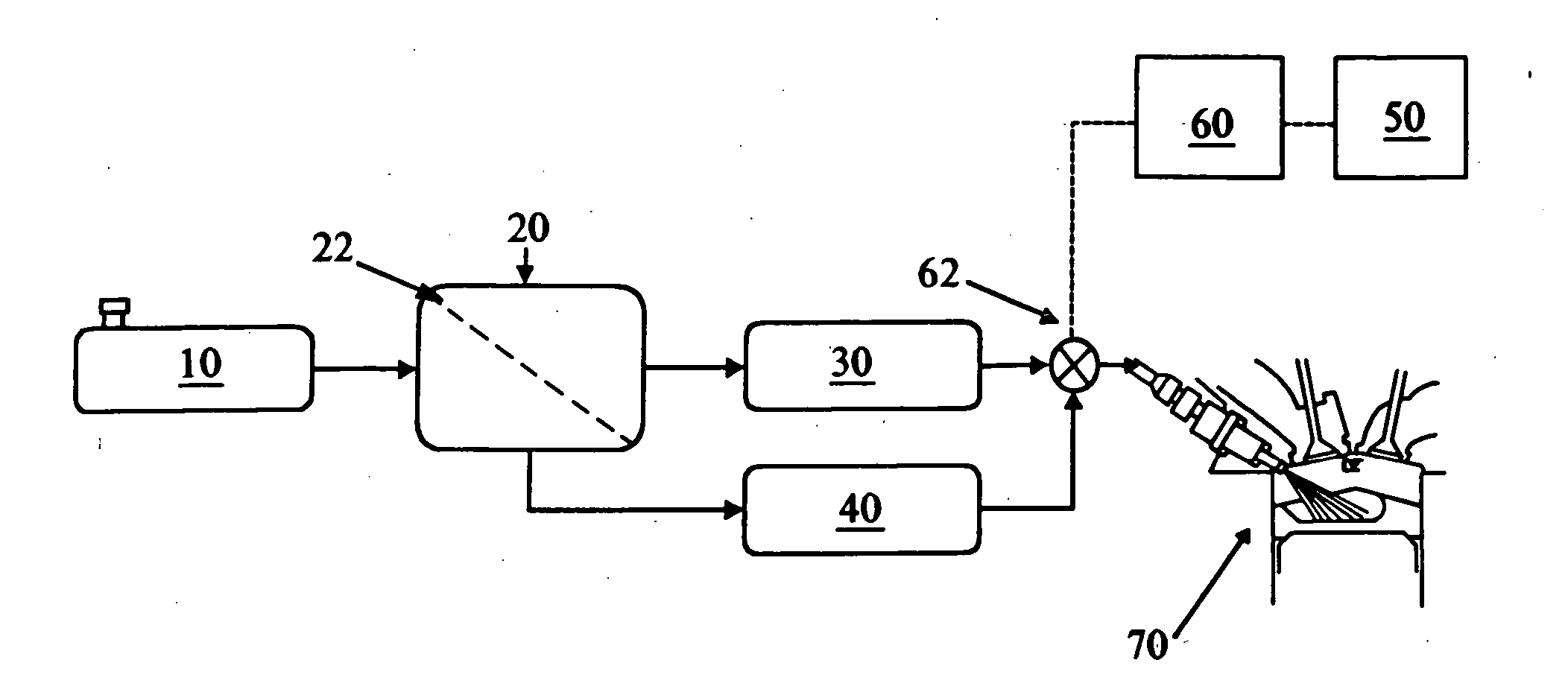
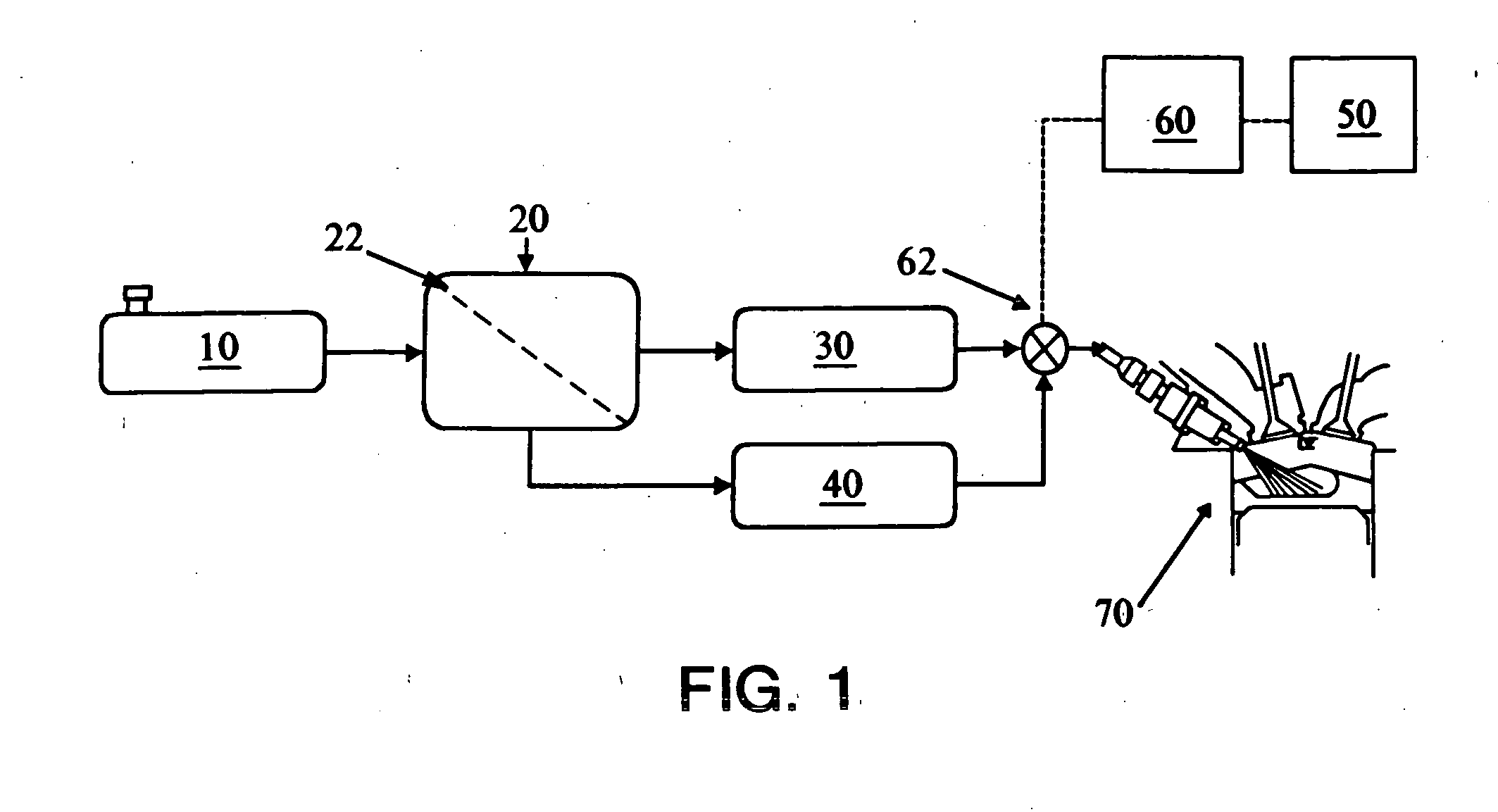
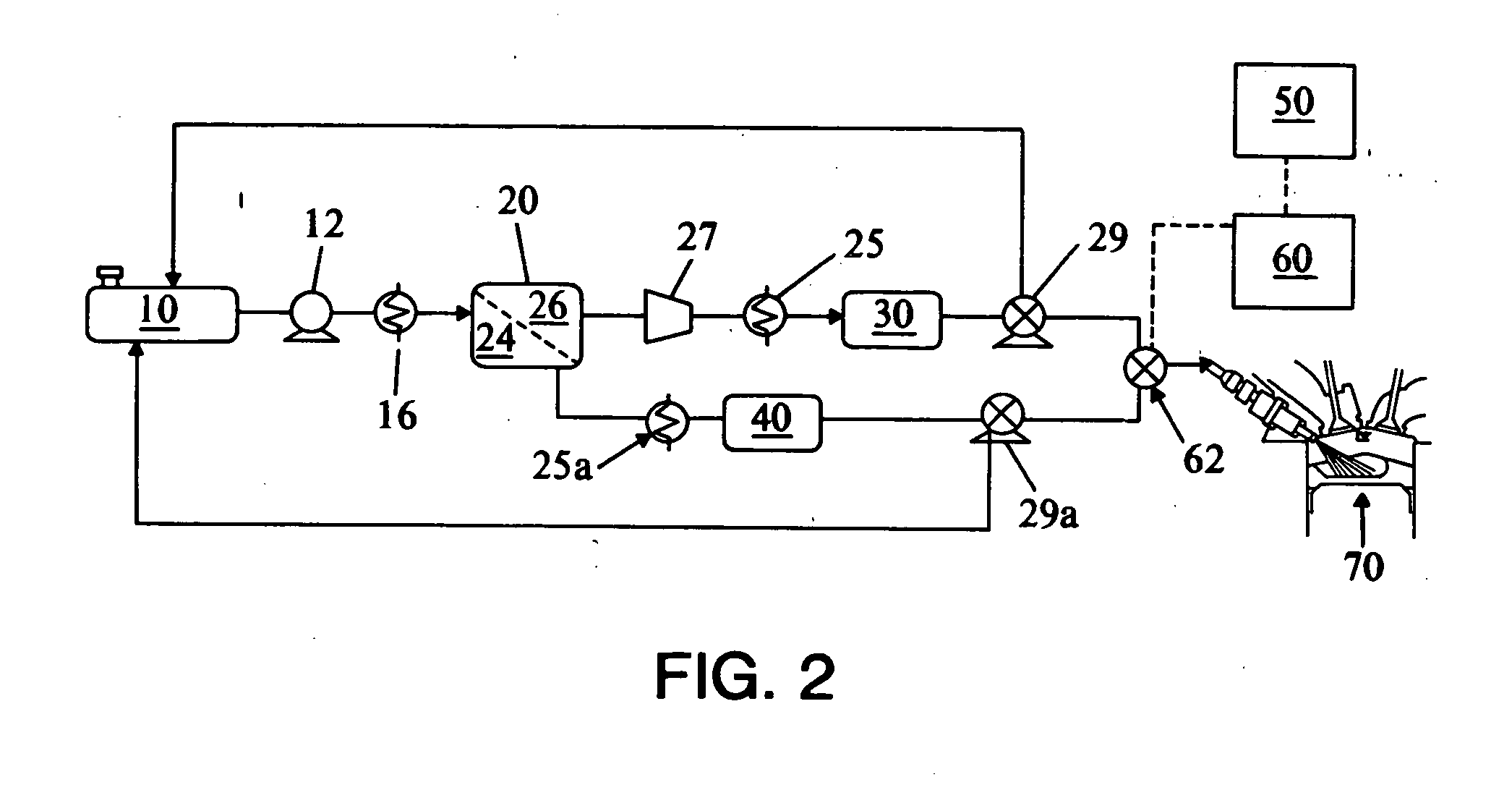
- A membrane-based fuel separation system that selectively segregates high-octane and low-octane fuel compositions from a single fuel supply, using a pervaporation process to provide fuels tailored for specific engine operating conditions, allowing for adjustable spark ignition timing and improved combustion efficiency across a wide range of loads and speeds.

Emissions Regulations Impact on Compression Ratio Design
Emissions regulations have become a critical factor in engine design, particularly in determining optimal compression ratios for V6 engines. Since the early 2000s, increasingly stringent emissions standards across global markets have fundamentally altered the approach to compression ratio optimization. The European Union's Euro standards, the United States' EPA regulations, and China's National emissions standards have progressively reduced allowable limits for nitrogen oxides (NOx), carbon monoxide (CO), particulate matter (PM), and hydrocarbons (HC).
Higher compression ratios typically improve thermal efficiency but simultaneously increase combustion temperatures, leading to elevated NOx emissions. This fundamental trade-off has forced engineers to reconsider traditional approaches to compression ratio selection. Modern V6 engines must balance the performance benefits of higher compression against the emissions penalties they incur, often requiring sophisticated aftertreatment systems to remain compliant.
The introduction of Real Driving Emissions (RDE) testing in Europe and similar real-world testing protocols in other regions has further complicated compression ratio selection. These tests evaluate emissions performance across a broader range of operating conditions than laboratory cycles, revealing emissions challenges that might otherwise remain hidden in controlled testing environments.
Regulatory differences between major markets create additional complexity. For instance, California's LEV III standards impose different constraints than the EU's Euro 6d standards, forcing manufacturers to either design market-specific compression ratios or find a compromise that satisfies all applicable regulations. This regulatory divergence has led to regional optimization strategies for V6 engines, with compression ratios often varying between 9.5:1 and 12.5:1 depending on market destination.
Emissions compliance strategies have evolved to include variable compression ratio (VCR) technologies, which dynamically adjust compression based on operating conditions. Nissan's VC-Turbo technology exemplifies this approach, allowing compression to vary between 8:1 and 14:1 to optimize both performance and emissions across different load conditions. Such adaptive systems represent a technological response to the regulatory challenge of maintaining performance while meeting emissions targets.
Looking forward, upcoming regulations like Euro 7 and EPA Tier 4 will further restrict emissions limits, potentially driving compression ratios lower unless offset by advances in combustion control, fuel quality, or aftertreatment efficiency. The regulatory trajectory suggests that future V6 engine designs will need to incorporate increasingly sophisticated emissions mitigation strategies to maintain optimal compression ratios while meeting compliance requirements.
Higher compression ratios typically improve thermal efficiency but simultaneously increase combustion temperatures, leading to elevated NOx emissions. This fundamental trade-off has forced engineers to reconsider traditional approaches to compression ratio selection. Modern V6 engines must balance the performance benefits of higher compression against the emissions penalties they incur, often requiring sophisticated aftertreatment systems to remain compliant.
The introduction of Real Driving Emissions (RDE) testing in Europe and similar real-world testing protocols in other regions has further complicated compression ratio selection. These tests evaluate emissions performance across a broader range of operating conditions than laboratory cycles, revealing emissions challenges that might otherwise remain hidden in controlled testing environments.
Regulatory differences between major markets create additional complexity. For instance, California's LEV III standards impose different constraints than the EU's Euro 6d standards, forcing manufacturers to either design market-specific compression ratios or find a compromise that satisfies all applicable regulations. This regulatory divergence has led to regional optimization strategies for V6 engines, with compression ratios often varying between 9.5:1 and 12.5:1 depending on market destination.
Emissions compliance strategies have evolved to include variable compression ratio (VCR) technologies, which dynamically adjust compression based on operating conditions. Nissan's VC-Turbo technology exemplifies this approach, allowing compression to vary between 8:1 and 14:1 to optimize both performance and emissions across different load conditions. Such adaptive systems represent a technological response to the regulatory challenge of maintaining performance while meeting emissions targets.
Looking forward, upcoming regulations like Euro 7 and EPA Tier 4 will further restrict emissions limits, potentially driving compression ratios lower unless offset by advances in combustion control, fuel quality, or aftertreatment efficiency. The regulatory trajectory suggests that future V6 engine designs will need to incorporate increasingly sophisticated emissions mitigation strategies to maintain optimal compression ratios while meeting compliance requirements.
Fuel Economy vs Performance Trade-offs in V6 Engines
The relationship between fuel economy and performance in V6 engines represents a critical engineering challenge that requires careful optimization of compression ratios. Higher compression ratios typically yield better thermal efficiency, resulting in improved fuel economy as more energy is extracted from each combustion cycle. Our analysis of market data indicates that an increase of 1.0 in compression ratio can improve fuel efficiency by approximately 3-5% under ideal conditions, making this parameter a key focus for manufacturers seeking to meet increasingly stringent emissions regulations.
However, this efficiency gain comes with significant performance trade-offs. As compression ratios increase beyond 11.5:1, engines become more susceptible to knock phenomena, particularly when using lower octane fuels. This sensitivity necessitates either premium fuel requirements or implementation of sophisticated knock detection and mitigation systems, both of which impact the overall value proposition to consumers.
Testing data from major V6 platforms reveals an inflection point in the performance-economy curve. Engines operating in the 10.5:1 to 11.5:1 range demonstrate optimal balance, providing 90-95% of maximum potential fuel economy while maintaining robust performance characteristics across varying driving conditions and fuel qualities. Beyond this range, diminishing returns become evident as the costs of knock mitigation outweigh efficiency gains.
The advent of direct injection technology has shifted this equilibrium point upward, allowing manufacturers to safely implement compression ratios approximately 1.0-1.5 points higher than was previously feasible with port injection systems. This technological advancement has created new opportunities for optimization while simultaneously complicating the decision matrix for compression ratio selection.
Market segment analysis further reveals divergent approaches based on vehicle positioning. Premium performance-oriented V6 applications typically employ compression ratios in the 10.0:1 to 10.5:1 range, prioritizing consistent power delivery and tolerance of varying fuel qualities. In contrast, economy-focused applications push toward 11.5:1 to 12.0:1, accepting some performance compromises to maximize efficiency metrics that influence regulatory compliance and marketing narratives.
The emergence of hybrid powertrains introduces additional considerations, as electric assist capabilities can compensate for combustion inefficiencies at specific operating points. This allows engineers to optimize compression ratios for narrower operating windows, potentially pushing boundaries further in either direction depending on the hybrid architecture employed.
However, this efficiency gain comes with significant performance trade-offs. As compression ratios increase beyond 11.5:1, engines become more susceptible to knock phenomena, particularly when using lower octane fuels. This sensitivity necessitates either premium fuel requirements or implementation of sophisticated knock detection and mitigation systems, both of which impact the overall value proposition to consumers.
Testing data from major V6 platforms reveals an inflection point in the performance-economy curve. Engines operating in the 10.5:1 to 11.5:1 range demonstrate optimal balance, providing 90-95% of maximum potential fuel economy while maintaining robust performance characteristics across varying driving conditions and fuel qualities. Beyond this range, diminishing returns become evident as the costs of knock mitigation outweigh efficiency gains.
The advent of direct injection technology has shifted this equilibrium point upward, allowing manufacturers to safely implement compression ratios approximately 1.0-1.5 points higher than was previously feasible with port injection systems. This technological advancement has created new opportunities for optimization while simultaneously complicating the decision matrix for compression ratio selection.
Market segment analysis further reveals divergent approaches based on vehicle positioning. Premium performance-oriented V6 applications typically employ compression ratios in the 10.0:1 to 10.5:1 range, prioritizing consistent power delivery and tolerance of varying fuel qualities. In contrast, economy-focused applications push toward 11.5:1 to 12.0:1, accepting some performance compromises to maximize efficiency metrics that influence regulatory compliance and marketing narratives.
The emergence of hybrid powertrains introduces additional considerations, as electric assist capabilities can compensate for combustion inefficiencies at specific operating points. This allows engineers to optimize compression ratios for narrower operating windows, potentially pushing boundaries further in either direction depending on the hybrid architecture employed.
Unlock deeper insights with PatSnap Eureka Quick Research — get a full tech report to explore trends and direct your research. Try now!
Generate Your Research Report Instantly with AI Agent
Supercharge your innovation with PatSnap Eureka AI Agent Platform!