Dynamic Load Matching For Intermittent Power From OTEs
AUG 28, 20259 MIN READ
Generate Your Research Report Instantly with AI Agent
PatSnap Eureka helps you evaluate technical feasibility & market potential.
OTE Power Intermittency Background and Objectives
Ocean Thermal Energy (OTE) represents a significant yet largely untapped renewable energy source that harnesses the temperature difference between warm surface waters and cold deep ocean waters. This technology has evolved considerably since its conceptual introduction in the late 19th century, with notable advancements in the 1970s during the global energy crisis and accelerated development in recent decades due to climate change concerns and renewable energy imperatives.
The fundamental challenge with OTE systems lies in their inherent power intermittency. Unlike conventional power generation methods, OTE power production fluctuates based on several natural factors: seasonal temperature variations, daily thermal cycles, ocean currents, and weather patterns. These fluctuations create significant obstacles for grid integration and reliable energy supply, limiting widespread adoption despite the technology's enormous potential.
Current OTE implementations primarily utilize Ocean Thermal Energy Conversion (OTEC) systems, which generate electricity through temperature differentials. However, these systems struggle with efficiency and reliability issues when operating under variable conditions. The power output can fluctuate by 30-50% depending on seasonal changes and up to 15% during daily cycles, creating substantial challenges for grid operators and end-users requiring consistent power.
The technical objective of Dynamic Load Matching (DLM) for OTE systems is to develop adaptive technologies that can effectively manage the variable nature of ocean thermal energy production. This involves creating intelligent systems capable of predicting power fluctuations, optimizing energy storage solutions, and implementing smart load management strategies to ensure consistent power delivery despite inherent intermittency.
Key goals include developing predictive algorithms that can forecast OTE power generation based on oceanographic and meteorological data, designing hybrid energy storage systems optimized for the unique characteristics of ocean thermal energy, and creating adaptive grid integration technologies that can seamlessly balance supply and demand despite fluctuations.
The long-term vision extends beyond merely compensating for intermittency to actually leveraging the predictable patterns within OTE variability. By understanding and anticipating these patterns, next-generation systems could transform what is currently viewed as a limitation into a strategic advantage, particularly for applications where power needs align with natural ocean energy cycles.
Success in this domain would significantly enhance the viability of OTE as a mainstream renewable energy source, potentially unlocking access to an estimated 44,000 TWh of annual energy generation capacity—equivalent to more than twice the current global electricity consumption.
The fundamental challenge with OTE systems lies in their inherent power intermittency. Unlike conventional power generation methods, OTE power production fluctuates based on several natural factors: seasonal temperature variations, daily thermal cycles, ocean currents, and weather patterns. These fluctuations create significant obstacles for grid integration and reliable energy supply, limiting widespread adoption despite the technology's enormous potential.
Current OTE implementations primarily utilize Ocean Thermal Energy Conversion (OTEC) systems, which generate electricity through temperature differentials. However, these systems struggle with efficiency and reliability issues when operating under variable conditions. The power output can fluctuate by 30-50% depending on seasonal changes and up to 15% during daily cycles, creating substantial challenges for grid operators and end-users requiring consistent power.
The technical objective of Dynamic Load Matching (DLM) for OTE systems is to develop adaptive technologies that can effectively manage the variable nature of ocean thermal energy production. This involves creating intelligent systems capable of predicting power fluctuations, optimizing energy storage solutions, and implementing smart load management strategies to ensure consistent power delivery despite inherent intermittency.
Key goals include developing predictive algorithms that can forecast OTE power generation based on oceanographic and meteorological data, designing hybrid energy storage systems optimized for the unique characteristics of ocean thermal energy, and creating adaptive grid integration technologies that can seamlessly balance supply and demand despite fluctuations.
The long-term vision extends beyond merely compensating for intermittency to actually leveraging the predictable patterns within OTE variability. By understanding and anticipating these patterns, next-generation systems could transform what is currently viewed as a limitation into a strategic advantage, particularly for applications where power needs align with natural ocean energy cycles.
Success in this domain would significantly enhance the viability of OTE as a mainstream renewable energy source, potentially unlocking access to an estimated 44,000 TWh of annual energy generation capacity—equivalent to more than twice the current global electricity consumption.
Market Analysis for Dynamic Load Matching Systems
The global market for Dynamic Load Matching (DLM) systems specifically designed for Ocean Thermal Energy (OTE) applications is experiencing significant growth, driven by increasing investments in renewable energy technologies and the push for grid stability solutions. Current market valuation stands at approximately $2.3 billion, with projections indicating a compound annual growth rate of 18.7% through 2030, potentially reaching $7.5 billion by the end of the decade.
The primary market segments for DLM systems include utility-scale power generation, island and remote communities, maritime applications, and specialized industrial operations. Utility companies represent the largest customer segment, accounting for roughly 42% of current market demand, as they seek solutions to integrate intermittent renewable sources into existing grid infrastructure.
Geographically, the Asia-Pacific region leads market adoption with 38% market share, particularly in island nations like Japan, Philippines, and Indonesia where OTE resources are abundant. North America follows at 27%, with significant deployments along coastal regions, while Europe represents 22% of the market with strong policy support for renewable integration technologies.
Key market drivers include the decreasing cost of energy storage technologies, which have fallen by 87% over the past decade, making hybrid OTE-storage systems increasingly economically viable. Additionally, regulatory frameworks promoting grid stability and renewable integration, particularly in developed markets, are creating favorable conditions for DLM system deployment.
Customer pain points center around system reliability, with 68% of potential adopters citing concerns about the performance of load matching systems during extreme weather events. Integration complexity with existing infrastructure remains another significant barrier, with implementation costs averaging 22-30% of total project expenses.
Market research indicates that customers prioritize three key features in DLM systems: scalability to accommodate growing renewable capacity, interoperability with multiple energy sources beyond OTE, and predictive capabilities leveraging AI for anticipatory load management. Systems offering these features command premium pricing, with margins 15-20% higher than basic solutions.
The competitive landscape remains fragmented, with no single provider holding more than 14% market share. This fragmentation presents opportunities for new entrants with innovative approaches, particularly those offering integrated hardware-software solutions that address the full spectrum of intermittency challenges specific to OTE applications.
The primary market segments for DLM systems include utility-scale power generation, island and remote communities, maritime applications, and specialized industrial operations. Utility companies represent the largest customer segment, accounting for roughly 42% of current market demand, as they seek solutions to integrate intermittent renewable sources into existing grid infrastructure.
Geographically, the Asia-Pacific region leads market adoption with 38% market share, particularly in island nations like Japan, Philippines, and Indonesia where OTE resources are abundant. North America follows at 27%, with significant deployments along coastal regions, while Europe represents 22% of the market with strong policy support for renewable integration technologies.
Key market drivers include the decreasing cost of energy storage technologies, which have fallen by 87% over the past decade, making hybrid OTE-storage systems increasingly economically viable. Additionally, regulatory frameworks promoting grid stability and renewable integration, particularly in developed markets, are creating favorable conditions for DLM system deployment.
Customer pain points center around system reliability, with 68% of potential adopters citing concerns about the performance of load matching systems during extreme weather events. Integration complexity with existing infrastructure remains another significant barrier, with implementation costs averaging 22-30% of total project expenses.
Market research indicates that customers prioritize three key features in DLM systems: scalability to accommodate growing renewable capacity, interoperability with multiple energy sources beyond OTE, and predictive capabilities leveraging AI for anticipatory load management. Systems offering these features command premium pricing, with margins 15-20% higher than basic solutions.
The competitive landscape remains fragmented, with no single provider holding more than 14% market share. This fragmentation presents opportunities for new entrants with innovative approaches, particularly those offering integrated hardware-software solutions that address the full spectrum of intermittency challenges specific to OTE applications.
Technical Challenges in OTE Power Integration
The integration of Ocean Thermal Energy (OTE) systems into existing power grids presents significant technical challenges due to the intermittent nature of this renewable energy source. The variable temperature differentials between surface and deep ocean waters result in fluctuating power generation patterns that do not align with conventional grid requirements for stable, predictable electricity supply.
Power quality issues represent a primary concern in OTE integration. The inconsistent power output creates voltage fluctuations, frequency deviations, and harmonic distortions that can compromise grid stability. These power quality problems are particularly pronounced during rapid changes in ocean thermal conditions, requiring sophisticated power conditioning equipment to ensure compliance with grid codes and standards.
Energy storage systems are critical for addressing the intermittency challenge but face unique constraints in marine environments. Conventional battery technologies suffer from accelerated degradation due to saltwater exposure and temperature variations. Alternative storage solutions such as pumped hydro or compressed air systems require significant spatial modifications to offshore or coastal OTE installations, increasing both complexity and cost.
Grid synchronization presents another substantial hurdle. OTE systems must maintain precise frequency and phase alignment with the main grid despite variable power output. This necessitates advanced power electronics and control systems capable of rapid response to changing thermal conditions while maintaining synchronization parameters within acceptable limits.
The marine environment itself imposes severe constraints on electrical infrastructure. Saltwater corrosion, biofouling, and extreme weather events threaten the integrity of transmission equipment. Subsea power cables connecting offshore OTE installations to onshore grids must withstand these harsh conditions while minimizing transmission losses over potentially long distances.
Load forecasting for OTE systems remains challenging due to the complex interplay between ocean thermal gradients, seasonal variations, and climate patterns. Traditional load prediction models developed for solar or wind energy prove inadequate for OTE applications, necessitating new predictive algorithms that incorporate oceanographic data and thermal gradient forecasting.
Protection systems for OTE grid integration require specialized design considerations. Conventional overcurrent and differential protection schemes must be adapted to account for the unique fault characteristics of marine power generation systems. Isolation mechanisms must function reliably in saltwater environments while providing rapid response to electrical faults.
The economic viability of technical solutions presents an overarching challenge. The cost of specialized marine-grade power electronics, corrosion-resistant materials, and robust transmission infrastructure significantly impacts the levelized cost of electricity from OTE systems. Finding cost-effective solutions that maintain technical performance remains a critical barrier to widespread adoption.
Power quality issues represent a primary concern in OTE integration. The inconsistent power output creates voltage fluctuations, frequency deviations, and harmonic distortions that can compromise grid stability. These power quality problems are particularly pronounced during rapid changes in ocean thermal conditions, requiring sophisticated power conditioning equipment to ensure compliance with grid codes and standards.
Energy storage systems are critical for addressing the intermittency challenge but face unique constraints in marine environments. Conventional battery technologies suffer from accelerated degradation due to saltwater exposure and temperature variations. Alternative storage solutions such as pumped hydro or compressed air systems require significant spatial modifications to offshore or coastal OTE installations, increasing both complexity and cost.
Grid synchronization presents another substantial hurdle. OTE systems must maintain precise frequency and phase alignment with the main grid despite variable power output. This necessitates advanced power electronics and control systems capable of rapid response to changing thermal conditions while maintaining synchronization parameters within acceptable limits.
The marine environment itself imposes severe constraints on electrical infrastructure. Saltwater corrosion, biofouling, and extreme weather events threaten the integrity of transmission equipment. Subsea power cables connecting offshore OTE installations to onshore grids must withstand these harsh conditions while minimizing transmission losses over potentially long distances.
Load forecasting for OTE systems remains challenging due to the complex interplay between ocean thermal gradients, seasonal variations, and climate patterns. Traditional load prediction models developed for solar or wind energy prove inadequate for OTE applications, necessitating new predictive algorithms that incorporate oceanographic data and thermal gradient forecasting.
Protection systems for OTE grid integration require specialized design considerations. Conventional overcurrent and differential protection schemes must be adapted to account for the unique fault characteristics of marine power generation systems. Isolation mechanisms must function reliably in saltwater environments while providing rapid response to electrical faults.
The economic viability of technical solutions presents an overarching challenge. The cost of specialized marine-grade power electronics, corrosion-resistant materials, and robust transmission infrastructure significantly impacts the levelized cost of electricity from OTE systems. Finding cost-effective solutions that maintain technical performance remains a critical barrier to widespread adoption.
Current Dynamic Load Matching Solutions
01 Dynamic impedance matching techniques
Dynamic impedance matching techniques are used to optimize power transfer in electronic systems by automatically adjusting the impedance matching network in response to changing load conditions. These techniques involve real-time monitoring of load impedance and adaptive adjustment of matching components to maintain maximum power transfer efficiency. This approach is particularly valuable in wireless power transfer systems, RF transmitters, and other applications where load conditions vary during operation.- Dynamic impedance matching for power transfer systems: Dynamic load matching techniques are used in power transfer systems to optimize energy transmission efficiency. These systems continuously adjust the impedance matching network to adapt to changing load conditions, ensuring maximum power transfer. The matching circuits typically employ variable components such as tunable capacitors or inductors that automatically adjust based on feedback from load monitoring systems, maintaining optimal impedance matching despite fluctuations in the load characteristics.
- Adaptive load matching in wireless communication systems: In wireless communication systems, dynamic load matching is implemented to optimize signal transmission and reception under varying environmental conditions. These systems use real-time monitoring of signal quality metrics to adjust antenna matching networks, improving signal integrity and reducing power consumption. The adaptive matching circuits can compensate for changes in antenna impedance caused by user proximity, device orientation, or surrounding objects, maintaining optimal performance across different operating scenarios.
- Load matching algorithms and computational methods: Advanced algorithms are employed to achieve dynamic load matching in various applications. These computational methods include machine learning approaches that predict optimal matching parameters based on historical data, real-time optimization techniques that continuously solve for matching conditions, and adaptive control systems that respond to changing load characteristics. The algorithms typically aim to minimize reflection coefficients or maximize power transfer efficiency through iterative adjustment of matching network parameters.
- Hardware implementations for dynamic load matching: Specialized hardware components are designed for implementing dynamic load matching in electronic systems. These include digitally controlled variable capacitors, switchable inductor arrays, PIN diode-based RF switches, and MEMS-based tunable components. The hardware implementations often feature integrated sensing mechanisms to detect load changes and control circuitry to adjust matching networks with minimal latency, enabling real-time adaptation to varying load conditions across different frequency bands.
- Application-specific dynamic load matching techniques: Dynamic load matching is tailored for specific applications such as renewable energy systems, electric vehicle charging, RF power amplifiers, and biomedical devices. Each application domain has unique requirements for load matching speed, accuracy, and power handling capability. For instance, solar inverters use maximum power point tracking as a form of dynamic load matching, while RF systems may employ different techniques based on bandwidth and linearity requirements. These specialized approaches optimize performance metrics relevant to each application while managing the trade-offs between complexity and efficiency.
02 Load matching in power transmission systems
Load matching in power transmission systems involves optimizing the interface between power sources and loads to maximize energy transfer efficiency. This includes techniques for matching source impedance to load impedance in various power delivery applications such as grid systems, renewable energy integration, and distributed power networks. Advanced algorithms and control systems are employed to maintain optimal matching conditions despite fluctuations in load demands or source capabilities.Expand Specific Solutions03 Adaptive load matching for wireless communication
Adaptive load matching techniques specifically designed for wireless communication systems enable efficient operation across varying signal conditions and environmental factors. These systems dynamically adjust antenna matching networks to optimize transmission and reception performance. The matching circuits can compensate for changes in antenna characteristics due to proximity effects, orientation changes, or interference, ensuring consistent communication quality and power efficiency in mobile devices and wireless infrastructure.Expand Specific Solutions04 Real-time load monitoring and matching systems
Real-time load monitoring systems continuously measure electrical parameters to enable dynamic load matching. These systems incorporate sensors, signal processing algorithms, and feedback control mechanisms to detect changes in load conditions and trigger appropriate adjustments to matching networks. The monitoring components provide essential data for decision-making in adaptive matching systems, allowing for immediate response to load variations and maintaining optimal system performance across changing operating conditions.Expand Specific Solutions05 Load matching circuits and hardware implementations
Specialized hardware implementations for load matching include configurable matching networks, tunable components, and integrated circuit solutions. These hardware designs feature variable capacitors, switchable inductors, or programmable impedance networks that can be adjusted electronically to achieve optimal matching conditions. The physical implementation of these circuits addresses practical considerations such as size constraints, power handling capabilities, and integration with existing systems while providing the flexibility needed for dynamic load matching.Expand Specific Solutions
Key Industry Players in OTE Power Management
The dynamic load matching for Ocean Thermal Energy (OTE) intermittent power market is in an early growth phase, with increasing interest driven by renewable energy demands. The market size remains relatively modest but shows promising expansion potential as technologies mature. From a technical maturity perspective, academic institutions like Zhejiang University and Jimei University are leading fundamental research, while commercial players demonstrate varying levels of development. Huawei and Samsung are leveraging their power electronics expertise to develop advanced load matching solutions, while grid operators like State Grid Corporation of China are implementing pilot projects. Nokia and Ericsson are contributing telecommunications integration capabilities essential for smart grid applications, creating a competitive landscape where cross-sector collaboration is becoming increasingly important.
Huawei Technologies Co., Ltd.
Technical Solution: Huawei has developed an advanced Dynamic Load Matching (DLM) system specifically designed for Ocean Thermal Energy (OTE) applications. Their solution incorporates intelligent power management algorithms that continuously monitor and predict energy generation patterns from intermittent OTE sources. The system employs a multi-tier energy storage architecture combining supercapacitors for rapid response to power fluctuations and high-density lithium batteries for longer-term storage. Huawei's DLM technology utilizes AI-driven predictive analytics to forecast energy production based on ocean temperature differentials, tidal patterns, and historical performance data. Their system features adaptive load scheduling that prioritizes critical infrastructure needs while dynamically adjusting non-essential power consumption during low-generation periods. Additionally, Huawei has implemented grid integration capabilities that allow seamless transition between OTE power, traditional grid power, and other renewable sources to ensure continuous operation despite the intermittent nature of ocean thermal energy.
Strengths: Superior AI-based predictive algorithms provide exceptional forecasting accuracy for intermittent OTE power generation. The multi-tier storage solution offers both rapid response and long-term storage capabilities. Weaknesses: The system requires significant computational resources and initial setup costs may be prohibitive for smaller deployments. Performance in extreme ocean conditions remains less tested than land-based renewable integration solutions.
Nokia Solutions & Networks Oy
Technical Solution: Nokia Solutions & Networks has developed a specialized Dynamic Load Matching system for Ocean Thermal Energy Converters (OTECs) that focuses on telecommunications infrastructure applications. Their solution integrates advanced power electronics with intelligent load management algorithms specifically designed to handle the variable nature of OTE power generation. Nokia's approach incorporates predictive analytics that utilize oceanographic data and machine learning to forecast power availability windows, enabling proactive load scheduling. The system features a modular architecture with distributed control nodes that can independently manage local loads while communicating with a central orchestration platform. This design provides resilience against communication failures while optimizing overall system efficiency. Nokia's technology includes specialized power conditioning equipment that can handle the unique characteristics of OTE generation, including voltage and frequency stabilization during rapid changes in available power. Their solution also incorporates hybrid energy storage systems combining ultracapacitors for handling short-term fluctuations with advanced battery technologies for longer duration storage, all managed by sophisticated energy management algorithms that optimize storage utilization based on predicted generation patterns.
Strengths: Exceptional expertise in telecommunications power requirements provides highly reliable solutions for critical infrastructure applications. The distributed control architecture offers superior resilience against system failures. Weaknesses: Solutions are primarily optimized for telecommunications applications and may require significant adaptation for other industrial uses. The system's dependence on accurate oceanographic forecasting can limit performance in regions with less predictable ocean conditions.
Core Technologies for Intermittent Power Handling
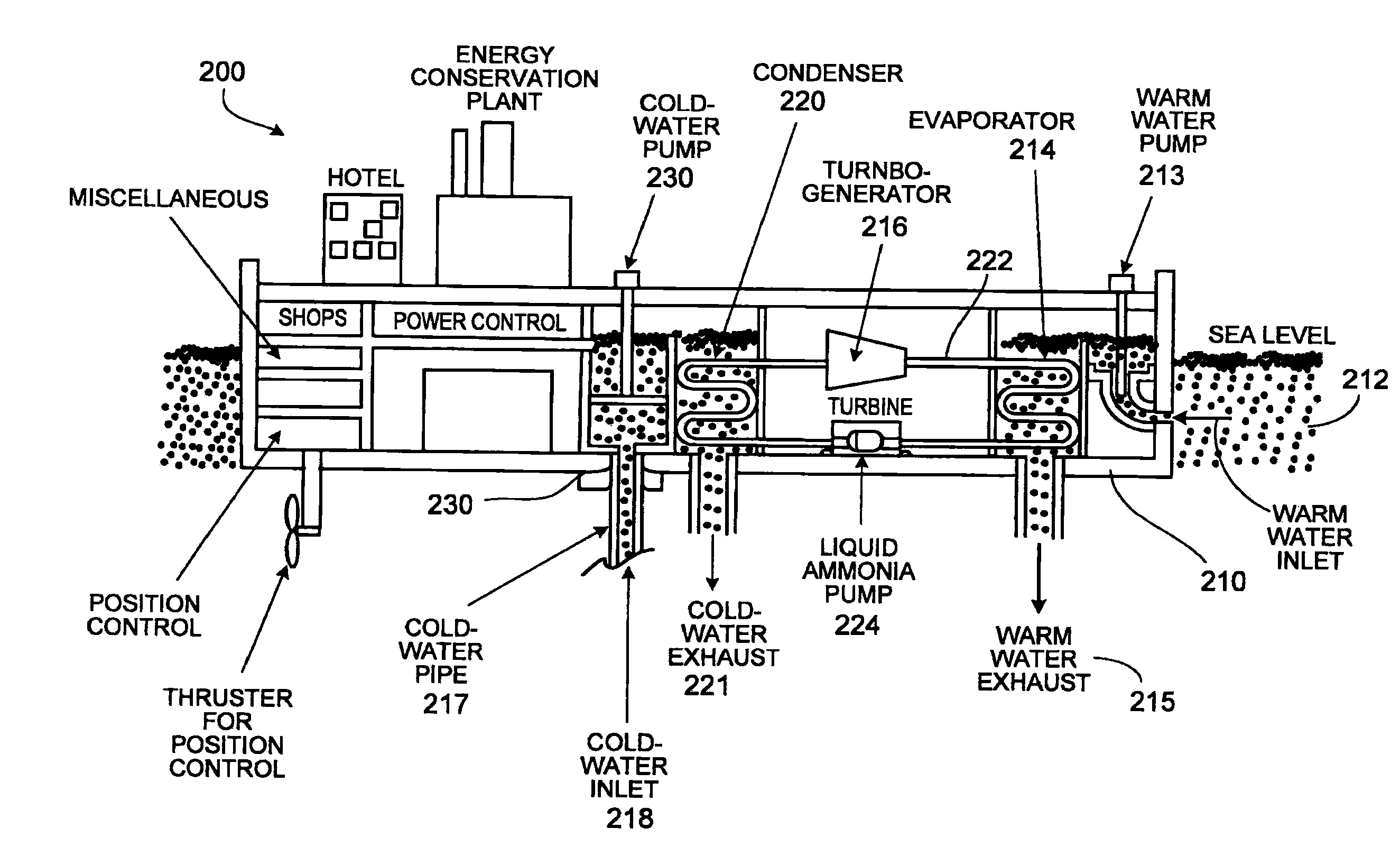
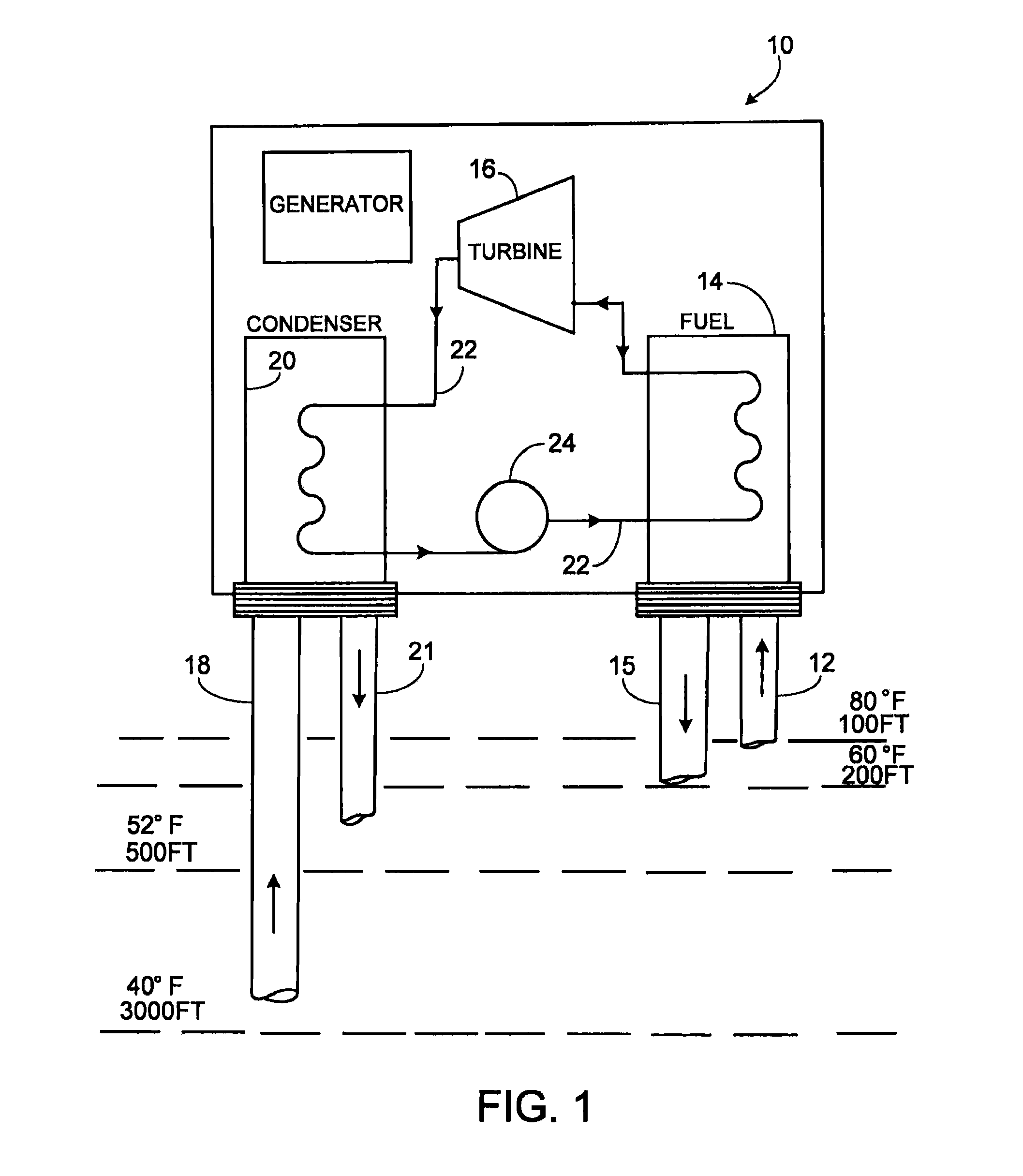
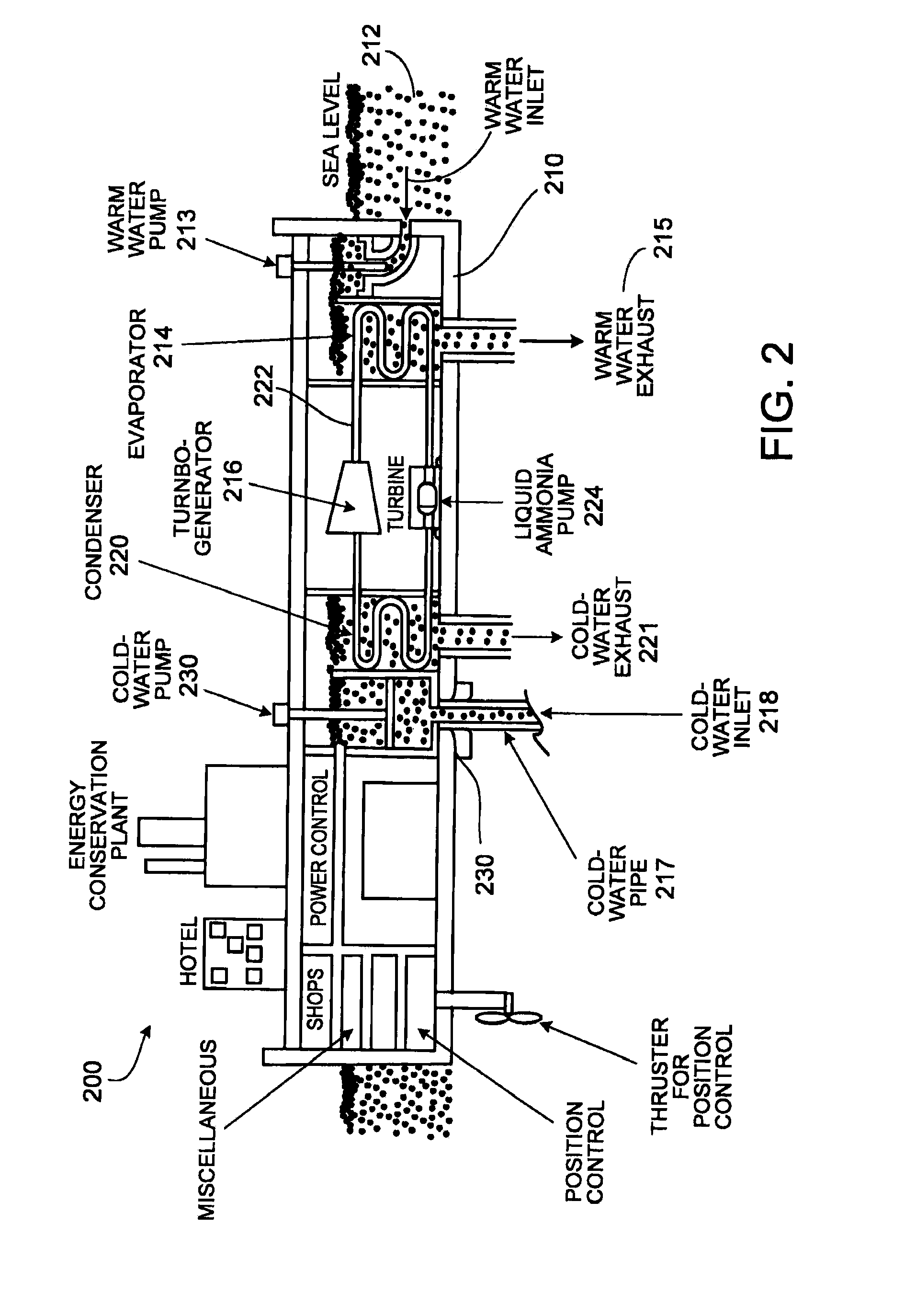
Ocean Thermal Energy Conversion Power Plant
PatentActiveUS20240318640A1
Innovation
- A floating OTEC power plant with a multi-stage heat engine and integrated heat exchange compartments, featuring a continuous offset staved cold water pipe and a hybrid cascading multi-stage heat exchange system, reduces parasitic loads and construction costs while minimizing environmental impact through efficient water flow and discharge management.


Ocean Thermal Energy Conversion Plant
PatentActiveUS20110173979A1
Innovation
- A floating OTEC power plant with a multi-stage heat exchange system integrated into a minimal heave platform, featuring large volume water conduits and modular heat exchanger compartments, optimized to minimize pressure losses and environmental impact by discharging warm and cold water at appropriate depths, utilizing a hybrid cascading heat exchange cycle to enhance energy transfer efficiency.

Energy Storage Integration Strategies
Energy storage systems play a crucial role in addressing the intermittent nature of Ocean Thermal Energy (OTE) power generation. The integration of appropriate storage technologies enables continuous power supply despite the variable output from OTE converters, creating a more reliable and grid-compatible energy source.
Battery storage systems represent the most immediate solution for OTE applications, with lithium-ion technologies offering high energy density and rapid response capabilities. These systems can effectively capture excess energy during peak OTE production periods and discharge during low-output intervals. For offshore OTE installations, specialized marine-grade battery enclosures have been developed to withstand harsh saltwater environments while maintaining optimal operating temperatures.
Pumped hydro storage presents a compelling large-scale option for coastal OTE facilities. The natural proximity to water bodies creates opportunities for innovative designs that utilize the ocean itself as the lower reservoir. Recent pilot projects have demonstrated dual-purpose systems where the cold water discharge from OTE operations is channeled through pumped storage infrastructure before returning to the ocean, maximizing overall system efficiency.
Hydrogen production and storage systems are emerging as a promising long-term strategy for OTE load matching. During periods of excess power generation, electrolyzers can convert surplus electricity into hydrogen, which can be stored and later reconverted to electricity via fuel cells when OTE output diminishes. This approach offers seasonal storage capabilities that shorter-duration technologies cannot match, particularly valuable for OTE systems in regions with significant seasonal thermal gradient variations.
Thermal energy storage (TES) solutions provide a direct approach to managing OTE output fluctuations. By storing the temperature differential itself rather than converting it to electricity first, these systems can achieve higher round-trip efficiencies. Advanced phase-change materials specifically engineered for the temperature ranges typical in OTE operations (20-25°C for warm surface water and 4-7°C for deep cold water) have demonstrated promising results in recent field tests.
Hybrid storage configurations combining multiple technologies have proven most effective for comprehensive OTE load matching. Short-duration battery systems handle minute-to-hour fluctuations, while hydrogen or pumped hydro components manage longer-term energy shifting. Sophisticated energy management systems employing predictive algorithms for ocean temperature variations and load demands optimize the interaction between these storage components, maximizing overall system performance and economic viability.
Battery storage systems represent the most immediate solution for OTE applications, with lithium-ion technologies offering high energy density and rapid response capabilities. These systems can effectively capture excess energy during peak OTE production periods and discharge during low-output intervals. For offshore OTE installations, specialized marine-grade battery enclosures have been developed to withstand harsh saltwater environments while maintaining optimal operating temperatures.
Pumped hydro storage presents a compelling large-scale option for coastal OTE facilities. The natural proximity to water bodies creates opportunities for innovative designs that utilize the ocean itself as the lower reservoir. Recent pilot projects have demonstrated dual-purpose systems where the cold water discharge from OTE operations is channeled through pumped storage infrastructure before returning to the ocean, maximizing overall system efficiency.
Hydrogen production and storage systems are emerging as a promising long-term strategy for OTE load matching. During periods of excess power generation, electrolyzers can convert surplus electricity into hydrogen, which can be stored and later reconverted to electricity via fuel cells when OTE output diminishes. This approach offers seasonal storage capabilities that shorter-duration technologies cannot match, particularly valuable for OTE systems in regions with significant seasonal thermal gradient variations.
Thermal energy storage (TES) solutions provide a direct approach to managing OTE output fluctuations. By storing the temperature differential itself rather than converting it to electricity first, these systems can achieve higher round-trip efficiencies. Advanced phase-change materials specifically engineered for the temperature ranges typical in OTE operations (20-25°C for warm surface water and 4-7°C for deep cold water) have demonstrated promising results in recent field tests.
Hybrid storage configurations combining multiple technologies have proven most effective for comprehensive OTE load matching. Short-duration battery systems handle minute-to-hour fluctuations, while hydrogen or pumped hydro components manage longer-term energy shifting. Sophisticated energy management systems employing predictive algorithms for ocean temperature variations and load demands optimize the interaction between these storage components, maximizing overall system performance and economic viability.
Grid Compatibility and Standardization Issues
The integration of Ocean Thermal Energy (OTE) systems into existing power grids presents significant challenges due to the intermittent nature of power generation. Grid compatibility and standardization issues must be addressed to ensure seamless integration and optimal performance of these systems within established electrical infrastructure.
Current grid codes and interconnection standards were primarily developed for conventional power generation systems with predictable output profiles. OTE systems, characterized by their variable power output dependent on ocean thermal gradients, require specialized grid integration protocols. The lack of standardized interconnection requirements specifically tailored for OTE technologies creates regulatory uncertainty and technical barriers for project developers and utilities alike.
Voltage and frequency fluctuations represent critical challenges when connecting OTE systems to the grid. Without proper load matching mechanisms, these fluctuations can compromise grid stability and power quality. International standards such as IEEE 1547 and IEC 61400-21 provide some guidance for renewable energy integration, but specific provisions for OTE technologies remain underdeveloped, creating compliance challenges for system designers.
Grid operators typically require predictable generation forecasts to maintain system balance. The variable nature of OTE power generation complicates this forecasting process, necessitating advanced prediction models and grid management strategies. Some jurisdictions have implemented grid codes with specific requirements for fault ride-through capabilities and reactive power support that OTE systems must meet, adding complexity to system design and increasing costs.
Harmonization of technical standards across different regions represents another significant challenge. The global nature of ocean energy development means that OTE systems may be deployed in various jurisdictions with differing grid requirements. This lack of international standardization creates market fragmentation and impedes technology transfer and scaling.
Energy storage integration standards for OTE systems remain in nascent stages. While battery storage technologies can help mitigate intermittency issues, the regulatory frameworks governing their integration with marine renewable energy systems are still evolving. Clear standards for hybrid OTE-storage systems would accelerate market adoption and improve grid compatibility.
Communication protocols between OTE systems and grid operators require standardization to enable effective monitoring and control. Smart grid integration capabilities, including real-time data exchange and remote operation functionality, are increasingly becoming requirements for grid connection but lack specific guidelines for OTE applications.
Current grid codes and interconnection standards were primarily developed for conventional power generation systems with predictable output profiles. OTE systems, characterized by their variable power output dependent on ocean thermal gradients, require specialized grid integration protocols. The lack of standardized interconnection requirements specifically tailored for OTE technologies creates regulatory uncertainty and technical barriers for project developers and utilities alike.
Voltage and frequency fluctuations represent critical challenges when connecting OTE systems to the grid. Without proper load matching mechanisms, these fluctuations can compromise grid stability and power quality. International standards such as IEEE 1547 and IEC 61400-21 provide some guidance for renewable energy integration, but specific provisions for OTE technologies remain underdeveloped, creating compliance challenges for system designers.
Grid operators typically require predictable generation forecasts to maintain system balance. The variable nature of OTE power generation complicates this forecasting process, necessitating advanced prediction models and grid management strategies. Some jurisdictions have implemented grid codes with specific requirements for fault ride-through capabilities and reactive power support that OTE systems must meet, adding complexity to system design and increasing costs.
Harmonization of technical standards across different regions represents another significant challenge. The global nature of ocean energy development means that OTE systems may be deployed in various jurisdictions with differing grid requirements. This lack of international standardization creates market fragmentation and impedes technology transfer and scaling.
Energy storage integration standards for OTE systems remain in nascent stages. While battery storage technologies can help mitigate intermittency issues, the regulatory frameworks governing their integration with marine renewable energy systems are still evolving. Clear standards for hybrid OTE-storage systems would accelerate market adoption and improve grid compatibility.
Communication protocols between OTE systems and grid operators require standardization to enable effective monitoring and control. Smart grid integration capabilities, including real-time data exchange and remote operation functionality, are increasingly becoming requirements for grid connection but lack specific guidelines for OTE applications.
Unlock deeper insights with PatSnap Eureka Quick Research — get a full tech report to explore trends and direct your research. Try now!
Generate Your Research Report Instantly with AI Agent
Supercharge your innovation with PatSnap Eureka AI Agent Platform!