How Brain-Computer Interfaces support communication in locked-in syndrome patients
SEP 2, 20259 MIN READ
Generate Your Research Report Instantly with AI Agent
Patsnap Eureka helps you evaluate technical feasibility & market potential.
BCI Technology Evolution and Objectives
Brain-Computer Interface (BCI) technology has evolved significantly over the past five decades, transforming from rudimentary experimental setups to sophisticated systems capable of facilitating communication for individuals with severe motor impairments. The journey began in the 1970s when researchers first demonstrated the possibility of using brain signals to control external devices. By the 1990s, the field had advanced to enable basic cursor control through electroencephalography (EEG) signals, marking a crucial milestone in BCI development.
The early 2000s witnessed a paradigm shift with the introduction of invasive BCIs, which involved implanting electrodes directly into the brain tissue to capture more precise neural signals. This approach significantly improved signal quality and enabled more complex control capabilities. Concurrently, non-invasive technologies continued to evolve, with improvements in signal processing algorithms and hardware miniaturization making BCIs more accessible and practical for clinical applications.
For locked-in syndrome patients, who retain cognitive function but lose voluntary muscle control, BCI technology represents a critical lifeline to the outside world. The primary objective of BCI development in this context is to restore communication capabilities, allowing these individuals to express thoughts, needs, and emotions despite their physical limitations. This goal has driven researchers to develop increasingly sophisticated systems that can translate neural activity into meaningful communication outputs.
Recent technological advancements have focused on enhancing the accuracy, speed, and usability of BCI systems for locked-in patients. Machine learning algorithms have revolutionized signal interpretation, enabling more intuitive and efficient communication interfaces. Additionally, hybrid BCI systems that combine multiple signal acquisition methods have emerged, offering improved performance and reliability in real-world settings.
The current trajectory of BCI technology aims to develop fully implantable, wireless systems with long-term stability and minimal maintenance requirements. Research is also exploring the integration of sensory feedback mechanisms to create closed-loop systems that provide users with more natural and intuitive control experiences. Furthermore, efforts are underway to develop portable, user-friendly BCI solutions that can be deployed in home environments, reducing dependence on clinical settings.
The ultimate objective extends beyond basic communication to enable richer interactions, including internet access, environmental control, and even the expression of emotional states. As BCI technology continues to mature, the goal is to provide locked-in syndrome patients with communication capabilities that approach the naturalness and efficiency of normal speech, significantly enhancing their quality of life and social participation.
The early 2000s witnessed a paradigm shift with the introduction of invasive BCIs, which involved implanting electrodes directly into the brain tissue to capture more precise neural signals. This approach significantly improved signal quality and enabled more complex control capabilities. Concurrently, non-invasive technologies continued to evolve, with improvements in signal processing algorithms and hardware miniaturization making BCIs more accessible and practical for clinical applications.
For locked-in syndrome patients, who retain cognitive function but lose voluntary muscle control, BCI technology represents a critical lifeline to the outside world. The primary objective of BCI development in this context is to restore communication capabilities, allowing these individuals to express thoughts, needs, and emotions despite their physical limitations. This goal has driven researchers to develop increasingly sophisticated systems that can translate neural activity into meaningful communication outputs.
Recent technological advancements have focused on enhancing the accuracy, speed, and usability of BCI systems for locked-in patients. Machine learning algorithms have revolutionized signal interpretation, enabling more intuitive and efficient communication interfaces. Additionally, hybrid BCI systems that combine multiple signal acquisition methods have emerged, offering improved performance and reliability in real-world settings.
The current trajectory of BCI technology aims to develop fully implantable, wireless systems with long-term stability and minimal maintenance requirements. Research is also exploring the integration of sensory feedback mechanisms to create closed-loop systems that provide users with more natural and intuitive control experiences. Furthermore, efforts are underway to develop portable, user-friendly BCI solutions that can be deployed in home environments, reducing dependence on clinical settings.
The ultimate objective extends beyond basic communication to enable richer interactions, including internet access, environmental control, and even the expression of emotional states. As BCI technology continues to mature, the goal is to provide locked-in syndrome patients with communication capabilities that approach the naturalness and efficiency of normal speech, significantly enhancing their quality of life and social participation.
Market Analysis for BCI in Locked-in Syndrome
The Brain-Computer Interface (BCI) market for locked-in syndrome patients represents a specialized but rapidly growing segment within the broader neurotechnology industry. Current market estimates value the global BCI market at approximately $1.9 billion in 2023, with projections suggesting growth to reach $3.7 billion by 2027, representing a compound annual growth rate (CAGR) of 15-18%. Within this broader market, applications specifically targeting locked-in syndrome patients account for roughly 8-10% of the total market value, though this proportion is expected to increase as technology advances.
The demand for BCI solutions for locked-in syndrome is primarily driven by the estimated 50,000-100,000 patients worldwide suffering from this condition, with approximately 1,000-2,000 new cases diagnosed annually. Healthcare institutions, rehabilitation centers, and research facilities constitute the primary customer base, with growing interest from home care providers as more user-friendly systems emerge.
Market penetration remains relatively low at 15-20% of the potential patient population, indicating substantial room for growth. This limited penetration stems from several factors: high costs (with advanced BCI systems ranging from $10,000 to $50,000), technical complexity requiring specialized training, and varying levels of insurance coverage across different regions.
Regional analysis reveals North America currently dominates the market with approximately 45% share, followed by Europe (30%) and Asia-Pacific (20%). However, the Asia-Pacific region is experiencing the fastest growth rate at 20-22% annually, driven by increasing healthcare expenditure and growing awareness in countries like China, Japan, and South Korea.
The market structure is characterized by a mix of established medical device companies, specialized neurotechnology firms, and academic spin-offs. Price sensitivity remains high, with most end-users (hospitals and patients) highly responsive to cost considerations, creating significant pressure for more affordable solutions.
Reimbursement landscapes vary dramatically by region, with some European countries offering comprehensive coverage for BCI devices as assistive technology, while coverage in the United States remains fragmented across different insurance providers. This inconsistent reimbursement environment represents one of the most significant barriers to broader market adoption.
Future market growth will likely be catalyzed by technological improvements reducing system costs, increasing accuracy, and simplifying user interfaces. The projected 5-year CAGR for BCI solutions specifically targeting locked-in syndrome is estimated at 22-25%, outpacing the broader BCI market as awareness grows and technology matures.
The demand for BCI solutions for locked-in syndrome is primarily driven by the estimated 50,000-100,000 patients worldwide suffering from this condition, with approximately 1,000-2,000 new cases diagnosed annually. Healthcare institutions, rehabilitation centers, and research facilities constitute the primary customer base, with growing interest from home care providers as more user-friendly systems emerge.
Market penetration remains relatively low at 15-20% of the potential patient population, indicating substantial room for growth. This limited penetration stems from several factors: high costs (with advanced BCI systems ranging from $10,000 to $50,000), technical complexity requiring specialized training, and varying levels of insurance coverage across different regions.
Regional analysis reveals North America currently dominates the market with approximately 45% share, followed by Europe (30%) and Asia-Pacific (20%). However, the Asia-Pacific region is experiencing the fastest growth rate at 20-22% annually, driven by increasing healthcare expenditure and growing awareness in countries like China, Japan, and South Korea.
The market structure is characterized by a mix of established medical device companies, specialized neurotechnology firms, and academic spin-offs. Price sensitivity remains high, with most end-users (hospitals and patients) highly responsive to cost considerations, creating significant pressure for more affordable solutions.
Reimbursement landscapes vary dramatically by region, with some European countries offering comprehensive coverage for BCI devices as assistive technology, while coverage in the United States remains fragmented across different insurance providers. This inconsistent reimbursement environment represents one of the most significant barriers to broader market adoption.
Future market growth will likely be catalyzed by technological improvements reducing system costs, increasing accuracy, and simplifying user interfaces. The projected 5-year CAGR for BCI solutions specifically targeting locked-in syndrome is estimated at 22-25%, outpacing the broader BCI market as awareness grows and technology matures.
Current BCI Limitations and Technical Barriers
Despite significant advancements in BCI technology for locked-in syndrome patients, several critical limitations and technical barriers persist. Signal acquisition remains a fundamental challenge, with non-invasive methods like EEG suffering from poor spatial resolution and susceptibility to noise, while invasive methods face issues of long-term stability and potential tissue damage. The signal-to-noise ratio in current BCI systems is often inadequate, particularly in real-world environments where electrical interference, movement artifacts, and background neural activity can significantly degrade performance.
Processing speed presents another major barrier, with many systems experiencing substantial latency between thought generation and command execution. This delay, sometimes extending to several seconds, severely limits the practical utility of BCIs for natural communication, especially for complex messages or emergency situations where immediate response is crucial.
Decoding accuracy remains inconsistent across users and sessions, with error rates that can frustrate patients and caregivers alike. The variability in neural signals between individuals necessitates extensive calibration periods, sometimes lasting hours, which must be frequently repeated due to the non-stationary nature of brain signals. This calibration requirement significantly reduces the practical usability of BCI systems in daily life.
Hardware limitations further constrain BCI adoption, with many systems requiring bulky equipment, specialized technical support, and controlled environments. The lack of portable, user-friendly interfaces that can function reliably in home settings represents a significant barrier to widespread implementation for locked-in patients who need communication support throughout their daily lives.
Training requirements pose additional challenges, as both patients and caregivers must invest substantial time to achieve proficiency. The cognitive load imposed on users can be particularly problematic for locked-in patients who may already experience fatigue and limited cognitive resources due to their underlying condition.
Ethical and regulatory barriers also exist, particularly for invasive BCIs that require surgical implantation. Questions regarding informed consent, especially for completely locked-in patients, remain unresolved, while regulatory pathways for novel BCI technologies are still evolving in many jurisdictions.
Finally, cost remains prohibitive for many potential users, with advanced BCI systems often priced beyond the reach of individual patients. Limited insurance coverage for these technologies, coupled with ongoing maintenance expenses and the need for technical support, creates significant financial barriers to access, particularly in resource-limited settings.
Processing speed presents another major barrier, with many systems experiencing substantial latency between thought generation and command execution. This delay, sometimes extending to several seconds, severely limits the practical utility of BCIs for natural communication, especially for complex messages or emergency situations where immediate response is crucial.
Decoding accuracy remains inconsistent across users and sessions, with error rates that can frustrate patients and caregivers alike. The variability in neural signals between individuals necessitates extensive calibration periods, sometimes lasting hours, which must be frequently repeated due to the non-stationary nature of brain signals. This calibration requirement significantly reduces the practical usability of BCI systems in daily life.
Hardware limitations further constrain BCI adoption, with many systems requiring bulky equipment, specialized technical support, and controlled environments. The lack of portable, user-friendly interfaces that can function reliably in home settings represents a significant barrier to widespread implementation for locked-in patients who need communication support throughout their daily lives.
Training requirements pose additional challenges, as both patients and caregivers must invest substantial time to achieve proficiency. The cognitive load imposed on users can be particularly problematic for locked-in patients who may already experience fatigue and limited cognitive resources due to their underlying condition.
Ethical and regulatory barriers also exist, particularly for invasive BCIs that require surgical implantation. Questions regarding informed consent, especially for completely locked-in patients, remain unresolved, while regulatory pathways for novel BCI technologies are still evolving in many jurisdictions.
Finally, cost remains prohibitive for many potential users, with advanced BCI systems often priced beyond the reach of individual patients. Limited insurance coverage for these technologies, coupled with ongoing maintenance expenses and the need for technical support, creates significant financial barriers to access, particularly in resource-limited settings.
Current BCI Communication Solutions for LIS
01 Neural signal processing for BCI communication
Brain-Computer Interfaces rely on sophisticated neural signal processing algorithms to interpret brain activity and convert it into meaningful communication outputs. These systems capture electrical signals from the brain through various recording methods, then process and classify these signals to identify user intent. Advanced signal processing techniques help filter noise, extract features, and translate neural patterns into commands that can control communication devices, enabling individuals with speech or motor impairments to express themselves.- Neural signal processing for BCI communication: Brain-Computer Interfaces rely on sophisticated neural signal processing algorithms to interpret brain activity and convert it into meaningful commands. These systems capture electrical signals from the brain through various recording methods, then process and classify these signals to enable communication. Advanced signal processing techniques help filter noise, extract features, and translate neural patterns into digital commands that can control external devices or communication systems for individuals with speech or motor impairments.
- Non-invasive BCI communication systems: Non-invasive brain-computer interface technologies enable communication support without requiring surgical implantation. These systems typically use electroencephalography (EEG), functional near-infrared spectroscopy (fNIRS), or other external sensing methods to detect brain activity patterns. The technology allows users to control communication devices through mental commands, enabling individuals with severe motor disabilities to express themselves. These systems often incorporate visual, auditory, or tactile feedback mechanisms to improve user interaction and communication efficiency.
- Invasive BCI implants for communication: Invasive brain-computer interface implants provide direct neural recording capabilities for enhanced communication support. These systems involve surgically placed electrodes or sensor arrays that directly contact brain tissue, allowing for higher fidelity signal acquisition compared to non-invasive methods. The implanted devices can detect more precise neural activity patterns, enabling more natural and fluid communication for users with communication disabilities. Advanced implant designs focus on biocompatibility, longevity, and wireless data transmission to improve user experience and reduce medical complications.
- AI-enhanced BCI communication platforms: Artificial intelligence and machine learning algorithms significantly enhance brain-computer interface communication capabilities. These systems learn from user brain activity patterns over time, improving accuracy and responsiveness of the communication interface. AI-powered BCIs can predict user intentions, adapt to changing neural signals, and provide context-aware communication assistance. The integration of natural language processing allows for more intuitive text generation and speech synthesis, enabling more natural conversations for users with communication impairments.
- BCI network connectivity and communication protocols: Brain-computer interfaces require specialized network architectures and communication protocols to facilitate reliable data transmission between neural sensors and output devices. These systems implement secure wireless communication standards, data encryption, and efficient bandwidth management to ensure responsive user experience. The network infrastructure supports real-time signal processing, cloud-based computing resources, and integration with various communication platforms. Advanced protocols enable BCIs to connect with smart home systems, mobile devices, and assistive technologies, expanding communication possibilities for users with disabilities.
02 Non-invasive BCI communication systems
Non-invasive Brain-Computer Interface systems provide communication support without requiring surgical implantation. These technologies typically use electroencephalography (EEG), functional near-infrared spectroscopy (fNIRS), or other external sensors to detect brain activity patterns. The systems are designed to be user-friendly, portable, and accessible for daily communication needs, making them suitable for a wider range of users including those with neurodegenerative conditions or severe physical disabilities who retain cognitive function.Expand Specific Solutions03 Invasive neural implants for direct communication
Invasive neural implant technologies for Brain-Computer Interfaces involve surgically placed electrodes or sensor arrays that directly interface with brain tissue. These systems offer higher signal resolution and more precise communication capabilities compared to non-invasive approaches. The implants can detect neural activity from specific brain regions associated with speech or language processing, enabling more natural communication for individuals with conditions like locked-in syndrome, ALS, or severe paralysis who cannot communicate through conventional means.Expand Specific Solutions04 Assistive communication devices with BCI integration
Assistive communication devices integrated with Brain-Computer Interface technology provide comprehensive support for individuals with communication disabilities. These systems combine BCI capabilities with specialized software interfaces, predictive text algorithms, and synthetic speech generation to create complete communication solutions. The devices are designed to adapt to users' specific needs and abilities, offering customizable interfaces, multiple input methods, and integration with existing assistive technologies to enhance communication effectiveness and independence.Expand Specific Solutions05 BCI-based emotion and intention recognition for enhanced communication
Advanced Brain-Computer Interface systems incorporate emotion and intention recognition capabilities to enhance communication support. These technologies analyze neural patterns associated with emotional states and communicative intent, adding nuance and context to user interactions. By detecting emotional valence, arousal, and specific communicative intentions, these systems enable more natural and expressive communication for users who cannot convey emotion through traditional means, creating more meaningful social interactions and improving quality of life.Expand Specific Solutions
Leading BCI Research Institutions and Companies
Brain-Computer Interface (BCI) technology for locked-in syndrome communication is in an early growth phase, with the market expanding rapidly as clinical applications demonstrate increasing viability. The global BCI market is projected to reach significant scale as healthcare applications gain traction. Technologically, we're seeing varying maturity levels across implementations. Research institutions like Washington University, MIT, and Johns Hopkins are advancing fundamental science, while companies like CereGate GmbH and Intel are developing commercial applications. Chinese universities (Tianjin University, Peking University, Zhejiang University) are making significant research contributions, particularly in non-invasive BCI approaches. The field is transitioning from primarily academic research to commercial viability, with increasing focus on improving signal processing, miniaturization, and user experience for locked-in patients.
Zhejiang University
Technical Solution: Zhejiang University has developed an innovative BCI system called "NeuralLink" specifically optimized for Chinese-speaking locked-in syndrome patients. Their technology utilizes a hybrid approach combining non-invasive EEG with functional near-infrared spectroscopy (fNIRS) to improve signal quality and reduce noise. The system employs advanced deep learning algorithms trained on large datasets of Chinese language patterns to accurately decode intended communication. Zhejiang's researchers have implemented a novel "attention-based" neural decoding framework that focuses on detecting when patients are actively attempting to communicate versus resting, significantly reducing false positives. Their platform includes a specialized visual interface that presents Chinese characters in an optimized layout based on frequency and context, improving communication efficiency. The system also incorporates eye-tracking capabilities as a complementary input method for patients with residual eye movement, creating a multimodal communication channel.
Strengths: Specialized optimization for Chinese language provides advantages for this population; hybrid sensing approach improves signal quality; multimodal input options increase accessibility. Weaknesses: May require adaptation for non-Chinese languages; relatively new technology with limited long-term validation; complex setup may require technical expertise.
CereGate GmbH
Technical Solution: CereGate has developed an implantable BCI system called "NeuroKey" specifically designed for locked-in syndrome patients. The system utilizes a minimally invasive surgical approach to place high-density microelectrode arrays in the motor cortex. These arrays capture neural signals that are processed through proprietary algorithms to decode intended speech and movement patterns. The system incorporates adaptive learning mechanisms that continuously improve signal interpretation based on the patient's neural activity patterns. CereGate's technology enables real-time communication through a specialized interface that converts neural signals into text, synthesized speech, or control commands for external devices. The system includes wireless data transmission capabilities and a user-friendly software platform that can be customized to individual patient needs and capabilities.
Strengths: Highly specialized focus on locked-in syndrome applications; minimally invasive approach reduces surgical risks; adaptive learning algorithms improve performance over time. Weaknesses: Limited clinical validation compared to academic research systems; potential high cost limiting accessibility; requires specialized surgical expertise for implantation.
Key BCI Patents and Scientific Breakthroughs
Brain-computer interface
PatentWO2014207008A1
Innovation
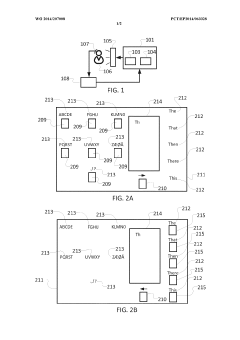
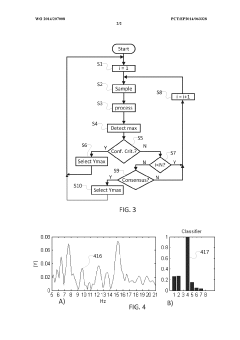
- A method that uses a combination of short and extended sampling periods, with adaptive confidence thresholds and voting mechanisms to select user-intended inputs, allowing for reliable detection of dominant stimulation frequencies even in noisy conditions, thereby increasing ITR.
Ethical and Privacy Considerations in BCI
The implementation of Brain-Computer Interfaces (BCIs) for locked-in syndrome patients raises significant ethical and privacy concerns that must be carefully addressed. As these technologies directly interface with neural activity, they create unprecedented access to the most private domain of human experience—the mind. This access necessitates robust ethical frameworks to protect patients' autonomy, dignity, and privacy rights.
Informed consent represents a primary ethical challenge in BCI implementation. For locked-in patients with severely limited communication abilities, establishing valid consent processes becomes particularly complex. Surrogate decision-making often becomes necessary, raising questions about who should make decisions regarding BCI use and how to ensure these decisions align with the patient's presumed wishes.
Data security and neural privacy emerge as critical concerns as BCIs collect and interpret neural signals. These systems generate highly sensitive data that could potentially reveal cognitive processes, emotional states, and even unexpressed thoughts. The storage, ownership, and potential commercialization of this neural data require careful consideration and strong protections to prevent unauthorized access or misuse.
The potential for psychological harm also warrants attention. Patients may experience frustration with technology limitations, disappointment with communication capabilities, or psychological distress from dependency on technological intermediaries for basic communication. Long-term psychological support should accompany BCI implementation to address these challenges.
Questions of identity and agency arise as BCIs mediate communication. When thoughts are filtered through algorithmic interpretation, concerns emerge about authenticity and whether the expressed communication truly represents the patient's intended meaning. This technological mediation may influence how others perceive the patient's personhood and autonomy.
Equitable access to BCI technology presents another ethical dimension. The high cost and specialized expertise required for BCI implementation create potential disparities in access. Ensuring that these life-changing technologies are available regardless of socioeconomic status or geographic location remains a significant challenge.
Regulatory frameworks currently lag behind technological developments in the BCI field. Clear guidelines are needed regarding data ownership, appropriate use contexts, and protection standards. International cooperation in developing these frameworks would help establish consistent ethical standards across different healthcare systems and cultural contexts.
Informed consent represents a primary ethical challenge in BCI implementation. For locked-in patients with severely limited communication abilities, establishing valid consent processes becomes particularly complex. Surrogate decision-making often becomes necessary, raising questions about who should make decisions regarding BCI use and how to ensure these decisions align with the patient's presumed wishes.
Data security and neural privacy emerge as critical concerns as BCIs collect and interpret neural signals. These systems generate highly sensitive data that could potentially reveal cognitive processes, emotional states, and even unexpressed thoughts. The storage, ownership, and potential commercialization of this neural data require careful consideration and strong protections to prevent unauthorized access or misuse.
The potential for psychological harm also warrants attention. Patients may experience frustration with technology limitations, disappointment with communication capabilities, or psychological distress from dependency on technological intermediaries for basic communication. Long-term psychological support should accompany BCI implementation to address these challenges.
Questions of identity and agency arise as BCIs mediate communication. When thoughts are filtered through algorithmic interpretation, concerns emerge about authenticity and whether the expressed communication truly represents the patient's intended meaning. This technological mediation may influence how others perceive the patient's personhood and autonomy.
Equitable access to BCI technology presents another ethical dimension. The high cost and specialized expertise required for BCI implementation create potential disparities in access. Ensuring that these life-changing technologies are available regardless of socioeconomic status or geographic location remains a significant challenge.
Regulatory frameworks currently lag behind technological developments in the BCI field. Clear guidelines are needed regarding data ownership, appropriate use contexts, and protection standards. International cooperation in developing these frameworks would help establish consistent ethical standards across different healthcare systems and cultural contexts.
Regulatory Framework for Neural Interfaces
The regulatory landscape for neural interfaces, particularly Brain-Computer Interfaces (BCIs) used with locked-in syndrome patients, presents a complex framework that continues to evolve alongside technological advancements. Currently, medical-grade BCIs fall under the classification of medical devices, requiring approval from regulatory bodies such as the FDA in the United States, the EMA in Europe, and equivalent organizations worldwide. These approvals typically demand rigorous clinical trials demonstrating both safety and efficacy, with particular emphasis on long-term biocompatibility and risk assessment.
For BCIs supporting communication in locked-in syndrome patients, regulatory considerations extend beyond standard medical device requirements. Privacy and data security regulations are especially critical, as these systems collect and process neural data—considered among the most sensitive personal information. The GDPR in Europe and HIPAA in the United States provide baseline frameworks for handling such data, though specific provisions for neural data remain underdeveloped in many jurisdictions.
Ethical oversight represents another crucial regulatory dimension. Most countries require institutional review board approval for BCI implementation, particularly for invasive systems. These reviews assess informed consent protocols—a uniquely challenging aspect for locked-in patients who may rely on the very technology being evaluated to communicate their consent. Several countries have developed specialized frameworks for proxy consent in these scenarios, though international standardization remains limited.
Reimbursement pathways constitute a significant regulatory hurdle affecting accessibility. In many healthcare systems, BCIs for communication support still occupy an ambiguous position between assistive technology and medical necessity, complicating insurance coverage and public funding decisions. Countries with universal healthcare systems have generally established clearer pathways than market-based systems, though coverage remains inconsistent globally.
The regulatory framework also encompasses post-market surveillance requirements, which are particularly stringent for neural interfaces. Manufacturers must maintain vigilance systems to monitor long-term performance and safety, with mandatory reporting of adverse events. For communication BCIs used with locked-in patients, these requirements often include specialized performance metrics related to communication accuracy and reliability.
Emerging regulatory trends indicate movement toward adaptive licensing pathways that acknowledge the unique challenges of neural interface technology while maintaining safety standards. Several jurisdictions are developing regulatory sandboxes specifically for neurotechnology, allowing controlled implementation with enhanced monitoring rather than traditional approval processes. These frameworks aim to balance innovation needs with patient protection in this rapidly evolving field.
For BCIs supporting communication in locked-in syndrome patients, regulatory considerations extend beyond standard medical device requirements. Privacy and data security regulations are especially critical, as these systems collect and process neural data—considered among the most sensitive personal information. The GDPR in Europe and HIPAA in the United States provide baseline frameworks for handling such data, though specific provisions for neural data remain underdeveloped in many jurisdictions.
Ethical oversight represents another crucial regulatory dimension. Most countries require institutional review board approval for BCI implementation, particularly for invasive systems. These reviews assess informed consent protocols—a uniquely challenging aspect for locked-in patients who may rely on the very technology being evaluated to communicate their consent. Several countries have developed specialized frameworks for proxy consent in these scenarios, though international standardization remains limited.
Reimbursement pathways constitute a significant regulatory hurdle affecting accessibility. In many healthcare systems, BCIs for communication support still occupy an ambiguous position between assistive technology and medical necessity, complicating insurance coverage and public funding decisions. Countries with universal healthcare systems have generally established clearer pathways than market-based systems, though coverage remains inconsistent globally.
The regulatory framework also encompasses post-market surveillance requirements, which are particularly stringent for neural interfaces. Manufacturers must maintain vigilance systems to monitor long-term performance and safety, with mandatory reporting of adverse events. For communication BCIs used with locked-in patients, these requirements often include specialized performance metrics related to communication accuracy and reliability.
Emerging regulatory trends indicate movement toward adaptive licensing pathways that acknowledge the unique challenges of neural interface technology while maintaining safety standards. Several jurisdictions are developing regulatory sandboxes specifically for neurotechnology, allowing controlled implementation with enhanced monitoring rather than traditional approval processes. These frameworks aim to balance innovation needs with patient protection in this rapidly evolving field.
Unlock deeper insights with Patsnap Eureka Quick Research — get a full tech report to explore trends and direct your research. Try now!
Generate Your Research Report Instantly with AI Agent
Supercharge your innovation with Patsnap Eureka AI Agent Platform!