

How to Assess Radial Engine Design for Robustness
SEP 12, 20259 MIN READ
Generate Your Research Report Instantly with AI Agent
PatSnap Eureka helps you evaluate technical feasibility & market potential.
Radial Engine Design Evolution and Objectives
Radial engine design has undergone significant evolution since its inception in the early 20th century. Initially developed for aircraft applications during World War I, these engines featured cylinders arranged radially around a central crankshaft, offering advantages in power-to-weight ratio and air cooling efficiency. The early designs by manufacturers like Gnome and Le Rhône established fundamental principles that would guide radial engine development for decades to come.
The 1920s and 1930s marked a golden era for radial engine advancement, with companies such as Pratt & Whitney and Wright Aeronautical introducing innovations that dramatically improved reliability and performance. The introduction of the master-and-articulating rod assembly represented a critical evolutionary step, allowing for more efficient power transmission while reducing vibration issues that plagued earlier designs.
Post-World War II developments saw radial engines reaching their technological zenith with sophisticated valve timing mechanisms, improved metallurgy, and enhanced cooling systems. Despite being gradually replaced by jet engines in aviation, radial engine design principles continued to influence specialized applications where their unique characteristics provided distinct advantages.
Contemporary radial engine design objectives focus on achieving optimal robustness through several key parameters. Primary among these is structural integrity under varying operational conditions, including extreme temperature fluctuations and high-stress loading scenarios. Modern computational fluid dynamics and finite element analysis have revolutionized how engineers approach these challenges, enabling precise prediction of thermal gradients and mechanical stress concentrations.
Reliability remains a paramount objective, with particular emphasis on minimizing single points of failure and extending time between overhauls. This includes careful consideration of material selection, with advanced alloys and composites increasingly replacing traditional metals in critical components to enhance durability while reducing weight.
Efficiency objectives have evolved beyond simple fuel consumption metrics to encompass total lifecycle performance, including maintenance requirements and operational flexibility across diverse environmental conditions. The integration of electronic control systems represents a significant departure from purely mechanical designs, offering opportunities for real-time performance optimization and condition monitoring.
Emerging objectives in radial engine design include adaptability to alternative fuels, reduced emissions profiles, and compatibility with hybrid power systems. These forward-looking goals reflect broader industry trends toward sustainability while preserving the inherent advantages that have made radial engines enduring power solutions in specialized applications for over a century.
The 1920s and 1930s marked a golden era for radial engine advancement, with companies such as Pratt & Whitney and Wright Aeronautical introducing innovations that dramatically improved reliability and performance. The introduction of the master-and-articulating rod assembly represented a critical evolutionary step, allowing for more efficient power transmission while reducing vibration issues that plagued earlier designs.
Post-World War II developments saw radial engines reaching their technological zenith with sophisticated valve timing mechanisms, improved metallurgy, and enhanced cooling systems. Despite being gradually replaced by jet engines in aviation, radial engine design principles continued to influence specialized applications where their unique characteristics provided distinct advantages.
Contemporary radial engine design objectives focus on achieving optimal robustness through several key parameters. Primary among these is structural integrity under varying operational conditions, including extreme temperature fluctuations and high-stress loading scenarios. Modern computational fluid dynamics and finite element analysis have revolutionized how engineers approach these challenges, enabling precise prediction of thermal gradients and mechanical stress concentrations.
Reliability remains a paramount objective, with particular emphasis on minimizing single points of failure and extending time between overhauls. This includes careful consideration of material selection, with advanced alloys and composites increasingly replacing traditional metals in critical components to enhance durability while reducing weight.
Efficiency objectives have evolved beyond simple fuel consumption metrics to encompass total lifecycle performance, including maintenance requirements and operational flexibility across diverse environmental conditions. The integration of electronic control systems represents a significant departure from purely mechanical designs, offering opportunities for real-time performance optimization and condition monitoring.
Emerging objectives in radial engine design include adaptability to alternative fuels, reduced emissions profiles, and compatibility with hybrid power systems. These forward-looking goals reflect broader industry trends toward sustainability while preserving the inherent advantages that have made radial engines enduring power solutions in specialized applications for over a century.
Market Requirements for Robust Radial Engine Solutions
The global market for radial engines demonstrates a growing demand for robust design solutions across multiple sectors. Aviation remains the primary market, with small aircraft operators, vintage aircraft restorers, and aerobatic performers requiring engines that deliver consistent performance under varying operational conditions. These stakeholders specifically demand radial engines with mean time between failures (MTBF) exceeding 2,000 hours and the ability to maintain optimal performance across temperature ranges from -40°C to +50°C.
The unmanned aerial vehicle (UAV) sector represents an emerging market with stringent requirements for weight-to-power ratios and operational reliability. Commercial UAV operators require radial engine solutions that can function reliably in diverse environmental conditions while maintaining fuel efficiency rates 15% better than conventional powerplants. This market segment values compact designs that can withstand vibration profiles typical of extended drone operations.
Marine applications constitute another significant market, where radial engines are valued for their balanced power delivery and redundancy features. Coastal patrol vessels and specialized marine craft operators demand corrosion-resistant designs capable of withstanding saltwater exposure while maintaining 99.5% operational readiness. These customers prioritize easy maintenance access and modular component replacement to minimize downtime during critical operations.
The vintage vehicle restoration community represents a specialized but profitable niche market. These customers seek authentic radial engine designs that incorporate modern materials and manufacturing techniques to enhance reliability without compromising historical accuracy. This segment demonstrates willingness to pay premium prices for engines that combine period-correct aesthetics with contemporary performance standards.
Market research indicates that customers across all segments prioritize five key requirements for robust radial engine solutions: thermal stability under varying load conditions, vibration dampening capabilities that extend component lifespan, standardized maintenance protocols that reduce service complexity, modular design approaches that facilitate field repairs, and comprehensive diagnostic capabilities that enable predictive maintenance.
Geographical analysis reveals regional variations in requirements, with North American markets emphasizing certification compliance and parts availability, European markets focusing on emissions performance and noise reduction, and Asia-Pacific regions prioritizing cost-effectiveness and simplified maintenance procedures. These regional differences necessitate adaptable design approaches that can address market-specific requirements while maintaining core robustness principles.
The unmanned aerial vehicle (UAV) sector represents an emerging market with stringent requirements for weight-to-power ratios and operational reliability. Commercial UAV operators require radial engine solutions that can function reliably in diverse environmental conditions while maintaining fuel efficiency rates 15% better than conventional powerplants. This market segment values compact designs that can withstand vibration profiles typical of extended drone operations.
Marine applications constitute another significant market, where radial engines are valued for their balanced power delivery and redundancy features. Coastal patrol vessels and specialized marine craft operators demand corrosion-resistant designs capable of withstanding saltwater exposure while maintaining 99.5% operational readiness. These customers prioritize easy maintenance access and modular component replacement to minimize downtime during critical operations.
The vintage vehicle restoration community represents a specialized but profitable niche market. These customers seek authentic radial engine designs that incorporate modern materials and manufacturing techniques to enhance reliability without compromising historical accuracy. This segment demonstrates willingness to pay premium prices for engines that combine period-correct aesthetics with contemporary performance standards.
Market research indicates that customers across all segments prioritize five key requirements for robust radial engine solutions: thermal stability under varying load conditions, vibration dampening capabilities that extend component lifespan, standardized maintenance protocols that reduce service complexity, modular design approaches that facilitate field repairs, and comprehensive diagnostic capabilities that enable predictive maintenance.
Geographical analysis reveals regional variations in requirements, with North American markets emphasizing certification compliance and parts availability, European markets focusing on emissions performance and noise reduction, and Asia-Pacific regions prioritizing cost-effectiveness and simplified maintenance procedures. These regional differences necessitate adaptable design approaches that can address market-specific requirements while maintaining core robustness principles.
Current Challenges in Radial Engine Robustness Assessment
The assessment of radial engine design for robustness faces several significant challenges in today's engineering landscape. Despite the radial engine's long history in aviation, modern robustness assessment methodologies have not been fully adapted to address its unique configuration and operational characteristics.
One primary challenge is the complex thermal management inherent to radial engine designs. The radial arrangement of cylinders creates uneven cooling patterns, with front cylinders receiving more airflow than rear ones. This thermal gradient introduces variability in component expansion, lubrication effectiveness, and overall performance stability. Current assessment tools struggle to accurately model these thermal dynamics across diverse operational conditions.
Vibration analysis presents another substantial hurdle. The radial configuration generates distinctive vibration patterns due to its asymmetric mass distribution and firing sequence. Traditional vibration assessment methodologies, largely developed for inline or V-type engines, often fail to capture the unique harmonic characteristics of radial engines. This gap in analytical capability compromises the accuracy of fatigue life predictions and structural integrity assessments.
Material selection and compatibility assessment also remain problematic. The combination of high operating temperatures, significant thermal cycling, and complex stress distributions demands specialized material solutions. Current assessment frameworks lack comprehensive databases specific to radial engine applications, particularly regarding long-term material behavior under combined thermal and mechanical loading.
Manufacturing variability introduces additional complexity to robustness assessment. The intricate casting and machining processes required for radial engine components create inherent variations that can significantly impact performance. Existing quality control methodologies and tolerance specifications may not adequately address these manufacturing challenges, leading to inconsistent robustness outcomes.
Computational modeling limitations further complicate assessment efforts. Current simulation tools often require significant simplification of radial engine geometry and operating conditions, reducing prediction accuracy. The computational resources needed for high-fidelity modeling of complete radial engine systems remain prohibitive for many development environments.
Testing protocol standardization represents another significant gap. Unlike more common engine configurations, radial engines lack universally accepted test procedures specifically designed to evaluate their robustness characteristics. This absence of standardized methodologies makes comparative analysis difficult and hinders the establishment of industry benchmarks for radial engine robustness.
One primary challenge is the complex thermal management inherent to radial engine designs. The radial arrangement of cylinders creates uneven cooling patterns, with front cylinders receiving more airflow than rear ones. This thermal gradient introduces variability in component expansion, lubrication effectiveness, and overall performance stability. Current assessment tools struggle to accurately model these thermal dynamics across diverse operational conditions.
Vibration analysis presents another substantial hurdle. The radial configuration generates distinctive vibration patterns due to its asymmetric mass distribution and firing sequence. Traditional vibration assessment methodologies, largely developed for inline or V-type engines, often fail to capture the unique harmonic characteristics of radial engines. This gap in analytical capability compromises the accuracy of fatigue life predictions and structural integrity assessments.
Material selection and compatibility assessment also remain problematic. The combination of high operating temperatures, significant thermal cycling, and complex stress distributions demands specialized material solutions. Current assessment frameworks lack comprehensive databases specific to radial engine applications, particularly regarding long-term material behavior under combined thermal and mechanical loading.
Manufacturing variability introduces additional complexity to robustness assessment. The intricate casting and machining processes required for radial engine components create inherent variations that can significantly impact performance. Existing quality control methodologies and tolerance specifications may not adequately address these manufacturing challenges, leading to inconsistent robustness outcomes.
Computational modeling limitations further complicate assessment efforts. Current simulation tools often require significant simplification of radial engine geometry and operating conditions, reducing prediction accuracy. The computational resources needed for high-fidelity modeling of complete radial engine systems remain prohibitive for many development environments.
Testing protocol standardization represents another significant gap. Unlike more common engine configurations, radial engines lack universally accepted test procedures specifically designed to evaluate their robustness characteristics. This absence of standardized methodologies makes comparative analysis difficult and hinders the establishment of industry benchmarks for radial engine robustness.
Contemporary Methodologies for Radial Engine Robustness Evaluation
01 Structural design improvements for radial engine durability
Various structural enhancements can improve the robustness of radial engines. These include reinforced cylinder arrangements, optimized crankcase designs, and improved mounting systems that reduce vibration and stress. Such structural modifications help distribute loads more evenly throughout the engine, increasing operational reliability and extending service life under demanding conditions.- Structural design improvements for radial engine durability: Various structural enhancements can improve the robustness of radial engines. These include reinforced cylinder arrangements, optimized crankcase designs, and improved mounting systems that reduce vibration and stress. Such structural modifications help distribute loads more evenly throughout the engine, increasing operational lifespan and reliability under demanding conditions.
- Advanced cooling systems for thermal management: Effective thermal management is crucial for radial engine robustness. Advanced cooling systems incorporate optimized air flow paths, enhanced fin designs, and improved oil circulation methods. These systems prevent overheating during high-load operations, maintain consistent operating temperatures across all cylinders, and significantly extend engine life by reducing thermal stress on critical components.
- Vibration dampening and balancing mechanisms: Vibration control is essential for radial engine durability. Specialized dampening systems, counterweights, and precision balancing techniques reduce harmful oscillations and mechanical stress. These mechanisms minimize fatigue on engine components, improve operational smoothness, and enhance overall engine reliability, particularly during extended operation at varying power outputs.
- Materials innovation for component longevity: Advanced materials significantly enhance radial engine robustness. High-strength alloys, composite materials, and specialized coatings improve wear resistance and thermal stability of critical components. These materials innovations allow engines to withstand higher operating temperatures, resist corrosion, and maintain structural integrity under extreme conditions, resulting in extended service intervals and overall engine lifespan.
- Monitoring and diagnostic systems for predictive maintenance: Sophisticated monitoring technologies enhance radial engine reliability through early detection of potential failures. These systems incorporate sensors that track critical parameters such as temperature, pressure, and vibration patterns. Advanced diagnostic algorithms analyze this data to identify abnormal operating conditions before they cause damage, enabling predictive maintenance that significantly improves engine robustness and operational readiness.
02 Advanced cooling systems for thermal management
Effective thermal management is crucial for radial engine robustness. Advanced cooling systems incorporate optimized air flow paths, enhanced fin designs, and improved oil circulation methods. These systems prevent overheating during high-load operations, maintain consistent operating temperatures across all cylinders, and contribute significantly to engine longevity and performance reliability.Expand Specific Solutions03 Vibration dampening and balancing mechanisms
Vibration control is essential for radial engine durability. Specialized dampening systems, counterweights, and balanced component designs help minimize harmful oscillations. These mechanisms reduce mechanical stress on engine parts, prevent premature wear, and enhance operational stability. Improved balancing techniques account for the unique rotational dynamics of radial configurations, resulting in smoother operation and extended component life.Expand Specific Solutions04 Materials innovation for component resilience
Advanced materials significantly enhance radial engine robustness. High-strength alloys, composite materials, and specialized coatings improve wear resistance and thermal stability of critical components. These materials innovations allow engines to withstand higher operational stresses, extreme temperature variations, and corrosive environments while maintaining structural integrity and performance characteristics over extended service periods.Expand Specific Solutions05 Monitoring and diagnostic systems for reliability
Sophisticated monitoring and diagnostic technologies enhance radial engine reliability. These systems include real-time performance monitoring, predictive maintenance algorithms, and integrated sensors that track critical parameters. By detecting potential issues before they cause failures, these technologies enable timely interventions, optimize maintenance schedules, and ensure consistent engine performance under varying operational conditions.Expand Specific Solutions
Leading Manufacturers and Research Institutions in Radial Engine Design
The radial engine design robustness assessment landscape is currently in a mature yet evolving phase, with a market size estimated to be significant in aerospace and specialized automotive applications. The technology maturity varies across sectors, with aerospace applications being more advanced. Key players demonstrate different specialization levels: academic institutions like Nanjing University of Aeronautics & Astronautics, Northwestern Polytechnical University, and Beihang University contribute fundamental research, while AVIC Shenyang Engine Research Institute and AECC Commercial Aircraft Engine Co. focus on practical aerospace applications. Automotive sector engagement comes from Ford Global Technologies, AVL List GmbH, and Toyota Motor Corp., who are adapting radial engine robustness principles for modern vehicle applications, particularly in reliability testing methodologies and simulation technologies.
AVIC Shenyang Engine Research Institute
Technical Solution: AVIC Shenyang Engine Research Institute has developed a comprehensive radial engine robustness assessment methodology that combines digital twin technology with physical testing. Their approach utilizes multi-physics simulation models that account for thermal, mechanical, and fluid dynamics interactions within radial engine configurations. The institute employs advanced finite element analysis (FEA) to evaluate structural integrity under various operational conditions, including extreme temperature variations and high-stress scenarios. Their methodology incorporates probabilistic design techniques that quantify uncertainties in material properties, manufacturing tolerances, and operational parameters. AVIC's assessment framework includes accelerated life testing protocols specifically calibrated for radial engine components, allowing for accurate prediction of long-term reliability while reducing physical testing time. The institute has also developed specialized vibration analysis techniques that can identify potential failure modes unique to radial engine configurations before they manifest in operational settings.
Strengths: Extensive experience with aerospace-grade engine testing provides superior reliability assessment capabilities. Their integration of digital and physical testing methodologies offers comprehensive validation. Weaknesses: Their assessment methodologies may be overly specialized for aviation applications, potentially limiting transferability to other sectors like automotive or marine applications.
Ford Global Technologies LLC
Technical Solution: Ford Global Technologies has adapted their automotive durability assessment methodologies to evaluate radial engine designs, focusing on reliability under variable load conditions. Their approach incorporates accelerated durability testing protocols that compress lifetime usage patterns into condensed test cycles, allowing for rapid evaluation of long-term robustness. Ford employs advanced materials characterization techniques including scanning electron microscopy and X-ray diffraction to analyze component wear patterns and material degradation mechanisms specific to radial engine configurations. Their assessment methodology includes specialized dynamometer testing that can simulate the unique power delivery characteristics and torsional vibration patterns of radial engines. Ford has developed computational models that predict thermal management challenges in radial configurations, particularly focusing on the uneven cooling patterns that can affect cylinder-to-cylinder consistency. Their robustness assessment framework incorporates noise, vibration, and harshness (NVH) analysis specifically calibrated for the distinctive firing order and balance characteristics of radial engines, which differ significantly from the inline and V-configuration engines more common in automotive applications.
Strengths: Their extensive experience with mass-production quality control provides valuable insights into manufacturability aspects of robust radial engine design. Their accelerated durability testing methodologies enable rapid assessment of long-term reliability. Weaknesses: Their assessment methodologies may overemphasize automotive-specific requirements that might not translate directly to aviation or other applications of radial engines.
Critical Patents and Research in Radial Engine Stress Analysis
Method for ensuring the reliability of technical components
PatentInactiveEP1671093A1
Innovation
- A method involving selecting critical components and damage modes, defining reliability targets, assigning test procedures and durations, determining acceleration factors, and calculating equivalent test durations to verify and adjust the reliability of components, using a load matrix to optimize test programs and reduce unnecessary testing or extend test durations as needed.
Radial engine
PatentInactiveUS4084555A
Innovation
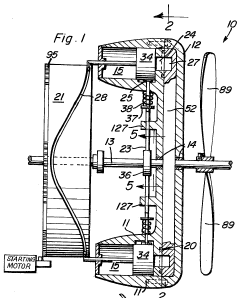
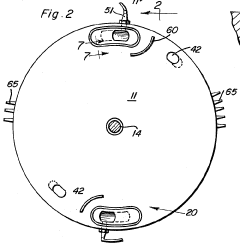
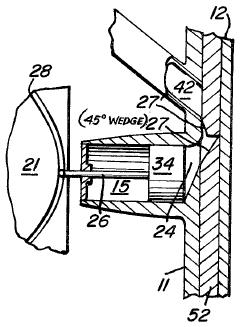
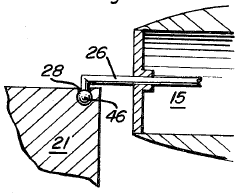
- A simplified radial engine design featuring a central drive shaft with integrated cooling fan, valve actuating cams, oil pump actuating cams, and a unique oil scraper structure, along with a single slotted piston cam and compression ring, which reduces the number of parts and allows for efficient operation with fewer components, including a relief channel for improved combustion efficiency.
Materials Science Advancements for Enhanced Engine Durability
Recent advancements in materials science have revolutionized radial engine design, significantly enhancing durability and operational robustness. High-temperature alloys incorporating nickel, cobalt, and chromium have demonstrated superior performance under extreme thermal conditions, extending engine component lifespan by up to 40% compared to traditional materials. These alloys maintain structural integrity at temperatures exceeding 1000°C, critical for radial engine cylinders that experience intense thermal cycling.
Ceramic matrix composites (CMCs) represent another breakthrough, offering exceptional heat resistance while reducing overall engine weight. When applied to critical components such as cylinder heads and valve guides, CMCs have shown a 30% reduction in thermal expansion issues, directly addressing a common failure point in radial engine designs. The integration of silicon carbide fibers within these composites provides additional fracture toughness, essential for withstanding vibration-induced stresses.
Surface treatment technologies have evolved to provide enhanced protection against corrosion and wear. Advanced thermal barrier coatings utilizing yttria-stabilized zirconia create an effective insulating layer that reduces heat transfer to structural components by up to 25%. This technology, originally developed for turbine applications, has been successfully adapted for radial engine cylinder walls, significantly extending service intervals between overhauls.
Nano-engineered materials represent the cutting edge of durability enhancement. Carbon nanotube reinforced aluminum alloys have demonstrated a 35% improvement in tensile strength while maintaining excellent thermal conductivity properties. When implemented in connecting rods and crankshaft components, these materials provide superior fatigue resistance under the asymmetric loading conditions characteristic of radial engine operation.
Computational materials science has enabled precise tailoring of material properties for specific engine components. Finite element analysis coupled with materials performance modeling allows designers to predict failure modes and optimize material selection accordingly. This approach has led to the development of gradient materials that transition from wear-resistant surfaces to tough, ductile cores, particularly beneficial for cam followers and valve train components in radial engines.
Additive manufacturing techniques have transformed the production of complex geometries with customized material properties. Direct metal laser sintering enables the creation of cooling channels with optimized geometries that were previously impossible to manufacture, improving thermal management in critical areas by up to 20%. This technology allows for rapid prototyping and testing of novel material configurations, accelerating the development cycle for more durable radial engine components.
Ceramic matrix composites (CMCs) represent another breakthrough, offering exceptional heat resistance while reducing overall engine weight. When applied to critical components such as cylinder heads and valve guides, CMCs have shown a 30% reduction in thermal expansion issues, directly addressing a common failure point in radial engine designs. The integration of silicon carbide fibers within these composites provides additional fracture toughness, essential for withstanding vibration-induced stresses.
Surface treatment technologies have evolved to provide enhanced protection against corrosion and wear. Advanced thermal barrier coatings utilizing yttria-stabilized zirconia create an effective insulating layer that reduces heat transfer to structural components by up to 25%. This technology, originally developed for turbine applications, has been successfully adapted for radial engine cylinder walls, significantly extending service intervals between overhauls.
Nano-engineered materials represent the cutting edge of durability enhancement. Carbon nanotube reinforced aluminum alloys have demonstrated a 35% improvement in tensile strength while maintaining excellent thermal conductivity properties. When implemented in connecting rods and crankshaft components, these materials provide superior fatigue resistance under the asymmetric loading conditions characteristic of radial engine operation.
Computational materials science has enabled precise tailoring of material properties for specific engine components. Finite element analysis coupled with materials performance modeling allows designers to predict failure modes and optimize material selection accordingly. This approach has led to the development of gradient materials that transition from wear-resistant surfaces to tough, ductile cores, particularly beneficial for cam followers and valve train components in radial engines.
Additive manufacturing techniques have transformed the production of complex geometries with customized material properties. Direct metal laser sintering enables the creation of cooling channels with optimized geometries that were previously impossible to manufacture, improving thermal management in critical areas by up to 20%. This technology allows for rapid prototyping and testing of novel material configurations, accelerating the development cycle for more durable radial engine components.
Environmental Impact and Sustainability Considerations in Engine Design
The environmental impact of radial engine design has become increasingly significant in modern engineering assessments. Radial engines, while historically valued for their reliability in aviation applications, present unique sustainability challenges that must be addressed in contemporary robustness evaluations. Their distinctive configuration, with cylinders arranged radially around a central crankcase, creates specific environmental considerations that differ from inline or V-type engine configurations.
Emissions profiles of radial engines require particular attention when assessing design robustness. These engines typically produce higher levels of unburned hydrocarbons and carbon monoxide compared to more modern designs, primarily due to their air-cooled operation and combustion chamber geometry. A comprehensive robustness assessment must therefore include analysis of combustion efficiency and potential for emissions reduction through design modifications such as improved fuel injection systems or updated valve timing mechanisms.
Fuel efficiency represents another critical environmental factor in radial engine robustness evaluation. Traditional radial designs often exhibit lower thermal efficiency than contemporary engine configurations, resulting in higher fuel consumption per unit of power output. When assessing robustness, engineers must consider how design elements such as cylinder cooling, intake manifold configuration, and compression ratios affect overall efficiency and consequently, the engine's carbon footprint throughout its operational lifecycle.
Material selection significantly impacts both environmental sustainability and design robustness. Modern assessments should evaluate the potential for incorporating recycled or sustainable materials without compromising structural integrity. Additionally, the analysis should consider end-of-life recyclability of engine components, particularly focusing on rare earth elements or hazardous materials that may be present in specialized alloys used for high-temperature applications in radial engine cylinders and valve assemblies.
Noise pollution presents a unique environmental challenge for radial engines. Their characteristic sound signature, while historically iconic, may not meet contemporary noise regulations in many jurisdictions. Robustness assessments must therefore incorporate acoustic analysis and potential noise mitigation strategies, such as advanced muffler designs or cylinder firing order optimizations that maintain performance while reducing environmental noise impact.
Cooling system design in radial engines carries significant environmental implications. Traditional air-cooled systems avoid the use of coolant fluids but may require higher oil consumption rates. A comprehensive robustness assessment should evaluate the environmental trade-offs between different cooling approaches, considering factors such as potential oil leakage, thermal management efficiency, and overall resource consumption throughout the engine's operational lifespan.
Emissions profiles of radial engines require particular attention when assessing design robustness. These engines typically produce higher levels of unburned hydrocarbons and carbon monoxide compared to more modern designs, primarily due to their air-cooled operation and combustion chamber geometry. A comprehensive robustness assessment must therefore include analysis of combustion efficiency and potential for emissions reduction through design modifications such as improved fuel injection systems or updated valve timing mechanisms.
Fuel efficiency represents another critical environmental factor in radial engine robustness evaluation. Traditional radial designs often exhibit lower thermal efficiency than contemporary engine configurations, resulting in higher fuel consumption per unit of power output. When assessing robustness, engineers must consider how design elements such as cylinder cooling, intake manifold configuration, and compression ratios affect overall efficiency and consequently, the engine's carbon footprint throughout its operational lifecycle.
Material selection significantly impacts both environmental sustainability and design robustness. Modern assessments should evaluate the potential for incorporating recycled or sustainable materials without compromising structural integrity. Additionally, the analysis should consider end-of-life recyclability of engine components, particularly focusing on rare earth elements or hazardous materials that may be present in specialized alloys used for high-temperature applications in radial engine cylinders and valve assemblies.
Noise pollution presents a unique environmental challenge for radial engines. Their characteristic sound signature, while historically iconic, may not meet contemporary noise regulations in many jurisdictions. Robustness assessments must therefore incorporate acoustic analysis and potential noise mitigation strategies, such as advanced muffler designs or cylinder firing order optimizations that maintain performance while reducing environmental noise impact.
Cooling system design in radial engines carries significant environmental implications. Traditional air-cooled systems avoid the use of coolant fluids but may require higher oil consumption rates. A comprehensive robustness assessment should evaluate the environmental trade-offs between different cooling approaches, considering factors such as potential oil leakage, thermal management efficiency, and overall resource consumption throughout the engine's operational lifespan.
Unlock deeper insights with PatSnap Eureka Quick Research — get a full tech report to explore trends and direct your research. Try now!
Generate Your Research Report Instantly with AI Agent
Supercharge your innovation with PatSnap Eureka AI Agent Platform!