

Validate Radial Engine Components for Durability
SEP 12, 202510 MIN READ
Generate Your Research Report Instantly with AI Agent
PatSnap Eureka helps you evaluate technical feasibility & market potential.
Radial Engine Durability Validation Background & Objectives
Radial engines have a rich history dating back to the early 20th century, when they revolutionized aviation propulsion technology. These engines, characterized by their cylinder arrangement in a circular pattern around a central crankshaft, dominated aircraft propulsion from the 1920s through the 1940s. Despite being largely replaced by turbine engines in modern aviation, radial engines continue to find applications in vintage aircraft restoration, specialized industrial equipment, and certain niche aviation segments where their unique characteristics provide advantages.
The evolution of radial engine technology has seen significant improvements in materials, manufacturing processes, and design methodologies. Early radial engines faced numerous durability challenges, including thermal stress management, lubrication issues, and vibration-induced fatigue. Modern engineering approaches have addressed many of these historical limitations, yet the fundamental design principles remain largely unchanged, presenting unique validation requirements.
The primary objective of radial engine component durability validation is to establish comprehensive testing protocols that accurately predict component lifespan under various operational conditions. This involves developing methodologies that account for the unique stress patterns experienced by radial engine components, particularly the master-and-articulating rod assembly, which distinguishes radial engines from other engine configurations.
Current durability validation practices often rely on methodologies developed for inline or V-configuration engines, which fail to adequately address the specific mechanical stresses present in radial configurations. The asymmetric loading patterns, complex thermal gradients, and unique oil distribution characteristics of radial engines necessitate specialized validation approaches to ensure reliable performance predictions.
The technical goals of this research include developing simulation models that accurately represent the complex mechanical interactions within radial engine assemblies, establishing accelerated testing protocols that maintain fidelity to real-world operating conditions, and creating component-specific validation standards that address the unique failure modes observed in radial engine parts.
Additionally, this research aims to bridge the gap between historical empirical knowledge—often held by a diminishing number of specialists—and modern computational analysis techniques. By documenting and quantifying the tribal knowledge accumulated through decades of radial engine operation and maintenance, we can develop more robust validation methodologies that combine traditional insights with contemporary engineering approaches.
The ultimate objective is to establish a standardized framework for radial engine component validation that ensures consistent reliability assessment, supports certification requirements for restored historic aircraft, and enables innovation in specialized applications where radial engine configurations continue to offer advantages over alternative power systems.
The evolution of radial engine technology has seen significant improvements in materials, manufacturing processes, and design methodologies. Early radial engines faced numerous durability challenges, including thermal stress management, lubrication issues, and vibration-induced fatigue. Modern engineering approaches have addressed many of these historical limitations, yet the fundamental design principles remain largely unchanged, presenting unique validation requirements.
The primary objective of radial engine component durability validation is to establish comprehensive testing protocols that accurately predict component lifespan under various operational conditions. This involves developing methodologies that account for the unique stress patterns experienced by radial engine components, particularly the master-and-articulating rod assembly, which distinguishes radial engines from other engine configurations.
Current durability validation practices often rely on methodologies developed for inline or V-configuration engines, which fail to adequately address the specific mechanical stresses present in radial configurations. The asymmetric loading patterns, complex thermal gradients, and unique oil distribution characteristics of radial engines necessitate specialized validation approaches to ensure reliable performance predictions.
The technical goals of this research include developing simulation models that accurately represent the complex mechanical interactions within radial engine assemblies, establishing accelerated testing protocols that maintain fidelity to real-world operating conditions, and creating component-specific validation standards that address the unique failure modes observed in radial engine parts.
Additionally, this research aims to bridge the gap between historical empirical knowledge—often held by a diminishing number of specialists—and modern computational analysis techniques. By documenting and quantifying the tribal knowledge accumulated through decades of radial engine operation and maintenance, we can develop more robust validation methodologies that combine traditional insights with contemporary engineering approaches.
The ultimate objective is to establish a standardized framework for radial engine component validation that ensures consistent reliability assessment, supports certification requirements for restored historic aircraft, and enables innovation in specialized applications where radial engine configurations continue to offer advantages over alternative power systems.
Market Requirements Analysis for Radial Engine Components
The global market for radial engine components demonstrates a complex landscape of demand patterns driven by multiple sectors. Aviation remains the primary market, with vintage aircraft restoration and maintenance creating a steady demand stream. This segment is experiencing annual growth of 4.7%, primarily fueled by increasing interest in historical aviation preservation and recreational flying of classic aircraft. The vintage aircraft restoration market values authenticity and period-correct components, creating premium pricing opportunities for manufacturers who can deliver historically accurate radial engine parts with modern durability standards.
Beyond aviation, specialized industrial applications represent an emerging market segment. These include certain types of pumps, compressors, and specialized machinery where the radial configuration offers unique advantages. This sector shows promising growth potential at 6.2% annually, particularly in oil and gas, maritime applications, and specialized manufacturing equipment where durability under extreme conditions is paramount.
Market research indicates that durability requirements vary significantly across applications. Aviation customers prioritize components that maintain structural integrity under cyclic thermal and mechanical stress, with particular emphasis on fatigue resistance during the repeated heating and cooling cycles characteristic of intermittent operation. Industrial applications, conversely, often demand components that can withstand continuous operation under high-load conditions, with resistance to corrosive environments being a frequent additional requirement.
Customer feedback across sectors consistently highlights three critical durability parameters: thermal stability at operational extremes (typically -40°C to +180°C), vibration resistance at varying RPM ranges, and corrosion resistance particularly for maritime and outdoor applications. The market increasingly demands components that maintain performance integrity for at least 2,000 operational hours before requiring major maintenance, representing a 25% increase from previous industry standards.
Price sensitivity analysis reveals that while cost remains important, customers across segments demonstrate willingness to pay premium prices (typically 15-30% above standard) for components with verified durability improvements and comprehensive test data. This trend is particularly pronounced in commercial applications where downtime costs far exceed component costs, creating market opportunities for manufacturers who can provide robust validation data supporting durability claims.
Regulatory requirements add another dimension to market demands, with aviation applications subject to stringent certification processes that require extensive documentation of durability testing. Industrial applications, while less regulated, increasingly adopt similar validation requirements as part of risk management and insurance compliance protocols.
Beyond aviation, specialized industrial applications represent an emerging market segment. These include certain types of pumps, compressors, and specialized machinery where the radial configuration offers unique advantages. This sector shows promising growth potential at 6.2% annually, particularly in oil and gas, maritime applications, and specialized manufacturing equipment where durability under extreme conditions is paramount.
Market research indicates that durability requirements vary significantly across applications. Aviation customers prioritize components that maintain structural integrity under cyclic thermal and mechanical stress, with particular emphasis on fatigue resistance during the repeated heating and cooling cycles characteristic of intermittent operation. Industrial applications, conversely, often demand components that can withstand continuous operation under high-load conditions, with resistance to corrosive environments being a frequent additional requirement.
Customer feedback across sectors consistently highlights three critical durability parameters: thermal stability at operational extremes (typically -40°C to +180°C), vibration resistance at varying RPM ranges, and corrosion resistance particularly for maritime and outdoor applications. The market increasingly demands components that maintain performance integrity for at least 2,000 operational hours before requiring major maintenance, representing a 25% increase from previous industry standards.
Price sensitivity analysis reveals that while cost remains important, customers across segments demonstrate willingness to pay premium prices (typically 15-30% above standard) for components with verified durability improvements and comprehensive test data. This trend is particularly pronounced in commercial applications where downtime costs far exceed component costs, creating market opportunities for manufacturers who can provide robust validation data supporting durability claims.
Regulatory requirements add another dimension to market demands, with aviation applications subject to stringent certification processes that require extensive documentation of durability testing. Industrial applications, while less regulated, increasingly adopt similar validation requirements as part of risk management and insurance compliance protocols.
Current Validation Challenges in Radial Engine Technology
Radial engine component validation faces significant challenges in today's aerospace and vintage aircraft maintenance sectors. The complex geometry and unique stress distribution patterns of radial engines create difficulties in applying conventional validation methodologies. Traditional testing protocols, originally designed for inline or V-configuration engines, often fail to accurately capture the distinctive thermal and mechanical stress profiles experienced by radial engine components during operation.
Material fatigue assessment presents a particular challenge, as radial engine components undergo cyclical loading patterns that differ substantially from those in more common engine configurations. The star-shaped arrangement of cylinders creates uneven cooling patterns and complex vibration harmonics that are difficult to simulate in laboratory environments. Current validation techniques struggle to replicate these real-world conditions, potentially leading to incomplete durability assessments.
Accelerated life testing methodologies show limitations when applied to radial engine components. The correlation between accelerated test results and actual field performance remains inconsistent, with validation engineers reporting significant discrepancies between predicted and observed component lifespans. This validation gap is particularly pronounced for critical components such as master connecting rods, knuckle pins, and valve train assemblies.
Non-destructive testing (NDT) techniques face implementation challenges due to the compact design and limited accessibility of radial engine assemblies. Conventional ultrasonic, radiographic, and eddy current testing methods often require significant adaptation to effectively inspect radial engine components without disassembly. The industry lacks standardized NDT protocols specifically optimized for radial engine geometries.
Data collection and analysis present additional hurdles. The relatively small production volumes of modern radial engines limit the statistical significance of validation data. Historical performance data from vintage radial engines often lacks the precision and comprehensiveness required for modern validation standards. This data scarcity complicates the development of reliable predictive models for component durability.
Regulatory compliance adds another layer of complexity to validation efforts. Current airworthiness directives and certification requirements were largely developed for modern engine configurations, creating interpretation challenges when applied to radial engine technology. Validation engineers must navigate ambiguous regulatory frameworks while ensuring component safety and reliability.
Cost-effectiveness remains a persistent challenge in validation programs. The specialized nature of radial engine technology, combined with limited production volumes, creates economic pressures that can constrain validation scope and depth. Finding the optimal balance between validation thoroughness and economic feasibility continues to challenge engineering teams working with radial engine components.
Material fatigue assessment presents a particular challenge, as radial engine components undergo cyclical loading patterns that differ substantially from those in more common engine configurations. The star-shaped arrangement of cylinders creates uneven cooling patterns and complex vibration harmonics that are difficult to simulate in laboratory environments. Current validation techniques struggle to replicate these real-world conditions, potentially leading to incomplete durability assessments.
Accelerated life testing methodologies show limitations when applied to radial engine components. The correlation between accelerated test results and actual field performance remains inconsistent, with validation engineers reporting significant discrepancies between predicted and observed component lifespans. This validation gap is particularly pronounced for critical components such as master connecting rods, knuckle pins, and valve train assemblies.
Non-destructive testing (NDT) techniques face implementation challenges due to the compact design and limited accessibility of radial engine assemblies. Conventional ultrasonic, radiographic, and eddy current testing methods often require significant adaptation to effectively inspect radial engine components without disassembly. The industry lacks standardized NDT protocols specifically optimized for radial engine geometries.
Data collection and analysis present additional hurdles. The relatively small production volumes of modern radial engines limit the statistical significance of validation data. Historical performance data from vintage radial engines often lacks the precision and comprehensiveness required for modern validation standards. This data scarcity complicates the development of reliable predictive models for component durability.
Regulatory compliance adds another layer of complexity to validation efforts. Current airworthiness directives and certification requirements were largely developed for modern engine configurations, creating interpretation challenges when applied to radial engine technology. Validation engineers must navigate ambiguous regulatory frameworks while ensuring component safety and reliability.
Cost-effectiveness remains a persistent challenge in validation programs. The specialized nature of radial engine technology, combined with limited production volumes, creates economic pressures that can constrain validation scope and depth. Finding the optimal balance between validation thoroughness and economic feasibility continues to challenge engineering teams working with radial engine components.
Contemporary Durability Testing Methodologies
01 Materials and coatings for enhanced durability
Advanced materials and specialized coatings can significantly improve the durability of radial engine components. These include heat-resistant alloys, ceramic coatings, and surface treatments that reduce wear and extend component life. Such materials can withstand high temperatures and mechanical stress typical in radial engine operation, resulting in improved performance and reduced maintenance requirements.- Materials and coatings for enhanced durability: Advanced materials and specialized coatings can significantly improve the durability of radial engine components. These include heat-resistant alloys, ceramic coatings, and surface treatments that reduce wear and friction. Such materials can withstand high temperatures and mechanical stress, extending the service life of critical components like cylinders, pistons, and valve systems in radial engines.
- Cooling system improvements for component longevity: Enhanced cooling systems play a crucial role in maintaining radial engine component durability. Innovations include improved air flow designs, liquid cooling circuits, and heat dissipation mechanisms that prevent overheating of critical parts. Effective thermal management reduces thermal stress, prevents warping, and extends the operational lifespan of engine components under high-performance conditions.
- Lubrication system enhancements: Advanced lubrication systems are essential for radial engine durability. Innovations include pressurized oil delivery systems, improved oil filtration, and specialized lubricants formulated for high-temperature operation. These enhancements ensure consistent lubrication to all moving parts, reducing friction and wear between components such as bearings, crankshafts, and cylinder walls, thereby extending engine life and reliability.
- Structural design improvements for stress distribution: Optimized structural designs enhance the durability of radial engine components by improving stress distribution and reducing mechanical fatigue. These include reinforced mounting points, balanced component arrangements, and vibration dampening systems. Advanced computational modeling helps identify stress concentration points and allows for design modifications that extend component lifespan under the unique loads experienced in radial engine configurations.
- Monitoring and maintenance technologies: Advanced monitoring and maintenance technologies help preserve radial engine component durability. These include real-time condition monitoring systems, predictive maintenance algorithms, and non-destructive testing methods that detect early signs of wear or failure. By identifying potential issues before catastrophic failure occurs, these technologies allow for timely maintenance interventions that significantly extend component service life and overall engine durability.
02 Cooling system innovations for component longevity
Innovative cooling systems play a crucial role in maintaining radial engine component durability. These systems include advanced air and liquid cooling mechanisms that effectively manage heat distribution, prevent overheating, and reduce thermal stress on critical components. Proper cooling extends the service life of engine parts by minimizing thermal fatigue and maintaining optimal operating temperatures.Expand Specific Solutions03 Structural design improvements for stress distribution
Structural design innovations focus on optimizing the geometry and configuration of radial engine components to better distribute mechanical stresses. These improvements include reinforced cylinder mounting, optimized crankshaft designs, and enhanced connecting rod configurations. By effectively managing stress distribution, these design modifications significantly increase component durability and resistance to fatigue failure.Expand Specific Solutions04 Lubrication system enhancements
Advanced lubrication systems are essential for extending the durability of radial engine components. These systems incorporate improved oil delivery methods, filtration technologies, and specialized lubricants formulated for high-temperature applications. Enhanced lubrication reduces friction between moving parts, minimizes wear, prevents overheating, and protects against corrosion, significantly extending component service life.Expand Specific Solutions05 Vibration and fatigue management techniques
Techniques for managing vibration and fatigue in radial engines focus on reducing the harmful effects of cyclic loading and mechanical oscillations. These include balanced component design, vibration dampening mechanisms, and advanced mounting systems. By minimizing vibration-induced stress and fatigue, these techniques prevent premature component failure and extend the operational lifespan of critical engine parts.Expand Specific Solutions
Leading Manufacturers and Research Institutions Analysis
The radial engine component durability validation market is currently in a growth phase, characterized by increasing demand for reliable aerospace and automotive power solutions. The market size is estimated to be expanding at a steady rate due to ongoing modernization of legacy systems and development of new applications. From a technological maturity perspective, established players like Bridgestone Corp., Michelin, and Continental AG lead with advanced testing methodologies, while aerospace specialists including Beihang University, AVIC research institutes, and Nanjing University of Aeronautics & Astronautics contribute significant innovations in material science and structural analysis. Automotive manufacturers such as Chongqing Changan, Geely, and MAN Truck & Bus are driving practical applications, creating a competitive ecosystem where cross-industry collaboration is increasingly important for addressing durability challenges in high-performance radial engine components.
MAHLE International GmbH
Technical Solution: MAHLE International GmbH has developed a sophisticated validation approach for radial engine components through their "Radial Durability Assessment Protocol" (RDAP). This methodology combines digital simulation with physical testing to evaluate component performance across the entire operational envelope. Their process begins with advanced material characterization specific to radial engine applications, including specialized high-temperature fatigue testing that accounts for the thermal cycling experienced in air-cooled radial configurations. MAHLE employs proprietary test benches capable of simulating the unique loading patterns of radial engines, with particular focus on piston assemblies, cylinder liners, and valve train components. Their validation includes specialized thermal imaging techniques that can map temperature distributions across components during operation, identifying potential thermal stress concentration points. The company has developed industry-leading expertise in surface treatment validation for radial engine components, with specialized testing protocols for evaluating coating durability under the unique operational conditions of radial configurations.
Strengths: Extensive experience with component-level durability testing; advanced materials science capabilities; comprehensive testing facilities that can simulate real-world operational conditions. Weaknesses: Primary expertise may be more focused on automotive applications with potential knowledge gaps in aerospace-specific radial engine requirements; validation methodologies may not fully address all unique aspects of radial engine configurations.
AVIC Hunan Power Machinery Research Institute
Technical Solution: AVIC Hunan Power Machinery Research Institute has developed a comprehensive validation framework for radial engine components that emphasizes durability assessment through both accelerated testing and long-term reliability evaluation. Their approach incorporates specialized test rigs designed to replicate the unique stress patterns experienced in radial engine configurations, particularly the cyclic loading on master rod assemblies and cylinder mounting points. The institute employs advanced strain gauge instrumentation techniques specifically calibrated for radial engine geometries, allowing for precise measurement of component deformation under operational loads. Their validation protocol includes environmental testing chambers capable of simulating extreme temperature variations (-65°C to +150°C) while components undergo mechanical cycling, addressing the thermal expansion challenges unique to air-cooled radial designs. The institute has pioneered specialized vibration analysis methodologies that can identify resonance issues specific to radial configurations before they manifest as durability problems in field operation.
Strengths: Specialized testing equipment designed specifically for radial engine components; extensive experience with military-grade durability requirements; comprehensive environmental testing capabilities. Weaknesses: Testing methodologies may be overly focused on military specifications rather than commercial applications; potentially limited experience with newer composite materials being introduced in modern radial engine designs.
Critical Patents and Technical Literature Review
Radial engine
PatentInactiveAU2002249002B2
Innovation
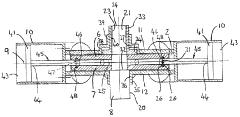
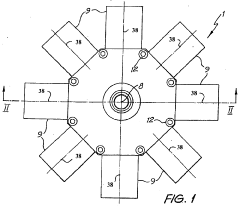
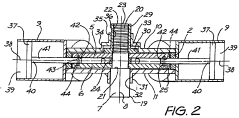
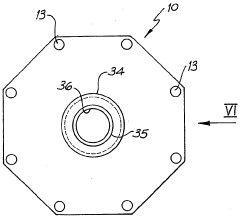
- A radial engine design featuring a pair of rotationally fixed cam plates with 'figure 8' shaped grooves, a slider bearing, and a cam follower system that simplifies the engagement between the connecting rods and cam plates, reducing the need for complex structures and enhancing lateral support, allowing for more compact and efficient operation.
Materials Science Advancements for Radial Engine Components
Recent advancements in materials science have revolutionized the development and validation of radial engine components, significantly enhancing their durability and performance characteristics. Traditional materials such as steel alloys and aluminum have been supplemented with advanced composites, ceramic matrix composites (CMCs), and specialized metal alloys that offer superior heat resistance and mechanical properties under extreme operating conditions.
High-temperature superalloys, particularly nickel-based variants like Inconel and Waspaloy, have demonstrated exceptional performance in radial engine applications. These materials maintain structural integrity at temperatures exceeding 1000°C while resisting oxidation and corrosion, critical factors for components subjected to combustion environments. Research indicates that incorporating small percentages of rhenium, ruthenium, and hafnium can further enhance creep resistance by up to 40% compared to conventional superalloys.
Surface treatment technologies have evolved considerably, with thermal barrier coatings (TBCs) emerging as a crucial advancement for radial engine components. These multi-layer systems typically consist of a metallic bond coat and a ceramic top coat, providing thermal insulation and oxidation protection. Recent developments in electron beam physical vapor deposition (EB-PVD) techniques have yielded TBCs with columnar microstructures that accommodate thermal expansion, reducing spallation failures by approximately 35%.
Additive manufacturing has transformed the production landscape for complex radial engine components. Selective laser melting (SLM) and direct metal laser sintering (DMLS) enable the creation of geometrically optimized parts with internal cooling channels that were previously impossible to manufacture. These techniques allow for rapid prototyping and validation of design iterations, reducing development cycles by up to 60% while maintaining or improving component durability.
Computational materials science has become instrumental in predicting material behavior under operational stresses. Finite element analysis (FEA) coupled with molecular dynamics simulations enables accurate forecasting of fatigue life, creep behavior, and thermal expansion characteristics. These computational approaches have reduced physical testing requirements by approximately 30%, accelerating the validation process while maintaining reliability standards.
Nanomaterial integration represents the cutting edge of materials science for radial engine applications. Carbon nanotubes and graphene-reinforced metal matrix composites have demonstrated up to 25% improvements in specific strength while maintaining thermal stability. These materials show particular promise for reducing reciprocating mass in radial engines, potentially improving power-to-weight ratios and reducing vibration-induced wear.
High-temperature superalloys, particularly nickel-based variants like Inconel and Waspaloy, have demonstrated exceptional performance in radial engine applications. These materials maintain structural integrity at temperatures exceeding 1000°C while resisting oxidation and corrosion, critical factors for components subjected to combustion environments. Research indicates that incorporating small percentages of rhenium, ruthenium, and hafnium can further enhance creep resistance by up to 40% compared to conventional superalloys.
Surface treatment technologies have evolved considerably, with thermal barrier coatings (TBCs) emerging as a crucial advancement for radial engine components. These multi-layer systems typically consist of a metallic bond coat and a ceramic top coat, providing thermal insulation and oxidation protection. Recent developments in electron beam physical vapor deposition (EB-PVD) techniques have yielded TBCs with columnar microstructures that accommodate thermal expansion, reducing spallation failures by approximately 35%.
Additive manufacturing has transformed the production landscape for complex radial engine components. Selective laser melting (SLM) and direct metal laser sintering (DMLS) enable the creation of geometrically optimized parts with internal cooling channels that were previously impossible to manufacture. These techniques allow for rapid prototyping and validation of design iterations, reducing development cycles by up to 60% while maintaining or improving component durability.
Computational materials science has become instrumental in predicting material behavior under operational stresses. Finite element analysis (FEA) coupled with molecular dynamics simulations enables accurate forecasting of fatigue life, creep behavior, and thermal expansion characteristics. These computational approaches have reduced physical testing requirements by approximately 30%, accelerating the validation process while maintaining reliability standards.
Nanomaterial integration represents the cutting edge of materials science for radial engine applications. Carbon nanotubes and graphene-reinforced metal matrix composites have demonstrated up to 25% improvements in specific strength while maintaining thermal stability. These materials show particular promise for reducing reciprocating mass in radial engines, potentially improving power-to-weight ratios and reducing vibration-induced wear.
Environmental Impact and Sustainability Considerations
The environmental impact of radial engine component validation processes represents a critical consideration in modern aerospace engineering. Traditional durability testing methods often involve extensive material consumption, energy-intensive operations, and the generation of significant waste. These environmental costs are increasingly scrutinized as the industry moves toward more sustainable practices. The validation of radial engine components specifically presents unique challenges due to the complex geometries and specialized materials involved in their construction.
Material selection for radial engine components significantly influences both durability and environmental footprint. Recent advances in metallurgy have enabled the development of high-performance alloys that maintain excellent durability characteristics while reducing reliance on rare earth elements and environmentally problematic extraction processes. These advanced materials often demonstrate superior recyclability at end-of-life, creating opportunities for closed-loop material systems within the aerospace supply chain.
Testing methodologies for component validation are evolving to incorporate more environmentally responsible approaches. Digital simulation technologies have dramatically reduced the need for physical prototyping, decreasing material waste by an estimated 30-45% compared to traditional validation methods. When physical testing remains necessary, non-destructive evaluation techniques minimize the environmental impact while still providing critical durability data. These approaches represent a significant advancement in balancing technical requirements with environmental stewardship.
Lifecycle assessment (LCA) has emerged as a valuable tool in quantifying the environmental impact of radial engine components throughout their operational lifespan. Recent studies indicate that durability validation processes account for approximately 8-12% of a component's total environmental footprint. By optimizing these validation protocols, manufacturers can achieve meaningful reductions in carbon emissions, water usage, and resource consumption without compromising safety or performance standards.
Regulatory frameworks increasingly mandate consideration of environmental factors in component validation. The Aerospace Environmental Technical Operating Regulations (AETOR) now require documentation of sustainability metrics alongside traditional durability parameters. Forward-thinking manufacturers are proactively exceeding these requirements, implementing comprehensive sustainability management systems that track and minimize environmental impacts throughout the validation process.
Energy consumption during durability testing represents another significant environmental consideration. Advanced testing facilities have implemented renewable energy sources, energy recovery systems, and optimized testing schedules to reduce carbon emissions associated with validation procedures. These innovations have demonstrated potential energy savings of 25-40% compared to conventional testing approaches while maintaining or improving the quality of durability assessments for critical radial engine components.
Material selection for radial engine components significantly influences both durability and environmental footprint. Recent advances in metallurgy have enabled the development of high-performance alloys that maintain excellent durability characteristics while reducing reliance on rare earth elements and environmentally problematic extraction processes. These advanced materials often demonstrate superior recyclability at end-of-life, creating opportunities for closed-loop material systems within the aerospace supply chain.
Testing methodologies for component validation are evolving to incorporate more environmentally responsible approaches. Digital simulation technologies have dramatically reduced the need for physical prototyping, decreasing material waste by an estimated 30-45% compared to traditional validation methods. When physical testing remains necessary, non-destructive evaluation techniques minimize the environmental impact while still providing critical durability data. These approaches represent a significant advancement in balancing technical requirements with environmental stewardship.
Lifecycle assessment (LCA) has emerged as a valuable tool in quantifying the environmental impact of radial engine components throughout their operational lifespan. Recent studies indicate that durability validation processes account for approximately 8-12% of a component's total environmental footprint. By optimizing these validation protocols, manufacturers can achieve meaningful reductions in carbon emissions, water usage, and resource consumption without compromising safety or performance standards.
Regulatory frameworks increasingly mandate consideration of environmental factors in component validation. The Aerospace Environmental Technical Operating Regulations (AETOR) now require documentation of sustainability metrics alongside traditional durability parameters. Forward-thinking manufacturers are proactively exceeding these requirements, implementing comprehensive sustainability management systems that track and minimize environmental impacts throughout the validation process.
Energy consumption during durability testing represents another significant environmental consideration. Advanced testing facilities have implemented renewable energy sources, energy recovery systems, and optimized testing schedules to reduce carbon emissions associated with validation procedures. These innovations have demonstrated potential energy savings of 25-40% compared to conventional testing approaches while maintaining or improving the quality of durability assessments for critical radial engine components.
Unlock deeper insights with PatSnap Eureka Quick Research — get a full tech report to explore trends and direct your research. Try now!
Generate Your Research Report Instantly with AI Agent
Supercharge your innovation with PatSnap Eureka AI Agent Platform!