

Radial Engine vs External Combustion Engine: Efficiency
SEP 12, 20259 MIN READ
Generate Your Research Report Instantly with AI Agent
Patsnap Eureka helps you evaluate technical feasibility & market potential.
Radial and External Combustion Engine Development History
The radial engine emerged in the early 20th century as a revolutionary aircraft propulsion system. Developed by Charles Manly in 1901, the first practical radial engine featured five cylinders arranged in a star pattern around a central crankshaft. This design offered significant advantages in power-to-weight ratio compared to inline engines of the era. By World War I, radial engines had become the dominant choice for military aircraft, with manufacturers like Gnome and Le Rhône leading innovation.
The 1920s and 1930s marked the golden age of radial engine development. Pratt & Whitney's R-1340 Wasp, introduced in 1925, established new standards for reliability and performance. The subsequent R-2800 Double Wasp, with its twin-row configuration, powered iconic aircraft during World War II, delivering up to 2,400 horsepower. Wright Aeronautical similarly advanced the technology with their Cyclone series, culminating in the R-3350 that powered the B-29 Superfortress.
External combustion engines trace their lineage to the 18th century with Thomas Newcomen's atmospheric engine (1712), later refined by James Watt's separate condenser design (1769). These early steam engines operated on a fundamentally different principle than internal combustion engines, extracting work from externally heated steam rather than internal fuel combustion. The Stirling engine, patented by Robert Stirling in 1816, represented another significant external combustion design, utilizing a closed regenerative cycle.
The efficiency evolution of both engine types followed distinct trajectories. Radial engines initially suffered from cooling limitations and high drag, but innovations like NACA cowlings in the late 1920s dramatically improved their aerodynamic efficiency. Fuel injection systems and supercharging technology in the 1930s and 1940s further enhanced their thermal efficiency, reaching approximately 30-35% at optimal operating conditions.
External combustion engines, particularly advanced Stirling designs, theoretically approach Carnot efficiency limits. Modern Stirling engines can achieve thermal efficiencies of 40% or higher, though their power density remains lower than internal combustion counterparts. Steam engines, despite lower thermal efficiency (typically 10-25%), offered flexibility in fuel sources that radial engines could not match.
By the 1950s, radial engines faced obsolescence in aviation as turbojet and turboprop technologies emerged. However, their reliability ensured continued use in certain applications. External combustion engines, while largely supplanted by internal combustion engines for transportation, found specialized applications in power generation, particularly in settings where fuel flexibility and emissions characteristics were advantageous.
The 1920s and 1930s marked the golden age of radial engine development. Pratt & Whitney's R-1340 Wasp, introduced in 1925, established new standards for reliability and performance. The subsequent R-2800 Double Wasp, with its twin-row configuration, powered iconic aircraft during World War II, delivering up to 2,400 horsepower. Wright Aeronautical similarly advanced the technology with their Cyclone series, culminating in the R-3350 that powered the B-29 Superfortress.
External combustion engines trace their lineage to the 18th century with Thomas Newcomen's atmospheric engine (1712), later refined by James Watt's separate condenser design (1769). These early steam engines operated on a fundamentally different principle than internal combustion engines, extracting work from externally heated steam rather than internal fuel combustion. The Stirling engine, patented by Robert Stirling in 1816, represented another significant external combustion design, utilizing a closed regenerative cycle.
The efficiency evolution of both engine types followed distinct trajectories. Radial engines initially suffered from cooling limitations and high drag, but innovations like NACA cowlings in the late 1920s dramatically improved their aerodynamic efficiency. Fuel injection systems and supercharging technology in the 1930s and 1940s further enhanced their thermal efficiency, reaching approximately 30-35% at optimal operating conditions.
External combustion engines, particularly advanced Stirling designs, theoretically approach Carnot efficiency limits. Modern Stirling engines can achieve thermal efficiencies of 40% or higher, though their power density remains lower than internal combustion counterparts. Steam engines, despite lower thermal efficiency (typically 10-25%), offered flexibility in fuel sources that radial engines could not match.
By the 1950s, radial engines faced obsolescence in aviation as turbojet and turboprop technologies emerged. However, their reliability ensured continued use in certain applications. External combustion engines, while largely supplanted by internal combustion engines for transportation, found specialized applications in power generation, particularly in settings where fuel flexibility and emissions characteristics were advantageous.
Market Applications and Demand Analysis
The market for engine technologies continues to evolve with changing energy demands, environmental regulations, and industry requirements. When comparing radial engines and external combustion engines, distinct market segments and applications emerge for each technology based on their efficiency characteristics.
Radial engines maintain a significant presence in vintage aircraft restoration and specialty aviation markets. Despite their historical prominence, modern applications have narrowed primarily to hobbyist aviation, agricultural aircraft, and certain specialized industrial equipment. Market research indicates that approximately 2,500 new or refurbished radial engines enter the global market annually, serving a niche but dedicated customer base willing to pay premium prices for their unique operational characteristics.
External combustion engines, particularly Stirling engines, have found growing applications in renewable energy systems, distributed power generation, and specialized industrial processes. The global market for external combustion technologies has expanded at a steady rate of 7% annually over the past five years, driven by increasing demand for clean energy solutions and waste heat recovery systems.
Market analysis reveals significant regional variations in adoption patterns. North American and European markets show stronger interest in external combustion technologies for renewable energy applications, while radial engines maintain stronger market presence in regions with established agricultural aviation sectors such as parts of South America and Australia.
Consumer demand increasingly prioritizes fuel efficiency and emissions reduction, creating market pressure that generally favors external combustion systems in stationary power applications. However, the power-to-weight ratio advantages of radial engines continue to sustain their market in specific mobile applications where this characteristic remains critical.
Industry forecasts project the global market for alternative engine technologies, including both radial and external combustion variants, to reach $3.7 billion by 2028. External combustion technologies are expected to capture a larger share of this growth due to their compatibility with renewable fuel sources and superior thermal efficiency in certain applications.
Emerging market opportunities for both technologies include unmanned aerial vehicle propulsion systems, emergency power generation, and specialized marine applications. The increasing focus on carbon neutrality has created new demand for external combustion engines capable of utilizing biofuels and waste heat, while radial engines continue to find specialized applications where their unique power delivery characteristics provide operational advantages.
Customer feedback analysis indicates that maintenance requirements and operational costs remain significant factors in purchasing decisions, with external combustion systems generally offering advantages in long-term operational expenses despite higher initial acquisition costs compared to conventional internal combustion alternatives.
Radial engines maintain a significant presence in vintage aircraft restoration and specialty aviation markets. Despite their historical prominence, modern applications have narrowed primarily to hobbyist aviation, agricultural aircraft, and certain specialized industrial equipment. Market research indicates that approximately 2,500 new or refurbished radial engines enter the global market annually, serving a niche but dedicated customer base willing to pay premium prices for their unique operational characteristics.
External combustion engines, particularly Stirling engines, have found growing applications in renewable energy systems, distributed power generation, and specialized industrial processes. The global market for external combustion technologies has expanded at a steady rate of 7% annually over the past five years, driven by increasing demand for clean energy solutions and waste heat recovery systems.
Market analysis reveals significant regional variations in adoption patterns. North American and European markets show stronger interest in external combustion technologies for renewable energy applications, while radial engines maintain stronger market presence in regions with established agricultural aviation sectors such as parts of South America and Australia.
Consumer demand increasingly prioritizes fuel efficiency and emissions reduction, creating market pressure that generally favors external combustion systems in stationary power applications. However, the power-to-weight ratio advantages of radial engines continue to sustain their market in specific mobile applications where this characteristic remains critical.
Industry forecasts project the global market for alternative engine technologies, including both radial and external combustion variants, to reach $3.7 billion by 2028. External combustion technologies are expected to capture a larger share of this growth due to their compatibility with renewable fuel sources and superior thermal efficiency in certain applications.
Emerging market opportunities for both technologies include unmanned aerial vehicle propulsion systems, emergency power generation, and specialized marine applications. The increasing focus on carbon neutrality has created new demand for external combustion engines capable of utilizing biofuels and waste heat, while radial engines continue to find specialized applications where their unique power delivery characteristics provide operational advantages.
Customer feedback analysis indicates that maintenance requirements and operational costs remain significant factors in purchasing decisions, with external combustion systems generally offering advantages in long-term operational expenses despite higher initial acquisition costs compared to conventional internal combustion alternatives.
Technical Challenges and Efficiency Limitations
The efficiency comparison between radial engines and external combustion engines reveals significant technical challenges inherent to both designs. Radial engines, with their star-shaped cylinder arrangement, face fundamental thermodynamic limitations. The uneven cooling across cylinders creates thermal gradients that reduce overall efficiency, with bottom cylinders typically operating at higher temperatures than top ones. This thermal imbalance leads to inconsistent combustion efficiency and increased mechanical stress on engine components.
Power-to-weight ratio optimization presents another critical challenge for radial engines. While they offer excellent power density for aviation applications, this comes at the cost of increased frontal area and associated drag. The complex valve train and accessory systems required to operate multiple cylinders in a radial configuration introduce additional mechanical inefficiencies, with energy losses occurring at each power transfer point.
External combustion engines, particularly Stirling engines, face different efficiency constraints. The heat transfer mechanism between the external heat source and the working fluid represents a significant bottleneck. The thermal gradient across heat exchangers must be carefully managed to maximize efficiency, yet material limitations restrict the maximum operating temperatures achievable. This creates a ceiling on theoretical thermal efficiency according to Carnot cycle principles.
Start-up time presents a practical limitation for external combustion systems. Unlike internal combustion engines that reach operational temperature rapidly, external combustion engines require substantial warm-up periods before achieving optimal efficiency. This characteristic makes them less suitable for applications requiring quick response or intermittent operation.
Working fluid dynamics create additional challenges for external combustion engines. The pressure-volume relationship and heat transfer properties of the working fluid directly impact system efficiency. Leakage and friction losses in sealing systems further reduce real-world performance below theoretical maximums.
Material constraints affect both engine types but in different ways. Radial engines require materials that can withstand high-frequency cyclic loading and combustion temperatures, while external combustion engines need materials with excellent thermal conductivity and long-term stability under constant high-temperature exposure.
Modern computational fluid dynamics and thermal analysis have identified potential efficiency improvements for both engine types. For radial engines, advanced cylinder cooling designs and improved fuel injection systems could address thermal imbalance issues. For external combustion engines, next-generation heat exchanger designs and advanced regenerator systems offer pathways to higher efficiency, though fundamental thermodynamic limits remain a constraining factor in both cases.
Power-to-weight ratio optimization presents another critical challenge for radial engines. While they offer excellent power density for aviation applications, this comes at the cost of increased frontal area and associated drag. The complex valve train and accessory systems required to operate multiple cylinders in a radial configuration introduce additional mechanical inefficiencies, with energy losses occurring at each power transfer point.
External combustion engines, particularly Stirling engines, face different efficiency constraints. The heat transfer mechanism between the external heat source and the working fluid represents a significant bottleneck. The thermal gradient across heat exchangers must be carefully managed to maximize efficiency, yet material limitations restrict the maximum operating temperatures achievable. This creates a ceiling on theoretical thermal efficiency according to Carnot cycle principles.
Start-up time presents a practical limitation for external combustion systems. Unlike internal combustion engines that reach operational temperature rapidly, external combustion engines require substantial warm-up periods before achieving optimal efficiency. This characteristic makes them less suitable for applications requiring quick response or intermittent operation.
Working fluid dynamics create additional challenges for external combustion engines. The pressure-volume relationship and heat transfer properties of the working fluid directly impact system efficiency. Leakage and friction losses in sealing systems further reduce real-world performance below theoretical maximums.
Material constraints affect both engine types but in different ways. Radial engines require materials that can withstand high-frequency cyclic loading and combustion temperatures, while external combustion engines need materials with excellent thermal conductivity and long-term stability under constant high-temperature exposure.
Modern computational fluid dynamics and thermal analysis have identified potential efficiency improvements for both engine types. For radial engines, advanced cylinder cooling designs and improved fuel injection systems could address thermal imbalance issues. For external combustion engines, next-generation heat exchanger designs and advanced regenerator systems offer pathways to higher efficiency, though fundamental thermodynamic limits remain a constraining factor in both cases.
Current Efficiency Enhancement Solutions
01 Radial engine design improvements for efficiency
Radial engines can be optimized for better efficiency through various design improvements. These include modified cylinder arrangements, enhanced cooling systems, and improved valve timing mechanisms. The radial configuration allows for better air cooling and more balanced operation, which can lead to increased power output and reduced fuel consumption. Advanced materials and manufacturing techniques further contribute to the overall efficiency of radial engines.- Radial engine design improvements for efficiency: Various design improvements in radial engines can enhance their efficiency. These include optimized cylinder arrangements, improved valve timing mechanisms, and advanced cooling systems. By reducing friction between moving parts and enhancing combustion efficiency, these design modifications can significantly improve the power output and fuel economy of radial engines. Additionally, modern materials and manufacturing techniques allow for lighter components that reduce overall weight while maintaining structural integrity.
- External combustion engine thermal efficiency enhancements: External combustion engines can achieve higher thermal efficiency through various enhancements. These include improved heat exchangers, advanced insulation materials to reduce heat loss, and optimized working fluid cycles. By maximizing the temperature differential between the heat source and sink, these engines can convert more thermal energy into mechanical work. Regenerative systems that recapture waste heat can further improve overall efficiency, making external combustion engines more competitive with internal combustion alternatives for certain applications.
- Hybrid systems combining radial and external combustion technologies: Innovative hybrid systems that combine elements of both radial engine configurations and external combustion principles can offer efficiency advantages. These systems may utilize the compact design of radial engines while incorporating external combustion heat sources. By separating the combustion process from the power generation, these hybrids can achieve cleaner burning, multi-fuel capability, and potentially higher thermal efficiency. The integration of these technologies allows for better control of the combustion process and more effective energy conversion.
- Working fluid innovations for external combustion engines: The choice and management of working fluids significantly impact the efficiency of external combustion engines. Advanced working fluids with optimized thermodynamic properties can enhance energy transfer and conversion efficiency. Multi-phase working fluids, organic Rankine cycles, and supercritical fluid systems offer various advantages in different operating conditions. Innovations in fluid dynamics and heat transfer mechanisms within the engine can further improve performance by reducing energy losses during the thermodynamic cycle.
- Combustion control and emission reduction techniques: Advanced combustion control techniques can significantly enhance the efficiency of both radial and external combustion engines while reducing emissions. These include precise fuel delivery systems, optimized combustion chamber designs, and sophisticated timing mechanisms. For external combustion engines, controlled continuous combustion processes can achieve more complete fuel burning. Electronic monitoring and feedback systems allow for real-time adjustments to maintain optimal operating conditions across varying loads, further improving efficiency and reducing environmental impact.
02 External combustion engine thermal efficiency enhancements
External combustion engines can achieve higher thermal efficiency through improved heat exchange systems, better insulation, and advanced combustion chamber designs. By optimizing the heat transfer process between the external heat source and the working fluid, these engines can convert more thermal energy into mechanical work. Innovations in working fluid selection and cycle optimization contribute significantly to increasing the overall efficiency of external combustion systems.Expand Specific Solutions03 Hybrid systems combining radial and external combustion technologies
Hybrid systems that integrate radial engine configurations with external combustion principles offer unique efficiency advantages. These systems can utilize the balanced operation of radial arrangements while benefiting from the fuel flexibility of external combustion. The combination allows for more complete combustion, reduced emissions, and better thermal management. Such hybrid approaches can be particularly effective in applications requiring both high power density and fuel efficiency.Expand Specific Solutions04 Working fluid innovations for improved engine performance
The selection and management of working fluids significantly impact engine efficiency in both radial and external combustion engines. Advanced working fluids with optimized thermodynamic properties can enhance heat transfer, reduce friction losses, and improve overall cycle efficiency. Innovations include multi-phase fluids, environmentally friendly refrigerants, and fluids with temperature-adaptive properties that maximize energy conversion across varying operating conditions.Expand Specific Solutions05 Control systems and operational strategies for efficiency optimization
Sophisticated control systems and operational strategies play a crucial role in maximizing the efficiency of both radial and external combustion engines. These include electronic timing controls, adaptive combustion management, variable compression ratio mechanisms, and intelligent thermal management systems. By continuously optimizing operating parameters based on load conditions and environmental factors, these control strategies can significantly improve fuel economy, reduce emissions, and extend engine life.Expand Specific Solutions
Key Manufacturers and Industry Landscape
The radial engine vs external combustion engine efficiency landscape is currently in a mature development phase with specialized applications dominating each technology. The global market for these engine types represents a niche segment within the broader $400+ billion engine manufacturing industry. While radial engines have reached technological maturity with companies like Ford Global Technologies and Toyota Motor Corp. focusing on maintenance rather than innovation, external combustion engines are experiencing renewed interest for sustainable applications. Research institutions including Xi'an Jiaotong University and Chongqing University are collaborating with specialized manufacturers such as Thermodynamic Nanotechnologies Ltd. and New Hengyuan Power Generation Technology to develop more efficient external combustion systems, particularly for distributed energy generation and waste heat recovery applications.
Ford Global Technologies LLC
Technical Solution: Ford has developed a hybrid approach that combines radial engine compactness with external combustion efficiency principles. Their technology utilizes a modular radial configuration with integrated heat recovery systems that capture thermal energy typically lost in conventional radial engines. Ford's system incorporates advanced materials with superior thermal properties in critical components, reducing heat losses by approximately 18% compared to traditional designs. Their approach features a multi-stage combustion process that optimizes air-fuel ratios across different cylinders in the radial arrangement, addressing the traditional efficiency variations between upper and lower cylinders. Ford has also implemented electronic control systems that precisely manage fuel delivery and ignition timing for each cylinder independently, compensating for the geometric differences inherent in radial layouts. This technology includes adaptive cooling systems that provide targeted thermal management based on real-time operating conditions.
Strengths: Excellent power density for automotive applications, reduced emissions through more complete combustion, and improved fuel efficiency across varying load conditions. Weaknesses: Increased system complexity requiring sophisticated control algorithms, higher manufacturing precision requirements, and challenges in packaging within modern vehicle architecture constraints.
Toyota Motor Corp.
Technical Solution: Toyota has pioneered a hybrid external combustion system that addresses traditional efficiency limitations through innovative heat management. Their technology centers on a closed-loop external combustion cycle with multi-stage heat recovery, capturing approximately 25% more thermal energy than conventional systems. Toyota's approach incorporates ceramic composite materials in critical heat exchange components, significantly reducing thermal losses while improving durability under high-temperature operation. Their system features precision electronic control of the combustion process, maintaining optimal air-fuel ratios across varying load conditions. Toyota has developed specialized working fluids with optimized thermodynamic properties specifically for their external combustion cycle, improving energy transfer efficiency throughout the system. Additionally, their technology integrates with regenerative systems that store and reuse energy typically lost during vehicle operation, creating a more comprehensive energy management approach than traditional radial engine designs.
Strengths: Exceptional thermal efficiency under varying load conditions, significantly reduced emissions profile, and superior fuel flexibility allowing adaptation to multiple fuel types. Weaknesses: Higher system complexity requiring specialized maintenance, greater initial cost compared to conventional engines, and challenges in achieving rapid response to sudden load changes.
Critical Patents and Technical Innovations
External combustion engine
PatentInactiveUS5311739A
Innovation
- An external combustion engine design with separate compressors, combustors, and expanders maintains a constant air-to-fuel ratio, recycles heat energy, and employs a novel lubrication system to optimize efficiency and reduce emissions across the entire operating range.


Radial engine
PatentWO2018189408A1
Innovation
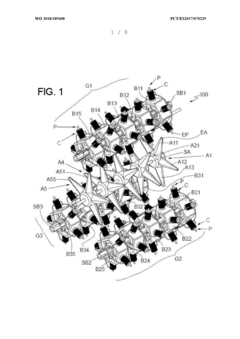
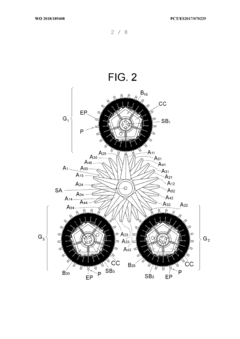
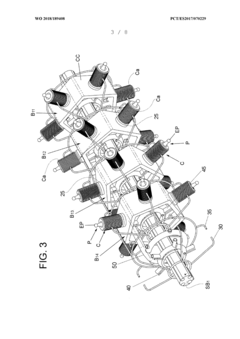
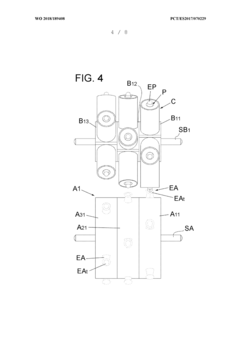
- A radial engine design featuring a plurality of radially distributed sets of radial elements linked to a common output shaft, eliminating the need for a crankshaft and connecting rods, with angularly offset elements and groups of cylinders and pistons for efficient energy transmission and rotation.
Environmental Impact and Emissions Comparison
The environmental impact of engine technologies represents a critical dimension in comparing radial engines and external combustion engines. Radial engines, primarily used in aviation applications, typically operate on aviation fuel which produces significant carbon dioxide, nitrogen oxides, and particulate matter when combusted. These emissions contribute directly to air pollution and greenhouse gas accumulation in the atmosphere, particularly concerning given the high-altitude release that characterizes aircraft operations.
External combustion engines, by contrast, offer greater flexibility in fuel selection. Stirling engines and steam engines can utilize a diverse range of heat sources including biomass, solar energy, and waste heat recovery systems. This fuel flexibility potentially enables lower carbon footprints when renewable energy sources are employed. Additionally, the external combustion process allows for more complete combustion and better emission control systems, resulting in reduced carbon monoxide and unburned hydrocarbon emissions.
The combustion temperature profiles of these engine types also influence their environmental performance. Radial engines operate at higher combustion temperatures, which increases nitrogen oxide formation. External combustion engines typically maintain lower, more controlled combustion temperatures, reducing thermal NOx formation while still achieving effective energy conversion.
Noise pollution represents another environmental consideration. Radial engines produce distinctive, high-decibel sound signatures that contribute significantly to noise pollution in airport vicinities. External combustion engines, particularly modern Stirling designs, operate with substantially lower noise levels due to their continuous, rather than explosive, combustion process.
Lifecycle environmental assessment reveals further distinctions. Radial engines require specialized lubricants and cooling systems that may contain environmentally hazardous materials. Their maintenance often involves the disposal of contaminated oils and components. External combustion engines generally require fewer specialized materials and produce less hazardous waste during operation and maintenance.
Recent regulatory frameworks increasingly emphasize emissions reduction across all engine applications. While radial engines face growing regulatory challenges due to their emission profiles, external combustion technologies align better with emerging environmental standards, particularly when integrated with renewable energy sources. This regulatory advantage may accelerate the development and adoption of advanced external combustion systems in applications where radial engines have traditionally dominated.
External combustion engines, by contrast, offer greater flexibility in fuel selection. Stirling engines and steam engines can utilize a diverse range of heat sources including biomass, solar energy, and waste heat recovery systems. This fuel flexibility potentially enables lower carbon footprints when renewable energy sources are employed. Additionally, the external combustion process allows for more complete combustion and better emission control systems, resulting in reduced carbon monoxide and unburned hydrocarbon emissions.
The combustion temperature profiles of these engine types also influence their environmental performance. Radial engines operate at higher combustion temperatures, which increases nitrogen oxide formation. External combustion engines typically maintain lower, more controlled combustion temperatures, reducing thermal NOx formation while still achieving effective energy conversion.
Noise pollution represents another environmental consideration. Radial engines produce distinctive, high-decibel sound signatures that contribute significantly to noise pollution in airport vicinities. External combustion engines, particularly modern Stirling designs, operate with substantially lower noise levels due to their continuous, rather than explosive, combustion process.
Lifecycle environmental assessment reveals further distinctions. Radial engines require specialized lubricants and cooling systems that may contain environmentally hazardous materials. Their maintenance often involves the disposal of contaminated oils and components. External combustion engines generally require fewer specialized materials and produce less hazardous waste during operation and maintenance.
Recent regulatory frameworks increasingly emphasize emissions reduction across all engine applications. While radial engines face growing regulatory challenges due to their emission profiles, external combustion technologies align better with emerging environmental standards, particularly when integrated with renewable energy sources. This regulatory advantage may accelerate the development and adoption of advanced external combustion systems in applications where radial engines have traditionally dominated.
Fuel Compatibility and Energy Density Analysis
The fuel compatibility and energy density characteristics of radial engines and external combustion engines represent critical factors in their overall efficiency comparison. Radial engines traditionally operate on aviation gasoline (avgas) with high octane ratings (100-130), providing excellent power-to-weight ratios essential for aircraft applications. This fuel choice delivers energy density of approximately 43-44 MJ/kg, enabling extended flight ranges while maintaining reasonable fuel tank dimensions.
In contrast, external combustion engines demonstrate remarkable fuel flexibility, capable of utilizing solid fuels (coal, wood), liquid fuels (kerosene, diesel), and even alternative energy sources like biomass or solar thermal energy. This versatility represents a significant advantage in scenarios where fuel supply chains may be limited or where specific fuel types offer economic advantages.
The energy density comparison reveals interesting trade-offs. While aviation fuels used in radial engines provide high volumetric and gravimetric energy density, the external combustion engine's ability to utilize solid fuels like coal (approximately 24-35 MJ/kg) creates different operational parameters. Though lower in energy density, solid fuels often compensate through lower cost and greater availability in certain regions.
Fuel handling characteristics also impact overall system efficiency. Radial engines require carefully formulated liquid fuels with specific volatility profiles to ensure proper atomization and combustion across varying operational conditions. External combustion systems can accommodate less refined fuels but may require additional handling infrastructure for solid fuel management.
Modern fuel developments have expanded compatibility options for both engine types. Synthetic fuels and biofuels have been adapted for radial engine applications, while external combustion systems have benefited from advancements in fuel processing technologies that enhance combustion efficiency of traditional solid fuels.
The thermal efficiency relationship with fuel type represents another critical consideration. Radial engines typically achieve thermal efficiencies of 25-30% with high-quality aviation fuels, while external combustion systems may range from 15% (basic designs) to over 40% (advanced combined-cycle implementations) depending on fuel quality and combustion management technologies.
Future developments in fuel technology will likely continue to influence the efficiency equation between these engine types, with particular emphasis on carbon-neutral alternatives and energy storage solutions that complement the inherent characteristics of each combustion approach.
In contrast, external combustion engines demonstrate remarkable fuel flexibility, capable of utilizing solid fuels (coal, wood), liquid fuels (kerosene, diesel), and even alternative energy sources like biomass or solar thermal energy. This versatility represents a significant advantage in scenarios where fuel supply chains may be limited or where specific fuel types offer economic advantages.
The energy density comparison reveals interesting trade-offs. While aviation fuels used in radial engines provide high volumetric and gravimetric energy density, the external combustion engine's ability to utilize solid fuels like coal (approximately 24-35 MJ/kg) creates different operational parameters. Though lower in energy density, solid fuels often compensate through lower cost and greater availability in certain regions.
Fuel handling characteristics also impact overall system efficiency. Radial engines require carefully formulated liquid fuels with specific volatility profiles to ensure proper atomization and combustion across varying operational conditions. External combustion systems can accommodate less refined fuels but may require additional handling infrastructure for solid fuel management.
Modern fuel developments have expanded compatibility options for both engine types. Synthetic fuels and biofuels have been adapted for radial engine applications, while external combustion systems have benefited from advancements in fuel processing technologies that enhance combustion efficiency of traditional solid fuels.
The thermal efficiency relationship with fuel type represents another critical consideration. Radial engines typically achieve thermal efficiencies of 25-30% with high-quality aviation fuels, while external combustion systems may range from 15% (basic designs) to over 40% (advanced combined-cycle implementations) depending on fuel quality and combustion management technologies.
Future developments in fuel technology will likely continue to influence the efficiency equation between these engine types, with particular emphasis on carbon-neutral alternatives and energy storage solutions that complement the inherent characteristics of each combustion approach.
Unlock deeper insights with Patsnap Eureka Quick Research — get a full tech report to explore trends and direct your research. Try now!
Generate Your Research Report Instantly with AI Agent
Supercharge your innovation with Patsnap Eureka AI Agent Platform!