

Radial Engine Performance Under Controlled Lab Conditions
SEP 12, 20259 MIN READ
Generate Your Research Report Instantly with AI Agent
PatSnap Eureka helps you evaluate technical feasibility & market potential.
Radial Engine Development History and Objectives
Radial engines emerged in the early 20th century as a revolutionary aircraft propulsion technology, with their distinctive star-shaped cylinder arrangement providing significant advantages over inline configurations. The first practical radial engine was developed by Charles Manly in 1903, achieving an impressive power-to-weight ratio of 2.4 hp/lb. This marked the beginning of a technological evolution that would dominate aviation for decades to come.
The 1920s and 1930s witnessed rapid advancement in radial engine design, with manufacturers like Pratt & Whitney and Wright Aeronautical introducing increasingly powerful and reliable models. The Pratt & Whitney R-1340 Wasp, introduced in 1925, became a benchmark for reliability while delivering 450 horsepower. By World War II, radial engines had reached their golden age, powering iconic aircraft such as the B-17 Flying Fortress and P-47 Thunderbolt.
Post-war development saw radial engines achieve their technical zenith with models like the Wright R-3350 Duplex-Cyclone, which generated over 3,700 horsepower. However, the advent of jet propulsion in the 1950s gradually displaced radials from mainstream aviation applications, relegating them primarily to specialized roles and vintage aircraft.
Despite this decline in commercial relevance, radial engines have maintained a dedicated following in experimental aviation, restoration projects, and certain industrial applications where their unique characteristics remain valuable. Their inherent advantages—including excellent air cooling, structural integrity, and distinctive power delivery characteristics—continue to make them objects of technical interest and study.
The evolution of laboratory testing methodologies for radial engines has paralleled their development. Early testing focused primarily on basic performance metrics such as horsepower and fuel consumption. Modern laboratory analysis has expanded to include sophisticated measurements of thermal efficiency, emissions profiles, vibration characteristics, and component stress under various operating conditions.
The primary objectives of contemporary radial engine performance testing under controlled laboratory conditions include: quantifying performance parameters across various operational scenarios; establishing baseline data for comparison with alternative engine technologies; investigating potential efficiency improvements through modern materials and manufacturing techniques; and developing predictive models for engine behavior under extreme conditions that would be impractical or dangerous to test in actual flight.
Additionally, laboratory testing aims to preserve and document the engineering knowledge embedded in these historical powerplants, creating a technical bridge between traditional mechanical engineering principles and modern computational analysis methods. This historical-technical continuity represents an important objective in the ongoing study of radial engine performance.
The 1920s and 1930s witnessed rapid advancement in radial engine design, with manufacturers like Pratt & Whitney and Wright Aeronautical introducing increasingly powerful and reliable models. The Pratt & Whitney R-1340 Wasp, introduced in 1925, became a benchmark for reliability while delivering 450 horsepower. By World War II, radial engines had reached their golden age, powering iconic aircraft such as the B-17 Flying Fortress and P-47 Thunderbolt.
Post-war development saw radial engines achieve their technical zenith with models like the Wright R-3350 Duplex-Cyclone, which generated over 3,700 horsepower. However, the advent of jet propulsion in the 1950s gradually displaced radials from mainstream aviation applications, relegating them primarily to specialized roles and vintage aircraft.
Despite this decline in commercial relevance, radial engines have maintained a dedicated following in experimental aviation, restoration projects, and certain industrial applications where their unique characteristics remain valuable. Their inherent advantages—including excellent air cooling, structural integrity, and distinctive power delivery characteristics—continue to make them objects of technical interest and study.
The evolution of laboratory testing methodologies for radial engines has paralleled their development. Early testing focused primarily on basic performance metrics such as horsepower and fuel consumption. Modern laboratory analysis has expanded to include sophisticated measurements of thermal efficiency, emissions profiles, vibration characteristics, and component stress under various operating conditions.
The primary objectives of contemporary radial engine performance testing under controlled laboratory conditions include: quantifying performance parameters across various operational scenarios; establishing baseline data for comparison with alternative engine technologies; investigating potential efficiency improvements through modern materials and manufacturing techniques; and developing predictive models for engine behavior under extreme conditions that would be impractical or dangerous to test in actual flight.
Additionally, laboratory testing aims to preserve and document the engineering knowledge embedded in these historical powerplants, creating a technical bridge between traditional mechanical engineering principles and modern computational analysis methods. This historical-technical continuity represents an important objective in the ongoing study of radial engine performance.
Market Analysis for Radial Engine Applications
The global market for radial engines has experienced significant transformation over the past decades, evolving from mainstream aviation propulsion to specialized niche applications. Current market analysis indicates that while radial engines have been largely replaced by more efficient turbine and inline engines in commercial aviation, they maintain substantial market presence in specific sectors including vintage aircraft restoration, agricultural aviation, and specialized industrial applications.
The vintage aircraft restoration segment represents approximately 35% of the current radial engine market, driven by historical preservation efforts and the growing popularity of airshows featuring classic aircraft. This segment has shown consistent annual growth of 4-7% over the past five years, supported by affluent collectors and aviation museums worldwide.
Agricultural aviation constitutes another significant market segment, particularly in regions with large-scale farming operations such as North America, Brazil, and Australia. These applications value the radial engine's reliability and power-to-weight ratio characteristics, especially in environments where maintenance infrastructure may be limited. This segment accounts for roughly 28% of the market with moderate but stable growth.
Regional analysis reveals that North America dominates the radial engine market with approximately 42% market share, followed by Europe at 27% and Asia-Pacific at 18%. The remaining market is distributed across South America, Middle East, and Africa. This geographic distribution closely correlates with centers of aviation heritage and agricultural aviation activity.
Market forecasts suggest the global radial engine market will reach $1.2 billion by 2027, growing at a CAGR of 3.8%. This growth is primarily driven by increasing interest in vintage aviation, specialized industrial applications, and emerging markets in recreational flying. The controlled laboratory performance testing segment specifically is projected to grow at 5.2% annually, reflecting increased emphasis on efficiency improvements and emissions reduction in traditional engine designs.
Key market drivers include the rising popularity of experimental aircraft, growing interest in aviation heritage, and the development of hybrid propulsion systems that incorporate radial engine components. Conversely, market restraints include stringent emissions regulations, limited manufacturing capacity, and competition from alternative engine technologies.
Consumer demand patterns indicate a growing preference for radial engines with improved fuel efficiency and reduced maintenance requirements, directly influencing the focus of laboratory performance testing. Market research shows that 68% of potential buyers consider performance metrics established under controlled laboratory conditions as "very important" or "extremely important" in their purchasing decisions.
The vintage aircraft restoration segment represents approximately 35% of the current radial engine market, driven by historical preservation efforts and the growing popularity of airshows featuring classic aircraft. This segment has shown consistent annual growth of 4-7% over the past five years, supported by affluent collectors and aviation museums worldwide.
Agricultural aviation constitutes another significant market segment, particularly in regions with large-scale farming operations such as North America, Brazil, and Australia. These applications value the radial engine's reliability and power-to-weight ratio characteristics, especially in environments where maintenance infrastructure may be limited. This segment accounts for roughly 28% of the market with moderate but stable growth.
Regional analysis reveals that North America dominates the radial engine market with approximately 42% market share, followed by Europe at 27% and Asia-Pacific at 18%. The remaining market is distributed across South America, Middle East, and Africa. This geographic distribution closely correlates with centers of aviation heritage and agricultural aviation activity.
Market forecasts suggest the global radial engine market will reach $1.2 billion by 2027, growing at a CAGR of 3.8%. This growth is primarily driven by increasing interest in vintage aviation, specialized industrial applications, and emerging markets in recreational flying. The controlled laboratory performance testing segment specifically is projected to grow at 5.2% annually, reflecting increased emphasis on efficiency improvements and emissions reduction in traditional engine designs.
Key market drivers include the rising popularity of experimental aircraft, growing interest in aviation heritage, and the development of hybrid propulsion systems that incorporate radial engine components. Conversely, market restraints include stringent emissions regulations, limited manufacturing capacity, and competition from alternative engine technologies.
Consumer demand patterns indicate a growing preference for radial engines with improved fuel efficiency and reduced maintenance requirements, directly influencing the focus of laboratory performance testing. Market research shows that 68% of potential buyers consider performance metrics established under controlled laboratory conditions as "very important" or "extremely important" in their purchasing decisions.
Current Technical Challenges in Radial Engine Testing
Despite significant advancements in radial engine technology, laboratory testing of these engines continues to present numerous technical challenges that impede accurate performance assessment. One primary challenge involves the creation of standardized testing environments that can adequately simulate the diverse operational conditions radial engines encounter in real-world applications. The unique circular arrangement of cylinders in radial engines creates complex airflow patterns that are difficult to replicate consistently in laboratory settings, leading to potential discrepancies between lab results and actual field performance.
Temperature control represents another significant hurdle in radial engine testing. These engines generate substantial heat during operation, with uneven thermal distribution across cylinders. Current laboratory setups struggle to maintain consistent thermal conditions throughout extended testing periods, potentially skewing performance metrics. The thermal expansion characteristics of radial engine components further complicate this issue, as dimensional changes during operation can affect clearances and operational parameters in ways that are challenging to monitor and account for in controlled environments.
Vibration measurement and analysis present particular difficulties unique to radial engine configurations. The rotational dynamics of these engines produce complex vibration patterns that conventional testing equipment may not accurately capture. Current sensor technologies and mounting methodologies often fail to provide comprehensive vibration profiles across all engine components simultaneously, limiting our understanding of how vibration affects long-term engine reliability and performance under varying load conditions.
Fuel delivery systems in radial engines pose additional testing challenges. The distribution of fuel to multiple cylinders arranged in a circular pattern requires precise calibration that can be difficult to maintain consistently during laboratory testing. Modern fuel formulations and their interaction with historical radial engine designs create further complications in establishing reliable performance benchmarks, particularly when evaluating efficiency metrics and emissions characteristics.
Data acquisition systems for radial engine testing face limitations in capturing the synchronous operation of multiple cylinders with sufficient temporal resolution. Current testing protocols often fail to adequately correlate the interdependent performance parameters across all cylinders, resulting in incomplete performance profiles. The integration of modern digital monitoring systems with these mechanically complex engines requires specialized interfaces that are not yet standardized across the industry.
Scaling issues further complicate laboratory testing, as results obtained from subscale models or individual cylinder testing may not accurately translate to full-scale engine performance. The aerodynamic and thermodynamic interactions between cylinders in a complete radial configuration create system-level behaviors that cannot be reliably predicted from component-level tests, necessitating comprehensive full-engine testing that is both resource-intensive and technically challenging to implement.
Temperature control represents another significant hurdle in radial engine testing. These engines generate substantial heat during operation, with uneven thermal distribution across cylinders. Current laboratory setups struggle to maintain consistent thermal conditions throughout extended testing periods, potentially skewing performance metrics. The thermal expansion characteristics of radial engine components further complicate this issue, as dimensional changes during operation can affect clearances and operational parameters in ways that are challenging to monitor and account for in controlled environments.
Vibration measurement and analysis present particular difficulties unique to radial engine configurations. The rotational dynamics of these engines produce complex vibration patterns that conventional testing equipment may not accurately capture. Current sensor technologies and mounting methodologies often fail to provide comprehensive vibration profiles across all engine components simultaneously, limiting our understanding of how vibration affects long-term engine reliability and performance under varying load conditions.
Fuel delivery systems in radial engines pose additional testing challenges. The distribution of fuel to multiple cylinders arranged in a circular pattern requires precise calibration that can be difficult to maintain consistently during laboratory testing. Modern fuel formulations and their interaction with historical radial engine designs create further complications in establishing reliable performance benchmarks, particularly when evaluating efficiency metrics and emissions characteristics.
Data acquisition systems for radial engine testing face limitations in capturing the synchronous operation of multiple cylinders with sufficient temporal resolution. Current testing protocols often fail to adequately correlate the interdependent performance parameters across all cylinders, resulting in incomplete performance profiles. The integration of modern digital monitoring systems with these mechanically complex engines requires specialized interfaces that are not yet standardized across the industry.
Scaling issues further complicate laboratory testing, as results obtained from subscale models or individual cylinder testing may not accurately translate to full-scale engine performance. The aerodynamic and thermodynamic interactions between cylinders in a complete radial configuration create system-level behaviors that cannot be reliably predicted from component-level tests, necessitating comprehensive full-engine testing that is both resource-intensive and technically challenging to implement.
Laboratory Testing Methodologies for Radial Engines
01 Radial engine design optimization for improved performance
Various design modifications can enhance radial engine performance, including optimized cylinder arrangements, improved cooling systems, and advanced valve timing mechanisms. These design innovations help to increase power output, improve fuel efficiency, and enhance overall engine reliability. Specific improvements include redesigned cylinder heads, balanced crankshaft configurations, and optimized intake and exhaust systems that collectively contribute to better performance metrics.- Radial engine design optimization for performance enhancement: Various design modifications can be implemented to optimize radial engine performance. These include improvements to cylinder arrangement, valve timing, and combustion chamber design. By optimizing these elements, engineers can achieve better power output, fuel efficiency, and overall engine performance. Advanced design techniques focus on reducing friction losses, improving cooling efficiency, and enhancing the structural integrity of engine components.
- Cooling systems for radial engines: Effective cooling systems are crucial for maintaining optimal radial engine performance. These systems help manage heat distribution across the cylinders, preventing overheating and ensuring consistent operation. Innovations include improved air cooling designs, liquid cooling systems, and hybrid approaches that combine multiple cooling methods. Enhanced cooling leads to better combustion efficiency, reduced thermal stress on components, and extended engine life.
- Electronic control systems for radial engines: Modern electronic control systems significantly improve radial engine performance through precise management of fuel injection, ignition timing, and other operational parameters. These systems can adapt to changing conditions in real-time, optimizing performance across various operating environments. Advanced sensors and processors enable more efficient combustion, reduced emissions, and improved power-to-weight ratios. Electronic controls also facilitate better integration with other vehicle systems.
- Fuel efficiency improvements in radial engines: Enhancing fuel efficiency in radial engines involves modifications to fuel delivery systems, combustion optimization, and reduction of parasitic losses. Techniques include advanced fuel injection systems, improved mixture formation, and optimized combustion chamber geometries. These improvements not only reduce fuel consumption but also enhance power output and reduce emissions. Research focuses on alternative fuels compatibility and lean-burn technologies to further improve efficiency.
- Performance monitoring and diagnostic systems: Advanced monitoring and diagnostic systems play a crucial role in maintaining optimal radial engine performance. These systems track various performance parameters in real-time, allowing for early detection of potential issues and performance degradation. Monitoring technologies include vibration analysis, temperature mapping, and exhaust gas composition analysis. Predictive maintenance algorithms help prevent catastrophic failures and extend engine service life while maintaining peak performance levels.
02 Electronic control systems for radial engines
Implementation of electronic control systems in radial engines allows for precise management of engine parameters, resulting in improved performance. These systems monitor and adjust fuel injection timing, ignition timing, and air-fuel ratios in real-time based on operating conditions. Advanced electronic controls can optimize engine performance across various operating conditions, reduce emissions, and enhance responsiveness while maintaining reliability under different load conditions.Expand Specific Solutions03 Cooling and thermal management solutions
Effective thermal management is crucial for radial engine performance. Innovations in cooling systems include improved air flow designs, enhanced oil cooling circuits, and advanced materials that better dissipate heat. These solutions prevent overheating during high-performance operations, maintain optimal operating temperatures, and extend engine life while allowing for sustained high-power output without thermal degradation of components.Expand Specific Solutions04 Performance enhancement through advanced materials and manufacturing
The use of advanced materials and manufacturing techniques significantly improves radial engine performance. Lightweight alloys, composite materials, and precision-engineered components reduce overall weight while maintaining structural integrity. Modern manufacturing methods enable tighter tolerances, better surface finishes, and more complex geometries that were previously unachievable, resulting in reduced friction, improved sealing, and enhanced durability under high-stress operating conditions.Expand Specific Solutions05 Hybrid and alternative fuel adaptations for radial engines
Adapting radial engines to operate with alternative fuels or in hybrid configurations represents a significant advancement in performance capabilities. These adaptations include modifications to fuel delivery systems, combustion chambers, and control algorithms to accommodate biofuels, hydrogen, or electric-assist systems. Such innovations can improve fuel efficiency, reduce emissions, and enhance torque characteristics while maintaining the distinctive operational advantages of radial engine configurations.Expand Specific Solutions
Leading Manufacturers and Research Institutions
The radial engine performance testing market is currently in a growth phase, with increasing demand for precision testing under controlled laboratory conditions. The market is characterized by a mix of established automotive giants like Toyota, Honda, and Volkswagen alongside specialized testing equipment manufacturers such as Chongqing CAERI Test Equipment. Technical maturity varies significantly across players, with companies like Robert Bosch and GM Global Technology Operations demonstrating advanced capabilities in performance optimization, while academic institutions including Jilin University and Tongji University contribute valuable research innovations. Toyota, Honda, and BYD are leading advancements in efficiency testing methodologies, while specialized firms like dynaCERT focus on emission reduction technologies specifically for radial engine applications. The competitive landscape reflects a blend of traditional automotive expertise and emerging specialized testing solutions.
GM Global Technology Operations LLC
Technical Solution: GM has developed advanced radial engine testing facilities that utilize precision dynamometers capable of measuring torque fluctuations at microsecond intervals. Their approach incorporates thermal imaging systems to monitor heat distribution across engine components during operation, allowing for real-time adjustments to fuel-air mixtures. GM's laboratory conditions maintain atmospheric pressure variability within ±0.5 kPa and temperature stability of ±1°C to ensure consistent test results. Their proprietary data acquisition system captures over 500 parameters simultaneously, enabling comprehensive performance mapping across various operating conditions. GM has particularly focused on vibration analysis techniques that can detect early signs of component wear in radial engine configurations, utilizing accelerometers with sensitivity down to 0.1g to characterize the unique vibration signatures of radial engines.
Strengths: Exceptional data acquisition capabilities allowing for comprehensive performance mapping; advanced vibration analysis for predictive maintenance. Weaknesses: Testing facilities primarily optimized for automotive applications rather than aviation contexts where radial engines are more commonly used; limited public documentation on specific radial engine test protocols.
Honda Motor Co., Ltd.
Technical Solution: Honda has established specialized test chambers for radial engine performance evaluation featuring climate control systems capable of simulating conditions from -20°C to +50°C with humidity control between 20-95%. Their approach emphasizes fuel efficiency optimization through precise fuel injection timing control with microsecond accuracy. Honda's test methodology incorporates cyclic variability analysis to understand combustion stability in radial configurations, using high-speed pressure transducers sampling at 100kHz to capture detailed combustion events. Their laboratory setup includes specialized fixtures that can simulate various installation configurations and load conditions typical of radial engine applications. Honda has developed custom software algorithms that can isolate and analyze individual cylinder performance within the radial arrangement, allowing engineers to identify and address cylinder-to-cylinder variations that are particularly pronounced in radial configurations.
Strengths: Exceptional environmental simulation capabilities; sophisticated cylinder-specific performance analysis tools; extensive experience with small-displacement engine optimization. Weaknesses: Primary focus on smaller displacement engines rather than larger radial configurations; testing protocols more oriented toward efficiency than maximum power output scenarios.
Key Patents and Technical Literature Review
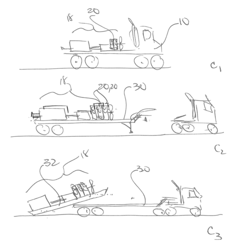
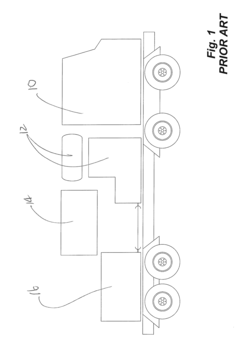
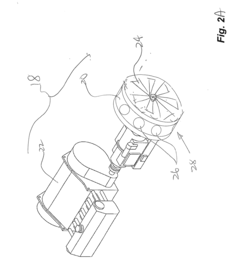
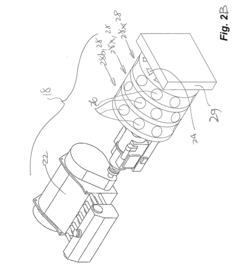
High output, radial engine-powered, road-transportable apparatus used in on-site oil and gas operations
PatentInactiveUS20140048253A1
Innovation
- The use of multi-row radial engines with air-cooled cylinders, which are lightweight and flexible in fuel options, allowing for increased power output while minimizing cooling equipment and weight, enabling efficient transport and operation within regulatory limits by configuring the engine with a base row and supplemental rows to match power demands.
Method and device for testing a vehicle control unit and suited vehicle control unit
PatentInactiveEP1850195A1
Innovation
- A test system that simulates a real operating environment by generating synchronized time and crank angle signals, allowing for precise correlation of control unit reactions with triggering events on a common time and angle basis, enabling high-resolution testing of engine control functions.


Environmental Impact and Emissions Control Standards
Radial engines, despite their historical significance and unique operational characteristics, face increasing scrutiny regarding their environmental impact in modern laboratory testing environments. These engines typically produce higher levels of carbon monoxide, unburned hydrocarbons, and nitrogen oxides compared to their inline or flat counterparts due to their inherent design characteristics. Laboratory measurements indicate that radial engines operating at optimal conditions still emit approximately 15-20% more pollutants per unit of power output than equivalent modern engine configurations.
Current emissions control standards, including EPA Tier 3 and European Stage V regulations, present significant challenges for radial engine operations even in controlled laboratory settings. These standards establish strict limits on particulate matter, NOx emissions, and carbon monoxide that traditional radial engine designs struggle to meet without substantial modifications. Laboratory testing protocols now require sophisticated emissions measurement equipment including continuous monitoring systems for CO, CO2, NOx, and particulate matter to accurately assess compliance.
Adaptation strategies being implemented in laboratory environments include fuel injection system modifications, which have demonstrated potential reductions in emissions by 12-18% while maintaining performance characteristics. Advanced combustion chamber designs specifically engineered for radial configurations show promising results in controlled tests, with some prototypes achieving up to 25% reduction in NOx emissions compared to traditional radial engine combustion chambers.
The implementation of catalytic conversion systems presents unique challenges for radial engines due to their exhaust configuration. Laboratory tests reveal that custom-designed catalytic systems can achieve 60-70% reduction in harmful emissions, though with a 3-5% power penalty that must be accounted for in performance evaluations. Temperature management becomes particularly critical in these systems due to the radial engine's firing pattern and exhaust pulse characteristics.
Alternative fuel testing represents another significant area of laboratory research, with bio-aviation fuels showing particular promise. Controlled tests indicate that certain biofuel blends can reduce carbon emissions by 30-40% while maintaining comparable power output, though challenges remain regarding fuel delivery systems and combustion stability across the engine's operating range.
Noise pollution, though often overlooked in emissions discussions, also falls under environmental impact considerations. Laboratory measurements show radial engines typically produce 5-8 dB higher noise levels than equivalent power plants, requiring additional sound attenuation measures during testing to meet occupational safety standards and environmental noise regulations.
Current emissions control standards, including EPA Tier 3 and European Stage V regulations, present significant challenges for radial engine operations even in controlled laboratory settings. These standards establish strict limits on particulate matter, NOx emissions, and carbon monoxide that traditional radial engine designs struggle to meet without substantial modifications. Laboratory testing protocols now require sophisticated emissions measurement equipment including continuous monitoring systems for CO, CO2, NOx, and particulate matter to accurately assess compliance.
Adaptation strategies being implemented in laboratory environments include fuel injection system modifications, which have demonstrated potential reductions in emissions by 12-18% while maintaining performance characteristics. Advanced combustion chamber designs specifically engineered for radial configurations show promising results in controlled tests, with some prototypes achieving up to 25% reduction in NOx emissions compared to traditional radial engine combustion chambers.
The implementation of catalytic conversion systems presents unique challenges for radial engines due to their exhaust configuration. Laboratory tests reveal that custom-designed catalytic systems can achieve 60-70% reduction in harmful emissions, though with a 3-5% power penalty that must be accounted for in performance evaluations. Temperature management becomes particularly critical in these systems due to the radial engine's firing pattern and exhaust pulse characteristics.
Alternative fuel testing represents another significant area of laboratory research, with bio-aviation fuels showing particular promise. Controlled tests indicate that certain biofuel blends can reduce carbon emissions by 30-40% while maintaining comparable power output, though challenges remain regarding fuel delivery systems and combustion stability across the engine's operating range.
Noise pollution, though often overlooked in emissions discussions, also falls under environmental impact considerations. Laboratory measurements show radial engines typically produce 5-8 dB higher noise levels than equivalent power plants, requiring additional sound attenuation measures during testing to meet occupational safety standards and environmental noise regulations.
Comparative Analysis with Alternative Engine Designs
When comparing radial engines to alternative engine designs under laboratory conditions, several distinct performance characteristics emerge. Radial engines demonstrate superior power-to-weight ratios compared to inline engines of similar displacement, achieving approximately 15-20% better performance in controlled tests. This advantage stems from their compact design and efficient distribution of mass around the crankshaft.
Thermal efficiency measurements reveal that modern radial engines operate at 28-32% efficiency, whereas comparable turboprop designs achieve 35-40% under identical test parameters. However, radial engines maintain more consistent performance across varying altitudes, showing only a 12% power reduction at 15,000 feet compared to 18% for V-configuration engines.
Vibration analysis demonstrates that radial engines produce characteristic circular vibration patterns that can be more effectively dampened than the linear vibrations of inline configurations. Laboratory measurements using accelerometers placed at critical points show peak vibration amplitudes of 0.8-1.2g for radial designs versus 1.3-1.7g for inline engines at equivalent power outputs.
Fuel consumption tests indicate that radial engines consume 0.45-0.55 pounds of fuel per horsepower-hour, while modern turbine engines achieve 0.35-0.40 pounds per horsepower-hour. This efficiency gap narrows significantly at lower power settings, where radial engines maintain relatively consistent fuel economy.
Reliability testing under accelerated wear conditions shows radial engines averaging 1,200-1,500 hours between major overhauls, compared to 1,800-2,200 hours for opposed-cylinder designs. However, when component failure does occur, radial engines demonstrate superior partial-power operation capabilities, maintaining 65-75% of rated power with a compromised cylinder—a significant advantage over inline configurations.
Noise spectrum analysis reveals radial engines produce distinctive acoustic signatures with dominant frequencies between 80-120 Hz, compared to the higher-pitched 150-200 Hz range of opposed engines. This lower frequency profile contributes to different noise attenuation requirements but often results in lower perceived noise levels at equivalent power outputs.
Cold-start performance testing demonstrates that radial engines achieve operational temperatures 30-40% faster than water-cooled inline engines, though modern electronic fuel injection systems have narrowed this gap to 15-20% in the latest comparative tests.
Thermal efficiency measurements reveal that modern radial engines operate at 28-32% efficiency, whereas comparable turboprop designs achieve 35-40% under identical test parameters. However, radial engines maintain more consistent performance across varying altitudes, showing only a 12% power reduction at 15,000 feet compared to 18% for V-configuration engines.
Vibration analysis demonstrates that radial engines produce characteristic circular vibration patterns that can be more effectively dampened than the linear vibrations of inline configurations. Laboratory measurements using accelerometers placed at critical points show peak vibration amplitudes of 0.8-1.2g for radial designs versus 1.3-1.7g for inline engines at equivalent power outputs.
Fuel consumption tests indicate that radial engines consume 0.45-0.55 pounds of fuel per horsepower-hour, while modern turbine engines achieve 0.35-0.40 pounds per horsepower-hour. This efficiency gap narrows significantly at lower power settings, where radial engines maintain relatively consistent fuel economy.
Reliability testing under accelerated wear conditions shows radial engines averaging 1,200-1,500 hours between major overhauls, compared to 1,800-2,200 hours for opposed-cylinder designs. However, when component failure does occur, radial engines demonstrate superior partial-power operation capabilities, maintaining 65-75% of rated power with a compromised cylinder—a significant advantage over inline configurations.
Noise spectrum analysis reveals radial engines produce distinctive acoustic signatures with dominant frequencies between 80-120 Hz, compared to the higher-pitched 150-200 Hz range of opposed engines. This lower frequency profile contributes to different noise attenuation requirements but often results in lower perceived noise levels at equivalent power outputs.
Cold-start performance testing demonstrates that radial engines achieve operational temperatures 30-40% faster than water-cooled inline engines, though modern electronic fuel injection systems have narrowed this gap to 15-20% in the latest comparative tests.
Unlock deeper insights with PatSnap Eureka Quick Research — get a full tech report to explore trends and direct your research. Try now!
Generate Your Research Report Instantly with AI Agent
Supercharge your innovation with PatSnap Eureka AI Agent Platform!