

Radial Engine vs Bi-Fuel Engine: Emissions Comparison
SEP 12, 20259 MIN READ
Generate Your Research Report Instantly with AI Agent
PatSnap Eureka helps you evaluate technical feasibility & market potential.
Radial and Bi-Fuel Engine Evolution & Objectives
The evolution of internal combustion engines has been marked by significant technological advancements aimed at improving performance, efficiency, and environmental impact. Radial engines, first developed in the early 20th century, represented a revolutionary design characterized by cylinders arranged in a circular pattern around a central crankshaft. This configuration offered advantages in power-to-weight ratio and cooling efficiency, making radial engines particularly suitable for aviation applications during the 1920s through the 1950s.
The development trajectory of radial engines saw their peak utilization during World War II, where their reliability and maintainability proved crucial for military aircraft. However, the post-war era witnessed a gradual decline in their prominence as jet engines and more compact inline configurations gained favor. Despite this shift, radial engines have maintained niche applications in certain sectors, including vintage aircraft restoration, specialized industrial equipment, and some marine applications.
Bi-fuel engines emerged as a response to growing concerns about fossil fuel dependency and environmental impact. These engines are designed to operate on two different fuel types, typically a conventional fuel (gasoline or diesel) and an alternative fuel such as natural gas, propane, or biofuel. The evolution of bi-fuel technology gained momentum in the 1970s following global oil crises, but saw significant technological refinement in the early 2000s as emissions regulations tightened worldwide.
The technological progression of bi-fuel systems has been characterized by increasingly sophisticated electronic control units, fuel delivery systems, and combustion optimization algorithms. Modern bi-fuel engines incorporate advanced sensors and adaptive control strategies to seamlessly transition between fuel types while maintaining performance parameters and minimizing emissions fluctuations.
The primary objective in comparing radial and bi-fuel engine emissions is to establish a comprehensive understanding of their respective environmental impacts across various operational scenarios. This comparison aims to quantify differences in greenhouse gas emissions, particulate matter, nitrogen oxides, and other pollutants under standardized testing conditions. Additionally, the analysis seeks to identify potential synergies where historical radial engine designs might benefit from bi-fuel adaptation technologies.
Further objectives include evaluating the lifecycle emissions of both engine types, considering manufacturing processes, operational lifespan, and end-of-life disposal or recycling. This holistic assessment will provide valuable insights for regulatory frameworks, industry standards development, and future research directions in sustainable propulsion technologies. The findings will also inform potential retrofit strategies for existing radial engines to meet contemporary emissions standards while preserving their unique performance characteristics.
The development trajectory of radial engines saw their peak utilization during World War II, where their reliability and maintainability proved crucial for military aircraft. However, the post-war era witnessed a gradual decline in their prominence as jet engines and more compact inline configurations gained favor. Despite this shift, radial engines have maintained niche applications in certain sectors, including vintage aircraft restoration, specialized industrial equipment, and some marine applications.
Bi-fuel engines emerged as a response to growing concerns about fossil fuel dependency and environmental impact. These engines are designed to operate on two different fuel types, typically a conventional fuel (gasoline or diesel) and an alternative fuel such as natural gas, propane, or biofuel. The evolution of bi-fuel technology gained momentum in the 1970s following global oil crises, but saw significant technological refinement in the early 2000s as emissions regulations tightened worldwide.
The technological progression of bi-fuel systems has been characterized by increasingly sophisticated electronic control units, fuel delivery systems, and combustion optimization algorithms. Modern bi-fuel engines incorporate advanced sensors and adaptive control strategies to seamlessly transition between fuel types while maintaining performance parameters and minimizing emissions fluctuations.
The primary objective in comparing radial and bi-fuel engine emissions is to establish a comprehensive understanding of their respective environmental impacts across various operational scenarios. This comparison aims to quantify differences in greenhouse gas emissions, particulate matter, nitrogen oxides, and other pollutants under standardized testing conditions. Additionally, the analysis seeks to identify potential synergies where historical radial engine designs might benefit from bi-fuel adaptation technologies.
Further objectives include evaluating the lifecycle emissions of both engine types, considering manufacturing processes, operational lifespan, and end-of-life disposal or recycling. This holistic assessment will provide valuable insights for regulatory frameworks, industry standards development, and future research directions in sustainable propulsion technologies. The findings will also inform potential retrofit strategies for existing radial engines to meet contemporary emissions standards while preserving their unique performance characteristics.
Market Demand Analysis for Low-Emission Engine Technologies
The global market for low-emission engine technologies has experienced significant growth in recent years, driven primarily by increasingly stringent environmental regulations and growing consumer awareness about climate change. The comparison between Radial Engines and Bi-Fuel Engines represents a critical segment within this evolving market landscape, with distinct demand patterns emerging across different regions and industries.
In the transportation sector, which accounts for approximately 23% of global CO2 emissions, the demand for cleaner engine alternatives has surged dramatically. Market research indicates that industries utilizing heavy machinery and aviation applications are showing particular interest in advanced engine technologies that can reduce their carbon footprint while maintaining operational efficiency.
The regulatory environment has become a primary market driver, with major economies implementing progressively stricter emission standards. The European Union's Euro 7 standards, California's Advanced Clean Cars II regulations, and China's China VI standards are creating substantial market pressure for engine manufacturers to innovate toward lower-emission solutions. This regulatory landscape has accelerated the market growth rate for low-emission technologies to 12.3% annually since 2020.
Consumer preferences have also shifted significantly, with sustainability becoming a key purchasing consideration. A recent industry survey revealed that 68% of commercial fleet operators now rank emissions performance among their top three purchasing criteria, compared to just 31% five years ago. This shift represents a fundamental change in market dynamics that favors technologies offering demonstrable emissions advantages.
The aviation and specialty vehicle segments present particularly promising markets for advanced engine configurations. The general aviation market has shown growing interest in alternatives to traditional powerplants, with fuel efficiency and emissions reduction becoming increasingly important factors in purchasing decisions. Similarly, specialized industrial applications where weight-to-power ratio and fuel flexibility are critical considerations represent high-value market opportunities.
Economic factors are also influencing market demand patterns. The volatility in fuel prices has intensified interest in bi-fuel capabilities, with operators seeking to hedge against price fluctuations through fuel flexibility. This economic driver has expanded the potential market for bi-fuel engines beyond traditional applications into new sectors previously dominated by single-fuel powerplants.
Market forecasts suggest that the global low-emission engine technology market will reach $218 billion by 2028, with technologies offering dual benefits of emissions reduction and operational flexibility capturing premium positions. The comparative emissions performance between radial and bi-fuel configurations will likely determine significant market share allocations within this growing sector.
In the transportation sector, which accounts for approximately 23% of global CO2 emissions, the demand for cleaner engine alternatives has surged dramatically. Market research indicates that industries utilizing heavy machinery and aviation applications are showing particular interest in advanced engine technologies that can reduce their carbon footprint while maintaining operational efficiency.
The regulatory environment has become a primary market driver, with major economies implementing progressively stricter emission standards. The European Union's Euro 7 standards, California's Advanced Clean Cars II regulations, and China's China VI standards are creating substantial market pressure for engine manufacturers to innovate toward lower-emission solutions. This regulatory landscape has accelerated the market growth rate for low-emission technologies to 12.3% annually since 2020.
Consumer preferences have also shifted significantly, with sustainability becoming a key purchasing consideration. A recent industry survey revealed that 68% of commercial fleet operators now rank emissions performance among their top three purchasing criteria, compared to just 31% five years ago. This shift represents a fundamental change in market dynamics that favors technologies offering demonstrable emissions advantages.
The aviation and specialty vehicle segments present particularly promising markets for advanced engine configurations. The general aviation market has shown growing interest in alternatives to traditional powerplants, with fuel efficiency and emissions reduction becoming increasingly important factors in purchasing decisions. Similarly, specialized industrial applications where weight-to-power ratio and fuel flexibility are critical considerations represent high-value market opportunities.
Economic factors are also influencing market demand patterns. The volatility in fuel prices has intensified interest in bi-fuel capabilities, with operators seeking to hedge against price fluctuations through fuel flexibility. This economic driver has expanded the potential market for bi-fuel engines beyond traditional applications into new sectors previously dominated by single-fuel powerplants.
Market forecasts suggest that the global low-emission engine technology market will reach $218 billion by 2028, with technologies offering dual benefits of emissions reduction and operational flexibility capturing premium positions. The comparative emissions performance between radial and bi-fuel configurations will likely determine significant market share allocations within this growing sector.
Current Emissions Performance and Technical Challenges
Current emissions performance data indicates that radial engines typically produce higher levels of carbon monoxide (CO) and unburned hydrocarbons (HC) compared to modern bi-fuel engines. Radial engines, with their air-cooled design and older combustion technology, generally operate at equivalence ratios that favor power over emissions control, resulting in CO emissions that can exceed 5% by volume during certain operating conditions. Particulate matter emissions from radial engines are also significant, especially during cold starts and low power operations.
Bi-fuel engines, particularly those designed to operate on both gasoline and compressed natural gas (CNG) or liquefied petroleum gas (LPG), demonstrate substantially lower emissions profiles. Recent testing shows that when operating in natural gas mode, these engines can reduce CO emissions by up to 80% and nitrogen oxides (NOx) by approximately 60% compared to their gasoline-only counterparts. Hydrocarbon emissions are typically reduced by 40-50% when operating on gaseous fuels.
The primary technical challenges in emissions comparison between these engine types stem from their fundamental design differences. Radial engines, with their unique cylinder arrangement and mechanical simplicity, were not originally designed with emissions control as a priority. Retrofitting modern emissions control technologies to these engines presents significant engineering challenges, including space constraints, thermal management issues, and the potential for performance degradation.
For bi-fuel engines, the main technical challenges revolve around optimizing combustion parameters for multiple fuel types. Achieving consistent emissions performance across different fuels requires sophisticated engine control systems capable of adjusting ignition timing, fuel delivery, and air-fuel ratios in real-time. Cold-start emissions remain problematic, particularly in colder climates where gaseous fuels may not vaporize efficiently.
Measurement standardization presents another significant challenge. Historical emissions data for radial engines is often limited or collected using outdated methodologies, making direct comparisons with modern bi-fuel engines difficult. Additionally, real-world operating conditions can vary dramatically from laboratory testing environments, particularly for radial engines used in vintage aircraft applications.
Regulatory frameworks add complexity to the comparison, as many radial engines in current use are exempt from modern emissions standards due to their historical or specialized applications. In contrast, bi-fuel engines typically must meet stringent contemporary emissions regulations, which drives continuous technological improvement in their emissions control systems.
The development of cost-effective catalytic converters and exhaust after-treatment systems specifically designed for radial engine configurations remains a significant technical hurdle. Similarly, bi-fuel engines face challenges in catalyst durability when switching between fuel types, as different combustion byproducts can affect catalyst performance and longevity.
Bi-fuel engines, particularly those designed to operate on both gasoline and compressed natural gas (CNG) or liquefied petroleum gas (LPG), demonstrate substantially lower emissions profiles. Recent testing shows that when operating in natural gas mode, these engines can reduce CO emissions by up to 80% and nitrogen oxides (NOx) by approximately 60% compared to their gasoline-only counterparts. Hydrocarbon emissions are typically reduced by 40-50% when operating on gaseous fuels.
The primary technical challenges in emissions comparison between these engine types stem from their fundamental design differences. Radial engines, with their unique cylinder arrangement and mechanical simplicity, were not originally designed with emissions control as a priority. Retrofitting modern emissions control technologies to these engines presents significant engineering challenges, including space constraints, thermal management issues, and the potential for performance degradation.
For bi-fuel engines, the main technical challenges revolve around optimizing combustion parameters for multiple fuel types. Achieving consistent emissions performance across different fuels requires sophisticated engine control systems capable of adjusting ignition timing, fuel delivery, and air-fuel ratios in real-time. Cold-start emissions remain problematic, particularly in colder climates where gaseous fuels may not vaporize efficiently.
Measurement standardization presents another significant challenge. Historical emissions data for radial engines is often limited or collected using outdated methodologies, making direct comparisons with modern bi-fuel engines difficult. Additionally, real-world operating conditions can vary dramatically from laboratory testing environments, particularly for radial engines used in vintage aircraft applications.
Regulatory frameworks add complexity to the comparison, as many radial engines in current use are exempt from modern emissions standards due to their historical or specialized applications. In contrast, bi-fuel engines typically must meet stringent contemporary emissions regulations, which drives continuous technological improvement in their emissions control systems.
The development of cost-effective catalytic converters and exhaust after-treatment systems specifically designed for radial engine configurations remains a significant technical hurdle. Similarly, bi-fuel engines face challenges in catalyst durability when switching between fuel types, as different combustion byproducts can affect catalyst performance and longevity.
Comparative Analysis of Emission Reduction Solutions
01 Emission reduction technologies for radial engines
Various technologies have been developed to reduce emissions in radial engines, including improved combustion chamber designs, advanced fuel injection systems, and exhaust gas treatment methods. These technologies aim to optimize the combustion process in the radially arranged cylinders, resulting in more complete fuel burning and reduced harmful emissions such as NOx, CO, and particulate matter.- Emission reduction technologies in radial engines: Radial engines can be equipped with various emission reduction technologies to meet environmental standards. These include advanced fuel injection systems, exhaust gas recirculation (EGR), and catalytic converters specifically designed for the unique configuration of radial engines. These technologies help in reducing NOx, CO, and hydrocarbon emissions while maintaining the performance characteristics of radial engines.
- Bi-fuel engine emission control systems: Bi-fuel engines that can operate on multiple fuel types (such as gasoline/CNG or diesel/natural gas) require specialized emission control systems. These systems include adaptive fuel management controllers, dual-path exhaust treatment, and sensors that can detect and adjust for different fuel compositions. Such systems help optimize combustion and reduce emissions regardless of which fuel is being used.
- Electronic control units for emission optimization: Advanced electronic control units (ECUs) play a crucial role in managing emissions in both radial and bi-fuel engines. These ECUs use real-time data from multiple sensors to adjust fuel-air ratios, ignition timing, and other parameters to minimize emissions under varying operating conditions. Some systems incorporate machine learning algorithms to continuously improve emission performance over time.
- Alternative fuel adaptation for emission reduction: Adapting engines to run on alternative fuels such as hydrogen, biofuels, or synthetic fuels can significantly reduce harmful emissions. These adaptations include modified fuel delivery systems, combustion chamber redesigns, and specialized materials to handle different combustion characteristics. For radial engines, these adaptations must account for the unique cylinder arrangement and cooling requirements.
- Exhaust aftertreatment systems for multi-fuel applications: Specialized exhaust aftertreatment systems designed for engines that operate on multiple fuels help reduce emissions across different operating modes. These systems may include selective catalytic reduction (SCR), diesel particulate filters (DPF), and three-way catalytic converters that can function effectively with varying exhaust compositions. Advanced thermal management ensures these systems maintain optimal efficiency regardless of the fuel being used.
02 Bi-fuel engine emission control systems
Bi-fuel engines, which can operate on two different types of fuel (typically gasoline and an alternative fuel like CNG, LPG, or ethanol), require specialized emission control systems. These systems include adaptive fuel management controllers, dual-path exhaust treatment, and sensors that monitor and adjust the air-fuel ratio based on the fuel being used, ensuring optimal combustion and minimized emissions regardless of the fuel source.Expand Specific Solutions03 Electronic control units for emission optimization
Advanced electronic control units (ECUs) play a crucial role in managing emissions in both radial and bi-fuel engines. These systems utilize real-time data from multiple sensors to precisely control fuel injection timing, ignition timing, and air-fuel ratios. By continuously adjusting engine parameters based on operating conditions, ECUs can significantly reduce emissions while maintaining performance and fuel efficiency.Expand Specific Solutions04 Alternative fuel adaptation for emission reduction
Adapting engines to run on alternative fuels can substantially reduce emissions. Research has focused on modifying both radial and conventional engines to efficiently utilize cleaner fuels such as natural gas, hydrogen, or biofuels. These adaptations include changes to fuel delivery systems, combustion chamber designs, and exhaust aftertreatment technologies, resulting in lower carbon emissions and reduced environmental impact.Expand Specific Solutions05 Exhaust gas recirculation and aftertreatment systems
Exhaust gas recirculation (EGR) and aftertreatment systems are effective methods for reducing emissions in both radial and bi-fuel engines. EGR works by recirculating a portion of exhaust gases back into the combustion chamber, lowering combustion temperatures and reducing NOx formation. Aftertreatment systems, including catalytic converters, particulate filters, and selective catalytic reduction (SCR) systems, further treat exhaust gases to remove harmful pollutants before they are released into the atmosphere.Expand Specific Solutions
Leading Manufacturers and Industry Competition Landscape
The radial engine vs bi-fuel engine emissions comparison market is currently in a growth phase, with increasing environmental regulations driving innovation. The global market for cleaner engine technologies is expanding rapidly, projected to reach significant scale as industries seek emissions reduction solutions. Leading companies like Ford Global Technologies, Cummins, and Robert Bosch GmbH have achieved notable technological maturity in this space, developing advanced emission control systems. Westport Fuel Systems and Weichai Power are making substantial progress in bi-fuel engine technology, while traditional manufacturers like Caterpillar and MAN Truck & Bus are adapting their radial engine offerings to meet stricter emission standards. Academic institutions including Harbin Engineering University and Tianjin University contribute valuable research to advance both technologies' environmental performance.
Ford Global Technologies LLC
Technical Solution: Ford has pioneered a hybrid approach to radial and bi-fuel engine emissions management through their EcoBoost platform adapted for alternative fuels. Their system employs direct injection technology with precise fuel delivery timing to optimize combustion efficiency in bi-fuel applications. Ford's emissions control strategy incorporates dual-path exhaust gas recirculation (EGR) systems that can be independently controlled based on the fuel being utilized. For their bi-fuel applications, Ford has developed specialized catalyst formulations that effectively manage emissions from both fuel types, with particular attention to reducing NOx and particulate matter. Their proprietary engine control software includes predictive algorithms that anticipate fuel transitions and adjust combustion parameters accordingly to minimize emissions spikes during fuel switching events. Ford's testing has demonstrated that their bi-fuel systems can achieve up to 25% lower greenhouse gas emissions compared to conventional gasoline engines while maintaining comparable performance characteristics.
Strengths: Seamless transition between fuel types with minimal emissions impact; sophisticated control systems optimize combustion regardless of fuel; reduced carbon footprint while maintaining performance. Weaknesses: Complex dual-fuel management systems increase production costs; requires more sophisticated maintenance procedures; cold-start emissions management remains challenging with certain fuel combinations.
Caterpillar, Inc.
Technical Solution: Caterpillar has developed sophisticated Dynamic Gas Blending (DGB) technology for their large displacement engines, enabling bi-fuel operation that can substitute up to 85% of diesel fuel with natural gas while maintaining performance and reliability. Their system features adaptive control algorithms that continuously optimize the gas substitution rate based on operating conditions, load demands, and emissions targets. Caterpillar's emissions strategy incorporates specialized turbocharging systems with variable geometry capabilities that optimize air-fuel ratios across the operating range. Their bi-fuel engines utilize proprietary combustion chamber designs that enhance flame propagation and reduce unburned methane emissions—a critical factor in greenhouse gas reduction. The system includes sophisticated knock detection sensors that allow operation at optimal efficiency while preventing damaging detonation. Caterpillar's field testing has demonstrated that their DGB technology can reduce fuel costs by up to 40% while decreasing CO2 emissions by approximately 20% compared to diesel-only operation, with minimal impact on engine durability and maintenance intervals.
Strengths: Significant fuel cost savings while maintaining diesel engine reliability; flexible operation with automatic adjustment to available gas quality; minimal performance compromise compared to diesel-only operation. Weaknesses: Requires substantial infrastructure for gas storage and delivery; system complexity increases maintenance requirements; emissions benefits vary significantly based on natural gas composition and quality.
Key Emission Control Technologies and Patents
Bi-fuel engine with variable air fuel ratio
PatentActiveUS11149668B2
Innovation
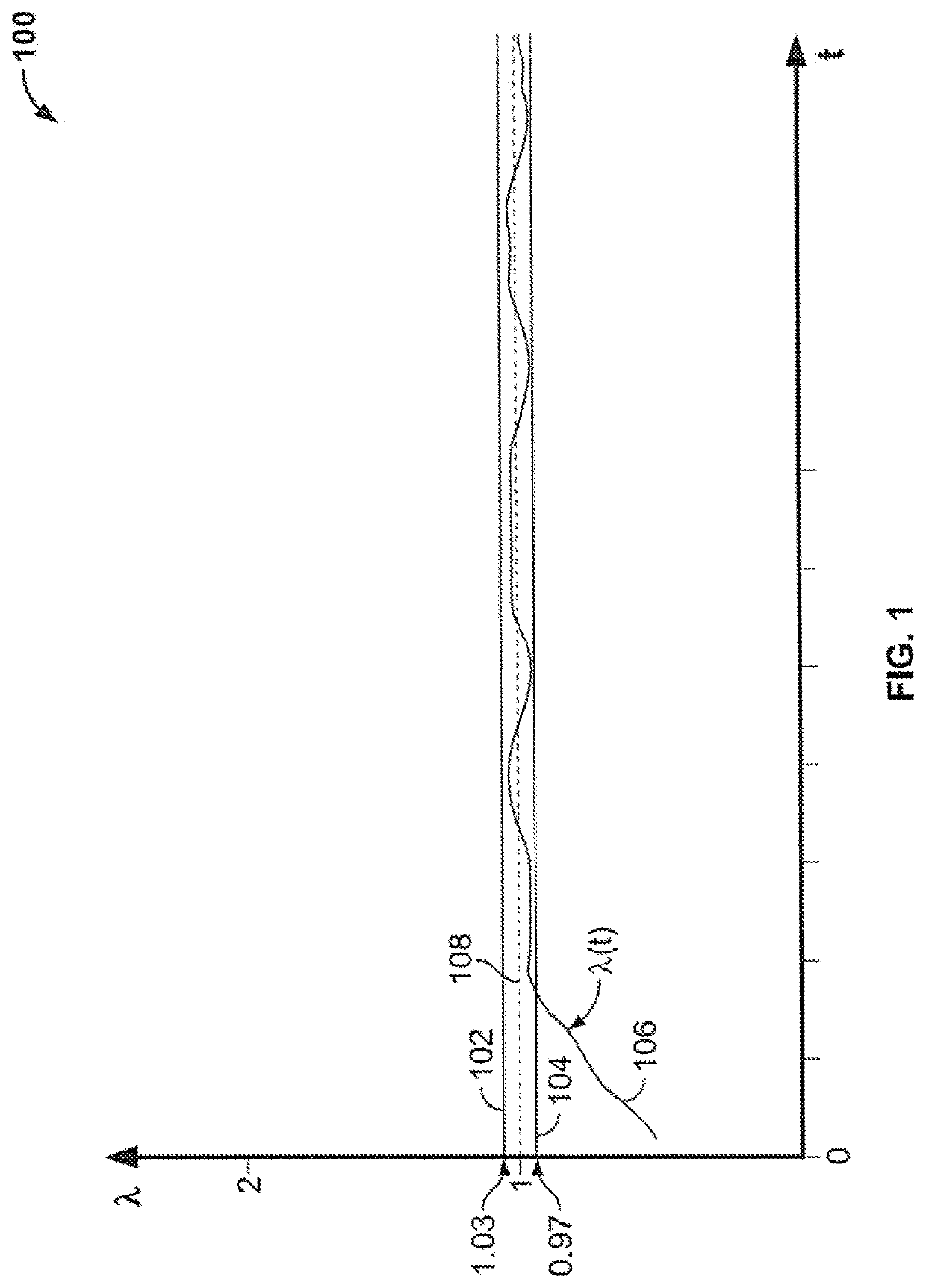
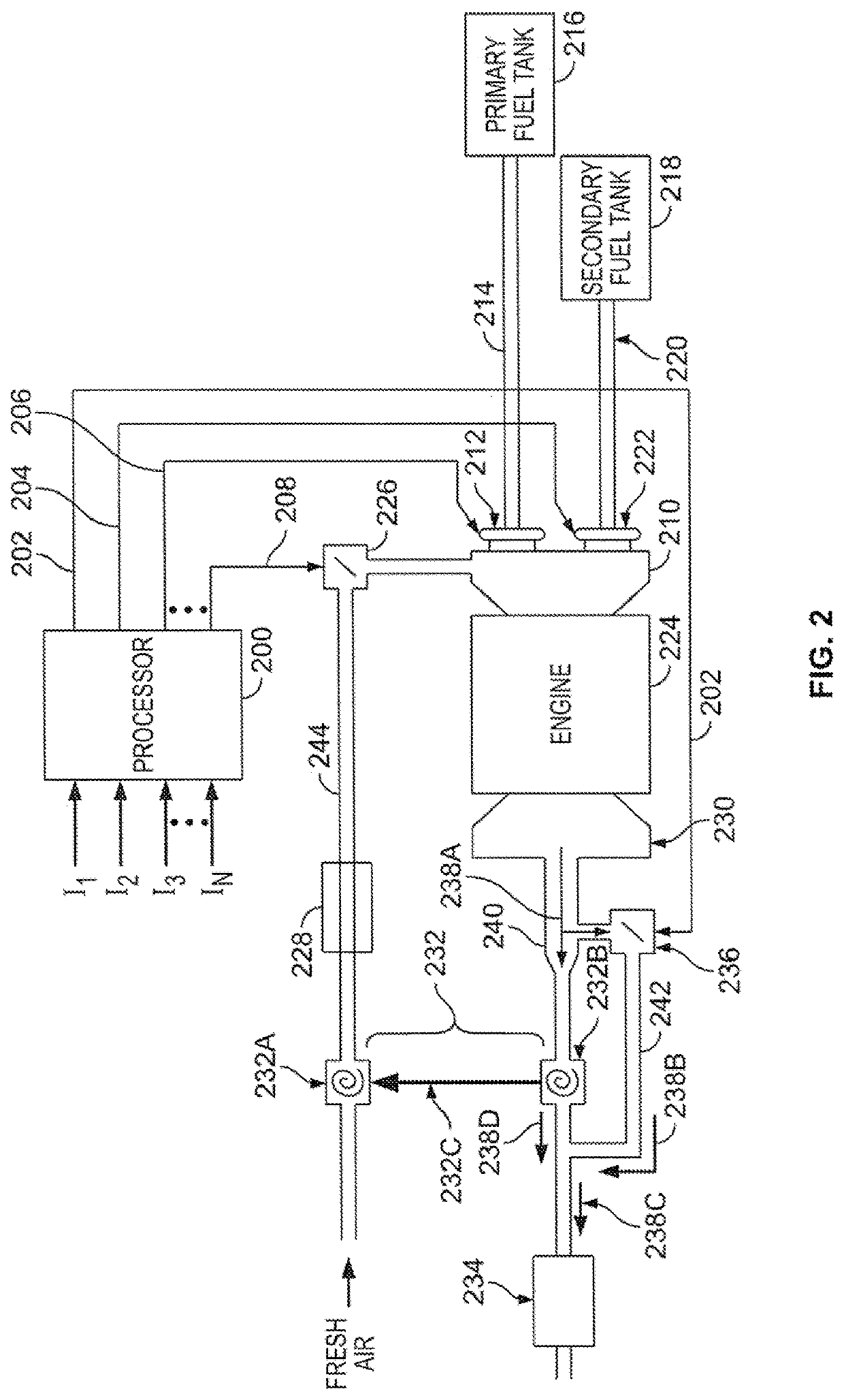
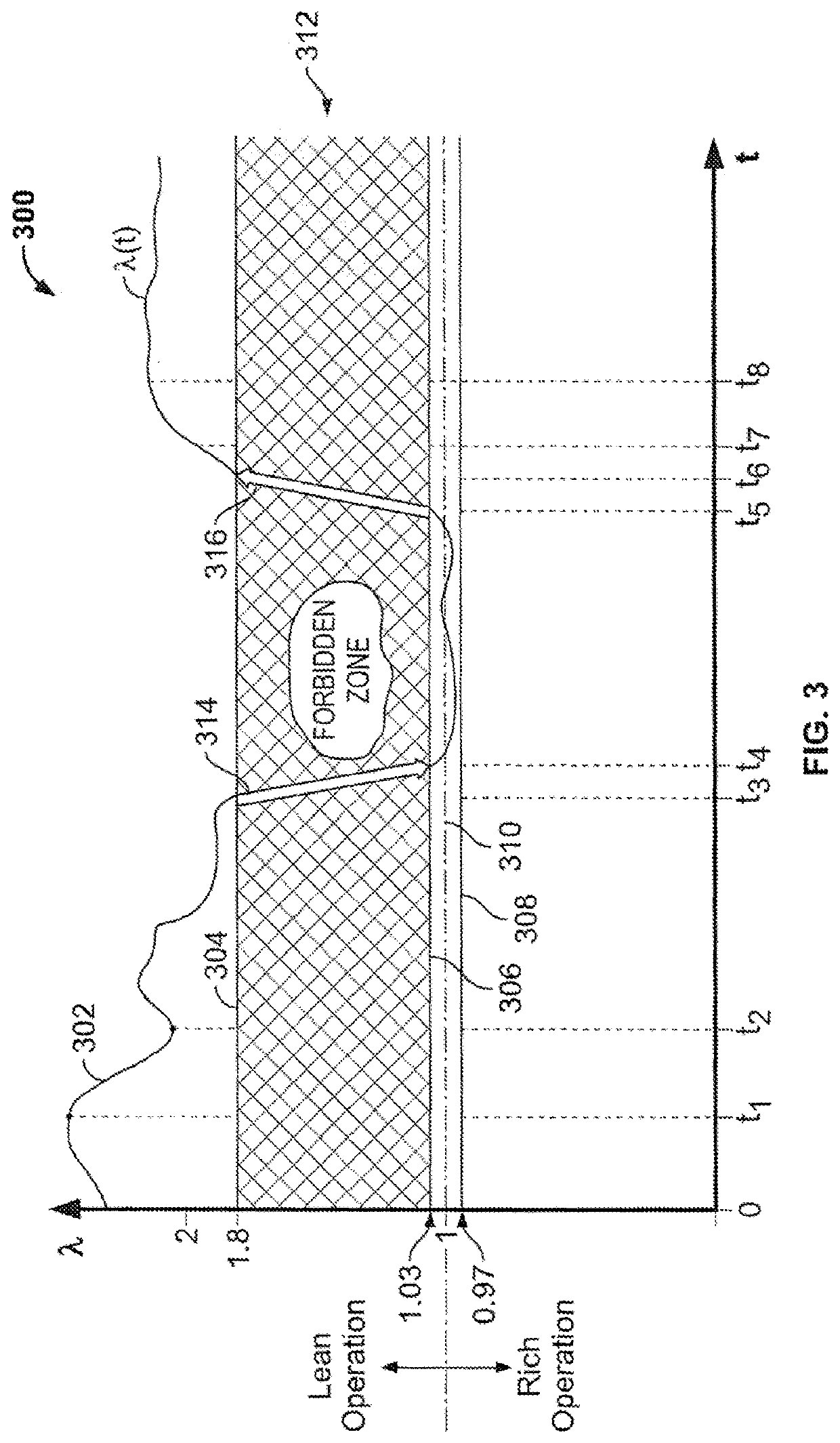
- A bi-fuel engine control system utilizing a processor and air pump to dynamically adjust air and fuel intake, allowing operation at acceptable lambda values, switching between primary and secondary fuels to maintain optimal air-fuel ratios and prevent forbidden lambda values, thereby reducing harmful emissions.

Apparatus And Method For Fuelling A Flexible-Fuel Internal Combustion Engine
PatentActiveUS20140238340A1
Innovation
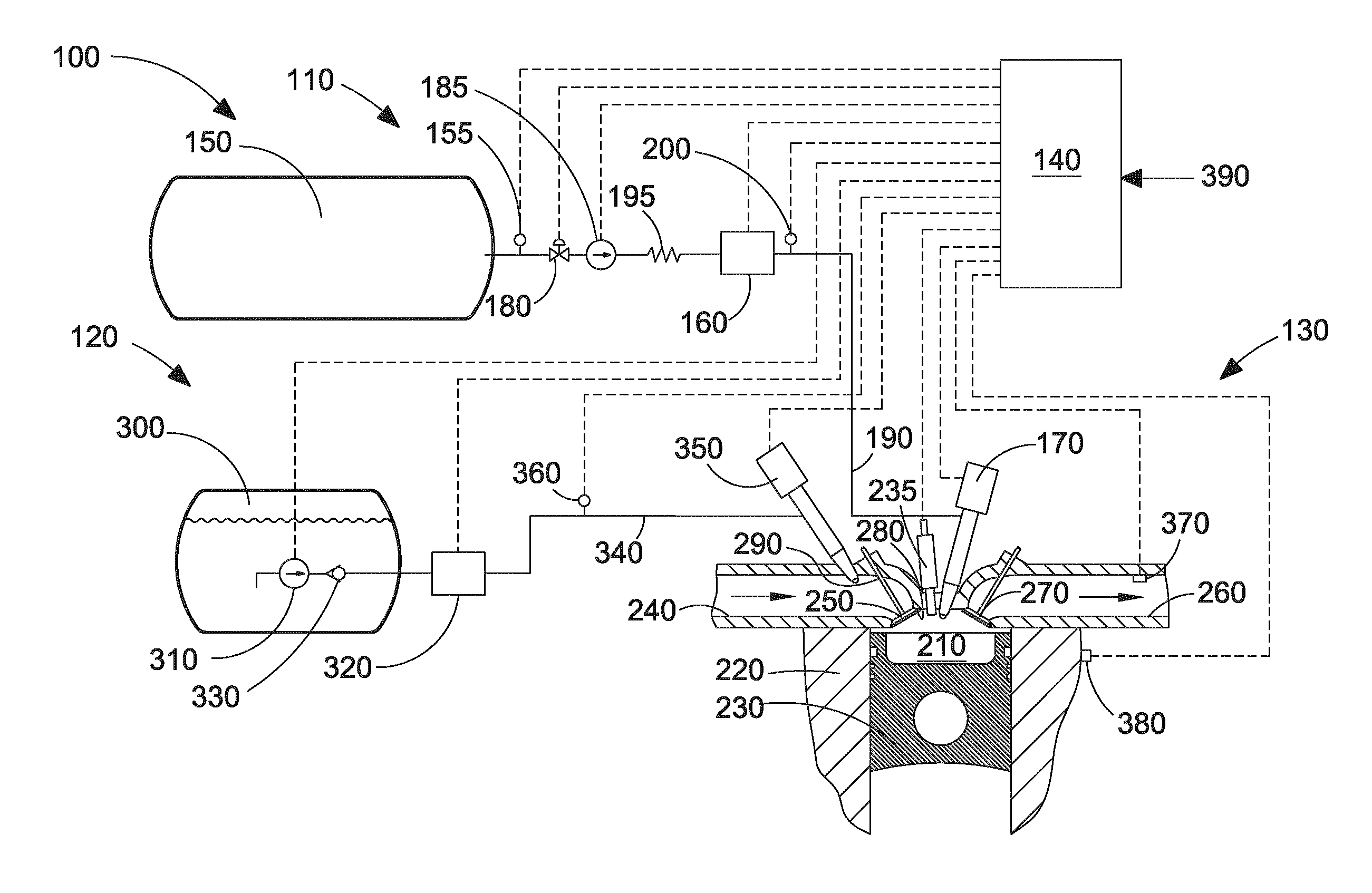
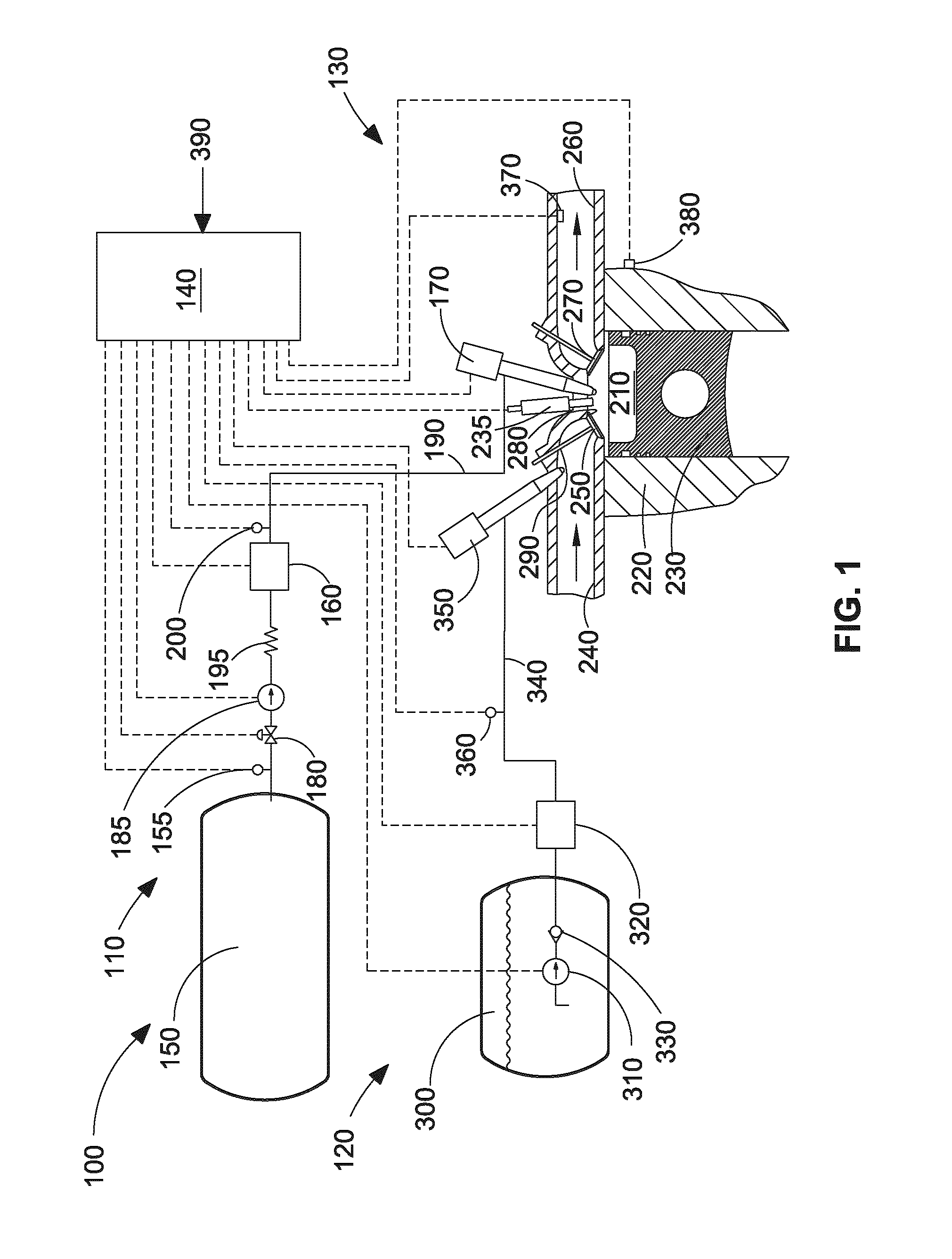
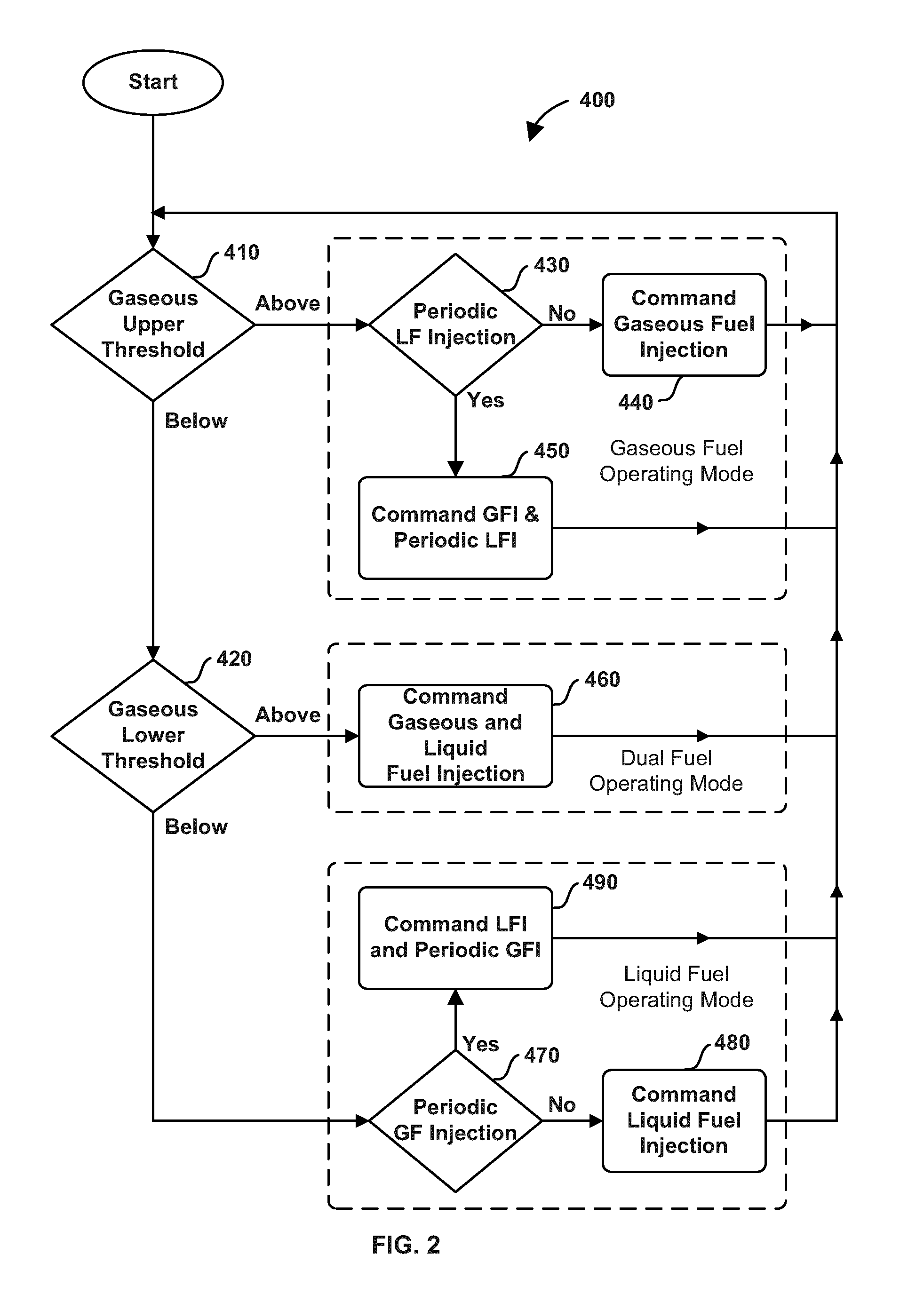
- An apparatus and method that delivers both gaseous and liquid fuels to a combustion chamber, utilizing a computer to control the gaseous-to-liquid fuel ratio based on various engine and environmental parameters, with a gaseous fuel injector directly injecting into the chamber and a liquid fuel injector injecting upstream of the intake valve, allowing for precise fuel delivery and optimized engine operation.

Environmental Regulatory Framework for Engine Emissions
The global regulatory landscape for engine emissions has evolved significantly over the past decades, establishing increasingly stringent standards that manufacturers must meet. The United States Environmental Protection Agency (EPA) and the European Union's Euro standards represent two of the most influential regulatory frameworks, setting benchmarks for emissions of nitrogen oxides (NOx), carbon monoxide (CO), particulate matter (PM), and hydrocarbons (HC).
In the United States, the Clean Air Act amendments of 1990 established the foundation for modern emissions regulations, with Tier 1 through Tier 4 standards progressively tightening limits for both on-road and off-road engines. The current Tier 4 Final regulations represent a 90% reduction in emissions compared to previous generations, particularly targeting NOx and PM emissions.
The European Union has implemented parallel regulations through its Euro standards (Euro 1 through Euro 6 for light-duty vehicles, and Stage I through Stage V for non-road engines). These standards have been particularly aggressive in reducing diesel emissions, with Euro 6 requiring an 80% reduction in NOx compared to Euro 5, and introducing real-world driving emissions (RDE) testing protocols.
When comparing radial engines and bi-fuel engines, these regulatory frameworks apply different methodologies. Radial engines, primarily used in vintage aircraft and specialized applications, often benefit from "grandfather clauses" or historical vehicle exemptions in many jurisdictions. However, when used in modern applications, they must meet contemporary standards, which can be challenging given their inherently higher emissions profiles.
Bi-fuel engines, capable of operating on conventional fuels (gasoline/diesel) and alternative fuels (typically natural gas or propane), face a more complex regulatory environment. These engines must meet emissions standards for both fuel types, with testing protocols that evaluate emissions during fuel transitions and under various operating conditions. The EPA's dual-fuel certification procedures require manufacturers to demonstrate compliance across the entire operating envelope.
International Maritime Organization (IMO) regulations have also become increasingly relevant, particularly for larger marine engines. The IMO Tier III standards specifically address NOx emissions in designated Emission Control Areas (ECAs), requiring a 75% reduction compared to Tier II standards. These regulations have significant implications for both engine types when deployed in marine applications.
Emerging markets are rapidly adopting variations of these established regulatory frameworks, with China implementing China VI standards (equivalent to Euro 6) and India moving to Bharat Stage VI. This global harmonization of emissions standards creates both challenges and opportunities for engine manufacturers, particularly those developing hybrid technologies like bi-fuel systems.
In the United States, the Clean Air Act amendments of 1990 established the foundation for modern emissions regulations, with Tier 1 through Tier 4 standards progressively tightening limits for both on-road and off-road engines. The current Tier 4 Final regulations represent a 90% reduction in emissions compared to previous generations, particularly targeting NOx and PM emissions.
The European Union has implemented parallel regulations through its Euro standards (Euro 1 through Euro 6 for light-duty vehicles, and Stage I through Stage V for non-road engines). These standards have been particularly aggressive in reducing diesel emissions, with Euro 6 requiring an 80% reduction in NOx compared to Euro 5, and introducing real-world driving emissions (RDE) testing protocols.
When comparing radial engines and bi-fuel engines, these regulatory frameworks apply different methodologies. Radial engines, primarily used in vintage aircraft and specialized applications, often benefit from "grandfather clauses" or historical vehicle exemptions in many jurisdictions. However, when used in modern applications, they must meet contemporary standards, which can be challenging given their inherently higher emissions profiles.
Bi-fuel engines, capable of operating on conventional fuels (gasoline/diesel) and alternative fuels (typically natural gas or propane), face a more complex regulatory environment. These engines must meet emissions standards for both fuel types, with testing protocols that evaluate emissions during fuel transitions and under various operating conditions. The EPA's dual-fuel certification procedures require manufacturers to demonstrate compliance across the entire operating envelope.
International Maritime Organization (IMO) regulations have also become increasingly relevant, particularly for larger marine engines. The IMO Tier III standards specifically address NOx emissions in designated Emission Control Areas (ECAs), requiring a 75% reduction compared to Tier II standards. These regulations have significant implications for both engine types when deployed in marine applications.
Emerging markets are rapidly adopting variations of these established regulatory frameworks, with China implementing China VI standards (equivalent to Euro 6) and India moving to Bharat Stage VI. This global harmonization of emissions standards creates both challenges and opportunities for engine manufacturers, particularly those developing hybrid technologies like bi-fuel systems.
Lifecycle Emissions Assessment Methodologies
Lifecycle emissions assessment methodologies provide a comprehensive framework for evaluating the environmental impact of different engine technologies throughout their entire existence. When comparing radial engines with bi-fuel engines, it is essential to employ standardized approaches that account for emissions across all stages of the engine lifecycle.
The Well-to-Wheel (WTW) methodology represents the most comprehensive approach, encompassing emissions from fuel extraction, processing, distribution, and ultimate combustion in the engine. For radial engines primarily operating on aviation gasoline, this assessment must account for petroleum extraction, refining processes, and the high carbon intensity of specialized aviation fuels. Bi-fuel engines, capable of operating on conventional fuels and alternatives like natural gas or propane, require a more complex WTW analysis that considers the varying production pathways of multiple fuel types.
Life Cycle Assessment (LCA) extends beyond operational emissions to include manufacturing and end-of-life considerations. This methodology examines raw material extraction, component manufacturing, assembly processes, operational lifetime, and eventual disposal or recycling. Radial engines, with their complex mechanical design featuring multiple cylinders arranged in a circular pattern, typically involve more intensive manufacturing processes and specialized materials compared to conventional inline configurations used in many bi-fuel applications.
The Carbon Footprint Analysis methodology focuses specifically on greenhouse gas emissions throughout the lifecycle, converting all emissions to carbon dioxide equivalent (CO2e) units. This standardization allows for direct comparison between the two engine technologies despite their different operational characteristics and fuel consumption patterns.
Embodied Energy Assessment quantifies the total energy consumed during manufacturing and maintenance phases. Radial engines, with their historical designs dating back to early aviation, often require specialized manufacturing techniques and materials that may result in different embodied energy profiles compared to more modern bi-fuel engine designs.
Regulatory compliance methodologies vary by region and application, with aviation and automotive sectors following different standards. The International Civil Aviation Organization (ICAO) emissions standards govern many radial engine applications, while bi-fuel engines often must comply with EPA or Euro emissions standards depending on their application and market.
When selecting an appropriate methodology for comparing these engine types, researchers must consider the specific application context, available data quality, and the primary environmental impacts of concern to ensure meaningful and actionable assessment results.
The Well-to-Wheel (WTW) methodology represents the most comprehensive approach, encompassing emissions from fuel extraction, processing, distribution, and ultimate combustion in the engine. For radial engines primarily operating on aviation gasoline, this assessment must account for petroleum extraction, refining processes, and the high carbon intensity of specialized aviation fuels. Bi-fuel engines, capable of operating on conventional fuels and alternatives like natural gas or propane, require a more complex WTW analysis that considers the varying production pathways of multiple fuel types.
Life Cycle Assessment (LCA) extends beyond operational emissions to include manufacturing and end-of-life considerations. This methodology examines raw material extraction, component manufacturing, assembly processes, operational lifetime, and eventual disposal or recycling. Radial engines, with their complex mechanical design featuring multiple cylinders arranged in a circular pattern, typically involve more intensive manufacturing processes and specialized materials compared to conventional inline configurations used in many bi-fuel applications.
The Carbon Footprint Analysis methodology focuses specifically on greenhouse gas emissions throughout the lifecycle, converting all emissions to carbon dioxide equivalent (CO2e) units. This standardization allows for direct comparison between the two engine technologies despite their different operational characteristics and fuel consumption patterns.
Embodied Energy Assessment quantifies the total energy consumed during manufacturing and maintenance phases. Radial engines, with their historical designs dating back to early aviation, often require specialized manufacturing techniques and materials that may result in different embodied energy profiles compared to more modern bi-fuel engine designs.
Regulatory compliance methodologies vary by region and application, with aviation and automotive sectors following different standards. The International Civil Aviation Organization (ICAO) emissions standards govern many radial engine applications, while bi-fuel engines often must comply with EPA or Euro emissions standards depending on their application and market.
When selecting an appropriate methodology for comparing these engine types, researchers must consider the specific application context, available data quality, and the primary environmental impacts of concern to ensure meaningful and actionable assessment results.
Unlock deeper insights with PatSnap Eureka Quick Research — get a full tech report to explore trends and direct your research. Try now!
Generate Your Research Report Instantly with AI Agent
Supercharge your innovation with PatSnap Eureka AI Agent Platform!