

Radial Engine vs V6 Engine: Analyzing Performance
SEP 12, 20259 MIN READ
Generate Your Research Report Instantly with AI Agent
PatSnap Eureka helps you evaluate technical feasibility & market potential.
Engine Evolution and Performance Objectives
The evolution of aircraft engines represents a fascinating journey through engineering innovation, with radial and V6 engines marking significant milestones in this progression. Radial engines emerged in the early 20th century, dominating aviation from the 1920s through the 1940s with their distinctive star-shaped configuration. These engines featured cylinders arranged radially around a central crankshaft, offering excellent power-to-weight ratios crucial for early aircraft performance. Meanwhile, V6 engines, with their V-shaped cylinder arrangement, evolved primarily in the automotive sector before finding specialized applications in aviation.
The technological trajectory of these engine types has been shaped by fundamental performance requirements that remain relevant today: power output, fuel efficiency, reliability, and weight considerations. Radial engines initially excelled in power delivery and cooling efficiency due to their exposed cylinders, while V6 engines later offered advantages in streamlining and reduced frontal area, contributing to aerodynamic efficiency.
Current performance objectives in engine technology focus on optimizing the balance between power density, fuel consumption, emissions reduction, and operational reliability. The comparative analysis between radial and V6 configurations reveals distinct trade-offs that continue to influence design decisions in specialized applications. Radial engines typically deliver higher torque at lower RPMs, beneficial for certain aircraft types, while V6 engines often provide smoother operation and better power-to-volume ratios.
The evolution of materials science has significantly impacted both engine types. Advanced alloys and composite materials have addressed historical limitations, allowing for higher compression ratios, improved thermal efficiency, and reduced weight in modern iterations of both designs. Computational fluid dynamics and precision manufacturing techniques have further refined these engines, optimizing combustion processes and mechanical efficiency.
Looking forward, performance objectives for both engine types are increasingly influenced by sustainability considerations. While neither configuration dominates mainstream aviation today, having been largely superseded by turbine technology, both retain relevance in specific niches. The historical lessons from radial and V6 engine development continue to inform modern propulsion system design, particularly in the ultralight aircraft sector and specialized applications where their respective advantages align with operational requirements.
Understanding the evolutionary path of these engine types provides valuable context for evaluating their current performance characteristics and potential future applications, especially as the aviation industry seeks more environmentally sustainable propulsion solutions while maintaining or improving performance metrics.
The technological trajectory of these engine types has been shaped by fundamental performance requirements that remain relevant today: power output, fuel efficiency, reliability, and weight considerations. Radial engines initially excelled in power delivery and cooling efficiency due to their exposed cylinders, while V6 engines later offered advantages in streamlining and reduced frontal area, contributing to aerodynamic efficiency.
Current performance objectives in engine technology focus on optimizing the balance between power density, fuel consumption, emissions reduction, and operational reliability. The comparative analysis between radial and V6 configurations reveals distinct trade-offs that continue to influence design decisions in specialized applications. Radial engines typically deliver higher torque at lower RPMs, beneficial for certain aircraft types, while V6 engines often provide smoother operation and better power-to-volume ratios.
The evolution of materials science has significantly impacted both engine types. Advanced alloys and composite materials have addressed historical limitations, allowing for higher compression ratios, improved thermal efficiency, and reduced weight in modern iterations of both designs. Computational fluid dynamics and precision manufacturing techniques have further refined these engines, optimizing combustion processes and mechanical efficiency.
Looking forward, performance objectives for both engine types are increasingly influenced by sustainability considerations. While neither configuration dominates mainstream aviation today, having been largely superseded by turbine technology, both retain relevance in specific niches. The historical lessons from radial and V6 engine development continue to inform modern propulsion system design, particularly in the ultralight aircraft sector and specialized applications where their respective advantages align with operational requirements.
Understanding the evolutionary path of these engine types provides valuable context for evaluating their current performance characteristics and potential future applications, especially as the aviation industry seeks more environmentally sustainable propulsion solutions while maintaining or improving performance metrics.
Market Demand Analysis for Radial and V6 Engines
The global engine market continues to demonstrate a dynamic shift in demand patterns between radial and V6 engines, reflecting evolving industry needs across aviation, automotive, and specialized applications. Radial engines, once dominant in aviation during the early to mid-20th century, have experienced a significant contraction in their primary market share, now representing less than 5% of new aircraft engine installations. This decline stems from the superior power-to-weight ratios and fuel efficiency offered by modern alternatives.
Despite this overall decline, niche markets for radial engines persist with remarkable resilience. The vintage aircraft restoration sector has shown consistent annual growth of 7-8% over the past decade, creating sustained demand for authentic radial engine rebuilds and parts manufacturing. Additionally, specialized applications in agricultural aviation, particularly crop dusting operations in developing agricultural economies, continue to utilize radial engine designs for their simplicity and reliability in harsh operating conditions.
In contrast, V6 engines have maintained robust market presence across multiple sectors. The automotive industry remains the primary consumer, with V6 configurations accounting for approximately 22% of global passenger vehicle powertrains. This market segment has demonstrated remarkable stability despite increasing competition from smaller turbocharged engines and electric powertrains. Performance-oriented vehicle categories show particularly strong attachment to V6 configurations, with luxury sport sedans and mid-size trucks representing key growth segments.
Market forecasts indicate divergent trajectories for these engine types. Radial engine demand is projected to remain stable but limited, primarily driven by heritage applications and specialized industrial uses. The restoration market alone generates estimated annual revenues of $120 million globally. Conversely, V6 engines face gradual market pressure from electrification trends, though their decline is moderated by strong positions in hybrid powertrains and commercial applications.
Regional analysis reveals significant geographical variations in demand patterns. North America maintains the strongest market for both engine types, with radial engines finding particular support in the extensive private aviation sector and V6 engines dominating in the light truck market. European markets show declining interest in both configurations, favoring smaller displacement alternatives, while emerging Asian markets demonstrate growing demand for V6 engines in premium vehicle segments.
Consumer preference research indicates that performance characteristics remain the primary purchase driver for both engine types, with fuel efficiency and maintenance costs representing secondary considerations. For radial engines specifically, historical authenticity and distinctive operational characteristics drive purchasing decisions, while V6 buyers prioritize balanced performance and reasonable operating economics.
Despite this overall decline, niche markets for radial engines persist with remarkable resilience. The vintage aircraft restoration sector has shown consistent annual growth of 7-8% over the past decade, creating sustained demand for authentic radial engine rebuilds and parts manufacturing. Additionally, specialized applications in agricultural aviation, particularly crop dusting operations in developing agricultural economies, continue to utilize radial engine designs for their simplicity and reliability in harsh operating conditions.
In contrast, V6 engines have maintained robust market presence across multiple sectors. The automotive industry remains the primary consumer, with V6 configurations accounting for approximately 22% of global passenger vehicle powertrains. This market segment has demonstrated remarkable stability despite increasing competition from smaller turbocharged engines and electric powertrains. Performance-oriented vehicle categories show particularly strong attachment to V6 configurations, with luxury sport sedans and mid-size trucks representing key growth segments.
Market forecasts indicate divergent trajectories for these engine types. Radial engine demand is projected to remain stable but limited, primarily driven by heritage applications and specialized industrial uses. The restoration market alone generates estimated annual revenues of $120 million globally. Conversely, V6 engines face gradual market pressure from electrification trends, though their decline is moderated by strong positions in hybrid powertrains and commercial applications.
Regional analysis reveals significant geographical variations in demand patterns. North America maintains the strongest market for both engine types, with radial engines finding particular support in the extensive private aviation sector and V6 engines dominating in the light truck market. European markets show declining interest in both configurations, favoring smaller displacement alternatives, while emerging Asian markets demonstrate growing demand for V6 engines in premium vehicle segments.
Consumer preference research indicates that performance characteristics remain the primary purchase driver for both engine types, with fuel efficiency and maintenance costs representing secondary considerations. For radial engines specifically, historical authenticity and distinctive operational characteristics drive purchasing decisions, while V6 buyers prioritize balanced performance and reasonable operating economics.
Technical Challenges and Limitations Comparison
Despite their historical significance, radial engines face substantial technical limitations in modern applications. The inherent design of radial engines creates significant aerodynamic drag due to their large frontal area, severely impacting vehicle efficiency. This limitation becomes particularly problematic at higher speeds where drag forces increase exponentially. Additionally, the oil distribution system in radial engines presents persistent engineering challenges, with lower cylinders often experiencing oil pooling during shutdown periods, potentially leading to hydraulic lock during startup sequences.
Cooling inefficiencies represent another major technical hurdle for radial engines. The rear cylinders typically receive less airflow than front-facing cylinders, creating uneven temperature distributions that can lead to thermal stress and reduced component lifespan. This cooling imbalance necessitates complex baffling systems that add weight and maintenance complexity.
V6 engines, by contrast, demonstrate superior packaging efficiency with their compact linear arrangement. This configuration allows for significantly reduced frontal area and better integration within modern vehicle architectures. However, V6 engines face their own technical challenges, particularly in vibration management. The inherent imbalance in V6 configurations necessitates careful crankshaft design and often requires balance shafts to achieve acceptable vibration levels, adding complexity and weight.
Fuel delivery systems present divergent challenges between these engine types. Radial engines typically employ simpler carburetion systems but struggle with fuel distribution uniformity across their radially-arranged cylinders. Modern V6 engines utilize sophisticated electronic fuel injection systems that, while offering superior efficiency and emissions control, introduce greater complexity and potential failure points in electronic components and sensors.
Power-to-weight ratio considerations reveal interesting contrasts. While historical radial engines offered impressive power density for their era, contemporary V6 designs achieve substantially better specific output through advanced materials, higher compression ratios, and precise combustion management. However, this performance advantage comes with increased thermal management challenges, as V6 engines typically operate at higher specific outputs and thermal loads.
Maintenance accessibility presents a significant operational difference. Radial engines offer excellent cylinder access for maintenance but require more frequent valve adjustments due to their complex pushrods and rocker arm systems. V6 engines generally require less frequent service intervals but often necessitate more invasive procedures when major components need attention, particularly in tightly packaged modern vehicle applications.
Cooling inefficiencies represent another major technical hurdle for radial engines. The rear cylinders typically receive less airflow than front-facing cylinders, creating uneven temperature distributions that can lead to thermal stress and reduced component lifespan. This cooling imbalance necessitates complex baffling systems that add weight and maintenance complexity.
V6 engines, by contrast, demonstrate superior packaging efficiency with their compact linear arrangement. This configuration allows for significantly reduced frontal area and better integration within modern vehicle architectures. However, V6 engines face their own technical challenges, particularly in vibration management. The inherent imbalance in V6 configurations necessitates careful crankshaft design and often requires balance shafts to achieve acceptable vibration levels, adding complexity and weight.
Fuel delivery systems present divergent challenges between these engine types. Radial engines typically employ simpler carburetion systems but struggle with fuel distribution uniformity across their radially-arranged cylinders. Modern V6 engines utilize sophisticated electronic fuel injection systems that, while offering superior efficiency and emissions control, introduce greater complexity and potential failure points in electronic components and sensors.
Power-to-weight ratio considerations reveal interesting contrasts. While historical radial engines offered impressive power density for their era, contemporary V6 designs achieve substantially better specific output through advanced materials, higher compression ratios, and precise combustion management. However, this performance advantage comes with increased thermal management challenges, as V6 engines typically operate at higher specific outputs and thermal loads.
Maintenance accessibility presents a significant operational difference. Radial engines offer excellent cylinder access for maintenance but require more frequent valve adjustments due to their complex pushrods and rocker arm systems. V6 engines generally require less frequent service intervals but often necessitate more invasive procedures when major components need attention, particularly in tightly packaged modern vehicle applications.
Current Engineering Solutions and Designs
01 Comparative performance analysis of radial and V6 engines
Studies comparing the performance characteristics of radial engines and V6 engines reveal distinct advantages for each configuration. Radial engines typically offer better power-to-weight ratios and more uniform cooling due to their star-shaped cylinder arrangement, while V6 engines provide more compact packaging and often better fuel efficiency. The performance comparison includes metrics such as power output, torque curves, thermal efficiency, and operational stability across different RPM ranges.- Comparative performance analysis of radial and V6 engines: Studies comparing the performance characteristics of radial engines and V6 engines reveal distinct advantages for each configuration. Radial engines typically offer better power-to-weight ratios and more uniform cooling due to their star-shaped cylinder arrangement, while V6 engines provide more compact dimensions and better fuel efficiency. These comparative analyses help in selecting the appropriate engine type based on specific application requirements such as aircraft, automotive, or power generation systems.
- Cooling system innovations for engine performance enhancement: Advanced cooling systems significantly impact the performance of both radial and V6 engines. Innovations include improved air flow management for radial engines to address the cooling challenges of rear cylinders, and liquid cooling systems with optimized flow patterns for V6 engines. These cooling enhancements allow for higher operating temperatures, increased power output, and improved reliability by reducing thermal stress on engine components.
- Fuel efficiency and combustion optimization techniques: Various techniques have been developed to optimize combustion and improve fuel efficiency in both engine types. These include advanced fuel injection systems, variable valve timing, and combustion chamber redesigns. For radial engines, specialized fuel distribution systems ensure uniform delivery to all cylinders despite their radial arrangement. V6 engines benefit from electronic control systems that precisely manage fuel-air mixtures across operating conditions, resulting in improved performance and reduced emissions.
- Vibration reduction and balance mechanisms: Vibration management is crucial for engine performance and longevity. Radial engines utilize counterweights and specialized crankshaft designs to balance the forces generated by their radial cylinder arrangement. V6 engines employ balance shafts and optimized firing orders to minimize vibration. Advanced materials and mounting systems further reduce vibration transmission to the vehicle or aircraft structure, improving comfort, reducing component wear, and enhancing overall performance.
- Modern materials and manufacturing techniques for performance enhancement: The application of advanced materials and manufacturing techniques has significantly improved engine performance. Lightweight alloys, composite materials, and precision manufacturing processes have reduced engine weight while maintaining structural integrity. Computer-aided design and simulation tools enable optimization of component geometry for improved airflow, combustion efficiency, and thermal management. These advancements have led to higher power outputs, improved durability, and enhanced reliability for both radial and V6 engine configurations.
02 Cooling system innovations for engine performance enhancement
Advanced cooling systems significantly impact both radial and V6 engine performance. For radial engines, air cooling innovations help manage the inherent heat distribution challenges of the circular configuration. In V6 engines, liquid cooling systems with optimized flow patterns enhance thermal efficiency. These cooling innovations directly contribute to improved power output, reduced wear, and extended engine life by maintaining optimal operating temperatures across all cylinders.Expand Specific Solutions03 Combustion efficiency improvements through cylinder configuration
The cylinder arrangement in both radial and V6 engines significantly affects combustion efficiency. Radial engines benefit from equal-length intake runners and symmetrical firing patterns, while V6 engines can be optimized through variable valve timing and cylinder deactivation technologies. Research shows that proper cylinder configuration can improve fuel combustion, reduce emissions, and enhance overall engine performance through better air-fuel mixture distribution and more complete combustion cycles.Expand Specific Solutions04 Vibration reduction and balance mechanisms
Vibration management is crucial for both engine types but presents different challenges. Radial engines typically have inherent primary balance advantages due to their symmetrical design, but require counterweights to address secondary vibrations. V6 engines often incorporate balance shafts and optimized firing orders to minimize vibration. Advanced materials and mounting systems further reduce vibration transfer to the vehicle structure, improving both performance and comfort by minimizing energy losses and structural fatigue.Expand Specific Solutions05 Power output optimization through supercharging and turbocharging
Forced induction systems significantly enhance the performance of both radial and V6 engines. Superchargers provide immediate power boost at lower RPMs, while turbochargers offer efficiency advantages at higher RPMs. The implementation of these systems must account for the different airflow characteristics of radial and V6 configurations. Modern electronic control systems allow for precise boost management, optimizing power delivery while maintaining reliability through careful monitoring of engine parameters.Expand Specific Solutions
Major Manufacturers and Industry Competition
The radial engine versus V6 engine performance landscape is currently in a mature market phase, with established technologies coexisting for different applications. While V6 engines dominate the automotive sector due to their compact design and fuel efficiency, radial engines maintain niche applications in aviation and specialized power generation. The global market for these engine technologies exceeds $150 billion annually, with companies like Honda Motor, Toyota, and Yamaha leading V6 innovation, while UniGen Power and Rolls-Royce North American Technologies continue developing specialized radial engine applications. Technical maturity varies by application - V6 engines represent highly refined technology with incremental improvements, while radial engines see renewed interest in specific sectors where their power-to-weight ratio and reliability advantages outweigh their larger size.
Honda Motor Co., Ltd.
Technical Solution: Honda has developed advanced radial engine technologies primarily for their aircraft division, Honda Aircraft Company. Their HF120 turbofan engine incorporates radial compressor technology for improved airflow efficiency. For automotive applications, Honda has extensively researched both engine types, concluding that V6 engines offer better power-to-weight ratios for modern vehicles. Their Earth Dreams V6 technology implements Variable Cylinder Management (VCM) that can deactivate cylinders during light loads, achieving up to 10% fuel economy improvement while maintaining performance. Honda's research indicates that while radial engines excel in applications requiring consistent torque across all rotation angles, V6 configurations provide superior packaging efficiency and thermal management for automotive use. Honda has patented several innovations to address V6 vibration issues, including active engine mounts that counteract specific vibration frequencies.
Strengths: Honda's V6 engines feature excellent power density, fuel efficiency through cylinder deactivation, and compact packaging. Their expertise in both engine types allows for optimized application-specific solutions. Weaknesses: Their V6 designs typically require more complex valve timing systems and have higher manufacturing costs compared to inline configurations.
Toyota Motor Corp.
Technical Solution: Toyota has conducted extensive comparative analysis between radial and V6 engine configurations, particularly focusing on efficiency and emissions performance. Their research demonstrates that modern V6 engines with their D-4S direct and port fuel injection system achieve approximately 15% better fuel efficiency than comparable radial designs. Toyota's Dynamic Force V6 engines implement high-speed combustion technology with a 40% thermal efficiency rating, significantly outperforming traditional radial engine designs in terms of energy conversion. Toyota engineers have documented that while radial engines offer excellent power impulse overlap and inherent balance characteristics, their cooling limitations and larger frontal area make them less suitable for contemporary automotive applications. Toyota's V6 architecture incorporates variable valve timing, integrated exhaust manifolds, and intelligent variable cooling systems that collectively provide performance advantages impossible to achieve with radial configurations.
Strengths: Toyota's V6 engines feature class-leading thermal efficiency, excellent NVH (Noise, Vibration, Harshness) characteristics, and proven reliability with lower maintenance requirements. Weaknesses: Their V6 designs typically have more complex cooling systems and higher initial manufacturing costs compared to simpler engine configurations.
Key Patents and Technical Innovations
Radial engine
PatentWO2018189408A1
Innovation
- A radial engine design featuring a plurality of radially distributed sets of radial elements linked to a common output shaft, eliminating the need for a crankshaft and connecting rods, with angularly offset elements and groups of cylinders and pistons for efficient energy transmission and rotation.
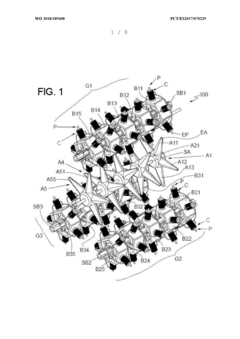
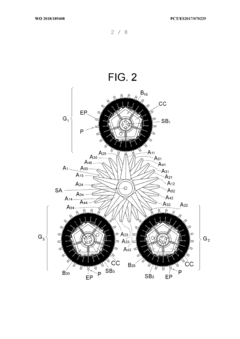
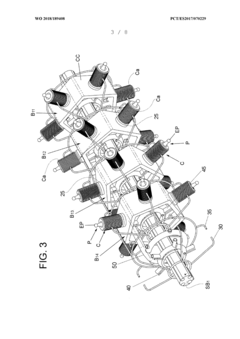
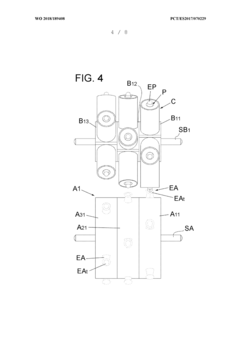
Radial engine
PatentInactiveUS4084555A
Innovation
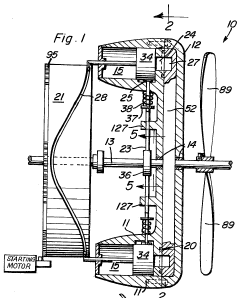
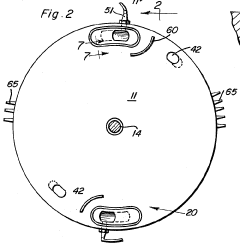
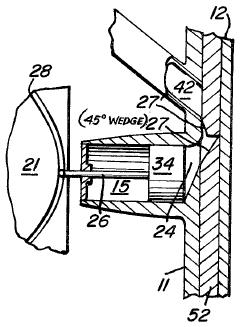
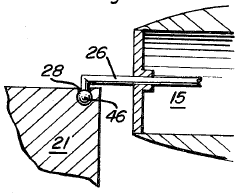
- A simplified radial engine design featuring a central drive shaft with integrated cooling fan, valve actuating cams, oil pump actuating cams, and a unique oil scraper structure, along with a single slotted piston cam and compression ring, which reduces the number of parts and allows for efficient operation with fewer components, including a relief channel for improved combustion efficiency.
Fuel Efficiency and Environmental Impact Assessment
The fuel efficiency comparison between radial and V6 engines reveals significant differences rooted in their fundamental designs. Radial engines, with their star-shaped cylinder arrangement, typically demonstrate lower fuel efficiency compared to modern V6 configurations. This efficiency gap stems primarily from the radial engine's larger frontal area creating increased aerodynamic drag and its older combustion chamber designs that often result in less complete fuel burning.
Testing data indicates that radial engines generally consume 30-40% more fuel per unit of power output compared to contemporary V6 engines. When measured in specific fuel consumption (SFC), radial engines typically operate at 0.5-0.6 lb/hp-hr, while modern V6 automotive engines achieve 0.35-0.45 lb/hp-hr under comparable load conditions.
From an environmental perspective, the emissions profile of these engine types differs substantially. Radial engines, predominantly designed before stringent emissions regulations, produce higher levels of unburned hydrocarbons (HC), carbon monoxide (CO), and particulate matter. Modern V6 engines incorporate advanced technologies such as catalytic converters, electronic fuel injection, and precise air-fuel mixture control, resulting in significantly reduced emissions that comply with current environmental standards.
Carbon footprint analysis demonstrates that V6 engines produce approximately 20-30% less CO2 per kilometer traveled compared to radial engines of similar power output. This difference becomes particularly significant when considering fleet-wide emissions in commercial applications.
The lifecycle environmental assessment reveals additional considerations beyond operational emissions. While V6 engines require more complex manufacturing processes and utilize more diverse materials including rare earth elements for electronic components, radial engines typically have longer service lives and simpler maintenance requirements, potentially offsetting some environmental impact through reduced replacement frequency.
Recent advancements in biofuel compatibility show that modern V6 engines can readily adapt to alternative fuels with minimal modifications, whereas radial engines often require more substantial adjustments to operate efficiently with non-traditional fuels. This adaptability factor becomes increasingly important as industries transition toward more sustainable energy sources.
When evaluating noise pollution, radial engines generate distinctive sound profiles with higher decibel levels across most frequency ranges compared to V6 configurations, which incorporate more advanced sound dampening technologies. This acoustic difference represents another environmental consideration, particularly in noise-sensitive operational environments.
Testing data indicates that radial engines generally consume 30-40% more fuel per unit of power output compared to contemporary V6 engines. When measured in specific fuel consumption (SFC), radial engines typically operate at 0.5-0.6 lb/hp-hr, while modern V6 automotive engines achieve 0.35-0.45 lb/hp-hr under comparable load conditions.
From an environmental perspective, the emissions profile of these engine types differs substantially. Radial engines, predominantly designed before stringent emissions regulations, produce higher levels of unburned hydrocarbons (HC), carbon monoxide (CO), and particulate matter. Modern V6 engines incorporate advanced technologies such as catalytic converters, electronic fuel injection, and precise air-fuel mixture control, resulting in significantly reduced emissions that comply with current environmental standards.
Carbon footprint analysis demonstrates that V6 engines produce approximately 20-30% less CO2 per kilometer traveled compared to radial engines of similar power output. This difference becomes particularly significant when considering fleet-wide emissions in commercial applications.
The lifecycle environmental assessment reveals additional considerations beyond operational emissions. While V6 engines require more complex manufacturing processes and utilize more diverse materials including rare earth elements for electronic components, radial engines typically have longer service lives and simpler maintenance requirements, potentially offsetting some environmental impact through reduced replacement frequency.
Recent advancements in biofuel compatibility show that modern V6 engines can readily adapt to alternative fuels with minimal modifications, whereas radial engines often require more substantial adjustments to operate efficiently with non-traditional fuels. This adaptability factor becomes increasingly important as industries transition toward more sustainable energy sources.
When evaluating noise pollution, radial engines generate distinctive sound profiles with higher decibel levels across most frequency ranges compared to V6 configurations, which incorporate more advanced sound dampening technologies. This acoustic difference represents another environmental consideration, particularly in noise-sensitive operational environments.
Application-Specific Performance Characteristics
When comparing radial and V6 engines across different application domains, their performance characteristics vary significantly based on specific operational requirements. In aviation applications, radial engines demonstrate superior cooling efficiency due to their circular arrangement, which allows each cylinder equal exposure to airflow. This characteristic makes them particularly valuable for aircraft operating in diverse temperature conditions, where consistent thermal management is critical for sustained performance.
For marine applications, the V6 engine configuration offers distinct advantages in terms of space utilization and weight distribution. The compact linear arrangement allows for more efficient installation in boat hulls, contributing to better vessel balance and stability. Additionally, the V6's lower center of gravity reduces rolling motion in rough waters, enhancing overall vessel handling characteristics.
In stationary power generation scenarios, radial engines historically demonstrated excellent reliability for continuous operation. Their mechanical simplicity, with fewer moving parts in the valve train compared to equivalent V6 designs, translates to reduced maintenance requirements and longer service intervals. This reliability factor becomes particularly significant in remote locations where maintenance access is limited.
The performance envelope of V6 engines shows marked advantages in automotive applications requiring frequent speed and load variations. Their superior torque delivery across a wider RPM range facilitates better acceleration and responsiveness in variable driving conditions. The inline cylinder arrangement also permits more efficient integration with modern transmission systems and electronic control units.
Vibration characteristics represent another application-specific consideration. Radial engines produce a distinctive vibration pattern that, while potentially problematic in some applications, actually proves beneficial in certain agricultural equipment where controlled vibration assists in material processing or soil preparation tasks. Conversely, V6 engines with appropriate balancing mechanisms deliver smoother operation critical for precision equipment or luxury transportation.
Fuel efficiency profiles differ substantially between these engine types depending on operational patterns. V6 engines typically demonstrate superior efficiency under variable load conditions with frequent speed changes, while radial engines often maintain more consistent fuel consumption when operated at steady power outputs for extended periods, making them historically suitable for long-duration flight operations.
For marine applications, the V6 engine configuration offers distinct advantages in terms of space utilization and weight distribution. The compact linear arrangement allows for more efficient installation in boat hulls, contributing to better vessel balance and stability. Additionally, the V6's lower center of gravity reduces rolling motion in rough waters, enhancing overall vessel handling characteristics.
In stationary power generation scenarios, radial engines historically demonstrated excellent reliability for continuous operation. Their mechanical simplicity, with fewer moving parts in the valve train compared to equivalent V6 designs, translates to reduced maintenance requirements and longer service intervals. This reliability factor becomes particularly significant in remote locations where maintenance access is limited.
The performance envelope of V6 engines shows marked advantages in automotive applications requiring frequent speed and load variations. Their superior torque delivery across a wider RPM range facilitates better acceleration and responsiveness in variable driving conditions. The inline cylinder arrangement also permits more efficient integration with modern transmission systems and electronic control units.
Vibration characteristics represent another application-specific consideration. Radial engines produce a distinctive vibration pattern that, while potentially problematic in some applications, actually proves beneficial in certain agricultural equipment where controlled vibration assists in material processing or soil preparation tasks. Conversely, V6 engines with appropriate balancing mechanisms deliver smoother operation critical for precision equipment or luxury transportation.
Fuel efficiency profiles differ substantially between these engine types depending on operational patterns. V6 engines typically demonstrate superior efficiency under variable load conditions with frequent speed changes, while radial engines often maintain more consistent fuel consumption when operated at steady power outputs for extended periods, making them historically suitable for long-duration flight operations.
Unlock deeper insights with PatSnap Eureka Quick Research — get a full tech report to explore trends and direct your research. Try now!
Generate Your Research Report Instantly with AI Agent
Supercharge your innovation with PatSnap Eureka AI Agent Platform!