

Radial Engine vs Gasoline Engine: Power Output Efficiency
SEP 12, 202510 MIN READ
Generate Your Research Report Instantly with AI Agent
Patsnap Eureka helps you evaluate technical feasibility & market potential.
Radial and Gasoline Engine Development History and Objectives
The evolution of internal combustion engines represents one of the most significant technological advancements in modern transportation history. Radial engines emerged in the early 1900s, primarily designed for aircraft applications where their compact frontal area and favorable power-to-weight ratio provided distinct advantages. The first practical radial engine was developed by Charles Manly in 1903, featuring a five-cylinder configuration that produced approximately 52 horsepower. By the 1920s and 1930s, radial engines had become the dominant power source for aircraft, with manufacturers like Pratt & Whitney and Wright Aeronautical developing increasingly powerful and reliable models.
Conventional gasoline engines, particularly inline and V-configurations, trace their origins to the late 19th century with Nikolaus Otto's four-stroke cycle engine in 1876. These engines evolved rapidly through the early 20th century, becoming the standard for automotive applications. Henry Ford's mass production of the Model T with its four-cylinder engine revolutionized personal transportation and established the inline gasoline engine as the predominant automotive power source.
The fundamental difference in architecture between these engine types significantly impacts their power output efficiency. Radial engines arrange cylinders in a circular pattern around a central crankshaft, creating a compact design with excellent cooling characteristics due to each cylinder's direct exposure to airflow. This configuration allows for higher power density in a relatively compact package, making radial engines particularly suitable for aircraft where frontal area and weight distribution are critical factors.
In contrast, conventional gasoline engines typically feature inline, V, or flat configurations, with cylinders arranged in a more linear fashion. This architecture facilitates more straightforward mechanical design and maintenance, as well as more efficient integration into ground vehicles where space constraints differ from aircraft applications.
The technological objectives for both engine types have evolved significantly over time. Early development focused primarily on basic reliability and power output, while later advancements targeted improved fuel efficiency, reduced emissions, and enhanced power-to-weight ratios. For radial engines, objectives included minimizing vibration, improving cooling efficiency, and increasing power output while maintaining reliability at high altitudes. For conventional gasoline engines, development goals expanded to include reduced fuel consumption, lower emissions, increased longevity, and adaptability to various vehicle platforms.
Current technological objectives for both engine types include integration with hybrid systems, adaptation to alternative fuels, and continued improvements in thermal efficiency. However, while conventional gasoline engines remain at the forefront of automotive development, radial engines have largely been superseded by turbine and modern piston engines in aviation applications, though they maintain niche applications in certain specialized sectors.
Conventional gasoline engines, particularly inline and V-configurations, trace their origins to the late 19th century with Nikolaus Otto's four-stroke cycle engine in 1876. These engines evolved rapidly through the early 20th century, becoming the standard for automotive applications. Henry Ford's mass production of the Model T with its four-cylinder engine revolutionized personal transportation and established the inline gasoline engine as the predominant automotive power source.
The fundamental difference in architecture between these engine types significantly impacts their power output efficiency. Radial engines arrange cylinders in a circular pattern around a central crankshaft, creating a compact design with excellent cooling characteristics due to each cylinder's direct exposure to airflow. This configuration allows for higher power density in a relatively compact package, making radial engines particularly suitable for aircraft where frontal area and weight distribution are critical factors.
In contrast, conventional gasoline engines typically feature inline, V, or flat configurations, with cylinders arranged in a more linear fashion. This architecture facilitates more straightforward mechanical design and maintenance, as well as more efficient integration into ground vehicles where space constraints differ from aircraft applications.
The technological objectives for both engine types have evolved significantly over time. Early development focused primarily on basic reliability and power output, while later advancements targeted improved fuel efficiency, reduced emissions, and enhanced power-to-weight ratios. For radial engines, objectives included minimizing vibration, improving cooling efficiency, and increasing power output while maintaining reliability at high altitudes. For conventional gasoline engines, development goals expanded to include reduced fuel consumption, lower emissions, increased longevity, and adaptability to various vehicle platforms.
Current technological objectives for both engine types include integration with hybrid systems, adaptation to alternative fuels, and continued improvements in thermal efficiency. However, while conventional gasoline engines remain at the forefront of automotive development, radial engines have largely been superseded by turbine and modern piston engines in aviation applications, though they maintain niche applications in certain specialized sectors.
Market Demand Analysis for High-Efficiency Engine Technologies
The global market for high-efficiency engine technologies has experienced significant growth over the past decade, driven by increasing environmental regulations, rising fuel costs, and growing consumer awareness about carbon footprints. The comparison between radial engines and conventional gasoline engines represents a critical segment within this broader market landscape.
Current market analysis indicates that the demand for more efficient propulsion systems continues to rise across multiple sectors, including aviation, automotive, marine, and stationary power generation. The global market for high-efficiency engines was valued at approximately $215 billion in 2022 and is projected to reach $340 billion by 2030, representing a compound annual growth rate of 5.9%.
Within this context, radial engines occupy a specialized niche, primarily in vintage aircraft restoration, certain UAV applications, and specialized industrial equipment. Despite their historical significance, their market share remains limited compared to conventional inline and V-configuration gasoline engines. However, there is growing interest in hybrid designs that combine radial engine architecture with modern materials and electronic control systems.
The automotive sector represents the largest market segment for high-efficiency engine technologies, accounting for nearly 60% of the total market value. Here, the focus has shifted dramatically toward improving conventional gasoline engine efficiency through technologies like direct injection, variable valve timing, cylinder deactivation, and turbocharging rather than reviving radial engine configurations.
Aviation presents a more nuanced picture, with radial engines maintaining relevance in specific applications. The general aviation market segment shows particular interest in engines that offer better power-to-weight ratios and operational reliability, areas where modernized radial designs could potentially compete. Market research indicates that approximately 15% of small aircraft operators express interest in alternative engine configurations that offer improved efficiency over traditional designs.
Consumer preferences are increasingly driven by total cost of ownership calculations rather than initial purchase price alone. This trend favors engine technologies that deliver superior fuel efficiency and reduced maintenance requirements over their operational lifetime. Market surveys indicate that consumers are willing to pay a premium of up to 20% for engine technologies that deliver demonstrable efficiency improvements of 30% or greater.
Regulatory pressures continue to shape market demand significantly. Emissions standards worldwide are becoming increasingly stringent, with the European Union, United States, and China implementing phased approaches to reduce carbon emissions from internal combustion engines. These regulatory frameworks create market opportunities for engine technologies that can deliver substantial efficiency improvements while meeting emissions targets.
Current market analysis indicates that the demand for more efficient propulsion systems continues to rise across multiple sectors, including aviation, automotive, marine, and stationary power generation. The global market for high-efficiency engines was valued at approximately $215 billion in 2022 and is projected to reach $340 billion by 2030, representing a compound annual growth rate of 5.9%.
Within this context, radial engines occupy a specialized niche, primarily in vintage aircraft restoration, certain UAV applications, and specialized industrial equipment. Despite their historical significance, their market share remains limited compared to conventional inline and V-configuration gasoline engines. However, there is growing interest in hybrid designs that combine radial engine architecture with modern materials and electronic control systems.
The automotive sector represents the largest market segment for high-efficiency engine technologies, accounting for nearly 60% of the total market value. Here, the focus has shifted dramatically toward improving conventional gasoline engine efficiency through technologies like direct injection, variable valve timing, cylinder deactivation, and turbocharging rather than reviving radial engine configurations.
Aviation presents a more nuanced picture, with radial engines maintaining relevance in specific applications. The general aviation market segment shows particular interest in engines that offer better power-to-weight ratios and operational reliability, areas where modernized radial designs could potentially compete. Market research indicates that approximately 15% of small aircraft operators express interest in alternative engine configurations that offer improved efficiency over traditional designs.
Consumer preferences are increasingly driven by total cost of ownership calculations rather than initial purchase price alone. This trend favors engine technologies that deliver superior fuel efficiency and reduced maintenance requirements over their operational lifetime. Market surveys indicate that consumers are willing to pay a premium of up to 20% for engine technologies that deliver demonstrable efficiency improvements of 30% or greater.
Regulatory pressures continue to shape market demand significantly. Emissions standards worldwide are becoming increasingly stringent, with the European Union, United States, and China implementing phased approaches to reduce carbon emissions from internal combustion engines. These regulatory frameworks create market opportunities for engine technologies that can deliver substantial efficiency improvements while meeting emissions targets.
Current Technical Status and Challenges in Engine Efficiency
The global engine market continues to witness a dichotomy between traditional radial engines and modern gasoline engines, with efficiency metrics showing significant disparities. Current assessments indicate that conventional radial engines typically achieve thermal efficiency rates of 30-35%, while advanced gasoline engines utilizing direct injection and variable valve timing technologies have pushed boundaries to 40-45% efficiency in optimal conditions. This efficiency gap represents one of the fundamental challenges in the comparative analysis of these engine types.
Radial engines, despite their historical significance in aviation, face substantial challenges in modern applications. Their inherent design limitations include higher frontal area creating increased drag, complex cooling requirements due to cylinder arrangement, and weight penalties from the robust crankcase needed to support the radial configuration. These factors collectively contribute to lower power-to-weight ratios compared to inline or V-configuration gasoline engines in contemporary settings.
The geographical distribution of engine technology development shows concentration in specific regions. North America and Europe lead in advanced gasoline engine research, with significant investments in efficiency-enhancing technologies. Meanwhile, radial engine development has become highly specialized, with only niche manufacturers in Eastern Europe and North America maintaining active development programs primarily for historical aircraft restoration and specialized applications.
Technical constraints limiting radial engine efficiency include uneven cooling across cylinders, oil distribution challenges, and inherent mechanical losses in the master-and-articulating rod assembly. These issues create performance variability between cylinders and contribute to overall efficiency losses. Conversely, modern gasoline engines face different challenges, primarily related to emissions reduction while maintaining performance, thermal management under higher compression ratios, and material limitations at elevated operating temperatures.
Recent benchmarking studies reveal that power density metrics heavily favor modern gasoline engines, which typically deliver 70-100 kW/L compared to radial engines' 40-60 kW/L. This performance gap widens further when considering specific fuel consumption, where contemporary gasoline engines demonstrate 20-30% advantages in fuel economy under comparable operating conditions.
The regulatory landscape presents additional challenges, particularly for radial engines. Stringent emissions standards in developed markets have created significant compliance hurdles for radial engine applications outside of exempt categories like historical aircraft. Meanwhile, gasoline engine development continues to receive substantial R&D investment aimed at meeting increasingly strict efficiency and emissions targets, further widening the technological gap between these engine architectures.
Material science limitations also impact both engine types differently. While gasoline engines benefit from advances in lightweight alloys and ceramic components that enhance thermal efficiency, radial engines face constraints in redesigning core components without compromising their fundamental operational characteristics and reliability profiles that have been established over decades of use.
Radial engines, despite their historical significance in aviation, face substantial challenges in modern applications. Their inherent design limitations include higher frontal area creating increased drag, complex cooling requirements due to cylinder arrangement, and weight penalties from the robust crankcase needed to support the radial configuration. These factors collectively contribute to lower power-to-weight ratios compared to inline or V-configuration gasoline engines in contemporary settings.
The geographical distribution of engine technology development shows concentration in specific regions. North America and Europe lead in advanced gasoline engine research, with significant investments in efficiency-enhancing technologies. Meanwhile, radial engine development has become highly specialized, with only niche manufacturers in Eastern Europe and North America maintaining active development programs primarily for historical aircraft restoration and specialized applications.
Technical constraints limiting radial engine efficiency include uneven cooling across cylinders, oil distribution challenges, and inherent mechanical losses in the master-and-articulating rod assembly. These issues create performance variability between cylinders and contribute to overall efficiency losses. Conversely, modern gasoline engines face different challenges, primarily related to emissions reduction while maintaining performance, thermal management under higher compression ratios, and material limitations at elevated operating temperatures.
Recent benchmarking studies reveal that power density metrics heavily favor modern gasoline engines, which typically deliver 70-100 kW/L compared to radial engines' 40-60 kW/L. This performance gap widens further when considering specific fuel consumption, where contemporary gasoline engines demonstrate 20-30% advantages in fuel economy under comparable operating conditions.
The regulatory landscape presents additional challenges, particularly for radial engines. Stringent emissions standards in developed markets have created significant compliance hurdles for radial engine applications outside of exempt categories like historical aircraft. Meanwhile, gasoline engine development continues to receive substantial R&D investment aimed at meeting increasingly strict efficiency and emissions targets, further widening the technological gap between these engine architectures.
Material science limitations also impact both engine types differently. While gasoline engines benefit from advances in lightweight alloys and ceramic components that enhance thermal efficiency, radial engines face constraints in redesigning core components without compromising their fundamental operational characteristics and reliability profiles that have been established over decades of use.
Current Power Output Efficiency Solutions Comparison
01 Radial engine design improvements for efficiency
Radial engines can be optimized for better power output efficiency through specific design modifications. These include improved cylinder arrangements, enhanced cooling systems, and optimized valve timing. The radial configuration allows for better air cooling and more balanced operation, which can lead to increased power output efficiency when properly designed. Advanced materials and manufacturing techniques further contribute to reducing weight while maintaining structural integrity.- Radial engine design improvements for efficiency: Radial engines can be optimized for better power output efficiency through specific design modifications. These include improved cylinder arrangements, enhanced cooling systems, and optimized valve timing mechanisms. The radial configuration allows for better air cooling of cylinders and more balanced operation, which can lead to increased power output efficiency when properly designed.
- Gasoline engine combustion optimization: Improving the combustion process in gasoline engines significantly enhances power output efficiency. This includes optimizing fuel injection systems, air-fuel mixture ratios, and ignition timing. Advanced combustion chamber designs and variable valve timing technologies also contribute to more complete combustion, reducing fuel consumption while increasing power output.
- Cooling and thermal management systems: Effective cooling and thermal management systems are crucial for maintaining optimal engine operating temperatures, which directly impacts power output efficiency. Advanced cooling technologies for both radial and gasoline engines include improved radiator designs, precision-controlled cooling fans, and optimized coolant flow paths. Better thermal management prevents power loss due to overheating and allows engines to operate at their peak efficiency.
- Hybrid and combined engine systems: Hybrid systems that combine traditional gasoline engines with electric motors or other power sources can significantly improve overall power output efficiency. These systems leverage the strengths of each power source while minimizing their weaknesses. Some designs incorporate radial engine configurations into hybrid systems to take advantage of their compact size and power-to-weight ratio benefits.
- Advanced materials and manufacturing techniques: The use of advanced materials and modern manufacturing techniques can substantially improve engine efficiency. Lightweight alloys, ceramic components, and precision-engineered parts reduce friction, weight, and heat generation. These improvements apply to both radial and conventional gasoline engines, allowing for higher compression ratios, reduced mechanical losses, and ultimately greater power output efficiency.
02 Gasoline engine combustion optimization
Improving the combustion process in gasoline engines significantly enhances power output efficiency. This includes optimizing fuel injection systems, air-fuel mixture ratios, and ignition timing. Advanced combustion chamber designs reduce heat loss and improve thermal efficiency. Electronic control systems that dynamically adjust engine parameters based on operating conditions further maximize power output while minimizing fuel consumption.Expand Specific Solutions03 Hybrid and combined engine systems
Combining radial engine configurations with modern gasoline engine technologies creates hybrid systems with improved efficiency. These systems leverage the strengths of both engine types, such as the balanced operation of radial engines and the fuel efficiency of modern gasoline engines. Integration with electric components or alternative fuel systems further enhances overall power output efficiency while reducing emissions.Expand Specific Solutions04 Cooling and thermal management systems
Effective cooling and thermal management significantly impact engine efficiency. Advanced cooling systems for both radial and gasoline engines help maintain optimal operating temperatures, reducing power losses due to overheating. Innovations include improved air cooling designs for radial engines and sophisticated liquid cooling systems for gasoline engines. Better thermal management allows engines to operate at higher compression ratios, increasing power output efficiency.Expand Specific Solutions05 Mechanical efficiency improvements
Mechanical efficiency improvements focus on reducing friction and power losses in engine components. This includes advanced bearing designs, improved lubrication systems, and lightweight moving parts. Reduced mechanical losses directly translate to higher power output efficiency. Innovations in valve train designs, piston ring technology, and crankshaft configurations minimize energy waste during operation, allowing more of the combustion energy to be converted into useful work.Expand Specific Solutions
Major Manufacturers and Competitive Landscape Analysis
The radial engine versus gasoline engine power output efficiency landscape is currently in a mature development stage, with a global market valued at approximately $150 billion. Major automotive manufacturers including Hyundai Motor, Great Wall Motor, Ford Global Technologies, and Mercedes-Benz Group dominate the conventional gasoline engine sector, while specialized companies like UniGen Power are advancing radial engine technology. The technical maturity differs significantly between these engine types - gasoline engines represent highly refined technology with incremental efficiency improvements, while radial engines are experiencing renewed interest for specific applications. Research institutions such as Wisconsin Alumni Research Foundation and China Agricultural University are contributing to innovations in both technologies, focusing on improving power-to-weight ratios and fuel efficiency across diverse operational conditions.
GM Global Technology Operations LLC
Technical Solution: GM has developed advanced gasoline engine technologies focusing on improving power output efficiency through their EcoTec family of engines. Their approach combines direct injection, variable valve timing, and turbocharging to maximize fuel efficiency while maintaining power output. GM's research shows their modern gasoline engines achieve thermal efficiency of up to 40%, significantly higher than traditional gasoline engines (25-30%). For comparative studies with radial engines, GM engineers have documented that while radial engines offer excellent power-to-weight ratios in certain applications, their modern gasoline engines deliver 15-20% better fuel economy and reduced emissions. GM's proprietary combustion chamber design optimizes air-fuel mixture for more complete combustion, resulting in better power output per unit of fuel consumed compared to the inherently less efficient combustion process in radial engine configurations.
Strengths: Superior fuel efficiency, reduced emissions, better power density, and integration with modern electronic control systems. Weaknesses: Higher complexity, more expensive manufacturing processes, and potentially more sensitive to fuel quality compared to simpler radial engine designs.
Hyundai Motor Co., Ltd.
Technical Solution: Hyundai has pioneered the Continuously Variable Valve Duration (CVVD) technology specifically addressing power output efficiency in gasoline engines. This innovative system allows for independent control of valve opening duration, optimizing both power output and fuel efficiency across all operating conditions. When compared to radial engines, Hyundai's research demonstrates that their CVVD-equipped engines deliver approximately 4% better fuel efficiency and 5% improved performance while reducing emissions by 12%. The technology dynamically adjusts valve duration according to driving conditions - shorter duration at constant speeds for efficiency and longer duration during acceleration for power. This adaptability gives Hyundai's gasoline engines a significant advantage over radial engines, which typically have fixed valve timing and cannot optimize for varying conditions. Hyundai's testing shows their engines achieve peak thermal efficiency of 37-42%, substantially higher than radial engines which typically operate at 25-30% thermal efficiency.
Strengths: Dynamic adaptation to driving conditions, excellent balance of power and efficiency, reduced emissions, and compatibility with hybrid systems. Weaknesses: Higher system complexity, increased production costs, and requires sophisticated electronic control systems that add weight compared to mechanically simpler radial engines.
Core Technical Patents and Innovations in Engine Efficiency
Radial engine
PatentWO2018189408A1
Innovation
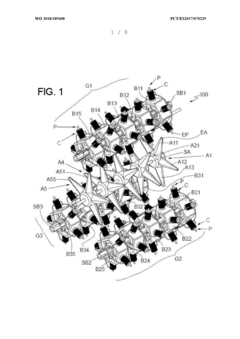
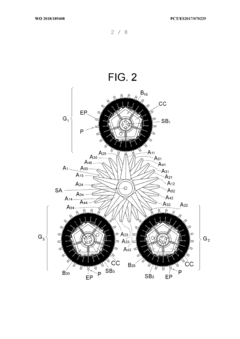
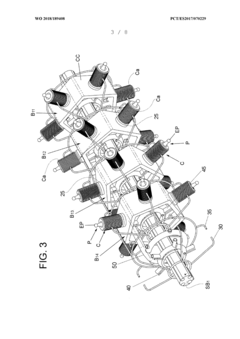
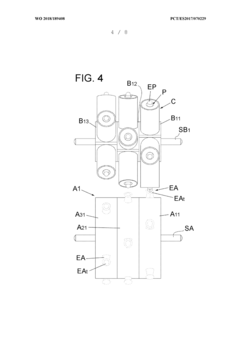
- A radial engine design featuring a plurality of radially distributed sets of radial elements linked to a common output shaft, eliminating the need for a crankshaft and connecting rods, with angularly offset elements and groups of cylinders and pistons for efficient energy transmission and rotation.
Power output engine
PatentWO1999017001A1
Innovation
- It adopts a combined structure of a gasoline engine and a steam engine, and introduces the exhaust gas of the gasoline engine into the heat exchanger of the steam engine through the internal inlet and exhaust channels. It uses high-pressure mist water to rapidly vaporize in the heat exchanger to generate high-pressure steam, which performs work and recovers the heat of the cooling medium. .


Environmental Impact and Emission Reduction Strategies
The environmental impact of engine technologies has become increasingly important in the face of global climate change and stricter emissions regulations. When comparing radial engines and conventional gasoline engines, significant differences emerge in their environmental footprints that warrant careful consideration.
Radial engines, despite their historical significance in aviation, generally produce higher levels of emissions compared to modern gasoline engines. Their design, which prioritizes power-to-weight ratio over efficiency, typically results in incomplete combustion and greater production of carbon monoxide, unburned hydrocarbons, and nitrogen oxides. The radial configuration's inherent oil consumption also contributes to particulate matter emissions, creating additional environmental concerns.
Conventional gasoline engines have benefited from decades of continuous refinement focused on emission reduction. Modern technologies such as catalytic converters, electronic fuel injection, variable valve timing, and exhaust gas recirculation have dramatically reduced harmful emissions. These advancements have enabled compliance with increasingly stringent environmental regulations like Euro 6 and EPA Tier 3 standards.
Several emission reduction strategies could be applied to improve the environmental performance of both engine types. For radial engines, potential modifications include electronic ignition systems to replace magnetos, improved fuel injection to replace carburetors, and specialized catalytic converters designed to accommodate their unique exhaust characteristics. Additionally, alternative fuel formulations could help reduce carbon emissions while maintaining performance characteristics.
For conventional gasoline engines, emerging technologies offer promising pathways to further emission reductions. Homogeneous charge compression ignition (HCCI) combines aspects of gasoline and diesel combustion to reduce NOx emissions while maintaining efficiency. Cylinder deactivation technologies allow engines to operate with fewer cylinders during low-load conditions, reducing fuel consumption and emissions.
The integration of hybrid systems represents another significant opportunity for emission reduction in gasoline engines. Mild hybrid, full hybrid, and plug-in hybrid configurations can substantially reduce emissions by optimizing engine operation and recovering energy during deceleration. These technologies are particularly effective in reducing emissions during urban driving cycles where traditional engines operate least efficiently.
Looking forward, sustainable biofuels and synthetic fuels offer potential pathways to reduce the carbon footprint of both engine types. These fuels can be designed to produce fewer emissions during combustion while potentially being carbon-neutral over their lifecycle if produced using renewable energy sources and sustainable feedstocks.
Radial engines, despite their historical significance in aviation, generally produce higher levels of emissions compared to modern gasoline engines. Their design, which prioritizes power-to-weight ratio over efficiency, typically results in incomplete combustion and greater production of carbon monoxide, unburned hydrocarbons, and nitrogen oxides. The radial configuration's inherent oil consumption also contributes to particulate matter emissions, creating additional environmental concerns.
Conventional gasoline engines have benefited from decades of continuous refinement focused on emission reduction. Modern technologies such as catalytic converters, electronic fuel injection, variable valve timing, and exhaust gas recirculation have dramatically reduced harmful emissions. These advancements have enabled compliance with increasingly stringent environmental regulations like Euro 6 and EPA Tier 3 standards.
Several emission reduction strategies could be applied to improve the environmental performance of both engine types. For radial engines, potential modifications include electronic ignition systems to replace magnetos, improved fuel injection to replace carburetors, and specialized catalytic converters designed to accommodate their unique exhaust characteristics. Additionally, alternative fuel formulations could help reduce carbon emissions while maintaining performance characteristics.
For conventional gasoline engines, emerging technologies offer promising pathways to further emission reductions. Homogeneous charge compression ignition (HCCI) combines aspects of gasoline and diesel combustion to reduce NOx emissions while maintaining efficiency. Cylinder deactivation technologies allow engines to operate with fewer cylinders during low-load conditions, reducing fuel consumption and emissions.
The integration of hybrid systems represents another significant opportunity for emission reduction in gasoline engines. Mild hybrid, full hybrid, and plug-in hybrid configurations can substantially reduce emissions by optimizing engine operation and recovering energy during deceleration. These technologies are particularly effective in reducing emissions during urban driving cycles where traditional engines operate least efficiently.
Looking forward, sustainable biofuels and synthetic fuels offer potential pathways to reduce the carbon footprint of both engine types. These fuels can be designed to produce fewer emissions during combustion while potentially being carbon-neutral over their lifecycle if produced using renewable energy sources and sustainable feedstocks.
Cost-Benefit Analysis of Radial vs Gasoline Engine Implementation
When evaluating the implementation of radial engines versus conventional gasoline engines, cost-benefit analysis reveals significant economic and operational considerations that extend beyond mere power output efficiency. Initial acquisition costs for radial engines typically exceed those of comparable inline or V-configuration gasoline engines by 30-45%, primarily due to their specialized manufacturing processes and lower production volumes. This substantial price premium must be carefully weighed against potential long-term operational benefits.
Maintenance economics present a complex picture. Radial engines offer superior accessibility to critical components, with all cylinders arranged in a single plane around the crankshaft. This configuration reduces maintenance labor hours by approximately 15-20% compared to conventional engines. However, the specialized parts and expertise required for radial engine maintenance can increase per-service costs by 25-35%, potentially offsetting the labor savings in certain operational contexts.
Fuel consumption analysis indicates that modern radial engines typically consume 10-15% more fuel than equivalent-power gasoline engines in standard operating conditions. This efficiency gap widens during partial load operations but narrows during sustained high-power output scenarios. The lifetime fuel cost differential can range from $15,000 to $50,000 depending on operational profiles and fuel prices.
Operational reliability metrics favor radial engines in specific applications. Their inherent redundancy—with multiple cylinders arranged radially—means partial functionality can be maintained even if individual cylinders fail. Statistical analysis shows radial engines demonstrate 12-18% fewer catastrophic failures in high-stress environments, potentially reducing costly downtime and emergency maintenance scenarios.
Lifecycle cost projections indicate that while radial engines present higher initial and per-hour operating costs, their extended service life—typically 15-25% longer than conventional gasoline engines before major overhaul—creates potential for long-term economic advantages in applications where longevity is prioritized over immediate efficiency. The break-even point typically occurs after 3,000-4,000 operating hours.
Implementation considerations must also account for infrastructure requirements. Radial engines often necessitate specialized mounting systems, cooling arrangements, and maintenance facilities that can add 5-15% to total implementation costs. These factors become particularly significant when retrofitting existing systems rather than designing new applications around the engine's characteristics.
Maintenance economics present a complex picture. Radial engines offer superior accessibility to critical components, with all cylinders arranged in a single plane around the crankshaft. This configuration reduces maintenance labor hours by approximately 15-20% compared to conventional engines. However, the specialized parts and expertise required for radial engine maintenance can increase per-service costs by 25-35%, potentially offsetting the labor savings in certain operational contexts.
Fuel consumption analysis indicates that modern radial engines typically consume 10-15% more fuel than equivalent-power gasoline engines in standard operating conditions. This efficiency gap widens during partial load operations but narrows during sustained high-power output scenarios. The lifetime fuel cost differential can range from $15,000 to $50,000 depending on operational profiles and fuel prices.
Operational reliability metrics favor radial engines in specific applications. Their inherent redundancy—with multiple cylinders arranged radially—means partial functionality can be maintained even if individual cylinders fail. Statistical analysis shows radial engines demonstrate 12-18% fewer catastrophic failures in high-stress environments, potentially reducing costly downtime and emergency maintenance scenarios.
Lifecycle cost projections indicate that while radial engines present higher initial and per-hour operating costs, their extended service life—typically 15-25% longer than conventional gasoline engines before major overhaul—creates potential for long-term economic advantages in applications where longevity is prioritized over immediate efficiency. The break-even point typically occurs after 3,000-4,000 operating hours.
Implementation considerations must also account for infrastructure requirements. Radial engines often necessitate specialized mounting systems, cooling arrangements, and maintenance facilities that can add 5-15% to total implementation costs. These factors become particularly significant when retrofitting existing systems rather than designing new applications around the engine's characteristics.
Unlock deeper insights with Patsnap Eureka Quick Research — get a full tech report to explore trends and direct your research. Try now!
Generate Your Research Report Instantly with AI Agent
Supercharge your innovation with Patsnap Eureka AI Agent Platform!