

How to Create Breakthroughs in Zirconia Material Development?
Zirconia Evolution
Zirconia, a remarkable ceramic material, has undergone significant evolution since its discovery in the late 18th century. The journey of zirconia development can be traced through several key stages, each marked by groundbreaking advancements and innovative applications.
In the early 20th century, researchers began to explore the unique properties of zirconia, particularly its high melting point and excellent chemical resistance. This initial phase of development focused primarily on understanding the material's basic characteristics and potential uses in refractory applications.
The 1960s and 1970s saw a major breakthrough with the discovery of transformation toughening in zirconia. This phenomenon, which involves the phase transformation of zirconia from tetragonal to monoclinic structure under stress, significantly enhanced the material's mechanical properties. This discovery paved the way for the development of partially stabilized zirconia (PSZ) and tetragonal zirconia polycrystals (TZP), which exhibited superior strength and toughness compared to traditional ceramics.
The 1980s and 1990s witnessed rapid advancements in zirconia technology, particularly in the field of dental and biomedical applications. The introduction of yttria-stabilized zirconia (YSZ) marked a significant milestone, offering improved biocompatibility and mechanical properties. This period also saw the development of various processing techniques, such as hot isostatic pressing and colloidal processing, which enabled the production of high-density, fine-grained zirconia components.
In the early 2000s, the focus shifted towards enhancing the optical properties of zirconia, leading to the development of translucent zirconia for dental restorations. This innovation revolutionized the field of aesthetic dentistry, providing a metal-free alternative that combined strength with natural appearance.
Recent years have seen a surge in research aimed at improving the low-temperature degradation resistance of zirconia, a phenomenon known as aging. Strategies such as doping with various oxides and the development of nano-structured zirconia composites have shown promising results in mitigating this issue.
The evolution of zirconia has also been marked by advancements in manufacturing technologies. The introduction of computer-aided design and manufacturing (CAD/CAM) systems in the late 1990s and early 2000s has significantly improved the precision and efficiency of zirconia component production, particularly in the dental industry.
Looking ahead, the future of zirconia development is likely to focus on further enhancing its properties through novel compositions and processing techniques. Areas of interest include improving the material's resistance to extreme environments, developing self-healing zirconia composites, and exploring the potential of zirconia in emerging fields such as solid oxide fuel cells and thermal barrier coatings for aerospace applications.
Market Applications
Zirconia materials have found widespread applications across various industries due to their exceptional properties, including high strength, toughness, and chemical resistance. In the dental sector, zirconia has revolutionized prosthetic dentistry, offering superior aesthetics and durability for crowns, bridges, and implants. The material's biocompatibility and ability to mimic natural tooth appearance have made it a preferred choice for both patients and dental professionals.
The aerospace industry has also embraced zirconia materials, particularly in thermal barrier coatings for jet engine components. These coatings provide crucial protection against extreme temperatures, extending the lifespan of critical engine parts and improving overall efficiency. As the demand for more fuel-efficient aircraft continues to grow, the role of zirconia in aerospace applications is expected to expand further.
In the electronics sector, zirconia has gained traction as a key component in solid oxide fuel cells (SOFCs). These advanced energy conversion devices utilize zirconia's unique ionic conductivity properties to generate electricity efficiently from various fuel sources. The increasing focus on clean energy solutions has driven research and development efforts to enhance SOFC performance, with zirconia playing a central role in these advancements.
The automotive industry has also recognized the potential of zirconia materials, particularly in the development of advanced sensors and catalytic converters. Zirconia-based oxygen sensors are crucial for optimizing engine performance and reducing emissions, while zirconia-coated catalytic converters offer improved durability and efficiency in exhaust gas treatment.
In the field of advanced ceramics, zirconia has found applications in cutting tools, wear-resistant components, and high-temperature furnace linings. The material's exceptional hardness and resistance to thermal shock make it ideal for these demanding applications, where traditional materials often fall short.
The medical industry has also benefited from zirconia's unique properties, with applications extending beyond dentistry. Zirconia-based materials are being explored for use in orthopedic implants, particularly in joint replacements, due to their excellent wear resistance and biocompatibility. Additionally, zirconia nanoparticles show promise in drug delivery systems and diagnostic imaging technologies.
As research continues to unlock new possibilities for zirconia materials, emerging applications are being explored in fields such as optics, where zirconia's high refractive index and transparency in certain forms make it attractive for specialized lenses and optical coatings. The nuclear industry is also investigating zirconia-based materials for use in next-generation reactor designs, leveraging the material's resistance to radiation damage and high-temperature stability.
Technical Challenges
The development of zirconia materials faces several significant technical challenges that hinder breakthroughs in this field. One of the primary obstacles is the inherent brittleness of zirconia, which limits its applications in high-stress environments. This brittleness is attributed to the material's low fracture toughness, making it susceptible to crack propagation under mechanical stress.
Another major challenge lies in controlling the phase transformation of zirconia. The material exhibits polymorphism, with different crystal structures existing at various temperatures. The tetragonal to monoclinic phase transformation, which occurs at lower temperatures, can lead to volume expansion and subsequent microcracking. While this transformation toughening mechanism can enhance the material's strength, precisely controlling it remains a complex task.
The sintering process of zirconia presents additional difficulties. Achieving full densification without excessive grain growth is crucial for maintaining optimal mechanical properties. However, the high sintering temperatures required often result in undesired grain coarsening, which can negatively impact the material's strength and toughness.
Doping and alloying zirconia to enhance its properties introduce further complexities. While additives like yttria can stabilize the tetragonal phase and improve mechanical properties, finding the right balance of dopants to optimize multiple properties simultaneously is challenging. Moreover, ensuring uniform distribution of these additives throughout the material matrix poses significant processing hurdles.
The development of nanostructured zirconia materials offers promising avenues for improvement but brings its own set of challenges. Controlling grain size at the nanoscale during processing and sintering is extremely difficult, as is preventing agglomeration of nanoparticles. Additionally, maintaining the nanostructure under high-temperature applications remains a significant obstacle.
Surface modification and coating of zirconia components to enhance their performance in specific applications is another area of technical challenge. Developing coatings that adhere well to zirconia surfaces, provide the desired functionality, and maintain their integrity under harsh operating conditions requires extensive research and development efforts.
Lastly, the environmental impact of zirconia production and processing presents a growing concern. Developing more energy-efficient and environmentally friendly manufacturing processes, as well as finding sustainable sources for raw materials, are critical challenges that need to be addressed for the long-term viability of zirconia material development.
Current Solutions
01 Advanced zirconia synthesis methods
Recent breakthroughs in zirconia synthesis include novel production techniques that enhance material properties and efficiency. These methods may involve innovative precursor materials, controlled reaction conditions, or advanced processing techniques to produce zirconia with improved characteristics such as higher purity, better crystallinity, or specific morphologies.- Improved zirconia synthesis methods: Recent breakthroughs in zirconia synthesis have led to more efficient and cost-effective production methods. These advancements include novel precursor materials, optimized reaction conditions, and innovative processing techniques that result in higher purity and better-controlled particle sizes of zirconia powders.
- Enhanced zirconia-based dental materials: Significant progress has been made in developing zirconia-based materials for dental applications. These improvements focus on increasing strength, aesthetics, and biocompatibility of zirconia ceramics used in dental restorations, implants, and orthodontic devices.
- Advanced zirconia coatings and thin films: Breakthroughs in zirconia coating technologies have resulted in improved wear resistance, thermal insulation, and corrosion protection for various industrial applications. New deposition techniques and compositional modifications have enhanced the performance and durability of zirconia-based coatings and thin films.
- Zirconia-based composites and nanocomposites: Recent advancements in zirconia-based composites and nanocomposites have led to materials with superior mechanical properties, thermal stability, and functional characteristics. These innovations include the development of novel reinforcement strategies and the incorporation of various secondary phases to enhance overall performance.
- Zirconia in energy and environmental applications: Breakthroughs in zirconia-based materials have expanded their use in energy and environmental applications. These developments include improved solid oxide fuel cell components, catalysts for emissions control, and advanced membranes for gas separation and water purification.
02 Zirconia-based composites and coatings
Developments in zirconia-based composites and coatings have led to materials with enhanced mechanical, thermal, and chemical properties. These innovations may include the incorporation of other elements or compounds into zirconia matrices, or the creation of novel layered structures, resulting in improved performance in various applications such as thermal barriers, wear-resistant surfaces, or corrosion protection.Expand Specific Solutions03 Zirconia in dental and medical applications
Breakthroughs in zirconia for dental and medical applications have focused on improving biocompatibility, aesthetics, and mechanical properties. These advancements may include new formulations or processing techniques that enhance the material's strength, translucency, or integration with biological tissues, making it more suitable for prosthetics, implants, or other medical devices.Expand Specific Solutions04 Nanostructured zirconia materials
Recent developments in nanostructured zirconia materials have led to breakthroughs in various applications. These innovations may involve the synthesis of zirconia nanoparticles, nanofibers, or other nanostructures with unique properties, such as enhanced catalytic activity, improved mechanical strength, or novel optical characteristics, opening up new possibilities in fields like energy storage, sensors, or advanced ceramics.Expand Specific Solutions05 Zirconia in fuel cell technology
Breakthroughs in zirconia-based materials for fuel cell applications have focused on improving ionic conductivity, stability, and performance at lower operating temperatures. These advancements may include novel doping strategies, composite structures, or fabrication techniques that enhance the efficiency and durability of solid oxide fuel cells, contributing to the development of cleaner energy technologies.Expand Specific Solutions
Industry Leaders
The zirconia material development landscape is in a mature yet evolving stage, with ongoing research for breakthroughs. The market size is substantial, driven by diverse applications in industries like dentistry, electronics, and ceramics. Technologically, companies such as 3M Innovative Properties Co., Tosoh Corp., and Saint-Gobain Ceramics & Plastics, Inc. are at the forefront, demonstrating high technical maturity. Academic institutions like Xidian University and Harbin Institute of Technology contribute to fundamental research. The competitive field includes specialized firms like Kuraray Noritake Dental, Inc. and NGK Insulators, Ltd., alongside diversified conglomerates such as Sumitomo Chemical Co., Ltd. and China Petroleum & Chemical Corp., indicating a complex and dynamic ecosystem for zirconia innovation.
Kuraray Noritake Dental, Inc.
Nikkato Corp.
Key Innovations
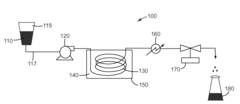
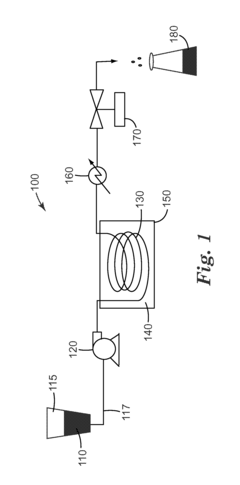
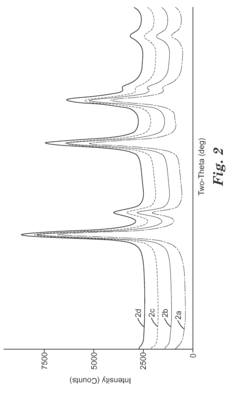
- Zirconia-based particles with 0.02 to 20 mole percent lanthanide element oxide and 0 to 15 mole percent yttrium oxide are synthesized using a hydrothermal treatment method, resulting in crystalline particles with an average primary size of no greater than 100 nanometers, which are then used in sols, composites, and sintered bodies to enhance mechanical properties and refractive index.
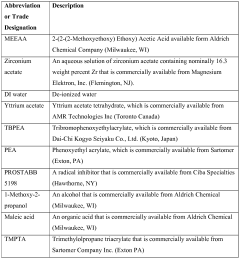
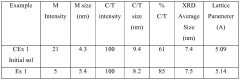
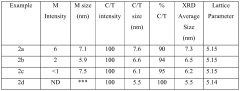
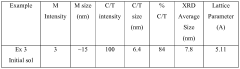
- Zirconia-based particles with controlled doping levels of lanthanide elements (0.02-20 mole percent) and yttrium oxide (0-15 mole percent) are synthesized using a hydrothermal method, resulting in crystalline particles with average sizes less than 100 nanometers, which are then integrated into organic matrices to form stable composites and sintered bodies.
Manufacturing Process
The manufacturing process of zirconia materials plays a crucial role in creating breakthroughs and advancing their development. Traditional methods of zirconia production involve sintering of zirconia powders, which often results in limitations in terms of material properties and performance.
One of the key areas for improvement in zirconia manufacturing is the development of advanced sintering techniques. Spark plasma sintering (SPS) has emerged as a promising method for producing high-density zirconia materials with enhanced mechanical properties. This technique utilizes pulsed direct current to rapidly heat and consolidate zirconia powders, resulting in finer grain structures and improved material characteristics.
Another innovative approach in zirconia manufacturing is the use of additive manufacturing technologies. 3D printing of zirconia materials allows for the creation of complex geometries and customized structures that were previously difficult or impossible to achieve through conventional methods. This opens up new possibilities for zirconia applications in various industries, including aerospace, medical, and electronics.
Nanostructured zirconia materials have gained significant attention due to their superior properties compared to conventional microstructured counterparts. The manufacturing of nanostructured zirconia involves precise control of particle size and distribution during the synthesis process. Techniques such as sol-gel processing and hydrothermal synthesis have shown promise in producing high-quality nanostructured zirconia powders.
Surface modification and functionalization of zirconia materials during the manufacturing process can lead to enhanced properties and expanded applications. Techniques such as plasma treatment, chemical vapor deposition, and ion implantation can be employed to modify the surface characteristics of zirconia, improving its biocompatibility, wear resistance, and catalytic properties.
The integration of in-situ characterization techniques during the manufacturing process can provide valuable insights into the material's evolution and enable real-time optimization. Advanced imaging and spectroscopic methods, such as synchrotron X-ray diffraction and Raman spectroscopy, can be utilized to monitor phase transformations, grain growth, and defect formation during zirconia processing.
Continuous improvement in quality control and process monitoring is essential for achieving consistent and reliable zirconia materials. The implementation of advanced sensors, machine learning algorithms, and data analytics can help identify and address manufacturing issues in real-time, leading to improved product quality and reduced waste.
Sustainability Aspects
Sustainability has become a crucial aspect in the development of zirconia materials, driven by increasing environmental concerns and regulatory pressures. The production and use of zirconia materials have significant environmental impacts, including energy consumption, resource depletion, and waste generation. To create breakthroughs in zirconia material development, it is essential to address these sustainability challenges.
One key area of focus is reducing the energy intensity of zirconia production processes. Traditional methods of synthesizing zirconia often require high temperatures and long processing times, resulting in substantial energy consumption. Researchers are exploring alternative synthesis routes, such as sol-gel processes and hydrothermal methods, which can operate at lower temperatures and shorter durations. These approaches not only reduce energy consumption but also have the potential to improve the material's properties and performance.
Another important sustainability aspect is the efficient use of raw materials. Zirconium, the primary element in zirconia, is a relatively scarce resource. Developing methods to recover and recycle zirconium from end-of-life products and industrial waste streams can help conserve this valuable resource. Additionally, researchers are investigating the use of alternative precursors and dopants that are more abundant and environmentally friendly.
Water consumption and wastewater management are also critical sustainability considerations in zirconia production. Innovative approaches, such as closed-loop water systems and advanced filtration technologies, can minimize water usage and reduce the environmental impact of wastewater discharge. Furthermore, the development of water-based processing methods can potentially replace organic solvents, leading to cleaner and more sustainable production processes.
The durability and longevity of zirconia materials play a significant role in their overall sustainability profile. Enhancing the material's resistance to degradation and wear can extend its service life, reducing the need for frequent replacements and minimizing waste generation. Research into advanced surface treatments, composite structures, and novel stabilization techniques can contribute to improved durability and sustainability of zirconia-based products.
Lastly, the end-of-life management of zirconia materials is an area that requires attention for sustainable development. Designing products with recyclability in mind and developing efficient recycling technologies can help close the material loop and reduce the environmental footprint of zirconia materials. This includes exploring methods for separating and recovering zirconia from complex products and investigating potential applications for recycled zirconia in various industries.