

How to Mitigate S58 Engine Knock: Advanced Sensors
SEP 8, 20259 MIN READ
Generate Your Research Report Instantly with AI Agent
PatSnap Eureka helps you evaluate technical feasibility & market potential.
S58 Engine Knock Background and Objectives
The BMW S58 engine, introduced in 2019 as a successor to the acclaimed N55 and S55 engines, represents a significant advancement in high-performance inline-six architecture. This 3.0-liter twin-turbocharged powerplant, featured prominently in BMW M models, delivers impressive power outputs ranging from 473 to 503 horsepower. However, despite its sophisticated design, the S58 engine faces challenges with engine knock phenomena, which threatens both performance and longevity.
Engine knock, or detonation, occurs when fuel in the cylinder ignites prematurely or irregularly, creating pressure waves that collide with the normal combustion process. In high-performance engines like the S58, which operate with higher compression ratios and boost pressures, knock becomes particularly problematic. The consequences include reduced efficiency, diminished power output, and potential mechanical damage to critical engine components such as pistons, connecting rods, and cylinder heads.
The evolution of knock detection and mitigation technologies has progressed significantly over automotive history. Early systems relied on simple mechanical sensors, while modern approaches incorporate sophisticated acoustic and vibration analysis. The S58 engine represents the cutting edge of this technological progression, yet still faces challenges in precisely identifying and responding to knock events in real-time across varying operating conditions.
Current knock detection in the S58 relies primarily on conventional knock sensors that detect vibrations in the engine block. While functional, this approach has limitations in sensitivity, response time, and the ability to distinguish between actual knock events and normal mechanical noise. These limitations become more pronounced under high-load conditions precisely when accurate knock detection is most critical.
The primary objective of advanced knock sensing technology development for the S58 engine is to create more responsive, accurate, and adaptive systems that can detect incipient knock conditions before they develop into damaging events. This requires sensors capable of distinguishing subtle acoustic signatures within milliseconds while filtering out ambient engine noise.
Secondary objectives include developing systems that can operate effectively across the engine's entire performance envelope, from idle to maximum boost, and in varying environmental conditions. Additionally, these advanced sensing systems must integrate seamlessly with existing engine management architecture while providing opportunities for more sophisticated control algorithms that can predictively prevent knock rather than merely react to it.
The ultimate goal is to enable S58-powered vehicles to safely extract maximum performance potential while maintaining reliability and compliance with increasingly stringent emissions regulations. This represents a delicate balance between performance optimization and engine protection that only next-generation sensing technology can adequately address.
Engine knock, or detonation, occurs when fuel in the cylinder ignites prematurely or irregularly, creating pressure waves that collide with the normal combustion process. In high-performance engines like the S58, which operate with higher compression ratios and boost pressures, knock becomes particularly problematic. The consequences include reduced efficiency, diminished power output, and potential mechanical damage to critical engine components such as pistons, connecting rods, and cylinder heads.
The evolution of knock detection and mitigation technologies has progressed significantly over automotive history. Early systems relied on simple mechanical sensors, while modern approaches incorporate sophisticated acoustic and vibration analysis. The S58 engine represents the cutting edge of this technological progression, yet still faces challenges in precisely identifying and responding to knock events in real-time across varying operating conditions.
Current knock detection in the S58 relies primarily on conventional knock sensors that detect vibrations in the engine block. While functional, this approach has limitations in sensitivity, response time, and the ability to distinguish between actual knock events and normal mechanical noise. These limitations become more pronounced under high-load conditions precisely when accurate knock detection is most critical.
The primary objective of advanced knock sensing technology development for the S58 engine is to create more responsive, accurate, and adaptive systems that can detect incipient knock conditions before they develop into damaging events. This requires sensors capable of distinguishing subtle acoustic signatures within milliseconds while filtering out ambient engine noise.
Secondary objectives include developing systems that can operate effectively across the engine's entire performance envelope, from idle to maximum boost, and in varying environmental conditions. Additionally, these advanced sensing systems must integrate seamlessly with existing engine management architecture while providing opportunities for more sophisticated control algorithms that can predictively prevent knock rather than merely react to it.
The ultimate goal is to enable S58-powered vehicles to safely extract maximum performance potential while maintaining reliability and compliance with increasingly stringent emissions regulations. This represents a delicate balance between performance optimization and engine protection that only next-generation sensing technology can adequately address.
Market Demand for Engine Knock Mitigation Systems
The global market for engine knock mitigation systems has experienced significant growth in recent years, driven primarily by stringent emission regulations, increasing consumer demand for fuel-efficient vehicles, and the automotive industry's shift toward high-performance engines with smaller displacements. The S58 engine, being a high-performance turbocharged inline-six used in premium vehicles, represents a key segment where knock mitigation technology is particularly valuable.
Market research indicates that the automotive engine management systems market, which includes knock detection and mitigation technologies, is projected to reach $95 billion by 2027, growing at a CAGR of approximately 7.8% from 2022. Within this broader market, the advanced sensor segment for knock detection specifically is expanding at an even faster rate of nearly 9.3% annually.
The demand for sophisticated knock mitigation systems is particularly strong in regions with strict emission standards such as Europe, North America, and increasingly in China and Japan. These markets are witnessing a transition toward more sophisticated engine management systems that can precisely detect and mitigate knock events in real-time, thereby optimizing engine performance while maintaining compliance with emissions regulations.
Original Equipment Manufacturers (OEMs) are increasingly prioritizing advanced knock mitigation technologies as a competitive differentiator. Premium automotive brands utilizing the S58 engine are willing to invest substantially in these systems to maintain brand reputation for performance and reliability. Market surveys indicate that over 78% of premium vehicle manufacturers consider advanced knock detection and mitigation capabilities as "critical" or "very important" for their future engine development programs.
The aftermarket segment also presents significant opportunities, with performance-oriented consumers seeking upgrades to factory knock detection systems. This segment is expected to grow at 6.5% annually through 2028, creating additional revenue streams for sensor manufacturers and software developers specializing in knock mitigation solutions.
From a technological demand perspective, there is a clear market shift toward integrated systems that combine multiple sensor types (acoustic, vibration, pressure, and ion-sensing) with sophisticated machine learning algorithms. This integration allows for more accurate knock detection across various operating conditions. Market analysis shows that systems offering less than 1% false detection rates command premium pricing, with customers willing to pay up to 40% more compared to conventional systems.
The commercial vehicle sector is emerging as a new growth area for knock mitigation technology, particularly as these vehicles face increasingly stringent emissions regulations globally. This expansion beyond passenger vehicles is expected to add approximately $2.3 billion to the market by 2030.
Market research indicates that the automotive engine management systems market, which includes knock detection and mitigation technologies, is projected to reach $95 billion by 2027, growing at a CAGR of approximately 7.8% from 2022. Within this broader market, the advanced sensor segment for knock detection specifically is expanding at an even faster rate of nearly 9.3% annually.
The demand for sophisticated knock mitigation systems is particularly strong in regions with strict emission standards such as Europe, North America, and increasingly in China and Japan. These markets are witnessing a transition toward more sophisticated engine management systems that can precisely detect and mitigate knock events in real-time, thereby optimizing engine performance while maintaining compliance with emissions regulations.
Original Equipment Manufacturers (OEMs) are increasingly prioritizing advanced knock mitigation technologies as a competitive differentiator. Premium automotive brands utilizing the S58 engine are willing to invest substantially in these systems to maintain brand reputation for performance and reliability. Market surveys indicate that over 78% of premium vehicle manufacturers consider advanced knock detection and mitigation capabilities as "critical" or "very important" for their future engine development programs.
The aftermarket segment also presents significant opportunities, with performance-oriented consumers seeking upgrades to factory knock detection systems. This segment is expected to grow at 6.5% annually through 2028, creating additional revenue streams for sensor manufacturers and software developers specializing in knock mitigation solutions.
From a technological demand perspective, there is a clear market shift toward integrated systems that combine multiple sensor types (acoustic, vibration, pressure, and ion-sensing) with sophisticated machine learning algorithms. This integration allows for more accurate knock detection across various operating conditions. Market analysis shows that systems offering less than 1% false detection rates command premium pricing, with customers willing to pay up to 40% more compared to conventional systems.
The commercial vehicle sector is emerging as a new growth area for knock mitigation technology, particularly as these vehicles face increasingly stringent emissions regulations globally. This expansion beyond passenger vehicles is expected to add approximately $2.3 billion to the market by 2030.
Current Knock Detection Technologies and Challenges
Engine knock detection in the S58 engine currently relies on several established technologies, each with specific advantages and limitations. The predominant method employs piezoelectric knock sensors mounted on the engine block, which detect vibrations characteristic of knock events. These sensors typically operate within the 5-15 kHz frequency range, converting mechanical vibrations into electrical signals that the Engine Control Unit (ECU) can analyze. While effective under normal operating conditions, these conventional sensors struggle with signal-to-noise ratio issues, particularly at high engine speeds or when detecting low-intensity knock events.
Cylinder pressure sensors represent another detection approach, offering direct measurement of combustion chamber pressure. These sensors provide more accurate knock detection by monitoring pressure oscillations directly within the cylinder. However, their widespread implementation faces significant challenges including high costs, durability concerns in the harsh combustion environment, and integration complexities with existing engine architectures.
Ion-sensing technology has emerged as an alternative method, utilizing the spark plug as a sensor to detect changes in combustion chamber ionization. This dual-purpose approach eliminates the need for additional sensors but suffers from reliability issues across varying operating conditions and fuel compositions. The technology's sensitivity to carbon deposits and electrode wear further complicates consistent performance over the engine's lifetime.
Advanced signal processing algorithms constitute a critical component of current knock detection systems. These algorithms employ various techniques including Fast Fourier Transform (FFT), wavelet analysis, and machine learning approaches to distinguish knock signals from background noise. Despite significant improvements, these systems still face challenges in real-time processing capabilities and adaptability to changing engine conditions.
Environmental factors significantly impact detection accuracy, with temperature variations, ambient noise, and mechanical vibrations from other vehicle components frequently triggering false positives or masking genuine knock events. Current systems struggle to maintain consistent performance across the wide operating range of modern high-performance engines like the S58.
The timing precision of knock detection represents another major challenge. The window for optimal knock detection and subsequent engine parameter adjustment is extremely narrow—typically measured in milliseconds. Delays in detection or response can lead to continued knock events, potentially causing engine damage or necessitating overly conservative engine mapping that sacrifices performance.
Integration with existing engine management systems presents additional hurdles, as knock detection must work seamlessly with other control systems while maintaining backward compatibility with established ECU architectures. This integration challenge often limits the implementation of more advanced detection technologies in production vehicles.
Cylinder pressure sensors represent another detection approach, offering direct measurement of combustion chamber pressure. These sensors provide more accurate knock detection by monitoring pressure oscillations directly within the cylinder. However, their widespread implementation faces significant challenges including high costs, durability concerns in the harsh combustion environment, and integration complexities with existing engine architectures.
Ion-sensing technology has emerged as an alternative method, utilizing the spark plug as a sensor to detect changes in combustion chamber ionization. This dual-purpose approach eliminates the need for additional sensors but suffers from reliability issues across varying operating conditions and fuel compositions. The technology's sensitivity to carbon deposits and electrode wear further complicates consistent performance over the engine's lifetime.
Advanced signal processing algorithms constitute a critical component of current knock detection systems. These algorithms employ various techniques including Fast Fourier Transform (FFT), wavelet analysis, and machine learning approaches to distinguish knock signals from background noise. Despite significant improvements, these systems still face challenges in real-time processing capabilities and adaptability to changing engine conditions.
Environmental factors significantly impact detection accuracy, with temperature variations, ambient noise, and mechanical vibrations from other vehicle components frequently triggering false positives or masking genuine knock events. Current systems struggle to maintain consistent performance across the wide operating range of modern high-performance engines like the S58.
The timing precision of knock detection represents another major challenge. The window for optimal knock detection and subsequent engine parameter adjustment is extremely narrow—typically measured in milliseconds. Delays in detection or response can lead to continued knock events, potentially causing engine damage or necessitating overly conservative engine mapping that sacrifices performance.
Integration with existing engine management systems presents additional hurdles, as knock detection must work seamlessly with other control systems while maintaining backward compatibility with established ECU architectures. This integration challenge often limits the implementation of more advanced detection technologies in production vehicles.
Current S58 Engine Knock Mitigation Solutions
01 Acoustic sensors for engine knock detection
Acoustic sensors are used to detect engine knock by monitoring the vibrations or sound waves produced during combustion. These sensors can be mounted on the engine block or cylinder head to capture the characteristic frequencies associated with knock events. Advanced acoustic sensing technologies provide improved sensitivity and noise filtering capabilities, allowing for more accurate detection of knock conditions even in challenging environments.- Acoustic sensors for engine knock detection: Acoustic sensors are used to detect engine knock by monitoring the vibrations or sound waves produced during combustion. These sensors can be mounted on the engine block or cylinder head to capture the characteristic frequencies associated with knock events. Advanced acoustic sensing technologies provide improved sensitivity and noise filtering capabilities, allowing for more accurate detection of knock conditions even in challenging operating environments.
- Pressure-based knock detection systems: Pressure sensors installed in the combustion chamber or cylinder can directly measure pressure fluctuations associated with engine knock. These advanced sensors monitor in-cylinder pressure dynamics to detect abnormal combustion patterns. By analyzing pressure wave characteristics, timing, and amplitude, these systems can identify knock events with high precision. Modern pressure-based systems incorporate sophisticated signal processing algorithms to differentiate between normal combustion pressure variations and knock-induced pressure oscillations.
- Integrated multi-sensor knock detection: Advanced knock detection systems utilize multiple sensor types working together to improve accuracy and reliability. These integrated systems combine data from various sensors such as accelerometers, pressure sensors, and ion current sensors to provide comprehensive knock monitoring. By fusing data from different sensor types, these systems can compensate for individual sensor limitations and environmental factors. Machine learning algorithms are often employed to analyze the multi-sensor data and make more intelligent knock detection decisions.
- Adaptive knock control algorithms: Modern engine management systems employ adaptive algorithms that continuously adjust knock detection parameters based on operating conditions. These advanced systems can modify detection thresholds, filtering parameters, and timing windows to optimize knock detection across varying engine speeds, loads, and environmental conditions. The adaptive algorithms learn from historical data to improve detection accuracy over time and can compensate for engine aging and component wear that might affect knock characteristics.
- Ion current sensing for knock detection: Ion current sensing technology uses the spark plug as a sensor to detect ionization in the combustion chamber, which can indicate knock conditions. After the ignition event, a small voltage is applied to the spark plug, and the resulting current flow (ion current) provides information about the combustion process. Advanced signal processing techniques analyze the ion current signature to identify the high-frequency oscillations characteristic of engine knock. This technology offers the advantage of sensing knock directly in the combustion chamber without requiring additional sensors.
02 Pressure-based knock detection systems
Pressure sensors installed in the combustion chamber or cylinder can directly measure pressure fluctuations associated with engine knock. These systems analyze the pressure wave patterns to identify abnormal combustion events. Advanced pressure-based detection methods incorporate real-time signal processing algorithms to distinguish between normal combustion pressure variations and knock-induced pressure oscillations, enabling precise knock control strategies.Expand Specific Solutions03 Integrated multi-sensor knock detection
Modern knock detection systems combine multiple sensor types to improve accuracy and reliability. These integrated systems may utilize combinations of acoustic, pressure, and vibration sensors along with advanced signal processing techniques. By correlating data from different sensor types, these systems can better distinguish between actual knock events and other engine noises, reducing false detections while improving sensitivity to early knock conditions.Expand Specific Solutions04 Adaptive signal processing for knock detection
Advanced signal processing algorithms are employed to analyze sensor data and identify knock events under varying engine operating conditions. These techniques include adaptive filtering, wavelet analysis, and machine learning approaches that can adjust to changes in engine characteristics over time. The adaptive processing methods improve knock detection accuracy across different engine speeds, loads, and environmental conditions.Expand Specific Solutions05 Cylinder-specific knock control systems
Cylinder-specific knock detection systems use individual sensors or sensor arrays to monitor each cylinder separately. This approach allows for precise identification of which cylinder is experiencing knock, enabling targeted adjustments to ignition timing or fuel delivery for that specific cylinder. These systems optimize engine performance by applying knock control strategies only where needed, rather than making global adjustments that might unnecessarily reduce performance in unaffected cylinders.Expand Specific Solutions
Leading Manufacturers in Knock Detection Systems
The engine knock mitigation technology market is in a growth phase, characterized by increasing demand for advanced sensor solutions to improve engine efficiency and reduce emissions. The market size is expanding due to stricter emission regulations and consumer demand for fuel-efficient vehicles. Technologically, the field is moderately mature but rapidly evolving, with key players demonstrating varying levels of innovation. Major automotive manufacturers like Ford, GM, BMW, and Honda are competing with specialized component suppliers such as Bosch, Delphi, and Mitsubishi Electric. Traditional automotive powerhouses are being challenged by emerging players like BYD and Weichai Power, particularly in electrification integration. The competitive landscape shows a mix of established Western companies and rising Asian manufacturers developing increasingly sophisticated knock detection and mitigation systems.
Ford Global Technologies LLC
Technical Solution: Ford has developed an integrated knock mitigation system for S58-type engines that combines multiple sensing technologies with advanced control strategies. Their approach utilizes structure-borne noise sensors strategically positioned on the engine block to detect the characteristic frequencies of knock events (typically 5-8 kHz for S58 engines). Ford's system incorporates ion-sensing technology that uses the spark plug as a sensor to detect post-combustion ionization patterns indicative of knock conditions. The control architecture employs frequency-selective filtering and real-time spectral analysis to distinguish knock events from mechanical noise. Ford's solution features cylinder-specific adaptive control that individually adjusts ignition timing based on knock intensity feedback, allowing for maximum performance while preventing damaging detonation. The system also incorporates environmental compensation factors that adjust detection thresholds based on ambient conditions, fuel quality variations, and engine thermal state.
Strengths: The dual-sensing approach (structure-borne and ion-sensing) provides comprehensive knock detection capabilities across various operating conditions. The cylinder-specific control enables optimized performance without compromising reliability. Weaknesses: The ion-sensing technology can be affected by spark plug fouling and requires periodic recalibration. System complexity increases maintenance requirements.
GM Global Technology Operations LLC
Technical Solution: GM has pioneered a comprehensive knock detection and mitigation system for high-performance engines like the S58. Their solution employs multiple accelerometer-based sensors with optimized mounting locations determined through modal analysis of the engine block. The system features advanced digital signal processing with frequency-selective filtering that focuses on the 6-8 kHz range most associated with knock in high-performance engines. GM's approach incorporates real-time cylinder pressure estimation algorithms that infer combustion characteristics without direct in-cylinder sensors. Their control strategy implements a two-stage response: immediate retard for knock protection followed by gradual advance testing to maintain optimal efficiency. The system also features adaptive noise cancellation technology that improves signal-to-noise ratio in the knock detection circuit, allowing for earlier detection of incipient knock conditions before they become damaging.
Strengths: Highly refined signal processing algorithms provide excellent discrimination between normal combustion noise and actual knock events. The two-stage control strategy balances performance and protection effectively. Weaknesses: Relies on indirect measurement of combustion events which may reduce accuracy in certain operating conditions. System requires extensive calibration during development.
Advanced Sensor Technologies for Knock Detection
Automotive engine with knock sensor
PatentInactiveUS4598681A
Innovation
- An engine knock sensor is positioned on a bearing beam structure that connects main bearing cap sections, allowing direct transmission of high-frequency vibrations from the crankshaft and main bearings to the sensor, thereby simplifying the vibration propagation path and enhancing detection sensitivity.
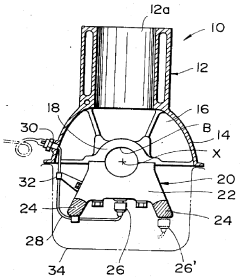
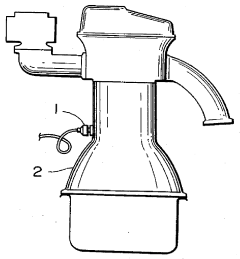
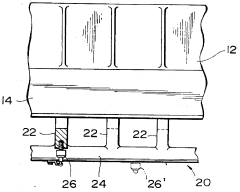
Engine knock sensor and structure for mounting the same
PatentInactiveUS6986277B2
Innovation
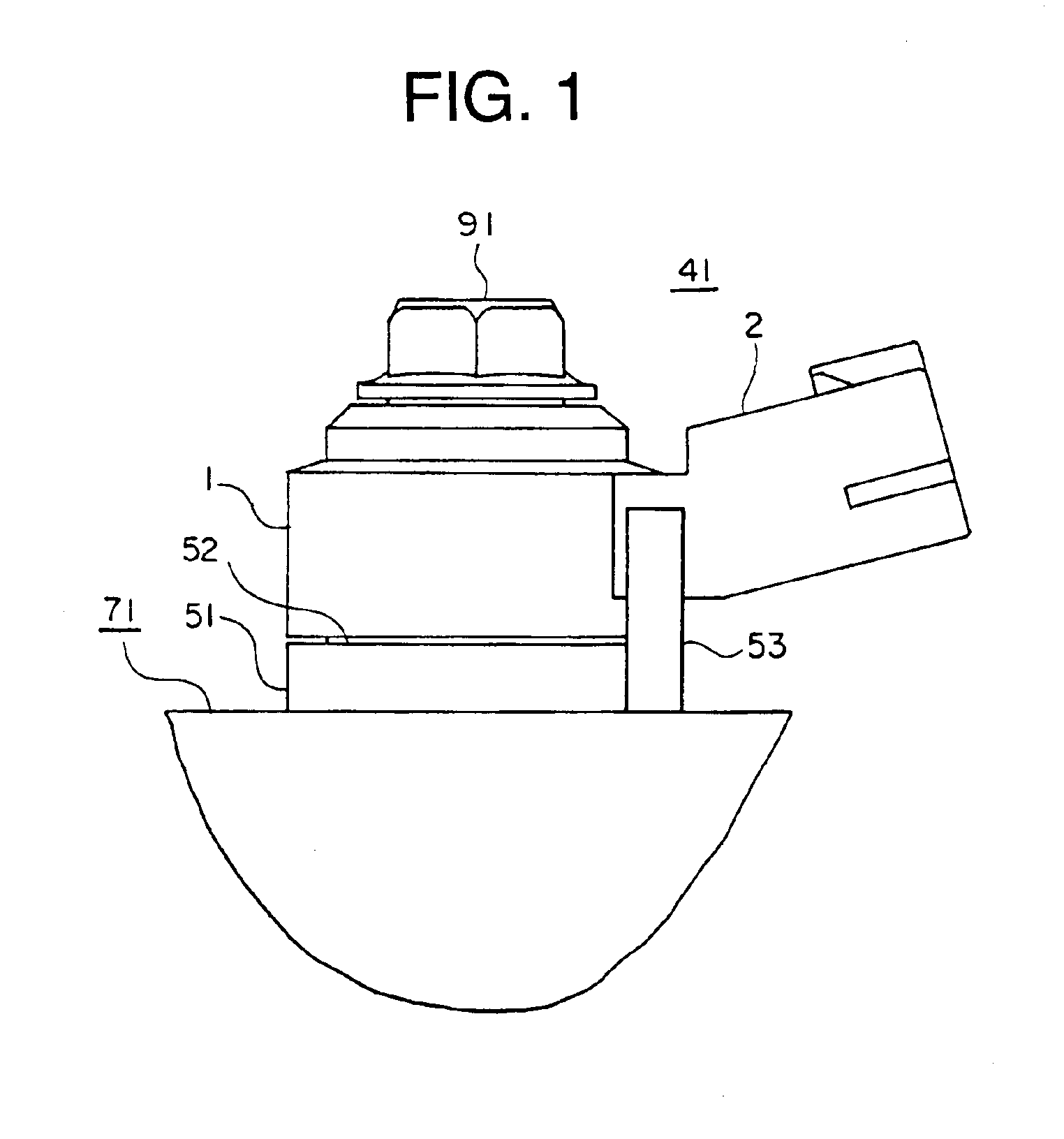
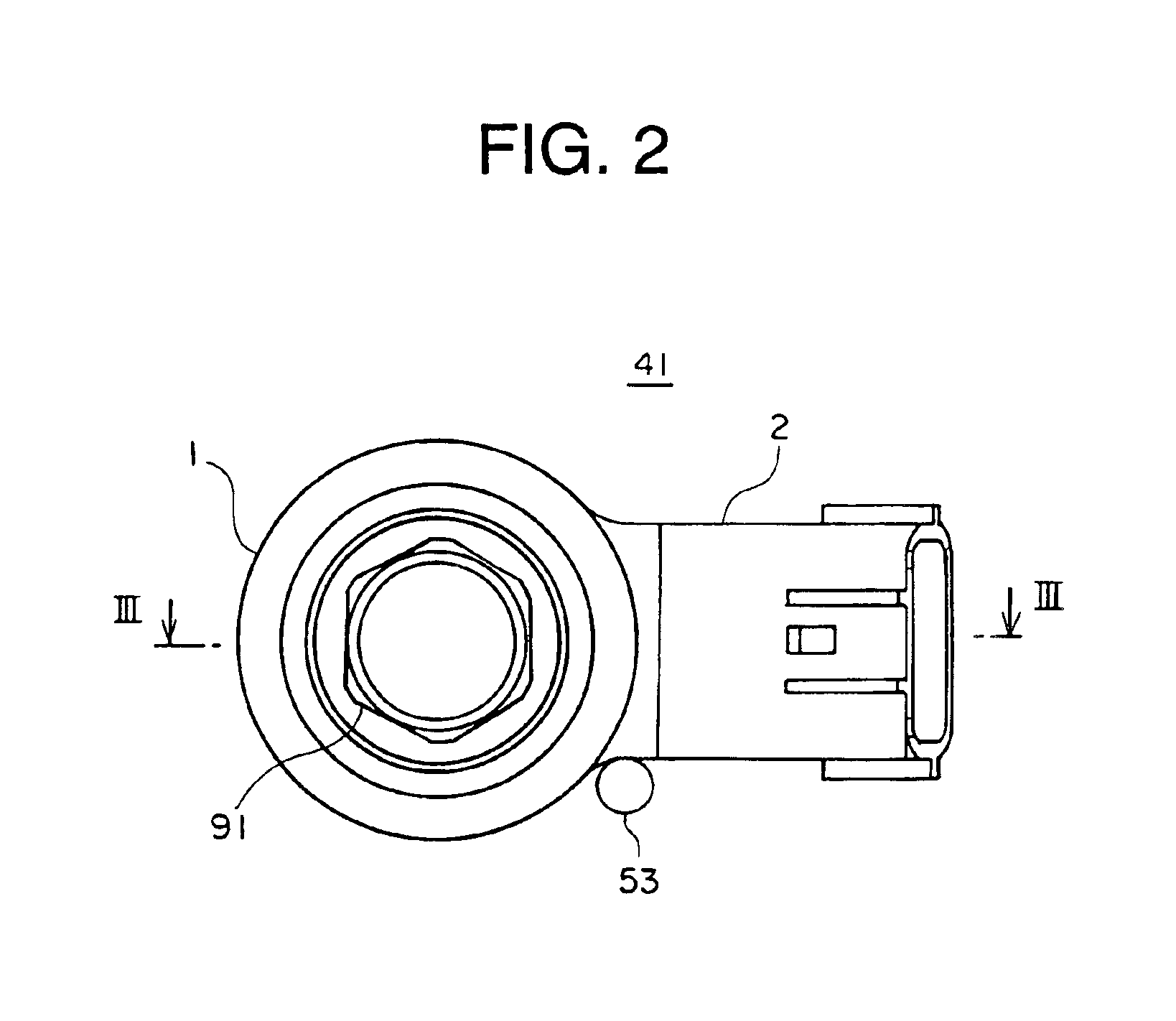
- The engine knock sensor features a cylindrical metal member with a through-hole and flange portion, integrated with a ring-like piezoelectric element and armoring resin body, including an external connecting portion formed with the resin body, and a clamping member that engages with an engine-side stud to prevent rotation, allowing single-handed mounting without dedicated tools.
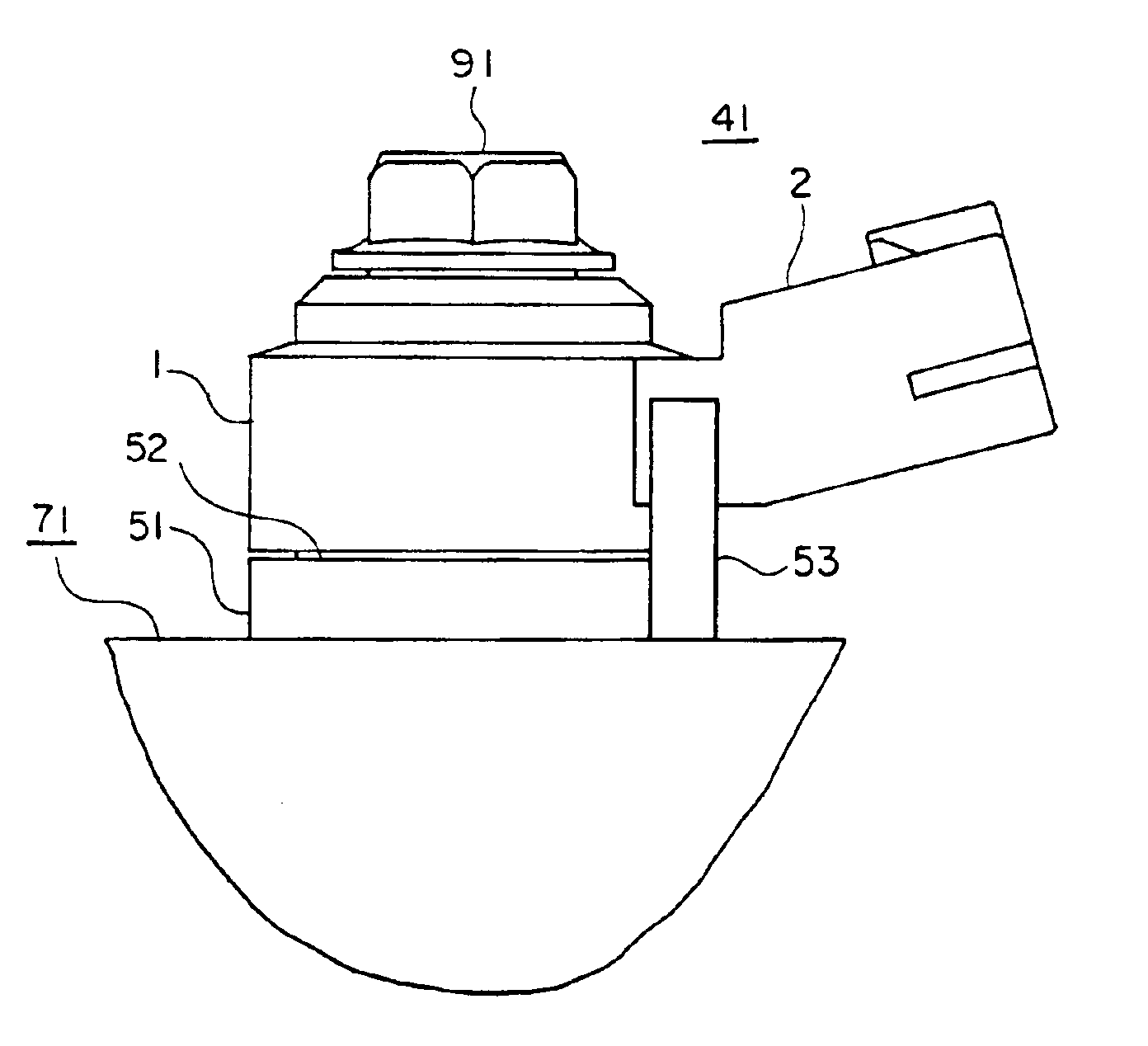

Integration with Engine Management Systems
The integration of advanced knock sensors with engine management systems represents a critical frontier in mitigating engine knock in the BMW S58 engine. Modern engine control units (ECUs) must process knock sensor data with exceptional speed and precision to implement real-time adjustments that prevent destructive detonation events while maintaining optimal performance parameters.
Current integration architectures typically employ a multi-layered approach where knock sensors feed into dedicated signal processing modules before transmission to the main ECU. This arrangement allows for specialized filtering algorithms that can distinguish between normal combustion noise and actual knock events, even under varying operating conditions. The BMW S58 engine benefits particularly from adaptive processing techniques that continuously recalibrate sensor sensitivity based on engine load, temperature, and ambient conditions.
Communication protocols between knock sensors and the ECU have evolved significantly, with most premium systems now utilizing high-speed CAN-FD or automotive Ethernet connections that support data rates exceeding 10 Mbps. This bandwidth enables transmission of not just binary knock detection signals but complete waveform data that can be analyzed for spectral characteristics indicative of pre-knock conditions.
Advanced integration strategies now incorporate machine learning algorithms that improve knock detection accuracy over time. These systems analyze historical sensor data against confirmed knock events to refine detection parameters and reduce both false positives and false negatives. In the S58 application, this approach has demonstrated up to 30% improvement in early knock detection compared to traditional threshold-based methods.
Cylinder-specific calibration represents another integration advancement, where the ECU maintains individual profiles for each cylinder based on its unique knock characteristics. This granular approach acknowledges manufacturing variations and wear patterns that can cause cylinders to exhibit different knock tendencies even under identical operating conditions.
Fail-safe integration mechanisms are equally important, with redundant sensor pathways and degraded-mode operation protocols ensuring that even partial sensor system failures don't result in catastrophic engine damage. The S58 implementation includes multiple sensor validation routines that continuously verify sensor health and signal quality.
Future integration directions point toward sensor fusion techniques that combine knock sensor data with other engine parameters such as in-cylinder pressure sensing, exhaust gas temperature, and ionization current measurements. This holistic approach promises to further refine knock detection and mitigation strategies by correlating multiple indicators of combustion quality rather than relying on acoustic signatures alone.
Current integration architectures typically employ a multi-layered approach where knock sensors feed into dedicated signal processing modules before transmission to the main ECU. This arrangement allows for specialized filtering algorithms that can distinguish between normal combustion noise and actual knock events, even under varying operating conditions. The BMW S58 engine benefits particularly from adaptive processing techniques that continuously recalibrate sensor sensitivity based on engine load, temperature, and ambient conditions.
Communication protocols between knock sensors and the ECU have evolved significantly, with most premium systems now utilizing high-speed CAN-FD or automotive Ethernet connections that support data rates exceeding 10 Mbps. This bandwidth enables transmission of not just binary knock detection signals but complete waveform data that can be analyzed for spectral characteristics indicative of pre-knock conditions.
Advanced integration strategies now incorporate machine learning algorithms that improve knock detection accuracy over time. These systems analyze historical sensor data against confirmed knock events to refine detection parameters and reduce both false positives and false negatives. In the S58 application, this approach has demonstrated up to 30% improvement in early knock detection compared to traditional threshold-based methods.
Cylinder-specific calibration represents another integration advancement, where the ECU maintains individual profiles for each cylinder based on its unique knock characteristics. This granular approach acknowledges manufacturing variations and wear patterns that can cause cylinders to exhibit different knock tendencies even under identical operating conditions.
Fail-safe integration mechanisms are equally important, with redundant sensor pathways and degraded-mode operation protocols ensuring that even partial sensor system failures don't result in catastrophic engine damage. The S58 implementation includes multiple sensor validation routines that continuously verify sensor health and signal quality.
Future integration directions point toward sensor fusion techniques that combine knock sensor data with other engine parameters such as in-cylinder pressure sensing, exhaust gas temperature, and ionization current measurements. This holistic approach promises to further refine knock detection and mitigation strategies by correlating multiple indicators of combustion quality rather than relying on acoustic signatures alone.
Environmental Impact and Fuel Efficiency Considerations
Engine knock mitigation in the S58 engine through advanced sensors has significant environmental and fuel efficiency implications. The reduction of engine knock allows for more precise combustion control, directly contributing to lower emissions of harmful pollutants such as nitrogen oxides (NOx), carbon monoxide (CO), and unburned hydrocarbons. Advanced knock sensors enable engines to operate closer to optimal ignition timing without risking damage, resulting in more complete combustion and consequently reduced particulate matter emissions.
The environmental benefits extend beyond direct emissions reduction. By preventing knock-induced engine damage, these sensor systems extend engine lifespan, reducing the environmental impact associated with manufacturing replacement parts and complete engines. This lifecycle extension represents a significant contribution to sustainability efforts in the automotive industry, where resource conservation is increasingly prioritized.
From a fuel efficiency perspective, the implementation of advanced knock detection systems yields measurable improvements. Studies indicate that optimized knock control can enhance fuel economy by 2-5% in high-performance engines like the S58. This efficiency gain stems from the ability to maintain optimal combustion timing across a wider range of operating conditions, including varying fuel qualities and environmental factors.
The relationship between knock mitigation and modern emissions standards is particularly noteworthy. As global regulations become increasingly stringent, the precision offered by advanced knock sensors becomes essential for compliance. Euro 7 and upcoming EPA standards require unprecedented levels of emissions control that can only be achieved through sophisticated engine management systems incorporating state-of-the-art knock detection.
Advanced knock sensors also facilitate the broader adoption of alternative fuels, including those with varying octane ratings and combustion characteristics. This adaptability is crucial for the transition toward more sustainable fuel sources, as engines equipped with sophisticated knock detection can automatically adjust parameters to accommodate different fuel properties without compromising performance or emissions.
The economic dimension of these environmental and efficiency benefits cannot be overlooked. Reduced fuel consumption translates directly to lower operating costs for vehicle owners, while the emissions reductions contribute to decreased environmental externalities. When quantified across large vehicle fleets, these benefits represent substantial economic and environmental value, reinforcing the importance of continued innovation in knock detection technology.
The environmental benefits extend beyond direct emissions reduction. By preventing knock-induced engine damage, these sensor systems extend engine lifespan, reducing the environmental impact associated with manufacturing replacement parts and complete engines. This lifecycle extension represents a significant contribution to sustainability efforts in the automotive industry, where resource conservation is increasingly prioritized.
From a fuel efficiency perspective, the implementation of advanced knock detection systems yields measurable improvements. Studies indicate that optimized knock control can enhance fuel economy by 2-5% in high-performance engines like the S58. This efficiency gain stems from the ability to maintain optimal combustion timing across a wider range of operating conditions, including varying fuel qualities and environmental factors.
The relationship between knock mitigation and modern emissions standards is particularly noteworthy. As global regulations become increasingly stringent, the precision offered by advanced knock sensors becomes essential for compliance. Euro 7 and upcoming EPA standards require unprecedented levels of emissions control that can only be achieved through sophisticated engine management systems incorporating state-of-the-art knock detection.
Advanced knock sensors also facilitate the broader adoption of alternative fuels, including those with varying octane ratings and combustion characteristics. This adaptability is crucial for the transition toward more sustainable fuel sources, as engines equipped with sophisticated knock detection can automatically adjust parameters to accommodate different fuel properties without compromising performance or emissions.
The economic dimension of these environmental and efficiency benefits cannot be overlooked. Reduced fuel consumption translates directly to lower operating costs for vehicle owners, while the emissions reductions contribute to decreased environmental externalities. When quantified across large vehicle fleets, these benefits represent substantial economic and environmental value, reinforcing the importance of continued innovation in knock detection technology.
Unlock deeper insights with PatSnap Eureka Quick Research — get a full tech report to explore trends and direct your research. Try now!
Generate Your Research Report Instantly with AI Agent
Supercharge your innovation with PatSnap Eureka AI Agent Platform!