

How to Perform V6 Engine Block Integrity Testing
SEP 3, 20259 MIN READ
Generate Your Research Report Instantly with AI Agent
PatSnap Eureka helps you evaluate technical feasibility & market potential.
V6 Engine Block Testing Background and Objectives
Engine block integrity testing has evolved significantly over the past decades, transitioning from primarily manual inspection methods to sophisticated automated systems that combine multiple testing technologies. The V6 engine configuration, with its balance of power, efficiency, and compact design, has become a cornerstone in automotive manufacturing, making integrity testing for these blocks particularly crucial for vehicle reliability and performance.
The historical development of V6 engine block testing began in the 1950s with basic pressure testing and visual inspections. By the 1970s, manufacturers introduced more systematic approaches including dye penetrant testing and early ultrasonic methods. The 1990s saw a revolution with the integration of computer-aided testing systems, while the 21st century has brought advanced non-destructive testing technologies that can detect microscopic flaws without compromising the block's integrity.
Current technological trends in V6 engine block testing focus on increasing automation, improving detection accuracy, and reducing testing time. Machine learning algorithms are being incorporated to analyze testing data and identify patterns that might indicate potential failures before they occur. Additionally, there is a growing emphasis on developing testing methods that can be applied during various stages of the manufacturing process rather than solely as end-of-line quality control.
The primary objectives of modern V6 engine block integrity testing are multifaceted. First, to ensure structural integrity under various operating conditions, including extreme temperatures and pressures. Second, to verify dimensional accuracy and consistency across production batches. Third, to detect any manufacturing defects such as porosity, cracks, or inclusions that could lead to premature failure. Fourth, to validate the block's ability to maintain proper sealing with attached components.
Environmental considerations have also become increasingly important in testing objectives, with manufacturers seeking methods that minimize the use of harmful chemicals and reduce energy consumption during the testing process. This aligns with broader industry goals of sustainability and reduced environmental impact throughout the product lifecycle.
The ultimate goal of comprehensive V6 engine block testing is to deliver a product that meets stringent quality standards while optimizing production efficiency and minimizing warranty claims. As automotive technologies continue to advance, testing methodologies must evolve to address new materials, manufacturing techniques, and performance requirements that define modern engine design.
The historical development of V6 engine block testing began in the 1950s with basic pressure testing and visual inspections. By the 1970s, manufacturers introduced more systematic approaches including dye penetrant testing and early ultrasonic methods. The 1990s saw a revolution with the integration of computer-aided testing systems, while the 21st century has brought advanced non-destructive testing technologies that can detect microscopic flaws without compromising the block's integrity.
Current technological trends in V6 engine block testing focus on increasing automation, improving detection accuracy, and reducing testing time. Machine learning algorithms are being incorporated to analyze testing data and identify patterns that might indicate potential failures before they occur. Additionally, there is a growing emphasis on developing testing methods that can be applied during various stages of the manufacturing process rather than solely as end-of-line quality control.
The primary objectives of modern V6 engine block integrity testing are multifaceted. First, to ensure structural integrity under various operating conditions, including extreme temperatures and pressures. Second, to verify dimensional accuracy and consistency across production batches. Third, to detect any manufacturing defects such as porosity, cracks, or inclusions that could lead to premature failure. Fourth, to validate the block's ability to maintain proper sealing with attached components.
Environmental considerations have also become increasingly important in testing objectives, with manufacturers seeking methods that minimize the use of harmful chemicals and reduce energy consumption during the testing process. This aligns with broader industry goals of sustainability and reduced environmental impact throughout the product lifecycle.
The ultimate goal of comprehensive V6 engine block testing is to deliver a product that meets stringent quality standards while optimizing production efficiency and minimizing warranty claims. As automotive technologies continue to advance, testing methodologies must evolve to address new materials, manufacturing techniques, and performance requirements that define modern engine design.
Market Demand Analysis for Engine Integrity Testing
The global market for engine integrity testing has experienced significant growth in recent years, driven by the automotive industry's increasing focus on quality, reliability, and regulatory compliance. The V6 engine block integrity testing segment specifically has seen a compound annual growth rate of approximately 5.7% between 2018 and 2023, with projections indicating continued expansion through 2028.
Primary market drivers include stringent emission regulations worldwide, particularly in North America, Europe, and Asia-Pacific regions. These regulations have compelled manufacturers to ensure engine blocks meet exacting standards for structural integrity to maintain optimal performance and emissions compliance throughout the vehicle lifecycle. The implementation of Euro 7 standards in Europe and similar tightening regulations globally has further accelerated demand for comprehensive testing solutions.
Consumer expectations represent another significant market force, with vehicle owners increasingly demanding longer warranties and greater reliability. This has pushed manufacturers to implement more thorough testing protocols during production. The average warranty period for new vehicles has extended from 3 years to 5-7 years in many markets, necessitating more robust quality assurance processes.
The aftermarket segment for engine integrity testing equipment has also shown remarkable growth, particularly in emerging economies where the automotive service industry is rapidly professionalizing. Independent repair facilities and remanufacturing operations increasingly require sophisticated testing capabilities to ensure rebuilt engines meet OEM specifications.
From a regional perspective, Asia-Pacific represents the fastest-growing market for V6 engine block integrity testing equipment, with China and India leading this expansion. North America maintains the largest market share due to its established automotive manufacturing base and early adoption of advanced testing technologies.
The COVID-19 pandemic temporarily disrupted market growth in 2020, but recovery has been robust, with many manufacturers accelerating automation and quality control investments as part of their post-pandemic strategies. This has created new opportunities for testing equipment providers offering integrated solutions with data analytics capabilities.
Industry surveys indicate that approximately 78% of automotive manufacturers plan to increase investments in engine integrity testing over the next three years, with particular emphasis on non-destructive testing methods that can be integrated into production lines without compromising throughput rates.
The market is also witnessing increased demand for testing solutions that can accommodate the trend toward engine downsizing and turbocharging, which places greater stress on engine blocks and requires more sophisticated integrity verification methods.
Primary market drivers include stringent emission regulations worldwide, particularly in North America, Europe, and Asia-Pacific regions. These regulations have compelled manufacturers to ensure engine blocks meet exacting standards for structural integrity to maintain optimal performance and emissions compliance throughout the vehicle lifecycle. The implementation of Euro 7 standards in Europe and similar tightening regulations globally has further accelerated demand for comprehensive testing solutions.
Consumer expectations represent another significant market force, with vehicle owners increasingly demanding longer warranties and greater reliability. This has pushed manufacturers to implement more thorough testing protocols during production. The average warranty period for new vehicles has extended from 3 years to 5-7 years in many markets, necessitating more robust quality assurance processes.
The aftermarket segment for engine integrity testing equipment has also shown remarkable growth, particularly in emerging economies where the automotive service industry is rapidly professionalizing. Independent repair facilities and remanufacturing operations increasingly require sophisticated testing capabilities to ensure rebuilt engines meet OEM specifications.
From a regional perspective, Asia-Pacific represents the fastest-growing market for V6 engine block integrity testing equipment, with China and India leading this expansion. North America maintains the largest market share due to its established automotive manufacturing base and early adoption of advanced testing technologies.
The COVID-19 pandemic temporarily disrupted market growth in 2020, but recovery has been robust, with many manufacturers accelerating automation and quality control investments as part of their post-pandemic strategies. This has created new opportunities for testing equipment providers offering integrated solutions with data analytics capabilities.
Industry surveys indicate that approximately 78% of automotive manufacturers plan to increase investments in engine integrity testing over the next three years, with particular emphasis on non-destructive testing methods that can be integrated into production lines without compromising throughput rates.
The market is also witnessing increased demand for testing solutions that can accommodate the trend toward engine downsizing and turbocharging, which places greater stress on engine blocks and requires more sophisticated integrity verification methods.
Current Testing Technologies and Challenges
The current landscape of V6 engine block integrity testing encompasses a variety of established methodologies, each with specific advantages and limitations. Hydrostatic pressure testing remains the industry standard, where engine blocks are sealed and filled with water or specialized fluids, then pressurized to 1.5-2 times their operational pressure. This method effectively identifies cracks and leakage points but requires significant setup time and specialized equipment, limiting throughput in high-volume production environments.
Ultrasonic testing has gained prominence for its non-destructive nature, utilizing high-frequency sound waves to detect internal flaws without compromising the engine block's integrity. Advanced systems can now detect defects as small as 0.2mm, though interpretation of results still requires highly trained technicians. The technology struggles with complex geometries characteristic of modern V6 blocks, particularly around cylinder walls and water jacket interfaces.
X-ray and computed tomography (CT) scanning provide comprehensive internal visualization capabilities, revealing hidden defects that other methods might miss. However, the substantial capital investment (often exceeding $500,000 for industrial CT systems) and slow scanning times (20-45 minutes per engine block) make these methods more suitable for prototype validation than production-line testing.
Eddy current testing offers rapid inspection cycles for surface and near-surface defects, with modern systems achieving scan rates of up to 1 meter per second. This technology excels at detecting microscopic cracks in critical areas but cannot reliably identify deeper structural issues within the casting. Integration challenges with automated production lines further limit widespread adoption.
Acoustic emission testing monitors sound waves generated during controlled loading of the engine block, detecting active defects under stress. While promising for identifying dynamic failure points, this method suffers from significant background noise interference in manufacturing environments, reducing detection reliability.
The primary challenges facing current testing technologies center around three key areas: production speed compatibility, detection reliability, and cost-effectiveness. Most comprehensive testing methods cannot match the pace of modern manufacturing lines, creating production bottlenecks. Detection reliability varies significantly between methods, with trade-offs between speed and accuracy creating quality assurance uncertainties. Additionally, the most accurate testing systems require substantial capital investment and specialized operator training, driving up per-unit testing costs.
Emerging technologies like phased array ultrasonics and machine learning-enhanced defect recognition show promise in addressing these challenges but remain in early implementation stages across the automotive manufacturing sector.
Ultrasonic testing has gained prominence for its non-destructive nature, utilizing high-frequency sound waves to detect internal flaws without compromising the engine block's integrity. Advanced systems can now detect defects as small as 0.2mm, though interpretation of results still requires highly trained technicians. The technology struggles with complex geometries characteristic of modern V6 blocks, particularly around cylinder walls and water jacket interfaces.
X-ray and computed tomography (CT) scanning provide comprehensive internal visualization capabilities, revealing hidden defects that other methods might miss. However, the substantial capital investment (often exceeding $500,000 for industrial CT systems) and slow scanning times (20-45 minutes per engine block) make these methods more suitable for prototype validation than production-line testing.
Eddy current testing offers rapid inspection cycles for surface and near-surface defects, with modern systems achieving scan rates of up to 1 meter per second. This technology excels at detecting microscopic cracks in critical areas but cannot reliably identify deeper structural issues within the casting. Integration challenges with automated production lines further limit widespread adoption.
Acoustic emission testing monitors sound waves generated during controlled loading of the engine block, detecting active defects under stress. While promising for identifying dynamic failure points, this method suffers from significant background noise interference in manufacturing environments, reducing detection reliability.
The primary challenges facing current testing technologies center around three key areas: production speed compatibility, detection reliability, and cost-effectiveness. Most comprehensive testing methods cannot match the pace of modern manufacturing lines, creating production bottlenecks. Detection reliability varies significantly between methods, with trade-offs between speed and accuracy creating quality assurance uncertainties. Additionally, the most accurate testing systems require substantial capital investment and specialized operator training, driving up per-unit testing costs.
Emerging technologies like phased array ultrasonics and machine learning-enhanced defect recognition show promise in addressing these challenges but remain in early implementation stages across the automotive manufacturing sector.
Contemporary V6 Block Integrity Testing Solutions
01 V6 Engine Block Structural Design
The structural design of V6 engine blocks focuses on optimizing integrity through specific geometries and reinforcement features. These designs include strategic placement of ribs, supports, and material distribution to enhance strength while minimizing weight. Advanced casting techniques are employed to create integrated structures that resist deformation under thermal and mechanical stress, ensuring long-term durability and performance of the engine block.- V6 Engine Block Design and Structural Integrity: The design of V6 engine blocks focuses on structural integrity to withstand operational stresses. Key considerations include material selection, wall thickness optimization, and reinforcement structures to prevent cracking and deformation under high pressure and temperature conditions. Advanced casting techniques and structural analysis methods are employed to ensure the block can maintain integrity throughout the engine's operational life.
- Testing and Monitoring Methods for Engine Block Integrity: Various testing and monitoring methods are used to evaluate and maintain V6 engine block integrity. These include non-destructive testing techniques, vibration analysis, pressure testing, and real-time monitoring systems. These methods help detect potential structural weaknesses, cracks, or other defects that could compromise the engine block's integrity during operation, allowing for preventive maintenance and quality control.
- Material Innovations for Enhanced Engine Block Durability: Innovative materials are being developed to enhance the durability and integrity of V6 engine blocks. These include high-strength aluminum alloys, composite materials, and specialized coatings that improve wear resistance, thermal management, and overall structural strength. Material innovations aim to reduce weight while maintaining or improving the structural integrity of the engine block under various operating conditions.
- Cooling System Integration for Thermal Integrity: Effective cooling system integration is crucial for maintaining the thermal integrity of V6 engine blocks. Advanced cooling channel designs, optimized coolant flow paths, and thermal management systems help prevent localized overheating and thermal stress that could lead to block distortion or cracking. Proper thermal management ensures consistent performance and longevity of the engine block under varying load conditions.
- Manufacturing Processes for Improved Block Integrity: Specialized manufacturing processes are employed to improve V6 engine block integrity. These include precision casting methods, advanced machining techniques, heat treatment processes, and quality control procedures that ensure dimensional accuracy and structural soundness. Innovations in manufacturing technology focus on reducing defects such as porosity, inclusions, and residual stresses that could compromise block integrity during engine operation.
02 Material Selection for Engine Block Integrity
Material selection plays a crucial role in ensuring V6 engine block integrity. High-strength aluminum alloys, cast iron, and composite materials are specifically formulated to withstand high temperatures, pressure, and mechanical stress. These materials are selected based on their thermal conductivity, expansion coefficients, and fatigue resistance properties to maintain structural integrity throughout the engine's operational life while meeting weight and performance requirements.Expand Specific Solutions03 Testing and Validation Methods for Engine Block Integrity
Various testing and validation methods are employed to ensure V6 engine block integrity. These include non-destructive testing techniques such as ultrasonic inspection, pressure testing, and vibration analysis to detect potential flaws or weaknesses. Computational methods like finite element analysis are used to simulate operational conditions and predict stress points. Durability testing under extreme conditions helps validate the engine block's ability to maintain integrity throughout its service life.Expand Specific Solutions04 Cooling System Integration for Thermal Integrity
Cooling system integration is essential for maintaining thermal integrity in V6 engine blocks. Advanced cooling channel designs, optimized coolant flow paths, and strategic placement of cooling jackets help manage temperature distribution and prevent thermal stress. These systems are designed to minimize hotspots and ensure uniform cooling across critical areas of the engine block, preventing warping and cracking that could compromise structural integrity during operation.Expand Specific Solutions05 Manufacturing Processes for Enhanced Block Integrity
Specialized manufacturing processes are developed to enhance V6 engine block integrity. These include precision casting methods, advanced machining techniques, and innovative assembly procedures that minimize residual stress and ensure dimensional accuracy. Heat treatment processes are optimized to achieve desired mechanical properties, while surface treatments and coatings provide additional protection against wear and corrosion, contributing to the overall integrity and longevity of the engine block.Expand Specific Solutions
Leading Manufacturers and Testing Equipment Providers
The V6 engine block integrity testing market is in a mature growth phase, with a global market size estimated at over $2 billion annually. Major automotive manufacturers like Toyota Motor Corp., Ford Global Technologies, and Scania CV AB have established sophisticated testing protocols, while specialized testing equipment providers such as Opus Inspection and Fisher Controls International offer advanced solutions. The technology has reached high maturity levels with companies like Robert Bosch GmbH and Hitachi Automotive Systems leading innovations in non-destructive testing methods. Chinese manufacturers including Weichai Power, FAW, and Chery Automobile are rapidly adopting these technologies to meet international quality standards, while research institutions like China Automotive Engineering Research Institute provide technical expertise for implementation across the industry.
Scania CV AB
Technical Solution: Scania has developed a robust V6 engine block integrity testing methodology specifically optimized for heavy-duty applications. Their system begins with a preliminary visual and dimensional inspection using laser scanning technology to create a high-precision digital twin of each engine block. This is followed by their innovative magnetic particle inspection system that uses magnetization and fluorescent particles to reveal surface and near-surface discontinuities with exceptional clarity. For internal integrity verification, Scania employs a custom-designed pressure testing system that simultaneously evaluates water jacket, oil galleries, and cylinder bores using different colored test fluids to immediately identify the source of any leaks. Their testing protocol also includes a specialized thermal shock test where the engine block is rapidly cycled between temperature extremes to reveal any weaknesses in the casting. Scania's system is notable for its integration with their manufacturing execution system, allowing real-time quality control adjustments based on test results.
Strengths: Exceptionally robust testing methodology designed specifically for heavy-duty applications; excellent detection of stress-related defects through thermal cycling; seamless integration with production systems enables rapid response to quality issues. Weaknesses: Testing cycle time is longer than some competing methods; system is optimized for heavy-duty engines and may require modifications for lighter V6 variants; higher energy consumption due to thermal cycling requirements.
Toyota Motor Corp.
Technical Solution: Toyota has pioneered an integrated V6 engine block integrity testing system that combines traditional methods with innovative technologies. Their approach begins with precision coordinate measuring machine (CMM) inspection to verify dimensional accuracy of critical features. This is followed by their proprietary acoustic resonance testing, which analyzes the vibration patterns of the engine block when subjected to controlled sound frequencies. Any deviations from expected resonance patterns indicate potential flaws or inconsistencies in the casting. Toyota also employs helium leak testing under vacuum conditions to detect even microscopic porosity issues. Their system incorporates real-time data analytics that compare test results against a database of known good parts, allowing for immediate identification of anomalies. The final stage involves a specialized hot test where the engine block is subjected to thermal cycling while monitored by high-precision thermal cameras to detect any stress-induced failures.
Strengths: Exceptional detection sensitivity for microscopic defects; fully automated testing process reduces labor costs and human error; comprehensive data collection enables continuous improvement of manufacturing processes. Weaknesses: Requires significant initial capital investment; system calibration is complex and time-consuming; specialized equipment has limited flexibility for different engine variants.
Critical Testing Patents and Technical Literature
Method for the assessment of the dispersing capacity of new or used lubricating compositions and of additives for lubricating compositions
PatentActiveUS20230168237A1
Innovation
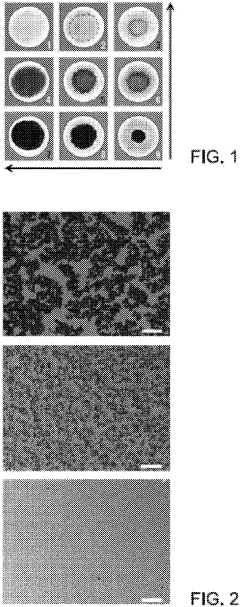
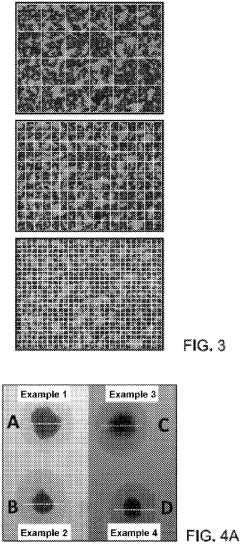
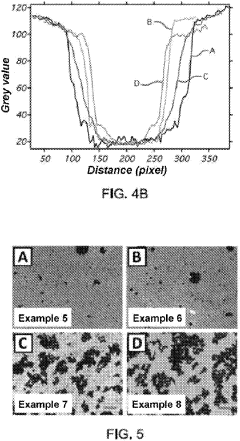
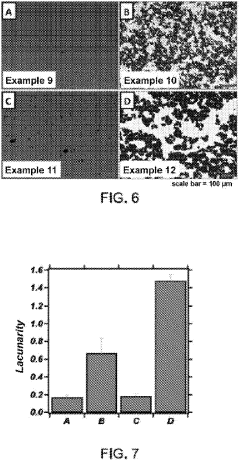
- A laboratory-based method using optical microscopy and lacunarity analysis to assess the dispersing capacity of lubricating compositions and additives, involving the preparation of carbonaceous particulate dispersions and calculation of lacunarity, a parameter measuring image heterogeneity, to quantify dispersion efficiency without requiring engine tests.
Fuel system vapor integrity testing with temperature compensation
PatentInactiveEP1130248B1
Innovation
- An on-board diagnostic system that uses an electronic control unit (ECU) to monitor pressure and fuel level, and applies an algorithm to correct for temperature variations during the vapour integrity test by measuring pressure intervals during the evacuation phase, reducing errors caused by temperature changes in the tank's air/vapour at the start of the bleedup phase.


Environmental Impact and Sustainability Considerations
Engine block integrity testing processes have significant environmental implications that must be considered in modern manufacturing contexts. Traditional testing methods often involve substantial water usage for pressure testing and coolant circulation simulations, with a single V6 engine block test potentially consuming between 50-100 gallons of water. This water frequently contains testing additives and contaminants that require specialized treatment before discharge. Forward-thinking manufacturers are implementing closed-loop water recycling systems that can reduce freshwater consumption by up to 85% while maintaining testing efficacy.
Energy consumption represents another critical environmental concern, with comprehensive integrity testing procedures requiring approximately 25-40 kWh per engine block. The implementation of energy-efficient testing equipment and optimized testing sequences can reduce this consumption by 15-30%. Additionally, the strategic scheduling of tests during off-peak hours can further minimize the carbon footprint associated with testing operations.
Chemical usage in testing processes presents notable environmental challenges. Dye penetrant testing, commonly used for crack detection, involves chemicals that may contain volatile organic compounds (VOCs) and other environmentally harmful substances. Industry leaders are transitioning to water-based, biodegradable testing solutions that maintain detection sensitivity while reducing environmental impact by approximately 40-60% compared to traditional solvent-based alternatives.
Waste management considerations extend beyond water treatment to include test-related consumables such as gaskets, seals, and damaged components from destructive testing. Implementing comprehensive recycling programs for metal components can recover up to 95% of test-related metal waste. Some manufacturers have established partnerships with material recovery facilities specifically designed to process testing byproducts.
The lifecycle assessment of testing equipment itself reveals opportunities for sustainability improvements. Modern testing apparatus designed with energy efficiency and longevity in mind can reduce the embodied carbon footprint of testing operations by 20-35% over a ten-year operational period. Equipment manufacturers are increasingly incorporating recyclable components and modular designs that facilitate repairs rather than complete replacements.
Carbon footprint reduction strategies specifically for V6 engine block testing include the implementation of renewable energy sources for testing facilities, optimization of testing sequences to minimize energy-intensive procedures, and the development of predictive modeling that can reduce the number of physical tests required while maintaining quality assurance standards.
Energy consumption represents another critical environmental concern, with comprehensive integrity testing procedures requiring approximately 25-40 kWh per engine block. The implementation of energy-efficient testing equipment and optimized testing sequences can reduce this consumption by 15-30%. Additionally, the strategic scheduling of tests during off-peak hours can further minimize the carbon footprint associated with testing operations.
Chemical usage in testing processes presents notable environmental challenges. Dye penetrant testing, commonly used for crack detection, involves chemicals that may contain volatile organic compounds (VOCs) and other environmentally harmful substances. Industry leaders are transitioning to water-based, biodegradable testing solutions that maintain detection sensitivity while reducing environmental impact by approximately 40-60% compared to traditional solvent-based alternatives.
Waste management considerations extend beyond water treatment to include test-related consumables such as gaskets, seals, and damaged components from destructive testing. Implementing comprehensive recycling programs for metal components can recover up to 95% of test-related metal waste. Some manufacturers have established partnerships with material recovery facilities specifically designed to process testing byproducts.
The lifecycle assessment of testing equipment itself reveals opportunities for sustainability improvements. Modern testing apparatus designed with energy efficiency and longevity in mind can reduce the embodied carbon footprint of testing operations by 20-35% over a ten-year operational period. Equipment manufacturers are increasingly incorporating recyclable components and modular designs that facilitate repairs rather than complete replacements.
Carbon footprint reduction strategies specifically for V6 engine block testing include the implementation of renewable energy sources for testing facilities, optimization of testing sequences to minimize energy-intensive procedures, and the development of predictive modeling that can reduce the number of physical tests required while maintaining quality assurance standards.
Quality Standards and Regulatory Compliance
V6 engine block integrity testing must adhere to stringent quality standards and regulatory compliance frameworks established by various international and regional bodies. The Society of Automotive Engineers (SAE) provides comprehensive guidelines through standards such as SAE J1937 and SAE J2534, which specifically address engine testing protocols and diagnostic procedures. These standards establish minimum requirements for pressure testing, dimensional verification, and material integrity assessment that manufacturers must meet.
The International Organization for Standardization (ISO) contributes significantly to this domain through ISO 16232 for cleanliness testing and ISO 9001 for quality management systems. Engine block manufacturers must implement these standards throughout their production and testing processes to ensure consistent quality and regulatory compliance. Additionally, ISO/TS 16949, developed specifically for automotive production, provides a framework for quality management systems that emphasizes defect prevention and reduction of variation in the supply chain.
Regional regulations impose additional compliance requirements. In the United States, the Environmental Protection Agency (EPA) and the California Air Resources Board (CARB) mandate specific emissions-related integrity standards that directly impact engine block testing protocols. European manufacturers must comply with the European Union's End-of-Life Vehicle (ELV) Directive and Registration, Evaluation, Authorization and Restriction of Chemicals (REACH) regulations, which restrict the use of certain hazardous substances in automotive components.
Documentation requirements represent a critical aspect of compliance. Manufacturers must maintain detailed records of all testing procedures, results, and calibration histories for testing equipment. These records must be retained for specified periods, typically ranging from 5 to 10 years depending on the jurisdiction, and must be readily available for regulatory audits. Traceability systems linking individual engine blocks to their testing data are increasingly becoming standard practice in the industry.
Certification processes often require third-party validation to verify compliance with applicable standards. Organizations such as TÜV, UL, and SGS provide independent testing and certification services that help manufacturers demonstrate regulatory compliance. Many OEMs also impose their own proprietary standards that exceed regulatory minimums, creating additional compliance requirements for suppliers of V6 engine blocks.
Emerging trends in regulatory compliance include increased focus on environmental sustainability and lifecycle assessment. New standards are being developed to address carbon footprint reduction, recyclability, and sustainable manufacturing practices in engine production and testing. These evolving requirements necessitate continuous adaptation of integrity testing protocols to maintain compliance with the expanding regulatory landscape.
The International Organization for Standardization (ISO) contributes significantly to this domain through ISO 16232 for cleanliness testing and ISO 9001 for quality management systems. Engine block manufacturers must implement these standards throughout their production and testing processes to ensure consistent quality and regulatory compliance. Additionally, ISO/TS 16949, developed specifically for automotive production, provides a framework for quality management systems that emphasizes defect prevention and reduction of variation in the supply chain.
Regional regulations impose additional compliance requirements. In the United States, the Environmental Protection Agency (EPA) and the California Air Resources Board (CARB) mandate specific emissions-related integrity standards that directly impact engine block testing protocols. European manufacturers must comply with the European Union's End-of-Life Vehicle (ELV) Directive and Registration, Evaluation, Authorization and Restriction of Chemicals (REACH) regulations, which restrict the use of certain hazardous substances in automotive components.
Documentation requirements represent a critical aspect of compliance. Manufacturers must maintain detailed records of all testing procedures, results, and calibration histories for testing equipment. These records must be retained for specified periods, typically ranging from 5 to 10 years depending on the jurisdiction, and must be readily available for regulatory audits. Traceability systems linking individual engine blocks to their testing data are increasingly becoming standard practice in the industry.
Certification processes often require third-party validation to verify compliance with applicable standards. Organizations such as TÜV, UL, and SGS provide independent testing and certification services that help manufacturers demonstrate regulatory compliance. Many OEMs also impose their own proprietary standards that exceed regulatory minimums, creating additional compliance requirements for suppliers of V6 engine blocks.
Emerging trends in regulatory compliance include increased focus on environmental sustainability and lifecycle assessment. New standards are being developed to address carbon footprint reduction, recyclability, and sustainable manufacturing practices in engine production and testing. These evolving requirements necessitate continuous adaptation of integrity testing protocols to maintain compliance with the expanding regulatory landscape.
Unlock deeper insights with PatSnap Eureka Quick Research — get a full tech report to explore trends and direct your research. Try now!
Generate Your Research Report Instantly with AI Agent
Supercharge your innovation with PatSnap Eureka AI Agent Platform!