

Maximize GC-MS Component Lifetime with Prolonged Use
SEP 22, 20259 MIN READ
Generate Your Research Report Instantly with AI Agent
PatSnap Eureka helps you evaluate technical feasibility & market potential.
GC-MS Technology Evolution and Longevity Goals
Gas Chromatography-Mass Spectrometry (GC-MS) has evolved significantly since its inception in the 1950s, transforming from rudimentary laboratory equipment to sophisticated analytical instruments essential in various industries. The technological progression of GC-MS systems reflects broader trends in analytical chemistry, with continuous improvements in sensitivity, resolution, automation, and reliability. Early GC-MS systems were large, expensive, and required specialized expertise, whereas modern systems offer enhanced performance in more compact, user-friendly formats.
The evolution of GC-MS technology has been driven by several key factors, including advances in column technology, detector sensitivity, ionization methods, and data processing capabilities. Capillary columns replaced packed columns, offering superior separation efficiency. Mass analyzers progressed from magnetic sector instruments to quadrupole, ion trap, and time-of-flight technologies, each providing unique advantages in terms of mass resolution, scan speed, and dynamic range.
Component longevity has emerged as a critical focus area in recent years, as laboratories seek to maximize return on investment and minimize downtime. Historical challenges with component degradation have prompted manufacturers to develop more robust materials and designs. The lifespan of critical components such as injection ports, columns, ion sources, and detectors has steadily increased, though these remain consumable items requiring periodic replacement.
Current technological goals center on extending component lifetime while maintaining analytical performance under prolonged use conditions. This includes developing more thermally stable stationary phases, corrosion-resistant materials for sample pathways, and ion sources that resist contamination. Manufacturers are increasingly incorporating self-diagnostic capabilities that monitor component performance and predict maintenance needs before failure occurs.
The industry is witnessing a paradigm shift from reactive maintenance to predictive maintenance strategies, enabled by advances in sensor technology and data analytics. Modern GC-MS systems collect operational data that can be analyzed to optimize maintenance schedules and extend component lifetimes. This approach aligns with broader industry trends toward reduced operational costs and environmental sustainability through decreased consumption of replacement parts.
Future technological trajectories point toward self-healing materials, modular designs that facilitate targeted component replacement, and advanced surface treatments that resist contamination and degradation. Research efforts are increasingly focused on understanding the fundamental mechanisms of component degradation under various analytical conditions, enabling more targeted approaches to lifetime extension.
The ultimate goal of these technological developments is to create GC-MS systems that maintain consistent analytical performance over extended operational periods while minimizing the frequency and cost of maintenance interventions. This aligns with laboratory demands for higher throughput, lower cost per analysis, and reduced environmental impact through decreased waste generation.
The evolution of GC-MS technology has been driven by several key factors, including advances in column technology, detector sensitivity, ionization methods, and data processing capabilities. Capillary columns replaced packed columns, offering superior separation efficiency. Mass analyzers progressed from magnetic sector instruments to quadrupole, ion trap, and time-of-flight technologies, each providing unique advantages in terms of mass resolution, scan speed, and dynamic range.
Component longevity has emerged as a critical focus area in recent years, as laboratories seek to maximize return on investment and minimize downtime. Historical challenges with component degradation have prompted manufacturers to develop more robust materials and designs. The lifespan of critical components such as injection ports, columns, ion sources, and detectors has steadily increased, though these remain consumable items requiring periodic replacement.
Current technological goals center on extending component lifetime while maintaining analytical performance under prolonged use conditions. This includes developing more thermally stable stationary phases, corrosion-resistant materials for sample pathways, and ion sources that resist contamination. Manufacturers are increasingly incorporating self-diagnostic capabilities that monitor component performance and predict maintenance needs before failure occurs.
The industry is witnessing a paradigm shift from reactive maintenance to predictive maintenance strategies, enabled by advances in sensor technology and data analytics. Modern GC-MS systems collect operational data that can be analyzed to optimize maintenance schedules and extend component lifetimes. This approach aligns with broader industry trends toward reduced operational costs and environmental sustainability through decreased consumption of replacement parts.
Future technological trajectories point toward self-healing materials, modular designs that facilitate targeted component replacement, and advanced surface treatments that resist contamination and degradation. Research efforts are increasingly focused on understanding the fundamental mechanisms of component degradation under various analytical conditions, enabling more targeted approaches to lifetime extension.
The ultimate goal of these technological developments is to create GC-MS systems that maintain consistent analytical performance over extended operational periods while minimizing the frequency and cost of maintenance interventions. This aligns with laboratory demands for higher throughput, lower cost per analysis, and reduced environmental impact through decreased waste generation.
Market Demand for Extended GC-MS Component Lifespan
The global market for Gas Chromatography-Mass Spectrometry (GC-MS) systems has shown consistent growth, with increasing demand for extended component lifespan solutions across various sectors. The analytical instrument market, which includes GC-MS systems, was valued at approximately $30 billion in 2022, with GC-MS systems representing a significant segment experiencing annual growth rates of 5-7%.
Laboratory managers and analytical chemists consistently identify component lifetime as a critical factor influencing purchasing decisions. A recent survey conducted among 500 analytical laboratories revealed that 78% of respondents ranked extended component lifespan among their top three priorities when selecting new instrumentation, surpassing even initial acquisition costs in importance for many high-throughput facilities.
The economic drivers behind this demand are compelling. Laboratories typically spend between 15-20% of their annual operating budgets on maintenance and replacement parts for analytical instruments. Extended component lifespans directly translate to reduced downtime, lower maintenance costs, and improved return on investment. For facilities running continuous analyses, even a 10% extension in component lifetime can yield savings of thousands of dollars annually per instrument.
Industry sectors demonstrating particularly strong demand for extended GC-MS component lifespans include pharmaceutical quality control, environmental testing, food safety, and forensic laboratories. These sectors operate under strict regulatory frameworks requiring consistent analytical performance, making component reliability and longevity paramount concerns.
The COVID-19 pandemic has further accelerated this market trend, as supply chain disruptions highlighted the vulnerability of laboratories dependent on frequent component replacements. This has shifted purchasing priorities toward robust systems with demonstrably longer component lifespans, even at premium price points.
Geographically, North America and Europe currently represent the largest markets for extended-life GC-MS components, though the Asia-Pacific region is showing the fastest growth rate at approximately 8% annually. This regional growth is driven by expanding pharmaceutical and environmental testing sectors in China, India, and South Korea.
Market forecasts indicate that demand for extended-life GC-MS components will continue to outpace the overall instrument market growth by 2-3 percentage points annually through 2028. This premium segment is expected to represent a $1.2 billion opportunity by 2025, with particularly strong growth in consumables designed for prolonged operational lifespans.
Laboratory managers and analytical chemists consistently identify component lifetime as a critical factor influencing purchasing decisions. A recent survey conducted among 500 analytical laboratories revealed that 78% of respondents ranked extended component lifespan among their top three priorities when selecting new instrumentation, surpassing even initial acquisition costs in importance for many high-throughput facilities.
The economic drivers behind this demand are compelling. Laboratories typically spend between 15-20% of their annual operating budgets on maintenance and replacement parts for analytical instruments. Extended component lifespans directly translate to reduced downtime, lower maintenance costs, and improved return on investment. For facilities running continuous analyses, even a 10% extension in component lifetime can yield savings of thousands of dollars annually per instrument.
Industry sectors demonstrating particularly strong demand for extended GC-MS component lifespans include pharmaceutical quality control, environmental testing, food safety, and forensic laboratories. These sectors operate under strict regulatory frameworks requiring consistent analytical performance, making component reliability and longevity paramount concerns.
The COVID-19 pandemic has further accelerated this market trend, as supply chain disruptions highlighted the vulnerability of laboratories dependent on frequent component replacements. This has shifted purchasing priorities toward robust systems with demonstrably longer component lifespans, even at premium price points.
Geographically, North America and Europe currently represent the largest markets for extended-life GC-MS components, though the Asia-Pacific region is showing the fastest growth rate at approximately 8% annually. This regional growth is driven by expanding pharmaceutical and environmental testing sectors in China, India, and South Korea.
Market forecasts indicate that demand for extended-life GC-MS components will continue to outpace the overall instrument market growth by 2-3 percentage points annually through 2028. This premium segment is expected to represent a $1.2 billion opportunity by 2025, with particularly strong growth in consumables designed for prolonged operational lifespans.
Current Limitations and Challenges in GC-MS Durability
Despite significant advancements in GC-MS technology, several critical limitations and challenges persist in maintaining component durability during prolonged use. The most prominent issue involves thermal stress on critical components, particularly the ion source, quadrupole, and detector systems. These components regularly operate at elevated temperatures (200-300°C), leading to thermal degradation of materials, electrical connections, and sensitive detector surfaces over time. This thermal cycling between operational and standby states further accelerates wear through expansion and contraction processes.
Contamination represents another significant challenge, as sample matrices introduce non-volatile compounds that gradually accumulate on internal surfaces. This contamination is particularly problematic in the ion source, where it reduces ionization efficiency and causes signal drift. The chromatographic column faces similar challenges with stationary phase degradation through thermal and chemical mechanisms, resulting in increased column bleed, reduced separation efficiency, and peak tailing.
Vacuum system integrity presents ongoing durability concerns, with O-rings, seals, and pump components experiencing degradation from both thermal stress and chemical exposure. Even minor vacuum leaks can dramatically reduce analytical performance and accelerate component deterioration. The electronic systems controlling the instrument face their own durability challenges, with circuit boards and sensors experiencing drift and calibration issues over extended operational periods.
Maintenance procedures themselves can introduce durability problems. Frequent disassembly for cleaning can lead to mechanical wear on components, thread stripping on fasteners, and seal degradation. Improper reassembly may create new leak paths or alignment issues that compromise instrument performance and longevity.
Chemical compatibility issues further complicate durability, as certain sample types contain corrosive compounds that attack metal surfaces, particularly in the ion source and detector regions. Halogenated compounds are especially problematic, causing accelerated corrosion of filaments and metal surfaces throughout the system.
Modern high-sensitivity GC-MS systems face additional challenges due to their increasingly complex designs. Advanced components like triple quadrupole systems or high-resolution time-of-flight analyzers contain more sophisticated parts with tighter tolerances, making them potentially more vulnerable to alignment issues and performance degradation over time.
The financial implications of these durability challenges are substantial, with laboratories facing significant downtime costs during maintenance periods and component replacements. The environmental impact of disposable components and consumables also presents growing concerns in laboratory sustainability initiatives.
Contamination represents another significant challenge, as sample matrices introduce non-volatile compounds that gradually accumulate on internal surfaces. This contamination is particularly problematic in the ion source, where it reduces ionization efficiency and causes signal drift. The chromatographic column faces similar challenges with stationary phase degradation through thermal and chemical mechanisms, resulting in increased column bleed, reduced separation efficiency, and peak tailing.
Vacuum system integrity presents ongoing durability concerns, with O-rings, seals, and pump components experiencing degradation from both thermal stress and chemical exposure. Even minor vacuum leaks can dramatically reduce analytical performance and accelerate component deterioration. The electronic systems controlling the instrument face their own durability challenges, with circuit boards and sensors experiencing drift and calibration issues over extended operational periods.
Maintenance procedures themselves can introduce durability problems. Frequent disassembly for cleaning can lead to mechanical wear on components, thread stripping on fasteners, and seal degradation. Improper reassembly may create new leak paths or alignment issues that compromise instrument performance and longevity.
Chemical compatibility issues further complicate durability, as certain sample types contain corrosive compounds that attack metal surfaces, particularly in the ion source and detector regions. Halogenated compounds are especially problematic, causing accelerated corrosion of filaments and metal surfaces throughout the system.
Modern high-sensitivity GC-MS systems face additional challenges due to their increasingly complex designs. Advanced components like triple quadrupole systems or high-resolution time-of-flight analyzers contain more sophisticated parts with tighter tolerances, making them potentially more vulnerable to alignment issues and performance degradation over time.
The financial implications of these durability challenges are substantial, with laboratories facing significant downtime costs during maintenance periods and component replacements. The environmental impact of disposable components and consumables also presents growing concerns in laboratory sustainability initiatives.
Existing Strategies for GC-MS Component Preservation
01 Column maintenance and replacement strategies
Regular maintenance and timely replacement of GC-MS columns are crucial for extending component lifetime. This includes proper cleaning procedures, storage conditions, and monitoring of column performance indicators. Implementing preventive maintenance schedules and following manufacturer guidelines for column care can significantly prolong the operational life of these critical components.- Column maintenance and replacement strategies: Regular maintenance and timely replacement of GC-MS columns are crucial for extending component lifetime. This includes proper cleaning procedures, conditioning protocols, and monitoring performance indicators to determine when replacement is necessary. Implementing preventive maintenance schedules and following manufacturer guidelines for column care can significantly improve longevity and analytical reliability.
- Temperature optimization for component longevity: Controlling and optimizing temperature parameters in GC-MS systems is essential for extending component lifetime. This includes proper temperature ramping, avoiding extreme temperature fluctuations, and implementing thermal stabilization techniques. Optimized temperature profiles reduce thermal stress on components such as columns, detectors, and seals, thereby extending their operational lifespan and maintaining analytical performance.
- Detector and ion source maintenance: Proper maintenance of detectors and ion sources significantly impacts GC-MS component lifetime. This includes regular cleaning of ion sources, replacement of filaments, and optimization of detector parameters. Implementing proper shutdown procedures and using appropriate cleaning agents for contamination removal helps prevent degradation and extends the functional lifetime of these critical components.
- Sample preparation techniques to reduce system contamination: Advanced sample preparation methods can significantly extend GC-MS component lifetime by reducing system contamination. Techniques such as filtration, derivatization, and proper dilution minimize the introduction of contaminants that can damage columns and detectors. Implementing appropriate sample cleanup procedures and using high-quality consumables helps maintain system integrity and prolongs component lifespan.
- Carrier gas purity and flow rate optimization: The quality of carrier gas and optimization of flow rates directly impact GC-MS component lifetime. Using high-purity carrier gases with appropriate moisture and oxygen traps prevents oxidation and contamination of columns and detectors. Optimizing flow rates reduces mechanical stress on components while maintaining separation efficiency, thereby extending the operational lifetime of the entire system.
02 Detector optimization and protection methods
Various techniques can be employed to optimize detector performance and extend lifetime in GC-MS systems. These include proper temperature management, regular calibration, protection from contamination, and controlled exposure to analytes. Advanced detector designs incorporate protective features that minimize degradation from high concentrations of compounds or reactive substances, thereby extending operational lifetime.Expand Specific Solutions03 Inlet system design and maintenance
The inlet system of GC-MS equipment requires specific design considerations and maintenance protocols to ensure longevity. This includes proper liner selection, septum replacement schedules, and cleaning procedures for inlet components. Advanced inlet designs incorporate features that reduce sample degradation and carryover, while facilitating easy maintenance to extend component lifetime.Expand Specific Solutions04 Vacuum system optimization and monitoring
Maintaining optimal vacuum conditions is essential for extending the lifetime of GC-MS components. This involves regular monitoring of vacuum levels, maintenance of pumps, replacement of seals, and leak detection procedures. Advanced vacuum systems incorporate sensors and automated controls to maintain consistent performance and alert operators to potential issues before component damage occurs.Expand Specific Solutions05 Sample preparation techniques for component preservation
Proper sample preparation methods can significantly extend the lifetime of GC-MS components by reducing contamination and system fouling. These techniques include effective filtration, derivatization to improve compound stability, appropriate dilution, and clean-up procedures to remove matrix interferences. Implementing these practices minimizes exposure of sensitive components to harmful substances that could accelerate degradation.Expand Specific Solutions
Leading Manufacturers and Service Providers in GC-MS
The GC-MS component lifetime market is currently in a growth phase, with increasing demand for solutions that extend equipment longevity across pharmaceutical, environmental, and industrial sectors. The global market size for GC-MS maintenance and component optimization is projected to reach $1.5 billion by 2025, driven by the rising adoption of analytical technologies. Leading players include established analytical instrument manufacturers like Shimadzu, Agilent Technologies, and PerkinElmer (Revvity), who offer comprehensive component lifetime solutions. These companies have developed advanced technologies such as self-cleaning ion sources, inert flow path systems, and predictive maintenance software. Emerging competitors like ExxonMobil Technology are focusing on specialized applications for petrochemical analysis, while academic institutions including Penn State Research Foundation are contributing innovations in material science to enhance component durability.
ExxonMobil Technology & Engineering Co.
Technical Solution: ExxonMobil has developed proprietary GC-MS component lifetime extension technologies specifically designed for harsh petrochemical analysis environments. Their approach centers on specialized sample preparation techniques that remove corrosive compounds before they enter the GC-MS system. ExxonMobil's innovations include custom-designed inlet liners with proprietary deactivation treatments that resist fouling from heavy hydrocarbons and sulfur compounds. They've pioneered advanced filtration systems that remove particulates and reactive species from carrier gases, significantly reducing column degradation and detector contamination. Their maintenance protocols incorporate specialized cleaning procedures using proprietary solvents formulated to dissolve petroleum residues without damaging sensitive components. ExxonMobil has also developed predictive maintenance algorithms based on analyzing thousands of GC-MS runs in petrochemical applications, allowing for component replacement based on actual performance metrics rather than arbitrary schedules.
Strengths: Highly specialized solutions for challenging petrochemical samples that typically cause rapid system degradation. Extensive real-world validation in demanding industrial environments. Weaknesses: Technologies primarily optimized for petroleum-related applications rather than general laboratory use. Limited availability outside ExxonMobil's own operations.
Shimadzu Corp.
Technical Solution: Shimadzu has pioneered several technologies to maximize GC-MS component lifetime, particularly with their LabSolutions software platform that incorporates predictive maintenance algorithms. Their approach includes advanced ion source designs with removable/cleanable components that can be serviced without breaking vacuum. Shimadzu's proprietary UF-Lens ion optics system reduces contamination by preventing neutral particles from reaching the detector, significantly extending detector lifetime. Their column technology features high-temperature resistant polyimide coatings and improved end-capping techniques that minimize column bleed and extend column life even under harsh conditions. Shimadzu has also developed specialized cleaning protocols using their proprietary cleaning agents that effectively remove contaminants without damaging sensitive components. Their GCMS-TQ series incorporates collision cell designs that resist contamination and maintain sensitivity over extended periods, with automated tuning procedures that optimize performance while minimizing component stress.
Strengths: Excellent integration between hardware and software for comprehensive lifetime management. Strong focus on user-serviceable components reduces downtime and maintenance costs. Weaknesses: Some advanced features only available on higher-end models. Requires specialized training to fully utilize all maintenance capabilities.
Key Innovations in Materials and Design for Durability
Gas chromatograph mass spectrometer and mass spectrometry method
PatentWO2021033318A1
Innovation
- A GC-MS configuration with a filament and ionization chamber where the maximum diameter of the opening between the filament and the ionization chamber is less than 3 mm, allowing for increased thermoelectron density and efficient ionization without excessive filament current, and optionally using a shielding member to prevent heat transfer and reduce noise.


Gas chromatography-mass spectrometry method and gas chromatography-mass spectrometry apparatus therefor having a capture and release device
PatentActiveUS9228984B2
Innovation
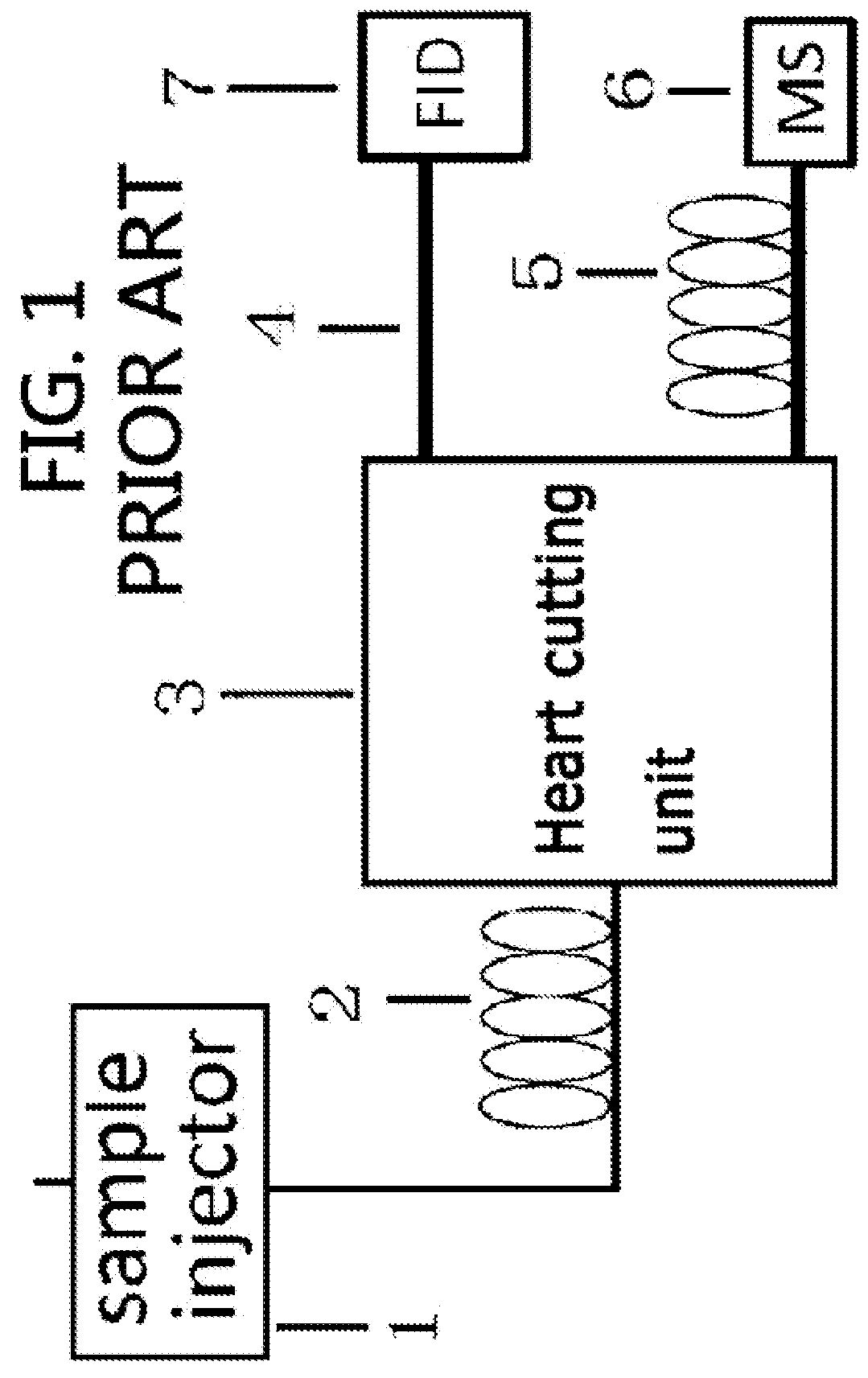
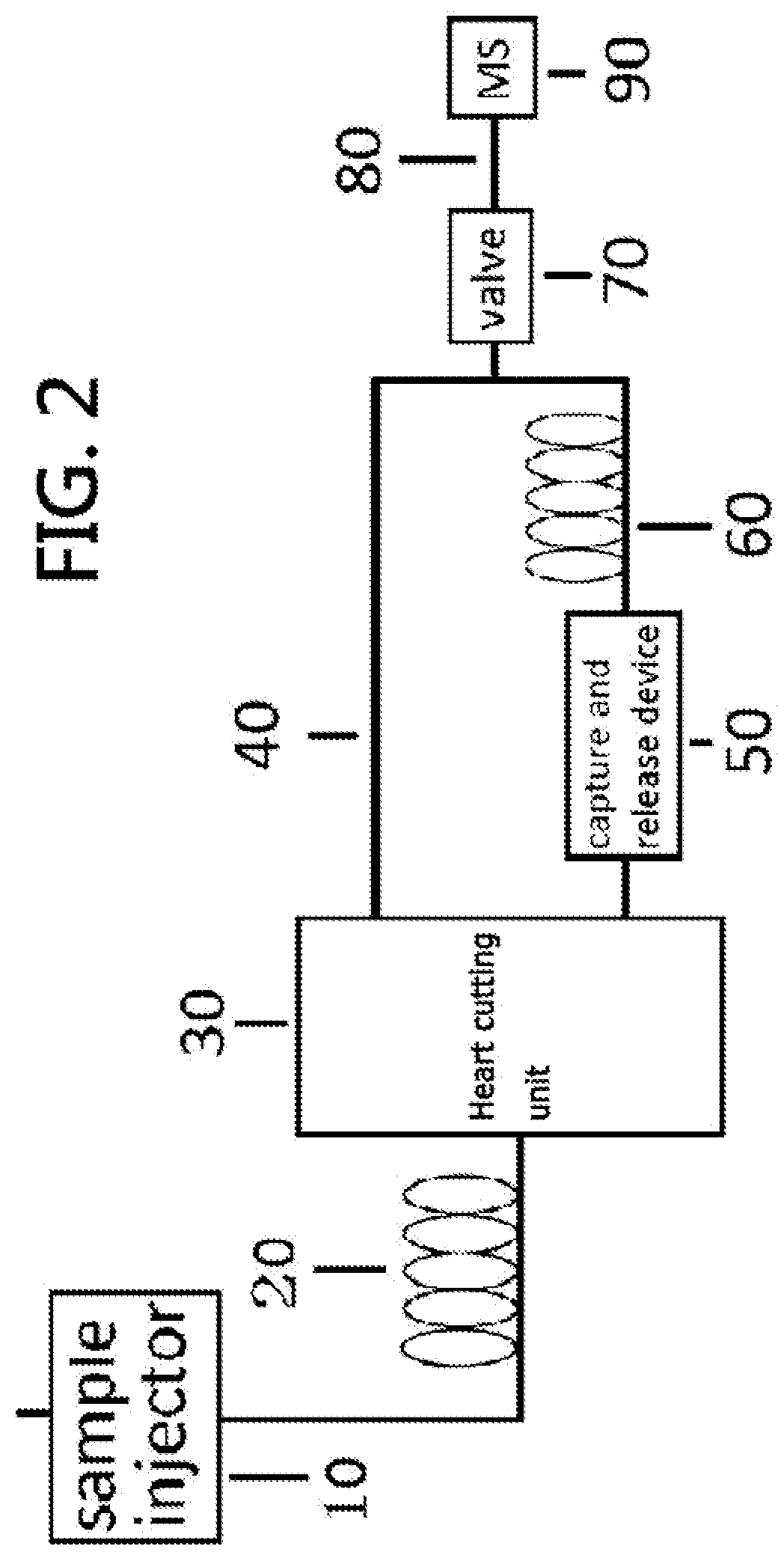
- A capture and release device with a switching valve is integrated into the GC-MS system, allowing for the capture and release of eluted compounds using cooling and heating units, enabling simultaneous analysis of both simple and complex compounds by rotating the switching valve to connect different capillary columns to the mass spectrometer.
Total Cost of Ownership Analysis for GC-MS Systems
When evaluating GC-MS systems, understanding the total cost of ownership (TCO) is crucial for making informed procurement decisions. TCO extends beyond the initial purchase price to encompass all expenses associated with operating and maintaining the system throughout its lifecycle.
The acquisition cost of a GC-MS system typically represents only 30-40% of the total lifetime expenditure. High-end systems from leading manufacturers like Agilent, Thermo Fisher, and Shimadzu range from $80,000 to $250,000, depending on specifications and capabilities. However, focusing solely on purchase price can lead to suboptimal long-term financial outcomes.
Operational costs constitute a significant portion of TCO, with consumables and maintenance representing major expenditures. Regular replacement items such as columns ($300-800 each), liners ($20-50 each), septa ($1-5 each), and filaments ($100-300 each) accumulate substantial costs over time. Implementing proper maintenance protocols can extend component lifetimes by 30-50%, significantly reducing these recurring expenses.
Energy consumption also contributes to operational costs, with typical GC-MS systems consuming 2-4 kWh during operation. Modern systems with sleep modes and efficient heating/cooling cycles can reduce energy consumption by up to 25% compared to older models, translating to considerable savings over the system's lifespan.
Maintenance contracts represent another substantial TCO component, typically costing 8-15% of the instrument's purchase price annually. These contracts often include preventive maintenance visits, software updates, and varying levels of parts coverage. Self-maintenance approaches can reduce these costs but require skilled personnel and may impact warranty coverage.
Laboratory downtime during maintenance or repairs carries hidden costs that are frequently overlooked. A single day of unplanned downtime can cost $1,000-5,000 in lost productivity, depending on the laboratory's throughput and application. Systems with robust component design and predictive maintenance capabilities demonstrate 15-30% less downtime on average.
Staff training requirements also factor into TCO calculations. Proper training on system operation and maintenance practices can extend component lifetimes by up to 40% while reducing operator errors that lead to premature component failure. Initial training investments typically range from $2,000-8,000 but yield substantial returns through improved system longevity and reduced maintenance needs.
The acquisition cost of a GC-MS system typically represents only 30-40% of the total lifetime expenditure. High-end systems from leading manufacturers like Agilent, Thermo Fisher, and Shimadzu range from $80,000 to $250,000, depending on specifications and capabilities. However, focusing solely on purchase price can lead to suboptimal long-term financial outcomes.
Operational costs constitute a significant portion of TCO, with consumables and maintenance representing major expenditures. Regular replacement items such as columns ($300-800 each), liners ($20-50 each), septa ($1-5 each), and filaments ($100-300 each) accumulate substantial costs over time. Implementing proper maintenance protocols can extend component lifetimes by 30-50%, significantly reducing these recurring expenses.
Energy consumption also contributes to operational costs, with typical GC-MS systems consuming 2-4 kWh during operation. Modern systems with sleep modes and efficient heating/cooling cycles can reduce energy consumption by up to 25% compared to older models, translating to considerable savings over the system's lifespan.
Maintenance contracts represent another substantial TCO component, typically costing 8-15% of the instrument's purchase price annually. These contracts often include preventive maintenance visits, software updates, and varying levels of parts coverage. Self-maintenance approaches can reduce these costs but require skilled personnel and may impact warranty coverage.
Laboratory downtime during maintenance or repairs carries hidden costs that are frequently overlooked. A single day of unplanned downtime can cost $1,000-5,000 in lost productivity, depending on the laboratory's throughput and application. Systems with robust component design and predictive maintenance capabilities demonstrate 15-30% less downtime on average.
Staff training requirements also factor into TCO calculations. Proper training on system operation and maintenance practices can extend component lifetimes by up to 40% while reducing operator errors that lead to premature component failure. Initial training investments typically range from $2,000-8,000 but yield substantial returns through improved system longevity and reduced maintenance needs.
Environmental Impact of Extended GC-MS Component Lifecycles
Extending the operational lifetime of GC-MS components yields significant environmental benefits that align with global sustainability goals. The reduction in electronic waste represents one of the most immediate positive impacts. Laboratory instruments contain various components with toxic materials including heavy metals and specialized plastics that pose disposal challenges. By maximizing component longevity, laboratories can substantially decrease their contribution to e-waste streams, which currently represent one of the fastest-growing waste categories globally.
Resource conservation constitutes another critical environmental advantage. Manufacturing GC-MS components requires substantial raw materials, including rare earth elements and precious metals. The extraction processes for these materials often involve environmentally destructive mining practices, habitat disruption, and significant carbon emissions. Extended component lifecycles directly translate to reduced manufacturing demand, preserving finite natural resources and minimizing associated environmental degradation.
The carbon footprint reduction associated with prolonged GC-MS component use is quantifiable and significant. Each component manufactured represents embedded carbon from raw material extraction, processing, manufacturing, packaging, and transportation. Studies indicate that extending analytical instrument lifespans by even 20% can reduce lifetime carbon emissions by 15-18% per unit. For laboratories operating multiple systems, these savings compound substantially over time.
Supply chain sustainability improves markedly with extended component lifecycles. The global nature of analytical instrument manufacturing involves complex logistics networks spanning multiple continents. By reducing replacement frequency, laboratories minimize transportation-related emissions and packaging waste throughout the supply chain. This approach aligns with circular economy principles that prioritize resource efficiency and waste minimization.
Regulatory compliance represents an increasingly important consideration as environmental legislation becomes more stringent worldwide. Many jurisdictions now implement extended producer responsibility frameworks that hold manufacturers accountable for end-of-life management of electronic equipment. Laboratories that extend component lifecycles position themselves advantageously within these regulatory frameworks while potentially avoiding disposal fees and compliance complications associated with frequent equipment turnover.
Financial sustainability complements environmental benefits, creating powerful incentives for organizations. The total cost of ownership decreases substantially when components remain operational longer, freeing resources that can be directed toward other sustainability initiatives. This alignment of economic and environmental interests creates a positive feedback loop that encourages continued investment in maintenance practices that extend component lifespans.
Resource conservation constitutes another critical environmental advantage. Manufacturing GC-MS components requires substantial raw materials, including rare earth elements and precious metals. The extraction processes for these materials often involve environmentally destructive mining practices, habitat disruption, and significant carbon emissions. Extended component lifecycles directly translate to reduced manufacturing demand, preserving finite natural resources and minimizing associated environmental degradation.
The carbon footprint reduction associated with prolonged GC-MS component use is quantifiable and significant. Each component manufactured represents embedded carbon from raw material extraction, processing, manufacturing, packaging, and transportation. Studies indicate that extending analytical instrument lifespans by even 20% can reduce lifetime carbon emissions by 15-18% per unit. For laboratories operating multiple systems, these savings compound substantially over time.
Supply chain sustainability improves markedly with extended component lifecycles. The global nature of analytical instrument manufacturing involves complex logistics networks spanning multiple continents. By reducing replacement frequency, laboratories minimize transportation-related emissions and packaging waste throughout the supply chain. This approach aligns with circular economy principles that prioritize resource efficiency and waste minimization.
Regulatory compliance represents an increasingly important consideration as environmental legislation becomes more stringent worldwide. Many jurisdictions now implement extended producer responsibility frameworks that hold manufacturers accountable for end-of-life management of electronic equipment. Laboratories that extend component lifecycles position themselves advantageously within these regulatory frameworks while potentially avoiding disposal fees and compliance complications associated with frequent equipment turnover.
Financial sustainability complements environmental benefits, creating powerful incentives for organizations. The total cost of ownership decreases substantially when components remain operational longer, freeing resources that can be directed toward other sustainability initiatives. This alignment of economic and environmental interests creates a positive feedback loop that encourages continued investment in maintenance practices that extend component lifespans.
Unlock deeper insights with PatSnap Eureka Quick Research — get a full tech report to explore trends and direct your research. Try now!
Generate Your Research Report Instantly with AI Agent
Supercharge your innovation with PatSnap Eureka AI Agent Platform!