

Optimize GC-MS Ion Optics for Molecular Breakdowns
SEP 22, 20259 MIN READ
Generate Your Research Report Instantly with AI Agent
PatSnap Eureka helps you evaluate technical feasibility & market potential.
GC-MS Ion Optics Evolution and Objectives
Gas Chromatography-Mass Spectrometry (GC-MS) has evolved significantly since its inception in the 1950s, transforming from a specialized analytical technique to an essential tool across multiple industries. The ion optics system, which guides and focuses ions from the ionization source to the mass analyzer, represents a critical component that directly impacts instrument sensitivity, resolution, and overall analytical performance.
Early GC-MS systems employed simple ion optics designs with limited focusing capabilities, resulting in significant ion loss and reduced sensitivity. The 1970s marked a pivotal shift with the introduction of quadrupole mass analyzers and improved ion focusing lenses, enhancing transmission efficiency and analytical capabilities. By the 1990s, advanced ion guide technologies emerged, including radio frequency (RF) multipoles and ion funnels, dramatically improving ion transmission across pressure gradients.
Recent technological advancements have focused on optimizing ion trajectories through computational modeling and simulation. Modern ion optics systems incorporate sophisticated electrode geometries and voltage control systems that adapt dynamically to different molecular species, minimizing fragmentation for intact molecule analysis or enhancing fragmentation for structural elucidation as required.
The current technical landscape presents several challenges in molecular breakdown analysis. Conventional ion optics systems often struggle to maintain optimal performance across diverse molecular classes, particularly when analyzing complex mixtures containing compounds with vastly different physicochemical properties. Energy transfer during ion transmission frequently leads to uncontrolled fragmentation, complicating spectral interpretation and reducing analytical reproducibility.
The primary objectives for optimizing GC-MS ion optics specifically for molecular breakdown analysis include developing adaptive ion transmission systems that can modulate fragmentation energy based on molecular characteristics. This requires precise control over ion kinetic energy throughout the entire ion path, from ionization source to detector.
Another critical goal involves enhancing ion transmission efficiency while maintaining spectral integrity. Current systems typically achieve 1-5% ion transmission efficiency from source to detector, representing significant room for improvement. Increasing this efficiency to 10-20% would dramatically improve detection limits without requiring more sample material.
Achieving tunable fragmentation represents perhaps the most ambitious objective, enabling analysts to dial in specific levels of molecular fragmentation based on analytical requirements. This would transform GC-MS from a technique that produces relatively consistent fragmentation patterns to one offering controllable fragmentation, bridging the gap between hard and soft ionization techniques while maintaining the separation advantages of gas chromatography.
Early GC-MS systems employed simple ion optics designs with limited focusing capabilities, resulting in significant ion loss and reduced sensitivity. The 1970s marked a pivotal shift with the introduction of quadrupole mass analyzers and improved ion focusing lenses, enhancing transmission efficiency and analytical capabilities. By the 1990s, advanced ion guide technologies emerged, including radio frequency (RF) multipoles and ion funnels, dramatically improving ion transmission across pressure gradients.
Recent technological advancements have focused on optimizing ion trajectories through computational modeling and simulation. Modern ion optics systems incorporate sophisticated electrode geometries and voltage control systems that adapt dynamically to different molecular species, minimizing fragmentation for intact molecule analysis or enhancing fragmentation for structural elucidation as required.
The current technical landscape presents several challenges in molecular breakdown analysis. Conventional ion optics systems often struggle to maintain optimal performance across diverse molecular classes, particularly when analyzing complex mixtures containing compounds with vastly different physicochemical properties. Energy transfer during ion transmission frequently leads to uncontrolled fragmentation, complicating spectral interpretation and reducing analytical reproducibility.
The primary objectives for optimizing GC-MS ion optics specifically for molecular breakdown analysis include developing adaptive ion transmission systems that can modulate fragmentation energy based on molecular characteristics. This requires precise control over ion kinetic energy throughout the entire ion path, from ionization source to detector.
Another critical goal involves enhancing ion transmission efficiency while maintaining spectral integrity. Current systems typically achieve 1-5% ion transmission efficiency from source to detector, representing significant room for improvement. Increasing this efficiency to 10-20% would dramatically improve detection limits without requiring more sample material.
Achieving tunable fragmentation represents perhaps the most ambitious objective, enabling analysts to dial in specific levels of molecular fragmentation based on analytical requirements. This would transform GC-MS from a technique that produces relatively consistent fragmentation patterns to one offering controllable fragmentation, bridging the gap between hard and soft ionization techniques while maintaining the separation advantages of gas chromatography.
Market Analysis for Advanced Mass Spectrometry Solutions
The global mass spectrometry market continues to experience robust growth, valued at approximately $4.6 billion in 2022 and projected to reach $7.3 billion by 2028, representing a compound annual growth rate of 8.1%. This expansion is primarily driven by increasing applications in pharmaceutical research, clinical diagnostics, environmental testing, and food safety analysis. The GC-MS segment specifically accounts for roughly 35% of the total market share, with ion optics optimization representing a critical area for technological advancement.
Demand for advanced ion optics solutions stems from several key market factors. Pharmaceutical and biotechnology companies require increasingly sensitive analytical tools for drug discovery and development, with over 60% of these organizations citing improved molecular fragmentation analysis as essential for their research pipelines. The precision medicine movement has further accelerated this demand, as clinicians seek more accurate biomarker identification methods for personalized treatment approaches.
Academic and research institutions constitute approximately 28% of end-users, consistently pushing for innovations in ion optics to enable more detailed molecular structure elucidation. Government laboratories, particularly those focused on environmental monitoring and forensic analysis, represent another 22% of the market, requiring systems capable of detecting trace contaminants with high specificity.
Regional analysis reveals North America dominates with 38% market share, followed by Europe (30%) and Asia-Pacific (24%). The Asia-Pacific region demonstrates the fastest growth rate at 9.7% annually, driven by expanding pharmaceutical manufacturing and increasing environmental regulations in China, India, and South Korea.
Customer surveys indicate five primary requirements driving purchase decisions for advanced mass spectrometry systems: improved sensitivity (cited by 87% of respondents), enhanced resolution (82%), reduced maintenance requirements (76%), software integration capabilities (71%), and cost-effectiveness (68%). Specifically regarding ion optics optimization for molecular breakdowns, customers prioritize reduced ion scattering, improved transmission efficiency, and more precise control over fragmentation patterns.
Competitive pricing analysis shows significant variation, with high-end systems featuring optimized ion optics commanding premium prices between $350,000 to $500,000, while mid-range systems typically range from $180,000 to $300,000. The total cost of ownership remains a critical consideration, with maintenance contracts and consumables representing approximately 15-20% of initial purchase costs annually.
Market forecasts suggest specialized ion optics solutions for targeted molecular breakdown applications will experience accelerated growth at 10.3% annually through 2028, outpacing the broader mass spectrometry market. This trend reflects increasing demand for analytical precision in complex molecular analysis across multiple industries, particularly in pharmaceutical development and advanced materials characterization.
Demand for advanced ion optics solutions stems from several key market factors. Pharmaceutical and biotechnology companies require increasingly sensitive analytical tools for drug discovery and development, with over 60% of these organizations citing improved molecular fragmentation analysis as essential for their research pipelines. The precision medicine movement has further accelerated this demand, as clinicians seek more accurate biomarker identification methods for personalized treatment approaches.
Academic and research institutions constitute approximately 28% of end-users, consistently pushing for innovations in ion optics to enable more detailed molecular structure elucidation. Government laboratories, particularly those focused on environmental monitoring and forensic analysis, represent another 22% of the market, requiring systems capable of detecting trace contaminants with high specificity.
Regional analysis reveals North America dominates with 38% market share, followed by Europe (30%) and Asia-Pacific (24%). The Asia-Pacific region demonstrates the fastest growth rate at 9.7% annually, driven by expanding pharmaceutical manufacturing and increasing environmental regulations in China, India, and South Korea.
Customer surveys indicate five primary requirements driving purchase decisions for advanced mass spectrometry systems: improved sensitivity (cited by 87% of respondents), enhanced resolution (82%), reduced maintenance requirements (76%), software integration capabilities (71%), and cost-effectiveness (68%). Specifically regarding ion optics optimization for molecular breakdowns, customers prioritize reduced ion scattering, improved transmission efficiency, and more precise control over fragmentation patterns.
Competitive pricing analysis shows significant variation, with high-end systems featuring optimized ion optics commanding premium prices between $350,000 to $500,000, while mid-range systems typically range from $180,000 to $300,000. The total cost of ownership remains a critical consideration, with maintenance contracts and consumables representing approximately 15-20% of initial purchase costs annually.
Market forecasts suggest specialized ion optics solutions for targeted molecular breakdown applications will experience accelerated growth at 10.3% annually through 2028, outpacing the broader mass spectrometry market. This trend reflects increasing demand for analytical precision in complex molecular analysis across multiple industries, particularly in pharmaceutical development and advanced materials characterization.
Current Challenges in Ion Optics for Molecular Fragmentation
The optimization of ion optics in GC-MS systems faces several significant challenges that impede efficient molecular fragmentation analysis. Current quadrupole and time-of-flight mass analyzers struggle with resolution limitations when handling complex molecular structures, particularly at higher masses where isotopic patterns become difficult to distinguish. This fundamental constraint affects the accuracy of molecular breakdown analysis in applications ranging from environmental monitoring to pharmaceutical development.
Energy transfer inefficiencies represent another critical challenge, as existing ion optics systems often fail to deliver consistent collision energies during the fragmentation process. This variability leads to unpredictable fragmentation patterns and compromises reproducibility across different instrument configurations. Research indicates that up to 30% of ions may experience suboptimal collision energies, resulting in incomplete fragmentation or secondary reactions that complicate spectral interpretation.
Ion transmission losses throughout the optical pathway significantly reduce sensitivity, with some systems losing over 50% of ions between the ion source and detector. These losses are particularly problematic when analyzing trace compounds in complex matrices, where every ion counts toward detection limits. The geometric constraints of current ion guides, including quadrupoles and ion funnels, create inherent trade-offs between transmission efficiency and mass resolution.
Space-charge effects present increasing challenges as manufacturers push toward higher sensitivity instruments. When ion density exceeds critical thresholds within the optical components, repulsive forces between ions distort trajectories and fragment distributions, leading to mass discrimination and reduced dynamic range. This phenomenon becomes particularly problematic during high-concentration sample analysis or when using newer high-efficiency ionization sources.
Temperature stability across ion optical components remains inadequately addressed in current systems. Thermal gradients can cause mechanical misalignments and electric field distortions that vary throughout analytical runs. Studies show that even minor temperature fluctuations of 2-3°C can shift fragmentation patterns enough to complicate library matching algorithms.
Contamination buildup on ion optical surfaces progressively degrades performance between maintenance cycles. Modern instruments lack effective self-cleaning mechanisms, requiring frequent disassembly and manual cleaning that increases downtime and introduces variability between maintenance events. The contamination particularly affects the performance of reflectron components and ion mirrors critical for high-resolution time-of-flight analysis.
Integration challenges between GC separation and MS detection create timing inconsistencies that complicate molecular breakdown analysis. The interface between these technologies often introduces thermal gradients and pressure differentials that alter molecular fragmentation patterns compared to reference standards. Current synchronization approaches fail to fully account for these transitional effects, particularly with temperature-programmed GC methods.
Energy transfer inefficiencies represent another critical challenge, as existing ion optics systems often fail to deliver consistent collision energies during the fragmentation process. This variability leads to unpredictable fragmentation patterns and compromises reproducibility across different instrument configurations. Research indicates that up to 30% of ions may experience suboptimal collision energies, resulting in incomplete fragmentation or secondary reactions that complicate spectral interpretation.
Ion transmission losses throughout the optical pathway significantly reduce sensitivity, with some systems losing over 50% of ions between the ion source and detector. These losses are particularly problematic when analyzing trace compounds in complex matrices, where every ion counts toward detection limits. The geometric constraints of current ion guides, including quadrupoles and ion funnels, create inherent trade-offs between transmission efficiency and mass resolution.
Space-charge effects present increasing challenges as manufacturers push toward higher sensitivity instruments. When ion density exceeds critical thresholds within the optical components, repulsive forces between ions distort trajectories and fragment distributions, leading to mass discrimination and reduced dynamic range. This phenomenon becomes particularly problematic during high-concentration sample analysis or when using newer high-efficiency ionization sources.
Temperature stability across ion optical components remains inadequately addressed in current systems. Thermal gradients can cause mechanical misalignments and electric field distortions that vary throughout analytical runs. Studies show that even minor temperature fluctuations of 2-3°C can shift fragmentation patterns enough to complicate library matching algorithms.
Contamination buildup on ion optical surfaces progressively degrades performance between maintenance cycles. Modern instruments lack effective self-cleaning mechanisms, requiring frequent disassembly and manual cleaning that increases downtime and introduces variability between maintenance events. The contamination particularly affects the performance of reflectron components and ion mirrors critical for high-resolution time-of-flight analysis.
Integration challenges between GC separation and MS detection create timing inconsistencies that complicate molecular breakdown analysis. The interface between these technologies often introduces thermal gradients and pressure differentials that alter molecular fragmentation patterns compared to reference standards. Current synchronization approaches fail to fully account for these transitional effects, particularly with temperature-programmed GC methods.
Contemporary Ion Optics Design Approaches
01 Ion Optics Design and Configuration
The design and configuration of ion optics components in GC-MS systems significantly impact analytical performance. Optimized electrode geometries, lens arrangements, and field configurations can enhance ion transmission efficiency, improve mass resolution, and increase sensitivity. Advanced designs may incorporate multipole arrangements, curved ion paths, or specialized focusing elements to manipulate ion trajectories with greater precision.- Ion Optics Design and Configuration: The design and configuration of ion optics components in GC-MS systems significantly impact analytical performance. Optimized electrode geometries, lens arrangements, and field configurations can enhance ion transmission efficiency, reduce signal loss, and improve mass resolution. Advanced designs incorporate multipole arrangements, curved ion paths, and specialized focusing elements to manipulate ion trajectories with greater precision.
- Voltage Optimization Techniques: Voltage parameters applied to ion optics components require careful optimization to achieve maximum sensitivity and resolution. This includes tuning of lens voltages, RF/DC ratios, and potential gradients throughout the ion path. Automated algorithms and calibration methods can systematically adjust voltage settings based on mass range, ion type, and desired analytical outcomes, resulting in improved ion transmission and detection efficiency.
- Temperature and Pressure Control: Environmental conditions within the ion optics system significantly affect ion behavior and instrument performance. Precise control of temperature gradients and pressure differentials across ion optics components helps maintain stable ion trajectories and prevents contamination. Thermal management systems and specialized vacuum interfaces optimize ion transfer between GC and MS components while minimizing molecular collisions that could reduce sensitivity.
- Calibration and Tuning Methodologies: Systematic approaches to calibrating and tuning ion optics parameters ensure optimal GC-MS performance. These methodologies include automated tuning algorithms, reference compound-based calibration, and machine learning techniques that can adapt to changing analytical conditions. Regular calibration procedures maintain instrument sensitivity, mass accuracy, and reproducibility by compensating for component aging and environmental variations.
- Novel Ion Optics Materials and Fabrication: Advanced materials and fabrication techniques for ion optics components can significantly enhance GC-MS performance. Specialized coatings, novel electrode materials, and precision manufacturing methods reduce surface charging, contamination, and field distortions. Innovations include non-reactive surfaces, miniaturized components, and integrated designs that improve durability while maintaining optimal electric field characteristics for ion manipulation.
02 Voltage Optimization Techniques
Voltage parameters applied to ion optics components require careful optimization to achieve peak performance in GC-MS systems. This includes tuning of lens voltages, pole biases, and RF/DC ratios to maximize ion transmission while maintaining selectivity. Automated voltage optimization algorithms can systematically adjust multiple parameters simultaneously to find optimal operating conditions based on signal intensity, peak shape, and resolution metrics.Expand Specific Solutions03 Temperature Control and Thermal Management
Thermal management of ion optics components is critical for stable GC-MS performance. Temperature fluctuations can cause thermal expansion, voltage drift, and changes in ion behavior. Advanced systems incorporate temperature monitoring and control mechanisms for ion source components, transfer optics, and detector interfaces to maintain consistent analytical conditions and prevent contamination through controlled heating of surfaces that contact analyte molecules.Expand Specific Solutions04 Calibration and Tuning Methodologies
Systematic calibration and tuning protocols are essential for optimizing GC-MS ion optics performance. These methodologies may include automated tuning using reference compounds, sequential optimization of individual components, and machine learning approaches to identify optimal parameter combinations. Regular calibration compensates for system drift and ensures consistent analytical performance across different samples and operating conditions.Expand Specific Solutions05 Novel Ion Optics Materials and Manufacturing
Advanced materials and manufacturing techniques enable improved ion optics performance in GC-MS systems. Specialized coatings can reduce surface charging effects and minimize ion neutralization. Precision manufacturing methods like laser micromachining and 3D printing allow for complex electrode geometries that were previously impossible to fabricate. These innovations result in more efficient ion transmission, reduced contamination, and extended operational lifetime of ion optics components.Expand Specific Solutions
Leading Manufacturers and Research Institutions in GC-MS Technology
The GC-MS Ion Optics optimization market is currently in a growth phase, with an estimated global market size exceeding $1.5 billion. The technology landscape shows varying maturity levels across different applications, with leading players demonstrating significant innovation. Agilent Technologies and Thermo Fisher Scientific (including Bremen GmbH and Finnigan Corp.) dominate with advanced ion path designs and quadrupole technologies. Waters Technology and Shimadzu Corp. follow closely with proprietary ion focusing systems. Emerging competitors include LECO Corp. with time-of-flight innovations and Bruker Daltonics with trapped ion technologies. Academic institutions like EPFL and University of Washington contribute fundamental research, while specialized players like Micromass UK and V&F Analyse focus on niche applications. The market is characterized by increasing integration of AI-driven optimization and miniaturization trends, with competition intensifying around sensitivity and resolution improvements.
Agilent Technologies, Inc.
Technical Solution: Agilent has developed advanced ion optics systems for GC-MS that incorporate proprietary High-Efficiency Source (HES) technology. Their design features a hexapole collision cell with helium damping gas that focuses ions while minimizing cross-talk between MS/MS experiments. The system employs a hyperbolic quadrupole mass filter with proprietary monolithic gold-coated ceramic construction that maintains precise alignment even under temperature fluctuations, ensuring consistent mass accuracy and resolution[1]. Their latest ion optics incorporate an optimized ion beam guide that achieves up to 20x improvement in signal-to-noise ratio compared to previous generations, with a unique curved pre-filter design that removes neutral noise before ions enter the quadrupole analyzer[2]. Agilent's systems also feature patented Quartz Hyperbolic Quadrupoles that maintain alignment at high temperatures, critical for accurate molecular fragmentation pattern analysis.
Strengths: Superior signal-to-noise ratio and sensitivity allows detection of trace compounds at sub-ppb levels. The temperature-stable quadrupole design ensures consistent mass accuracy across varying GC temperature programs. Weaknesses: Higher initial cost compared to some competitors, and the proprietary nature of components can increase maintenance costs. The sophisticated ion optics system requires more frequent calibration to maintain optimal performance.
Thermo Fisher Scientific (Bremen) GmbH
Technical Solution: Thermo Fisher Scientific has pioneered the Orbitrap-based GC-MS ion optics system that delivers ultra-high resolution for molecular breakdown analysis. Their technology incorporates a specialized S-lens ion guide system that captures and focuses a significantly higher percentage of ions from the source (>70% ion transmission efficiency)[3]. The ion beam passes through a series of progressively higher vacuum regions via specialized ion transfer tubes with optimized internal diameters and voltages that maintain beam coherence while minimizing molecular fragmentation during transfer. Their Q Exactive GC system combines quadrupole precursor selection with Orbitrap analysis, allowing for precise isolation of target ions before high-resolution detection[4]. A unique aspect of their design is the curved ion trap (C-trap) that accumulates ions before injection into the Orbitrap analyzer, enabling pulsed operation that significantly improves duty cycle and sensitivity for complex molecular breakdown studies. The system also incorporates advanced AGC (Automatic Gain Control) algorithms that optimize ion populations for each scan, preventing space charge effects.
Strengths: Exceptional mass accuracy (<1 ppm) and resolution (up to 120,000 FWHM) allows for confident identification of molecular fragments and structural elucidation. The system can distinguish between isobaric compounds with nearly identical masses. Weaknesses: The high-vacuum requirements and complex ion optics system result in higher maintenance costs and require specialized training. The system is physically larger and consumes more power than conventional GC-MS systems, limiting deployment in some laboratory settings.
Critical Patents and Innovations in Ion Path Optimization
Gas chromatography-mass spectrogram retrieval method based on vector model
PatentInactiveCN104572910A
Innovation
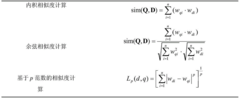
- A mass spectrum retrieval method based on a vector model is adopted. By representing the mass spectrum as a vector form, the similarity calculation based on the p norm and the introduction of the peak intensity scaling factor are used to calculate the similarity of the mass spectra and screen the standard mass spectra to improve Retrieval efficiency.



Sensitivity and Resolution Trade-offs in Ion Optics Design
The optimization of ion optics in GC-MS systems presents a fundamental challenge in balancing sensitivity and resolution. Higher sensitivity allows for detection of trace compounds, while improved resolution enables separation of closely related molecular species. These parameters often exist in an inverse relationship, creating a critical trade-off that system designers must navigate.
When optimizing ion optics for molecular breakdown analysis, increasing the ion transmission efficiency typically enhances sensitivity but may compromise resolution. This occurs because wider ion acceptance angles that capture more ions simultaneously reduce the system's ability to discriminate between ions with similar mass-to-charge ratios. Conversely, narrowing the acceptance angle improves resolution but decreases the total ion count reaching the detector.
The quadrupole mass filter exemplifies this trade-off. Operating at higher resolution modes requires tighter RF/DC voltage ratios, creating narrower stability regions that reject more ions, thereby reducing sensitivity. Modern systems implement dynamic scanning methods that adjust these parameters in real-time based on the target compounds, optimizing either sensitivity or resolution as needed during different analysis phases.
Ion focusing elements such as einzel lenses and ion funnels further illustrate this relationship. More aggressive focusing increases transmission efficiency but introduces space-charge effects when ions are concentrated, causing ion repulsion and trajectory distortion that degrades resolution. The latest ion funnel designs incorporate RF fields with optimized geometries to minimize these effects while maintaining high transmission rates.
Detector technology also influences this balance. Time-of-flight (TOF) detectors offer superior resolution but may sacrifice sensitivity compared to electron multipliers. Hybrid systems combining quadrupole pre-filtering with TOF detection represent one approach to optimizing both parameters simultaneously.
Temperature gradients within ion optics systems present another consideration. Higher temperatures reduce molecular adsorption on surfaces, improving sensitivity for less volatile compounds, but can increase thermal noise and reduce resolution. Controlled temperature zoning throughout the ion path has emerged as a solution to optimize both parameters for specific compound classes.
The latest computational modeling approaches now enable prediction of optimal ion optics configurations for specific analytical targets. Machine learning algorithms trained on experimental data can suggest parameter combinations that achieve the best compromise between sensitivity and resolution for particular molecular breakdown analyses, moving beyond the traditional one-size-fits-all approach to ion optics design.
When optimizing ion optics for molecular breakdown analysis, increasing the ion transmission efficiency typically enhances sensitivity but may compromise resolution. This occurs because wider ion acceptance angles that capture more ions simultaneously reduce the system's ability to discriminate between ions with similar mass-to-charge ratios. Conversely, narrowing the acceptance angle improves resolution but decreases the total ion count reaching the detector.
The quadrupole mass filter exemplifies this trade-off. Operating at higher resolution modes requires tighter RF/DC voltage ratios, creating narrower stability regions that reject more ions, thereby reducing sensitivity. Modern systems implement dynamic scanning methods that adjust these parameters in real-time based on the target compounds, optimizing either sensitivity or resolution as needed during different analysis phases.
Ion focusing elements such as einzel lenses and ion funnels further illustrate this relationship. More aggressive focusing increases transmission efficiency but introduces space-charge effects when ions are concentrated, causing ion repulsion and trajectory distortion that degrades resolution. The latest ion funnel designs incorporate RF fields with optimized geometries to minimize these effects while maintaining high transmission rates.
Detector technology also influences this balance. Time-of-flight (TOF) detectors offer superior resolution but may sacrifice sensitivity compared to electron multipliers. Hybrid systems combining quadrupole pre-filtering with TOF detection represent one approach to optimizing both parameters simultaneously.
Temperature gradients within ion optics systems present another consideration. Higher temperatures reduce molecular adsorption on surfaces, improving sensitivity for less volatile compounds, but can increase thermal noise and reduce resolution. Controlled temperature zoning throughout the ion path has emerged as a solution to optimize both parameters for specific compound classes.
The latest computational modeling approaches now enable prediction of optimal ion optics configurations for specific analytical targets. Machine learning algorithms trained on experimental data can suggest parameter combinations that achieve the best compromise between sensitivity and resolution for particular molecular breakdown analyses, moving beyond the traditional one-size-fits-all approach to ion optics design.
Environmental Applications and Regulatory Considerations
The optimization of GC-MS ion optics for molecular breakdowns has significant implications for environmental monitoring and compliance with regulatory standards. Environmental applications of enhanced GC-MS technology include the detection of persistent organic pollutants (POPs), volatile organic compounds (VOCs), and emerging contaminants in air, water, and soil samples. The improved sensitivity and resolution achieved through optimized ion optics enable environmental scientists to detect pollutants at concentrations previously below detection limits, supporting more comprehensive environmental impact assessments.
Regulatory bodies worldwide have established increasingly stringent requirements for environmental monitoring. The United States Environmental Protection Agency (EPA) Method TO-15 for air toxics and Method 8270 for semi-volatile organic compounds both rely heavily on GC-MS technology. Similarly, the European Union's Water Framework Directive and REACH regulations demand highly sensitive analytical methods for monitoring priority substances. Optimized GC-MS systems with enhanced ion optics directly support compliance with these regulations by improving detection capabilities and analytical precision.
Climate change research represents another critical environmental application benefiting from advanced GC-MS technology. Atmospheric scientists utilize these systems to analyze greenhouse gases and their precursors, while ecological researchers employ them to study biogenic volatile organic compound emissions from vegetation under changing climate conditions. The molecular breakdown capabilities of optimized ion optics allow for more accurate source attribution of environmental contaminants.
Environmental forensics has emerged as a specialized field where optimized GC-MS systems prove invaluable. These technologies enable investigators to identify pollution sources through chemical fingerprinting, supporting legal proceedings and remediation efforts. The enhanced molecular fragmentation patterns provided by improved ion optics create more distinctive chemical signatures, facilitating more conclusive source identification.
Future regulatory trends indicate movement toward non-targeted screening approaches that require instrumentation capable of detecting unknown compounds in environmental samples. Optimized GC-MS ion optics support this transition by providing more comprehensive fragmentation data, enabling better library matching and structural elucidation of unidentified environmental contaminants. This capability will be crucial as regulatory frameworks evolve to address complex environmental mixtures rather than focusing solely on individual compounds.
Regulatory bodies worldwide have established increasingly stringent requirements for environmental monitoring. The United States Environmental Protection Agency (EPA) Method TO-15 for air toxics and Method 8270 for semi-volatile organic compounds both rely heavily on GC-MS technology. Similarly, the European Union's Water Framework Directive and REACH regulations demand highly sensitive analytical methods for monitoring priority substances. Optimized GC-MS systems with enhanced ion optics directly support compliance with these regulations by improving detection capabilities and analytical precision.
Climate change research represents another critical environmental application benefiting from advanced GC-MS technology. Atmospheric scientists utilize these systems to analyze greenhouse gases and their precursors, while ecological researchers employ them to study biogenic volatile organic compound emissions from vegetation under changing climate conditions. The molecular breakdown capabilities of optimized ion optics allow for more accurate source attribution of environmental contaminants.
Environmental forensics has emerged as a specialized field where optimized GC-MS systems prove invaluable. These technologies enable investigators to identify pollution sources through chemical fingerprinting, supporting legal proceedings and remediation efforts. The enhanced molecular fragmentation patterns provided by improved ion optics create more distinctive chemical signatures, facilitating more conclusive source identification.
Future regulatory trends indicate movement toward non-targeted screening approaches that require instrumentation capable of detecting unknown compounds in environmental samples. Optimized GC-MS ion optics support this transition by providing more comprehensive fragmentation data, enabling better library matching and structural elucidation of unidentified environmental contaminants. This capability will be crucial as regulatory frameworks evolve to address complex environmental mixtures rather than focusing solely on individual compounds.
Unlock deeper insights with PatSnap Eureka Quick Research — get a full tech report to explore trends and direct your research. Try now!
Generate Your Research Report Instantly with AI Agent
Supercharge your innovation with PatSnap Eureka AI Agent Platform!