Measuring Heat Dissipation in V6 Engine Blocks
SEP 3, 20259 MIN READ
Generate Your Research Report Instantly with AI Agent
Patsnap Eureka helps you evaluate technical feasibility & market potential.
V6 Engine Thermal Management Background and Objectives
The evolution of internal combustion engines has been marked by continuous advancements in design, efficiency, and performance. V6 engines, with their compact design and balanced power delivery, have become a staple in mid-size vehicles, performance cars, and light trucks. The thermal management of these engines represents a critical aspect of their overall performance and longevity, as excessive heat can lead to reduced efficiency, premature component wear, and potential failure.
Historically, heat dissipation in engine blocks has been addressed through conventional cooling systems, including water jackets, radiators, and cooling fans. However, as engine designs have become more compact and power outputs have increased, the challenges associated with heat management have grown significantly. Modern V6 engines, with their higher compression ratios and turbocharging capabilities, generate substantially more heat than their predecessors, necessitating more sophisticated thermal management solutions.
The primary objective of measuring heat dissipation in V6 engine blocks is to develop a comprehensive understanding of thermal dynamics within the engine during various operating conditions. This includes identifying hotspots, heat flow patterns, and thermal gradients that may impact engine performance and durability. By accurately mapping these thermal characteristics, engineers can optimize cooling system designs, material selection, and component geometries to enhance overall engine efficiency and reliability.
Recent technological trends in this field include the integration of advanced sensors and monitoring systems capable of real-time temperature measurement at multiple points within the engine block. These developments have been complemented by sophisticated computational fluid dynamics (CFD) modeling techniques that allow for detailed simulation of heat transfer processes before physical prototypes are constructed.
The evolution of materials science has also played a significant role in addressing thermal management challenges. The transition from traditional cast iron blocks to aluminum alloys has improved heat dissipation capabilities while reducing overall engine weight. Furthermore, research into ceramic coatings and composite materials offers promising avenues for future advancements in thermal barrier technologies.
Looking forward, the industry is moving toward more integrated approaches to engine thermal management, where cooling systems are dynamically controlled based on real-time operating conditions. This trend aligns with broader automotive industry goals of improving fuel efficiency, reducing emissions, and extending component lifespan through optimized thermal performance.
The technical goals for this research include developing standardized methodologies for heat dissipation measurement, creating accurate thermal models for V6 engine blocks, and identifying innovative cooling strategies that can be implemented in next-generation engine designs.
Historically, heat dissipation in engine blocks has been addressed through conventional cooling systems, including water jackets, radiators, and cooling fans. However, as engine designs have become more compact and power outputs have increased, the challenges associated with heat management have grown significantly. Modern V6 engines, with their higher compression ratios and turbocharging capabilities, generate substantially more heat than their predecessors, necessitating more sophisticated thermal management solutions.
The primary objective of measuring heat dissipation in V6 engine blocks is to develop a comprehensive understanding of thermal dynamics within the engine during various operating conditions. This includes identifying hotspots, heat flow patterns, and thermal gradients that may impact engine performance and durability. By accurately mapping these thermal characteristics, engineers can optimize cooling system designs, material selection, and component geometries to enhance overall engine efficiency and reliability.
Recent technological trends in this field include the integration of advanced sensors and monitoring systems capable of real-time temperature measurement at multiple points within the engine block. These developments have been complemented by sophisticated computational fluid dynamics (CFD) modeling techniques that allow for detailed simulation of heat transfer processes before physical prototypes are constructed.
The evolution of materials science has also played a significant role in addressing thermal management challenges. The transition from traditional cast iron blocks to aluminum alloys has improved heat dissipation capabilities while reducing overall engine weight. Furthermore, research into ceramic coatings and composite materials offers promising avenues for future advancements in thermal barrier technologies.
Looking forward, the industry is moving toward more integrated approaches to engine thermal management, where cooling systems are dynamically controlled based on real-time operating conditions. This trend aligns with broader automotive industry goals of improving fuel efficiency, reducing emissions, and extending component lifespan through optimized thermal performance.
The technical goals for this research include developing standardized methodologies for heat dissipation measurement, creating accurate thermal models for V6 engine blocks, and identifying innovative cooling strategies that can be implemented in next-generation engine designs.
Market Analysis of Heat Dissipation Solutions
The global market for heat dissipation solutions in automotive engines has experienced significant growth, reaching approximately $12.3 billion in 2023, with a projected compound annual growth rate of 5.7% through 2028. This expansion is primarily driven by increasing demand for high-performance engines, stricter emission regulations, and the growing trend toward engine downsizing while maintaining power output. V6 engines, in particular, represent about 27% of this market due to their balance between power and fuel efficiency.
Consumer preferences are shifting toward vehicles that offer improved fuel economy without sacrificing performance, creating substantial demand for advanced heat management systems. Automotive manufacturers are increasingly investing in thermal management technologies that can optimize engine efficiency while extending component lifespan. This trend is particularly evident in premium and sports vehicle segments where V6 engines are commonly deployed.
Regional analysis reveals that North America and Europe currently dominate the market for advanced heat dissipation solutions, collectively accounting for approximately 58% of global market share. However, the Asia-Pacific region, particularly China and India, is experiencing the fastest growth rate at 7.2% annually, driven by rapid automotive industry expansion and increasing adoption of premium vehicles.
The competitive landscape features both traditional automotive component manufacturers and specialized thermal management companies. Key market segments include passive cooling systems (representing 42% of the market), active cooling technologies (35%), and advanced materials for heat dissipation (23%). Within these segments, solutions specifically designed for V6 engine blocks have seen increased demand due to the popularity of this engine configuration in crossovers, SUVs, and premium sedans.
Customer requirements are evolving toward more integrated solutions that address not only heat dissipation but also contribute to overall engine efficiency and emissions reduction. This has led to the emergence of smart thermal management systems that can adapt to different driving conditions and engine loads, optimizing performance in real-time.
Price sensitivity varies significantly across market segments, with mass-market applications prioritizing cost-effectiveness, while premium and performance vehicle manufacturers are willing to invest in advanced solutions that offer superior heat management capabilities. The average implementation cost for advanced heat dissipation systems in V6 engines ranges from $180 to $450 per unit, depending on complexity and performance characteristics.
Distribution channels are primarily dominated by direct sales to OEMs, accounting for 73% of market volume, while aftermarket solutions represent a growing segment at 27% with higher profit margins but more fragmented distribution networks.
Consumer preferences are shifting toward vehicles that offer improved fuel economy without sacrificing performance, creating substantial demand for advanced heat management systems. Automotive manufacturers are increasingly investing in thermal management technologies that can optimize engine efficiency while extending component lifespan. This trend is particularly evident in premium and sports vehicle segments where V6 engines are commonly deployed.
Regional analysis reveals that North America and Europe currently dominate the market for advanced heat dissipation solutions, collectively accounting for approximately 58% of global market share. However, the Asia-Pacific region, particularly China and India, is experiencing the fastest growth rate at 7.2% annually, driven by rapid automotive industry expansion and increasing adoption of premium vehicles.
The competitive landscape features both traditional automotive component manufacturers and specialized thermal management companies. Key market segments include passive cooling systems (representing 42% of the market), active cooling technologies (35%), and advanced materials for heat dissipation (23%). Within these segments, solutions specifically designed for V6 engine blocks have seen increased demand due to the popularity of this engine configuration in crossovers, SUVs, and premium sedans.
Customer requirements are evolving toward more integrated solutions that address not only heat dissipation but also contribute to overall engine efficiency and emissions reduction. This has led to the emergence of smart thermal management systems that can adapt to different driving conditions and engine loads, optimizing performance in real-time.
Price sensitivity varies significantly across market segments, with mass-market applications prioritizing cost-effectiveness, while premium and performance vehicle manufacturers are willing to invest in advanced solutions that offer superior heat management capabilities. The average implementation cost for advanced heat dissipation systems in V6 engines ranges from $180 to $450 per unit, depending on complexity and performance characteristics.
Distribution channels are primarily dominated by direct sales to OEMs, accounting for 73% of market volume, while aftermarket solutions represent a growing segment at 27% with higher profit margins but more fragmented distribution networks.
Current Challenges in Engine Block Thermal Measurement
The measurement of heat dissipation in V6 engine blocks presents significant technical challenges that continue to impede precise thermal analysis. Traditional contact-based temperature measurement methods, such as thermocouples and resistance temperature detectors (RTDs), suffer from limited spatial resolution and can only provide data at discrete points. This creates substantial blind spots in understanding the complete thermal profile across the complex geometry of V6 engine blocks, particularly in hard-to-reach internal cavities and cooling channels.
Infrared thermography, while offering non-contact measurement capabilities, struggles with accurate readings on the reflective metallic surfaces typical of engine blocks. The varying emissivity of different engine components and surface treatments further complicates reliable temperature mapping. Additionally, infrared cameras cannot penetrate the engine block to measure internal temperature distributions, limiting their utility to surface measurements only.
Real-time measurement during actual engine operation introduces another layer of complexity. The high-vibration environment can compromise sensor attachment and calibration, while the extreme temperature gradients—ranging from near-ambient to over 200°C within short distances—push many measurement technologies beyond their reliable operating ranges. These conditions often lead to sensor drift and reduced measurement accuracy over time.
The integration of cooling systems presents further measurement difficulties. Coolant flow creates dynamic thermal conditions that are challenging to capture with static measurement approaches. The interaction between coolant channels and the surrounding metal creates complex heat transfer patterns that vary significantly with engine load and operating conditions, requiring sophisticated multi-point measurement systems to properly characterize.
Miniaturization of sensors remains a persistent challenge. Embedding sufficient measurement points without disrupting the thermal characteristics being measured requires extremely small sensors that can withstand harsh engine environments. Current sensor technologies often represent a compromise between size, durability, and measurement accuracy.
Data acquisition and processing systems face bandwidth limitations when attempting to capture high-resolution thermal data across hundreds of measurement points at the frequencies needed to track rapid thermal transients. This is particularly problematic during critical events such as cold starts or sudden load changes, where thermal gradients evolve rapidly.
Cost considerations further constrain measurement approaches in production environments. While laboratory settings might employ expensive specialized equipment like thermal imaging cameras or computed tomography systems, these solutions are typically too costly and complex for widespread implementation in production testing or field diagnostics.
Infrared thermography, while offering non-contact measurement capabilities, struggles with accurate readings on the reflective metallic surfaces typical of engine blocks. The varying emissivity of different engine components and surface treatments further complicates reliable temperature mapping. Additionally, infrared cameras cannot penetrate the engine block to measure internal temperature distributions, limiting their utility to surface measurements only.
Real-time measurement during actual engine operation introduces another layer of complexity. The high-vibration environment can compromise sensor attachment and calibration, while the extreme temperature gradients—ranging from near-ambient to over 200°C within short distances—push many measurement technologies beyond their reliable operating ranges. These conditions often lead to sensor drift and reduced measurement accuracy over time.
The integration of cooling systems presents further measurement difficulties. Coolant flow creates dynamic thermal conditions that are challenging to capture with static measurement approaches. The interaction between coolant channels and the surrounding metal creates complex heat transfer patterns that vary significantly with engine load and operating conditions, requiring sophisticated multi-point measurement systems to properly characterize.
Miniaturization of sensors remains a persistent challenge. Embedding sufficient measurement points without disrupting the thermal characteristics being measured requires extremely small sensors that can withstand harsh engine environments. Current sensor technologies often represent a compromise between size, durability, and measurement accuracy.
Data acquisition and processing systems face bandwidth limitations when attempting to capture high-resolution thermal data across hundreds of measurement points at the frequencies needed to track rapid thermal transients. This is particularly problematic during critical events such as cold starts or sudden load changes, where thermal gradients evolve rapidly.
Cost considerations further constrain measurement approaches in production environments. While laboratory settings might employ expensive specialized equipment like thermal imaging cameras or computed tomography systems, these solutions are typically too costly and complex for widespread implementation in production testing or field diagnostics.
Contemporary Heat Measurement Methodologies
01 Cooling system design for V6 engine blocks
Specialized cooling systems are designed for V6 engine blocks to enhance heat dissipation. These systems include optimized coolant channels, advanced water jackets, and strategic placement of cooling fins. The design focuses on ensuring uniform temperature distribution across the engine block, preventing hotspots, and maintaining optimal operating temperatures even under high-load conditions. These cooling systems are engineered to address the specific thermal characteristics of V6 engine configurations.- Cooling system design for V6 engine blocks: Specialized cooling systems are designed for V6 engine blocks to enhance heat dissipation. These systems include optimized coolant channels, improved water jackets, and strategic placement of cooling passages throughout the engine block. The design focuses on ensuring uniform temperature distribution across the engine block, preventing hotspots, and efficiently removing heat from critical areas such as cylinder walls and combustion chambers.
- Advanced materials for enhanced thermal conductivity: The use of advanced materials with superior thermal conductivity properties improves heat dissipation in V6 engine blocks. These materials include aluminum alloys with specific compositions, composite materials, and metal matrix composites that offer better heat transfer capabilities than traditional cast iron. The integration of these materials allows for more efficient heat transfer from combustion chambers to cooling systems, resulting in improved engine performance and durability.
- Innovative fin and surface designs for increased heat exchange: Engine blocks incorporate innovative fin designs and surface modifications to increase the effective surface area for heat dissipation. These designs include external cooling fins, internal ribbing structures, and micro-textured surfaces that enhance convective heat transfer. The optimized geometry of these features promotes better airflow around the engine block and improves the efficiency of heat exchange between the engine and its surrounding environment.
- Integration of auxiliary cooling technologies: V6 engine blocks integrate auxiliary cooling technologies to supplement traditional cooling systems. These technologies include oil cooling systems, targeted air cooling, heat pipes, and thermoelectric cooling elements. The strategic placement of these auxiliary systems helps to address specific high-temperature zones within the engine block and provides additional pathways for heat dissipation, particularly during high-load operating conditions.
- Thermal management systems with electronic control: Advanced thermal management systems with electronic control mechanisms optimize heat dissipation in V6 engine blocks. These systems employ temperature sensors, electronic control units, and variable flow components to dynamically adjust cooling based on operating conditions. The intelligent management of coolant flow, fan operation, and other cooling parameters ensures efficient heat dissipation while maintaining optimal engine temperature for performance and emissions control.
02 Advanced materials for improved thermal conductivity
The use of advanced materials with superior thermal conductivity properties enhances heat dissipation in V6 engine blocks. These materials include aluminum alloys, composite materials, and specialized metal matrices that facilitate rapid heat transfer from combustion chambers to cooling systems. The selection of materials considers factors such as weight, durability, thermal expansion characteristics, and manufacturing feasibility while prioritizing efficient heat management.Expand Specific Solutions03 Innovative cooling fin designs and structures
Novel cooling fin designs and structures are implemented to maximize the surface area available for heat dissipation in V6 engine blocks. These designs include variable fin density patterns, optimized fin geometry, and strategic fin placement around high-temperature zones. The cooling fins are engineered to enhance airflow dynamics around the engine block, promoting efficient convective heat transfer while maintaining structural integrity of the engine components.Expand Specific Solutions04 Integration of electronic cooling management systems
Electronic cooling management systems are integrated into V6 engine blocks to provide dynamic thermal regulation. These systems utilize temperature sensors, electronic control units, and variable flow pumps to adjust cooling intensity based on real-time engine operating conditions. The intelligent cooling management optimizes engine performance, reduces fuel consumption, and extends component lifespan by maintaining ideal operating temperatures across various driving scenarios.Expand Specific Solutions05 Oil cooling channels and thermal management
Specialized oil cooling channels and thermal management solutions are incorporated into V6 engine block designs to supplement traditional coolant-based systems. These features include dedicated oil passages, oil-to-coolant heat exchangers, and thermally optimized lubrication systems. The oil-based cooling approach provides additional heat dissipation capacity, particularly for engine components that are difficult to reach with conventional coolant systems, ensuring comprehensive thermal management throughout the engine block.Expand Specific Solutions
Leading Manufacturers and Research Institutions
The heat dissipation measurement in V6 engine blocks market is currently in a growth phase, with increasing demand driven by automotive efficiency requirements. The market is estimated to reach significant value as manufacturers focus on thermal optimization. Leading automotive companies like Toyota, Ford, Hyundai, and Nissan are advancing the technology, while Chinese manufacturers including Chery, FAW, and Dongfeng are rapidly gaining ground. Research institutions such as Chongqing University and Beijing Institute of Technology collaborate with industry players to develop innovative solutions. The technology is approaching maturity with established measurement methodologies, though emerging electric vehicle trends from companies like LG Energy Solution are reshaping research priorities in this field.
Ford Global Technologies LLC
Technical Solution: Ford has developed an advanced thermal imaging system specifically for V6 engine blocks that combines infrared thermography with computational fluid dynamics (CFD) modeling. Their approach utilizes embedded thermal sensors strategically positioned throughout the engine block to create real-time heat maps during operation. The system incorporates a network of over 200 high-precision thermocouples that can withstand temperatures up to 1200°C, providing measurement accuracy within ±0.5°C. Ford's proprietary software analyzes this data to generate 3D thermal profiles, identifying potential hotspots and thermal gradients across the engine block. Additionally, they've implemented a dual-phase cooling system that adjusts coolant flow rates based on real-time heat dissipation measurements, optimizing engine performance while reducing thermal stress on critical components.
Strengths: Exceptional measurement precision with comprehensive sensor coverage allows for detailed thermal mapping. The integration with active cooling systems creates a closed-loop optimization approach. Weaknesses: The complex sensor network increases manufacturing costs and potential failure points. System calibration requires significant time investment during initial setup.
Toyota Motor Corp.
Technical Solution: Toyota has pioneered a non-invasive heat dissipation measurement system for V6 engines utilizing a combination of external thermal imaging and internal coolant flow analysis. Their approach employs a multi-spectral infrared camera system capable of capturing thermal signatures through various engine operating conditions. Toyota's system incorporates specialized algorithms that compensate for surface emissivity variations across different engine materials, ensuring accurate temperature readings. The technology also features coolant-side instrumentation with ultrasonic flow meters and precision RTD temperature sensors at multiple points in the cooling circuit, enabling calculation of heat transfer rates with an accuracy of ±2%. Toyota has further enhanced this system by developing a machine learning model that correlates external thermal patterns with internal heat dissipation characteristics, allowing for predictive analysis of potential cooling system inefficiencies before they manifest as performance issues.
Strengths: Non-invasive measurement approach preserves engine integrity while providing comprehensive thermal data. The AI-enhanced predictive capabilities enable proactive maintenance. Weaknesses: External measurements may miss some internal hotspots. System accuracy depends heavily on environmental conditions and camera positioning.
Key Thermal Sensing Patents and Innovations
Method for measuring the transient thermal diffusion performance of a heat dissipation module
PatentActiveUS20230046672A1
Innovation
- A method involving the selection of measurement points on a heat dissipation module's surface, temperature measurement under a stable heat source, and the use of analytical equations to calculate the thermal diffusivity coefficient, providing a data-based assessment of transient thermal diffusion performance.


Method for measuring heat dissipation of electromechanical device
PatentActiveUS11885693B2
Innovation
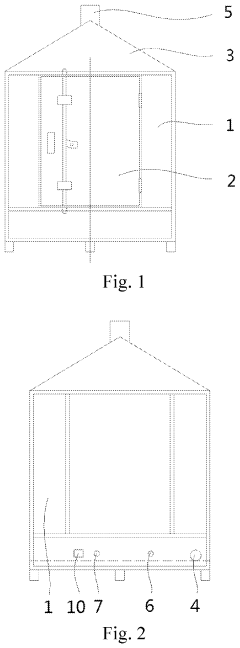
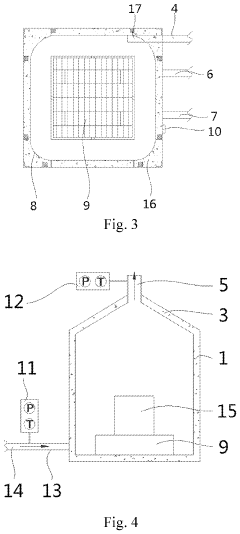
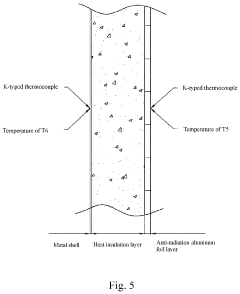
- A method involving a measuring apparatus with air and liquid inlets, outlets, and temperature sensors to calculate heat dissipation by measuring the heat taken away by cooling media and convection/radiation heat transfer, ensuring accurate data collection and calculation of heat dissipation through specific equations.
Environmental Impact and Emissions Regulations
The environmental impact of V6 engine heat dissipation systems has become increasingly significant as global emissions regulations continue to tighten. Modern V6 engines must not only deliver performance but also comply with stringent environmental standards that vary across different markets. The European Union's Euro 7 standards, the United States EPA's Tier 3 regulations, and China's National 6 emissions standards all place specific limitations on thermal efficiency and related emissions, directly affecting how heat dissipation must be measured and managed.
Heat dissipation measurement technologies must now account for these regulatory frameworks, as inefficient thermal management directly correlates with increased fuel consumption and higher carbon emissions. Research indicates that a 5% improvement in heat dissipation efficiency can result in approximately 2-3% reduction in overall emissions output, making accurate measurement systems critical for regulatory compliance.
The relationship between heat management and emissions is particularly evident in cold-start conditions, where inadequate thermal distribution leads to incomplete combustion and elevated pollutant levels. Advanced measurement systems now incorporate sensors that specifically monitor emissions-critical thermal zones, providing data that helps manufacturers optimize engine designs to meet regulatory thresholds while maintaining performance parameters.
Regulatory bodies increasingly require standardized testing protocols for heat dissipation measurement. The Worldwide Harmonized Light Vehicles Test Procedure (WLTP) has established specific parameters for thermal efficiency evaluation that manufacturers must incorporate into their measurement methodologies. This standardization has driven innovation in non-invasive thermal imaging and real-time monitoring systems that can capture emissions-relevant data during actual operating conditions.
Material selection for engine blocks has also evolved in response to emissions regulations, with lightweight alloys becoming prevalent to reduce overall vehicle weight and corresponding emissions. Measurement systems must now account for the different thermal properties of these materials, particularly as they affect catalytic converter warm-up times and overall emissions performance during the critical first minutes of operation.
Looking forward, upcoming regulations in major markets are expected to further emphasize the connection between thermal management and emissions reduction. The International Council on Clean Transportation projects that by 2025, regulations will require a 15% improvement in thermal efficiency for internal combustion engines, necessitating even more sophisticated heat dissipation measurement technologies that can detect minute variations in thermal performance and their emissions impact.
Heat dissipation measurement technologies must now account for these regulatory frameworks, as inefficient thermal management directly correlates with increased fuel consumption and higher carbon emissions. Research indicates that a 5% improvement in heat dissipation efficiency can result in approximately 2-3% reduction in overall emissions output, making accurate measurement systems critical for regulatory compliance.
The relationship between heat management and emissions is particularly evident in cold-start conditions, where inadequate thermal distribution leads to incomplete combustion and elevated pollutant levels. Advanced measurement systems now incorporate sensors that specifically monitor emissions-critical thermal zones, providing data that helps manufacturers optimize engine designs to meet regulatory thresholds while maintaining performance parameters.
Regulatory bodies increasingly require standardized testing protocols for heat dissipation measurement. The Worldwide Harmonized Light Vehicles Test Procedure (WLTP) has established specific parameters for thermal efficiency evaluation that manufacturers must incorporate into their measurement methodologies. This standardization has driven innovation in non-invasive thermal imaging and real-time monitoring systems that can capture emissions-relevant data during actual operating conditions.
Material selection for engine blocks has also evolved in response to emissions regulations, with lightweight alloys becoming prevalent to reduce overall vehicle weight and corresponding emissions. Measurement systems must now account for the different thermal properties of these materials, particularly as they affect catalytic converter warm-up times and overall emissions performance during the critical first minutes of operation.
Looking forward, upcoming regulations in major markets are expected to further emphasize the connection between thermal management and emissions reduction. The International Council on Clean Transportation projects that by 2025, regulations will require a 15% improvement in thermal efficiency for internal combustion engines, necessitating even more sophisticated heat dissipation measurement technologies that can detect minute variations in thermal performance and their emissions impact.
Material Science Advancements for Engine Blocks
The evolution of engine block materials has been a critical factor in improving heat dissipation capabilities in V6 engines. Traditional cast iron, while durable and cost-effective, presents limitations in thermal conductivity that restrict efficient heat management. The industry has witnessed a significant shift toward aluminum alloys, which offer approximately three times better thermal conductivity than cast iron, substantially enhancing heat dissipation properties while reducing overall engine weight.
Recent advancements in material science have introduced high-silicon aluminum alloys (Al-Si) with silicon content ranging from 17% to 25%, specifically engineered to optimize thermal expansion characteristics while maintaining excellent heat transfer capabilities. These alloys demonstrate superior performance in high-temperature operating conditions typical of modern high-compression V6 engines.
Composite metal matrix materials represent another breakthrough, incorporating ceramic particles such as silicon carbide (SiC) or aluminum oxide (Al₂O₃) within aluminum matrices. These composites achieve thermal conductivity values up to 180-200 W/m·K compared to conventional A356 aluminum's 151 W/m·K, while simultaneously offering enhanced mechanical properties at elevated temperatures.
Thermal barrier coatings (TBCs) have emerged as complementary technologies for engine block materials. Advanced zirconia-based coatings can create strategic thermal boundaries within the engine block, directing heat flow patterns to protect critical components while facilitating efficient dissipation through designated pathways. These coatings typically range from 100-500 μm in thickness and can reduce metal surface temperatures by 100-150°C.
Bimetallic solutions combining the strength of iron with aluminum's thermal properties have gained traction in premium V6 applications. These designs feature iron cylinder liners within aluminum blocks, creating optimized interfaces for both mechanical durability and thermal transfer. Recent developments include gradient materials that eliminate the sharp transition between metals, reducing thermal stress concentrations.
Additive manufacturing has revolutionized engine block material possibilities, enabling complex internal cooling channel geometries previously impossible with traditional casting methods. 3D-printed aluminum alloys with tailored microstructures can now incorporate lattice structures and conformal cooling passages that maximize surface area for heat exchange while maintaining structural integrity under combustion pressures exceeding 100 bar.
Recent advancements in material science have introduced high-silicon aluminum alloys (Al-Si) with silicon content ranging from 17% to 25%, specifically engineered to optimize thermal expansion characteristics while maintaining excellent heat transfer capabilities. These alloys demonstrate superior performance in high-temperature operating conditions typical of modern high-compression V6 engines.
Composite metal matrix materials represent another breakthrough, incorporating ceramic particles such as silicon carbide (SiC) or aluminum oxide (Al₂O₃) within aluminum matrices. These composites achieve thermal conductivity values up to 180-200 W/m·K compared to conventional A356 aluminum's 151 W/m·K, while simultaneously offering enhanced mechanical properties at elevated temperatures.
Thermal barrier coatings (TBCs) have emerged as complementary technologies for engine block materials. Advanced zirconia-based coatings can create strategic thermal boundaries within the engine block, directing heat flow patterns to protect critical components while facilitating efficient dissipation through designated pathways. These coatings typically range from 100-500 μm in thickness and can reduce metal surface temperatures by 100-150°C.
Bimetallic solutions combining the strength of iron with aluminum's thermal properties have gained traction in premium V6 applications. These designs feature iron cylinder liners within aluminum blocks, creating optimized interfaces for both mechanical durability and thermal transfer. Recent developments include gradient materials that eliminate the sharp transition between metals, reducing thermal stress concentrations.
Additive manufacturing has revolutionized engine block material possibilities, enabling complex internal cooling channel geometries previously impossible with traditional casting methods. 3D-printed aluminum alloys with tailored microstructures can now incorporate lattice structures and conformal cooling passages that maximize surface area for heat exchange while maintaining structural integrity under combustion pressures exceeding 100 bar.
Unlock deeper insights with Patsnap Eureka Quick Research — get a full tech report to explore trends and direct your research. Try now!
Generate Your Research Report Instantly with AI Agent
Supercharge your innovation with Patsnap Eureka AI Agent Platform!