

Neuromorphic Materials in Electronics: Regulatory Challenges
OCT 27, 202510 MIN READ
Generate Your Research Report Instantly with AI Agent
PatSnap Eureka helps you evaluate technical feasibility & market potential.
Neuromorphic Materials Evolution and Research Objectives
Neuromorphic computing represents a paradigm shift in electronic system design, drawing inspiration from the structure and function of biological neural systems. The evolution of neuromorphic materials has progressed significantly since the concept was first introduced by Carver Mead in the late 1980s. Initially, neuromorphic systems relied on conventional silicon-based CMOS technology to mimic neural functions, with limited success in replicating the efficiency and adaptability of biological systems.
The field experienced its first major breakthrough in the early 2000s with the development of memristive materials, which demonstrated the ability to change resistance based on the history of applied voltage, similar to how synapses modify their strength. This advancement marked the transition from purely digital approximations to analog implementations that more closely resembled biological neural processes.
Between 2010 and 2020, research expanded to include phase-change materials, ferroelectric materials, and various oxide-based compounds that exhibited properties suitable for neuromorphic applications. These materials enabled the creation of artificial synapses and neurons with significantly improved energy efficiency and learning capabilities compared to traditional computing architectures.
Recent developments have focused on two-dimensional materials such as graphene and transition metal dichalcogenides, which offer unprecedented scalability and integration potential. Additionally, organic and bio-inspired materials have emerged as promising candidates for creating flexible, biocompatible neuromorphic systems that can interface directly with biological tissues.
The primary research objectives in this field now center on addressing several critical challenges. First, improving the reliability and longevity of neuromorphic materials, as current implementations often suffer from degradation after repeated use. Second, enhancing the scalability of these materials to enable the creation of large-scale neuromorphic networks capable of complex cognitive tasks.
Another key objective is reducing the energy consumption of neuromorphic systems while maintaining or improving their computational capabilities. This aligns with the broader goal of developing sustainable electronics that can operate efficiently in resource-constrained environments.
Researchers are also focused on standardizing fabrication processes to ensure consistency in material properties and device performance across different manufacturing facilities. This standardization is essential for the commercial viability of neuromorphic technologies and their integration into existing electronic ecosystems.
The ultimate goal of neuromorphic materials research is to develop systems that can perform complex cognitive tasks with the energy efficiency and adaptability of biological brains, potentially revolutionizing fields ranging from artificial intelligence and robotics to healthcare and environmental monitoring.
The field experienced its first major breakthrough in the early 2000s with the development of memristive materials, which demonstrated the ability to change resistance based on the history of applied voltage, similar to how synapses modify their strength. This advancement marked the transition from purely digital approximations to analog implementations that more closely resembled biological neural processes.
Between 2010 and 2020, research expanded to include phase-change materials, ferroelectric materials, and various oxide-based compounds that exhibited properties suitable for neuromorphic applications. These materials enabled the creation of artificial synapses and neurons with significantly improved energy efficiency and learning capabilities compared to traditional computing architectures.
Recent developments have focused on two-dimensional materials such as graphene and transition metal dichalcogenides, which offer unprecedented scalability and integration potential. Additionally, organic and bio-inspired materials have emerged as promising candidates for creating flexible, biocompatible neuromorphic systems that can interface directly with biological tissues.
The primary research objectives in this field now center on addressing several critical challenges. First, improving the reliability and longevity of neuromorphic materials, as current implementations often suffer from degradation after repeated use. Second, enhancing the scalability of these materials to enable the creation of large-scale neuromorphic networks capable of complex cognitive tasks.
Another key objective is reducing the energy consumption of neuromorphic systems while maintaining or improving their computational capabilities. This aligns with the broader goal of developing sustainable electronics that can operate efficiently in resource-constrained environments.
Researchers are also focused on standardizing fabrication processes to ensure consistency in material properties and device performance across different manufacturing facilities. This standardization is essential for the commercial viability of neuromorphic technologies and their integration into existing electronic ecosystems.
The ultimate goal of neuromorphic materials research is to develop systems that can perform complex cognitive tasks with the energy efficiency and adaptability of biological brains, potentially revolutionizing fields ranging from artificial intelligence and robotics to healthcare and environmental monitoring.
Market Demand Analysis for Brain-Inspired Computing
The brain-inspired computing market is experiencing unprecedented growth, driven by the increasing demand for more efficient and intelligent computing systems. Current projections indicate that the global neuromorphic computing market will reach approximately $8.9 billion by 2025, with a compound annual growth rate of 49.1% from 2020. This remarkable growth trajectory is fueled by several converging market factors that highlight the critical need for neuromorphic materials in electronics.
The primary market driver is the exponential increase in data generation and processing requirements. Traditional von Neumann computing architectures are reaching their physical and practical limitations in handling the massive datasets required for modern AI applications. Brain-inspired computing offers a solution by mimicking the brain's parallel processing capabilities, enabling more efficient handling of complex, unstructured data while consuming significantly less power.
Energy efficiency represents another crucial market demand. Data centers currently consume about 1% of global electricity, with projections suggesting this could rise to 8% by 2030. Neuromorphic systems, which can potentially operate at 1,000 times greater energy efficiency than conventional computing systems, address this pressing sustainability concern while offering substantial operational cost savings for enterprises.
The edge computing revolution is creating substantial demand for neuromorphic solutions. Market research indicates that 75% of enterprise-generated data will be processed at the edge by 2025, requiring computing systems that can deliver real-time processing with minimal power consumption. Neuromorphic materials enable these capabilities through their inherent efficiency and adaptability.
Healthcare applications represent a particularly promising vertical market. The global AI in healthcare market is projected to reach $45.2 billion by 2026, with neuromorphic computing poised to revolutionize medical imaging, disease diagnosis, and personalized medicine through more sophisticated pattern recognition capabilities.
Autonomous systems across industries constitute another significant market segment. The autonomous vehicle market alone is expected to reach $556.67 billion by 2026, with neuromorphic computing offering crucial advantages in real-time decision-making, sensor fusion, and adaptive learning capabilities essential for safe operation.
Despite this promising outlook, market adoption faces challenges including the lack of standardized development frameworks, limited commercial-ready neuromorphic hardware, and regulatory uncertainties surrounding novel materials. The market currently demonstrates a gap between research advancements and commercial implementation, creating opportunities for early movers who can bridge this divide with practical, scalable solutions.
The primary market driver is the exponential increase in data generation and processing requirements. Traditional von Neumann computing architectures are reaching their physical and practical limitations in handling the massive datasets required for modern AI applications. Brain-inspired computing offers a solution by mimicking the brain's parallel processing capabilities, enabling more efficient handling of complex, unstructured data while consuming significantly less power.
Energy efficiency represents another crucial market demand. Data centers currently consume about 1% of global electricity, with projections suggesting this could rise to 8% by 2030. Neuromorphic systems, which can potentially operate at 1,000 times greater energy efficiency than conventional computing systems, address this pressing sustainability concern while offering substantial operational cost savings for enterprises.
The edge computing revolution is creating substantial demand for neuromorphic solutions. Market research indicates that 75% of enterprise-generated data will be processed at the edge by 2025, requiring computing systems that can deliver real-time processing with minimal power consumption. Neuromorphic materials enable these capabilities through their inherent efficiency and adaptability.
Healthcare applications represent a particularly promising vertical market. The global AI in healthcare market is projected to reach $45.2 billion by 2026, with neuromorphic computing poised to revolutionize medical imaging, disease diagnosis, and personalized medicine through more sophisticated pattern recognition capabilities.
Autonomous systems across industries constitute another significant market segment. The autonomous vehicle market alone is expected to reach $556.67 billion by 2026, with neuromorphic computing offering crucial advantages in real-time decision-making, sensor fusion, and adaptive learning capabilities essential for safe operation.
Despite this promising outlook, market adoption faces challenges including the lack of standardized development frameworks, limited commercial-ready neuromorphic hardware, and regulatory uncertainties surrounding novel materials. The market currently demonstrates a gap between research advancements and commercial implementation, creating opportunities for early movers who can bridge this divide with practical, scalable solutions.
Neuromorphic Materials Development Status and Barriers
Neuromorphic materials represent a revolutionary frontier in electronics, mimicking the brain's neural architecture to enable more efficient computing systems. Currently, these materials are at varying stages of development globally, with significant advancements in phase-change materials, memristive oxides, and organic electronic materials. Research institutions in the United States, European Union, China, and Japan have established dedicated neuromorphic research centers, creating a competitive landscape for innovation.
Despite promising progress, several critical barriers impede widespread implementation. Material stability remains a primary concern, as many neuromorphic materials exhibit degradation under operational conditions, limiting device longevity. Researchers at MIT and Stanford have documented performance deterioration in memristive devices after repeated switching cycles, presenting a significant challenge for commercial applications requiring years of reliable operation.
Scalability issues present another substantial hurdle. While laboratory demonstrations have shown impressive results with small arrays of neuromorphic components, scaling these to commercially viable dimensions introduces complications in uniformity and reliability. The semiconductor industry's established fabrication processes are not fully compatible with many neuromorphic materials, necessitating new manufacturing approaches and substantial capital investment.
Energy efficiency, paradoxically, remains problematic despite being a promised advantage. Although neuromorphic systems theoretically offer lower power consumption than conventional computing architectures, current implementations often require higher operational voltages than desired, negating some efficiency benefits. Research at IBM's neuromorphic labs indicates that material interface engineering represents a critical path toward resolving these energy constraints.
Standardization presents another significant barrier. The neuromorphic materials field lacks unified benchmarking protocols and performance metrics, making objective comparison between different material solutions difficult. This absence of standards hampers investment decisions and slows industry adoption. The IEEE has initiated working groups to address this gap, but consensus remains elusive.
Regulatory frameworks worldwide are struggling to keep pace with neuromorphic material development. Current electronic component regulations were not designed with brain-inspired computing in mind, creating uncertainty regarding certification requirements. Materials like hafnium oxide memristors face scrutiny under both electronic component regulations and emerging nanomaterial oversight regimes, creating a complex compliance landscape that increases development costs and timelines.
Access to specialized characterization equipment and expertise represents another limitation, particularly for smaller research entities and startups. The interdisciplinary nature of neuromorphic materials—spanning materials science, electrical engineering, computer architecture, and neuroscience—requires collaboration across traditionally separate domains, creating organizational challenges even within well-resourced institutions.
Despite promising progress, several critical barriers impede widespread implementation. Material stability remains a primary concern, as many neuromorphic materials exhibit degradation under operational conditions, limiting device longevity. Researchers at MIT and Stanford have documented performance deterioration in memristive devices after repeated switching cycles, presenting a significant challenge for commercial applications requiring years of reliable operation.
Scalability issues present another substantial hurdle. While laboratory demonstrations have shown impressive results with small arrays of neuromorphic components, scaling these to commercially viable dimensions introduces complications in uniformity and reliability. The semiconductor industry's established fabrication processes are not fully compatible with many neuromorphic materials, necessitating new manufacturing approaches and substantial capital investment.
Energy efficiency, paradoxically, remains problematic despite being a promised advantage. Although neuromorphic systems theoretically offer lower power consumption than conventional computing architectures, current implementations often require higher operational voltages than desired, negating some efficiency benefits. Research at IBM's neuromorphic labs indicates that material interface engineering represents a critical path toward resolving these energy constraints.
Standardization presents another significant barrier. The neuromorphic materials field lacks unified benchmarking protocols and performance metrics, making objective comparison between different material solutions difficult. This absence of standards hampers investment decisions and slows industry adoption. The IEEE has initiated working groups to address this gap, but consensus remains elusive.
Regulatory frameworks worldwide are struggling to keep pace with neuromorphic material development. Current electronic component regulations were not designed with brain-inspired computing in mind, creating uncertainty regarding certification requirements. Materials like hafnium oxide memristors face scrutiny under both electronic component regulations and emerging nanomaterial oversight regimes, creating a complex compliance landscape that increases development costs and timelines.
Access to specialized characterization equipment and expertise represents another limitation, particularly for smaller research entities and startups. The interdisciplinary nature of neuromorphic materials—spanning materials science, electrical engineering, computer architecture, and neuroscience—requires collaboration across traditionally separate domains, creating organizational challenges even within well-resourced institutions.
Current Neuromorphic Material Implementation Solutions
01 Memristive materials for neuromorphic computing
Memristive materials are key components in neuromorphic computing systems, mimicking the behavior of biological synapses. These materials can change their resistance based on the history of applied voltage or current, enabling them to store and process information simultaneously. This property makes them ideal for implementing artificial neural networks in hardware, offering advantages in energy efficiency and processing speed compared to traditional computing architectures.- Memristive materials for neuromorphic computing: Memristive materials are used in neuromorphic computing to mimic the behavior of biological synapses. These materials can change their resistance based on the history of applied voltage or current, enabling them to store and process information simultaneously. This property makes them ideal for implementing artificial neural networks in hardware, offering advantages in energy efficiency and processing speed compared to traditional computing architectures.
- Phase-change materials for neuromorphic applications: Phase-change materials can rapidly switch between amorphous and crystalline states, exhibiting different electrical resistances in each state. This property enables them to function as artificial synapses in neuromorphic systems, allowing for multi-level storage capabilities that mimic the variable connection strengths of biological neural networks. These materials offer non-volatile memory characteristics and can be integrated into neuromorphic computing architectures for efficient information processing.
- Neural network hardware implementations using specialized materials: Specialized materials are being developed to create hardware implementations of neural networks that more closely mimic biological brain functions. These materials enable the creation of physical neural networks with improved energy efficiency, processing speed, and learning capabilities compared to software-based implementations. The hardware implementations can include crossbar arrays, three-dimensional architectures, and other novel configurations that leverage the unique properties of these neuromorphic materials.
- Organic and polymer-based neuromorphic materials: Organic and polymer-based materials are being explored for neuromorphic applications due to their flexibility, biocompatibility, and tunable electrical properties. These materials can be engineered to exhibit synaptic behaviors such as spike-timing-dependent plasticity and can be fabricated using low-cost methods. Their mechanical flexibility makes them suitable for wearable or implantable neuromorphic devices, potentially enabling direct interfaces between artificial neural systems and biological tissues.
- Quantum materials for advanced neuromorphic systems: Quantum materials exhibit unique electronic, magnetic, or optical properties that can be harnessed for next-generation neuromorphic computing. These materials can leverage quantum effects to perform complex computations more efficiently than classical systems. Quantum neuromorphic materials may enable the development of systems that can handle probabilistic computing, quantum machine learning, and other advanced computational paradigms that more closely resemble the inherent uncertainty and parallelism of biological neural processing.
02 Phase-change materials for neuromorphic applications
Phase-change materials exhibit rapid and reversible transitions between amorphous and crystalline states, which can be utilized to create multi-level memory states in neuromorphic systems. These materials provide non-volatile memory capabilities with tunable resistance states, making them suitable for implementing synaptic weights in artificial neural networks. Their ability to maintain states without power consumption contributes to energy-efficient neuromorphic computing systems.Expand Specific Solutions03 Neural network hardware implementation using specialized materials
Specialized materials are being developed to directly implement neural network architectures in hardware. These materials facilitate the creation of physical neural networks that can perform computations more efficiently than software simulations on conventional hardware. By incorporating materials with inherent computational properties, these implementations can achieve higher energy efficiency, reduced latency, and improved parallelism for machine learning applications.Expand Specific Solutions04 Organic and bio-inspired neuromorphic materials
Organic and bio-inspired materials are emerging as alternatives for neuromorphic computing systems. These materials offer advantages such as flexibility, biocompatibility, and self-healing properties. By mimicking biological neural systems more closely, these materials can enable more efficient and adaptable neuromorphic architectures. Research in this area focuses on developing materials that can replicate the complex behaviors of biological neurons and synapses while maintaining low power consumption.Expand Specific Solutions05 Quantum materials for advanced neuromorphic systems
Quantum materials exhibit unique properties that can be harnessed for next-generation neuromorphic computing. These materials leverage quantum mechanical effects to perform complex computations that would be difficult or impossible with classical systems. By utilizing quantum superposition, entanglement, and tunneling effects, these materials can potentially achieve unprecedented computational capabilities for machine learning and artificial intelligence applications, while maintaining high energy efficiency.Expand Specific Solutions
Key Industry Players in Neuromorphic Materials
Neuromorphic materials in electronics are currently in an early growth phase, with the market expected to expand significantly as these brain-inspired technologies mature. The global market is projected to reach several billion dollars by 2030, driven by applications in AI, edge computing, and IoT. Major players like IBM, Samsung Electronics, and SK Hynix are leading commercial development, while research institutions such as Fudan University, CNRS, and University of Grenoble are advancing fundamental science. The regulatory landscape presents significant challenges, particularly regarding safety standards, intellectual property protection, and ethical implications of brain-like computing systems. Companies like Applied Materials and TDK are developing manufacturing processes to bridge the gap between laboratory research and commercial viability.
International Business Machines Corp.
Technical Solution: IBM has pioneered neuromorphic computing through its TrueNorth and subsequent Brain-Inspired Computing architectures. Their approach focuses on developing specialized hardware that mimics neural structures using phase-change memory (PCM) materials as artificial synapses. IBM's neuromorphic materials research includes the development of non-volatile memory technologies that can simultaneously store and process information, similar to biological neurons. Their recent advancements include analog memory devices that can perform computational tasks with significantly reduced energy consumption compared to traditional von Neumann architectures[1]. IBM has also addressed regulatory challenges by developing compliance frameworks for neuromorphic systems, particularly focusing on reliability standards, energy efficiency metrics, and safety protocols for brain-inspired computing systems[2]. Their materials innovation includes specialized chalcogenide-based PCM that can maintain multiple resistance states, enabling analog computation essential for neuromorphic applications[3].
Strengths: IBM's extensive research infrastructure and decades of experience in semiconductor technology provide them with unique capabilities to address material reliability and standardization issues. Their established relationships with regulatory bodies facilitate the development of appropriate frameworks for neuromorphic technologies. Weaknesses: The specialized nature of IBM's neuromorphic materials may create challenges for mass production and widespread adoption, potentially limiting commercial viability in consumer electronics markets.
Hewlett Packard Enterprise Development LP
Technical Solution: HPE has developed its neuromorphic computing approach through memristor-based architectures, focusing on materials that can fundamentally change how computing systems process information. Their memristor technology utilizes metal oxide materials (primarily titanium dioxide) that can maintain variable resistance states, enabling analog computation similar to biological synapses[1]. HPE's neuromorphic materials strategy addresses regulatory challenges through their "Memory-Driven Computing" architecture, which incorporates specialized hardware designed to meet emerging standards for energy efficiency and computational density. Their research has produced neuromorphic systems that demonstrate up to 1000x improvement in energy efficiency for specific AI workloads compared to conventional computing architectures[2]. HPE has also pioneered the development of compliance testing methodologies for neuromorphic materials, particularly focusing on long-term stability and reliability metrics that will be essential for regulatory approval in critical applications like medical devices and autonomous systems[3]. Their approach includes developing specialized tantalum oxide-based memristive materials that can achieve multi-bit storage capabilities while maintaining compatibility with CMOS fabrication processes.
Strengths: HPE's memristor technology offers exceptional energy efficiency and integration potential with existing semiconductor manufacturing processes, potentially easing regulatory approval for commercial applications. Their extensive intellectual property portfolio in neuromorphic materials provides strong market positioning. Weaknesses: The relatively new nature of memristor technology means that long-term reliability data is still being established, which could present challenges for regulatory approval in mission-critical applications requiring proven longevity.
Core Patents and Innovations in Neuromorphic Electronics
Neuromorphic device
PatentActiveUS20170193359A1
Innovation
- A neuromorphic device design featuring a stack structure with reactive metal layers and an oxygen diffusion-retarding layer, where the thickness of the oxygen diffusion-retarding layer varies along the direction, allowing for controlled formation and disappearance of dielectric oxide layers, ensuring gradual and symmetric conductivity changes.
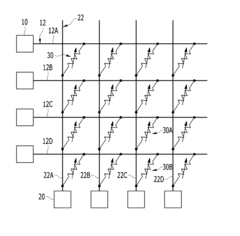
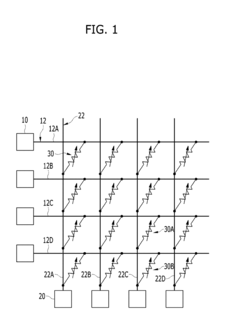
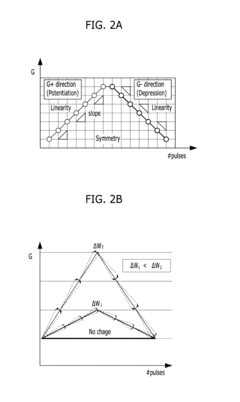
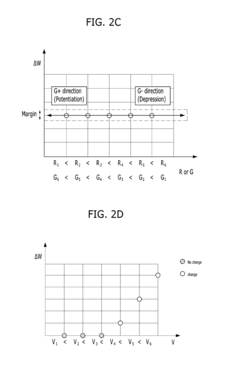
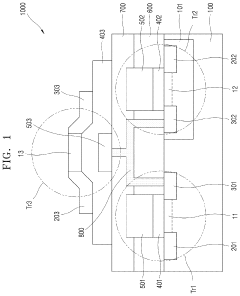
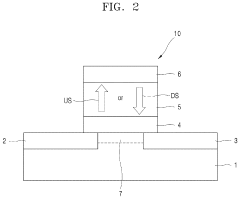
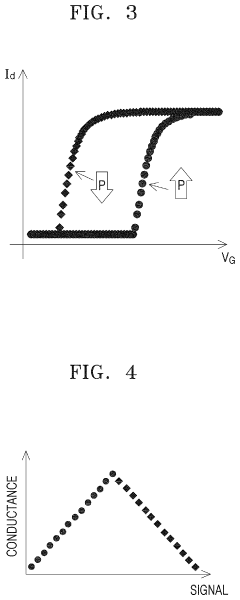
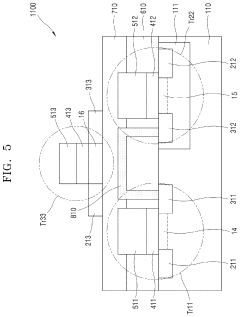
Semiconductor device including ferroelectric material, neuromorphic circuit including the semiconductor device, and neuromorphic computing apparatus including the neuromorphic circuit
PatentActiveUS11887989B2
Innovation
- The development of semiconductor devices and neuromorphic circuits incorporating ferroelectric materials, which enable efficient data processing by simulating synaptic functions, allowing for parallel processing and improved data storage and retrieval, thereby enhancing the accuracy and speed of data processing.
Regulatory Framework for Novel Electronic Materials
The regulatory landscape for neuromorphic materials represents a complex intersection of traditional electronics regulation and emerging technologies oversight. Current regulatory frameworks across major markets were primarily designed for conventional electronic components and may not adequately address the unique properties and potential risks associated with neuromorphic materials that mimic biological neural systems.
In the United States, the regulatory authority is fragmented across multiple agencies. The FDA maintains jurisdiction over medical applications of neuromorphic electronics, while the FCC regulates communication aspects, and the EPA addresses potential environmental impacts of novel materials. This multi-agency approach creates regulatory gaps where neuromorphic materials may fall between jurisdictional boundaries.
The European Union has adopted a more comprehensive approach through its RoHS (Restriction of Hazardous Substances) and REACH (Registration, Evaluation, Authorization and Restriction of Chemicals) regulations. These frameworks provide stronger oversight for novel materials but were not specifically designed with neuromorphic computing in mind. The EU's recent AI Act also touches on hardware components for AI systems, potentially affecting neuromorphic materials regulation.
Asian markets present varying regulatory approaches. Japan's regulatory system emphasizes industry standards and voluntary compliance, while China has implemented strategic regulations that prioritize domestic development of advanced electronic materials. South Korea has established specialized regulatory pathways for emerging electronic technologies, potentially offering a model for neuromorphic materials regulation.
International standardization efforts remain in nascent stages for neuromorphic materials. The IEEE and International Electrotechnical Commission have begun developing technical standards, but regulatory standards lag behind. This creates significant challenges for global market access and interoperability of neuromorphic systems.
Key regulatory challenges include the classification problem (whether to regulate neuromorphic materials as electronic components, AI systems, or a new category entirely), safety assessment protocols (traditional testing methods may not capture unique risks), and intellectual property frameworks (current patent systems struggle with bio-inspired electronic innovations).
Regulatory harmonization represents a critical need as the neuromorphic materials market develops. The absence of consistent global standards threatens to fragment the market and impede innovation. Industry stakeholders and regulatory bodies must collaborate to develop appropriate frameworks that balance innovation with safety, environmental protection, and ethical considerations.
In the United States, the regulatory authority is fragmented across multiple agencies. The FDA maintains jurisdiction over medical applications of neuromorphic electronics, while the FCC regulates communication aspects, and the EPA addresses potential environmental impacts of novel materials. This multi-agency approach creates regulatory gaps where neuromorphic materials may fall between jurisdictional boundaries.
The European Union has adopted a more comprehensive approach through its RoHS (Restriction of Hazardous Substances) and REACH (Registration, Evaluation, Authorization and Restriction of Chemicals) regulations. These frameworks provide stronger oversight for novel materials but were not specifically designed with neuromorphic computing in mind. The EU's recent AI Act also touches on hardware components for AI systems, potentially affecting neuromorphic materials regulation.
Asian markets present varying regulatory approaches. Japan's regulatory system emphasizes industry standards and voluntary compliance, while China has implemented strategic regulations that prioritize domestic development of advanced electronic materials. South Korea has established specialized regulatory pathways for emerging electronic technologies, potentially offering a model for neuromorphic materials regulation.
International standardization efforts remain in nascent stages for neuromorphic materials. The IEEE and International Electrotechnical Commission have begun developing technical standards, but regulatory standards lag behind. This creates significant challenges for global market access and interoperability of neuromorphic systems.
Key regulatory challenges include the classification problem (whether to regulate neuromorphic materials as electronic components, AI systems, or a new category entirely), safety assessment protocols (traditional testing methods may not capture unique risks), and intellectual property frameworks (current patent systems struggle with bio-inspired electronic innovations).
Regulatory harmonization represents a critical need as the neuromorphic materials market develops. The absence of consistent global standards threatens to fragment the market and impede innovation. Industry stakeholders and regulatory bodies must collaborate to develop appropriate frameworks that balance innovation with safety, environmental protection, and ethical considerations.
Environmental Impact and Sustainability Considerations
The development and deployment of neuromorphic materials in electronics present significant environmental challenges that require careful consideration within regulatory frameworks. These novel materials, designed to mimic neural structures, often contain rare earth elements, heavy metals, and specialized compounds that pose unique environmental risks throughout their lifecycle. The extraction processes for these materials frequently involve energy-intensive mining operations that contribute to habitat destruction, water pollution, and carbon emissions in source regions.
Manufacturing neuromorphic devices introduces additional environmental concerns, particularly regarding chemical usage and waste generation. The fabrication of these advanced materials typically requires specialized solvents, etching compounds, and processing agents that may contain persistent organic pollutants or other hazardous substances. Current regulatory frameworks in many jurisdictions lack specific provisions for these novel manufacturing processes, creating potential gaps in environmental protection.
The energy efficiency of neuromorphic systems represents a positive environmental attribute that regulators must balance against production impacts. These brain-inspired computing architectures can potentially reduce energy consumption by orders of magnitude compared to conventional electronics, offering significant sustainability benefits during operational phases. This energy advantage could substantially reduce the carbon footprint of computing infrastructure if widely adopted, presenting an important consideration for lifecycle assessment within regulatory evaluations.
End-of-life management for neuromorphic materials poses perhaps the most pressing regulatory challenge from a sustainability perspective. The complex integration of organic and inorganic components in these systems complicates traditional recycling approaches. Many neuromorphic materials lack established recycling protocols, potentially leading to improper disposal and environmental contamination. Regulatory frameworks must evolve to address these novel waste streams, potentially through extended producer responsibility programs or specialized recycling mandates.
Water usage throughout the neuromorphic materials lifecycle represents another critical environmental consideration. Semiconductor and specialized materials production typically requires ultra-pure water in substantial quantities, creating potential conflicts in water-stressed regions. Regulatory approaches must address water consumption, treatment requirements, and discharge standards specific to these emerging manufacturing processes to ensure sustainable water resource management.
Biodegradability and bioaccumulation potential of novel neuromorphic materials, particularly those incorporating organic components or nanomaterials, require dedicated regulatory attention. Current environmental risk assessment protocols may inadequately capture the unique environmental behaviors of these materials, necessitating new testing methodologies and safety standards to prevent unintended ecological consequences as these technologies scale.
Manufacturing neuromorphic devices introduces additional environmental concerns, particularly regarding chemical usage and waste generation. The fabrication of these advanced materials typically requires specialized solvents, etching compounds, and processing agents that may contain persistent organic pollutants or other hazardous substances. Current regulatory frameworks in many jurisdictions lack specific provisions for these novel manufacturing processes, creating potential gaps in environmental protection.
The energy efficiency of neuromorphic systems represents a positive environmental attribute that regulators must balance against production impacts. These brain-inspired computing architectures can potentially reduce energy consumption by orders of magnitude compared to conventional electronics, offering significant sustainability benefits during operational phases. This energy advantage could substantially reduce the carbon footprint of computing infrastructure if widely adopted, presenting an important consideration for lifecycle assessment within regulatory evaluations.
End-of-life management for neuromorphic materials poses perhaps the most pressing regulatory challenge from a sustainability perspective. The complex integration of organic and inorganic components in these systems complicates traditional recycling approaches. Many neuromorphic materials lack established recycling protocols, potentially leading to improper disposal and environmental contamination. Regulatory frameworks must evolve to address these novel waste streams, potentially through extended producer responsibility programs or specialized recycling mandates.
Water usage throughout the neuromorphic materials lifecycle represents another critical environmental consideration. Semiconductor and specialized materials production typically requires ultra-pure water in substantial quantities, creating potential conflicts in water-stressed regions. Regulatory approaches must address water consumption, treatment requirements, and discharge standards specific to these emerging manufacturing processes to ensure sustainable water resource management.
Biodegradability and bioaccumulation potential of novel neuromorphic materials, particularly those incorporating organic components or nanomaterials, require dedicated regulatory attention. Current environmental risk assessment protocols may inadequately capture the unique environmental behaviors of these materials, necessitating new testing methodologies and safety standards to prevent unintended ecological consequences as these technologies scale.
Unlock deeper insights with PatSnap Eureka Quick Research — get a full tech report to explore trends and direct your research. Try now!
Generate Your Research Report Instantly with AI Agent
Supercharge your innovation with PatSnap Eureka AI Agent Platform!