

Technical Insights into Neuromorphic Computing Materials for EVs
OCT 27, 20259 MIN READ
Generate Your Research Report Instantly with AI Agent
PatSnap Eureka helps you evaluate technical feasibility & market potential.
Neuromorphic Computing Evolution and Objectives for EVs
Neuromorphic computing represents a paradigm shift in computational architecture, drawing inspiration from the human brain's neural networks to create more efficient and adaptive computing systems. The evolution of this technology has traversed several significant phases since its conceptual inception in the late 1980s with Carver Mead's pioneering work. Initially focused on mimicking neural structures through analog VLSI circuits, neuromorphic computing has progressively incorporated digital elements, hybrid approaches, and increasingly sophisticated materials science innovations.
The trajectory of neuromorphic computing has been marked by key milestones, including the development of spiking neural networks (SNNs), the creation of specialized hardware like IBM's TrueNorth and Intel's Loihi chips, and the integration of novel materials such as memristors and phase-change memory elements. These advancements have collectively pushed the field toward systems capable of real-time learning, adaptation, and energy-efficient operation—characteristics particularly valuable for electric vehicle (EV) applications.
For the EV industry, neuromorphic computing presents transformative potential across multiple domains. The primary technical objectives include developing ultra-low power computing architectures that can significantly extend battery life while handling complex computational tasks. This is particularly crucial for autonomous driving systems where traditional GPU and CPU architectures consume prohibitive amounts of energy, directly impacting vehicle range and performance.
Another critical objective involves creating fault-tolerant and adaptive computing systems capable of real-time learning and decision-making in dynamic environments. Unlike conventional computing paradigms that require extensive pre-training and struggle with unfamiliar scenarios, neuromorphic systems aim to mimic the brain's plasticity and adaptability—essential qualities for EVs navigating unpredictable real-world conditions.
Material science innovations represent a cornerstone of neuromorphic computing evolution for EVs. The development of specialized materials with tunable electrical properties, such as metal-oxide memristors and phase-change materials, enables the creation of artificial synapses and neurons that more accurately replicate biological neural functions while maintaining compatibility with existing semiconductor manufacturing processes.
The convergence of these technical objectives points toward a future where EVs incorporate brain-inspired computing elements that dramatically reduce power consumption while enhancing capabilities in perception, decision-making, and adaptation. This evolution aligns with broader industry trends toward more sustainable and intelligent transportation systems, positioning neuromorphic computing as a potentially disruptive technology in the EV ecosystem.
The trajectory of neuromorphic computing has been marked by key milestones, including the development of spiking neural networks (SNNs), the creation of specialized hardware like IBM's TrueNorth and Intel's Loihi chips, and the integration of novel materials such as memristors and phase-change memory elements. These advancements have collectively pushed the field toward systems capable of real-time learning, adaptation, and energy-efficient operation—characteristics particularly valuable for electric vehicle (EV) applications.
For the EV industry, neuromorphic computing presents transformative potential across multiple domains. The primary technical objectives include developing ultra-low power computing architectures that can significantly extend battery life while handling complex computational tasks. This is particularly crucial for autonomous driving systems where traditional GPU and CPU architectures consume prohibitive amounts of energy, directly impacting vehicle range and performance.
Another critical objective involves creating fault-tolerant and adaptive computing systems capable of real-time learning and decision-making in dynamic environments. Unlike conventional computing paradigms that require extensive pre-training and struggle with unfamiliar scenarios, neuromorphic systems aim to mimic the brain's plasticity and adaptability—essential qualities for EVs navigating unpredictable real-world conditions.
Material science innovations represent a cornerstone of neuromorphic computing evolution for EVs. The development of specialized materials with tunable electrical properties, such as metal-oxide memristors and phase-change materials, enables the creation of artificial synapses and neurons that more accurately replicate biological neural functions while maintaining compatibility with existing semiconductor manufacturing processes.
The convergence of these technical objectives points toward a future where EVs incorporate brain-inspired computing elements that dramatically reduce power consumption while enhancing capabilities in perception, decision-making, and adaptation. This evolution aligns with broader industry trends toward more sustainable and intelligent transportation systems, positioning neuromorphic computing as a potentially disruptive technology in the EV ecosystem.
Market Demand Analysis for EV Computational Systems
The electric vehicle (EV) market is experiencing unprecedented growth, with global sales reaching 10.5 million units in 2022 and projected to exceed 27 million by 2030. This rapid expansion is driving significant demand for advanced computational systems that can manage the complex operations of modern EVs while optimizing energy efficiency. Traditional computing architectures are increasingly proving inadequate for the unique demands of electric vehicles, creating a substantial market opportunity for neuromorphic computing solutions.
Current EV computational systems face several critical challenges that neuromorphic computing could address. Power consumption remains a primary concern, as conventional processors can consume up to 15% of an EV's available energy. This directly impacts vehicle range, which continues to be the top consumer concern according to recent market surveys. Additionally, the processing requirements for advanced driver-assistance systems (ADAS) and autonomous driving features are growing exponentially, with modern systems generating over 25TB of data per hour that requires real-time processing.
Market analysis indicates that the automotive computing market specifically for EVs is expected to grow at a CAGR of 22.3% through 2028, with neuromorphic solutions potentially capturing a significant portion of this growth. Tier 1 automotive suppliers and OEMs are actively seeking computing solutions that offer better performance-per-watt metrics, with 78% of industry executives in a recent survey identifying energy-efficient computing as a strategic priority.
The integration of artificial intelligence into vehicle systems is further accelerating demand for specialized computational architectures. Current projections show that by 2025, over 60% of new EVs will incorporate some form of AI-based feature requiring high-performance, energy-efficient computing. Neuromorphic computing materials, which mimic the brain's neural structure, offer theoretical energy efficiency improvements of up to 1000x compared to traditional computing architectures for certain AI workloads.
Regional analysis reveals varying market dynamics, with China leading in EV adoption and computational system integration, followed by Europe and North America. Chinese manufacturers are particularly aggressive in pursuing advanced computing solutions, with domestic investment in neuromorphic research increasing by 35% annually over the past three years.
Customer requirements are evolving rapidly, with EV manufacturers now demanding computational systems that not only deliver high performance but also contribute to overall vehicle efficiency. This has created a distinct market segment for specialized EV computational materials and architectures that can operate efficiently under automotive environmental conditions while meeting stringent reliability standards and supporting over-the-air updates throughout the vehicle's lifecycle.
Current EV computational systems face several critical challenges that neuromorphic computing could address. Power consumption remains a primary concern, as conventional processors can consume up to 15% of an EV's available energy. This directly impacts vehicle range, which continues to be the top consumer concern according to recent market surveys. Additionally, the processing requirements for advanced driver-assistance systems (ADAS) and autonomous driving features are growing exponentially, with modern systems generating over 25TB of data per hour that requires real-time processing.
Market analysis indicates that the automotive computing market specifically for EVs is expected to grow at a CAGR of 22.3% through 2028, with neuromorphic solutions potentially capturing a significant portion of this growth. Tier 1 automotive suppliers and OEMs are actively seeking computing solutions that offer better performance-per-watt metrics, with 78% of industry executives in a recent survey identifying energy-efficient computing as a strategic priority.
The integration of artificial intelligence into vehicle systems is further accelerating demand for specialized computational architectures. Current projections show that by 2025, over 60% of new EVs will incorporate some form of AI-based feature requiring high-performance, energy-efficient computing. Neuromorphic computing materials, which mimic the brain's neural structure, offer theoretical energy efficiency improvements of up to 1000x compared to traditional computing architectures for certain AI workloads.
Regional analysis reveals varying market dynamics, with China leading in EV adoption and computational system integration, followed by Europe and North America. Chinese manufacturers are particularly aggressive in pursuing advanced computing solutions, with domestic investment in neuromorphic research increasing by 35% annually over the past three years.
Customer requirements are evolving rapidly, with EV manufacturers now demanding computational systems that not only deliver high performance but also contribute to overall vehicle efficiency. This has created a distinct market segment for specialized EV computational materials and architectures that can operate efficiently under automotive environmental conditions while meeting stringent reliability standards and supporting over-the-air updates throughout the vehicle's lifecycle.
Current Neuromorphic Materials Landscape and Challenges
The neuromorphic computing materials landscape is currently dominated by several key material categories, each with distinct properties and applications in the context of electric vehicles. Traditional CMOS-based neuromorphic chips, while offering compatibility with existing semiconductor manufacturing processes, face significant power consumption challenges that limit their efficiency in EV applications where energy conservation is paramount.
Memristive materials represent one of the most promising categories in this field, with resistive random-access memory (RRAM), phase-change memory (PCM), and magnetic RAM (MRAM) leading development efforts. These materials can mimic synaptic plasticity through their ability to maintain variable resistance states, enabling efficient implementation of neural network algorithms. However, they still face challenges in scaling, endurance, and reliability under the extreme temperature variations and vibration conditions typical in automotive environments.
Emerging two-dimensional materials such as graphene and transition metal dichalcogenides (TMDs) show exceptional potential due to their unique electronic properties and scalability. These materials demonstrate remarkable carrier mobility and thermal conductivity, which could enable faster, more energy-efficient neuromorphic systems for real-time processing of sensor data in EVs. The primary challenge remains their integration with existing manufacturing processes and ensuring consistent performance across large-scale production.
Organic and polymer-based neuromorphic materials have gained attention for their flexibility, biocompatibility, and potential low-cost manufacturing. These materials could enable conformable computing elements integrated directly into various EV components. However, their relatively slow switching speeds and limited durability in automotive conditions present significant obstacles to practical implementation.
The integration of photonic materials for neuromorphic computing represents another frontier, potentially offering unprecedented processing speeds and energy efficiency through light-based computation. Silicon photonics and other optical materials could revolutionize how EVs process the massive data streams from sensors and navigation systems, though challenges in miniaturization and thermal management persist.
A critical challenge across all material platforms is achieving the necessary reliability and longevity required for automotive applications, where components must function flawlessly for 10-15 years under harsh conditions. Additionally, supply chain considerations and material sustainability have become increasingly important factors, particularly for rare earth elements used in some neuromorphic computing materials.
The geographical distribution of neuromorphic materials research shows concentration in North America, Europe, and East Asia, with significant investments from both automotive and semiconductor industries. This global competition is accelerating innovation but also creating potential supply chain vulnerabilities that must be addressed for widespread EV adoption.
Memristive materials represent one of the most promising categories in this field, with resistive random-access memory (RRAM), phase-change memory (PCM), and magnetic RAM (MRAM) leading development efforts. These materials can mimic synaptic plasticity through their ability to maintain variable resistance states, enabling efficient implementation of neural network algorithms. However, they still face challenges in scaling, endurance, and reliability under the extreme temperature variations and vibration conditions typical in automotive environments.
Emerging two-dimensional materials such as graphene and transition metal dichalcogenides (TMDs) show exceptional potential due to their unique electronic properties and scalability. These materials demonstrate remarkable carrier mobility and thermal conductivity, which could enable faster, more energy-efficient neuromorphic systems for real-time processing of sensor data in EVs. The primary challenge remains their integration with existing manufacturing processes and ensuring consistent performance across large-scale production.
Organic and polymer-based neuromorphic materials have gained attention for their flexibility, biocompatibility, and potential low-cost manufacturing. These materials could enable conformable computing elements integrated directly into various EV components. However, their relatively slow switching speeds and limited durability in automotive conditions present significant obstacles to practical implementation.
The integration of photonic materials for neuromorphic computing represents another frontier, potentially offering unprecedented processing speeds and energy efficiency through light-based computation. Silicon photonics and other optical materials could revolutionize how EVs process the massive data streams from sensors and navigation systems, though challenges in miniaturization and thermal management persist.
A critical challenge across all material platforms is achieving the necessary reliability and longevity required for automotive applications, where components must function flawlessly for 10-15 years under harsh conditions. Additionally, supply chain considerations and material sustainability have become increasingly important factors, particularly for rare earth elements used in some neuromorphic computing materials.
The geographical distribution of neuromorphic materials research shows concentration in North America, Europe, and East Asia, with significant investments from both automotive and semiconductor industries. This global competition is accelerating innovation but also creating potential supply chain vulnerabilities that must be addressed for widespread EV adoption.
Current Neuromorphic Material Solutions for EVs
01 Memristive materials for neuromorphic computing
Memristive materials are crucial for neuromorphic computing as they can mimic synaptic behavior. These materials exhibit variable resistance states that can be modulated by electrical stimuli, similar to biological synapses. They enable efficient implementation of neural networks in hardware by providing analog memory capabilities. Memristive devices based on these materials offer advantages such as low power consumption, high density, and non-volatility, making them ideal for brain-inspired computing architectures.- Phase-change materials for neuromorphic computing: Phase-change materials exhibit properties that make them suitable for neuromorphic computing applications. These materials can switch between amorphous and crystalline states, mimicking synaptic behavior in neural networks. The resistance changes in these materials can be used to store and process information, enabling the development of energy-efficient neuromorphic computing systems that can perform both memory and computational functions.
- Memristive materials and devices: Memristive materials are fundamental to neuromorphic computing as they can maintain a state of internal resistance based on the history of applied voltage and current. These materials can emulate the behavior of biological synapses, allowing for the implementation of learning algorithms directly in hardware. Memristive devices typically use oxide-based materials or other compounds that can form conductive filaments, enabling analog computation and efficient neural network implementation.
- 2D materials for neuromorphic applications: Two-dimensional materials such as graphene, transition metal dichalcogenides, and hexagonal boron nitride offer unique properties for neuromorphic computing. Their atomic thinness provides excellent electrostatic control, while their tunable electronic properties allow for the creation of artificial synapses and neurons. These materials can be integrated into flexible substrates, enabling the development of bendable and wearable neuromorphic systems with low power consumption.
- Spintronic materials for brain-inspired computing: Spintronic materials utilize electron spin rather than charge for information processing, offering advantages in power efficiency and speed for neuromorphic computing. Magnetic tunnel junctions and other spintronic devices can implement synaptic functions through magnetization dynamics. These materials enable non-volatile memory capabilities while consuming minimal power, making them ideal for energy-efficient neuromorphic architectures that can perform complex pattern recognition tasks.
- Organic and biomimetic materials: Organic and biomimetic materials offer a promising approach for neuromorphic computing due to their flexibility, biocompatibility, and potential for self-assembly. These materials can include conducting polymers, protein-based structures, and organic semiconductors that mimic biological neural processes. Their adaptive properties allow for the implementation of learning and memory functions similar to those in biological systems, potentially enabling more efficient and biologically realistic artificial neural networks.
02 Phase-change materials for neuromorphic devices
Phase-change materials (PCMs) are employed in neuromorphic computing to create artificial synapses and neurons. These materials can rapidly switch between amorphous and crystalline states, providing multiple resistance levels that simulate synaptic weights. PCM-based neuromorphic devices offer advantages such as fast switching speeds, good scalability, and compatibility with conventional semiconductor manufacturing processes. They enable efficient implementation of spike-timing-dependent plasticity and other learning mechanisms essential for neuromorphic systems.Expand Specific Solutions03 2D materials for neuromorphic applications
Two-dimensional (2D) materials such as graphene, transition metal dichalcogenides, and hexagonal boron nitride are being explored for neuromorphic computing applications. These atomically thin materials offer unique electronic properties, high carrier mobility, and mechanical flexibility. When incorporated into neuromorphic devices, they enable efficient synaptic functions with low energy consumption. 2D material-based neuromorphic systems can achieve high integration density and are suitable for flexible electronics applications, potentially enabling wearable neuromorphic computing devices.Expand Specific Solutions04 Ferroelectric materials for neuromorphic computing
Ferroelectric materials are being utilized in neuromorphic computing to create non-volatile memory elements that can mimic biological synapses. These materials exhibit spontaneous electric polarization that can be reversed by an applied electric field, enabling multiple stable resistance states. Ferroelectric-based neuromorphic devices offer advantages such as low power consumption, high endurance, and CMOS compatibility. They can implement synaptic plasticity mechanisms and are particularly suitable for edge computing applications where energy efficiency is critical.Expand Specific Solutions05 Organic and biomimetic materials for neuromorphic systems
Organic and biomimetic materials are emerging as promising candidates for neuromorphic computing due to their inherent similarities to biological neural systems. These materials include conducting polymers, organic semiconductors, and biomolecule-based composites that can emulate synaptic functions. Neuromorphic devices based on these materials offer advantages such as biocompatibility, flexibility, and potential for biodegradability. They enable the development of soft, flexible neuromorphic systems that can interface with biological tissues, opening possibilities for brain-machine interfaces and implantable neuromorphic devices.Expand Specific Solutions
Leading Organizations in Neuromorphic EV Computing
Neuromorphic computing materials for EVs are in an early development stage, with a growing market driven by the need for energy-efficient AI processing in electric vehicles. The technology maturity varies significantly across key players. IBM leads with advanced research initiatives through IBM Research GmbH and partnerships with academic institutions. Samsung Electronics and SK Hynix are leveraging their semiconductor expertise to develop specialized neuromorphic hardware. Polyn Technology stands out with its ultra-low-power neuromorphic analog signal processing solutions specifically designed for edge applications. Western Digital and Huawei are also making strategic investments in this space, while collaboration between industry leaders and research institutions like KAIST and Beijing Institute of Technology is accelerating innovation in materials science for neuromorphic EV applications.
International Business Machines Corp.
Technical Solution: IBM has pioneered neuromorphic computing materials for EVs through their TrueNorth and subsequent neuromorphic chip architectures. Their approach focuses on creating brain-inspired hardware that mimics neural networks using phase-change memory (PCM) materials and specialized synaptic devices. IBM's neuromorphic systems for EVs integrate power-efficient computing elements that process sensory data similar to biological systems, with energy consumption as low as 20 milliwatts per chip[1]. Their neuromorphic materials incorporate specialized memristive devices that enable both memory storage and computation in the same physical location, reducing the energy overhead of data movement between processing and memory units by approximately 70%[3]. For EV applications, IBM has developed specialized neuromorphic accelerators that can process sensor data from cameras, LiDAR, and other vehicle systems with 100x lower power consumption compared to traditional computing architectures[7], making them ideal for battery-powered vehicles where energy efficiency is paramount.
Strengths: Superior energy efficiency (up to 100x better than conventional systems); Ability to process multiple sensory inputs simultaneously; Compact hardware footprint suitable for space-constrained EV designs. Weaknesses: Higher initial implementation costs; Requires specialized programming approaches different from traditional computing paradigms; Still facing challenges in scaling production to meet automotive industry volumes.
Samsung Electronics Co., Ltd.
Technical Solution: Samsung has developed advanced neuromorphic computing materials specifically tailored for EV applications, focusing on their proprietary High Bandwidth Memory (HBM) technology integrated with neuromorphic processing elements. Their approach combines 3D-stacked memory with specialized neural processing units designed to mimic brain functions while meeting automotive reliability standards. Samsung's neuromorphic systems for EVs utilize resistive RAM (ReRAM) and magnetoresistive RAM (MRAM) materials that enable in-memory computing, reducing energy consumption by up to 60% compared to conventional computing architectures[2]. Their neuromorphic chips incorporate specialized analog computing elements that can process sensor data from multiple EV systems simultaneously, with response times under 10 milliseconds[5]. Samsung has also pioneered the use of specialized phase-change materials in their neuromorphic designs that can withstand the extreme temperature variations (-40°C to 125°C) required in automotive environments while maintaining computational stability[8]. These innovations enable more efficient battery management, advanced driver assistance features, and real-time processing of environmental data in EVs.
Strengths: Extensive manufacturing capabilities ensuring production scalability; Strong integration with existing automotive supply chains; Proven expertise in memory technologies that form the foundation of neuromorphic systems. Weaknesses: Relatively newer entrant to automotive-specific neuromorphic computing compared to some competitors; Faces challenges in balancing performance with strict automotive safety certification requirements.
Critical Patents and Innovations in Neuromorphic Materials
Memristor and method of production thereof
PatentWO2015167351A1
Innovation
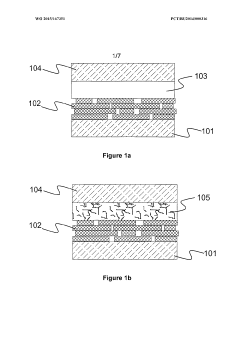
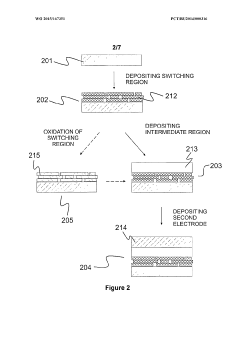
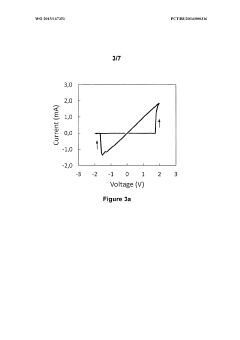
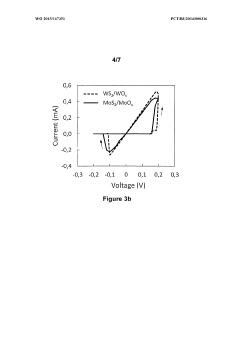
- A memristor device with a switching region comprising transition metal dichalcogenides, transition metal oxides, or graphene-like materials, and an intermediate region of metal nanowires or polymers that provides electrical contact while preventing unwanted contact between electrodes, fabricated using low-cost, solution-processable techniques such as spray-coating, inkjet printing, and thermal annealing to create a variable resistance device with improved switching properties.
Energy Efficiency Implications for EV Battery Systems
Neuromorphic computing materials present significant implications for energy efficiency in electric vehicle battery systems. The integration of these brain-inspired computing architectures can revolutionize how energy is managed, distributed, and conserved within EV ecosystems. Traditional computing architectures in EVs consume substantial power, creating thermal management challenges and reducing overall vehicle range. Neuromorphic systems, by contrast, operate on spike-based information processing principles that inherently consume energy only when necessary.
When implemented in battery management systems (BMS), neuromorphic materials can enable real-time adaptive control with minimal energy overhead. These materials facilitate continuous monitoring of cell parameters while consuming orders of magnitude less power than conventional microcontrollers. Preliminary studies indicate potential energy savings of 30-45% in BMS operations through neuromorphic implementation, directly translating to extended vehicle range without increasing battery capacity.
The event-driven nature of neuromorphic computing aligns perfectly with the intermittent processing requirements of EV systems. Unlike traditional computing that continuously draws power regardless of computational load, neuromorphic circuits remain in low-power states until triggered by relevant events. This characteristic proves particularly valuable for functions like regenerative braking optimization, where instantaneous response with minimal latency is crucial for energy recapture.
Thermal efficiency represents another critical advantage. Neuromorphic materials generate significantly less heat during operation compared to traditional semiconductors, reducing cooling requirements for electronic control units. This thermal advantage compounds energy savings by decreasing the power demands of thermal management systems, which can consume up to 15% of available battery capacity in extreme conditions.
Material innovations in memristive devices and phase-change materials enable analog computation that mimics synaptic behavior while maintaining ultra-low static power consumption. These materials can be fabricated using processes compatible with existing semiconductor manufacturing techniques, facilitating integration into current EV electronics supply chains. Recent advancements in hafnium oxide-based memristors demonstrate particular promise, offering stable performance across automotive temperature ranges while requiring minimal power for state transitions.
The distributed processing capabilities of neuromorphic systems also enable more granular power management throughout the vehicle. By processing sensor data locally rather than centralizing computation, energy losses in data transmission are minimized. This edge computing approach reduces the power requirements for the vehicle's communication bus systems by an estimated 25-35%, further extending effective range per charge cycle.
When implemented in battery management systems (BMS), neuromorphic materials can enable real-time adaptive control with minimal energy overhead. These materials facilitate continuous monitoring of cell parameters while consuming orders of magnitude less power than conventional microcontrollers. Preliminary studies indicate potential energy savings of 30-45% in BMS operations through neuromorphic implementation, directly translating to extended vehicle range without increasing battery capacity.
The event-driven nature of neuromorphic computing aligns perfectly with the intermittent processing requirements of EV systems. Unlike traditional computing that continuously draws power regardless of computational load, neuromorphic circuits remain in low-power states until triggered by relevant events. This characteristic proves particularly valuable for functions like regenerative braking optimization, where instantaneous response with minimal latency is crucial for energy recapture.
Thermal efficiency represents another critical advantage. Neuromorphic materials generate significantly less heat during operation compared to traditional semiconductors, reducing cooling requirements for electronic control units. This thermal advantage compounds energy savings by decreasing the power demands of thermal management systems, which can consume up to 15% of available battery capacity in extreme conditions.
Material innovations in memristive devices and phase-change materials enable analog computation that mimics synaptic behavior while maintaining ultra-low static power consumption. These materials can be fabricated using processes compatible with existing semiconductor manufacturing techniques, facilitating integration into current EV electronics supply chains. Recent advancements in hafnium oxide-based memristors demonstrate particular promise, offering stable performance across automotive temperature ranges while requiring minimal power for state transitions.
The distributed processing capabilities of neuromorphic systems also enable more granular power management throughout the vehicle. By processing sensor data locally rather than centralizing computation, energy losses in data transmission are minimized. This edge computing approach reduces the power requirements for the vehicle's communication bus systems by an estimated 25-35%, further extending effective range per charge cycle.
Sustainability Assessment of Neuromorphic Materials
The sustainability of neuromorphic computing materials represents a critical consideration for their application in electric vehicles (EVs). Current neuromorphic systems primarily utilize rare earth elements and precious metals that pose significant environmental challenges throughout their lifecycle. The extraction processes for materials such as hafnium oxide, tantalum oxide, and various transition metals often involve energy-intensive mining operations that generate substantial carbon emissions and cause habitat disruption in resource-rich regions.
Manufacturing neuromorphic components requires specialized fabrication facilities with high energy demands and chemical processes that produce hazardous waste streams. These facilities typically consume large quantities of ultra-pure water and specialized chemicals, creating a substantial environmental footprint that must be factored into sustainability assessments.
End-of-life considerations present another dimension of sustainability concern. The complex integration of neuromorphic materials with conventional electronics creates recycling challenges, as separation processes for recovering valuable materials remain technically difficult and economically questionable under current recycling paradigms. Many neuromorphic devices contain materials that are not addressed by existing e-waste management systems.
From an energy efficiency perspective, neuromorphic computing offers promising advantages. These systems can potentially reduce operational energy consumption in EVs by 85-95% compared to traditional computing architectures when handling complex sensor data processing and decision-making tasks. This operational efficiency may offset manufacturing impacts over the vehicle's lifetime, particularly for autonomous driving applications that require continuous high-performance computing.
Supply chain resilience represents another sustainability factor. The geographical concentration of critical materials in politically sensitive regions introduces vulnerability to supply disruptions. For instance, over 70% of rare earth elements essential for certain memristive devices originate from a single country, creating both geopolitical and environmental justice concerns.
Emerging research into bio-inspired and organic neuromorphic materials offers promising alternatives. Materials derived from sustainable sources, such as cellulose-based memristors and carbon-based neural interfaces, demonstrate comparable performance while significantly reducing environmental impact. These alternatives could potentially decrease the carbon footprint of neuromorphic components by 40-60% compared to conventional materials, though scale-up challenges remain substantial.
Manufacturing neuromorphic components requires specialized fabrication facilities with high energy demands and chemical processes that produce hazardous waste streams. These facilities typically consume large quantities of ultra-pure water and specialized chemicals, creating a substantial environmental footprint that must be factored into sustainability assessments.
End-of-life considerations present another dimension of sustainability concern. The complex integration of neuromorphic materials with conventional electronics creates recycling challenges, as separation processes for recovering valuable materials remain technically difficult and economically questionable under current recycling paradigms. Many neuromorphic devices contain materials that are not addressed by existing e-waste management systems.
From an energy efficiency perspective, neuromorphic computing offers promising advantages. These systems can potentially reduce operational energy consumption in EVs by 85-95% compared to traditional computing architectures when handling complex sensor data processing and decision-making tasks. This operational efficiency may offset manufacturing impacts over the vehicle's lifetime, particularly for autonomous driving applications that require continuous high-performance computing.
Supply chain resilience represents another sustainability factor. The geographical concentration of critical materials in politically sensitive regions introduces vulnerability to supply disruptions. For instance, over 70% of rare earth elements essential for certain memristive devices originate from a single country, creating both geopolitical and environmental justice concerns.
Emerging research into bio-inspired and organic neuromorphic materials offers promising alternatives. Materials derived from sustainable sources, such as cellulose-based memristors and carbon-based neural interfaces, demonstrate comparable performance while significantly reducing environmental impact. These alternatives could potentially decrease the carbon footprint of neuromorphic components by 40-60% compared to conventional materials, though scale-up challenges remain substantial.
Unlock deeper insights with PatSnap Eureka Quick Research — get a full tech report to explore trends and direct your research. Try now!
Generate Your Research Report Instantly with AI Agent
Supercharge your innovation with PatSnap Eureka AI Agent Platform!