

Optimizing Direct Lithium Extraction for Improved Consistency
SEP 11, 202511 MIN READ
Generate Your Research Report Instantly with AI Agent
PatSnap Eureka helps you evaluate technical feasibility & market potential.
DLE Technology Background and Objectives
Direct Lithium Extraction (DLE) technology has emerged as a revolutionary approach to lithium production, diverging from traditional methods such as evaporation ponds and hard rock mining. The evolution of DLE began in the late 1990s with rudimentary ion exchange processes, but has significantly accelerated in the past decade due to increasing global demand for lithium in battery applications. This technology aims to extract lithium directly from brine resources with greater efficiency, reduced environmental impact, and accelerated production timelines.
The fundamental principle of DLE involves selectively capturing lithium ions from brine solutions while leaving behind other elements. This selectivity represents a significant advancement over conventional methods that rely on natural evaporation, which typically requires 18-24 months and recovers only 30-40% of available lithium. In contrast, DLE technologies target recovery rates of 70-95% within timeframes measured in hours or days rather than months.
Current DLE methodologies can be categorized into three primary approaches: adsorption using inorganic materials, ion exchange with specialized resins, and solvent extraction techniques. Each methodology presents unique advantages and limitations regarding selectivity, recovery rates, and operational requirements. The technical evolution has been driven by the need to overcome challenges related to lithium selectivity in the presence of competing ions such as sodium, magnesium, and calcium.
The primary objectives of optimizing DLE for improved consistency include enhancing the selectivity of extraction materials, reducing energy and water consumption, minimizing chemical usage, and developing robust systems capable of handling variable brine compositions. Additionally, there is a critical focus on creating scalable processes that maintain performance consistency when transitioning from laboratory to commercial implementation.
Recent technological milestones include the development of novel adsorbent materials with improved lithium selectivity coefficients, advanced membrane systems for pre-concentration of brines, and integrated process designs that combine multiple extraction mechanisms. These innovations aim to address the persistent challenge of process variability, which has historically limited commercial adoption of DLE technologies.
The global imperative for sustainable lithium production has accelerated research and development in this field, with particular emphasis on technologies that can maintain consistent performance across diverse geological settings and brine chemistries. As electric vehicle adoption increases worldwide, the technical goal has expanded beyond mere extraction efficiency to include process reliability, operational consistency, and predictable product quality regardless of input variations.
The fundamental principle of DLE involves selectively capturing lithium ions from brine solutions while leaving behind other elements. This selectivity represents a significant advancement over conventional methods that rely on natural evaporation, which typically requires 18-24 months and recovers only 30-40% of available lithium. In contrast, DLE technologies target recovery rates of 70-95% within timeframes measured in hours or days rather than months.
Current DLE methodologies can be categorized into three primary approaches: adsorption using inorganic materials, ion exchange with specialized resins, and solvent extraction techniques. Each methodology presents unique advantages and limitations regarding selectivity, recovery rates, and operational requirements. The technical evolution has been driven by the need to overcome challenges related to lithium selectivity in the presence of competing ions such as sodium, magnesium, and calcium.
The primary objectives of optimizing DLE for improved consistency include enhancing the selectivity of extraction materials, reducing energy and water consumption, minimizing chemical usage, and developing robust systems capable of handling variable brine compositions. Additionally, there is a critical focus on creating scalable processes that maintain performance consistency when transitioning from laboratory to commercial implementation.
Recent technological milestones include the development of novel adsorbent materials with improved lithium selectivity coefficients, advanced membrane systems for pre-concentration of brines, and integrated process designs that combine multiple extraction mechanisms. These innovations aim to address the persistent challenge of process variability, which has historically limited commercial adoption of DLE technologies.
The global imperative for sustainable lithium production has accelerated research and development in this field, with particular emphasis on technologies that can maintain consistent performance across diverse geological settings and brine chemistries. As electric vehicle adoption increases worldwide, the technical goal has expanded beyond mere extraction efficiency to include process reliability, operational consistency, and predictable product quality regardless of input variations.
Market Analysis for DLE Solutions
The Direct Lithium Extraction (DLE) market is experiencing unprecedented growth, driven by the surging demand for lithium in electric vehicle batteries, energy storage systems, and consumer electronics. Current market valuations place the global DLE solutions sector at approximately $1.2 billion in 2023, with projections indicating a compound annual growth rate of 27.3% through 2030, potentially reaching $6.5 billion by the end of the decade.
This remarkable growth trajectory is primarily fueled by the automotive industry's transition toward electrification. Major automakers have committed over $500 billion to electric vehicle development and production, creating sustained demand for high-purity lithium compounds. The energy storage sector represents another significant market driver, with utility-scale installations increasing by 134% year-over-year in 2022.
Geographically, the DLE market shows distinct regional characteristics. North America currently leads in DLE technology adoption, particularly in the Salton Sea region of California and lithium triangle projects in Nevada. South America, despite housing 58% of global lithium reserves in its salt flats, is gradually shifting from traditional evaporation methods to more efficient DLE solutions. The Asia-Pacific region, dominated by China's processing capabilities, is investing heavily in DLE technologies to secure supply chain resilience.
Market segmentation reveals that ion-exchange based DLE solutions currently hold the largest market share at 42%, followed by adsorption-based technologies at 31%. Membrane and solvent extraction methods comprise the remaining market segments, though they show the highest growth rates due to recent technological breakthroughs.
Customer demand patterns indicate a strong preference for DLE solutions that can deliver consistent lithium purity above 99.5%, with recovery rates exceeding 80%. End-users are increasingly willing to pay premium prices for technologies that minimize water consumption and environmental impact, with sustainability metrics becoming key differentiators in purchase decisions.
The competitive landscape features established mining companies investing in DLE technologies alongside specialized technology startups. Strategic partnerships between technology providers and lithium end-users are becoming increasingly common, with 37 major collaboration agreements announced in the past 18 months. Venture capital funding for DLE startups reached $780 million in 2022, a 215% increase from the previous year.
Market challenges include high capital expenditure requirements, technical scalability issues, and regulatory uncertainties regarding water usage and brine disposal. However, these challenges are offset by the significant cost advantages DLE offers over traditional extraction methods, with potential production cost reductions of 30-50% at scale.
This remarkable growth trajectory is primarily fueled by the automotive industry's transition toward electrification. Major automakers have committed over $500 billion to electric vehicle development and production, creating sustained demand for high-purity lithium compounds. The energy storage sector represents another significant market driver, with utility-scale installations increasing by 134% year-over-year in 2022.
Geographically, the DLE market shows distinct regional characteristics. North America currently leads in DLE technology adoption, particularly in the Salton Sea region of California and lithium triangle projects in Nevada. South America, despite housing 58% of global lithium reserves in its salt flats, is gradually shifting from traditional evaporation methods to more efficient DLE solutions. The Asia-Pacific region, dominated by China's processing capabilities, is investing heavily in DLE technologies to secure supply chain resilience.
Market segmentation reveals that ion-exchange based DLE solutions currently hold the largest market share at 42%, followed by adsorption-based technologies at 31%. Membrane and solvent extraction methods comprise the remaining market segments, though they show the highest growth rates due to recent technological breakthroughs.
Customer demand patterns indicate a strong preference for DLE solutions that can deliver consistent lithium purity above 99.5%, with recovery rates exceeding 80%. End-users are increasingly willing to pay premium prices for technologies that minimize water consumption and environmental impact, with sustainability metrics becoming key differentiators in purchase decisions.
The competitive landscape features established mining companies investing in DLE technologies alongside specialized technology startups. Strategic partnerships between technology providers and lithium end-users are becoming increasingly common, with 37 major collaboration agreements announced in the past 18 months. Venture capital funding for DLE startups reached $780 million in 2022, a 215% increase from the previous year.
Market challenges include high capital expenditure requirements, technical scalability issues, and regulatory uncertainties regarding water usage and brine disposal. However, these challenges are offset by the significant cost advantages DLE offers over traditional extraction methods, with potential production cost reductions of 30-50% at scale.
Current DLE Challenges and Technical Barriers
Despite significant advancements in Direct Lithium Extraction (DLE) technologies, several persistent challenges and technical barriers continue to impede widespread commercial adoption and consistent performance. The primary obstacle remains the variability in brine composition across different geothermal and salt flat resources, which significantly impacts extraction efficiency. Lithium concentrations typically range from 20 to 1,500 mg/L, while competing ions like sodium, potassium, magnesium, and calcium can be present at concentrations 10-1,000 times higher, creating substantial selectivity challenges.
Sorbent performance inconsistency represents another critical barrier. Current ion exchange materials and adsorbents demonstrate diminished capacity and selectivity after multiple regeneration cycles, with performance degradation rates varying between 0.5-5% per cycle depending on brine chemistry and operating conditions. This necessitates frequent replacement, increasing operational costs and reducing economic viability.
Process scalability presents significant engineering challenges. Laboratory-scale DLE systems often achieve extraction efficiencies of 85-95%, but pilot and demonstration plants frequently report reduced efficiencies of 60-80% when scaled up. This efficiency gap stems from non-ideal flow dynamics, channeling effects, and mass transfer limitations in larger column systems that are difficult to predict from small-scale tests.
Energy consumption remains prohibitively high for many DLE implementations. Current technologies require 5-15 kWh per kilogram of lithium extracted, primarily for pumping, heating, and regeneration processes. This energy intensity significantly impacts the carbon footprint and economic feasibility of DLE operations, particularly in remote locations with limited energy infrastructure.
Water management poses another substantial challenge. Most DLE processes require 10-30 cubic meters of fresh water per ton of lithium carbonate equivalent produced for washing and regeneration steps. In water-scarce regions where many lithium resources are located, this requirement creates environmental concerns and potential conflicts with local communities over water rights.
Regeneration chemical consumption and waste management further complicate DLE implementation. Acid and base requirements for sorbent regeneration typically range from 2-8 tons per ton of lithium produced, generating significant volumes of neutralization waste that requires proper disposal or treatment.
Lastly, process control and automation systems struggle to adapt to the dynamic nature of brine resources. Real-time monitoring of lithium and competing ion concentrations remains technically challenging, limiting the ability to optimize extraction parameters in response to feed variations and resulting in inconsistent product quality.
Sorbent performance inconsistency represents another critical barrier. Current ion exchange materials and adsorbents demonstrate diminished capacity and selectivity after multiple regeneration cycles, with performance degradation rates varying between 0.5-5% per cycle depending on brine chemistry and operating conditions. This necessitates frequent replacement, increasing operational costs and reducing economic viability.
Process scalability presents significant engineering challenges. Laboratory-scale DLE systems often achieve extraction efficiencies of 85-95%, but pilot and demonstration plants frequently report reduced efficiencies of 60-80% when scaled up. This efficiency gap stems from non-ideal flow dynamics, channeling effects, and mass transfer limitations in larger column systems that are difficult to predict from small-scale tests.
Energy consumption remains prohibitively high for many DLE implementations. Current technologies require 5-15 kWh per kilogram of lithium extracted, primarily for pumping, heating, and regeneration processes. This energy intensity significantly impacts the carbon footprint and economic feasibility of DLE operations, particularly in remote locations with limited energy infrastructure.
Water management poses another substantial challenge. Most DLE processes require 10-30 cubic meters of fresh water per ton of lithium carbonate equivalent produced for washing and regeneration steps. In water-scarce regions where many lithium resources are located, this requirement creates environmental concerns and potential conflicts with local communities over water rights.
Regeneration chemical consumption and waste management further complicate DLE implementation. Acid and base requirements for sorbent regeneration typically range from 2-8 tons per ton of lithium produced, generating significant volumes of neutralization waste that requires proper disposal or treatment.
Lastly, process control and automation systems struggle to adapt to the dynamic nature of brine resources. Real-time monitoring of lithium and competing ion concentrations remains technically challenging, limiting the ability to optimize extraction parameters in response to feed variations and resulting in inconsistent product quality.
Current DLE Consistency Optimization Methods
01 Adsorption-based DLE technologies
Direct Lithium Extraction technologies using selective adsorbents to capture lithium ions from brines. These methods typically employ ion exchange materials or lithium-selective sorbents that can be regenerated for continuous operation. The consistency of extraction is maintained through controlled adsorption-desorption cycles, optimized contact time, and precise regeneration protocols that ensure reliable lithium recovery across multiple extraction cycles.- Adsorption-based DLE technologies for consistent lithium recovery: Adsorption-based Direct Lithium Extraction technologies utilize specialized adsorbents to selectively capture lithium ions from brine solutions. These methods provide consistent lithium recovery by employing materials with high selectivity for lithium over competing ions such as sodium, potassium, and magnesium. The process typically involves passing brine through columns containing these adsorbents, followed by elution steps to recover concentrated lithium solutions. This approach offers advantages in consistency compared to traditional evaporation methods, as it is less dependent on environmental conditions and can maintain stable recovery rates across varying brine compositions.
- Membrane and electrochemical DLE processes for uniform extraction: Membrane and electrochemical Direct Lithium Extraction processes employ selective membranes and electrical potential differences to achieve consistent lithium separation. These technologies utilize ion-exchange membranes, electrodialysis, or electrochemical cells to selectively transport lithium ions while rejecting competing species. The application of controlled electrical fields helps maintain uniform extraction conditions, resulting in consistent lithium recovery regardless of fluctuations in feed composition. These methods can be precisely controlled to ensure reproducible performance across different operational cycles, providing advantages in maintaining product quality and extraction efficiency.
- Process control systems for DLE consistency optimization: Advanced process control systems are implemented in Direct Lithium Extraction operations to optimize consistency in lithium recovery. These systems incorporate real-time monitoring of critical parameters such as pH, temperature, flow rates, and ion concentrations to maintain optimal extraction conditions. Automated feedback loops adjust process variables to compensate for variations in feed composition or environmental conditions. Machine learning algorithms can be employed to predict performance and recommend adjustments before consistency issues arise. These control systems ensure that extraction efficiency remains stable over time, reducing variability in product quality and recovery rates.
- Hybrid DLE systems for enhanced consistency across varying brine compositions: Hybrid Direct Lithium Extraction systems combine multiple extraction technologies to maintain consistent performance across varying brine compositions. These integrated approaches might combine adsorption with membrane separation, or electrochemical methods with selective precipitation steps. By leveraging the strengths of different technologies, hybrid systems can adapt to fluctuations in feed characteristics while maintaining stable lithium recovery rates. This approach is particularly valuable for operations processing brines from different sources or dealing with seasonal variations in brine chemistry, ensuring consistent product quality despite input variability.
- Continuous flow DLE processes for stability in long-term operations: Continuous flow Direct Lithium Extraction processes are designed to provide stability and consistency in long-term operations. Unlike batch processes that may experience variations between cycles, continuous systems maintain steady-state conditions that result in more uniform lithium recovery. These processes incorporate multiple extraction stages operating in parallel or series, allowing for consistent treatment of brine and recovery of lithium products. Continuous regeneration of extraction media and automated adjustment of process parameters help maintain stable performance over extended operational periods, reducing downtime and variability in product specifications.
02 Membrane and electrochemical DLE processes
Electrochemical and membrane-based approaches for consistent lithium extraction from various sources. These technologies utilize ion-selective membranes, electrochemical cells, or electrodialysis systems to separate lithium from other elements. Process consistency is achieved through precise control of electrical parameters, membrane selectivity optimization, and continuous monitoring systems that adjust operating conditions to maintain stable lithium recovery rates.Expand Specific Solutions03 Process monitoring and control systems for DLE
Advanced monitoring and control systems designed specifically for DLE operations to ensure consistent extraction performance. These systems incorporate real-time sensors, automated feedback mechanisms, and predictive analytics to maintain optimal operating conditions. By continuously adjusting process parameters based on feed composition variations and equipment performance, these technologies help achieve uniform lithium recovery rates and product quality across production cycles.Expand Specific Solutions04 Pre-treatment and brine conditioning methods
Specialized pre-treatment and brine conditioning techniques to enhance DLE consistency. These methods involve the removal of interfering elements, pH adjustment, temperature control, and other conditioning steps that prepare the lithium-containing solution for extraction. By standardizing the feed composition and properties before the main extraction process, these approaches minimize variations in extraction efficiency and product purity.Expand Specific Solutions05 Integrated DLE systems for continuous operation
Comprehensive DLE systems designed for continuous and consistent lithium production at industrial scale. These integrated solutions combine multiple extraction stages, regeneration processes, and recovery methods into cohesive systems that maintain stable operation over extended periods. The designs incorporate redundancy, buffer capacity, and process flexibility to accommodate variations in feed composition while delivering consistent lithium output quality and recovery rates.Expand Specific Solutions
Key Industry Players in DLE Technology
The Direct Lithium Extraction (DLE) technology market is currently in its growth phase, with an estimated market size of $450-500 million and projected CAGR of 25-30% through 2030. The competitive landscape features established energy players like Schlumberger and Koch Technology Solutions alongside specialized innovators such as Lilac Solutions, EnergyX, and Pure Lithium. Technical maturity varies significantly across approaches, with ion-exchange technologies (Sunresin, Lilac) showing commercial readiness while electrochemical methods (Pure Lithium, EnergyX) remain in development stages. Academic institutions (Central South University, University of Manchester) and research organizations (CSIR) are advancing fundamental extraction science, while battery manufacturers (BYD, CATL, Murata) are increasingly integrating vertically to secure lithium supply chains, driving competition for optimized DLE technologies that deliver consistent quality.
Schlumberger Technologies, Inc.
Technical Solution: Schlumberger has developed an advanced Direct Lithium Extraction (DLE) technology platform called "LiTAS" (Lithium Targeted Adsorption System) that utilizes selective ion exchange materials to extract lithium from brines with high efficiency. Their approach combines proprietary adsorbent materials with optimized flow systems that can operate continuously rather than in batch processes. The system employs a multi-stage adsorption process where lithium ions are selectively captured from brine solutions while rejecting competing ions like sodium, potassium, and magnesium. Schlumberger's technology incorporates real-time monitoring systems with advanced analytics to maintain consistent extraction rates despite variations in brine composition. Their process achieves recovery rates of over 90% across varying brine chemistries, with minimal chemical consumption and reduced water usage compared to traditional evaporation methods.
Strengths: Superior selectivity for lithium over competing ions, resulting in higher purity lithium products; advanced process control systems that maintain consistent performance despite brine variability; significantly reduced water footprint compared to evaporation ponds. Weaknesses: Higher initial capital expenditure than traditional methods; requires specialized technical expertise to operate; energy requirements may be higher than some competing DLE technologies.
Lilac Solutions, Inc.
Technical Solution: Lilac Solutions has pioneered a novel ion exchange technology specifically engineered for direct lithium extraction from brines. Their proprietary ceramic ion exchange beads feature nanoporous structures with precisely engineered binding sites that selectively capture lithium ions while rejecting competing elements. The technology operates in a continuous flow system where brine passes through columns containing these specialized beads, allowing for lithium adsorption in minutes rather than the months required by traditional evaporation methods. Lilac's process achieves consistent extraction regardless of brine composition variations through automated control systems that adjust operating parameters in real-time. Their technology demonstrates lithium recovery rates exceeding 90% while producing solutions with significantly higher lithium concentrations than the original brine, dramatically reducing subsequent processing requirements. The system is modular and scalable, allowing for deployment across various brine resources with minimal site-specific engineering.
Strengths: Exceptional lithium selectivity with minimal co-extraction of impurities; rapid extraction process (hours vs. months for evaporation); dramatically reduced water consumption; modular design allows for scalable implementation. Weaknesses: Requires periodic regeneration or replacement of ion exchange materials; higher energy consumption than passive evaporation methods; performance may degrade over multiple adsorption-desorption cycles requiring material replacement.
Critical Patents and Innovations in DLE Consistency
Method for improving lithium yield in a direct lithium extraction process
PatentWO2025163572A1
Innovation
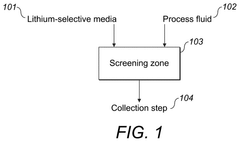
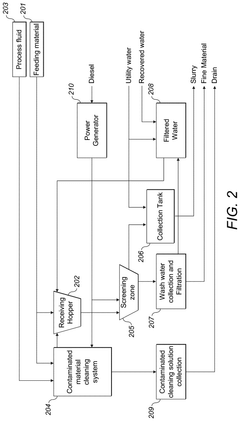
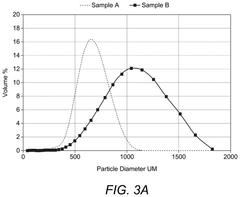
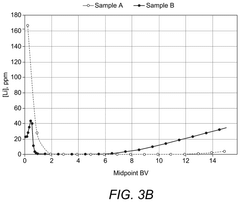
- A method involving a screening process using sieve elements with specific mesh sizes to separate lithium-selective media into desired particle sizes and remove contaminants, followed by dewatering and cleaning, ensuring optimal particle distribution and purity for improved lithium uptake.


Method for improving lithium yield in a direct lithium extraction process
PatentPendingUS20250249465A1
Innovation
- A method involving a screening process using sieve elements with specific mesh sizes to separate lithium-selective media into desired particle sizes and remove contaminants, followed by dewatering and cleaning, to ensure optimal media performance in packed-bed columns.
Environmental Impact Assessment of DLE Technologies
Direct Lithium Extraction (DLE) technologies represent a significant advancement in lithium production, but their environmental implications require thorough assessment. Compared to traditional evaporation ponds, DLE technologies generally demonstrate a substantially reduced physical footprint, with some systems requiring up to 90% less land area for equivalent lithium production. This spatial efficiency translates to minimized habitat disruption and reduced ecosystem fragmentation in sensitive areas.
Water consumption metrics reveal promising advantages, as most DLE systems can recycle 80-90% of process water, dramatically reducing freshwater requirements compared to conventional methods that consume 500,000+ gallons per ton of lithium produced. This efficiency is particularly critical in water-stressed regions where lithium resources are abundant, such as the lithium triangle of South America.
Carbon emissions profiles of DLE technologies vary significantly based on energy sources. When powered by renewable energy, DLE can achieve carbon footprints 30-50% lower than traditional extraction methods. However, implementation with fossil fuel energy sources may partially offset these benefits, highlighting the importance of integrated renewable energy solutions in deployment strategies.
Chemical usage presents both challenges and opportunities. While DLE processes require specialized sorbents and reagents, recent innovations have focused on developing biodegradable alternatives and closed-loop chemical recovery systems. Current data indicates a 40-60% reduction in harmful chemical discharge compared to conventional extraction methods.
Groundwater protection remains a critical consideration, as DLE operations interact directly with subsurface aquifers. Advanced monitoring systems and protective well designs have demonstrated effectiveness in preventing cross-contamination between aquifer layers, though long-term studies are still limited. Preliminary field data suggests minimal impact on surrounding groundwater quality when proper safeguards are implemented.
Waste management represents a significant environmental advantage, as DLE produces substantially less solid waste than traditional methods. The concentrated nature of DLE byproducts also facilitates more efficient recycling and potential valorization of secondary materials, creating opportunities for circular economy approaches within the lithium value chain.
Biodiversity impacts appear markedly reduced compared to evaporation pond methods, though site-specific assessments remain essential. Recent ecological monitoring at pilot DLE facilities has documented minimal disruption to local flora and fauna when compared to baseline measurements, suggesting promising compatibility with conservation objectives.
Human Development Goals:
AI:
The environmental impact assessment of Direct Lithium Extraction (DLE) technologies reveals significant advantages over traditional lithium production methods. DLE systems demonstrate a substantially reduced physical footprint, typically requiring 90% less land area than conventional evaporation ponds, which translates to minimized habitat disruption and ecosystem fragmentation in sensitive lithium-rich regions.
Water conservation represents one of DLE's most compelling environmental benefits. Most advanced DLE technologies can recycle 80-90% of process water, dramatically reducing freshwater consumption compared to traditional methods that require over 500,000 gallons per ton of lithium produced. This efficiency is particularly valuable in water-stressed regions like South America's lithium triangle, where conventional extraction has faced increasing criticism for depleting local water resources.
The carbon emissions profile of DLE technologies varies significantly depending on energy sources. When powered by renewable energy, DLE operations can achieve 30-50% lower carbon footprints than conventional extraction. However, implementation with fossil fuel energy sources may diminish these benefits, highlighting the importance of integrating renewable energy solutions into DLE deployment strategies to maximize environmental advantages.
Chemical usage in DLE processes presents both challenges and opportunities. While these technologies require specialized sorbents and reagents, recent innovations have focused on developing biodegradable alternatives and closed-loop chemical recovery systems. Current field data indicates a 40-60% reduction in harmful chemical discharge compared to traditional extraction methods, though ongoing research aims to further minimize chemical inputs.
Groundwater protection remains a critical consideration as DLE operations interact directly with subsurface aquifers. Advanced monitoring systems and protective well designs have demonstrated effectiveness in preventing cross-contamination between aquifer layers, though long-term studies are still limited. Preliminary field data suggests minimal impact on surrounding groundwater quality when proper safeguards are implemented.
Waste management represents another significant environmental advantage of DLE technologies. These systems produce substantially less solid waste than traditional methods, and the concentrated nature of DLE byproducts facilitates more efficient recycling and potential valorization of secondary materials, creating opportunities for circular economy approaches within the lithium value chain.
Water consumption metrics reveal promising advantages, as most DLE systems can recycle 80-90% of process water, dramatically reducing freshwater requirements compared to conventional methods that consume 500,000+ gallons per ton of lithium produced. This efficiency is particularly critical in water-stressed regions where lithium resources are abundant, such as the lithium triangle of South America.
Carbon emissions profiles of DLE technologies vary significantly based on energy sources. When powered by renewable energy, DLE can achieve carbon footprints 30-50% lower than traditional extraction methods. However, implementation with fossil fuel energy sources may partially offset these benefits, highlighting the importance of integrated renewable energy solutions in deployment strategies.
Chemical usage presents both challenges and opportunities. While DLE processes require specialized sorbents and reagents, recent innovations have focused on developing biodegradable alternatives and closed-loop chemical recovery systems. Current data indicates a 40-60% reduction in harmful chemical discharge compared to conventional extraction methods.
Groundwater protection remains a critical consideration, as DLE operations interact directly with subsurface aquifers. Advanced monitoring systems and protective well designs have demonstrated effectiveness in preventing cross-contamination between aquifer layers, though long-term studies are still limited. Preliminary field data suggests minimal impact on surrounding groundwater quality when proper safeguards are implemented.
Waste management represents a significant environmental advantage, as DLE produces substantially less solid waste than traditional methods. The concentrated nature of DLE byproducts also facilitates more efficient recycling and potential valorization of secondary materials, creating opportunities for circular economy approaches within the lithium value chain.
Biodiversity impacts appear markedly reduced compared to evaporation pond methods, though site-specific assessments remain essential. Recent ecological monitoring at pilot DLE facilities has documented minimal disruption to local flora and fauna when compared to baseline measurements, suggesting promising compatibility with conservation objectives.
Human Development Goals:
AI:
The environmental impact assessment of Direct Lithium Extraction (DLE) technologies reveals significant advantages over traditional lithium production methods. DLE systems demonstrate a substantially reduced physical footprint, typically requiring 90% less land area than conventional evaporation ponds, which translates to minimized habitat disruption and ecosystem fragmentation in sensitive lithium-rich regions.
Water conservation represents one of DLE's most compelling environmental benefits. Most advanced DLE technologies can recycle 80-90% of process water, dramatically reducing freshwater consumption compared to traditional methods that require over 500,000 gallons per ton of lithium produced. This efficiency is particularly valuable in water-stressed regions like South America's lithium triangle, where conventional extraction has faced increasing criticism for depleting local water resources.
The carbon emissions profile of DLE technologies varies significantly depending on energy sources. When powered by renewable energy, DLE operations can achieve 30-50% lower carbon footprints than conventional extraction. However, implementation with fossil fuel energy sources may diminish these benefits, highlighting the importance of integrating renewable energy solutions into DLE deployment strategies to maximize environmental advantages.
Chemical usage in DLE processes presents both challenges and opportunities. While these technologies require specialized sorbents and reagents, recent innovations have focused on developing biodegradable alternatives and closed-loop chemical recovery systems. Current field data indicates a 40-60% reduction in harmful chemical discharge compared to traditional extraction methods, though ongoing research aims to further minimize chemical inputs.
Groundwater protection remains a critical consideration as DLE operations interact directly with subsurface aquifers. Advanced monitoring systems and protective well designs have demonstrated effectiveness in preventing cross-contamination between aquifer layers, though long-term studies are still limited. Preliminary field data suggests minimal impact on surrounding groundwater quality when proper safeguards are implemented.
Waste management represents another significant environmental advantage of DLE technologies. These systems produce substantially less solid waste than traditional methods, and the concentrated nature of DLE byproducts facilitates more efficient recycling and potential valorization of secondary materials, creating opportunities for circular economy approaches within the lithium value chain.
Regulatory Framework for Lithium Extraction Operations
The regulatory landscape for lithium extraction operations has become increasingly complex as governments worldwide recognize the strategic importance of lithium resources for energy transition. At the international level, organizations such as the International Energy Agency (IEA) and the United Nations Environment Programme (UNEP) have established guidelines for sustainable mining practices that specifically address lithium extraction. These frameworks emphasize water conservation, ecosystem protection, and responsible resource management.
In major lithium-producing regions, regulatory approaches vary significantly. Chile, Argentina, and Bolivia—comprising the "Lithium Triangle"—have implemented distinct regulatory models. Chile treats lithium as a strategic resource subject to special concession contracts with strict environmental monitoring requirements. Argentina has a more decentralized approach with provincial governments controlling mining rights, while Bolivia maintains tight state control over its lithium resources.
The United States has recently strengthened its regulatory framework through the Critical Minerals Initiative, which streamlines permitting processes while maintaining environmental safeguards for lithium extraction projects. The Environmental Protection Agency (EPA) has developed specific guidelines for Direct Lithium Extraction (DLE) technologies, focusing on groundwater protection and waste management protocols.
European regulations emphasize sustainability metrics, with the European Union's Battery Directive requiring lithium producers to demonstrate environmental compliance throughout the supply chain. The EU Taxonomy for Sustainable Activities has established technical screening criteria specifically for lithium extraction operations, incentivizing adoption of DLE technologies with reduced environmental footprints.
Compliance requirements for DLE operations typically include water usage permits, discharge monitoring, regular environmental impact assessments, and community consultation processes. Many jurisdictions now require companies to submit detailed water management plans demonstrating minimal impact on local aquifers and surface water resources. Reporting requirements have expanded to include not only traditional environmental metrics but also social impact indicators and indigenous community engagement.
Emerging regulatory trends indicate a move toward standardized sustainability certification for lithium products, similar to existing schemes in other extractive industries. Several jurisdictions are developing lithium-specific regulatory frameworks that recognize the unique challenges of DLE technologies, including provisions for brine reinjection requirements, subsurface monitoring protocols, and selective extraction efficiency standards. These evolving regulations will significantly shape the development and implementation of optimized DLE technologies in the coming years.
In major lithium-producing regions, regulatory approaches vary significantly. Chile, Argentina, and Bolivia—comprising the "Lithium Triangle"—have implemented distinct regulatory models. Chile treats lithium as a strategic resource subject to special concession contracts with strict environmental monitoring requirements. Argentina has a more decentralized approach with provincial governments controlling mining rights, while Bolivia maintains tight state control over its lithium resources.
The United States has recently strengthened its regulatory framework through the Critical Minerals Initiative, which streamlines permitting processes while maintaining environmental safeguards for lithium extraction projects. The Environmental Protection Agency (EPA) has developed specific guidelines for Direct Lithium Extraction (DLE) technologies, focusing on groundwater protection and waste management protocols.
European regulations emphasize sustainability metrics, with the European Union's Battery Directive requiring lithium producers to demonstrate environmental compliance throughout the supply chain. The EU Taxonomy for Sustainable Activities has established technical screening criteria specifically for lithium extraction operations, incentivizing adoption of DLE technologies with reduced environmental footprints.
Compliance requirements for DLE operations typically include water usage permits, discharge monitoring, regular environmental impact assessments, and community consultation processes. Many jurisdictions now require companies to submit detailed water management plans demonstrating minimal impact on local aquifers and surface water resources. Reporting requirements have expanded to include not only traditional environmental metrics but also social impact indicators and indigenous community engagement.
Emerging regulatory trends indicate a move toward standardized sustainability certification for lithium products, similar to existing schemes in other extractive industries. Several jurisdictions are developing lithium-specific regulatory frameworks that recognize the unique challenges of DLE technologies, including provisions for brine reinjection requirements, subsurface monitoring protocols, and selective extraction efficiency standards. These evolving regulations will significantly shape the development and implementation of optimized DLE technologies in the coming years.
Unlock deeper insights with PatSnap Eureka Quick Research — get a full tech report to explore trends and direct your research. Try now!
Generate Your Research Report Instantly with AI Agent
Supercharge your innovation with PatSnap Eureka AI Agent Platform!