Pursuing zero-emission targets with V16 engine innovation
AUG 15, 20259 MIN READ
Generate Your Research Report Instantly with AI Agent
PatSnap Eureka helps you evaluate technical feasibility & market potential.
V16 Engine Evolution
The V16 engine has undergone significant evolution since its inception in the early 20th century. Initially developed for luxury automobiles and high-performance aircraft, these engines were prized for their smooth operation and impressive power output. The first notable V16 engine was introduced by Cadillac in 1930, setting a new standard for automotive engineering.
Throughout the mid-20th century, V16 engines found applications in various sectors, including marine propulsion and industrial power generation. Their ability to deliver substantial power with minimal vibration made them ideal for large vessels and stationary power plants. However, the complexity and cost of these engines limited their widespread adoption in consumer vehicles.
The 1980s and 1990s saw a resurgence of interest in V16 engines, particularly in the realm of motorsports. Formula One teams experimented with V16 configurations, seeking to maximize power output within regulatory constraints. This period of innovation led to advancements in materials science and engine management systems, which would later influence broader automotive engineering practices.
In recent years, the focus of V16 engine development has shifted towards efficiency and environmental sustainability. Engineers have explored ways to reduce emissions and improve fuel economy without sacrificing the power and smoothness that are hallmarks of the V16 configuration. This has led to the integration of technologies such as direct fuel injection, variable valve timing, and cylinder deactivation.
The pursuit of zero-emission targets has prompted a reevaluation of the V16 engine's role in modern transportation. While traditional fossil fuel-powered V16 engines face challenges in meeting stringent emissions standards, there is growing interest in adapting this configuration for use with alternative fuels or in hybrid powertrains. Some luxury automakers have explored the potential of V16 engines running on hydrogen or synthetic fuels as a way to preserve the character of these powerplants while reducing their environmental impact.
Advancements in materials and manufacturing techniques have also played a crucial role in the evolution of V16 engines. The use of lightweight alloys and advanced composites has helped reduce engine weight, improving overall vehicle efficiency. Additionally, precision manufacturing methods have enabled tighter tolerances and improved engine reliability, addressing some of the historical challenges associated with complex multi-cylinder engines.
As the automotive industry continues to evolve towards electrification, the future of V16 engines remains uncertain. However, their legacy of engineering excellence and the ongoing efforts to innovate within this configuration suggest that V16 engines may yet find a place in niche applications or as part of hybrid systems designed to meet zero-emission goals while preserving the unique characteristics that have made these engines legendary.
Throughout the mid-20th century, V16 engines found applications in various sectors, including marine propulsion and industrial power generation. Their ability to deliver substantial power with minimal vibration made them ideal for large vessels and stationary power plants. However, the complexity and cost of these engines limited their widespread adoption in consumer vehicles.
The 1980s and 1990s saw a resurgence of interest in V16 engines, particularly in the realm of motorsports. Formula One teams experimented with V16 configurations, seeking to maximize power output within regulatory constraints. This period of innovation led to advancements in materials science and engine management systems, which would later influence broader automotive engineering practices.
In recent years, the focus of V16 engine development has shifted towards efficiency and environmental sustainability. Engineers have explored ways to reduce emissions and improve fuel economy without sacrificing the power and smoothness that are hallmarks of the V16 configuration. This has led to the integration of technologies such as direct fuel injection, variable valve timing, and cylinder deactivation.
The pursuit of zero-emission targets has prompted a reevaluation of the V16 engine's role in modern transportation. While traditional fossil fuel-powered V16 engines face challenges in meeting stringent emissions standards, there is growing interest in adapting this configuration for use with alternative fuels or in hybrid powertrains. Some luxury automakers have explored the potential of V16 engines running on hydrogen or synthetic fuels as a way to preserve the character of these powerplants while reducing their environmental impact.
Advancements in materials and manufacturing techniques have also played a crucial role in the evolution of V16 engines. The use of lightweight alloys and advanced composites has helped reduce engine weight, improving overall vehicle efficiency. Additionally, precision manufacturing methods have enabled tighter tolerances and improved engine reliability, addressing some of the historical challenges associated with complex multi-cylinder engines.
As the automotive industry continues to evolve towards electrification, the future of V16 engines remains uncertain. However, their legacy of engineering excellence and the ongoing efforts to innovate within this configuration suggest that V16 engines may yet find a place in niche applications or as part of hybrid systems designed to meet zero-emission goals while preserving the unique characteristics that have made these engines legendary.
Zero-Emission Market
The zero-emission market has experienced significant growth in recent years, driven by increasing environmental concerns and stringent regulations aimed at reducing greenhouse gas emissions. This market encompasses a wide range of technologies and solutions designed to eliminate or drastically reduce harmful emissions across various industries, with a particular focus on the transportation sector.
In the automotive industry, the zero-emission market has been primarily dominated by electric vehicles (EVs) and hydrogen fuel cell vehicles (FCVs). These technologies have gained substantial traction due to their potential to completely eliminate tailpipe emissions. The global EV market has seen exponential growth, with sales reaching record highs year after year. Major automotive manufacturers have committed to electrifying their vehicle lineups, investing billions in research and development to improve battery technology, charging infrastructure, and overall vehicle performance.
However, the pursuit of zero-emission targets is not limited to passenger vehicles. The commercial transportation sector, including heavy-duty trucks, buses, and marine vessels, is also undergoing a transformation towards cleaner technologies. In this context, the innovation of zero-emission V16 engines represents a unique approach to addressing emissions in high-power applications where traditional electric or hydrogen fuel cell solutions may face limitations.
The market for zero-emission technologies in industrial applications is also expanding rapidly. Industries such as power generation, manufacturing, and construction are exploring ways to reduce their carbon footprint through the adoption of cleaner energy sources and more efficient processes. This has led to increased demand for renewable energy systems, energy storage solutions, and carbon capture technologies.
Government policies and incentives play a crucial role in shaping the zero-emission market. Many countries have set ambitious targets for reducing emissions and have implemented regulations to phase out internal combustion engines in favor of cleaner alternatives. These policies, coupled with financial incentives for consumers and businesses, have been instrumental in driving market growth and technological innovation.
The zero-emission market is characterized by intense competition and rapid technological advancements. Established automotive manufacturers are facing challenges from new entrants, particularly in the EV space, leading to increased innovation and accelerated development cycles. This competitive landscape has resulted in significant improvements in battery technology, driving range, and charging speeds, making zero-emission vehicles more practical and appealing to consumers.
As the market continues to evolve, there is growing interest in exploring alternative approaches to achieving zero emissions, particularly in sectors where electrification may not be the most viable solution. The development of zero-emission V16 engines represents one such innovative approach, potentially offering a pathway to combine high performance with environmental sustainability in specialized applications.
In the automotive industry, the zero-emission market has been primarily dominated by electric vehicles (EVs) and hydrogen fuel cell vehicles (FCVs). These technologies have gained substantial traction due to their potential to completely eliminate tailpipe emissions. The global EV market has seen exponential growth, with sales reaching record highs year after year. Major automotive manufacturers have committed to electrifying their vehicle lineups, investing billions in research and development to improve battery technology, charging infrastructure, and overall vehicle performance.
However, the pursuit of zero-emission targets is not limited to passenger vehicles. The commercial transportation sector, including heavy-duty trucks, buses, and marine vessels, is also undergoing a transformation towards cleaner technologies. In this context, the innovation of zero-emission V16 engines represents a unique approach to addressing emissions in high-power applications where traditional electric or hydrogen fuel cell solutions may face limitations.
The market for zero-emission technologies in industrial applications is also expanding rapidly. Industries such as power generation, manufacturing, and construction are exploring ways to reduce their carbon footprint through the adoption of cleaner energy sources and more efficient processes. This has led to increased demand for renewable energy systems, energy storage solutions, and carbon capture technologies.
Government policies and incentives play a crucial role in shaping the zero-emission market. Many countries have set ambitious targets for reducing emissions and have implemented regulations to phase out internal combustion engines in favor of cleaner alternatives. These policies, coupled with financial incentives for consumers and businesses, have been instrumental in driving market growth and technological innovation.
The zero-emission market is characterized by intense competition and rapid technological advancements. Established automotive manufacturers are facing challenges from new entrants, particularly in the EV space, leading to increased innovation and accelerated development cycles. This competitive landscape has resulted in significant improvements in battery technology, driving range, and charging speeds, making zero-emission vehicles more practical and appealing to consumers.
As the market continues to evolve, there is growing interest in exploring alternative approaches to achieving zero emissions, particularly in sectors where electrification may not be the most viable solution. The development of zero-emission V16 engines represents one such innovative approach, potentially offering a pathway to combine high performance with environmental sustainability in specialized applications.
V16 Tech Challenges
The pursuit of zero-emission targets with V16 engine innovation presents significant technical challenges. The V16 engine, known for its power and performance, traditionally consumes substantial amounts of fuel and produces considerable emissions. Adapting this engine configuration to meet stringent environmental standards requires overcoming several key obstacles.
One of the primary challenges is reducing carbon dioxide emissions while maintaining the engine's characteristic power output. This necessitates a complete redesign of the combustion process, potentially incorporating advanced fuel injection systems, variable valve timing, and cylinder deactivation technologies. Engineers must also address the issue of thermal efficiency, as V16 engines typically generate substantial heat, which contributes to energy loss and increased emissions.
Another significant hurdle is the integration of hybrid or electric systems into the V16 architecture. The sheer size and complexity of a V16 engine make it difficult to incorporate electric motors and battery packs without compromising the vehicle's weight distribution and overall performance. Balancing the power delivery between the internal combustion engine and electric components while ensuring seamless operation poses a considerable engineering challenge.
Material science plays a crucial role in overcoming these challenges. Developing lightweight yet durable materials for engine components can help reduce overall weight and improve fuel efficiency. However, these materials must withstand the extreme temperatures and pressures associated with high-performance V16 engines, requiring extensive research and testing.
The management of NOx emissions presents another technical obstacle. V16 engines, due to their high combustion temperatures, are prone to producing significant amounts of nitrogen oxides. Implementing effective after-treatment systems, such as selective catalytic reduction (SCR) or lean NOx traps, without compromising engine performance or increasing backpressure, demands innovative solutions.
Cooling system design for zero-emission V16 engines also poses challenges. The integration of advanced thermal management systems is essential to maintain optimal operating temperatures for both the engine and any hybrid components. This may involve the development of new coolant formulations and more efficient heat exchangers.
Lastly, the challenge of packaging and integrating all these advanced technologies into a cohesive system that fits within the constraints of a vehicle's engine bay cannot be understated. Engineers must find creative ways to accommodate the V16 engine, emission control systems, hybrid components, and cooling systems while ensuring serviceability and compliance with safety regulations.
One of the primary challenges is reducing carbon dioxide emissions while maintaining the engine's characteristic power output. This necessitates a complete redesign of the combustion process, potentially incorporating advanced fuel injection systems, variable valve timing, and cylinder deactivation technologies. Engineers must also address the issue of thermal efficiency, as V16 engines typically generate substantial heat, which contributes to energy loss and increased emissions.
Another significant hurdle is the integration of hybrid or electric systems into the V16 architecture. The sheer size and complexity of a V16 engine make it difficult to incorporate electric motors and battery packs without compromising the vehicle's weight distribution and overall performance. Balancing the power delivery between the internal combustion engine and electric components while ensuring seamless operation poses a considerable engineering challenge.
Material science plays a crucial role in overcoming these challenges. Developing lightweight yet durable materials for engine components can help reduce overall weight and improve fuel efficiency. However, these materials must withstand the extreme temperatures and pressures associated with high-performance V16 engines, requiring extensive research and testing.
The management of NOx emissions presents another technical obstacle. V16 engines, due to their high combustion temperatures, are prone to producing significant amounts of nitrogen oxides. Implementing effective after-treatment systems, such as selective catalytic reduction (SCR) or lean NOx traps, without compromising engine performance or increasing backpressure, demands innovative solutions.
Cooling system design for zero-emission V16 engines also poses challenges. The integration of advanced thermal management systems is essential to maintain optimal operating temperatures for both the engine and any hybrid components. This may involve the development of new coolant formulations and more efficient heat exchangers.
Lastly, the challenge of packaging and integrating all these advanced technologies into a cohesive system that fits within the constraints of a vehicle's engine bay cannot be understated. Engineers must find creative ways to accommodate the V16 engine, emission control systems, hybrid components, and cooling systems while ensuring serviceability and compliance with safety regulations.
Current V16 Solutions
01 Exhaust gas recirculation (EGR) systems
EGR systems are used to reduce emissions in V16 engines by recirculating a portion of the exhaust gas back into the engine cylinders. This lowers combustion temperatures and reduces the formation of nitrogen oxides (NOx). Advanced EGR systems may include cooling mechanisms and precise control strategies to optimize emission reduction while maintaining engine performance.- Exhaust gas recirculation (EGR) systems: EGR systems are used to reduce emissions in V16 engines by recirculating a portion of the exhaust gases back into the combustion chamber. This lowers combustion temperatures and reduces the formation of nitrogen oxides (NOx). Advanced EGR systems may include cooling mechanisms and precise control strategies to optimize emission reduction while maintaining engine performance.
- Selective catalytic reduction (SCR) technology: SCR systems are employed in V16 engines to reduce NOx emissions. These systems use a catalyst and a reducing agent, typically urea, to convert NOx into nitrogen and water. The integration of SCR technology in V16 engines requires careful design considerations for urea injection, mixing, and catalyst placement to ensure efficient emission reduction across various operating conditions.
- Advanced fuel injection systems: Sophisticated fuel injection systems are crucial for controlling emissions in V16 engines. These systems may include high-pressure common rail injection, multiple injection events per cycle, and precise electronic control. By optimizing fuel atomization, timing, and distribution, these systems can significantly reduce particulate matter and improve overall combustion efficiency, leading to lower emissions.
- Turbocharging and supercharging technologies: Forced induction systems, such as turbochargers and superchargers, are used in V16 engines to improve power output and efficiency while potentially reducing emissions. These systems can be designed to optimize air-fuel ratios across a wide range of operating conditions, enabling better combustion control and reduced emissions. Advanced designs may incorporate variable geometry turbochargers or electric compressors for enhanced performance and emission control.
- Aftertreatment systems integration: Comprehensive aftertreatment systems are integrated into V16 engines to meet stringent emission standards. These systems may combine multiple technologies such as diesel oxidation catalysts, diesel particulate filters, and SCR catalysts. The integration of these components requires careful thermal management, sensor placement, and control strategies to ensure optimal emission reduction across various engine operating conditions and duty cycles.
02 Selective catalytic reduction (SCR) technology
SCR systems are employed in V16 engines to reduce NOx emissions. These systems use a catalyst and a reducing agent, typically urea, to convert NOx into nitrogen and water. The integration of SCR technology in V16 engines requires careful design considerations for urea injection, mixing, and catalyst placement to ensure efficient emission reduction across various operating conditions.Expand Specific Solutions03 Advanced fuel injection systems
Sophisticated fuel injection systems are crucial for controlling emissions in V16 engines. These systems may include high-pressure common rail injection, multiple injection events per cycle, and precise electronic control. By optimizing fuel delivery and combustion, these systems can significantly reduce particulate matter and improve overall emission performance.Expand Specific Solutions04 Turbocharging and supercharging technologies
Forced induction systems, such as turbochargers and superchargers, are used in V16 engines to improve power output and efficiency while managing emissions. These systems can be designed with variable geometry or multi-stage configurations to optimize air delivery across the engine's operating range, contributing to better combustion and reduced emissions.Expand Specific Solutions05 Aftertreatment systems integration
Comprehensive aftertreatment systems for V16 engines may include a combination of diesel oxidation catalysts (DOC), diesel particulate filters (DPF), and SCR catalysts. The integration and packaging of these components require careful thermal management and control strategies to ensure optimal emission reduction performance while minimizing the impact on engine efficiency and packaging constraints.Expand Specific Solutions
Key V16 Manufacturers
The pursuit of zero-emission targets with V16 engine innovation is at a critical juncture, reflecting the automotive industry's transition towards sustainable technologies. This market is experiencing rapid growth, driven by stringent environmental regulations and increasing consumer demand for cleaner vehicles. While the V16 engine technology is mature, its adaptation for zero-emissions is still in early stages. Key players like SAIC General Motors, Rolls-Royce Solutions, and Liebherr-Components are investing heavily in research and development to overcome technical challenges and improve efficiency. Universities such as Tianjin University and Chongqing University are contributing valuable research, fostering industry-academia collaborations to accelerate innovation in this field.
Honda Motor Co., Ltd.
Technical Solution: Honda's approach to zero-emission V16 engine innovation focuses on hydrogen fuel cell technology. They are developing a V16 engine that uses hydrogen as fuel, producing only water vapor as a byproduct. This system combines the power and familiarity of a V16 engine with the zero-emission benefits of hydrogen fuel cells. Honda's technology incorporates advanced fuel cell stacks with high power density, allowing for compact integration into the V16 engine block[2]. The company is also working on improving hydrogen storage systems to increase range and performance. Additionally, Honda is developing smart engine management systems that optimize hydrogen consumption and power output, ensuring efficient operation across various driving conditions[4]. To address infrastructure challenges, Honda is collaborating with energy companies to expand hydrogen refueling networks[6].
Strengths: Achieves zero emissions, maintains high power output of V16 engines, leverages existing engine manufacturing capabilities. Weaknesses: Requires development of hydrogen infrastructure, higher initial costs, potential safety concerns with hydrogen storage and handling.
Ford Global Technologies LLC
Technical Solution: Ford is pursuing zero-emission targets with V16 engine innovation through a multi-faceted approach. They are developing a hybrid V16 engine that combines traditional internal combustion with electric power. This system utilizes advanced materials and combustion technologies to maximize efficiency while minimizing emissions. The engine incorporates cylinder deactivation technology, allowing it to operate on fewer cylinders when full power is not needed, thus reducing fuel consumption and emissions[1]. Additionally, Ford is exploring the use of sustainable biofuels in their V16 engines, which can significantly reduce carbon emissions without requiring major engine modifications[3]. The company is also investing in advanced exhaust after-treatment systems, including selective catalytic reduction (SCR) and particulate filters, to further reduce harmful emissions[5].
Strengths: Leverages existing V16 technology, provides a transitional solution towards zero emissions, maintains high performance. Weaknesses: Still produces some emissions, may face challenges in meeting stricter future regulations, potentially higher cost compared to fully electric solutions.
V16 Emission Patents
V engine
PatentInactiveUS20120255299A1
Innovation
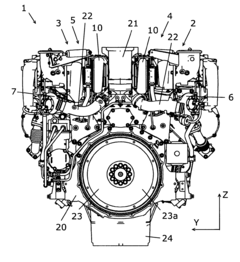
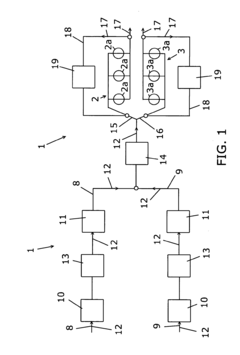
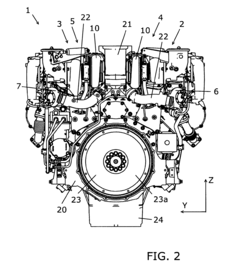
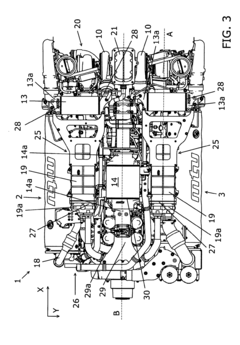
- A V engine design featuring a two-stage forced induction system with low-pressure and high-pressure exhaust stream turbochargers arranged on the end faces of each cylinder bank, incorporating a charge air cooler and exhaust gas return system to merge cooled exhaust gas with charge air, reducing emissions and enabling a compact configuration.
Zero emission technology to produce power in thermal plants and dimethyl ether from captured carbon dioxide
PatentWO2025141340A1
Innovation
- An integrated process in an IGCC power plant captures CO₂ using Pressure Swing Adsorption and Monoethanolamine, converts it into carbon monoxide through a Reverse Water Gas Shift reaction, and synthesizes Dimethyl Ether (DME) using a Cu/ZnO/Al₂O₃ catalyst, optimizing energy efficiency and reducing emissions.




Emission Regulations
Emission regulations have become increasingly stringent worldwide, driven by the urgent need to address climate change and improve air quality. These regulations set limits on the amount of pollutants that vehicles can emit, including carbon dioxide (CO2), nitrogen oxides (NOx), particulate matter (PM), and other harmful substances. The automotive industry, including manufacturers of V16 engines, must adapt to these evolving standards to remain compliant and competitive in the market.
In the European Union, the Euro 6 standards currently govern vehicle emissions, with plans for even stricter Euro 7 standards in the near future. These regulations aim to reduce CO2 emissions from new cars by 37.5% by 2030 compared to 2021 levels. Similarly, the United States Environmental Protection Agency (EPA) has implemented Corporate Average Fuel Economy (CAFE) standards, which require automakers to achieve specific fleet-wide fuel efficiency targets.
China, the world's largest automotive market, has also introduced stringent emission standards. The China 6 standards, equivalent to Euro 6, have been implemented nationwide, with some cities adopting even more stringent requirements. These regulations have significantly impacted the development and production of high-performance engines, including V16 configurations.
To meet these challenging targets, manufacturers are exploring various technologies and strategies. These include advanced engine management systems, improved combustion processes, and the integration of hybrid powertrains. For V16 engines, which are typically used in luxury and high-performance vehicles, the focus is on maintaining power output while drastically reducing emissions.
One approach is the implementation of advanced aftertreatment systems, such as selective catalytic reduction (SCR) and gasoline particulate filters (GPF). These technologies can significantly reduce NOx and PM emissions, respectively. Additionally, manufacturers are exploring the use of sustainable fuels, such as synthetic e-fuels, which can potentially offer a carbon-neutral solution for high-performance engines.
The pursuit of zero-emission targets with V16 engine innovation also involves the development of more efficient turbocharging systems, variable valve timing, and cylinder deactivation technologies. These advancements allow engines to operate more efficiently under various load conditions, reducing overall fuel consumption and emissions.
As emission regulations continue to evolve, the future of V16 engines will depend on their ability to meet increasingly stringent standards while maintaining their performance characteristics. This challenge drives ongoing research and development efforts in the automotive industry, pushing the boundaries of engine technology and paving the way for innovative solutions in the quest for zero-emission vehicles.
In the European Union, the Euro 6 standards currently govern vehicle emissions, with plans for even stricter Euro 7 standards in the near future. These regulations aim to reduce CO2 emissions from new cars by 37.5% by 2030 compared to 2021 levels. Similarly, the United States Environmental Protection Agency (EPA) has implemented Corporate Average Fuel Economy (CAFE) standards, which require automakers to achieve specific fleet-wide fuel efficiency targets.
China, the world's largest automotive market, has also introduced stringent emission standards. The China 6 standards, equivalent to Euro 6, have been implemented nationwide, with some cities adopting even more stringent requirements. These regulations have significantly impacted the development and production of high-performance engines, including V16 configurations.
To meet these challenging targets, manufacturers are exploring various technologies and strategies. These include advanced engine management systems, improved combustion processes, and the integration of hybrid powertrains. For V16 engines, which are typically used in luxury and high-performance vehicles, the focus is on maintaining power output while drastically reducing emissions.
One approach is the implementation of advanced aftertreatment systems, such as selective catalytic reduction (SCR) and gasoline particulate filters (GPF). These technologies can significantly reduce NOx and PM emissions, respectively. Additionally, manufacturers are exploring the use of sustainable fuels, such as synthetic e-fuels, which can potentially offer a carbon-neutral solution for high-performance engines.
The pursuit of zero-emission targets with V16 engine innovation also involves the development of more efficient turbocharging systems, variable valve timing, and cylinder deactivation technologies. These advancements allow engines to operate more efficiently under various load conditions, reducing overall fuel consumption and emissions.
As emission regulations continue to evolve, the future of V16 engines will depend on their ability to meet increasingly stringent standards while maintaining their performance characteristics. This challenge drives ongoing research and development efforts in the automotive industry, pushing the boundaries of engine technology and paving the way for innovative solutions in the quest for zero-emission vehicles.
Sustainable Materials
In the pursuit of zero-emission targets with V16 engine innovation, sustainable materials play a crucial role in reducing the environmental impact of these powerful engines. The development and integration of eco-friendly materials in V16 engines represent a significant step towards achieving sustainability in high-performance automotive applications.
Advanced composite materials, such as carbon fiber reinforced polymers (CFRP), are increasingly being utilized in V16 engine components. These materials offer exceptional strength-to-weight ratios, allowing for lighter engine designs without compromising structural integrity. By reducing overall engine weight, fuel efficiency is improved, contributing to lower emissions.
Innovative ceramic coatings are being applied to critical engine components, enhancing thermal efficiency and reducing friction. These coatings, often made from zirconia or alumina, can withstand extreme temperatures and provide superior wear resistance. As a result, engine longevity is increased, and the need for frequent replacements is minimized, reducing waste and resource consumption.
Biodegradable lubricants derived from renewable sources are being developed to replace traditional petroleum-based oils. These bio-lubricants offer comparable performance while significantly reducing the environmental impact associated with oil production and disposal. Some promising candidates include synthetic esters and vegetable oil-based formulations.
Recycled materials are finding their way into V16 engine manufacturing processes. For instance, recycled aluminum alloys are being used in engine blocks and cylinder heads, reducing the demand for virgin materials and lowering the carbon footprint of production. Advanced recycling techniques ensure that these materials meet the stringent quality requirements of high-performance engines.
Nanotechnology is enabling the development of novel materials with enhanced properties. Nanocomposites incorporating graphene or carbon nanotubes are being explored for use in engine components, offering improved strength, thermal conductivity, and wear resistance. These materials have the potential to extend engine life and improve overall efficiency.
Sustainable polymers, such as bio-based thermoplastics, are being investigated for use in non-critical engine components and accessories. These materials offer reduced environmental impact compared to traditional petroleum-based plastics while maintaining the necessary mechanical properties for automotive applications.
The integration of these sustainable materials in V16 engine innovation not only contributes to zero-emission targets but also promotes a circular economy approach in the automotive industry. By focusing on recyclability, durability, and renewable sources, manufacturers are paving the way for more environmentally responsible high-performance engines.
Advanced composite materials, such as carbon fiber reinforced polymers (CFRP), are increasingly being utilized in V16 engine components. These materials offer exceptional strength-to-weight ratios, allowing for lighter engine designs without compromising structural integrity. By reducing overall engine weight, fuel efficiency is improved, contributing to lower emissions.
Innovative ceramic coatings are being applied to critical engine components, enhancing thermal efficiency and reducing friction. These coatings, often made from zirconia or alumina, can withstand extreme temperatures and provide superior wear resistance. As a result, engine longevity is increased, and the need for frequent replacements is minimized, reducing waste and resource consumption.
Biodegradable lubricants derived from renewable sources are being developed to replace traditional petroleum-based oils. These bio-lubricants offer comparable performance while significantly reducing the environmental impact associated with oil production and disposal. Some promising candidates include synthetic esters and vegetable oil-based formulations.
Recycled materials are finding their way into V16 engine manufacturing processes. For instance, recycled aluminum alloys are being used in engine blocks and cylinder heads, reducing the demand for virgin materials and lowering the carbon footprint of production. Advanced recycling techniques ensure that these materials meet the stringent quality requirements of high-performance engines.
Nanotechnology is enabling the development of novel materials with enhanced properties. Nanocomposites incorporating graphene or carbon nanotubes are being explored for use in engine components, offering improved strength, thermal conductivity, and wear resistance. These materials have the potential to extend engine life and improve overall efficiency.
Sustainable polymers, such as bio-based thermoplastics, are being investigated for use in non-critical engine components and accessories. These materials offer reduced environmental impact compared to traditional petroleum-based plastics while maintaining the necessary mechanical properties for automotive applications.
The integration of these sustainable materials in V16 engine innovation not only contributes to zero-emission targets but also promotes a circular economy approach in the automotive industry. By focusing on recyclability, durability, and renewable sources, manufacturers are paving the way for more environmentally responsible high-performance engines.
Unlock deeper insights with PatSnap Eureka Quick Research — get a full tech report to explore trends and direct your research. Try now!
Generate Your Research Report Instantly with AI Agent
Supercharge your innovation with PatSnap Eureka AI Agent Platform!