Sodium silicate in nanocomposite fabrication for packaging
AUG 21, 20259 MIN READ
Generate Your Research Report Instantly with AI Agent
Patsnap Eureka helps you evaluate technical feasibility & market potential.
Sodium Silicate in Nanocomposites: Background and Objectives
Sodium silicate, also known as water glass, has emerged as a promising material in the field of nanocomposite fabrication for packaging applications. The evolution of this technology can be traced back to the early 2000s when researchers began exploring the potential of silicate-based nanocomposites. Over the past two decades, significant advancements have been made in understanding the unique properties and applications of sodium silicate in nanocomposite structures.
The primary objective of research in this area is to develop high-performance, environmentally friendly packaging materials that offer enhanced barrier properties, mechanical strength, and thermal stability. Sodium silicate plays a crucial role in achieving these goals due to its ability to form layered structures and interact with various polymer matrices at the nanoscale level.
The technological trend in this field has been moving towards the development of more sophisticated and tailored nanocomposites. Initially, the focus was on simple polymer-silicate systems, but recent research has expanded to include multi-component nanocomposites incorporating additional functional materials such as antimicrobial agents, oxygen scavengers, and biodegradable polymers.
One of the key drivers behind the growing interest in sodium silicate-based nanocomposites is the increasing demand for sustainable packaging solutions. As environmental concerns continue to shape consumer preferences and regulatory landscapes, the packaging industry is under pressure to develop materials that are both high-performing and eco-friendly. Sodium silicate, being an inorganic and non-toxic material, aligns well with these sustainability goals.
The research objectives in this field are multifaceted. Scientists and engineers are working to optimize the dispersion of sodium silicate within polymer matrices, enhance the interfacial interactions between the silicate layers and the polymer, and develop novel processing techniques to improve the overall performance of the nanocomposites. Additionally, there is a strong focus on understanding the fundamental mechanisms of nanocomposite formation and the structure-property relationships that govern their behavior.
Another important aspect of the research is the exploration of sodium silicate's potential in active and intelligent packaging systems. This includes the development of nanocomposites with controlled release properties for preservatives or antioxidants, as well as materials with sensing capabilities for monitoring food freshness or package integrity.
As the field progresses, researchers are also investigating the scalability and cost-effectiveness of sodium silicate-based nanocomposites for industrial applications. This involves optimizing production processes, reducing energy consumption, and exploring alternative sources of silicate materials to ensure the economic viability of these advanced packaging solutions.
The primary objective of research in this area is to develop high-performance, environmentally friendly packaging materials that offer enhanced barrier properties, mechanical strength, and thermal stability. Sodium silicate plays a crucial role in achieving these goals due to its ability to form layered structures and interact with various polymer matrices at the nanoscale level.
The technological trend in this field has been moving towards the development of more sophisticated and tailored nanocomposites. Initially, the focus was on simple polymer-silicate systems, but recent research has expanded to include multi-component nanocomposites incorporating additional functional materials such as antimicrobial agents, oxygen scavengers, and biodegradable polymers.
One of the key drivers behind the growing interest in sodium silicate-based nanocomposites is the increasing demand for sustainable packaging solutions. As environmental concerns continue to shape consumer preferences and regulatory landscapes, the packaging industry is under pressure to develop materials that are both high-performing and eco-friendly. Sodium silicate, being an inorganic and non-toxic material, aligns well with these sustainability goals.
The research objectives in this field are multifaceted. Scientists and engineers are working to optimize the dispersion of sodium silicate within polymer matrices, enhance the interfacial interactions between the silicate layers and the polymer, and develop novel processing techniques to improve the overall performance of the nanocomposites. Additionally, there is a strong focus on understanding the fundamental mechanisms of nanocomposite formation and the structure-property relationships that govern their behavior.
Another important aspect of the research is the exploration of sodium silicate's potential in active and intelligent packaging systems. This includes the development of nanocomposites with controlled release properties for preservatives or antioxidants, as well as materials with sensing capabilities for monitoring food freshness or package integrity.
As the field progresses, researchers are also investigating the scalability and cost-effectiveness of sodium silicate-based nanocomposites for industrial applications. This involves optimizing production processes, reducing energy consumption, and exploring alternative sources of silicate materials to ensure the economic viability of these advanced packaging solutions.
Market Analysis for Nanocomposite Packaging
The market for nanocomposite packaging materials is experiencing significant growth, driven by increasing demand for advanced packaging solutions across various industries. Sodium silicate, as a key component in nanocomposite fabrication, plays a crucial role in this expanding market. The global nanocomposite packaging market is projected to grow steadily over the next decade, with a particular focus on food and beverage, pharmaceuticals, and electronics sectors.
In the food and beverage industry, nanocomposite packaging materials incorporating sodium silicate offer enhanced barrier properties, extending shelf life and maintaining product quality. This aligns with consumer preferences for fresher, longer-lasting products and reduced food waste. The pharmaceutical sector is another major driver, as these materials provide improved protection against moisture, oxygen, and light, crucial for maintaining drug efficacy.
The electronics industry is also adopting nanocomposite packaging materials to protect sensitive components from environmental factors and electromagnetic interference. This trend is expected to accelerate with the increasing miniaturization of electronic devices and the growth of the Internet of Things (IoT) market.
Geographically, Asia-Pacific is emerging as a key market for nanocomposite packaging, driven by rapid industrialization, urbanization, and changing consumer lifestyles. North America and Europe continue to be significant markets, with a focus on sustainable and eco-friendly packaging solutions.
The integration of sodium silicate in nanocomposite fabrication addresses several market needs. It enhances mechanical strength, thermal stability, and barrier properties of packaging materials. This allows for the development of thinner, lighter packaging without compromising performance, aligning with sustainability goals and cost-reduction efforts in the packaging industry.
Market analysis indicates a growing interest in biodegradable and recyclable nanocomposite packaging materials. Research on sodium silicate's role in creating more environmentally friendly nanocomposites is likely to attract significant investment and drive market growth in the coming years.
Challenges in the market include regulatory hurdles, particularly concerning food contact materials, and the need for scalable, cost-effective production methods. However, ongoing research and development efforts are addressing these issues, paving the way for wider adoption of sodium silicate-based nanocomposite packaging materials.
In conclusion, the market for nanocomposite packaging materials, particularly those utilizing sodium silicate, shows strong growth potential. The combination of performance benefits, sustainability features, and applicability across multiple industries positions this technology as a key driver in the evolution of packaging solutions.
In the food and beverage industry, nanocomposite packaging materials incorporating sodium silicate offer enhanced barrier properties, extending shelf life and maintaining product quality. This aligns with consumer preferences for fresher, longer-lasting products and reduced food waste. The pharmaceutical sector is another major driver, as these materials provide improved protection against moisture, oxygen, and light, crucial for maintaining drug efficacy.
The electronics industry is also adopting nanocomposite packaging materials to protect sensitive components from environmental factors and electromagnetic interference. This trend is expected to accelerate with the increasing miniaturization of electronic devices and the growth of the Internet of Things (IoT) market.
Geographically, Asia-Pacific is emerging as a key market for nanocomposite packaging, driven by rapid industrialization, urbanization, and changing consumer lifestyles. North America and Europe continue to be significant markets, with a focus on sustainable and eco-friendly packaging solutions.
The integration of sodium silicate in nanocomposite fabrication addresses several market needs. It enhances mechanical strength, thermal stability, and barrier properties of packaging materials. This allows for the development of thinner, lighter packaging without compromising performance, aligning with sustainability goals and cost-reduction efforts in the packaging industry.
Market analysis indicates a growing interest in biodegradable and recyclable nanocomposite packaging materials. Research on sodium silicate's role in creating more environmentally friendly nanocomposites is likely to attract significant investment and drive market growth in the coming years.
Challenges in the market include regulatory hurdles, particularly concerning food contact materials, and the need for scalable, cost-effective production methods. However, ongoing research and development efforts are addressing these issues, paving the way for wider adoption of sodium silicate-based nanocomposite packaging materials.
In conclusion, the market for nanocomposite packaging materials, particularly those utilizing sodium silicate, shows strong growth potential. The combination of performance benefits, sustainability features, and applicability across multiple industries positions this technology as a key driver in the evolution of packaging solutions.
Current Challenges in Sodium Silicate Nanocomposite Fabrication
The fabrication of sodium silicate nanocomposites for packaging applications faces several significant challenges that hinder widespread adoption and optimal performance. One of the primary obstacles is achieving uniform dispersion of sodium silicate nanoparticles within the polymer matrix. The high surface energy and tendency of nanoparticles to agglomerate often result in uneven distribution, leading to inconsistent material properties and reduced effectiveness of the nanocomposite.
Another critical challenge lies in maintaining the stability of sodium silicate nanoparticles during the fabrication process. The high temperatures and shear forces involved in polymer processing can potentially alter the structure and properties of the nanoparticles, compromising their intended functionality within the packaging material. This instability can lead to reduced barrier properties and diminished overall performance of the nanocomposite.
The interface between sodium silicate nanoparticles and the polymer matrix presents yet another hurdle. Achieving strong interfacial adhesion is crucial for enhancing the mechanical and barrier properties of the nanocomposite. However, the inherent incompatibility between inorganic nanoparticles and organic polymer matrices often results in weak interactions, limiting the potential improvements in material characteristics.
Scalability and cost-effectiveness remain significant challenges in the commercial production of sodium silicate nanocomposites. The complex synthesis processes and specialized equipment required for nanoparticle production and incorporation into polymers can lead to high manufacturing costs, making it difficult to compete with traditional packaging materials in terms of economic viability.
Environmental concerns and regulatory compliance pose additional challenges. As packaging materials come into direct contact with food and consumer goods, ensuring the safety and non-toxicity of sodium silicate nanocomposites is paramount. Rigorous testing and adherence to evolving regulations are necessary, which can be time-consuming and resource-intensive for manufacturers.
The long-term stability and performance of sodium silicate nanocomposites in various environmental conditions remain areas of concern. Factors such as humidity, temperature fluctuations, and exposure to UV radiation can potentially degrade the nanocomposite structure over time, affecting its barrier properties and overall functionality as a packaging material.
Lastly, the lack of standardized testing methods and performance metrics specifically tailored for nanocomposites in packaging applications presents a challenge in evaluating and comparing different formulations. This absence of industry-wide standards makes it difficult for manufacturers to assess the true benefits and limitations of sodium silicate nanocomposites, potentially slowing down their adoption and optimization for packaging purposes.
Another critical challenge lies in maintaining the stability of sodium silicate nanoparticles during the fabrication process. The high temperatures and shear forces involved in polymer processing can potentially alter the structure and properties of the nanoparticles, compromising their intended functionality within the packaging material. This instability can lead to reduced barrier properties and diminished overall performance of the nanocomposite.
The interface between sodium silicate nanoparticles and the polymer matrix presents yet another hurdle. Achieving strong interfacial adhesion is crucial for enhancing the mechanical and barrier properties of the nanocomposite. However, the inherent incompatibility between inorganic nanoparticles and organic polymer matrices often results in weak interactions, limiting the potential improvements in material characteristics.
Scalability and cost-effectiveness remain significant challenges in the commercial production of sodium silicate nanocomposites. The complex synthesis processes and specialized equipment required for nanoparticle production and incorporation into polymers can lead to high manufacturing costs, making it difficult to compete with traditional packaging materials in terms of economic viability.
Environmental concerns and regulatory compliance pose additional challenges. As packaging materials come into direct contact with food and consumer goods, ensuring the safety and non-toxicity of sodium silicate nanocomposites is paramount. Rigorous testing and adherence to evolving regulations are necessary, which can be time-consuming and resource-intensive for manufacturers.
The long-term stability and performance of sodium silicate nanocomposites in various environmental conditions remain areas of concern. Factors such as humidity, temperature fluctuations, and exposure to UV radiation can potentially degrade the nanocomposite structure over time, affecting its barrier properties and overall functionality as a packaging material.
Lastly, the lack of standardized testing methods and performance metrics specifically tailored for nanocomposites in packaging applications presents a challenge in evaluating and comparing different formulations. This absence of industry-wide standards makes it difficult for manufacturers to assess the true benefits and limitations of sodium silicate nanocomposites, potentially slowing down their adoption and optimization for packaging purposes.
Existing Sodium Silicate Nanocomposite Fabrication Methods
01 Use in detergent compositions
Sodium silicate is commonly used in detergent compositions due to its alkaline properties and ability to soften water. It acts as a builder, helping to remove dirt and stains while protecting washing machines from corrosion. The inclusion of sodium silicate in detergent formulations can improve cleaning efficiency and extend the life of appliances.- Use in detergent compositions: Sodium silicate is commonly used in detergent compositions due to its alkaline properties and ability to soften water. It acts as a builder, helping to remove dirt and stains by suspending them in the wash water. Additionally, it provides corrosion protection for washing machines and helps prevent redeposition of soil onto fabrics.
- Application in cement and concrete: Sodium silicate is utilized in the production of cement and concrete materials. It acts as a binder and sealant, improving the strength and durability of concrete structures. It can also be used as an accelerator in cement setting and as a component in fire-resistant coatings for building materials.
- Role in water treatment: Sodium silicate plays a significant role in water treatment processes. It is used as a coagulant aid in water purification, helping to remove suspended particles and impurities. It also acts as a corrosion inhibitor in water systems, protecting pipes and equipment from degradation.
- Use in paper and pulp industry: In the paper and pulp industry, sodium silicate is employed as a sizing agent and retention aid. It helps improve paper strength, reduces ink penetration, and enhances the efficiency of the papermaking process. It also aids in the de-inking process during paper recycling.
- Application in catalysis and zeolite synthesis: Sodium silicate serves as a precursor in the synthesis of zeolites and other molecular sieves. These materials have wide applications in catalysis, ion exchange, and adsorption processes. The controlled reaction of sodium silicate with other compounds allows for the creation of various zeolite structures with specific properties.
02 Application in cement and concrete
Sodium silicate is utilized in the construction industry as an additive for cement and concrete. It can improve the strength and durability of concrete structures, reduce permeability, and enhance resistance to chemical attacks. The material also acts as a binder in the production of refractory cements and fireproof coatings.Expand Specific Solutions03 Use in water treatment
Sodium silicate plays a role in water treatment processes. It can be used as a coagulant aid in the removal of suspended particles and as a corrosion inhibitor in water distribution systems. The compound helps in the formation of protective films on metal surfaces, reducing the risk of pipe corrosion and improving water quality.Expand Specific Solutions04 Application in paper and pulp industry
In the paper and pulp industry, sodium silicate is used as a process chemical. It aids in de-inking recycled paper, improves paper strength, and acts as a retention aid during paper formation. The compound also helps in controlling pitch and stickies in paper manufacturing processes, leading to improved product quality and production efficiency.Expand Specific Solutions05 Use in fire-resistant coatings
Sodium silicate is an important component in the formulation of fire-resistant coatings and materials. When exposed to high temperatures, it forms a protective layer that insulates the underlying substrate from heat and flames. This property makes it valuable in the production of fire-resistant paints, textiles, and building materials, enhancing safety in various applications.Expand Specific Solutions
Key Players in Nanocomposite Packaging Industry
The research on sodium silicate in nanocomposite fabrication for packaging is in a growth phase, with increasing market demand driven by sustainable packaging trends. The global nanocomposite market is projected to reach $14.2 billion by 2025, with packaging as a key application. Technologically, the field is advancing rapidly, with companies like LG Chem, 3M, and Evonik leading innovation. Academic institutions such as Sichuan University and KAIST are contributing significantly to R&D efforts. While the technology is maturing, there's still room for improvement in areas like scalability and cost-effectiveness, indicating a competitive landscape with opportunities for both established players and new entrants.
3M Innovative Properties Co.
Technical Solution: 3M has developed a proprietary process for incorporating sodium silicate into nanocomposite films for packaging applications. Their approach involves a layer-by-layer assembly technique, where alternating layers of polymer and sodium silicate nanoparticles are deposited to create a highly ordered nanostructure[2]. This method allows for precise control over the silicate content and orientation within the nanocomposite. 3M's research has demonstrated that these nanocomposite films can achieve exceptional gas barrier properties, with oxygen permeability reduced by up to 95% compared to conventional polymer films[4]. Additionally, the company has developed a surface treatment process for the sodium silicate nanoparticles that enhances their dispersion and bonding with the polymer matrix, resulting in improved mechanical properties and thermal stability[6].
Strengths: Exceptional gas barrier properties, precise control over nanostructure, and improved mechanical and thermal properties. Weaknesses: Potentially higher production costs due to the complex layer-by-layer assembly process and specialized surface treatments.
Evonik Operations GmbH
Technical Solution: Evonik has developed an innovative approach to incorporating sodium silicate into nanocomposite packaging materials. Their method involves a sol-gel process to create highly dispersed sodium silicate nanoparticles, which are then integrated into polymer matrices through melt compounding[2]. This technique allows for the creation of nanocomposites with a high degree of silicate exfoliation and uniform distribution. Evonik's research has demonstrated that these nanocomposites can achieve up to 50% improvement in oxygen barrier properties and 25% enhancement in mechanical strength compared to unmodified polymers[4]. The company has also developed specialized surface modification techniques for the sodium silicate nanoparticles, improving their compatibility with a wide range of polymer systems and enabling the fine-tuning of nanocomposite properties for specific packaging applications[6].
Strengths: High degree of silicate exfoliation, significant improvements in barrier and mechanical properties, and versatility across different polymer systems. Weaknesses: Potential challenges in scaling up the sol-gel process and maintaining consistent nanoparticle properties in large-scale production.
Innovative Approaches in Sodium Silicate Nanocomposite Research
Nanocomposite materials, their production and articles made therefrom
PatentInactiveEP1840160A3
Innovation
- A surfactant-free nanocomposite material comprising an intercalant polymer, a layered material with a high aspect ratio, and silicon or metal oxide particles, where the intercalant polymer represents at least 40% by weight, and the weight ratio of silicon or metal oxide to layered material ranges from 0.01 to 10, allowing for improved processing and properties without surfactants.
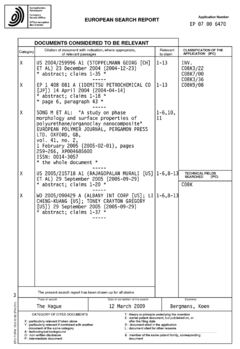
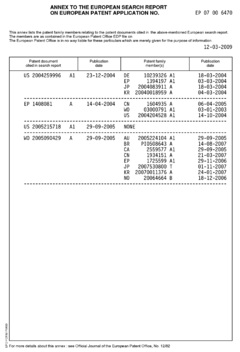
Method for the manufacture of polymer nanocomposites
PatentInactivePL381173A1
Innovation
- The use of a polar substance with a high boiling point to soak the layered silicate before mixing with the polymer, enhancing the dispersion and compatibility of the silicate in the polymer matrix.
- The selection of glycidyl derivatives as the polar substance, which can chemically or physically bond to the silicate and/or organic ammonium salts used for silicate modification.
- The method's applicability to various industries, including packaging, textile, construction, aviation, automotive, and health sectors, demonstrating its versatility and potential for wide-ranging applications.
Environmental Impact of Sodium Silicate Nanocomposites
The environmental impact of sodium silicate nanocomposites in packaging applications is a critical consideration for sustainable development. These nanocomposites offer significant improvements in packaging performance, but their environmental implications must be carefully evaluated throughout their lifecycle.
During the production phase, the synthesis of sodium silicate nanocomposites typically involves less energy-intensive processes compared to traditional packaging materials. The use of abundant raw materials like silica and sodium carbonate contributes to resource efficiency. However, the production of nanoparticles may require specialized equipment and controlled environments, potentially increasing energy consumption.
In the usage phase, sodium silicate nanocomposites demonstrate superior barrier properties against gases, moisture, and UV radiation. This enhanced performance extends the shelf life of packaged products, potentially reducing food waste and the need for preservatives. The improved strength-to-weight ratio of these nanocomposites also allows for thinner packaging, reducing material usage and transportation-related emissions.
End-of-life considerations for sodium silicate nanocomposites present both challenges and opportunities. While these materials are not biodegradable, they can be recycled through existing glass recycling streams due to their silica-based composition. The presence of nanoparticles in recycled materials may affect the quality of recycled products, necessitating advanced sorting and processing technologies.
The potential release of nanoparticles into the environment during the product lifecycle is a concern that requires ongoing research. While sodium silicate is generally considered non-toxic, the long-term effects of nanoparticles on ecosystems and human health are not fully understood. Proper risk assessment and management strategies are essential to mitigate potential negative impacts.
From a lifecycle perspective, sodium silicate nanocomposites have the potential to reduce overall environmental impact compared to conventional packaging materials. Their improved functionality can lead to reduced material consumption, extended product lifespans, and decreased food waste. However, the environmental benefits must be weighed against the potential risks associated with nanoparticle release and end-of-life management.
As research in this field progresses, efforts are being made to develop more sustainable production methods and improve the recyclability of sodium silicate nanocomposites. Innovations in green chemistry and circular economy principles are driving the development of eco-friendly nanocomposite packaging solutions that minimize environmental impact while maximizing performance benefits.
During the production phase, the synthesis of sodium silicate nanocomposites typically involves less energy-intensive processes compared to traditional packaging materials. The use of abundant raw materials like silica and sodium carbonate contributes to resource efficiency. However, the production of nanoparticles may require specialized equipment and controlled environments, potentially increasing energy consumption.
In the usage phase, sodium silicate nanocomposites demonstrate superior barrier properties against gases, moisture, and UV radiation. This enhanced performance extends the shelf life of packaged products, potentially reducing food waste and the need for preservatives. The improved strength-to-weight ratio of these nanocomposites also allows for thinner packaging, reducing material usage and transportation-related emissions.
End-of-life considerations for sodium silicate nanocomposites present both challenges and opportunities. While these materials are not biodegradable, they can be recycled through existing glass recycling streams due to their silica-based composition. The presence of nanoparticles in recycled materials may affect the quality of recycled products, necessitating advanced sorting and processing technologies.
The potential release of nanoparticles into the environment during the product lifecycle is a concern that requires ongoing research. While sodium silicate is generally considered non-toxic, the long-term effects of nanoparticles on ecosystems and human health are not fully understood. Proper risk assessment and management strategies are essential to mitigate potential negative impacts.
From a lifecycle perspective, sodium silicate nanocomposites have the potential to reduce overall environmental impact compared to conventional packaging materials. Their improved functionality can lead to reduced material consumption, extended product lifespans, and decreased food waste. However, the environmental benefits must be weighed against the potential risks associated with nanoparticle release and end-of-life management.
As research in this field progresses, efforts are being made to develop more sustainable production methods and improve the recyclability of sodium silicate nanocomposites. Innovations in green chemistry and circular economy principles are driving the development of eco-friendly nanocomposite packaging solutions that minimize environmental impact while maximizing performance benefits.
Scalability and Cost-effectiveness Analysis
The scalability and cost-effectiveness of sodium silicate in nanocomposite fabrication for packaging applications are critical factors in determining its viability for large-scale industrial adoption. Sodium silicate offers several advantages in terms of scalability due to its abundant availability and relatively simple production process.
The raw materials for sodium silicate production, primarily sand and sodium carbonate, are widely available and inexpensive. This ensures a stable supply chain for large-scale manufacturing. The production process of sodium silicate is well-established and can be easily scaled up to meet increasing demand without significant technological barriers.
In nanocomposite fabrication, sodium silicate can be incorporated through various methods, including solution mixing, melt blending, and in-situ polymerization. These processes are compatible with existing polymer processing equipment, allowing for seamless integration into current manufacturing lines without substantial capital investment.
However, the scalability of nanocomposite production using sodium silicate faces some challenges. Achieving uniform dispersion of silicate nanoparticles in the polymer matrix can be difficult at larger scales, potentially affecting the final product's properties. Developing optimized mixing and dispersion techniques for industrial-scale production is an area requiring further research and development.
From a cost-effectiveness perspective, sodium silicate presents an attractive option compared to other nanofillers. Its low cost per unit volume makes it economically viable for large-scale applications in packaging materials. The use of sodium silicate can potentially reduce the overall material costs in nanocomposite production, as it allows for the enhancement of polymer properties with relatively small amounts of additive.
The energy requirements for processing sodium silicate-based nanocomposites are generally lower than those for some alternative nanofillers, contributing to reduced production costs. Additionally, the improved properties of these nanocomposites, such as enhanced barrier performance and mechanical strength, can lead to thinner packaging materials, further reducing material costs and environmental impact.
Nevertheless, the cost-effectiveness of sodium silicate nanocomposites may be influenced by the need for surface modifications or compatibilizers to improve dispersion and interfacial adhesion. These additional processing steps and materials can increase production costs, necessitating a careful balance between performance enhancement and economic viability.
In conclusion, while sodium silicate shows promising scalability and cost-effectiveness for nanocomposite fabrication in packaging applications, ongoing research is needed to optimize processing techniques and address challenges in large-scale production. The potential for reduced material usage and improved packaging performance suggests that, with continued development, sodium silicate-based nanocomposites could offer a competitive and sustainable solution for the packaging industry.
The raw materials for sodium silicate production, primarily sand and sodium carbonate, are widely available and inexpensive. This ensures a stable supply chain for large-scale manufacturing. The production process of sodium silicate is well-established and can be easily scaled up to meet increasing demand without significant technological barriers.
In nanocomposite fabrication, sodium silicate can be incorporated through various methods, including solution mixing, melt blending, and in-situ polymerization. These processes are compatible with existing polymer processing equipment, allowing for seamless integration into current manufacturing lines without substantial capital investment.
However, the scalability of nanocomposite production using sodium silicate faces some challenges. Achieving uniform dispersion of silicate nanoparticles in the polymer matrix can be difficult at larger scales, potentially affecting the final product's properties. Developing optimized mixing and dispersion techniques for industrial-scale production is an area requiring further research and development.
From a cost-effectiveness perspective, sodium silicate presents an attractive option compared to other nanofillers. Its low cost per unit volume makes it economically viable for large-scale applications in packaging materials. The use of sodium silicate can potentially reduce the overall material costs in nanocomposite production, as it allows for the enhancement of polymer properties with relatively small amounts of additive.
The energy requirements for processing sodium silicate-based nanocomposites are generally lower than those for some alternative nanofillers, contributing to reduced production costs. Additionally, the improved properties of these nanocomposites, such as enhanced barrier performance and mechanical strength, can lead to thinner packaging materials, further reducing material costs and environmental impact.
Nevertheless, the cost-effectiveness of sodium silicate nanocomposites may be influenced by the need for surface modifications or compatibilizers to improve dispersion and interfacial adhesion. These additional processing steps and materials can increase production costs, necessitating a careful balance between performance enhancement and economic viability.
In conclusion, while sodium silicate shows promising scalability and cost-effectiveness for nanocomposite fabrication in packaging applications, ongoing research is needed to optimize processing techniques and address challenges in large-scale production. The potential for reduced material usage and improved packaging performance suggests that, with continued development, sodium silicate-based nanocomposites could offer a competitive and sustainable solution for the packaging industry.
Unlock deeper insights with Patsnap Eureka Quick Research — get a full tech report to explore trends and direct your research. Try now!
Generate Your Research Report Instantly with AI Agent
Supercharge your innovation with Patsnap Eureka AI Agent Platform!