

V6 Engine Pressure Testing: Procedure and Standards
SEP 3, 20259 MIN READ
Generate Your Research Report Instantly with AI Agent
PatSnap Eureka helps you evaluate technical feasibility & market potential.
V6 Engine Pressure Testing Background and Objectives
Pressure testing of V6 engines has evolved significantly over the past decades, transitioning from basic mechanical assessments to sophisticated computer-controlled diagnostic procedures. The historical development of engine pressure testing can be traced back to the early 1900s when rudimentary methods were employed to verify engine integrity. By the 1960s, with the introduction of V6 engines in mainstream automotive production, specialized testing protocols began to emerge to address the unique configuration and performance characteristics of these powerplants.
The V6 engine architecture presents distinct challenges for pressure testing due to its compact design, varied firing orders, and complex intake/exhaust manifold configurations. Modern pressure testing has expanded beyond simple compression tests to include cylinder leakage tests, oil pressure verification, cooling system pressure tests, and fuel system pressure analysis—all critical components in ensuring engine reliability and performance.
Current technological trends in V6 engine pressure testing include the integration of digital pressure sensors, real-time data acquisition systems, and automated testing sequences that minimize human error while maximizing diagnostic accuracy. The industry is moving toward comprehensive testing solutions that can simultaneously monitor multiple pressure points throughout the engine system, providing a holistic view of engine health and performance characteristics.
The primary objective of V6 engine pressure testing is to establish standardized procedures that accurately assess engine condition, identify potential failure points, and verify manufacturing quality before engines reach end-users. These procedures must be sufficiently sensitive to detect subtle variations that might indicate early-stage component wear or manufacturing defects, yet robust enough to be implemented in high-volume production environments.
Secondary objectives include developing testing protocols that can be efficiently executed during routine maintenance to extend engine life, reduce warranty claims, and enhance customer satisfaction. Additionally, pressure testing aims to provide valuable data for engineering teams to refine future engine designs by identifying common failure modes and performance limitations in current models.
The evolution of pressure testing standards has been significantly influenced by increasingly stringent emissions regulations, higher consumer expectations for engine longevity, and the automotive industry's push toward extended warranty periods. These factors have necessitated more precise and comprehensive testing methodologies that can predict long-term engine behavior based on initial pressure test results.
Looking forward, the field of V6 engine pressure testing is expected to incorporate machine learning algorithms that can analyze pressure test data against vast databases of engine performance metrics to predict potential failures before they occur, representing the next frontier in preventive engine diagnostics and quality assurance.
The V6 engine architecture presents distinct challenges for pressure testing due to its compact design, varied firing orders, and complex intake/exhaust manifold configurations. Modern pressure testing has expanded beyond simple compression tests to include cylinder leakage tests, oil pressure verification, cooling system pressure tests, and fuel system pressure analysis—all critical components in ensuring engine reliability and performance.
Current technological trends in V6 engine pressure testing include the integration of digital pressure sensors, real-time data acquisition systems, and automated testing sequences that minimize human error while maximizing diagnostic accuracy. The industry is moving toward comprehensive testing solutions that can simultaneously monitor multiple pressure points throughout the engine system, providing a holistic view of engine health and performance characteristics.
The primary objective of V6 engine pressure testing is to establish standardized procedures that accurately assess engine condition, identify potential failure points, and verify manufacturing quality before engines reach end-users. These procedures must be sufficiently sensitive to detect subtle variations that might indicate early-stage component wear or manufacturing defects, yet robust enough to be implemented in high-volume production environments.
Secondary objectives include developing testing protocols that can be efficiently executed during routine maintenance to extend engine life, reduce warranty claims, and enhance customer satisfaction. Additionally, pressure testing aims to provide valuable data for engineering teams to refine future engine designs by identifying common failure modes and performance limitations in current models.
The evolution of pressure testing standards has been significantly influenced by increasingly stringent emissions regulations, higher consumer expectations for engine longevity, and the automotive industry's push toward extended warranty periods. These factors have necessitated more precise and comprehensive testing methodologies that can predict long-term engine behavior based on initial pressure test results.
Looking forward, the field of V6 engine pressure testing is expected to incorporate machine learning algorithms that can analyze pressure test data against vast databases of engine performance metrics to predict potential failures before they occur, representing the next frontier in preventive engine diagnostics and quality assurance.
Market Requirements for Engine Pressure Testing
The global market for engine pressure testing equipment and services has experienced significant growth over the past decade, driven primarily by stringent emission regulations and increasing consumer demand for high-performance, fuel-efficient vehicles. For V6 engines specifically, pressure testing requirements have become more sophisticated as manufacturers push the boundaries of engine design to achieve better power-to-weight ratios while maintaining reliability.
Industry data indicates that automotive OEMs are increasingly demanding pressure testing solutions that can accommodate higher operating pressures, as modern V6 engines frequently operate at 20-30% higher compression ratios than previous generations. This trend is particularly evident in the premium and sports vehicle segments, where V6 engines remain a popular configuration balancing performance and efficiency.
Testing equipment manufacturers report growing demand for systems capable of detecting micro-leaks under variable temperature conditions, reflecting the industry's focus on quality assurance and durability. The market increasingly requires testing equipment that can simulate real-world operating conditions, including thermal cycling and vibration, to ensure comprehensive validation of engine integrity.
Regulatory influences continue to shape market requirements, with different regional standards creating demand for flexible testing solutions. European standards typically emphasize emissions performance, while North American requirements focus more heavily on safety and durability aspects. Asian markets, particularly China and Japan, are rapidly adopting hybrid standards that combine elements of both approaches.
The aftermarket segment presents distinct requirements, with repair facilities seeking cost-effective pressure testing solutions that offer quick diagnostic capabilities without sacrificing accuracy. This market segment values portability and ease of use, particularly for field service applications.
Digitalization is transforming pressure testing requirements, with increasing demand for systems that offer data logging, trend analysis, and integration with broader manufacturing execution systems. The ability to track pressure test results throughout an engine's lifecycle has become a key requirement for quality management and warranty claim processing.
Emerging market requirements include adaptability to alternative fuels and compatibility with hybrid powertrains, as V6 engines increasingly appear in these applications. Testing systems must now accommodate the unique pressure characteristics associated with these evolving technologies while maintaining backward compatibility with traditional testing protocols.
Industry data indicates that automotive OEMs are increasingly demanding pressure testing solutions that can accommodate higher operating pressures, as modern V6 engines frequently operate at 20-30% higher compression ratios than previous generations. This trend is particularly evident in the premium and sports vehicle segments, where V6 engines remain a popular configuration balancing performance and efficiency.
Testing equipment manufacturers report growing demand for systems capable of detecting micro-leaks under variable temperature conditions, reflecting the industry's focus on quality assurance and durability. The market increasingly requires testing equipment that can simulate real-world operating conditions, including thermal cycling and vibration, to ensure comprehensive validation of engine integrity.
Regulatory influences continue to shape market requirements, with different regional standards creating demand for flexible testing solutions. European standards typically emphasize emissions performance, while North American requirements focus more heavily on safety and durability aspects. Asian markets, particularly China and Japan, are rapidly adopting hybrid standards that combine elements of both approaches.
The aftermarket segment presents distinct requirements, with repair facilities seeking cost-effective pressure testing solutions that offer quick diagnostic capabilities without sacrificing accuracy. This market segment values portability and ease of use, particularly for field service applications.
Digitalization is transforming pressure testing requirements, with increasing demand for systems that offer data logging, trend analysis, and integration with broader manufacturing execution systems. The ability to track pressure test results throughout an engine's lifecycle has become a key requirement for quality management and warranty claim processing.
Emerging market requirements include adaptability to alternative fuels and compatibility with hybrid powertrains, as V6 engines increasingly appear in these applications. Testing systems must now accommodate the unique pressure characteristics associated with these evolving technologies while maintaining backward compatibility with traditional testing protocols.
Current Challenges in V6 Engine Pressure Testing
Despite significant advancements in V6 engine pressure testing technologies, the industry continues to face several critical challenges that impede optimal testing efficiency and accuracy. One of the primary obstacles is the increasing complexity of modern V6 engine designs, which incorporate sophisticated turbocharging systems, variable valve timing, and integrated exhaust gas recirculation components. These complex configurations create difficulties in accessing critical testing points and maintaining consistent pressure measurements across all engine chambers.
The miniaturization trend in engine components has further complicated pressure testing procedures, as smaller passageways and tighter tolerances leave minimal margin for error during testing. Engineers report significant difficulties in positioning pressure sensors in these confined spaces without disrupting normal fluid dynamics or creating artificial pressure variations that compromise test validity.
Temperature compensation remains another substantial challenge in pressure testing protocols. V6 engines operate across wide temperature ranges, and pressure readings can vary significantly based on thermal conditions. Current testing methodologies struggle to account for these temperature-induced variations, particularly during cold-start conditions or under high-load thermal scenarios, leading to inconsistent test results across different operating environments.
Data interpretation presents yet another hurdle, as the volume of pressure-related data generated during comprehensive engine testing has grown exponentially. Testing facilities often lack sophisticated analytical tools capable of processing this data deluge in real-time, resulting in delayed insights and extended development cycles. The industry has yet to establish standardized approaches for filtering signal noise from genuine pressure anomalies, especially in high-vibration testing environments.
Calibration drift in pressure testing equipment constitutes a persistent issue affecting long-term testing reliability. Current calibration methods require frequent recalibration, creating testing downtime and introducing potential inconsistencies between test sessions. The absence of universally accepted calibration standards specific to V6 engine configurations further complicates cross-comparison of test results between different facilities or manufacturers.
Regulatory compliance adds another layer of complexity, as emission standards increasingly demand more precise pressure control and measurement throughout the engine system. Testing protocols must now verify pressure integrity across a broader range of operating conditions while maintaining backward compatibility with established testing frameworks. This regulatory evolution has outpaced the development of corresponding testing technologies, creating compliance verification gaps.
Finally, cost considerations continue to constrain the implementation of advanced pressure testing solutions. High-precision testing equipment represents a significant capital investment, while the specialized expertise required to operate and interpret results adds substantial operational expenses. These economic factors have slowed the industry-wide adoption of next-generation pressure testing technologies, particularly among smaller manufacturers and suppliers.
The miniaturization trend in engine components has further complicated pressure testing procedures, as smaller passageways and tighter tolerances leave minimal margin for error during testing. Engineers report significant difficulties in positioning pressure sensors in these confined spaces without disrupting normal fluid dynamics or creating artificial pressure variations that compromise test validity.
Temperature compensation remains another substantial challenge in pressure testing protocols. V6 engines operate across wide temperature ranges, and pressure readings can vary significantly based on thermal conditions. Current testing methodologies struggle to account for these temperature-induced variations, particularly during cold-start conditions or under high-load thermal scenarios, leading to inconsistent test results across different operating environments.
Data interpretation presents yet another hurdle, as the volume of pressure-related data generated during comprehensive engine testing has grown exponentially. Testing facilities often lack sophisticated analytical tools capable of processing this data deluge in real-time, resulting in delayed insights and extended development cycles. The industry has yet to establish standardized approaches for filtering signal noise from genuine pressure anomalies, especially in high-vibration testing environments.
Calibration drift in pressure testing equipment constitutes a persistent issue affecting long-term testing reliability. Current calibration methods require frequent recalibration, creating testing downtime and introducing potential inconsistencies between test sessions. The absence of universally accepted calibration standards specific to V6 engine configurations further complicates cross-comparison of test results between different facilities or manufacturers.
Regulatory compliance adds another layer of complexity, as emission standards increasingly demand more precise pressure control and measurement throughout the engine system. Testing protocols must now verify pressure integrity across a broader range of operating conditions while maintaining backward compatibility with established testing frameworks. This regulatory evolution has outpaced the development of corresponding testing technologies, creating compliance verification gaps.
Finally, cost considerations continue to constrain the implementation of advanced pressure testing solutions. High-precision testing equipment represents a significant capital investment, while the specialized expertise required to operate and interpret results adds substantial operational expenses. These economic factors have slowed the industry-wide adoption of next-generation pressure testing technologies, particularly among smaller manufacturers and suppliers.
Standard V6 Engine Pressure Testing Methodologies
01 Pressure testing methods for V6 engines
Various methods are employed for pressure testing V6 engines to detect leaks and ensure proper functioning. These methods include using specialized testing equipment to apply controlled pressure to different engine components and monitoring pressure changes over time. The testing procedures help identify issues such as cracked blocks, faulty gaskets, or damaged seals that could affect engine performance.- Pressure testing methods for V6 engines: Various methods are employed for pressure testing V6 engines to detect leaks and ensure proper functioning. These methods include using specialized testing equipment to apply controlled pressure to different engine components and monitoring for pressure drops or irregularities. The testing procedures help identify issues such as cracked blocks, faulty gaskets, or damaged components that might affect engine performance.
- Pressure testing equipment for V6 engines: Specialized equipment designed for pressure testing V6 engines includes pressure gauges, adapters, and testing devices that can be connected to various engine ports. These tools allow for precise measurement of pressure in different engine systems, including the cooling system, oil system, and combustion chambers. The equipment is designed to withstand the high pressures involved in engine testing while providing accurate readings.
- Cylinder pressure monitoring in V6 engines: Monitoring cylinder pressure in V6 engines is crucial for evaluating combustion efficiency and engine health. Systems for measuring and analyzing cylinder pressure can detect issues such as valve leakage, piston ring wear, or improper fuel combustion. Advanced monitoring systems may include real-time pressure sensors that provide continuous data during engine operation, allowing for immediate detection of abnormalities.
- Fuel system pressure testing for V6 engines: Fuel system pressure testing in V6 engines involves checking the integrity and performance of fuel delivery components. This includes testing fuel pumps, injectors, pressure regulators, and fuel lines for proper pressure maintenance and flow. Specialized testing procedures can identify issues such as fuel leaks, pressure drops, or irregular fuel delivery that might affect engine performance and efficiency.
- Electronic pressure control systems for V6 engines: Modern V6 engines utilize electronic pressure control systems to optimize performance and efficiency. These systems employ sensors and electronic control units to monitor and adjust pressures in various engine components, including oil pressure, fuel pressure, and boost pressure in turbocharged engines. Advanced control algorithms can make real-time adjustments based on operating conditions to enhance engine performance and reduce emissions.
02 Pressure testing equipment for V6 engines
Specialized equipment designed for pressure testing V6 engines includes pressure gauges, adapters, and testing kits that connect to various engine ports. These tools allow technicians to apply precise pressure to the cooling system, oil system, or combustion chambers to diagnose problems. Advanced equipment may include digital pressure monitors that provide accurate readings and help identify even minor leaks or pressure irregularities.Expand Specific Solutions03 Cylinder pressure monitoring systems
Cylinder pressure monitoring systems for V6 engines provide real-time data on combustion pressure within each cylinder. These systems use sensors to measure pressure variations during engine operation, helping to identify issues such as misfires, valve problems, or compression losses. The monitoring systems can be integrated with engine control units to optimize performance based on pressure readings and detect potential failures before they cause significant damage.Expand Specific Solutions04 Cooling system pressure testing
Cooling system pressure testing for V6 engines involves checking the integrity of the radiator, hoses, water pump, and other components. By pressurizing the cooling system, technicians can identify leaks that might lead to overheating or engine damage. The testing procedures typically involve using a pressure tester connected to the radiator cap opening and observing whether the system maintains pressure over a specified period.Expand Specific Solutions05 Fuel system pressure testing
Fuel system pressure testing for V6 engines focuses on verifying proper fuel pressure and detecting leaks in fuel lines, injectors, and pumps. The testing involves connecting pressure gauges to fuel system test points and measuring pressure under various operating conditions. Maintaining correct fuel pressure is critical for optimal engine performance, fuel efficiency, and emissions control. Testing equipment may include specialized adapters for different fuel system configurations.Expand Specific Solutions
Leading Manufacturers and Testing Equipment Providers
The V6 engine pressure testing market is in a mature growth phase, characterized by established standards and procedures across the automotive industry. The global market size for engine testing equipment is estimated at $3.5 billion, with pressure testing systems representing a significant segment. Major automotive manufacturers like Toyota, BMW, Honda, and Scania have developed sophisticated proprietary testing protocols, while specialized component suppliers such as Continental Automotive, Robert Bosch, and Vitesco Technologies provide advanced pressure testing solutions. Chinese players including Weichai Power and Changan Automobile are rapidly advancing their capabilities, particularly in emerging markets. The technology has reached high maturity with standardized procedures, though innovation continues in digital monitoring and predictive analytics.
Toyota Motor Corp.
Technical Solution: Toyota has developed a comprehensive V6 engine pressure testing system that integrates both cold and hot testing procedures. Their approach utilizes a multi-stage testing protocol that begins with individual component testing before assembly and concludes with full engine pressure validation. Toyota's system employs precision sensors capable of detecting pressure variations as small as 0.01 MPa across multiple engine points simultaneously. Their procedure includes coolant system pressure testing at 150-200 kPa, oil system testing at operating temperatures between 80-120°C, and fuel system pressure testing up to 5 MPa for direct injection systems. Toyota has implemented automated testing stations with digital documentation that tracks each engine's pressure test results throughout its lifecycle, allowing for statistical analysis and continuous improvement of manufacturing processes.
Strengths: Toyota's integrated testing approach provides comprehensive validation while maintaining high production throughput. Their digital documentation system enables superior quality tracking and process improvement. Weakness: The sophisticated testing equipment requires significant capital investment and specialized maintenance personnel, potentially limiting implementation in smaller manufacturing facilities.
Bayerische Motoren Werke AG
Technical Solution: BMW has implemented an advanced V6 engine pressure testing protocol that integrates both traditional hydrostatic testing and innovative dynamic pressure analysis. Their procedure begins with component-level testing before assembly, followed by comprehensive system validation of the fully assembled engine. BMW's approach utilizes high-precision digital pressure transducers with accuracy of ±0.05% across the full measurement range, positioned at multiple critical points throughout the engine. Their testing sequence includes coolant system pressurization to 200 kPa maintained for 10 minutes, oil system testing at both cold static pressure (500 kPa) and simulated operating conditions with oil temperatures of 90-110°C, and fuel system pressure validation up to 200 bar for direct injection systems. BMW has developed a proprietary data analysis algorithm that compares pressure test results against statistical models derived from thousands of previously tested engines, allowing for the identification of subtle anomalies that might indicate potential future failures even when readings fall within nominal specifications. Their testing stations incorporate automated visual inspection systems that use machine learning to correlate pressure test results with physical characteristics of engine components.
Strengths: BMW's statistical approach to pressure test analysis provides superior detection of marginal defects compared to simple pass/fail criteria. Their integrated testing system offers excellent traceability and quality documentation. Weaknesses: The sophisticated testing equipment and data analysis systems require substantial initial investment and ongoing software maintenance, potentially increasing production costs.
Key Technical Innovations in Pressure Testing Systems
Method of testing assembled internal combustion engine
PatentInactiveCN1296689C
Innovation
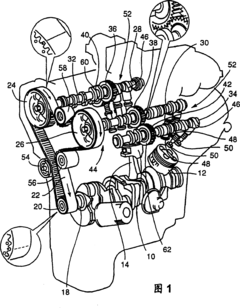
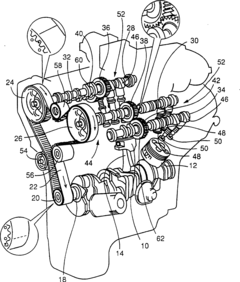
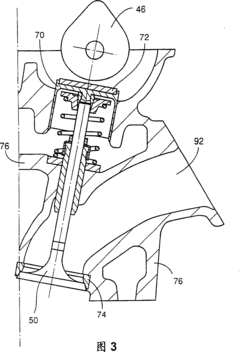
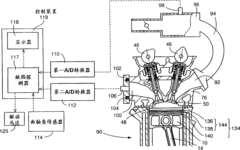
- By measuring the pressure changes in the space outside the intake valve and exhaust valve, combined with the cylinder pressure changes and valve opening and closing times, it is determined whether there are defects in the engine assembly, including phase differences between the crankshaft and camshaft, valve clearance, missing compression rings, etc. To solve the problem, an independent rotating device is used to rotate the engine when it is cold, simplifying the testing process and improving accuracy.
Method of testing assembled internal combustion engine
PatentInactiveUS6711944B2
Innovation
- A method that involves rotating the assembled engine and measuring the timing of pressure changes in the intake and exhaust valve side spaces to determine if there are faults in the engine assembly, such as incorrect phase differences or valve clearances, without disassembling the engine, by comparing measured timings with reference timings from normal engines.


Environmental Impact and Sustainability Considerations
The environmental impact of V6 engine pressure testing procedures represents a critical consideration in modern automotive manufacturing and maintenance operations. Traditional pressure testing methods often involve the use of hydraulic fluids or compressed air systems that can contribute to resource depletion and environmental contamination when not properly managed. The testing process typically consumes significant energy resources, particularly when conducted at scale in manufacturing facilities, contributing to the carbon footprint of automotive production.
Leakage of testing fluids presents a particular environmental concern, as many conventional hydraulic fluids contain petroleum derivatives and additives that can contaminate soil and water systems. Even small-scale leaks accumulated over numerous testing cycles can result in substantial environmental impact over time. Additionally, the disposal of used testing fluids requires specialized handling procedures to prevent environmental contamination, adding complexity and cost to the testing process.
Recent advancements in pressure testing technology have focused on developing more environmentally sustainable approaches. Water-based testing fluids with biodegradable additives offer reduced environmental impact compared to traditional petroleum-based alternatives, while maintaining the necessary performance characteristics for accurate pressure testing. These innovations align with broader industry sustainability goals while potentially reducing long-term environmental compliance costs.
Energy efficiency improvements in testing equipment design represent another significant sustainability advancement. Modern pressure testing systems incorporate energy recovery mechanisms, more efficient pumps, and intelligent control systems that optimize resource usage. These improvements not only reduce the environmental impact but also offer operational cost savings that can offset initial investment in upgraded equipment.
Regulatory frameworks increasingly emphasize environmental considerations in industrial testing procedures. Standards organizations and environmental protection agencies have established guidelines for the containment, treatment, and disposal of testing fluids, as well as emissions controls for testing facilities. Compliance with these regulations is becoming a fundamental aspect of pressure testing procedure design and implementation.
Looking forward, the industry is exploring closed-loop testing systems that minimize waste generation through fluid recycling and filtration. Advanced monitoring technologies enable more precise detection of system integrity issues, potentially reducing the frequency and duration of testing procedures. These developments represent promising pathways toward more sustainable pressure testing practices that balance technical requirements with environmental responsibility.
Leakage of testing fluids presents a particular environmental concern, as many conventional hydraulic fluids contain petroleum derivatives and additives that can contaminate soil and water systems. Even small-scale leaks accumulated over numerous testing cycles can result in substantial environmental impact over time. Additionally, the disposal of used testing fluids requires specialized handling procedures to prevent environmental contamination, adding complexity and cost to the testing process.
Recent advancements in pressure testing technology have focused on developing more environmentally sustainable approaches. Water-based testing fluids with biodegradable additives offer reduced environmental impact compared to traditional petroleum-based alternatives, while maintaining the necessary performance characteristics for accurate pressure testing. These innovations align with broader industry sustainability goals while potentially reducing long-term environmental compliance costs.
Energy efficiency improvements in testing equipment design represent another significant sustainability advancement. Modern pressure testing systems incorporate energy recovery mechanisms, more efficient pumps, and intelligent control systems that optimize resource usage. These improvements not only reduce the environmental impact but also offer operational cost savings that can offset initial investment in upgraded equipment.
Regulatory frameworks increasingly emphasize environmental considerations in industrial testing procedures. Standards organizations and environmental protection agencies have established guidelines for the containment, treatment, and disposal of testing fluids, as well as emissions controls for testing facilities. Compliance with these regulations is becoming a fundamental aspect of pressure testing procedure design and implementation.
Looking forward, the industry is exploring closed-loop testing systems that minimize waste generation through fluid recycling and filtration. Advanced monitoring technologies enable more precise detection of system integrity issues, potentially reducing the frequency and duration of testing procedures. These developments represent promising pathways toward more sustainable pressure testing practices that balance technical requirements with environmental responsibility.
Safety Standards and Regulatory Compliance
V6 engine pressure testing operations are governed by a comprehensive framework of safety standards and regulatory requirements that manufacturers must adhere to. At the international level, ISO 16232 provides guidelines for pressure testing procedures, while SAE J1739 establishes standards specifically for automotive engine testing. These frameworks ensure consistent quality and safety across global manufacturing operations.
In the United States, the Occupational Safety and Health Administration (OSHA) mandates specific workplace safety protocols for pressure testing environments, including standard 29 CFR 1910.169 for air compressors and pressure vessels. The Environmental Protection Agency (EPA) further regulates emissions testing aspects through the Clean Air Act provisions, which indirectly influence pressure testing procedures to ensure engines meet environmental compliance standards.
European regulations are particularly stringent, with the Pressure Equipment Directive (PED) 2014/68/EU establishing essential safety requirements for pressure equipment. Manufacturers exporting V6 engines to European markets must demonstrate compliance with these standards through proper testing documentation. Similarly, China's GB/T 30512 standard outlines specific requirements for engine pressure testing that differ slightly from Western standards.
Industry-specific standards also play a crucial role in V6 engine pressure testing. The Automotive Industry Action Group (AIAG) has developed specialized guidelines for pressure testing in automotive manufacturing, while the American Society of Mechanical Engineers (ASME) provides the ASME Boiler and Pressure Vessel Code that establishes testing parameters for pressure-containing components.
Risk assessment frameworks are integrated into these regulatory requirements, with ISO 31000 and ISO 12100 providing methodologies for identifying and mitigating hazards associated with pressure testing. These frameworks require manufacturers to implement hierarchical control measures, from engineering controls to personal protective equipment requirements.
Compliance documentation represents a significant aspect of regulatory adherence. Manufacturers must maintain detailed records of pressure testing procedures, results, calibration certificates, and personnel qualifications. These records are subject to audit by regulatory bodies and certification organizations, with non-compliance potentially resulting in significant penalties and market access restrictions.
Emerging trends in regulatory compliance include the integration of digital monitoring systems that provide real-time compliance verification and automated documentation. Additionally, harmonization efforts between different regional standards are gradually reducing the compliance burden for global manufacturers, though significant regional variations remain that necessitate market-specific testing protocols.
In the United States, the Occupational Safety and Health Administration (OSHA) mandates specific workplace safety protocols for pressure testing environments, including standard 29 CFR 1910.169 for air compressors and pressure vessels. The Environmental Protection Agency (EPA) further regulates emissions testing aspects through the Clean Air Act provisions, which indirectly influence pressure testing procedures to ensure engines meet environmental compliance standards.
European regulations are particularly stringent, with the Pressure Equipment Directive (PED) 2014/68/EU establishing essential safety requirements for pressure equipment. Manufacturers exporting V6 engines to European markets must demonstrate compliance with these standards through proper testing documentation. Similarly, China's GB/T 30512 standard outlines specific requirements for engine pressure testing that differ slightly from Western standards.
Industry-specific standards also play a crucial role in V6 engine pressure testing. The Automotive Industry Action Group (AIAG) has developed specialized guidelines for pressure testing in automotive manufacturing, while the American Society of Mechanical Engineers (ASME) provides the ASME Boiler and Pressure Vessel Code that establishes testing parameters for pressure-containing components.
Risk assessment frameworks are integrated into these regulatory requirements, with ISO 31000 and ISO 12100 providing methodologies for identifying and mitigating hazards associated with pressure testing. These frameworks require manufacturers to implement hierarchical control measures, from engineering controls to personal protective equipment requirements.
Compliance documentation represents a significant aspect of regulatory adherence. Manufacturers must maintain detailed records of pressure testing procedures, results, calibration certificates, and personnel qualifications. These records are subject to audit by regulatory bodies and certification organizations, with non-compliance potentially resulting in significant penalties and market access restrictions.
Emerging trends in regulatory compliance include the integration of digital monitoring systems that provide real-time compliance verification and automated documentation. Additionally, harmonization efforts between different regional standards are gradually reducing the compliance burden for global manufacturers, though significant regional variations remain that necessitate market-specific testing protocols.
Unlock deeper insights with PatSnap Eureka Quick Research — get a full tech report to explore trends and direct your research. Try now!
Generate Your Research Report Instantly with AI Agent
Supercharge your innovation with PatSnap Eureka AI Agent Platform!