
Non-aqueous electrolyte and lithium ion battery
A non-aqueous electrolyte, non-aqueous technology, used in secondary batteries, circuits, electrical components, etc., can solve the problems of low-temperature performance deterioration of lithium-ion batteries, increase of positive and negative interface impedance, and high-temperature performance deterioration, etc., to improve Effect of low temperature cycle performance
Patent Information
- Authority / Receiving Office
- CN · China
- Patent Type
- Applications(China)
- Current Assignee / Owner
- Publication Date
- 2017-08-04
Smart Images
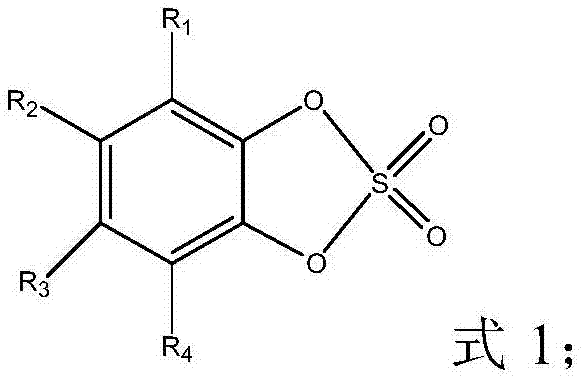
Figure 1 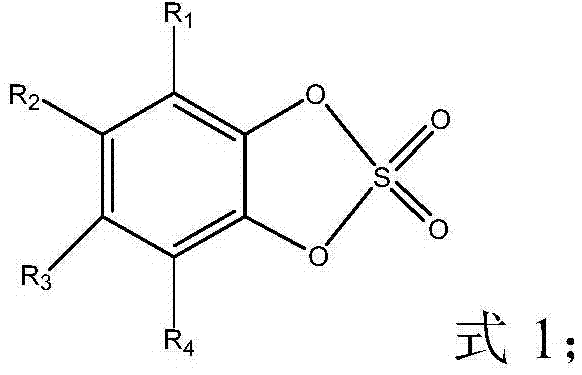
Figure 2 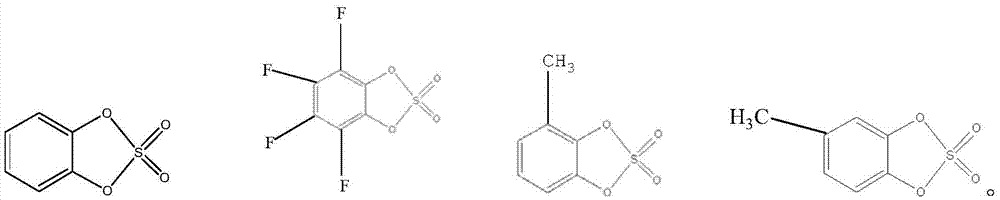
Figure 3
Abstract
Description
technical field
[0001] The invention relates to the field of batteries, in particular to a nonaqueous electrolytic solution and a lithium ion battery. Background technique
[0002] The high energy density, long cycle life, wide operating temperature range, and environmental protection of lithium-ion batteries have made them the main energy source for mobile electronic devices. With the widespread application of lithium-ion batteries, higher requirements are put forward for their environmental adaptability. Nowadays, electronic products sometimes need to be used under extreme conditions, such as environments with high or low temperatures. However, the performance of lithium-ion batteries will deteriorate significantly when used under extreme conditions.
[0003] As an important part of lithium-ion batteries, non-aqueous electrolyte has a significant impact on the high-temperature performance and low-temperature performance of the battery. However, in general, there is a con...
Examples
Embodiment 1
[0056] Lithium-ion batteries were prepared with reference to the method of Comparative Example 1, the difference being that when preparing the non-aqueous electrolyte, the additives were FEC with a mass percentage of 4%, and LiBF with a mass percentage of 0.2%. 4 , catechol cyclic sulfate with a mass percentage of 0.5%.
Embodiment 2
[0058] Lithium-ion batteries were prepared with reference to the method of Comparative Example 1, the difference being that when preparing the non-aqueous electrolyte, the additives were FEC with a mass percentage of 4%, and LiBF with a mass percentage of 0.2%. 4 , catechol cyclic sulfate with a mass percentage of 0.05%.
Embodiment 3
[0060] Lithium-ion batteries were prepared with reference to the method of Comparative Example 1, the difference being that when preparing the non-aqueous electrolyte, the additives were FEC with a mass percentage of 4%, and LiBF with a mass percentage of 0.2%. 4 , catechol cyclic sulfate with a mass percentage of 0.1%.