
Mass spectrum qualitative and quantitative analysis method for free fatty acids based on double-derivatization technology
A free fatty acid, quantitative analysis technology, applied in the field of qualitative and quantitative analysis of free fatty acid mass spectrometry, can solve the problems of insufficient detection sensitivity, difficult identification of double bond position, low ionization efficiency, etc., achieve high sensitivity, increase peak intensity, and improve mass spectrometry response Effect
- Summary
- Abstract
- Description
- Claims
- Application Information
AI Technical Summary
Problems solved by technology
Method used
Image

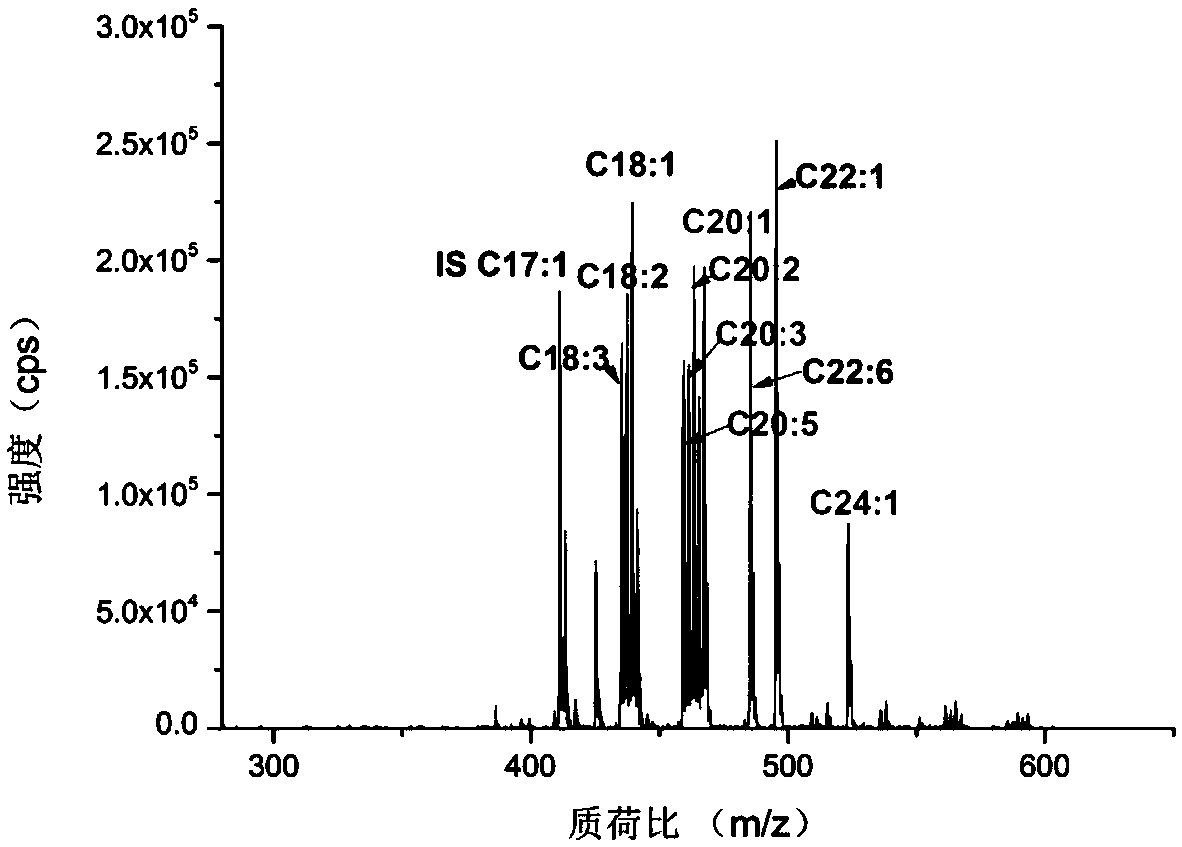
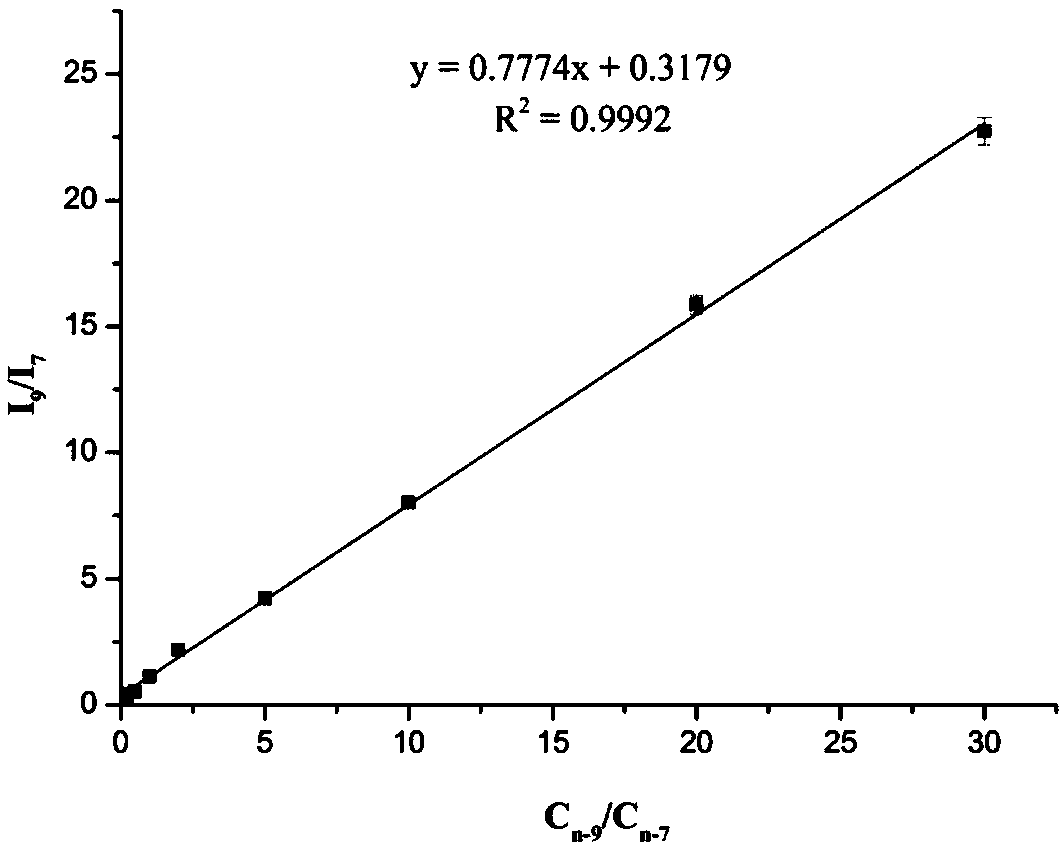
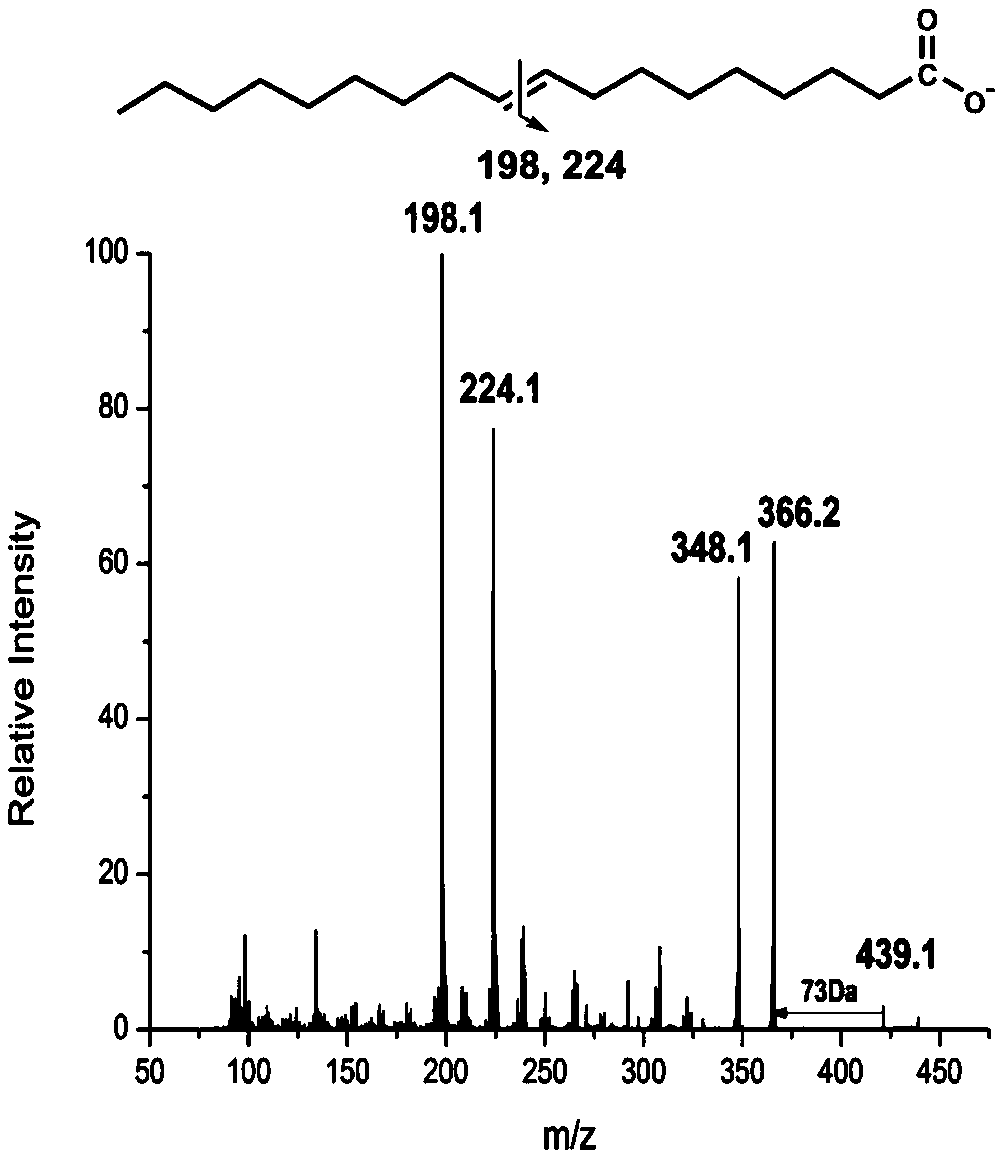
Examples
Embodiment 1
[0046] Qualitative and Quantitative Analysis of Free Fatty Acids in Example 1 Human Gastric Cancer Cells
[0047] A method for qualitative and quantitative analysis of free fatty acids in human gastric cancer cells based on double derivatization technology, the specific steps are as follows:
[0048] 1) Take one million cells in a 16mm×125mm glass tube, add 150μL of 10μmol / L C17:1(n-7) and 1ml PBS, centrifuge for 2 minutes at 3000 rpm, and discard the upper layer; Then add 1mL DPBS, then add 2mL methanol, acidify with hydrochloric acid, and the final concentration of hydrochloric acid reaches 25mM; then add 1ml isooctane, centrifuge at 3000 rpm for 1 minute, separate layers, and move the upper layer to a 10mm×75mm glass tube medium, blow dry with nitrogen; after the fatty acid extract was reconstituted with 1ml of acetone:water (6:4), take 50 μL of diluted liquid nitrogen and blow dry, and finally reconstitute with 950 μL of acetone:water (6:4), add 50 μL of ethanol, and use ...
Embodiment 2
[0051] Qualitative and quantitative analysis of free fatty acids in embodiment 2 human plasma
[0052] Qualitative and quantitative analysis of free fatty acids in human plasma: Take 10 μL into a 16mm×125mm glass tube, add 150 μL of 10 μmol / L C17:1(n-7), add 1ml of PBS, centrifuge for 2 minutes, 3000 rpm, and then Discard the supernatant. Add 1 mL of DPBS to the cells, followed by 2 mL of methanol, and acidify with hydrochloric acid to a final concentration of 25 mM. After adding 1ml of isooctane, the sample was centrifuged at 3000 rpm for 1 minute, separated into layers, and the upper layer was transferred to a 10mm×75mm glass tube, blown dry with nitrogen, and used for derivatization reaction. After the fatty acid extract was reconstituted with 1ml of acetone:water (6:4), take 50 μL of dilute liquid nitrogen to blow dry, reconstitute with 950 μL of acetone:water (6:4), add 50 μL of ethanol for the subsequent photochemical derivatization reaction and N, N-diethylethylenedia...
Embodiment 3
[0055] Qualitative and quantitative analysis of free fatty acids in the mouse liver in embodiment 3
[0056] Qualitative and quantitative analysis of free fatty acids in mouse liver: Take 1 mg into a 16mm×125mm glass tube, add 100 μL of 40 μmol / L C17:1(n-7), add 1ml of PBS, centrifuge for 2 minutes, 3000 rpm, Then discard the upper aqueous layer. Add 1 mL of DPBS to the cells, followed by 2 mL of methanol, and acidify with hydrochloric acid to a final concentration of 25 mM. After adding 1ml of isooctane, the sample was centrifuged at 3000 rpm for 1 minute, separated into layers, and the upper layer was transferred to a 10mm×75mm glass tube, blown dry with nitrogen, and used for derivatization reaction. After the fatty acid extract was reconstituted with 1ml of acetone:water (6:4), take 50 μL of dilute liquid nitrogen to blow dry, reconstitute with 950 μL of acetone:water (6:4), add 50 μL of ethanol for the subsequent photochemical derivatization reaction and N, N-diethyleth...
PUM
| Property | Measurement | Unit |
|---|---|---|
| energy | aaaaa | aaaaa |
Abstract
Description
Claims
Application Information
 Login to View More