

Doxorubicin-containing composition and application thereof
A composition and doxorubicin technology, applied in the field of doxorubicin-containing compositions, can solve problems such as reports on the combined use of formononetin and doxorubicin, etc., and achieve tumor-inhibiting activity, reducing dosage, reducing Cardiotoxic effects
Patent Information
- Authority / Receiving Office
- CN · China
- Patent Type
- Applications(China)
- Current Assignee / Owner
- Publication Date
- 2021-08-24
- Estimated Expiration
- Not applicable · inactive patent
Smart Images
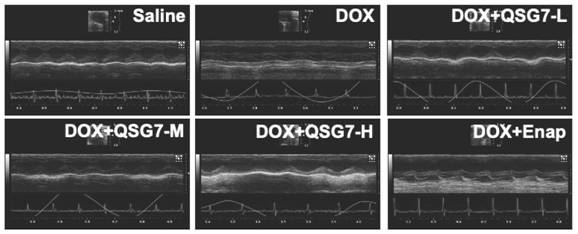
Figure 1 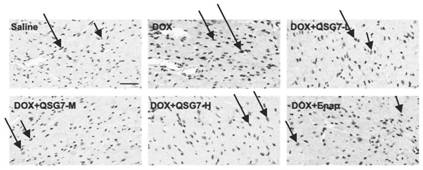
Figure 2 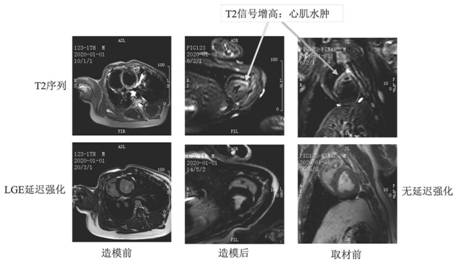
Figure 3
Abstract
Description
technical field
[0001] The invention relates to the field of pharmaceutical compositions, in particular to a composition containing doxorubicin and its application. Background technique
[0002] Doxorubicin, also known as 14-hydroxydaunorubicin, 14-hydroxydaunomycin, adriamycin, doxorubicin-power, doxorubicin, etc., its CAS registration number is 23214 -92-8, the structural formula is shown in formula Ⅰ.
[0003] Doxorubicin is an anti-tumor antibiotic, which can inhibit the synthesis of RNA and DNA. It has the strongest inhibitory effect on RNA and has a wide anti-tumor spectrum. Cyclic tumor cells have a killing effect. Clinically, it is mainly applicable to acute leukemia, and is effective for both acute lymphoblastic leukemia and myeloid leukemia. It is generally used as a second-line drug, that is, it can be considered when the first-line drug is resistant. Malignant lymphoma, can be used as the first drug alternately. Breast cancer, sarcoma, lung cancer, bladder ca...
Examples
experiment example 1
[0054] Experimental Example 1: Detection of resistance to doxorubicin-induced cardiotoxicity
[0055] 1. Animals and groups
[0056] 1.1 Mice were purchased from Speiford (Beijing) Biotechnology Co., Ltd. (Beijing ICP No. 20001007-1), 0000006524.
[0057] After 3 days of adaptive feeding, the mice were randomly divided into saline group (Saline), doxorubicin group (Dox), doxorubicin+formononetin low-dose group (Dox+QSG7-L), doxorubicin group Doxorubicin + formononetin medium dose group (Dox+QSG7-M), doxorubicin + formononetin high dose group (Dox+QSG7-H), doxorubicin + enalapril positive drug group (Dox+Enap) Wait for 6 groups. Both basic and clinical studies have shown that enalapril can reduce doxorubicin-induced cardiotoxicity and improve cardiac function, so it is used as a positive control drug in mouse experiments.
[0058] 1.2 Miniature pigs were purchased from Nongnong (Beijing) Biotechnology Co., Ltd. (Jingchang Yishui Xu Zhun [2020] No. 13522), 0000016148.
[005...
experiment example 2
[0165] Experimental example 2: Detection of anti-tumor activity
[0166] 1. Test method: Different tumor cells, including liver cancer cells (HepG2 cells), breast cancer cells (MCF-7 cells), human glioblastoma cells (U87 cells), were used in 8*10 4 The cells were inoculated into 96-well plates (100 μl / well) at a density of / mL, and stimulated according to the following grouping after 24 hours of culture. After 24 hours, the cell proliferation activity was detected by the CCK8 method with a microplate reader.
[0167] 2. Test groups:
[0168] Group 1: normal group (Control), QSG7 20μmol / L, QSG7 40μmol / L, QSG7 80μmol / L;
[0169] Group 2: normal group (Control), Dox 1 μmol / L, QSG7 80 μmol / L, Dox 1 μmol / L+QSG7 80 μmol / L, Dox 1 μmol / L+Dexra 10 μmol / L.
[0170] 3. Detection index: The OD value detected by the microplate reader represents the cell proliferation activity.
[0171] 4. Statistical method: Graphpad Prism 6.0 was used for data processing, expressed as Means±SD, Student...