
Linear interference suppression detection
a detection field and interference suppression technology, applied in the field of linear interference detection, can solve problems such as becoming the most challenging task
Patent Information
- Authority / Receiving Office
- US · United States
- Current Assignee / Owner
- Publication Date
- 2003-08-28
- Estimated Expiration
- Not applicable · inactive patent
Smart Images
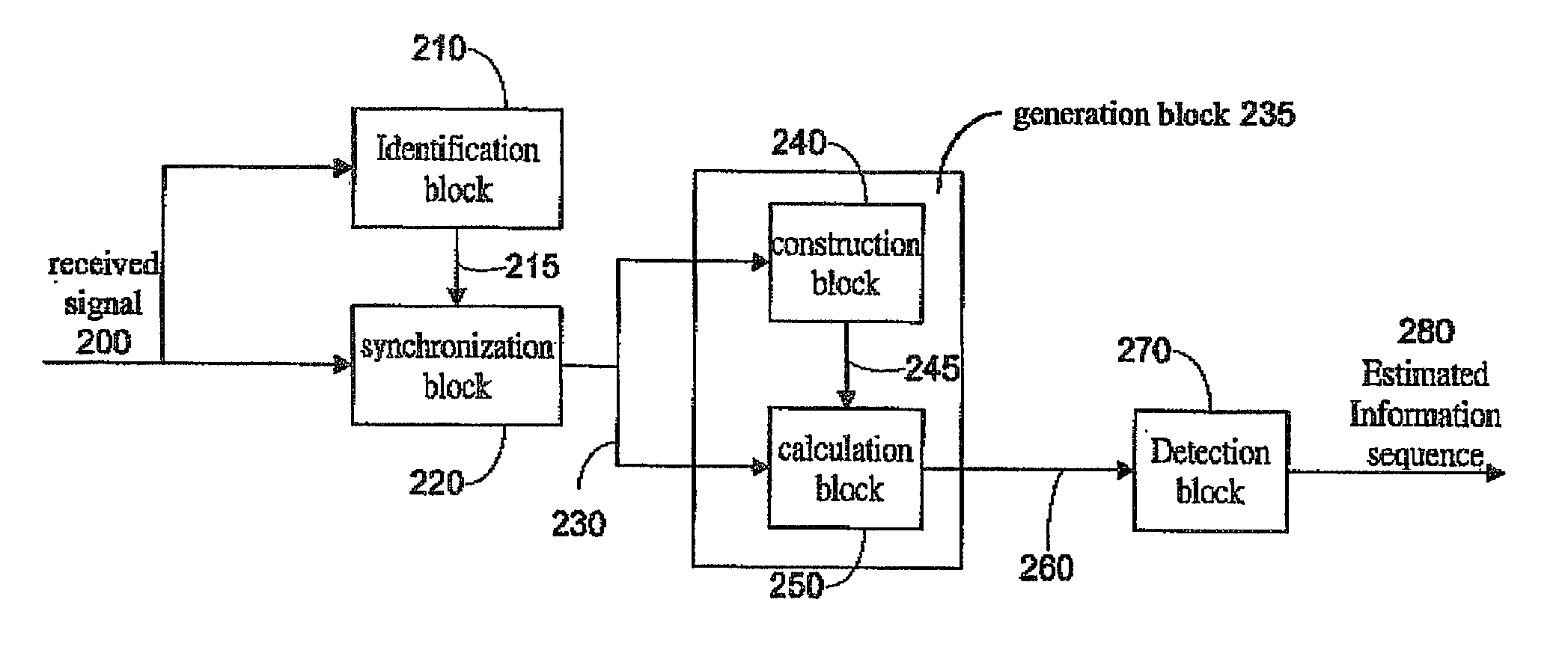
Figure 1 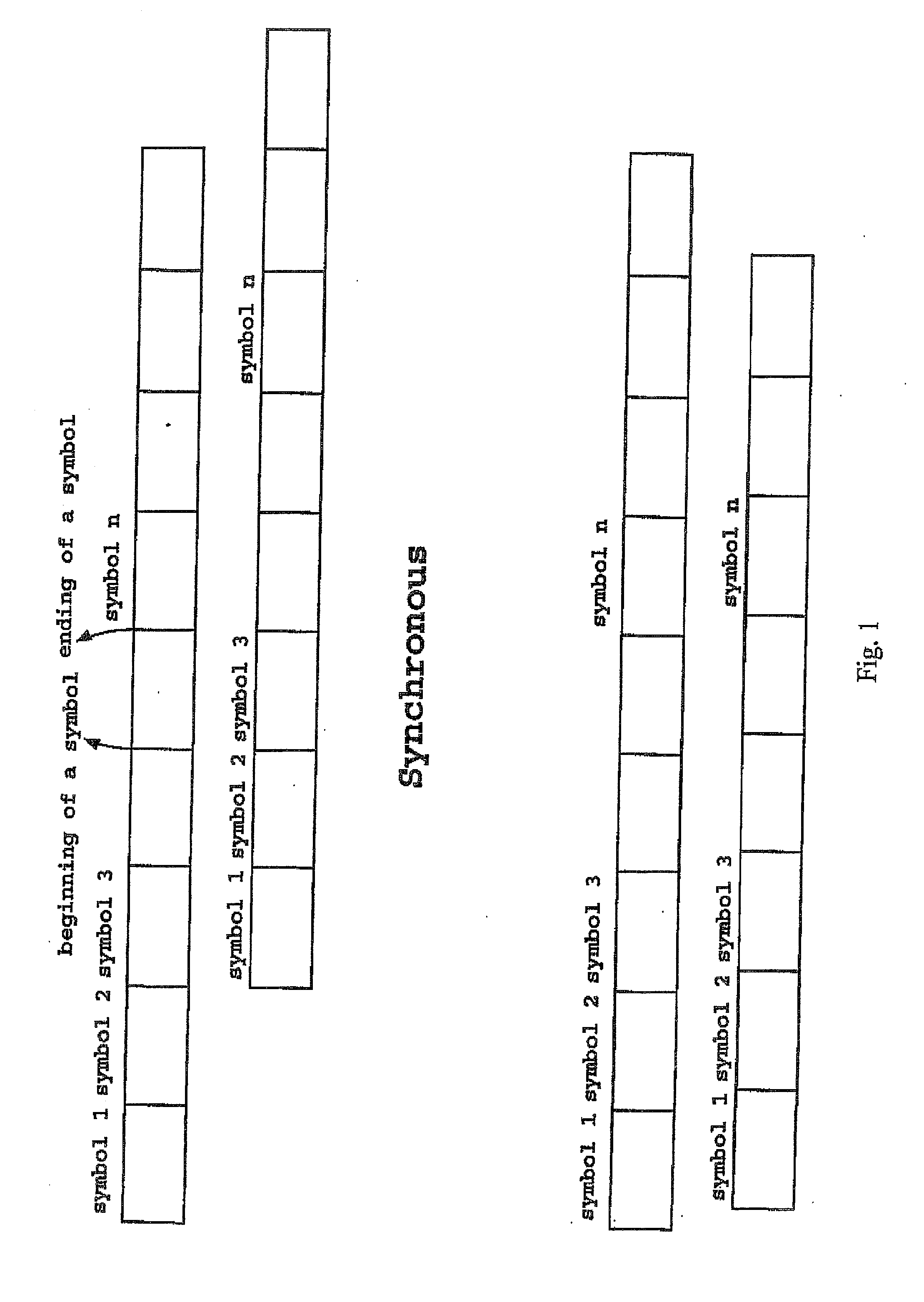
Figure 2 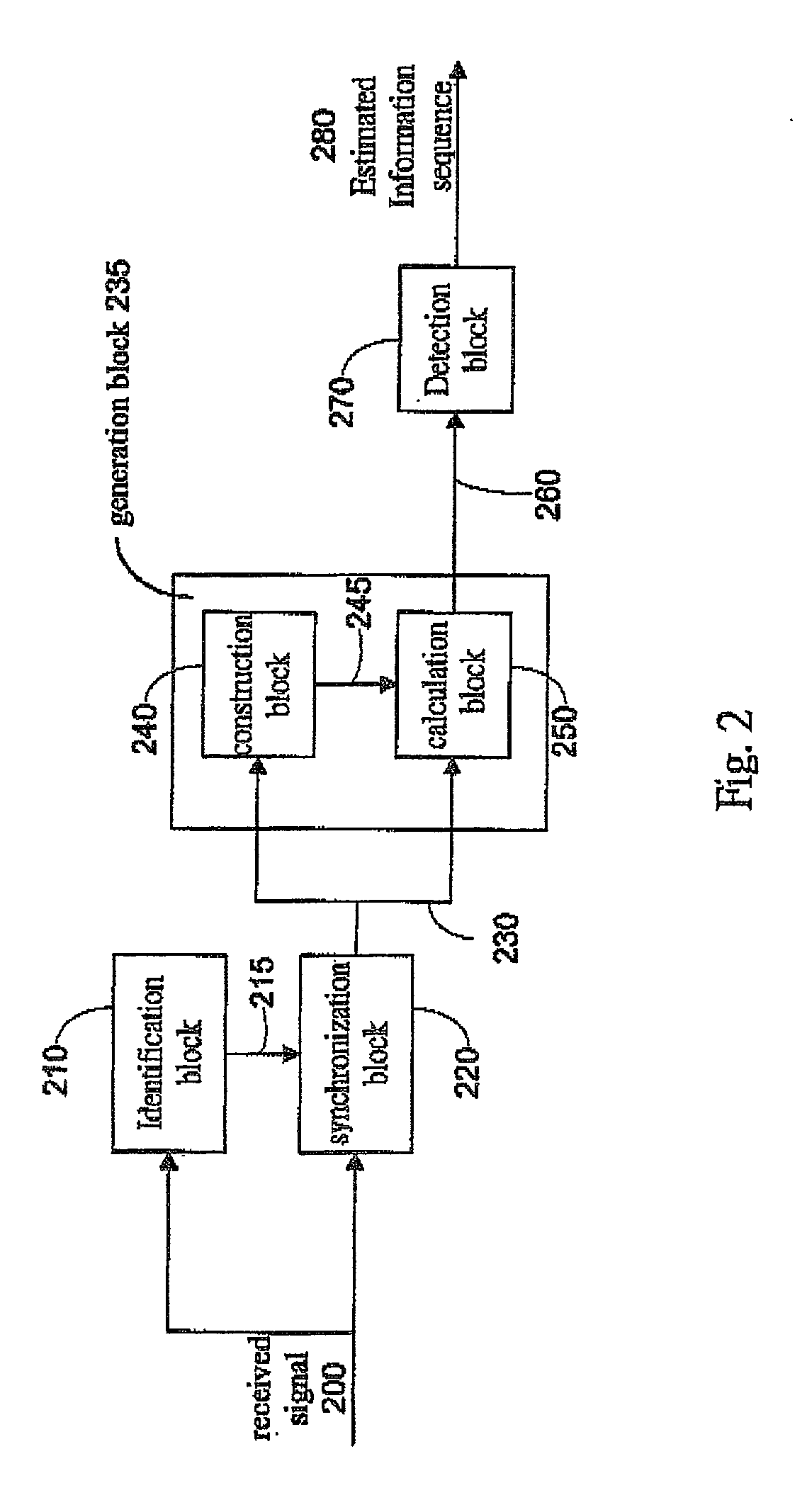
Figure 3
Abstract
Description
[0001] The present invention generally relates to communication systems, and more particularly, to Spread Spectrum communication systems having interference mitigation capability.BACKGROUND OF INVENTION
[0002] Driven by the great amount of interests in developing the wireless personal area network (WPAN), the IEEE 802.15 working group was formed working on the standard that provides low-cost, low-power consumption and short-distance (around 10 meters) transmission. To ease the development, the IEEE 802.15 working group accepted the suggestion of Bluetooth Special Interest Group to incorporate Bluetooth technology into the 802.15 standard, known as IEEE 802.15.1. However, the usage of Bluetooth technology on the unlicensed 2.4 GHz band which is also the transmission band for many communications systems (e.g. IEEE WLAN 802.11b, and HomeRF) suggests the problem of mutual interference from these incompatible protocols.
[0003] To seek a solution, the IEEE 802.15.2 task group was formed to ...
Examples
Embodiment Construction
[0031] One aspect of the present invention is used to mitigate interference effects under a communication environment including a first spread spectrum (SS) transmission scheme and a second spread spectrum (SS) transmission scheme in the same frequency band.
[0032] To describe the invention clearly, a number of definitions of terms used herein are given as follows.
[0033] The term "spread spectrum" used herein refers to a variety of radio transmission methods that continuously change frequencies or signal patterns. Direct sequence spread spectrum (DSSS), which is used in CDMA, multiplies the data bits by a very fast pseudo-random bit pattern (PN sequence) that "spreads" the data into a large coded stream that takes the full bandwidth of the channel
[0034] Frequency hopping spread spectrum (FHSS) continuously changes the center frequency of a conventional carrier several times per second according to a pseudo-random set of channels, while chirp spread spectrum changes the carrier freque...