

Polynucleotide Encoding a Maize Herbicide Resistance Gene and Methods for Use
a technology of polynucleotide and herbicide resistance, which is applied in the field of polynucleotide encoding a maize herbicide resistance gene and methods for use, can solve the problems of limiting the usefulness of commercial crop production, destroying chlorophyll and whitening of plant tissues, and thriving crop plants while non-herbicide-tolerant weeds are killed or severely damaged
- Summary
- Abstract
- Description
- Claims
- Application Information
AI Technical Summary
Problems solved by technology
Method used
Image

Examples
example 1
Identification of the Nsf1 Gene through Positional Cloning
[0112] A BC1 population (expected 50% Nsf1lnsf1, 50% nsf1 / nsf1) was developed using the sensitive inbred W703A as the recurrent parent, and either B73 or Q66 as the resistant line. Plants were misted with a 2.3 mM nicosulfuron, 0.5% v / v Kinetic surfactant solution at approximately the V3 stage. Both resistant and sensitive parents were also grown and sprayed as controls. In order to avoid falsely classifying a plant which may have died due to reasons other than the herbicide application, only resistant progeny were sampled and analyzed. A total of 96 resistant plants were used for the initial mapping. This was sufficient to place Nsf1 between markers umc1766 and umc2036, and thus on contig 202 of the maizeB73-based physical map ((Retrieved on Mar. 6, 2006) Retrieved from the internet Zea—mays / cytoview?contig=ctg202&x=44&y=9>).
[0113] Based on BAC-end sequences of a maize Mo17-based contig, flanking CAPS (cleaved amplified po...
example 2
Analysis of the Nsf1 Gene
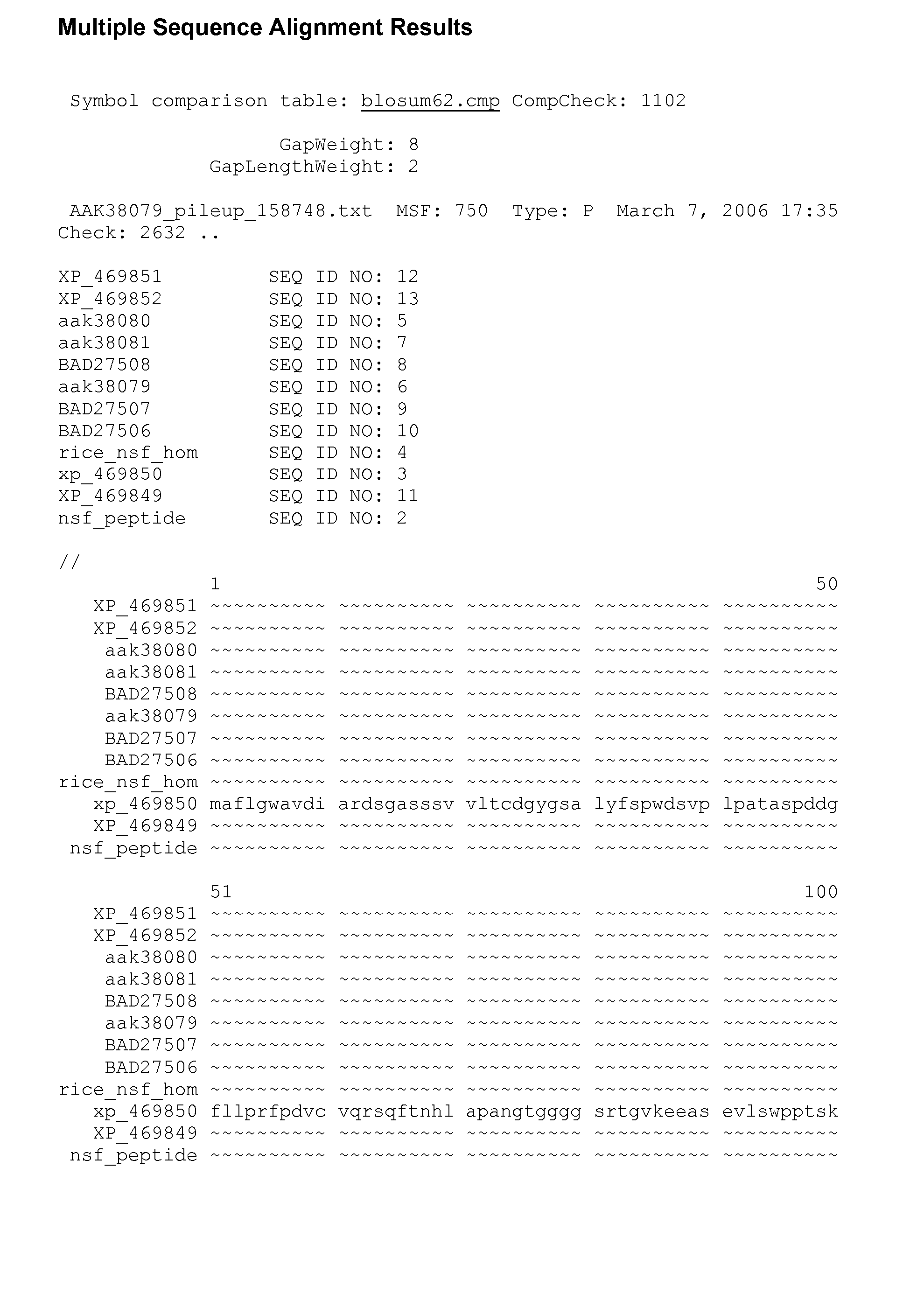
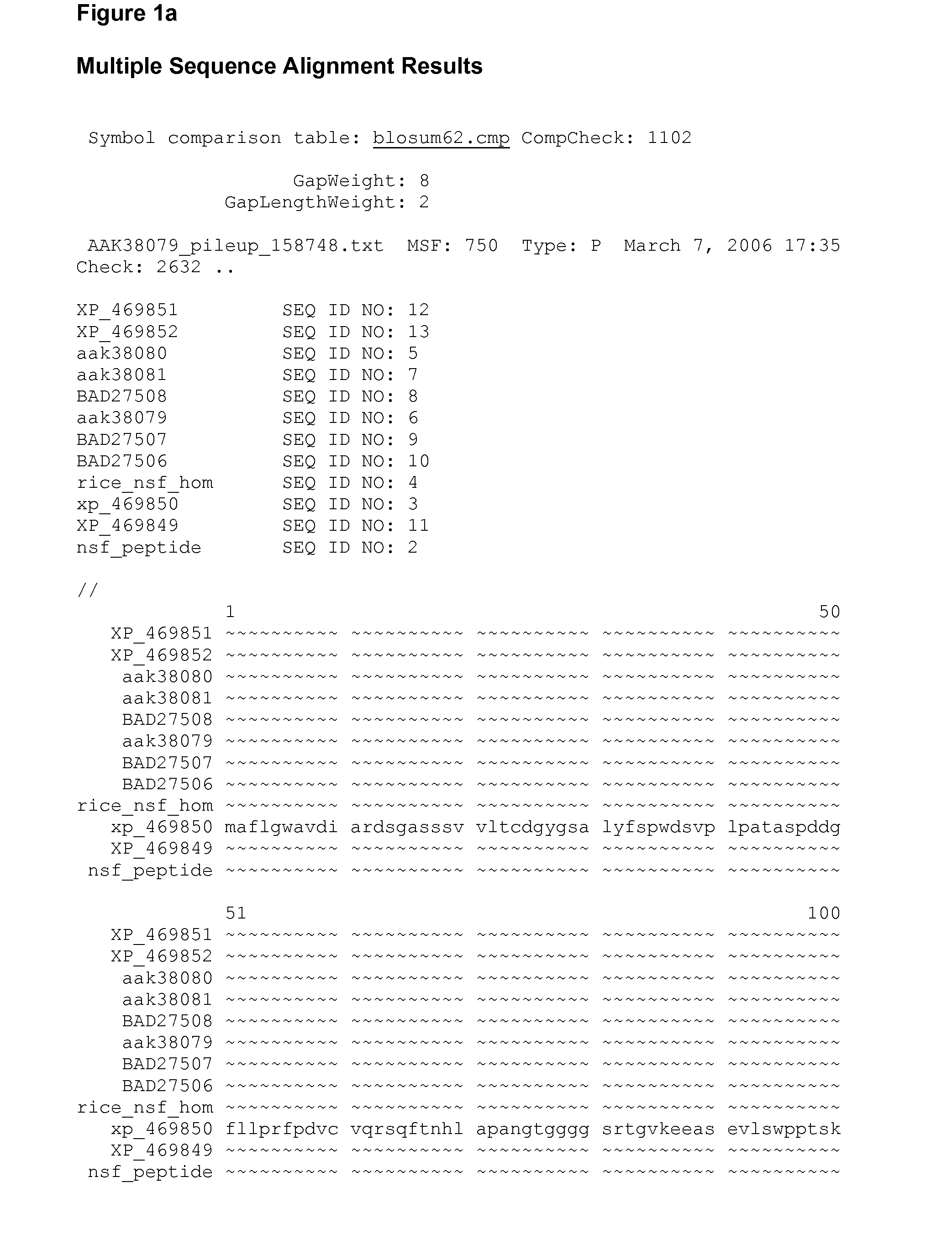
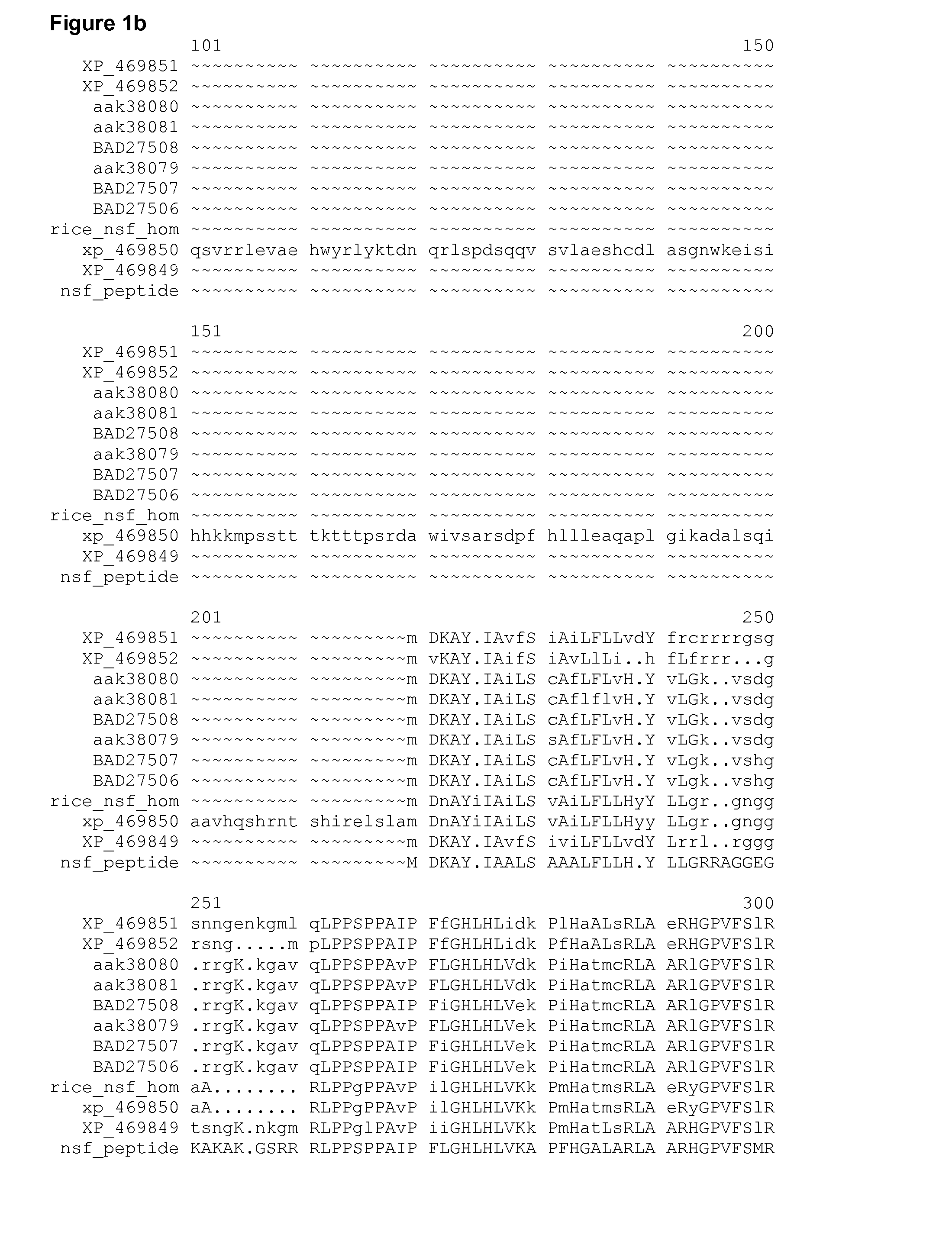
[0116] Analysis of the Gene 18 (Nsf1) sequence in the B73-derived BAC shows an open reading frame of 521 amino acids, and containing the conserved heme-binding motif FXXGXXXCXG (SEQ ID NO: 14) found in all cytochrome P450s (FIGS. 1d and 2b).
[0117] In order to determine if the Nsf1 allele was consistent across maize lines, three corn lines with unknown sensitivity levels to nicosulfuron were tested to determine their reaction and then evaluate their sequences. Plants were misted with a 2.3 mM nicosulfuron, 0.5% v / v Kinetic surfactant solution at approximately the V3 stage. Both known resistant and sensitive lines were also grown and sprayed as controls. Results of the testing of the three lines showed that lines Q66 and Black Mexican Sweet (BMS) were resistant and line A188 was sensitive.
[0118] Of these two other resistant lines, Q66 and BMS, also possess this ORF, although Q66 differs from both B73 and BMS by 3 amino acids (FIG. 2a and 2b) These three var...
example 3
Testing of Maize Plants for Sensitivity to Nicosulfuron
[0123] Three corn lines with unknown sensitivity levels to nicosulfuron were tested to determine their reaction. Plants were misted with a 2.3 mM nicosulfuron, 0.5% v / v Kinetic surfactant solution at approximately the V3 stage. Both known resistant and sensitive lines were also grown and sprayed as controls. Results of the testing of the three lines showed that lines Q66 and BMS were resistant and line A188 was sensitive.
PUM
| Property | Measurement | Unit |
|---|---|---|
| temperature | aaaaa | aaaaa |
| temperature | aaaaa | aaaaa |
| pH | aaaaa | aaaaa |
Abstract
Description
Claims
Application Information
 Login to View More