Apparatus for plugging a seacock externally

a technology for plugging and seacocks, applied in the field of external plugging devices for seacocks, can solve the problems of expensive hauling out, unsuitable holes for normal round plugs, and inability to work in typical seacock fittings

US20090107383A1Inactive Publication Date: 2009-04-30COTTEN GREGORY BENEDICT
6 Cites 4 Cited by

Patent Information

Authority / Receiving Office
US · United States
Patent Type
Applications(United States)
Current Assignee / Owner
Publication Date
2009-04-30
Estimated Expiration
Not applicable · inactive patent

Smart Images

  • Figure 1
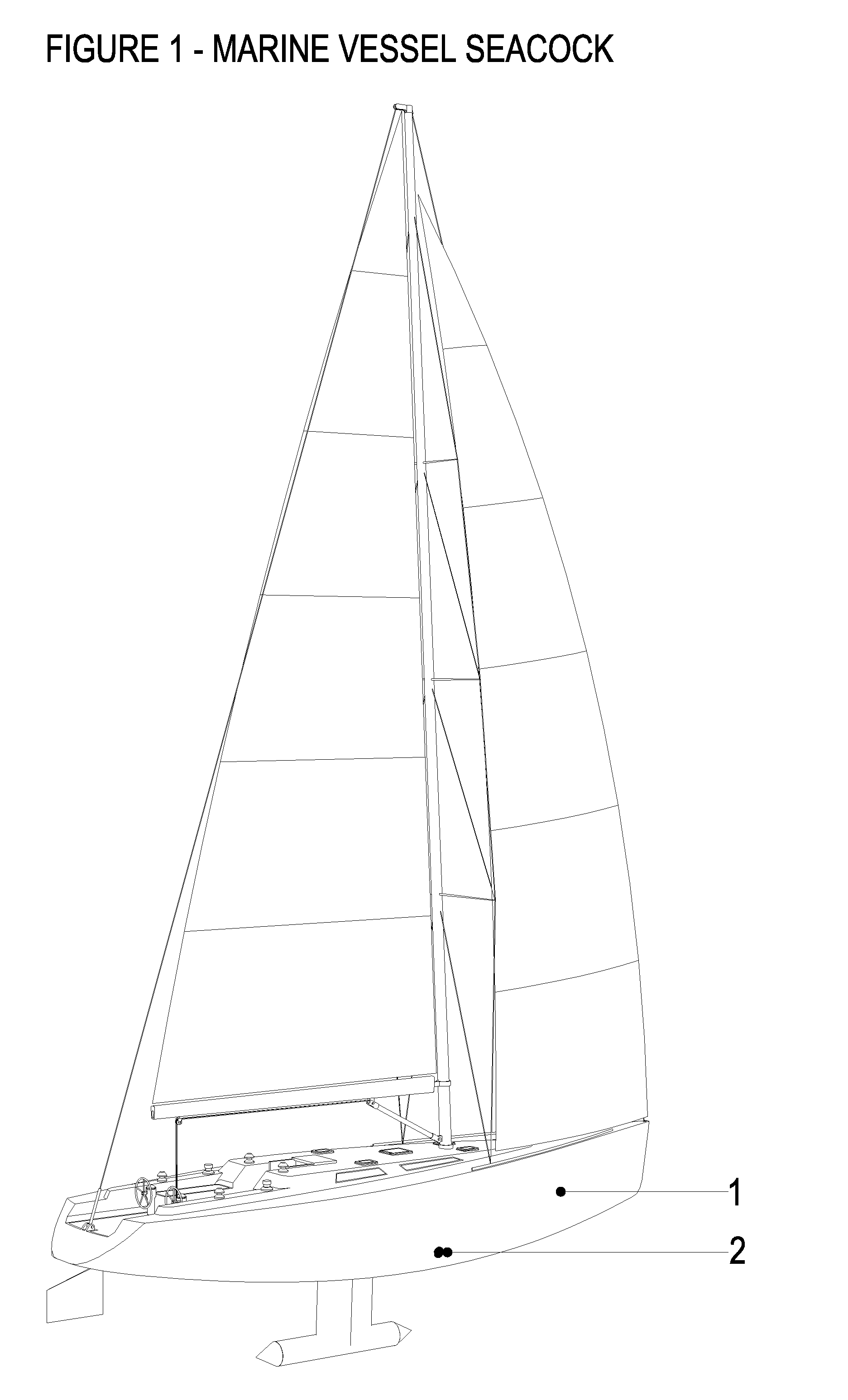
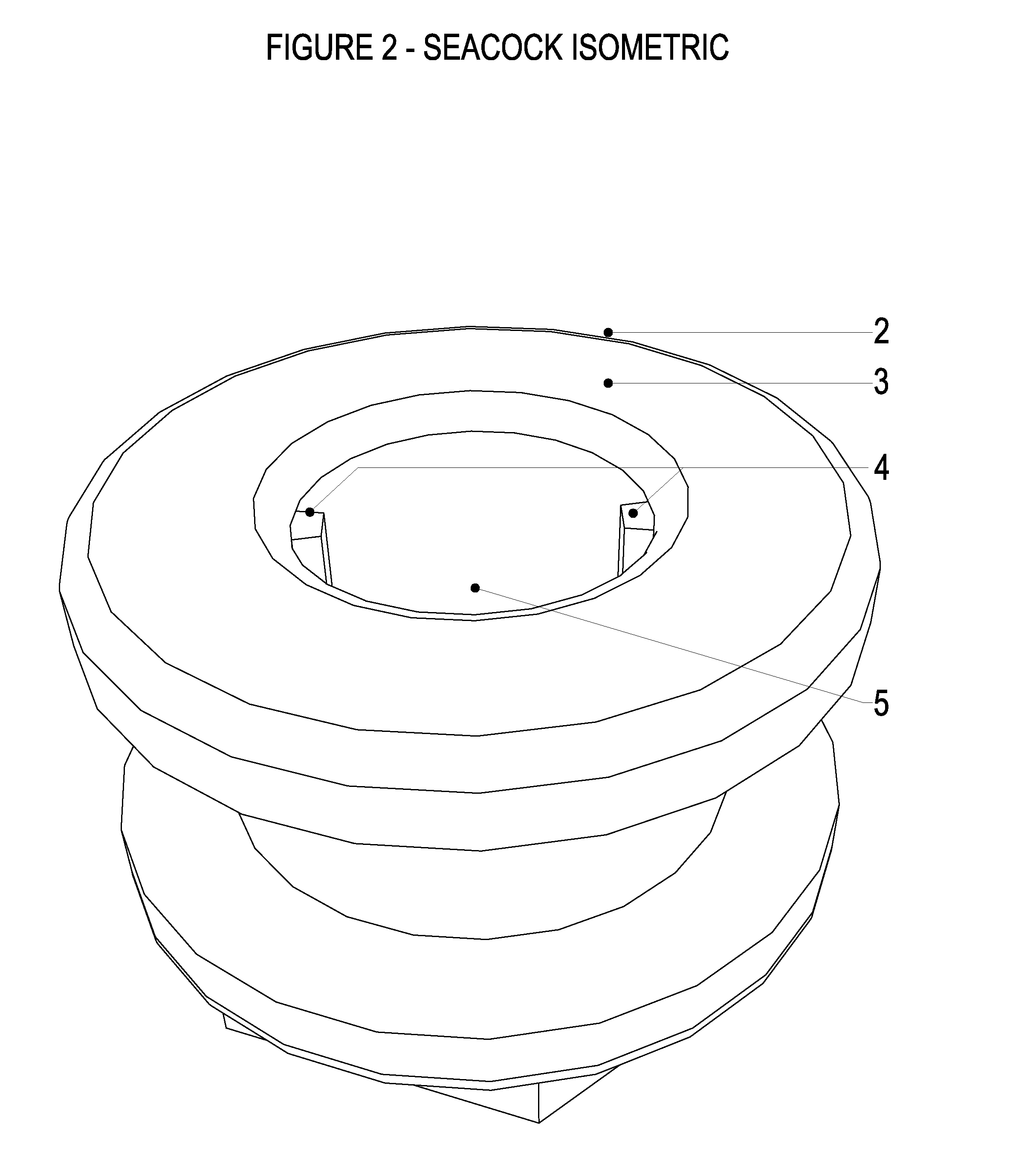
    Figure 1
  • Figure 2
    Figure 2
  • Figure 3
    Figure 3
Patent Text Reader

Abstract

This invention is directed to a thru-hull fitting or specifically a seacock which is below the normal waterline of a marine vessel and this invention provides an exterior plug to stop leakage and / or allow for maintenance of the interior hull valve, piping, and / or associated tubing without necessitating the need to haul out the vessel. The seacock plug includes a rubber bellows assembly; o-ring flange assembly, sealing wedge, and compression lead screw with T-handle that forms a watertight seal around the irregular interior shape hull fitting.
Need to check novelty before this filing date? Find Prior Art

Description

CROSS-REFERENCE TO RELATED APPLICATIONS

[0001] Not ApplicableSTATEMENT REGARDING FEDERALLY SPONSORED RESEARCH OR DEVELOPMENT

[0002] Not ApplicableREFERENCE TO SEQUENCE LISTING, A TABLE, OR A COMPUTER PROGRAM LISTING COMPACT DISC APPENDIX

[0003] Not ApplicableBACKGROUND OF THE INVENTION

[0004] The present invention applies to thru-hull fittings or specifically a seacock which is below the normal waterline of a marine vessel to prevent water intrusion by the application of an externally (water-side) applied plug device.

[0005] Related art consist primarily of circular plugs that are designed for a perfectly round hole. These plugs can be applied either internally or externally as the thru-hull is not equipped with an isolation valve for their intended above waterline use. Examples of circular plugs are taught in U.S. Pat. Nos. 6,390,007 and 1,446,812 while a screw-type permanent plug is taught in U.S. Pat. No. 4,512,547. Non plugging, but protective caps are taught in U.S. Pat. No. 7,210,423.[0...

Examples

Embodiment Construction

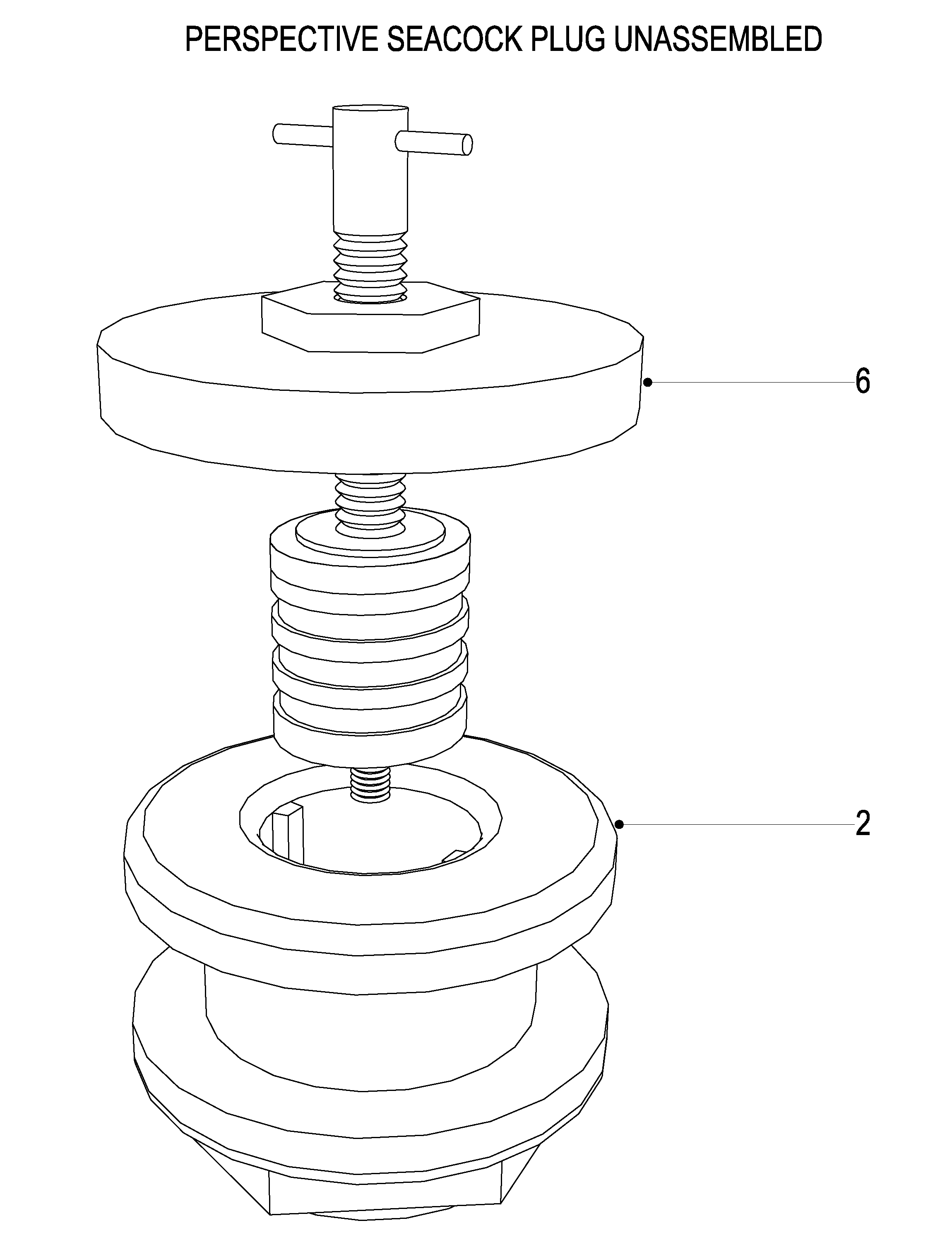
[0015]With reference to the figures, exemplary embodiments of the invention will now be described. Before proceeding to a detailed description of the preferred embodiments of the present invention and alternate embodiments, several general comments should be made about the applicability and the scope of the present invention. The scope of the invention disclosed is applicable to a plurality of uses, such as but not limited to other devices where a plug is required for an irregular shaped inner area of a hole. Thus even though embodiments are described specifically to marine vessel hulls, the present invention is applicable to other uses or applications.

[0016]As illustrated in FIG. 1, the present invention 6 (not shown in FIG. 1) is usually installed below the waterline on the seacock 2 located on the hull 1 of a marine vessel. As further illustrated in FIG. 2, the seacock 2 is shown in isometric view where the outer flange 3 surrounds the smooth inner passage or hole 5, but is irreg...