
Curing composition and method for producing same
A curable composition and polymer technology, applied in the field of curable compositions, can solve the problems of expensive equipment, unsuitable curing during manufacturing, and inability to obtain manufacturing stability, and achieve the effects of high safety and excellent rapid curing.
Patent Information
- Authority / Receiving Office
- CN · China
- Patent Type
- Patents(China)
- Current Assignee / Owner
- Publication Date
- 2009-04-08
Smart Images
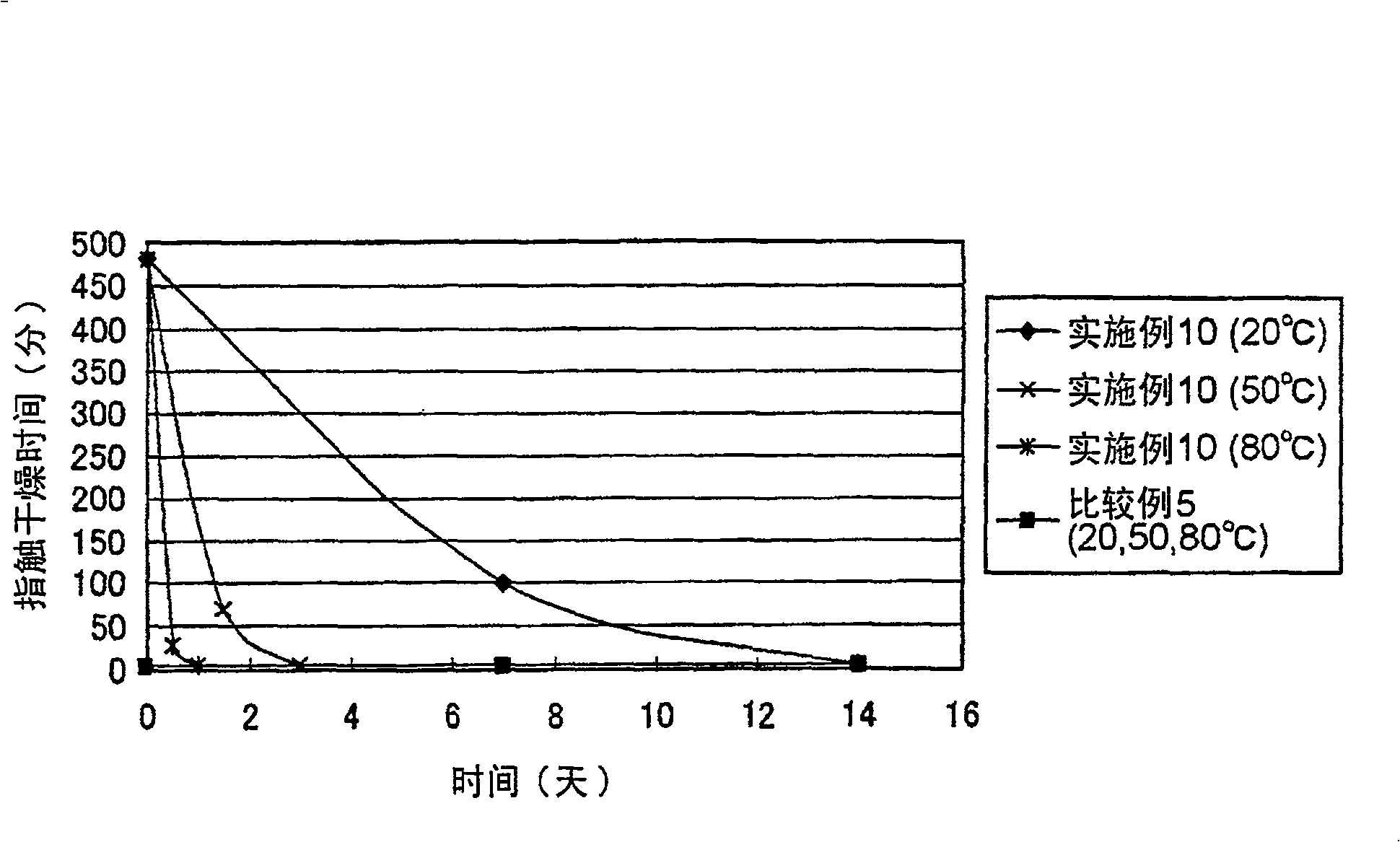
Figure 1 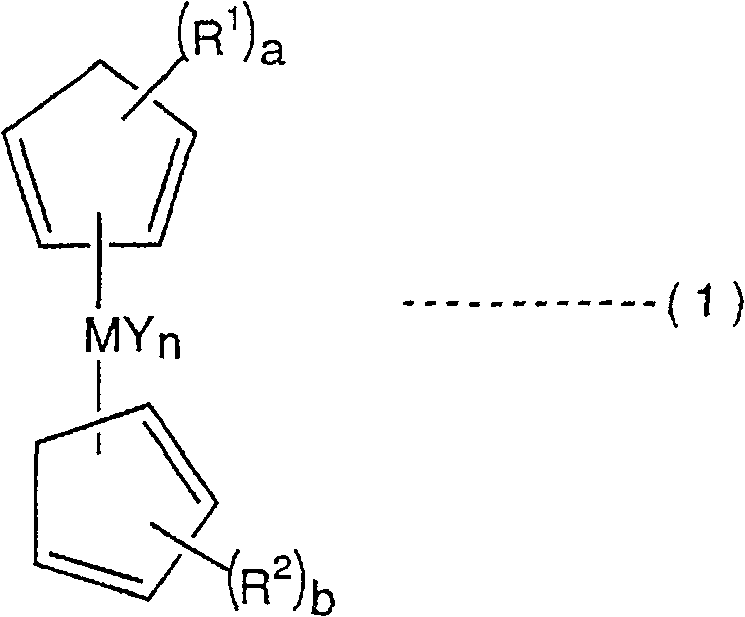
Figure 2 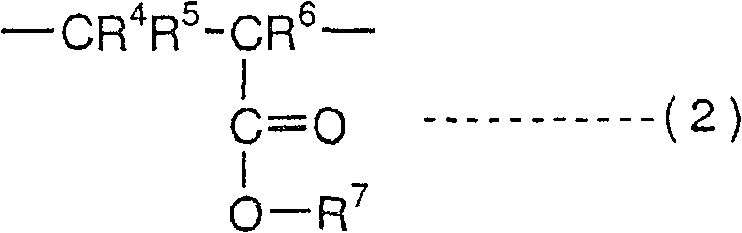
Figure 3
Abstract
Description
technical field
[0001] The present invention relates to a curable composition, and more specifically relates to a curable composition having excellent adhesiveness, rubber physical properties, rapid curing and production stability. Background technique
[0002] Patent Document 1 discloses a propylene-based polymer polymerized using a specific polymerization catalyst. In addition, Patent Document 1 discloses a curable composition comprising this special propylene-based polymer and a silane coupling agent, but the curable composition is not sufficient in adhesiveness, rubber physical properties, and the like.
[0003] In addition, industrially produced room temperature curable compositions containing organic polymers containing crosslinkable silyl groups are widely used in applications such as sealants, adhesives, and coatings. Generally, these curable compositions are cured using various metal catalysts, and are used in various applications depending on the type and amount a...
Examples
Embodiment
[0163] The present invention will be specifically described below with examples, but these examples are only for illustration and not limitation.
Synthetic example 1
[0165] 43 parts by weight of xylene, 80 parts by weight of methyl methacrylate, 20 parts by weight of stearyl methacrylate, 20 parts by weight of γ-methacryloxypropyl trimethoxysilane, and ruthenocene for metal catalysts 0.1 parts by weight of the dichloride was put into a flask equipped with a stirring device, a nitrogen gas introduction pipe, a thermometer, and a reflux cooling pipe, and the contents of the flask were heated to 80° C. under nitrogen gas introduction.
[0166] Next, stir and add 20 parts by weight of 3-mercaptopropyltrimethoxysilane fully replaced with nitrogen gas next time, after adding 20 parts by weight of 3-mercaptopropyltrimethoxysilane, heat and cool for 4 hours to make the stirring flask The temperature of the contents was maintained at 80°C. Thereafter, 20 parts by weight of 3-mercaptopropyltrimethoxysilane fully substituted with nitrogen was added to the flask over 5 minutes while stirring. After adding the total amount of 20 parts by weight of 3-m...
Synthetic example 2
[0170] In addition to replacing 80 parts by weight of methyl methacrylate in the contents of the flask with 10 parts by weight of n-butyl acrylate and 70 parts by weight of methyl methacrylate, the others were synthesized with Synthesis Example 1 to obtain a crosslinkable silane containing A mixture 2 of a polyoxyalkylene-based polymer (A) and a (meth)acrylic polymer (B).